

Last updated May 4th 2026
Some of the links below are affiliate links, meaning at no additional cost to you, we may earn a commission if you click through and make a purchase.
- Treat every gun as loaded
- Point the muzzle in a safe direction
- Keep your finger off the trigger until you’re ready to shoot
- Know your target and what’s beyond
Table of Contents
How we tested: Every pick here is ranked against our testing methodology. Minimum round counts, accuracy and reliability protocols, the failures that disqualify a gun.
Buckshot vs Slugs vs Birdshot: What You Need to Know
Shotgun ammo isn’t one-size-fits-all. The same gun can fire projectiles ranging from tiny #9 birdshot pellets (0.08″ diameter, 585 per ounce) to massive 1-ounce slugs (0.73″ diameter, one per shell). That versatility is the shotgun’s superpower and its source of confusion. Use the wrong ammo for the job and you’ll either miss your target, fail to stop a threat, or cause unnecessary damage.
I’m going to cover all three types in detail: what they are, how they work, and when to use each one. No hedging. Birdshot for defense is a bad idea, and I’ll explain exactly why. Slugs through a turkey choke will ruin your day, and I’ll explain that too. This is the definitive guide to shotgun ammo selection.
For specific product recommendations, check best 12 gauge slugs and our shotgun buying guide for choosing the right gun for your ammo.
Birdshot: What It Is and When to Use It
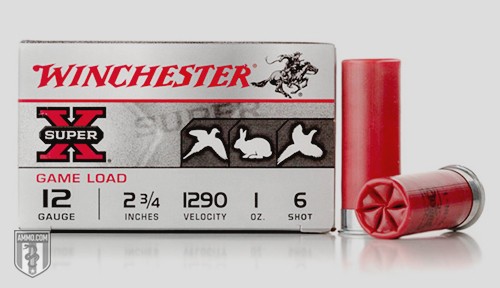
Birdshot is small, round pellets designed for hunting birds and shooting clay targets. Shot sizes range from #9 (smallest, 0.08″ diameter) to #1 (largest common birdshot, 0.16″ diameter). A standard 12 gauge target load with #7.5 shot contains roughly 350 pellets. That cloud of pellets creates a pattern that increases your chances of hitting a fast-moving target at 20-40 yards.
| Type | Size | Diameter | Pellet count | Best for |
|---|---|---|---|---|
| Birdshot | #9 | .08″ | 585 per oz | Skeet, dove at close range |
| Birdshot | #8 | .09″ | 410 per oz | Skeet, dove, quail |
| Birdshot | #7.5 | .095″ | 350 per oz | Trap, sporting clays, dove |
| Birdshot | #6 | .11″ | 225 per oz | Pheasant, grouse, rabbit |
| Birdshot | #5 | .12″ | 170 per oz | Pheasant, turkey with TSS |
| Birdshot | #4 | .13″ | 135 per oz | Late-season pheasant, duck |
| Birdshot | #2 | .15″ | 87 per oz | Duck, goose in steel shot |
| Birdshot | #1 | .16″ | 72 per oz | Geese, large ducks at range |
| Buckshot | #4 Buck | .24″ | 27 per shell | Home defense, less wall penetration |
| Buckshot | #1 Buck | .30″ | 16 per shell | Defense, best balance of penetration and count |
| Buckshot | 00 Buck | .33″ | 9 per shell | Defense standard, deer under 40 yards |
| Buckshot | 000 Buck | .36″ | 8 per shell | Maximum per-pellet energy, large game |
Smaller shot (higher numbers) gives you more pellets and denser patterns at close range. Larger shot (lower numbers) carries more energy per pellet at longer range but with fewer pellets in the pattern. Match your shot size to your target and your expected range. #7.5 for clays, #6 for pheasant, #4 for ducks, #2 for geese. That’s the short version.
Birdshot for Self-Defense: The Myth That Won’t Die
Let me be direct: birdshot is NOT an acceptable self-defense load. Not #4 birdshot, not #2 birdshot, not any birdshot. At indoor distances of 7-10 yards, birdshot creates a shallow wound channel that rarely penetrates deep enough to reach vital organs. The pellets are too light to maintain velocity through clothing, muscle, and bone. Multiple emergency room doctors and ballistic gel tests confirm this.
The “but it’ll devastate at close range” argument comes from people looking at surface wounds and confusing ugly with lethal. Yes, birdshot at contact range creates a horrific surface wound. But surface wounds don’t stop determined attackers. You need 12+ inches of penetration to reliably reach vital organs from any angle. Birdshot penetrates 4 to 6 inches in gel. That’s not enough.
If your concern is wall penetration in an apartment, use reduced-recoil 00 buckshot or #4 buckshot (not birdshot). Both penetrate walls less than a standard 00 buck load while still meeting the FBI’s 12-inch minimum penetration standard in tissue. Birdshot is for birds. Period. For load-by-load picks, see our best shotgun ammo for home defense roundup.
Buckshot: The Defense Standard
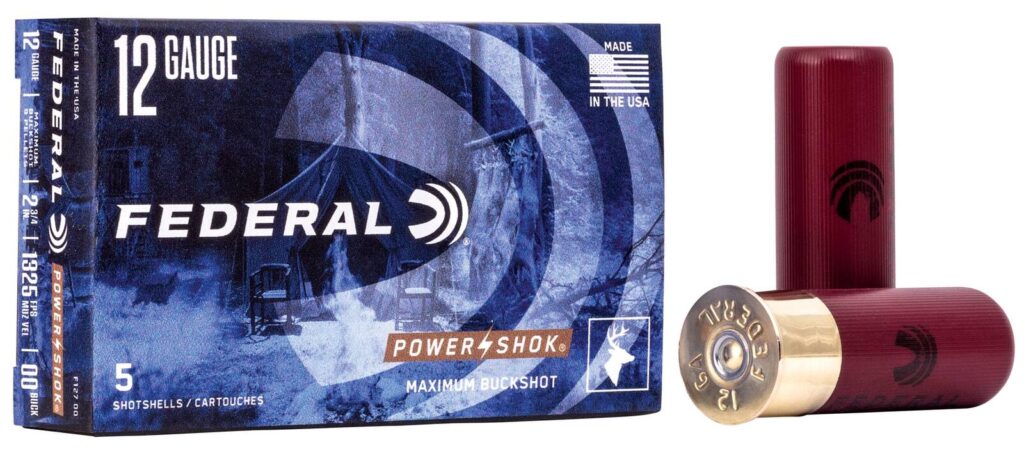
Buckshot consists of larger pellets designed for defense against humans and medium-to-large game at close range. The name comes from its original use: hunting deer (bucks) before accurate slugs existed. Today, buckshot is the standard defensive shotgun load and is also used for hunting deer at close range in brush country.
00 buckshot (“double-aught”) is the gold standard for defensive use. Nine pellets of .33 caliber lead, each roughly equivalent to a .32 ACP pistol bullet, fired simultaneously. At 15 yards, those nine pellets spread to about 8-10 inches depending on choke and barrel length. That’s like hitting a target with nine handgun rounds at once. Nothing else in the firearms world delivers that kind of instant, fight-stopping trauma.
Federal FliteControl is the benchmark defensive buckshot load. The special wad keeps the pellets together longer, producing tighter patterns than standard buckshot. At 15 yards, FliteControl patterns inside 4 to 5 inches from a cylinder-bore barrel. That’s shotgun slugging precision with buckshot versatility. Every defensive shotgun should have a box of FliteControl in the closet.
Buckshot for Deer Hunting
In some states (particularly in the Southeast), buckshot for deer is legal and traditional. Drives through thick brush where shots are under 30 yards make buckshot practical. But be honest about the limitations: past 25-30 yards, the pattern spreads enough that some pellets will miss a deer-sized target, leading to wounded animals. If you’re hunting deer with buckshot, keep your shots inside 25 yards and use the tightest choke your gun will handle. Slugs are more ethical at any range past 30 yards.
Slugs: The Long-Range Shotgun Option
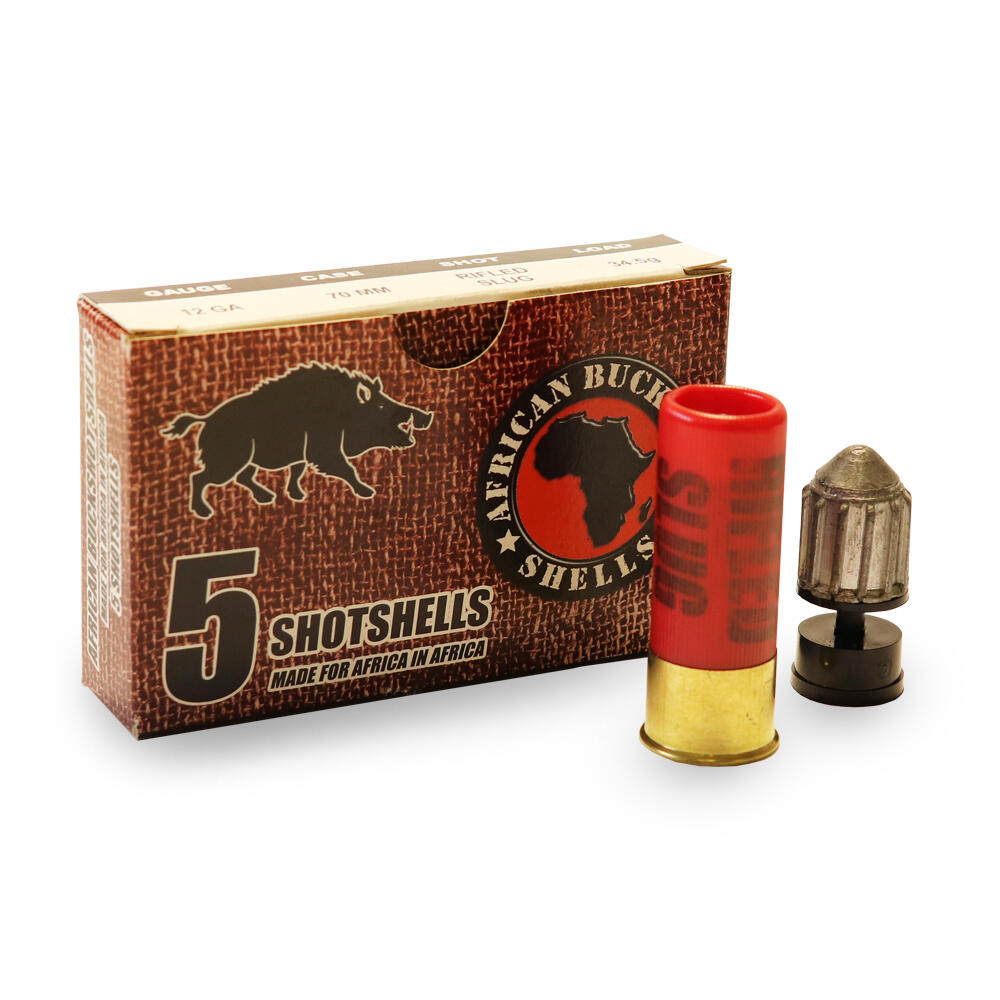
Slugs are single, large-caliber projectiles that turn a shotgun into a short-range rifle. A standard 12 gauge slug, per SAAMI 12 gauge dimensional spec, is approximately .73 caliber and weighs 1 ounce (437 grains). That’s massive. For comparison, a .30-06 rifle bullet weighs 150-180 grains. The slug hits harder at close range than almost any rifle cartridge in existence.
Types of Slugs
Foster Slugs: The classic “rifled slug” designed for smoothbore barrels. The hollow base and external rifling (actually rifling-shaped ribs, not true rifling) help it fly straight. Accurate to about 50-75 yards from a smoothbore. Cheap, widely available, and the most common slug type. These are what you shoot through your standard field barrel.
Sabot Slugs: A smaller-caliber projectile wrapped in a plastic sabot (shoe) that engages the rifling in a rifled barrel. When the slug leaves the barrel, the sabot falls away and the spin-stabilized projectile flies like a rifle bullet. Accurate to 150-200 yards with a rifled barrel and scope. More expensive, but dramatically more accurate. Never shoot sabots through a smoothbore.
Brenneke Slugs: German-designed slugs with an attached wad that acts as a stabilizing base. Heavier than Foster slugs and known for deep, straight penetration. The Brenneke Black Magic Magnum (602 grains) is the standard slug for bear defense among Alaska guides. Can be fired through smoothbore or rifled barrels.
Slugs for Home Defense
Slugs are the barrier-penetration option for home defense, and our dedicated slugs vs buckshot for home defense guide weighs the two head-to-head. If your concern is shooting through a car door, a heavy exterior wall, or an intermediate barrier, a slug will do what buckshot won’t. But that penetration cuts both ways. A slug will go through interior walls, exterior walls, and potentially into neighboring rooms or houses. For standard home defense inside a structure, 00 buckshot is the better choice. Reserve slugs for specific barrier-defeat scenarios.
Some shooters load their defensive shotgun with a mix: buckshot first, then slugs. The logic is buckshot for the first engagement, then slugs available if the threat takes cover behind furniture or walls. It’s a reasonable approach if you train with it. Just know exactly what’s in your tube at all times.
Slugs for Deer Hunting
For deer hunting in slug-only states (Ohio, Indiana, Iowa, Illinois, and others), sabot slugs through a rifled barrel are the way to go. The Savage 220, Mossberg 500 Slugster, and similar dedicated slug guns produce rifle-like accuracy at 100-150 yards. Pair a quality rifled barrel with Federal Trophy Copper or Hornady SST sabots and you’ll be printing 2-3 inch groups at 100 yards. That’s clean kills on whitetails. See our best slug guns guide for specific picks.
Wall Penetration Comparison: What Goes Through What
This is the question everyone asks: how much does each type penetrate through walls? Here’s the hierarchy based on multiple drywall penetration tests.
| Ammo Type | Walls Penetrated | Home Defense Suitability |
|---|---|---|
| #8 Birdshot | 1-2 walls | NOT recommended (insufficient penetration in tissue) |
| #4 Buckshot | 2-3 walls | Good (meets FBI minimum, less over-penetration) |
| #1 Buckshot | 3-4 walls | Excellent (best balance per FBI testing) |
| 00 Buckshot | 3-5 walls | Standard (most available, proven stopper) |
| 1 oz Slug | 5+ walls | Situational (barrier defeat only, extreme over-penetration) |
Important context: every effective defensive load will penetrate multiple interior walls. There is no magic round that stops a threat and doesn’t penetrate drywall. Even #4 buckshot goes through two walls. The goal isn’t zero wall penetration; it’s meeting the minimum penetration standard in tissue (12 inches) while minimizing excess penetration. #4 buck and #1 buck are the best balance for typical apartment and house scenarios.
Legal Considerations by State
Shotgun ammo regulations vary by state and by game species. Some states restrict slug types for deer hunting. Some require non-toxic shot (steel, bismuth, or tungsten) for all waterfowl. A few states ban lead shot entirely on public land. Before loading up for a hunt, check your specific state’s regulations.
For waterfowl, federal law requires non-toxic shot everywhere in the US. No exceptions. Lead birdshot for duck or goose hunting is illegal and carries serious penalties. Steel is the cheapest non-toxic option, but bismuth and TSS (tungsten super shot) outperform steel dramatically and are worth the premium for serious waterfowlers.
For defensive use, there are no federal restrictions on ammo type. Some local jurisdictions may have specific rules, so check your state gun laws before setting up your home defense loadout.
Quick Reference: What Ammo for What Job
| Use Case | Best Ammo | Why |
|---|---|---|
| Home Defense | 00 Buckshot (Federal FliteControl) | Maximum stopping power with tight patterns |
| Home Defense (apartments) | #4 or #1 Buckshot | Reduced wall penetration, still meets FBI standard |
| Bear Defense | Hard-cast slugs (Brenneke) | Maximum penetration through bone and muscle |
| Deer (smoothbore) | Foster slugs or Brenneke | Designed for smoothbore barrels, effective to 75 yards |
| Deer (rifled barrel) | Sabot slugs | Rifle-like accuracy to 150-200 yards |
| Dove/Quail | #7.5 or #8 birdshot | Dense pattern for small, fast targets |
| Pheasant | #5 or #6 birdshot | Enough energy for larger birds at 30-40 yards |
| Ducks | #2 or #3 steel shot | Non-toxic required, effective to 40 yards |
| Geese | BB or #1 steel, or TSS #9 | Maximum energy at range for large, tough birds |
| Turkey | #5 lead or TSS #9 | Dense head/neck patterns at 40-50 yards |
| Trap/Skeet | #7.5 or #8 target loads | Consistent patterns, low recoil for high volume |
Top Ammo Brands by Category
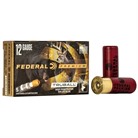
Defensive Buckshot: Federal FliteControl (the standard), Hornady Critical Defense, Federal Power-Shok. FliteControl patterns so much tighter than everything else that it’s worth the premium.
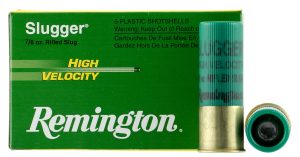
Slugs: Federal Trophy Copper (best sabot), Hornady SST (best expansion), Brenneke Black Magic (best penetration), Remington Slugger (best budget Foster). Each has a different strength depending on your use case.
Target Loads: Federal Top Gun, Winchester AA, Remington STS, Rio Target. Winchester AA and Remington STS are the gold standard for competition. Federal Top Gun is the best budget target load.
Hunting Loads: Federal Premium, Winchester Super-X, Kent Fasteel (steel waterfowl), Boss Bismuth (non-toxic upland), Apex TSS (turkey). Kent Fasteel is the best value in steel waterfowl loads, and Boss Bismuth lets you shoot non-toxic through vintage guns with fixed chokes.
The Bottom Line: Match Your Ammo to Your Mission
Buckshot for defense. Slugs for big game and barrier penetration. Birdshot for birds and clay targets. That’s it. Don’t overcomplicate it, and don’t listen to the people who say birdshot is “good enough” for home defense. It’s not. Load your defensive shotgun with quality 00 buckshot (Federal FliteControl if you can find it), keep a few slugs accessible for specific scenarios, and use the appropriate birdshot for whatever you’re hunting.
The beauty of the shotgun is that one gun handles all three. A Mossberg 500 with a box of each covers home defense, deer season, and bird season. No other weapon platform offers that versatility. Just make sure you know what’s loaded before you pull the trigger.
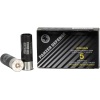
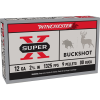
12 Gauge Buckshot: Live Prices
Buckshot is the home-defense standard, and it is cheap enough that there is no excuse for not patterning a box before you trust it. Prices below are live across the retailers we track.



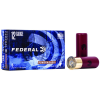
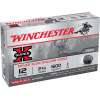
12 Gauge Slugs: Live Prices
Slugs cost roughly twice what buckshot does per round, which is worth knowing before you plan a season around them. Buy a box of two or three types and see which your barrel likes, because slug accuracy varies more between guns than between brands.

Related Shotgun Guides
Looking for the best prices? Check our gun deals page and price comparison tool to compare prices from 200+ retailers before you buy.
Frequently Asked Questions
Is birdshot good for home defense?
No. Birdshot penetrates only 4 to 6 inches in ballistic gel, far below the FBI minimum of 12 inches needed to reliably reach vital organs. Use 00 buckshot or #4 buckshot for home defense. Birdshot is for birds only.
What is the best shotgun ammo for home defense?
Federal FliteControl 00 buckshot is the gold standard. It produces the tightest patterns from a cylinder-bore barrel, with nine .33-caliber pellets that meet all defensive penetration standards. For apartments, #4 buckshot reduces wall penetration while still being effective.
What is the difference between 00 buckshot and slugs?
00 buckshot fires nine .33-caliber pellets that spread into an 8-10 inch pattern at 15 yards. Slugs fire a single .73-caliber projectile. Buckshot is better for general home defense. Slugs are better for barrier penetration, deer hunting, and bear defense.
Can I shoot slugs through a regular shotgun?
Yes. Foster-type slugs are safe to shoot through any standard smoothbore barrel with an open or modified choke. Do not shoot slugs through Full or Extra-Full turkey chokes. Sabot slugs should only be used with rifled barrels.
What birdshot size should I use for dove hunting?
Number 7.5 or #8 birdshot is standard for dove. These smaller pellets provide dense patterns at the 20-35 yard ranges where most dove shots occur. One-ounce target loads are sufficient.
Does buckshot go through walls?
Yes. All effective defensive loads penetrate multiple interior walls. 00 buckshot goes through 3-5 drywall panels. Number 4 buckshot goes through 2-3 panels. The goal is not zero wall penetration but meeting minimum tissue penetration while minimizing excess.
What is the best slug for deer hunting?
For rifled barrels, Federal Trophy Copper and Hornady SST sabot slugs are top performers. For smoothbore barrels, Remington Slugger and Federal Power-Shok Foster slugs are proven and affordable.
What shotgun ammo is best for bear defense?
Hard-cast, non-expanding slugs like the Brenneke Black Magic Magnum (602 grains) provide the deep penetration needed against heavy bone and muscle. Avoid hollow-point or expanding slugs that sacrifice penetration for expansion.
4,715+ Gun & Ammo Deals
Updated daily from 200+ top retailers. Filter by category, caliber, action type, and price.