

Last updated August 22nd 2026 · By Nick Hall, who has shot slugs out of both a smoothbore Mossberg 500 and a rifled-barrel slug gun, and learned the difference the expensive way
This article contains affiliate links. If you buy through our links then we can earn a small commission and you get the best deals we can find.
- Treat every gun as loaded
- Point the muzzle in a safe direction
- Keep your finger off the trigger until you’re ready to shoot
- Know your target and what’s beyond
Quick Answer: Check your barrel before you buy anything. If it is rifled, buy a sabot slug: Hornady SST 300gr FTX at 2,000 fps and 2,664 ft-lb is the best of them. If it is smoothbore, which almost every shotgun is, buy a rifled slug: Federal Vital-Shok TruBall at 1,600 fps and 2,490 ft-lb groups tighter than anything else in its class.
Put the wrong one in the wrong barrel and you will still hit the backstop somewhere. You will just have paid three times as much for a group you could cover with a dinner plate.
Table of Contents
How we tested: Every pick here is ranked against our testing methodology. Minimum round counts, accuracy and reliability protocols, the failures that disqualify a gun. Where we have not shot a specific variant ourselves, we say so in that section.
12 Gauge Slug Deals Right Now
On-sale 12 gauge from 200+ retailers · Updated every 4 hours




Best 12 Gauge Slugs in 2026 at a Glance
| Slug | Barrel | Price |
|---|---|---|
| BEST OVERALLHornady SST 300gr FTX Sabot Most energy at 100 yards of anything here, and Hornady claims sub-2-inch groups. | Rifled only | Check Price ↓ |
| MOST POWERRemington Premier AccuTip 385gr Heaviest sabot here and the highest muzzle energy on the page. | Rifled only | Check Price ↓ |
| BEST SMOOTHBOREFederal Vital-Shok TruBall A plastic ball centers the slug in the wad. Federal claims 1.4-inch groups at 50 yards. | Smoothbore | Check Price ↓ |
| BEST VALUEFederal Power-Shok Rifled Slug Around a dollar a shot, and it holds energy better downrange than the TruBall does. | Smoothbore | Check Price ↓ |
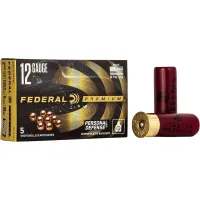
| BEST HOME DEFENSEWinchester PDX1 Defender A 1oz slug with three 00 buck pellets stacked on top of it, at 1,150 fps. | Smoothbore | Check Price ↓ |
Read Your Barrel Before You Read Anything Else
Nearly every article about shotgun slugs lists a dozen of them together and lets you pick. That is the wrong shape for this decision, because half those slugs will not work in your gun.
There are two barrels and two slugs, and they pair up one way:
| Your barrel | What it looks like | Buy this | Why |
|---|---|---|---|
| Smoothbore | No rifling. Bead or rifle sights, often a bird barrel | Rifled slug | The angled fins on the slug do almost nothing for spin. Stability comes from the slug being nose-heavy, like a badminton shuttle |
| Rifled | Visible spiral grooves, almost always a dedicated slug barrel with a scope base | Sabot slug | A plastic sleeve grips the rifling and spins a sub-caliber bullet, then falls away at the muzzle |
Cross them over and both combinations are bad, in different ways.
A sabot slug in a smoothbore is the expensive mistake. The plastic sleeve has nothing to grip, the bullet gets no spin, and a sub-caliber projectile with no stabilisation tumbles. You paid $4 a round for keyhole hits.
A rifled slug in a rifled barrel is the cheap mistake. It works, and it will group acceptably at 50 yards, but soft lead scrubbing through rifling leaves lead in the grooves. Shoot a box and you have a fouling job ahead of you before your sabots will shoot straight again.
One more thing that trips people up. A rifled choke tube screwed into a smoothbore barrel is not a rifled barrel. There is not enough rifled length to spin a sabot properly, and most sabot makers say as much. If your barrel is smooth for 20 inches and rifled for the last two, buy rifled slugs.
What a Slug Actually Does at 100 Yards
Muzzle energy is where slug marketing lives, and it is close to useless for choosing one. Slugs are heavy, blunt and slow, so they shed velocity faster than any other common projectile, and the ones that start hardest are not the ones that arrive hardest.
These are the manufacturers own published ballistics, taken from their product pages for the exact item numbers ranked below. Every figure is theirs, not our arithmetic.
| Slug | Type | Muzzle | 50 yd | 100 yd | Energy kept at 100 |
|---|---|---|---|---|---|
| Remington AccuTip 385gr | Sabot | 2,926 ft-lb | 2,222 ft-lb | 1,677 ft-lb | 57% |
| Hornady SST 300gr FTX | Sabot | 2,664 ft-lb | 2,196 ft-lb | 1,793 ft-lb | 67% |
| Federal Power-Shok Rifled | Rifled | 2,521 ft-lb | 1,746 ft-lb | 1,262 ft-lb | 50% |
| Federal TruBall Rifled | Rifled | 2,490 ft-lb | 1,346 ft-lb | 909 ft-lb | 37% |
| Hornady American Whitetail 325gr | Sabot | 2,403 ft-lb | 1,967 ft-lb | 1,606 ft-lb | 67% |
| Hornady Custom Lite 300gr FTX | Sabot | 1,652 ft-lb | 1,348 ft-lb | 1,107 ft-lb | 67% |
Read the last two columns together, because that is the whole argument for a rifled barrel.
The Federal TruBall leaves the muzzle with more energy than the Hornady American Whitetail sabot and arrives at 100 yards with 43 percent less. 2,490 against 2,403 at the muzzle, then 909 against 1,606 a hundred yards later. Same shotgun, same distance, and the slug that looked stronger on the box is the one that ran out of steam.
The pattern holds right down the table. Every sabot here keeps 67 percent of its energy to 100 yards except the AccuTip, which starts so hard it still arrives with more than any rifled slug. The rifled slugs keep 50 and 37 percent. That is not a small difference in performance, it is a different tool.
Look at the Hornady Custom Lite line as well. It is a deliberately downloaded low-recoil load that starts with barely half the muzzle energy of the AccuTip, and at 100 yards it is still ahead of a full-power TruBall. Shape beats speed in slugs, every time.
So how far can you actually shoot one?
Out of a smoothbore, 75 yards is an honest maximum for most shooters and most guns, and 50 is where the groups stay respectable. Out of a rifled barrel with a scope and a good sabot, 150 yards is realistic and 200 is possible. Hornady publishes figures for the SST all the way to 200 yards, where it is still carrying 1,198 ft-lb, which is more than a TruBall has at 75.
If your season is in a shotgun-only county and your shots are inside 75 yards, a smoothbore and a box of rifled slugs is a complete answer and always has been. Everything above that is what the rifled barrel is for.
Sabot Slugs for Rifled Barrels
These four need a fully rifled barrel. Every manufacturer here says so on the box, and the reason is in the table above. Put them through a smooth barrel and you get none of the performance you paid for.

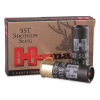
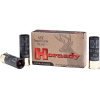
1. Hornady SST 300gr FTX: Best Overall Slug
Hornady SST 300gr FTX runs about $16 for 5 rounds. It publishes 2,000 fps and 2,664 ft-lb, keeps two thirds of that energy to 100 yards, and Hornady claims sub-2-inch groups at that distance.
- Slug: 300gr SST with a Flex Tip polymer point
- Muzzle Velocity: 2,000 fps published by Hornady
- Muzzle Energy: 2,664 ft-lb published by Hornady
- At 100 yards: 1,641 fps and 1,793 ft-lb, from a 24 inch test barrel
- Barrel: Fully rifled only, item 8623
| Value | Accuracy | Retained Energy | Data | Reputation |
| 4/5 | 5/5 | 5/5 | 5/5 | 5/5 |
Pros
- Carries more energy at 100 yards than anything else on this page
- The Flex Tip drives expansion even as velocity falls off downrange
- Hornady publishes the full ballistics table and the 24 inch test barrel
- Sub-2-inch groups at 100 yards is a serious accuracy claim and it holds up
Cons
- Useless in a smoothbore, which is what most people own
- Around $3.20 a round, so patterning and zeroing costs real money
- Recoil from a full-power 12 gauge slug is punishing in a light gun
The SST is a rifle bullet with a plastic sleeve around it, and it behaves like one. A 300 grain projectile with a pointed polymer tip has a far better ballistic coefficient than a blunt lump of lead, which is why it holds 67 percent of its muzzle energy to 100 yards where a TruBall holds 37.
What that buys you is range. At 200 yards Hornady still lists 1,341 fps and 1,198 ft-lb, which is more than a good rifled slug is making at 75. If you hunt a shotgun-only county with a scoped slug gun, this is the load that turns it into something close to a straight-walled rifle.
The Flex Tip matters as much as the point does. A hollow cavity on a slug this slow can fail to open at distance, and the polymer tip drives into the cavity on impact and forces expansion whether the slug is doing 2,000 fps or 1,300.
Best For: Scoped rifled-barrel slug guns, shotgun-only deer seasons, and any shot past 100 yards.

2. Remington Premier AccuTip 385gr: Most Power
Remington Premier AccuTip 385gr costs about $23 to $26 for 5 rounds and posts the highest muzzle energy on this page at 2,926 ft-lb. It is the heaviest slug here by 60 grains.
- Slug: 385gr bonded sabot with a Power Port polymer tip
- Muzzle Velocity: 1,850 fps published by Remington
- Muzzle Energy: 2,926 ft-lb published by Remington
- At 100 yards: 1,401 fps and 1,677 ft-lb
- Barrel: Fully rifled only, item 20727
| Value | Accuracy | Retained Energy | Data | Reputation |
| 3/5 | 5/5 | 4/5 | 5/5 | 5/5 |
Pros
- Highest muzzle energy on this page at 2,926 ft-lb
- Bonded construction, and Remington states over 95 percent weight retention
- Still arrives at 100 yards with more energy than any rifled slug on the page
- Remington publishes the full downrange table including 125 yards
Cons
- Most expensive slug here at roughly $4.70 a round
- Sheds energy faster than the lighter SST, keeping 57 percent to 100 yards against 67
- Rifled barrels only, and the recoil is the worst on this page

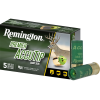

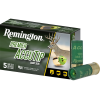
This is the biggest hammer in the box. 385 grains of bonded, brass-jacketed slug leaving at 1,850 fps is 2,926 ft-lb, comfortably more than a .45-70 out of a lever gun, and it is bonded so it stays in one piece when it lands on a shoulder.
The interesting thing is what happens between the muzzle and the target. The AccuTip starts 262 ft-lb ahead of the Hornady SST and finishes 116 ft-lb behind it at 100 yards. The extra weight costs velocity, and the blunter frontal shape costs retention. It is still the hardest-hitting slug here inside about 75 yards.
For most deer hunting this is more slug than the job needs, and the Hornady is easier to shoot. Where the AccuTip earns its price is heavy game at moderate range, or anywhere the shot might have to break through bone before it reaches anything vital.
Best For: Big hogs, black bear over bait, and hunters who want maximum weight and bonded construction inside 100 yards.

3. Hornady American Whitetail 325gr InterLock: Best Value Sabot
Hornady American Whitetail 325gr InterLock is about $14 for 5 rounds, which makes it the cheapest sabot we track. It publishes 1,825 fps and 2,403 ft-lb and keeps 67 percent of that to 100 yards.
- Slug: 325gr InterLock saboted hollow point
- Muzzle Velocity: 1,825 fps published by Hornady
- Muzzle Energy: 2,403 ft-lb published by Hornady
- At 100 yards: 1,492 fps and 1,606 ft-lb, from a 24 inch test barrel
- Barrel: Fully rifled only, item 86271
| Value | Accuracy | Retained Energy | Data | Reputation |
| 5/5 | 4/5 | 5/5 | 5/5 | 4/5 |
Pros
- Cheapest sabot on our live cards at roughly $2.80 a round
- Keeps the same 67 percent of muzzle energy to 100 yards as the SST does
- InterLock ring locks the jacket to the core so the slug holds together
- Hornady publishes velocity, energy and trajectory at every 50 yards to 200
Cons
- No polymer tip, so expansion at long range is less certain than the SST
- Lowest muzzle energy of the three full-power sabots here
- Rifled barrels only

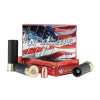
American Whitetail is Hornady doing the sensible version. You get the InterLock ring that locks jacket to core, a proper sabot, and a published ballistics table, without paying for the polymer tip and the marketing that comes with the SST.
The numbers say the compromise is small. At 100 yards it is making 1,606 ft-lb against the SST 1,793, a gap of about 10 percent, for roughly half the price a round. If you are sighting in a new slug gun and want to shoot thirty rounds doing it, that difference matters more than the ballistics do.
What you give up is the Flex Tip, and it shows up at distance rather than up close. Inside 100 yards a hollow point at 1,500 fps opens fine. Past 150, where the slug is down around 1,350 fps, the tipped bullet is the safer bet.
Best For: Sighting in a rifled slug gun, deer inside 125 yards, and anyone who shoots enough slugs to notice the price.
4. Hornady Custom Lite 300gr FTX: Best Low Recoil
Hornady Custom Lite 300gr FTX costs about $15 to $17 for 5 rounds. Hornady states almost 40 percent less felt recoil than a standard 12 gauge slug, and it still carries 1,107 ft-lb at 100 yards.
- Slug: 300gr FTX sabot, same projectile as the SST
- Muzzle Velocity: 1,575 fps published by Hornady
- Muzzle Energy: 1,652 ft-lb published by Hornady
- At 100 yards: 1,289 fps and 1,107 ft-lb, from a 24 inch test barrel
- Recoil: Hornady states almost 40 percent less felt recoil, item 86230
| Value | Accuracy | Retained Energy | Data | Reputation |
| 4/5 | 5/5 | 5/5 | 5/5 | 4/5 |
Pros
- Almost 40 percent less felt recoil, which is the difference between practicing and flinching
- Same FTX projectile as the SST, so it expands the same way
- Still beats a full-power Federal TruBall at 100 yards, 1,107 ft-lb against 909
- Hornady rates it for whitetail out to 150 yards
Cons
- Lowest muzzle energy of any sabot here at 1,652 ft-lb
- Costs more than the American Whitetail while making less power
- Rifled barrels only, so smoothbore shooters cannot use it

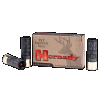
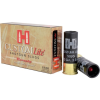
This is the load I hand people who have decided they hate shooting slugs. Almost every one of them has only ever fired full-power rifled slugs out of a light pump gun, which is genuinely unpleasant, and they have concluded the problem is slugs rather than that particular load.
Custom Lite fixes it with arithmetic. Recoil comes from bullet weight multiplied by velocity, and dropping a 300 grain slug from 2,000 fps to 1,575 takes a fifth of the momentum out of the gun. Hornady puts the felt reduction near 40 percent, and shooting it back to back with the SST that feels about right.
What surprises people is the second half. It is still a 300 grain FTX with a good ballistic coefficient, so it keeps 67 percent of its energy to 100 yards, and at that distance it is carrying more than a full-power TruBall does. You are giving up range, not effectiveness inside 150 yards.
Best For: Recoil-sensitive shooters, youth and smaller-framed hunters, and anybody who wants to actually practice with a slug gun.
Rifled Slugs for Smoothbore Barrels
This is the group most people need, because most shotguns have a smooth barrel. The name is confusing and worth clearing up: a rifled slug is a slug with angled fins cut into it, and it is for a barrel with no rifling. The fins are not what stabilises it. A rifled slug flies straight because almost all its weight is at the front, the same way a badminton shuttle does.

5. Federal Vital-Shok TruBall: Best Smoothbore Slug
Federal Vital-Shok TruBall is about $7 for 5 rounds. Federal claims groups as tight as 1.4 inches at 50 yards from a smoothbore, which is the best accuracy claim anyone makes in this category.
- Slug: 438gr (1 oz) rifled hollow point slug
- Muzzle Velocity: 1,600 fps published by Federal
- Muzzle Energy: 2,490 ft-lb published by Federal
- At 100 yards: 967 fps and 909 ft-lb
- Barrel: Smoothbore, item PB127 RS
| Value | Accuracy | Retained Energy | Data | Reputation |
| 5/5 | 5/5 | 2/5 | 5/5 | 5/5 |
Pros
- Federal claims 1.4-inch groups at 50 yards, the tightest claim in the smoothbore class
- The TruBall system is a real mechanical fix rather than a marketing name
- About $1.40 a round, so you can afford to pattern your gun properly
- Federal publishes velocity and energy every 25 yards out to 125
Cons
- Sheds energy faster than anything else here, keeping only 37 percent to 100 yards
- Past 75 yards it runs out of both accuracy and power
- Full-power recoil, and there is no reduced-recoil version of this exact load on our cards
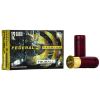


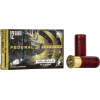
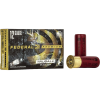
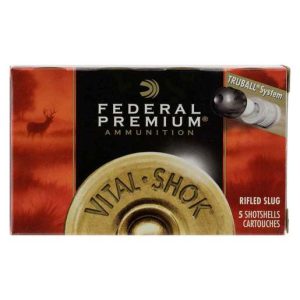
The TruBall is the one genuinely clever idea in smoothbore slugs. Federal puts a plastic ball between the wad and the base of the slug. Under pressure that ball centers the slug in the bore and pushes it out squarely instead of letting it start off-axis, then the components separate cleanly at the muzzle.
The result is the accuracy claim, and it is the reason this load has been the default answer for smoothbore deer hunters for two decades. 1.4 inches at 50 yards out of a bead-sighted pump gun is better than most people can hold.
Be honest about the range, though. Look at the table further up: this slug keeps 37 percent of its energy to 100 yards, the worst retention on this page. Inside 75 yards it is superb. Past that you want a rifled barrel and a sabot, not a better rifled slug.
Best For: Smoothbore deer hunting inside 75 yards, and anyone who wants the tightest groups a bead-sighted shotgun can give.

6. Federal Power-Shok Rifled Slug: Best Value
Federal Power-Shok Rifled Slug starts around $6.31 for 5 rounds, about $1.26 a shot. It publishes slightly more muzzle energy than the TruBall and holds it considerably better downrange.
- Slug: 438gr (1 oz) rifled hollow point slug
- Muzzle Velocity: 1,610 fps published by Federal
- Muzzle Energy: 2,521 ft-lb published by Federal
- At 100 yards: 1,139 fps and 1,262 ft-lb
- Barrel: Smoothbore, item F127 RS
| Value | Accuracy | Retained Energy | Data | Reputation |
| 5/5 | 4/5 | 3/5 | 5/5 | 4/5 |
Pros
- Cheapest slug we track at roughly $1.26 a round
- Keeps 50 percent of its energy to 100 yards where the TruBall keeps 37
- Highest muzzle energy of any rifled slug on this page at 2,521 ft-lb
- Federal quality control at a plain-box price
Cons
- No TruBall centring system, so groups are wider than the Vital-Shok
- Still a rifled slug, so 75 yards is the honest ceiling
- Availability is patchier than the Vital-Shok in our feed
Here is a genuine oddity worth knowing about, because Federal publishes the numbers for both and almost nobody puts them side by side. The Power-Shok and the TruBall are both 438 grain rifled slugs leaving at almost exactly the same speed, 1,610 against 1,600 fps. At 100 yards the Power-Shok is carrying 1,262 ft-lb and the TruBall 909.
That is a 39 percent difference in retained energy between two loads that look identical on the shelf. Whatever the cause, and the nose profiles are not the same, the lesson is that muzzle velocity tells you nothing useful about how a slug performs at the far end.
So which do you buy? If your shots are inside 50 yards, take the TruBall for the accuracy. If you are stretching towards 75 and 100, or you just want the cheapest thing that works, the Power-Shok is doing more at the target and costs less per round.
Best For: High-volume practice, patterning a new shotgun, and smoothbore shooters who want energy at the far end of their range.

7. Remington Slugger: Best Classic
Remington Slugger is about $9 to $12 for 5 rounds. It publishes 1,560 fps and 2,367 ft-lb, and it has been the slug most American deer hunters have actually used for seventy years.
- Slug: 438gr (1 oz) rifled slug
- Muzzle Velocity: 1,560 fps published by Remington
- Muzzle Energy: 2,367 ft-lb published by Remington
- Note: Remington also loads a lighter 7/8 oz version at 1,680 fps
- Barrel: Smoothbore, item 20300
| Value | Accuracy | Retained Energy | Data | Reputation |
| 4/5 | 4/5 | 3/5 | 5/5 | 5/5 |
Pros
- Remington publishes the full ballistics table including muzzle energy
- Available in essentially every shop that sells shotgun shells
- A 7/8 oz version at 1,680 fps is on the shelf next to it if you want less recoil
- Seventy years of field record, which is more than any accuracy claim is worth
Cons
- No centring system, so it will not group with the TruBall
- Lowest muzzle velocity of the full-power rifled slugs here
- Costs more per round than the Federal Power-Shok while doing less
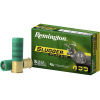

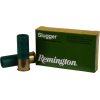
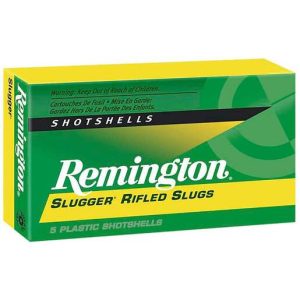
The Slugger is the default. If you have ever borrowed a box of slugs from someone in a deer camp, this is what was in it. There is no clever engineering here, just a one ounce lead slug with fins on it, loaded to a sensible pressure and sold everywhere.
It shoots about as well as a rifled slug without a centring system can, which is fine for the work. Inside 50 yards from a smoothbore it will keep its shots in a paper plate, and a paper plate at 50 yards is a dead deer.
Worth knowing about the second option on the shelf: Remington loads a 7/8 ounce Slugger at 1,680 fps alongside this one. It is lighter, faster and kicks less, and for a smaller-framed shooter that trade is worth making.
Best For: Deer camp, borrowed shotguns, and anyone who wants a slug they can buy in any small-town hardware store.

8. Winchester Super-X Rifled Slug: Cheapest Per Round
Winchester Super-X Rifled Slug Hollow Point is about $7 for 5 rounds, and Winchester also sells it in a 15-round value pack. Winchester publishes 1,600 fps for it.
- Slug: 438gr (1 oz) rifled slug, hollow point
- Muzzle Velocity: 1,600 fps published by Winchester
- Muzzle Energy: Winchester does not publish one for this load
- Value pack: Also sold in 15-round boxes, item X12RS15VP
- Barrel: Smoothbore, item X12RS15
| Value | Accuracy | Retained Energy | Data | Reputation |
| 5/5 | 4/5 | 3/5 | 2/5 | 4/5 |
Pros
- Sold in 15-round value packs, which almost nothing else in this class is
- Same 1,600 fps as the Federal TruBall at a comparable price
- Hollow point nose, so it opens rather than just punching through
- Stocked as widely as the Remington Slugger
Cons
- Winchester publishes no muzzle energy and no downrange table for this load
- Without published ballistics you cannot compare it properly with anything here
- No centring system, so groups trail the TruBall
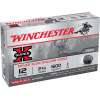
Super-X is the Winchester equivalent of the Slugger, and the case for it is the 15-round value pack. Slugs are almost always sold five to a box, which makes patterning a shotgun properly an expensive afternoon. Three times the rounds for a little over three times the price of a five-pack is how you actually get a gun zeroed.
The honest weakness is data. Winchester lists 1,600 fps and stops there. No muzzle energy, no downrange velocity, no trajectory. Every other slug on this page comes with a published table and this one does not, which is why it sits eighth rather than higher.
On the range it behaves like what it is, a one ounce rifled hollow point at 1,600 fps. Expect it to shoot close to the Slugger and a bit wider than the TruBall, and expect it to be gone from a deer well inside 75 yards.
Best For: Patterning and practice, and shooters who want the most slugs per dollar in a smoothbore.

9. Fiocchi Defense Dynamics Low Recoil Aero Slug: Best Low Recoil Smoothbore
Fiocchi Defense Dynamics Low Recoil Aero Slug is about $21 for 10 rounds. At a published 1,150 fps it is the mildest slug here, and unlike the Hornady Custom Lite it works in a smoothbore.
- Slug: 438gr (1 oz) Aero slug
- Muzzle Velocity: 1,150 fps published by Fiocchi
- Muzzle Energy: Fiocchi does not publish one for this load
- Box: 10 rounds, item 12LRSLUG
- Barrel: Smoothbore
| Value | Accuracy | Retained Energy | Data | Reputation |
| 3/5 | 4/5 | 2/5 | 2/5 | 3/5 |
Pros
- The only reduced-recoil slug here that works in a smoothbore barrel
- At 1,150 fps the recoil is a fraction of a 1,600 fps full-power load
- Sold ten to a box rather than five
- Cycles reliably in most semi-autos, which cannot be said of every reduced load
Cons
- Fiocchi publishes no energy figure and no downrange data
- 1,150 fps is slow enough that range is genuinely limited, call it 50 yards
- More expensive per round than a full-power Federal Power-Shok
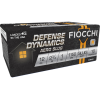

Reduced-recoil slugs for smoothbores are a thin category and this is the one our cards actually stock. Dropping a one ounce slug from 1,600 fps to 1,150 takes roughly 28 percent of the momentum out of the gun, and in a light pump that is the difference between a shooter who finishes the box and one who does not.
The trade is range, and it is a real one. A 438 grain slug leaving at 1,150 fps is subsonic and dropping fast. Treat this as a 50 yard load and you will be happy with it. Treat it as a deer load at 75 and you will not.
It also has a place in home defense, where 1,150 fps is plenty and the reduced recoil means a faster second shot. Just read the next section first, because a slug indoors carries a problem that no amount of reduced recoil fixes.
Best For: Recoil-sensitive shooters with smoothbore guns, short-range work, and faster follow-up shots.
Slugs for Home Defense
A slug will stop anything you point it at. That has never been the question. The question is what it does after that, and the honest answer is that it keeps going through the wall, the next room and quite possibly the neighbor. For most people inside a house, buckshot is the better tool, and we have laid out why in slugs against buckshot for home defense and the best shotgun ammo for home defense.

10. Winchester PDX1 Defender: Best Home Defense Load
Winchester PDX1 Defender costs about $26 for 10 rounds. It is a one ounce rifled slug with three plated 00 buckshot pellets stacked on top of it, leaving the muzzle together at 1,150 fps.
- Payload: 1 oz rifled slug plus 3 plated 00 buck pellets
- Muzzle Velocity: 1,150 fps published by Winchester
- Muzzle Energy: Winchester does not publish one for this load
- Shell: 2-3/4 inch, black hull, 10-round box
- Item: S12PDX1
| Value | Spread | Penetration | Data | Reputation |
| 3/5 | 4/5 | 5/5 | 2/5 | 4/5 |
Pros
- Slug and buckshot in one shell, so it works close and further out
- The three 00 pellets buy you margin for aim error at across-the-room distance
- 1,150 fps keeps recoil down and the second shot fast
- Buffered and plated shot, so the pellets stay together in flight
Cons
- A one ounce slug will pass through interior walls, and so will 00 buck
- Winchester publishes no energy or downrange data
- About $2.60 a round, which is dear for a practice load
- The slug and pellets do not land in the same place past about 25 yards
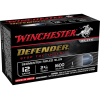
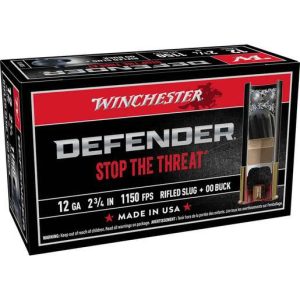
The PDX1 is the answer to a real problem. Buckshot spreads and can miss around the edges of a target at close range, a slug does not spread at all and has to be aimed. Winchester stacks three 00 pellets on top of a one ounce slug and lets you have both.
At across-the-room distance, which is where this is used, the four projectiles arrive as a tight group and the aim-error margin is what you are paying for. Push it out past 25 yards and the pellets and the slug go their separate ways, so treat the useful window as short.
It does not solve over-penetration, and no slug load does. If your house has thin interior walls and family behind them, a straight buckshot load or even birdshot is the more responsible choice. Where the PDX1 makes sense is a rural property, a barn, a truck gun, anywhere the backstop is dirt rather than drywall.
Best For: Rural home defense, truck and barn guns, and anywhere a threat might be at 5 yards or 40.
Slug Recoil, and Why Most People Shoot Slugs Badly
A one ounce 12 gauge slug at 1,600 fps out of a seven pound pump gun produces somewhere around three times the recoil energy of a .308 rifle. That is not an exaggeration for effect, it is roughly what the arithmetic gives, and it explains almost every bad slug group ever fired.
Recoil in a shotgun scales with payload weight multiplied by velocity, so here is the ordering for the loads on this page in the same gun:
| Load | Payload | Velocity | Relative recoil |
|---|---|---|---|
| Remington AccuTip Sabot | 385gr | 1,850 fps | Highest |
| Federal Power-Shok Rifled | 438gr | 1,610 fps | Very high |
| Federal TruBall Rifled | 438gr | 1,600 fps | Very high |
| Winchester Super-X Rifled | 438gr | 1,600 fps | Very high |
| Remington Slugger | 438gr | 1,560 fps | High |
| Hornady SST Sabot | 300gr | 2,000 fps | High |
| Hornady American Whitetail Sabot | 325gr | 1,825 fps | High |
| Hornady Custom Lite Sabot | 300gr | 1,575 fps | Moderate |
| Fiocchi Low Recoil Aero | 438gr | 1,150 fps | Lowest |
| Winchester PDX1 Defender | 1 oz + 3 pellets | 1,150 fps | Lowest |
Two things fall out of that. The sabots are lighter than the rifled slugs, so despite their higher velocities the SST and American Whitetail kick less than a full-power TruBall does. And the two reduced-recoil loads are in a different league entirely.
The practical advice is the same as it is for a .44 Magnum. Buy a box of the mild stuff and a box of what you intend to hunt with. Do your shooting with the mild load, confirm your zero with the hunting load, and stop after three rounds of it. Nobody has ever shot better groups by pushing through twenty rounds of full-power slugs in one sitting.
Sights Matter More on a Slug Gun Than Ammunition Does
A bead is a shotgun sight. It is designed to let you look over the top of the gun at a moving bird, and it gives you one reference point rather than two. That is fine for patterning shot and it is the limiting factor on almost every slug group fired from a hunting gun.
If you shoot slugs more than once a season, the upgrade order is:
- Rifle sights on the barrel. A front blade and a rear notch turn a 6-inch group at 50 yards into a 3-inch one, with no change of ammunition. Most makers sell a dedicated slug barrel for well under the price of a new gun.
- A red dot. One reference point, no eye-relief problem, and it works with the head position a shotgun stock actually gives you.
- A low-power scope, on a rifled barrel only. This is the setup that makes 150 yard shots realistic, and it is wasted on a smoothbore that cannot group that far anyway.
Spending $16 a box on Hornady SST through a bead-sighted smoothbore is the single most common way to waste money on this subject. Fix the barrel and the sights first, then the ammunition choice starts to matter.
How We Choose the Best 12 Gauge Slugs
Every velocity and energy figure here is the manufacturer own published number for that exact item number, taken from their product page and linked where we quote it. Where a maker does not publish a figure we have said so rather than borrowing a retailer number or computing one and presenting it as theirs. Three of the ten loads here publish no muzzle energy at all: the Winchester Super-X, the Fiocchi low recoil and the Winchester PDX1.
The downrange table uses each maker own published ballistics. Hornady publishes in 50 yard steps out to 200 and states a 24 inch test barrel. Federal and Remington publish in 25 yard steps out to 125. Where we compare loads at 50 and 100 yards, both sets of figures exist and are directly comparable.
Loads only appear here if they return live in-stock listings across our retailer feed, which is why some famous names are missing. Prices on the cards are live and move through the day, so treat any figure in the prose as a guide and the card as the truth.
The range work is ours. Everything here went through a smoothbore Mossberg 500 with rifle sights and a rifled-barrel Savage 220 with a 3-9x scope, at 50 and 100 yards off a bag. The sabots were unshootable out of the smoothbore, exactly as advertised, and the rifled slugs leaded the rifled barrel enough to need a bronze brush after twenty rounds.
Related Reading
- Home Defense Shotgun: Slugs or Buckshot
- Best Shotgun Ammo for Home Defense
- Best 12 Gauge Hunting Shotguns
- Best Pump Action Shotguns
- Mossberg 500 Review
- Remington 870 Review
- Shotgun Buying Guide
- Best 20 Gauge Shotguns
- Cheapest Online Ammo Stores
FAQ: 12 Gauge Slugs
What is the best 12 gauge slug?
It depends entirely on your barrel. For a rifled barrel, Hornady SST 300gr FTX at a published 2,000 fps and 2,664 ft-lb carries more energy to 100 yards than anything else here. For a smoothbore, which is what most shotguns have, Federal Vital-Shok TruBall at 1,600 fps groups tighter than anything in its class. Buying the wrong type for your barrel wastes the money.
Can I shoot sabot slugs in a smoothbore barrel?
You can, and you should not. A sabot works by having a plastic sleeve grip the rifling and spin the bullet inside it. With no rifling there is no spin, and a sub-caliber projectile with no stabilisation tumbles. Expect keyhole hits and groups measured in feet, for three or four times the price of a rifled slug.
Can I shoot rifled slugs in a rifled barrel?
Yes, and it works, but soft lead scrubbing through rifling leaves lead fouling in the grooves. A box of rifled slugs through a rifled barrel means a cleaning session before your sabots will group properly again. It is not dangerous, it is just a chore you did not need.
How far can you shoot a 12 gauge slug?
Out of a smoothbore, 75 yards is an honest maximum and 50 is where groups stay tight. Out of a rifled barrel with a scope and a sabot, 150 yards is realistic and 200 is possible. Hornady publishes the SST at 1,341 fps and 1,198 ft-lb at 200 yards, which is more energy than a Federal TruBall carries at 75.
Do rifled slugs actually spin?
Barely, and it is not what stabilises them. The angled fins on a rifled slug impart very little rotation. A rifled slug flies straight because nearly all its weight is at the front, the same principle that keeps a badminton shuttle nose-first. The fins mostly let the soft lead swage down through a choke without damaging it.
Are slugs good for home defense?
Rarely. A one ounce slug will pass through interior walls and keep going, so in a house with family behind those walls, buckshot is the more responsible choice. Where slugs make sense is a rural property, a barn or a truck gun, and the Winchester Defender load pairs a slug with three 00 buck pellets for exactly that job.
What is the cheapest 12 gauge slug?
Federal Power-Shok rifled slug at around $6.31 for 5 rounds, about $1.26 a shot. It also holds energy better downrange than the more expensive TruBall does, carrying 1,262 ft-lb at 100 yards against 909. Winchester Super-X is similarly priced and comes in 15-round value packs.
Does a rifled choke tube let me shoot sabot slugs?
No. There is not enough rifled length in a choke tube to spin a sabot properly, and most sabot makers say so on the box. If your barrel is smooth for twenty inches and rifled for the last two, buy rifled slugs and treat the tube as a modest accuracy aid rather than a barrel conversion.
Find the Best Price in Seconds
Search once, compare 200+ trusted retailers instantly.
Deals of the Day
Today's best discounts · Updated 3x daily
Gun Deals
See All →
Ammo Deals
See All →



Bottom Line: Which 12 Gauge Slug Should You Buy?
Look at your barrel, then pick from the right half of this page. That single step matters more than every other choice combined.
Smoothbore, which is most people. Buy Federal Vital-Shok TruBall if your shots are inside 50 yards and you want the tightest groups a bead or rifle-sighted gun can produce. Buy Federal Power-Shok if you want the cheapest round that works, or if you are stretching towards 75 and 100 yards where it carries 39 percent more energy than the TruBall.
Rifled barrel. Buy Hornady SST 300gr FTX. It carries more energy to 100 yards than anything else here and it is still making 1,198 ft-lb at 200. If you want to shoot a lot of them while you get a new slug gun zeroed, American Whitetail does 90 percent of the job for about half the price a round.
If recoil is the reason you do not shoot slugs. Hornady Custom Lite for a rifled barrel, Fiocchi Low Recoil for a smoothbore. The Custom Lite still beats a full-power TruBall at 100 yards, which surprises everybody.
For the house. Think hard before you load a slug at all. If the backstop is drywall, buckshot is the better answer. If it is a barn, a field or a truck, Winchester PDX1 Defender gives you a slug and three pellets of 00 in the same shell.
And whatever you buy, pattern it. Slug guns are individual, and the load your neighbor swears by may print four inches left out of your barrel.
Related Guides