
Last updated: March 29, 2026 . Affiliate disclosure: This post contains affiliate links. If you buy through our links we may earn a small commission at no extra cost to you.
- Treat every gun as loaded
- Point the muzzle in a safe direction
- Keep your finger off the trigger until you’re ready to shoot
- Know your target and what’s beyond
Table of Contents
A .308 at 300 yards versus a 12-gauge slug at 100 yards. That’s not really a fair fight, and honestly it’s not supposed to be. These two tools exist for different jobs, different terrain, and in some states, different legal situations entirely. Picking the wrong one doesn’t just hurt your odds. It can get you ticketed or leave you trailing a deer through three counties.
I’ve hunted with both for years, and the answer to “shotgun or rifle?” is almost always “depends.” Depends on your state, your land, your target species, and how far you’re realistically shooting. Let’s break it down properly.
How we tested: Every pick here is ranked against our testing methodology. Minimum round counts, accuracy and reliability protocols, the failures that disqualify a gun.
Quick Verdict
Pick a shotgun for thick cover, close-range deer in slug-only zones, upland birds, and waterfowl. Pick a rifle for open country, distance work past 150 yards, varmints and coyotes, and big game in the West. Most hunters end up owning both, the question is which one rides shotgun on a given day, not which one is “better.”
If you can only afford one and you hunt the Midwest or Northeast, the shotgun wins by default, state law often forces the call. If you hunt the West or the South, a bolt-action rifle in .308 or 6.5 Creedmoor covers more ground. Specific picks for both at the bottom of this guide.
Effective Range: Where Each One Actually Performs
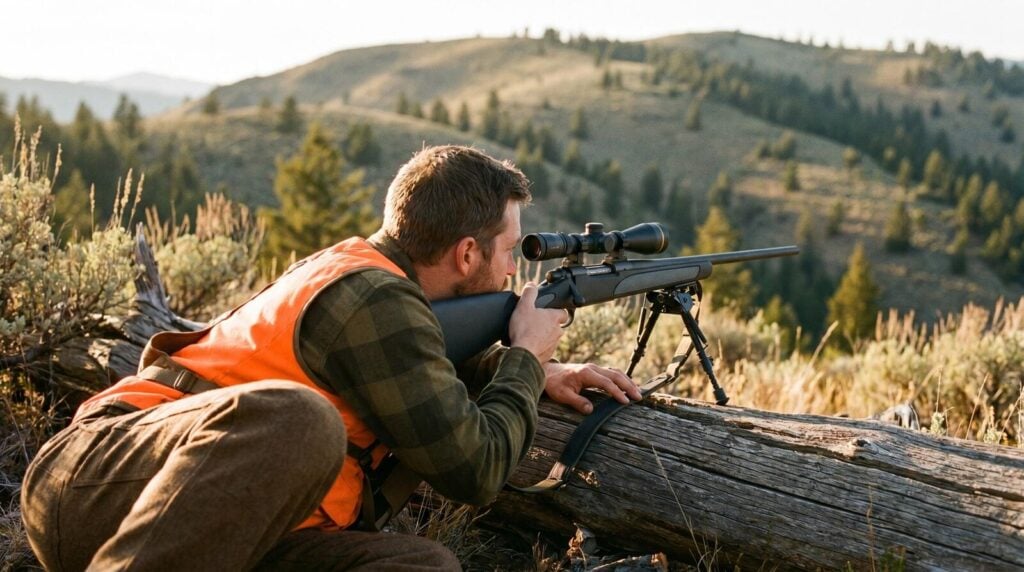
Effective range is the biggest practical difference between hunting with a shotgun and a rifle. A rifle cartridge like .308 Winchester is lethal and accurate out to 400-500 yards in capable hands, with a flat trajectory that makes distance management straightforward. A 12-gauge slug, even a high-quality sabot round, is a 150-yard gun on a good day. Most hunters using rifled slug barrels are shooting sub-100-yard deer.
Put it this way: a .308 fired from a bolt rifle at 300 yards drops roughly 14 inches if you’re zeroed at 100. A Remington Brenneke slug at 300 yards has dropped so far off the map it’s practically useless for ethical hunting. The ballistics just don’t hold up at distance.
That said, inside 100 yards? A 1-ounce slug hits with somewhere between 1,800 and 2,400 foot-pounds of energy depending on the load (per Federal Premium and Brenneke published ballistic data). That’s comparable to a .308 at the same distance, and more than enough for whitetail.
The limitation isn’t power, it’s trajectory and range. Modern rifled slug barrels run 1:28 to 1:34 twist and stabilize sabot slugs well; older smoothbores need Foster slugs that drop off faster past 75 yards.
Rifle cartridges like .308.30-06, or 6.5 Creedmoor start to shine when you’re hunting open terrain where shots stretch past 150 yards. If you’re hunting out West on wide-open prairies or glassing deer across a cut field, a rifle isn’t just better. It’s the only sensible choice.
| Capability | Shotgun (12-gauge) | Rifle (.308 / 6.5 Creedmoor) |
|---|---|---|
| Effective range | 50-150 yards (rifled slug w/ scope) | 300-500+ yards |
| Max danger zone | ~800 yards | ~3,500-4,000 yards |
| Best terrain | Thick brush, swamps, suburban | Open prairie, mountains, cuts |
| Best game type | Birds, waterfowl, slug-zone deer | Big game, varmints, long-distance |
| Typical felt recoil | 30-40 ft-lb (12-ga slug) | 15-20 ft-lb (.308) |
| Slug-only state legal | Yes | No (with straight-wall exceptions) |
Legal Requirements: Slug-Only Zones and State Rifle Restrictions
Slug-only zones make the choice for you in 14 states. A significant portion of the Midwest and Northeast restricts deer hunting to shotguns only, more specifically, to smoothbore shotguns with slugs or buckshot. These restrictions exist because of population density.
A rifle bullet carries a danger zone of over a mile. A slug’s danger zone is around 800 yards. That matters when you’ve got farms and subdivisions scattered across your hunting area.
States with shotgun-only or limited-firearms zones for deer include Michigan, Ohio, Indiana, Iowa, and Illinois (verify current rules against each state’s DNR, links to our state-by-state guide for the live regulatory picture). Many of these states have been gradually expanding their “straight-wall cartridge” exceptions, which allow certain rifle cartridges like .350 Legend.450 Bushmaster, and .44 Magnum in rifle form. But if you’re hunting in these states without checking current regulations, you’re gambling with your license.
Pennsylvania, New York, and New Jersey have similar patchwork regulations depending on the zone or county. Some areas allow rifles for certain species but not others. The only reliable source is your state’s current hunting regulations. Don’t trust your buddy’s three-year-old memory on this one.
In most Western states. Colorado, Wyoming, Montana, Idaho. Rifles are standard issue for deer and elk. The terrain and population density make the shotgun-only logic irrelevant. You’ll look out of place showing up to an elk camp with a slug gun.
Terrain and Habitat: Thick Brush vs Open Fields
Terrain density decides the gun before regulations do. Even where both are legal, terrain should drive your choice. Shotguns thrive in tight cover. Dense hardwood bottoms, swamp edges, river corridors full of deadfall. These are shotgun country. You’re not taking 200-yard shots in a Pennsylvania laurel thicket. You’re shooting at deer crossing a gap at 30 feet.
A rifle’s long-range advantage becomes a liability in heavy cover. You can’t use that 300-yard capability if you can’t see 50 yards in any direction. And maneuvering a long-barreled rifle through dense woods is genuinely annoying. A pump-action shotgun with a 22-inch barrel is a much better tool for that environment.
Open agricultural fields, clear-cuts, and Western plains flip this completely. If you’re hunting standing corn edges, wide-open river bottoms, or glassing deer across CRP fields, a slug gun puts you at a serious disadvantage. That’s a rifle setup, full stop. A .308 or .30-06 with a decent scope and you’re in business out to 400 yards if your form is there.
Transitional habitat. Where fields meet woods. Genuinely cuts both ways. If your shots are mostly under 100 yards with occasional longer opportunities, check out our best slug gun guide alongside a look at mid-range rifle options. Sometimes the answer is one for stand hunting and one for drives.
Game Type: Birds, Big Game, and Small Game
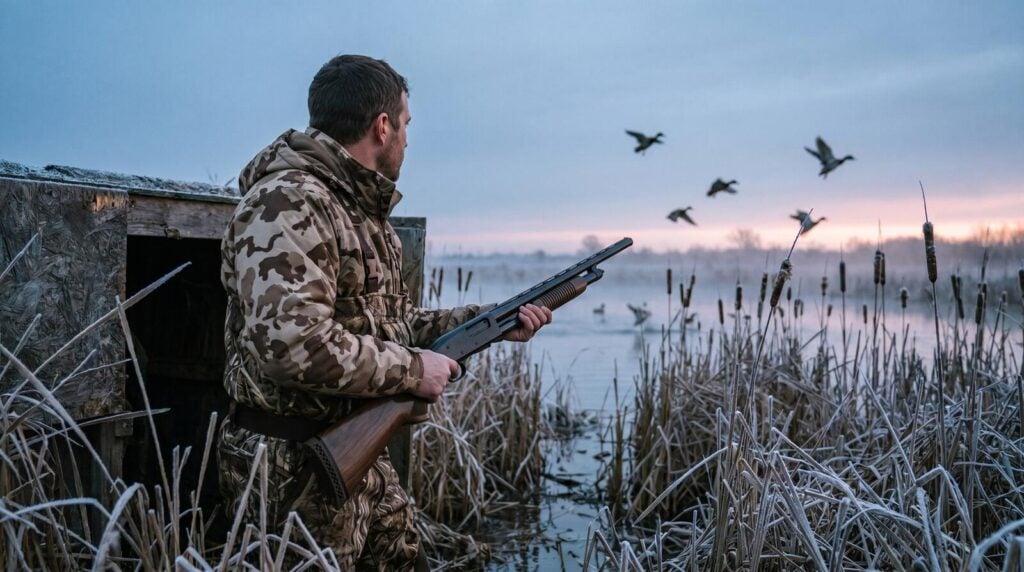
Here’s where shotguns have a monopoly that no rifle can touch. Upland birds, waterfowl, doves, turkeys. Shot patterns are the only practical tool for moving targets at bird-hunting distances. You literally cannot shoot a flushing pheasant with a .308. Well. You can try. But you’ll eat lead for dinner.
Birdshot for doves is the textbook example of something only a shotgun handles. A load of 7.5 or 8 shot out of a 12-gauge with a modified choke is what everybody at the dove field is running. There’s no rifle equivalent. Nothing else works for that application.
For big game. Deer, black bear, hogs. Both platforms work, but with the range caveats already covered. Slugs hit hard and kill cleanly at close range. A sabot slug from a dedicated slug gun with a rifled barrel can stretch to 150 yards reliably. Past that, you need a rifle.
Small game gets interesting. Squirrels and rabbits with a .22 LR are traditional, but a light field load of 7.5 shot in a 20-gauge is equally valid for squirrels in timber. For larger varmints like coyotes, the rifle takes over. More on that below.
Coyotes and Varmints: Where the Rifle Wins Clearly
Buckshot for coyotes at 40-50 yards works. I’ve done it and it’s effective, especially on night hunting or dogs coming in to a call. But it has real limitations. Pattern density drops fast past 50 yards, and you need a head/neck presentation or a tight pattern on the vitals. It’s not ideal for open-country coyote work.
A .223 Remington changes the equation entirely. Flat shooting, low recoil, good terminal performance on 30-50 pound animals, and you can reach out to 300 yards without much drama. That’s why predator hunters in open states default to .223 (per Federal Premium and Hornady terminal-performance data).
It’s made for this. The buckshot option is for timber hunters who already have a shotgun in hand and don’t want to lug a second gun.
For anything heavier than coyotes. Feral hogs in particular. The rifle advantage grows. A 200-pound boar deserves a proper rifle round. A .308.30-06, or even a stout AR in 6.5 Grendel handles hogs from brush range out to serious distance. Buckshot on hogs is marginal at best and dangerous at worst if the pig doesn’t go down clean.
The Versatility Argument
Versatility favors the shotgun when you’re buying one gun and hunting multiple species in one state, a shotgun might actually be the more versatile tool. Change the choke and the load, and a single 12-gauge takes you from dove fields in September to turkey woods in spring to deer season in November. That’s hard to beat on a budget.
Check our shotgun buying guide if this is your situation. A pump-action with a 28-inch barrel and interchangeable chokes covers birds, then swap to a rifled barrel or a cylinder-bore slug barrel for deer. Total cost might be $400-600 for a Mossberg 500 or Remington 870 with an extra barrel. That’s genuinely hard to beat for a first hunting gun.
A rifle is more specialized. A .308 bolt gun is excellent for deer and elk and maybe coyotes, but it’s useless on birds. If your hunting covers both feathered and furred game, a rifle-only setup leaves a gap. That’s why a lot of hunters end up owning both eventually. Which is, coincidentally, never a bad outcome.
If you want the deep dive on shotguns specifically for deer season, we’ve got a full breakdown at best shotgun for deer hunting. And if you’re still sorting out gauge, the 12-gauge vs 20-gauge comparison is worth a read before you buy.
Safety Considerations: Danger Zones Matter
Danger zone math favors the shotgun in populated areas. Rifle bullets travel far, a .308 has a maximum danger zone of roughly 3,500-4,000 yards depending on bullet weight and angle (per NSSF range-safety guidance).
Most centerfire rifle cartridges are dangerous well past a mile. That’s why slug-only zones exist in densely populated states, it’s not about the gun, it’s about what happens if you miss or if the bullet passes through.
A 12-gauge slug’s maximum range is around 800 yards. Still dangerous, but significantly less than a rifle bullet. In hunting areas near farms, roads, or structures, that reduction in potential danger distance is the entire reason shotgun-only zones exist. The regulation is sound from a safety standpoint.
Buckshot is even shorter range. A load of 00 buck is effective to maybe 50 yards on deer, with the pellets losing meaningful energy past that. The danger zone shrinks accordingly. For hunters pushing deer through thick cover or hunting near property lines, that matters.
This doesn’t mean shotguns are “safer” in every context. Know your target and what’s behind it regardless of what you’re shooting. But the shorter danger zone of slugs and shot is a real factor in making regulation decisions. And it’s a legitimate consideration when you’re choosing what to carry on a specific piece of ground.
What about recoil for new hunters?
Recoil is the variable new hunters underestimate most. A 12-gauge slug load through a 7-pound pump shotgun generates roughly 35-40 ft-lb of free recoil, enough to bruise shoulders on a 25-round sight-in session. A .308 bolt rifle of the same weight runs ~17 ft-lb, and a .243 Winchester drops to ~9 ft-lb (per Chuck Hawks recoil tables).
If you’re putting a youth or recoil-sensitive new hunter into the field, a .243 bolt rifle or a 20-gauge slug gun is the kindest entry point. A 12-gauge slug is the harshest mainstream hunting load shy of magnum rifle calibers. Don’t hand a new shooter a 3-inch slug on day one.
Suppressor and hearing protection
Rifle hunters have a hearing-protection advantage shotgun hunters do not: suppressors. A .308 bolt rifle with a hunting suppressor (Banish 30, SilencerCo Omega) drops muzzle report to hearing-safe levels, a major quality-of-life improvement on stand hunts, with the bonus of less spooking of game on follow-up shots. Suppressors are legal for hunting in 41 states as of 2026 (per the American Suppressor Association).
Shotgun suppressors exist (Salvo 12, Omega 12, Hushpower) but are rare and bulky. Most waterfowl and upland hunters still hunt with electronic muffs or unprotected ears, not ideal. If hearing health matters to you and a suppressor is in your budget, the rifle option scales better.
Cost Comparison: Ammo, Guns, and Setup Costs
| Cost item | Shotgun (12-gauge) | Rifle (.308 / 6.5 Creedmoor) |
|---|---|---|
| Gun MSRP (entry) | $249-$499 (Maverick 88, Mossberg 500) | $549-$799 (Ruger American, Remington 700 SPS) |
| Field load ammo | $8-$15 per box of 25 | $25-$45 per box of 20 (.308 standard) |
| Premium hunting ammo | $15-$30 per box (slugs, turkey) | $45-$80 per box (Berger, Hornady ELD-X) |
| Scope budget | $80-$200 (1-4x optional) | $200-$600 (3-9x or 4-12x required) |
| Cost per shot | ~$0.45 (field) / ~$1.00 (slug) | ~$1.40 (factory standard) |
Shotgun ammo varies wildly. Field loads for bird hunting run $8-15 per box of 25. Premium turkey loads with TSS shot can hit $8-10 per shell. Deer slugs fall in the $5-10 per 5-pack range for quality sabot rounds. Budget foster slugs are cheaper, but you get what you pay for in a rifled barrel.
Rifle ammo for hunting runs $25-45 per box of 20 for standard .308 or .30-06 loads. Match-grade or premium hunting ammo pushes higher. But you’re also shooting fewer rounds. Deer hunters might fire 3-10 rounds per season including sighting in. The per-round cost is higher, but the volume is lower.
Gun cost depends on what you buy. A solid pump-action shotgun, Mossberg 500, Remington 870, or a budget Maverick 88, can be had for $250-$400.
A decent hunting rifle starts around $400-$500 for a Ruger American or Savage Axis, and goes up from there once you add a scope and rings. The rifle setup generally costs more to get started right.
For a complete look at the best 12-gauge options at different price points, the best hunting shotguns guide covers everything from budget pumps to semi-auto options worth the extra money.
Which States Restrict Rifles for Deer?
The list shifts regularly as states update regulations, but these are the states with significant shotgun-only or limited-firearms restrictions for deer as of 2026. Always verify current regs before hunting.
Shotgun or straight-wall cartridge only (most or all zones): Illinois, Indiana, Iowa, Ohio. These Midwestern states have tight restrictions due to flat terrain and high rural population density. Iowa and Ohio have expanded to include straight-wall rifle cartridges in recent years, but centerfire bottleneck cartridges like .308 are still prohibited in most zones.
Mixed regulations by zone: Michigan, Pennsylvania, New Jersey, New York, Maryland. These states have rifle-legal zones (often northern or less-populated regions) and shotgun/limited-firearm zones elsewhere. In Michigan, the Upper Peninsula is rifle country while much of the Lower Peninsula historically required shotguns or straight-wall cartridges.
Rifle generally permitted: Most Western states, the Southeast, and rural Midwest. In states like Kentucky, Tennessee, Wisconsin, and Minnesota, rifles are broadly legal for deer. The South and West are generally rifle-friendly with few restrictions.
The straight-wall cartridge movement has been the big story of the last decade. .350 Legend.450 Bushmaster.360 Buckhammer, and .44 Magnum in rifle form now give hunters in restricted states a legitimate 200-yard option that technically qualifies as a rifle. It’s worth understanding how your state classifies these before you shop.
So Which One Should You Bring?
There is no universal answer, which is the honest truth. If the state decides for you, that’s your answer. If your terrain is tight woods under 100 yards, bring the shotgun. If you’re hunting open country where shots might stretch to 250-plus, bring the rifle.
If you’re hunting birds at all during the season, you need a shotgun. Doves, pheasant, turkey, waterfowl. Nothing replaces a shot pattern on moving birds. That’s not negotiable.
For big game in rifle-legal states, a .308 or comparable cartridge gives you more options and better performance at distance. For thick-cover deer in restricted states, a quality slug gun with a rifled barrel and good sabot loads is a surprisingly capable setup. Don’t treat it like a consolation prize. Treat it like the specialized tool it is.
Most hunters who hunt seriously end up with both. That’s not a cop-out. That’s the right answer.
Best Hunting Shotgun and Rifle Picks (2026)
Specific picks across the four hunting roles this guide covers, versatile shotgun, slug-zone deer shotgun, all-around hunting rifle, and budget bolt-action.
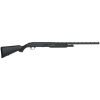
Mossberg 500 Field 12-Gauge (Best All-Around Hunting Shotgun) $399-$499
The Remington 870 is the obvious alternative, equally capable, slightly better aftermarket, slightly worse barrel-swap ergonomics. Either will outlive you if you clean it.
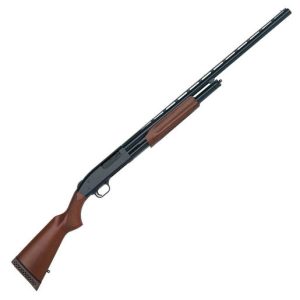
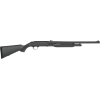
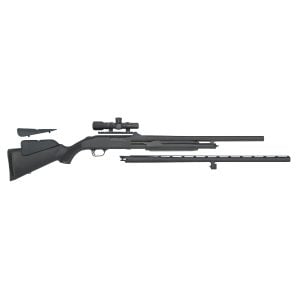
Remington 870 Slug Special Purpose (Best Slug-Zone Deer Shotgun) $549-$699
Best paired with a 1-4x or 2-7x low-magnification hunting scope. Brenneke Black Magic and Federal TruBall slugs are both proven loads in the rifled 870.
Remington 700 SPS Synthetic (Best All-Around Hunting Rifle) $649-$799
The aftermarket is enormous (stocks, triggers, barrels, magazines). Pair with a 3-9x or 4-12x scope and you have a 500-yard deer rifle that started life at street prices under $800.
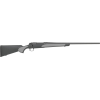
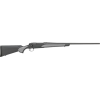
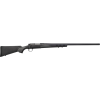
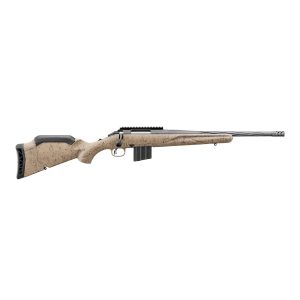
Ruger American Rifle Gen II (Best Budget Hunting Rifle) $549-$649
Pick this if budget is tight or you want a modern feature set (AICS mags, threaded muzzle, factory free-float forend) without paying premium-rifle money. Slightly cheaper trigger feel than the Remington 700 stock, but a better adjustable design.
Frequently Asked Questions
Is a shotgun or a rifle better for deer hunting?
Depends on state law and terrain. In open country or where rifles are legal for deer (most Western and Southern states), a bolt-action rifle in .308.30-06, or 6.5 Creedmoor is the more capable tool, flatter trajectory, longer effective range, and easier shot-placement at distance. In shotgun-only deer zones across the Midwest and Northeast (Indiana, Iowa, Illinois, much of Ohio, much of Michigan, and parts of New York), a dedicated slug gun like the Remington 870 SPS Slug or Mossberg 500 Slugster is the legal and practical answer inside 100 yards.
What states require shotguns for deer hunting?
Traditionally Iowa, Indiana, Illinois, Ohio, and parts of Michigan, Pennsylvania, New York, Massachusetts, and Delaware have restricted deer hunting to shotguns or limited-range firearms. Many of these states have expanded their rules in recent seasons to allow straight-wall cartridge rifles (.350 Legend.450 Bushmaster.444 Marlin.45-70). Always check the current year's state DNR regulations, the list changes annually.
Can you hunt birds with a rifle?
Legally yes in most states, practically no. A bird-sized target in flight is functionally impossible to hit with a single rifle bullet. Rifles for upland and waterfowl are essentially non-existent in serious hunting circles. The shotgun's pattern of pellets exists precisely for moving targets, that's why every bird hunter on earth uses one.
What is the maximum effective range of a 12-gauge slug?
Roughly 100 yards with a smoothbore barrel and Foster-style slugs, 150 yards with a rifled barrel and quality sabot slugs (Remington AccuTip, Federal TruBall, Brenneke Black Magic). Past 150, energy and trajectory drop off sharply. Past 200, you're wounding game, not killing it cleanly.
Is a .308 rifle safer than a 12-gauge slug in populated areas?
No, the opposite. A .308 bullet has a maximum danger zone of roughly 3 miles. A 12-gauge slug has a danger zone of roughly 800 yards. That's the actual reason shotgun-only deer zones exist in the populated Midwest and Northeast: the slug's shorter danger zone keeps stray rounds out of farms, subdivisions, and roadways. The slug isn't safer to shoot, it's safer to miss with.
Can I use a rifle for waterfowl or upland birds?
Federal law prohibits rifles for migratory waterfowl in the U.S., waterfowl is shotgun-only under federal regulation. Upland game (pheasant, quail, grouse) is technically legal with a rifle in some states but practically impossible. Bird hunting is a shotgun discipline, full stop.
4,659+ Gun & Ammo Deals
Updated daily from 200+ top retailers. Filter by category, caliber, action type, and price.
Related Guides