
Last Updated: May 20th, 2026
This post contains affiliate links. If you click through and buy, I may earn a small commission at no cost to you. It helps keep the lights on and the recommendations independent.
- Treat every gun as loaded
- Point the muzzle in a safe direction
- Keep your finger off the trigger until you’re ready to shoot
- Know your target and what’s beyond
Shotgun Barrel Length Guide
Barrel length sounds like a simple spec. Then you walk into a gun store and find eight common lengths between 14 and 32 inches, and nobody behind the counter agrees on which one you should buy. Ask three people. Get three answers.
The truth is more useful than the arguments. Your barrel length depends on what you’re going to shoot, home defenders, turkey hunters, trap shooters, and dove gunners all want different lengths, and getting it wrong won’t ruin your life. It’ll just make you slower or less effective at the thing you bought the gun for.
This guide breaks the whole spectrum down by use case. No fluff. Each section names specific guns at that length, why the length suits the job, and the tradeoffs you accept by going shorter or longer.
Let’s get the quick answer first, then walk the physics.
Table of Contents
The Short Answer: Barrel Length by Use Case
If you only read one section, read this shotgun barrel length chart. Find your primary use case in the left column and the recommended barrel length is in the second.
| Primary Use | Recommended Length | Why |
|---|---|---|
| Home defense | 18.5″ | Shortest legal length; maneuverable in hallways and rooms. |
| Truck gun / brush | 20″ | Fast handling with better blast management than 18.5″. |
| Deer slugs | 22″–24″ | Compact for treestand use with enough sight radius for accuracy. |
| Turkey | 24″ | Short enough for blind use, long enough to handle full-choke patterns. |
| Upland birds | 26″ | Quick swing for flushing birds with decent reach to 35 yards. |
| Waterfowl | 28″ | Forward weight smooths the swing on crossing ducks and geese. |
| Sporting clays | 28″–30″ | The competition standard; swing characteristics over raw speed. |
| Trap | 30″–32″ | Long barrel keeps the muzzle rising through climbing targets. |
| One gun for everything | 28″ | Won’t be perfect at HD or dedicated trap; competent at everything else. |
Bookmark this table. The rest of the guide explains the physics so you understand the why, but the answer above is right for 90% of buyers.
The Legal Minimums
Federal law under the National Firearms Act sets the minimum legal barrel length for a shotgun at 18 inches. The overall length of the firearm must also be at least 26 inches.
Go shorter than either number and you’ve built a short-barreled shotgun (SBS). That’s an NFA item, $200 tax stamp, Form 4 filing with the ATF, fingerprints, photos, and a waiting period that currently runs 6 to 12 months.
Most manufacturers build their “legal minimum” defensive shotguns at 18.5 inches rather than 18 flat. That half-inch buffer costs nothing in performance and keeps you clear of any measurement disputes during a state-line traffic stop.
State laws can be stricter than federal. A handful of states impose overall-length restrictions, magazine-capacity limits, or feature bans that affect what you can legally own. Check your state attorney general’s published guidance before buying any short-barreled configuration. The Mossberg 590 Shockwave and Remington TAC-14 are “firearms”, not shotguns, not SBS, and have their own legal nuances we cover in our Mossberg 590 Shockwave review.
How Barrel Length Affects Velocity
Longer barrels give propellant gases more time to push the shot column before it exits the muzzle. That translates to higher velocity, tighter patterns at distance, and more energy on target. Real physics, not a marketing claim.
But the velocity gains diminish past a certain point. Going from 18 to 26 inches produces a measurable jump (typically 100-150 fps depending on load). Going from 28 to 32 inches gives you maybe 10-20 fps per inch.
By 28 inches most modern shotshell loads have burned virtually all their powder. The remaining acceleration is marginal. Beyond 28 inches, the velocity argument runs out fast.
The reasons to choose a 30 or 32-inch barrel are about swing, sight radius, and balance, not raw velocity. The same logic applies to the best shotgun barrel length for hunting: pick the length for the swing characteristic that fits your quarry, not the velocity gain. We’ll get to those.
How Barrel Length Affects Handling and Swing
Short barrels are fast. An 18.5-inch defensive shotgun shoulders quickly, swings fast, and maneuvers in tight spaces without snagging on door frames or seat backs. That responsiveness matters when you’re clearing a hallway at 2 am or hunting thick brush where birds flush at your feet.
Long barrels are smooth. A 28 or 30-inch barrel has more forward weight, which keeps your swing going through the target rather than stopping with it. Critical for breaking clay targets and connecting on waterfowl, where you need to track a moving target and maintain the arc after the shot.
The tradeoff sits on a spectrum. Short barrel: fast acquisition, less smooth swing, more felt recoil. Long barrel: slower to mount, smoother follow-through, more forgiving on the shoulder. Where you land should depend on what you’re primarily shooting and how heavy that swing has to be.
How Barrel Length Affects Pattern
Pattern density at distance is mostly a choke and ammo question. Barrel length plays a smaller role than most shooters assume. A 26-inch barrel with a full choke patterns essentially the same as a 32-inch barrel with a full choke at 40 yards.
Where barrel length does matter is in how consistently the shot column accelerates through the bore. Longer barrels with backbored geometry produce slightly less shot deformation, which delivers marginally tighter patterns with steel shot in particular. The difference is real but small.
For practical purposes, choose your choke for pattern density and your barrel length for handling. Treating barrel length as a pattern-controlling spec leads to wrong purchases.
How We Researched This Guide
This guide draws on hands-on shooting across a dozen different barrel lengths spanning the last decade. Personal range time with 18.5-inch defensive shotguns through 32-inch Browning Citoris on a sporting clays course.
The velocity numbers come from chronograph data published by Federal, Winchester, and Hornady plus independent testing from Field & Stream and American Rifleman. The legal language comes directly from the NFA statute text on the ATF’s site and our own research into state-by-state restrictions.
Every length recommendation pairs with a specific use case I’ve personally shot or trained for. Where I’m relying on competitive shooter consensus rather than personal trap-line experience, I say so directly.
18″ to 18.5″, Home Defense and Tactical
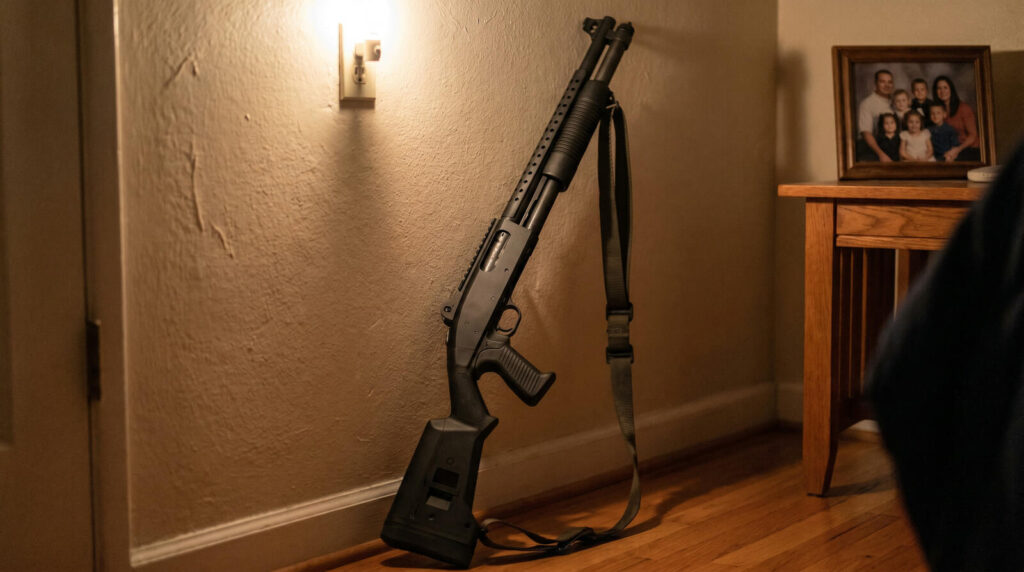
The shortest you can go legally without NFA paperwork, and the standard for home-defense shotguns. The Mossberg 500 Tactical, Mossberg 590A1, Remington 870 Tactical, and Winchester SXP Defender all live in this barrel-length zone.
The tradeoffs are real. Patterns open faster at distance, muzzle blast is noticeably more intense, and you’ll feel recoil more sharply without barrel weight forward. Inside the house, none of that matters much. Most defensive engagements happen inside 7 yards where pattern spread is minimal anyway.
The shotgun barrel length for home defense is settled science, 18.5 inches. If home defense is your primary mission, this is the right length. Full stop. See our best shotguns for home defense roundup for specific picks at this length, or our budget home defense shotgun guide if you’re shopping under $500.
20″, The Truck Gun and Brush Length
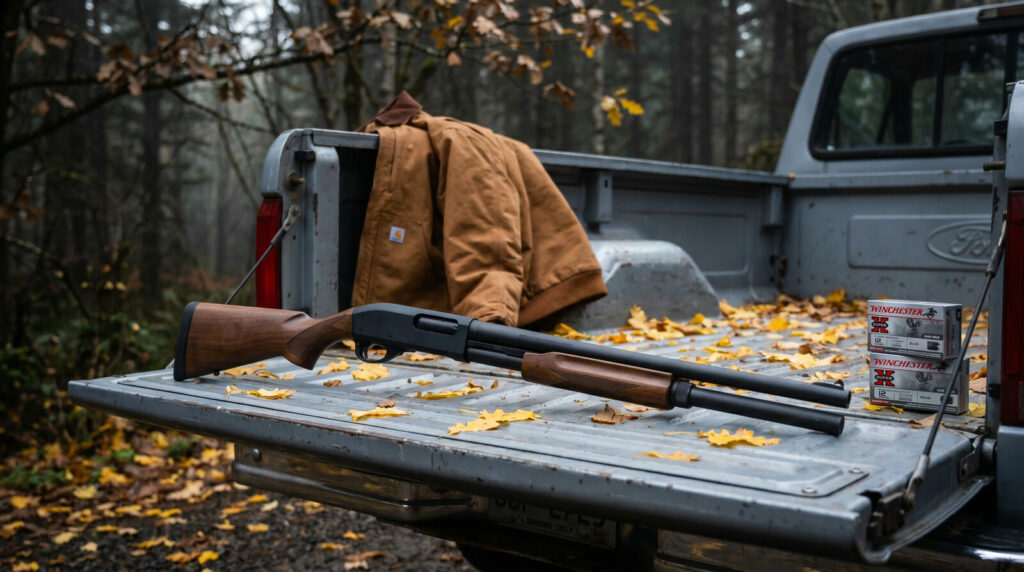
A 20-inch barrel hits a useful middle ground. Short enough to be maneuverable in a truck cab or thick woods, long enough that you’re not giving up much velocity. Muzzle blast is noticeably more manageable than an 18.5-inch gun.
Popular for hunting in dense cover, particularly where birds or deer might be at close-to-medium range and you need to swing the gun between branches. The Mossberg 590A1 in its 20-inch configuration is the canonical example. It’s also a solid choice for a single shotgun that handles both home defense and woods hunting.
If you need one gun for the truck and the brush, 20 inches is the smart pick. It’s the length we recommend in our best tactical shotguns roundup for buyers who don’t want to commit to the shortest possible barrel.
22″ to 24″, Slug Guns and Compact Field
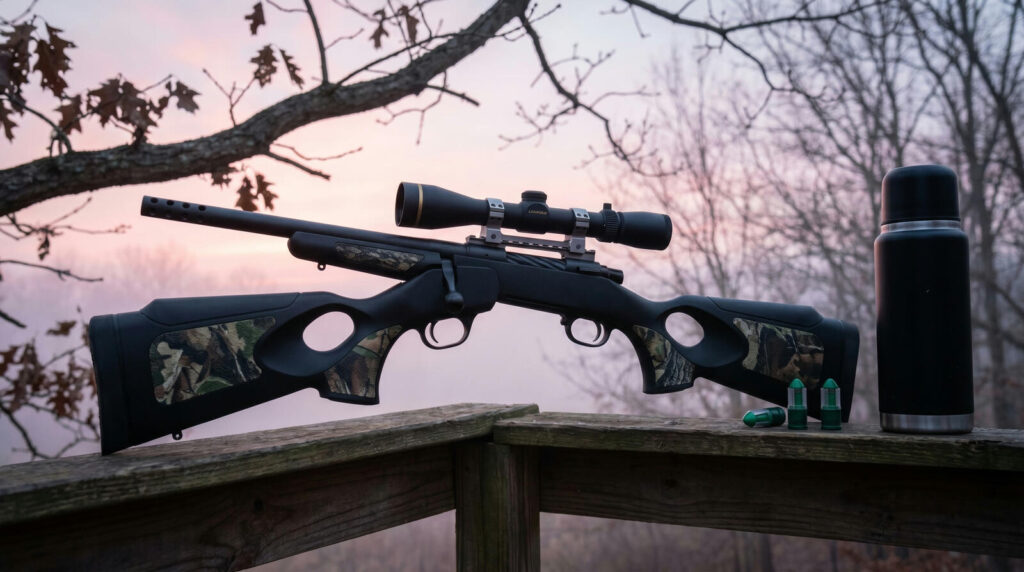
The 22 to 24-inch barrel has a specific niche: slug shooting and deer hunting. Rifled slug barrels frequently come in this range because you don’t need the longer sight radius and swing characteristics of a field gun. You’re shooting a single projectile at a stationary or slowly moving target.
Dedicated slug guns and bolt-action shotguns designed for sabot slugs commonly use 22 inches. It keeps the overall package compact enough for a treestand while giving decent sight radius for accurate slug shooting out to 100-150 yards with the right optic.
Turkey guns also live in the 24-inch zone. Short enough for blind use and decoy work, long enough to handle full and extra-full chokes that deliver the tight patterns turkey demands. The Mossberg 500 Turkey and Beretta A300 Turkey both ship with 24-inch barrels by default.
26″, Upland Birds and All-Around Field
Here’s where you start getting into genuine field-gun territory. A 26-inch barrel is the standard “all-around” recommendation for upland hunting: pheasant, quail, grouse, dove, and general small game. Quick enough to swing on fast-flushing birds, long enough to deliver pattern performance to 35-40 yards.
This is also the shortest barrel length that competes reasonably in sporting clays and skeet. Not optimal, but workable if you’re a casual clay shooter who primarily hunts and doesn’t want two guns.
For new shooters buying a first field gun, 26 inches is usually the right call if you’re primarily hunting rather than breaking clays at the trap range. Lighter to carry over a long day in the field, faster on the swing when a covey flushes.
28″, The Most Versatile Length
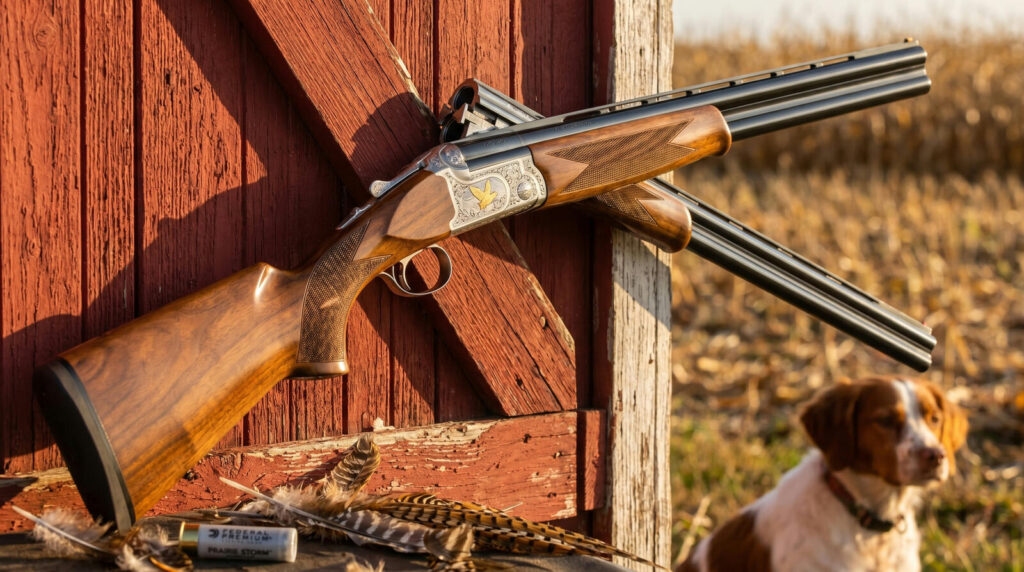
If I had to pick one barrel length that does the most things well, it’s 28 inches. The industry standard for sporting clays, the preferred length for most waterfowl hunting, and perfectly capable for upland hunting if you’re not in thick brush. The length most competitive shooters start with and often stay with.
The 28-inch barrel gives you the forward weight and swing characteristics that make breaking moving targets consistent. You can mount the gun, lead a target, and follow through without fighting the inertia like you would with a short barrel. Most Beretta A300 and A400 semi-autos ship in 28-inch configurations for exactly this reason.
Velocity-wise, you’re close to the theoretical maximum for most standard shotshell loads. Pattern performance is excellent. The gun is still manageable enough for extended hunting days without burning out your shoulder muscles.
For shooters cross-shopping 28 vs 26 inch shotgun barrels: the 26 wins on weight and swing speed in dense cover, the 28 wins on follow-through across crossing clays. Most buyers don’t shoot enough tight-cover upland to feel the 26’s advantage. Genuinely the best default choice for most shooters. See our best 12 gauge shotguns roundup for specific 28-inch picks across pumps, semi-autos, and over-unders.
30″ to 32″, Trap and Competition
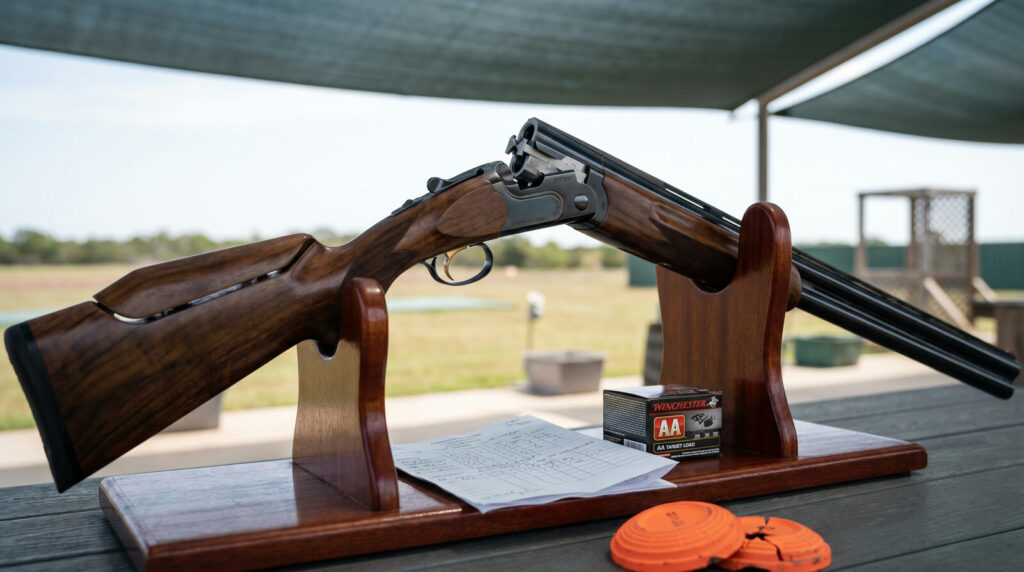
Trap shooting sends targets away from you on rising angles, and that geometry rewards a longer barrel. The extra weight keeps the muzzle moving upward through the target, and the longer sight radius makes it easier to read your lead. Most dedicated trap shooters prefer 30 or 32 inches.
Sporting clays shooters competing seriously also gravitate toward 30 inches. You encounter enough long crossers and driven birds in sporting that the swing and balance of a 30-inch barrel pays off over a full round.
Thirty-two inches is a dedicated competition length. You’ll see it on the Browning BT-99, Krieghoff K-80, and Perazzi MX8 trap setups. For casual trap, overkill. For serious competitors, worth trying. Our best over-under shotguns roundup covers the competition-grade options at these lengths.
Ported vs Non-Ported Barrels
Porting refers to holes or slots drilled near the muzzle that vent gas upward, counteracting muzzle rise. The effect is real but modest. Experienced shooters notice it. Beginners probably won’t.
The downside is increased muzzle blast, which matters if you shoot without ear protection in hunting situations or in an enclosed space. For competition clay shooting with hearing protection, porting is a reasonable upgrade.
For hunting or home defense, skip it. The extra blast trades a small ergonomic gain for significant hearing damage risk in any unprotected environment.
Backbored Barrels
Backboring means the bore diameter is opened wider than the standard .729 inches for 12 gauge. Some competition barrels are bored to .740 or .750 inches.
The claimed benefits are reduced felt recoil and better pattern consistency, because shot deforms less in a wider bore. The difference matters most with steel shot for waterfowl hunting, where standard tight-choke constrictions can produce inconsistent patterns.
For most shooters using lead or bismuth shot, backboring is a marginal upgrade. Guns featuring it tend to be expensive, and backboring is one of several premium features. Don’t make purchase decisions based on backboring alone.
Interchangeable Barrel Systems
One of the smartest things about owning a Mossberg 500 or Remington 870 is that you don’t have to choose one barrel length. Both platforms have massive aftermarket ecosystems where you can buy additional barrels and swap them in under a minute with no tools.
Buy a 28-inch field barrel and an 18.5-inch defensive barrel and you’ve got two guns in one for the price of a barrel. The 870 swap takes about 30 seconds: remove the magazine cap, slide the old barrel off, slide the new one on, replace the cap. The 500 is essentially identical.
This flexibility is why these two platforms have dominated the American pump market for decades. Our Remington 870 vs Mossberg 500 comparison walks through the in-family barrel ecosystem in detail.
One caveat: barrel compatibility isn’t universal within a platform. Remington 870 barrels have different compatibility depending on receiver type (Express, Wingmaster, Police). Mossberg 500 and 590 barrels are not interchangeable despite sharing a receiver size. Check specs before buying.
Choke vs Barrel Length: Different Tools
New shooters routinely confuse what barrel length controls with what choke controls. Quick separation: barrel length controls velocity, swing, and sight radius. Choke controls pattern density at distance.
Want tighter patterns at 40 yards? Tighter choke. Cylinder, improved cylinder, modified, full, extra full, each step constricts the muzzle and tightens the pattern. Barrel length plays only a minor role here.
Want faster handling? Shorter barrel. Want smoother swing on crossing targets? Longer barrel. Choke barely matters for these.
Most modern shotguns use threaded interchangeable choke tubes, so you can shoot the same barrel at clays in the morning with improved cylinder and turkey in the afternoon with extra full. The choke change takes 30 seconds with a wrench. Barrel length is the permanent commitment.
Common Mistakes Buyers Make
- Buying short for “tactical” looks. An 18.5-inch barrel on a shotgun you’ll mostly use for upland hunting is the wrong gun. The short barrel snags in brush, swings poorly, and patterns badly past 25 yards.
- Buying long for “more velocity.” Beyond 28 inches the velocity gains are measured in single-digit fps per inch. You’re paying for swing characteristics, not raw speed. Make the trade deliberately.
- Confusing barrel length with pattern. The choke does the patterning work. A 26-inch barrel with a full choke patterns the same as a 32-inch barrel with the same choke at 40 yards. Don’t shop barrels expecting pattern improvements.
- Not checking state-specific overall-length rules. Federal minimums are not the only restriction. Several states impose additional overall-length or magazine-capacity rules. Verify your state before buying any short configuration.
- Buying a 30-32″ trap barrel for general field use. The competition lengths are deliberately heavy and slow on the mount. Beautiful at the trap range, exhausting on a 5-mile pheasant walk.
Who Shouldn’t Overthink Barrel Length
Honest section. Some shooters are massively overthinking this spec and would be better served buying a versatile mid-length gun and moving on. If you fit one of these profiles, stop reading and buy a 28-inch shotgun.
- The casual hunter who shoots a box of shells a year. Your barrel length doesn’t matter at the volume you shoot. Pick 28 inches and never think about it again.
- The first-time shotgun buyer with no fixed use case. If you’re not sure whether you’ll mostly hunt or mostly shoot clays, the 28-inch barrel handles both adequately. Decide your specialty later.
- The buyer of a combo set. If you’re getting a Mossberg 500 Field/Security Combo with both a 28-inch and an 18.5-inch barrel in the box, you don’t need to choose. You bought both.
- The home defender who already owns a longer field gun. Buy an 18.5-inch barrel for your existing receiver. Done. You don’t need a second complete gun.
The Bottom Line
The best shotgun barrel length depends on what you’re shooting. If you’re shooting one specific thing, match your barrel to the use case in the table at the top of this guide. The recommendations there cover 90% of buyers.
If you’re shooting multiple things, buy a 28-inch field gun and add an 18.5-inch defensive barrel to the same receiver. The Mossberg 500 and Remington 870 both support this with under-a-minute tool-free swaps. You’ll have one gun that handles birds, clays, and home defense, for the price of one gun plus one extra barrel.
And if you’re paralyzed by the choice and just want someone to tell you what to do: get an 870 Express or Mossberg 500 with a 28-inch barrel. You’ll cover everything except dedicated trap competition and you’ll spend less than $500.
Frequently Asked Questions
What is the minimum legal shotgun barrel length?
Federal law requires a minimum barrel length of 18 inches for a shotgun, with an overall length of at least 26 inches. Most manufacturers produce defensive shotguns at 18.5 inches to maintain a legal buffer.
What barrel length is best for home defense?
18.5 inches is the standard for home defense. It keeps the gun maneuverable in hallways and rooms without requiring NFA paperwork.
What is the most versatile shotgun barrel length?
28 inches is the most versatile. It handles waterfowl, sporting clays, dove, and upland hunting competently with near-maximum velocity for most loads.
Does a longer barrel increase velocity?
Yes, but with diminishing returns. Going from 18 to 26 inches produces a noticeable increase. Beyond 28 inches, gains drop to roughly 10-20 fps per inch. Longer barrels past 28 inches are chosen for swing characteristics, not velocity.
What barrel length for trap shooting?
30 or 32 inches. The extra length provides forward balance that smooths the upward swing arc trap targets require.
Can I swap barrels on a Mossberg 500 or Remington 870?
Yes, both platforms support barrel swaps in under a minute with no tools. Check compatibility carefully as not all barrels within a model line are interchangeable.
Are ported barrels worth it?
Ported barrels reduce muzzle rise modestly, which helps in competition. The downside is increased muzzle blast. Reasonable for competition, not particularly useful for hunting or home defense.
What barrel length for waterfowl?
28 inches is the standard for waterfowl. It provides enough swing weight for leading birds and delivers near-maximum velocity for steel shot loads.
Related Reading
- Shotgun Buying Guide: Gauges, Actions, Barrels
- Shotgun Gauge Explained: 12, 20, 28.410
- Buckshot vs Slugs vs Birdshot: When to Use Each
- Remington 870 vs Mossberg 500: The Definitive Showdown
- 10 Best Shotguns for Home Defense (2026)
- 8 Best Tactical Shotguns in 2026
- 8 Best 12 Gauge Shotguns in 2026
- 8 Best Over/Under Shotguns in 2026
4,659+ Gun & Ammo Deals
Updated daily from 200+ top retailers. Filter by category, caliber, action type, and price.