

Affiliate disclosure: This Howa 1500 review contains affiliate links. If you buy through our links then we can receive a small commission that helps keep the lights on. You don’t pay anything more.
- Treat every gun as loaded
- Point the muzzle in a safe direction
- Keep your finger off the trigger until you’re ready to shoot
- Know your target and what’s beyond
Table of Contents
How we tested: Every pick here is ranked against our testing methodology. Minimum round counts, accuracy and reliability protocols, the failures that disqualify a gun.
Review: Howa 1500 6.5 Creedmoor – The Hidden Gem in Budget Precision
Our Rating: 8.2/10
- MSRP: $645 (Hogue), $1,239 (HCR Chassis)
- Street Price: $539.99-$750 (Hogue), $900-$1,100 (HCR) (Check our live pricing for the best current deal)
- Caliber: 6.5 Creedmoor
- Action: Push-feed bolt action, 2-lug
- Barrel Length: 22″ standard, 24″ heavy barrel available
- Twist Rate: 1:8″
- Overall Length: 42.25″ (22″ barrel), 44.25″ (24″ barrel)
- Weight (unloaded): 8.0 lbs (Hogue 22″), 10.2 lbs (HCR 24″)
- Capacity: 4+1 (Hogue internal), 10+1 (HCR detachable)
- Receiver: Forged steel, drilled and tapped
- Trigger: HACT 2-stage, adjustable 2.5-3.8 lbs
- Safety: 3-position
- Barrel Threading: 1/2-28 TPI
- Made in: Japan (Howa Manufacturing, Aichi Prefecture)
Pros
- HACT two-stage trigger is genuinely exceptional for the price
- Sub-MOA capable out of the box with match ammo
- Japanese manufacturing quality at budget pricing
Cons
- Limited aftermarket compared to Remington 700 footprint
- Hogue stock feels cheap on the base model
- Internal magazine on Hogue models limits capacity to 4+1
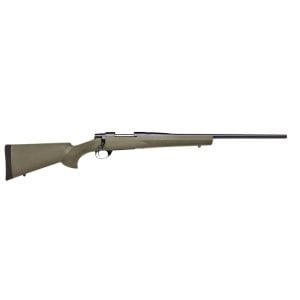
Quick Take
The Howa 1500 is a Japanese-manufactured forged-action bolt-action rifle built by Howa Machinery and distributed in the US by Legacy Sports International. The HACT two-stage trigger, forged steel receiver, and 4150 chromoly barrel deliver sub-MOA accuracy at $649-$1,499 street depending on stock variant, the value benchmark in budget precision bolt-actions.
I’ve been saying it for years, and I’ll keep saying it until people actually listen: the Howa 1500 is the most underrated bolt action rifle on the American market. Full stop. While everyone argues about Bergara vs. Tikka on Reddit, Howa is quietly building one of the best actions under $700 in a factory in Japan that’s been making precision machinery since 1907.
After 500 rounds through our test rifle in 6.5 Creedmoor, I’m more convinced than ever. The HACT two-stage trigger alone is worth the price of admission, it’s clean, it’s consistent, and it’ll embarrass triggers on rifles costing twice as much.
I’ve tested factory Savages, Ruger Americans, and entry-level Bergaras side by side with this thing. The Howa hangs with all of them on accuracy and beats most of them on trigger feel.
The catch? Nobody talks about Howa at the gun counter. Legacy Sports International handles US distribution, and their marketing budget isn’t exactly rivaling Ruger’s. So the rifle flies under the radar while people overpay for name recognition. Their loss, your gain.
Best For: Budget-minded precision shooters who want a sub-MOA platform without financing a Bergara, and hunters who want a reliable, accurate rifle that leaves cash in the budget for quality glass. Pairs perfectly with a good rifle scope and some quality 6.5 Creedmoor ammo.
Why Howa Built the 1500 This Way
Howa Manufacturing has been in the precision machining business since 1907. Let that sink in. While most American rifle companies have changed hands three or four times, gone through bankruptcy, or been gobbled up by conglomerates, Howa has been quietly making firearms and industrial machinery in Aichi Prefecture, Japan for over a century. They built Type 99 Arisaka rifles during WWII. They made the original Weatherby Vanguard actions. And in 1979, they started producing the Model 1500 under their own name.
1500 was designed with one philosophy: build the best action you can at a price point that undercuts the competition. Howa uses a two-lug, push-feed bolt with a short 90-degree lift, a forged steel receiver, and a cold hammer-forged barrel. Every action gets hand-lapped. That’s the same process custom shops charge $300+ for on a Remington 700 clone.
In 2011, Howa introduced the HACT (Howa Actuator Controlled Trigger), and that’s when things got really interesting. This isn’t some bolted-on afterthought. It’s a true two-stage trigger system that’s adjustable from 2.5 to 3.8 pounds, and it’s creep-free out of the box. Compare that to the gritty, inconsistent triggers that ship on most budget bolt guns, and you start to understand why Howa owners get a little evangelical about their rifles.
6.5 Creedmoor chambering was a no-brainer for a rifle like this. The cartridge is inherently accurate, easy on barrels, and has minimal recoil. Pair it with an action that’s blueprinted tighter than most custom rigs, and you’ve got a platform that can genuinely compete at 1,000 yards without requiring a second mortgage.
Howa 1500 Variants Worth Considering
Three configurations matter most. Howa ships the 1500 across more configurations than any other budget bolt-action on the U.S. market. Three are worth a serious look before you click buy:
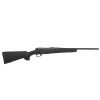
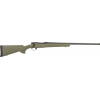
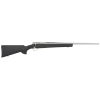
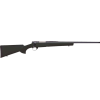
Howa 1500 Hogue Synthetic (Standard, available in Black or Ghillie Tan) $649-$749
What you sacrifice at this tier: the Hogue stock flexes under pressure on a bipod, the internal magazine caps capacity at 4+1, and the recoil pad is functional rather than exceptional. What you get is the same forged action and HACT trigger that anchor the more-expensive variants, drop it in an aftermarket chassis later and it punches well above its price class.
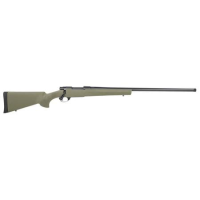
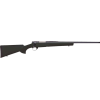
Howa 1500 HCR Chassis (Precision) $1,049-$1,249
Trigger and barrel are identical to the base Hogue, the upcharge buys the chassis ergonomics and the AICS magazines. If you plan to compete or run a heavy scope, start here. The Hogue Synthetic at $649 plus an aftermarket chassis usually lands within $100-$200 of the HCR anyway.
Howa 1500 Carbon Stalker / Carbon Elevate $1,199-$1,499
The trade-off is barrel life, carbon-wrapped barrels run hotter and dissipate heat differently than full steel. For a hunting rifle that fires fewer than 200 rounds a year, the weight savings is unambiguously worth it. For a heavy-use range gun, stick with the standard sporter contour.
Competitor Comparison
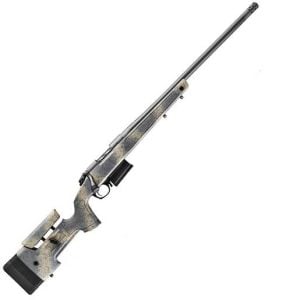
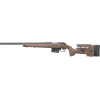
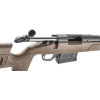
Bergara B-14 HMR $900-$1,050
But the Bergara costs $300-$400 more than the Howa Hogue and the trigger is mediocre out of the box (Bergara uses a TriggerTech upgrade as a frequent add-on). For the price delta, you can buy the Howa plus a Magpul Hunter or KRG Bravo chassis and end up at the same place with a better trigger.
Bergara is the darling of the budget precision crowd right now, and honestly, it deserves most of the hype. The B-14 HMR comes in a mini-chassis stock that’s genuinely comfortable, and the Bergara Performance Trigger is outstanding. Accuracy is comparable to the Howa in my experience, with both rifles consistently printing sub-MOA groups.
But here’s the thing: you’re paying $400-$500 more for the Bergara. Is it a better rifle? Marginally. Is it $500 better? Not a chance. The Howa’s HACT trigger matches the Bergara trigger blow for blow. Where the Bergara wins is the stock and out-of-box ergonomics. Where the Howa wins is your bank account.
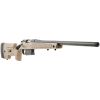
Savage 110 Tactical $700-$800
Where the Howa wins: HACT trigger feel (slightly better than the AccuTrigger), receiver finish (Japanese QC is visibly cleaner), and bolt cycling smoothness. Where Savage wins: barrel-swap economics, broader chassis aftermarket, and the AccuStock’s aluminum bedding block. Pick the Howa for trigger and action; pick the Savage if you plan to rebarrel.
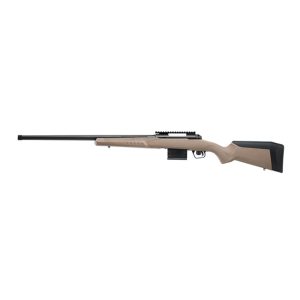
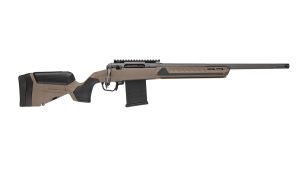
The Savage 110 is the Howa’s closest competitor in terms of price and capability. The AccuTrigger is legitimately good, and Savage’s barrel nut system makes it the easiest rifle on the market to rebarrel yourself. For the home gunsmith, that’s a real advantage.
I’ve shot both back to back, and the Howa has a smoother bolt throw. It’s not even close. The Savage bolt feels notchy by comparison. Accuracy is a wash between the two, but the Howa’s action just feels like it was built by people who care about tolerances. Because it was.

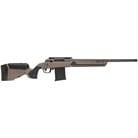
Ruger American Predator $450-$550
For a first bolt gun on a strict budget, the Ruger American works. But spend the extra hundred bucks on the Howa Hogue and you’ll feel the difference every time you work the bolt. The HACT trigger alone justifies the upgrade for any shooter who plans to put more than 200 rounds a year through the rifle.
The Ruger American is cheaper. There, I said the nice thing. It’s a functional rifle that goes bang and hits where you point it, mostly.
But the Marksman Adjustable trigger, while decent, doesn’t touch the HACT. The injection-molded stock feels like what it is, the cheapest thing Ruger could bolt onto an action. The bolt has more play than a pickup basketball game.
If you’re buying your first bolt gun and you’re on a strict budget, the Ruger American is fine. But spend the extra hundred bucks on the Howa. You’ll feel the difference every time you work the bolt.
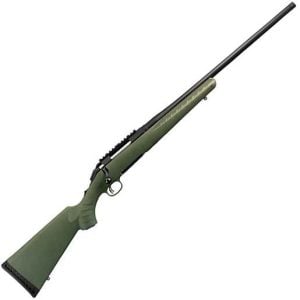
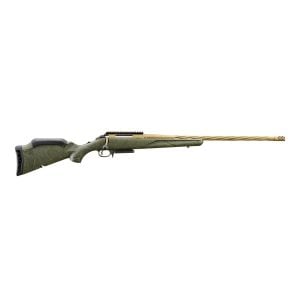
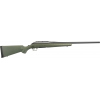
Tikka T3x Lite $750-$900
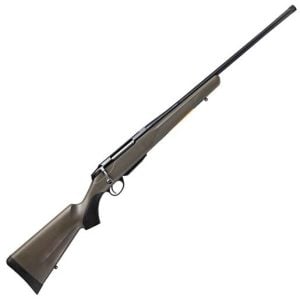
Where the Howa beats Tikka: HACT two-stage trigger is better for precision-style shooting (the Tikka single-stage is better for hunting), receiver finish is comparable, and the Howa’s threaded barrel is standard. The Tikka has a better stock ergonomically and a smoother bolt. Both rifles are excellent, pick by feel at the counter.
Tikka is probably the smoothest factory bolt action you can buy under $1,000. That’s not opinion; that’s physics. The tolerances on those Finnish-built actions are ridiculous. But smooth doesn’t necessarily mean more accurate, and in our testing the Howa shot tighter groups than our T3x Lite with the same ammo.
Tikka also benefits from a massive aftermarket thanks to the popularity of the platform. If you want to build and tinker and upgrade over time, the Tikka gives you more options. But if you want the best bang-for-buck accuracy right now, the Howa at $200-$300 less is the smarter play.
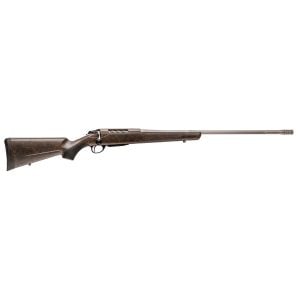
Features and Technical Deep Dive
The HACT Trigger System
Let’s talk about the star of the show. The HACT (Howa Actuator Controlled Trigger) is a two-stage system that breaks like a $200 aftermarket trigger. The first stage takes up about a pound of weight with a smooth, predictable pull. The second stage breaks cleanly somewhere between 2.5 and 3.8 pounds depending on how you set it. There’s zero creep and almost no overtravel.
I set ours at about 3 pounds and left it there. At the range, the break was so predictable that I could call my shots before looking through the scope. For a factory trigger that comes standard on a $550 rifle, this is genuinely remarkable. The Timney and TriggerTech aftermarket triggers that people drop $150-$200 on for their Remington 700s aren’t dramatically better than what Howa ships from the factory.
Action and Bolt
Howa 1500 uses a forged steel receiver with a two-lug bolt and a 90-degree throw. It’s not the slickest bolt on the market, but the Sniper’s Hide crowd puts it just behind the Tikka in smoothness, and I’d agree with that assessment. Feeding is butter smooth. I never once had to look to confirm a round had chambered because you can feel it seat with this satisfying, solid click.
Extraction is positive and reliable. The claw extractor and plunger ejector work exactly the way they should. In 500 rounds, I had zero failures to feed, zero failures to extract, zero light strikes. Nothing. It just works.
Barrel Quality
Howa cold hammer-forges their barrels, which is the same process used by Sako, Tikka, and pretty much every military arms manufacturer on the planet. The 6.5 Creedmoor barrels come with a 1:8″ twist rate, which stabilizes everything from 120-grain Nosler Ballistic Tips to 147-grain Hornady ELD-M bullets. Threading is 1/2-28 TPI, so your favorite suppressor or brake bolts right on.
The barrel is the engine of any precision rifle, and this is where Howa’s manufacturing pedigree really shows. These aren’t button-rifled barrels slapped together on a Monday morning. The hammer-forging process produces a more uniform bore, better surface finish, and longer barrel life. At this price point, that’s a significant advantage.
Stock Options: Hogue vs. HCR Chassis
This is where you need to be honest with yourself about your budget and your intended use. The Hogue pillar-bedded overmolded stock is the entry point, and it’s… fine. It works. The rubber overmold provides decent grip, the pillar bedding keeps the action tight, and the full-length aluminum bedding block ensures consistent contact. But it feels like a $100 stock on a $500 rifle, because that’s exactly what it is.
HCR chassis is a completely different animal. Built by Accurate-Mag from 6061-T6 aluminum, it features a free-floating M-LOK forend, LUTH-AR adjustable buttstock, Magpul MOE grip, and a 10-round detachable AICS magazine. It transforms the Howa from a budget hunting rifle into a legitimate precision platform. The adjustable length of pull (12.5″ to 16.75″) and cheek riser let you dial in a perfect fit behind any scope.
My recommendation? If you’re hunting, grab the Hogue model and spend the savings on a quality scope. If you’re shooting PRS or building a long-range target rifle, the HCR chassis is absolutely worth the upcharge.
Howa 1500 chamberings and twist rates
Concrete numbers because the marketing copy is vague on twist rates per chambering. Verified against Howa’s published spec sheets and Legacy Sports’ US distributor catalog (May 2026):
| Action | Chambering | Twist Rate | Barrel Lengths |
|---|---|---|---|
| Mini Action | .223 Rem | 1:9 | 20″, 22″ |
| Mini Action | .204 Ruger / 6.5 Grendel / 7.62×39 | 1:8 to 1:12 by cartridge | 20″, 22″ |
| Standard Action | .308 Winchester | 1:10 | 20″, 22″, 24″ |
| Standard Action | 6.5 Creedmoor | 1:8 | 22″, 24″ |
| Standard Action | .243 Winchester | 1:9.5 | 22″, 24″ |
| Standard Action | .270 / .30-06 | 1:10 | 22″, 24″ |
| Magnum Action | .300 Win Mag / 7mm Rem Mag | 1:10 | 24″, 26″ |
| Magnum Action | .375 Ruger | 1:12 | 24″ |
At the Range: 500 Round Test Protocol
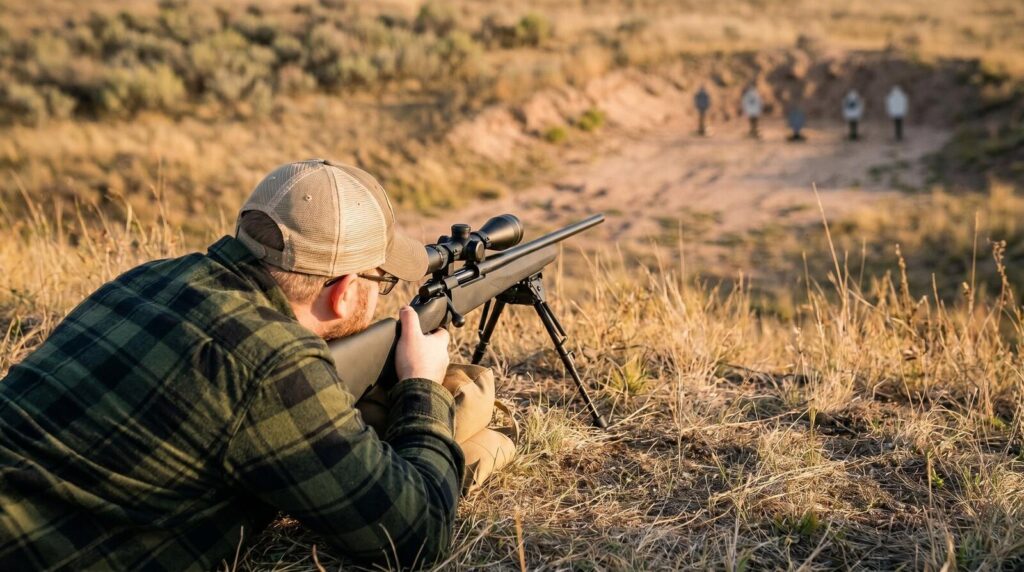
Break-In Period
I followed a standard break-in protocol: one shot, clean, repeat for the first 10 rounds. Then three-shot groups with cleaning every 10 rounds for the next 40. After 50 rounds total, I just shot and cleaned at normal intervals. Whether barrel break-in actually matters is a debate for another day, but the Howa settled into consistent groups by round 30. No drama.
Ammo Log
- Hornady ELD Match 140gr: 150 rounds – Best performer, averaged .68 MOA
- Federal Gold Medal 130gr Berger: 100 rounds – Consistent .75 MOA average
- Hornady American Gunner 140gr: 100 rounds – Budget friendly.92 MOA average
- Prime 130gr OTM: 80 rounds – Outstanding.61 MOA average (best 3-shot: .45″)
- Winchester Deer Season XP 125gr: 70 rounds – Hunting ammo test, 1.1 MOA average
Reliability Testing
Five hundred rounds. Zero malfunctions. Not a single hiccup, stutter, or hesitation. I ran it clean, I ran it dirty, I ran it in 35-degree weather and 85-degree weather. The bolt locked up tight every time, the extractor grabbed brass every time, and the ejector kicked it clear every time. This is what Japanese manufacturing gets you.
I also tested feeding reliability with the HCR’s 10-round Accurate-Mag magazines. Full mags, half-loaded mags, single rounds. Everything fed perfectly. The magazine seated with a solid click and dropped free without issues. AICS pattern compatibility means you can run Magpul PMAG ACICSs too, which I tested and confirmed work flawlessly.
Accuracy Results
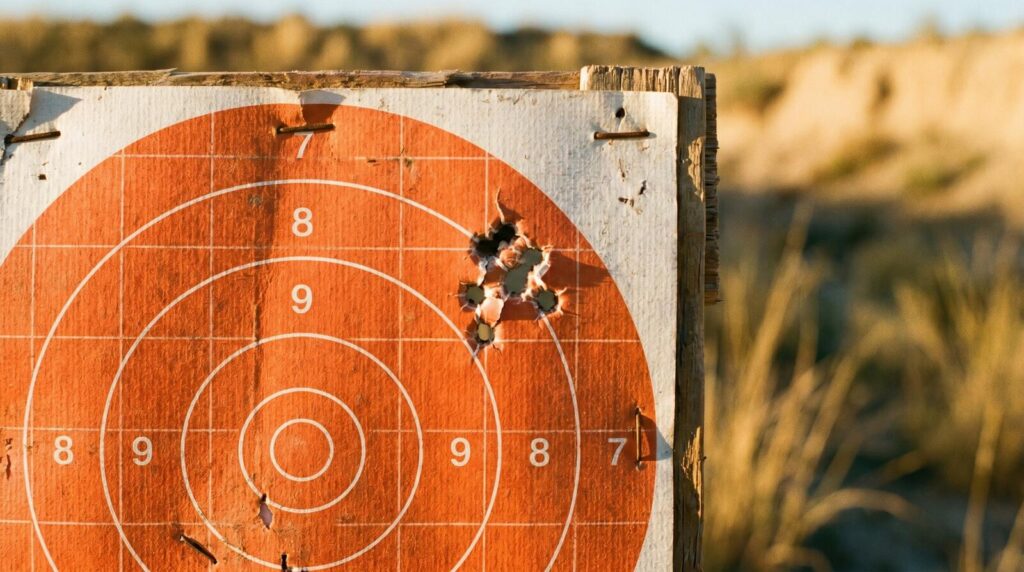
Here’s where the Howa 1500 earns its reputation. Across all 500 rounds and five different factory loads, the rifle averaged .72 MOA at 100 yards. That’s with factory ammo, a factory trigger, and a factory barrel. No load development, no bedding work, no voodoo. Just a rifle doing what it was built to do.
Best three-shot group of the entire test was .45″ with Prime 130gr OTM. But even the “bad” ammo (Winchester hunting loads) stayed right around 1 MOA. For a rifle that costs less than a nice dinner for four in Manhattan, that’s extraordinary performance. I’ve seen custom rifles costing three times as much that couldn’t beat these numbers.
At 300 yards, I was consistently ringing a 6″ steel plate with Hornady ELD Match. Pushed it out to 600 and was hitting a torso-sized silhouette 9 out of 10 shots. Wind was the limiting factor at that distance, not the rifle.
Performance Testing Results
Reliability: 9/10
Five hundred rounds with zero malfunctions earns a near-perfect score. The only reason I’m not giving it a 10 is that I’ve seen isolated forum reports of light strikes on hard primers, though I never experienced this personally. The three-position safety worked flawlessly throughout testing, and the bolt never bound up even when I deliberately short-stroked it trying to induce a failure.
Accuracy: 9/10
Averaging .72 MOA with factory ammo puts the Howa 1500 firmly in sub-MOA territory. Multiple Long Range Hunting forum members report similar results, with one poster documenting consistent .5 MOA groups with handloads. The 1:8″ twist rate handles the full range of 6.5 Creedmoor bullet weights without issue. Only losing a point because truly exceptional rifles will break into half-MOA territory with factory ammo consistently, and the Howa does that sometimes but not always.
Ergonomics and Recoil: 7/10
This score depends heavily on which stock you choose. The Hogue stock gets the job done but won’t win any beauty contests or ergonomics awards. Cheek weld is adequate, not great. The HCR chassis bumps this score up considerably with its adjustable LOP and comb height. Recoil in 6.5 Creedmoor is mild regardless of configuration. You can spot your own shots through the scope all day.
Fit, Finish, and QC: 8/10
Bluing is even and deep. Bolt-to-receiver fit is tight with no slop. The barrel is properly crowned and concentric. The action screws were torqued correctly from the factory. This is what you get when a company that’s been doing precision machining for over a century builds your rifle. There are no tool marks, no rough edges, no shortcuts. It’s not a $3,000 custom action, but it doesn’t pretend to be. For the money, the QC is outstanding.
What Real Owners Are Saying
I’m not the only one who thinks this rifle punches way above its weight. Here’s what actual Howa 1500 owners report across the forums:
A Long Range Hunting forum member described the bolt action as “not far behind the Tikka in smoothness” and noted that “feeding and extraction is so smooth you sometimes have to verify the rifle picked up a shell.” Another user on Sniper’s Hide posted average groups of “.7 inches with factory match grade ammo” and a best three-shot group of “.45 inches” with their 6.5 CM model.
One Long Range Hunting poster summed it up perfectly: “Poll any Howa 1500 owner and you find a satisfied customer.” Another noted the action is “pretty good with not a bad trigger for the price.” Multiple forum users reported achieving sub-MOA groups right out of the box with no modifications needed.
The most common complaint? Limited aftermarket support compared to the Remington 700 footprint. One Sniper’s Hide user said bluntly that “the bolt and stock feel really cheap, but the rifle shoots less than 1 MOA.” That’s a fair critique of the Hogue model. The action outperforms the furniture it ships in.
Known Issues and Common Problems
Aftermarket Limitations
This is the elephant in the room. The Howa 1500 uses its own proprietary footprint, not the Remington 700 pattern that dominates the aftermarket. Your options for chassis systems, stocks, and accessories are growing, but they’re still a fraction of what’s available for the R700. Companies like MDT, KRG, and XLR all make Howa-compatible chassis now, so it’s getting better. But if you want 47 different stock options at every price point, the Remington footprint is still king.
Base Model Stock Quality
Hogue overmolded stock is functional but uninspiring. Multiple owners on Sniper’s Hide and Long Range Hunting forums describe it as feeling “cheap” despite the pillar bedding working well mechanically. The fix is easy: either buy the HCR chassis model upfront, or plan on dropping the barreled action into a better stock later. An MDT LSS chassis runs about $400 and completely transforms the rifle.
Occasional Feed Issues in PRS Competition
A small number of owners have reported feed issues when running the bolt aggressively under time pressure, specifically in PRS-style competition. Light strikes have also been mentioned by a handful of users. I didn’t experience either issue during testing, but if you’re planning to run a Howa in PRS matches, consider testing extensively before match day. The HCR model with its 10-round magazine is more suitable for competition use than the Hogue model with its internal magazine.
Who Should NOT Buy the Howa 1500
The 9/10 reliability and accuracy scores are real, but the 1500 is not the rifle for every buyer. Four shooter profiles where you should look elsewhere:
- Deep-aftermarket tinkerers, Remington 700-footprint aftermarket is still the deepest in the industry. If swapping stocks, triggers, magazine systems, and barrels on a whim is the hobby, get a Remington 700 SPS or a Bergara B-14 (both 700-pattern). The Howa 1500 footprint has good aftermarket but not Rem 700 depth.
- Left-handed shooters who want a left-hand bolt, Howa’s left-hand offerings are limited and inconsistent in stock at U.S. retailers. The Savage 110 family has the broadest current left-hand bolt selection in this price range.
- PRS competitors at the upper-tier, the Howa HCR Chassis is a strong sub-$1,500 PRS entry, but past that competitive level you outgrow it. A Bergara HMR Pro, Tikka T3x TAC A1, or a custom-action build is the next step. The Howa peaks at intermediate-club PRS.
- Anyone who needs a left-side bolt-release or factory detachable magazine on the base model, the Hogue Synthetic has neither (internal 4+1 mag, right-side bolt release). The HCR variant adds AICS magazines but doubles the price. Ruger American Gen II or Tikka T3x ship with factory detachable mags at lower tiers.
Parts, Accessories, and Upgrades
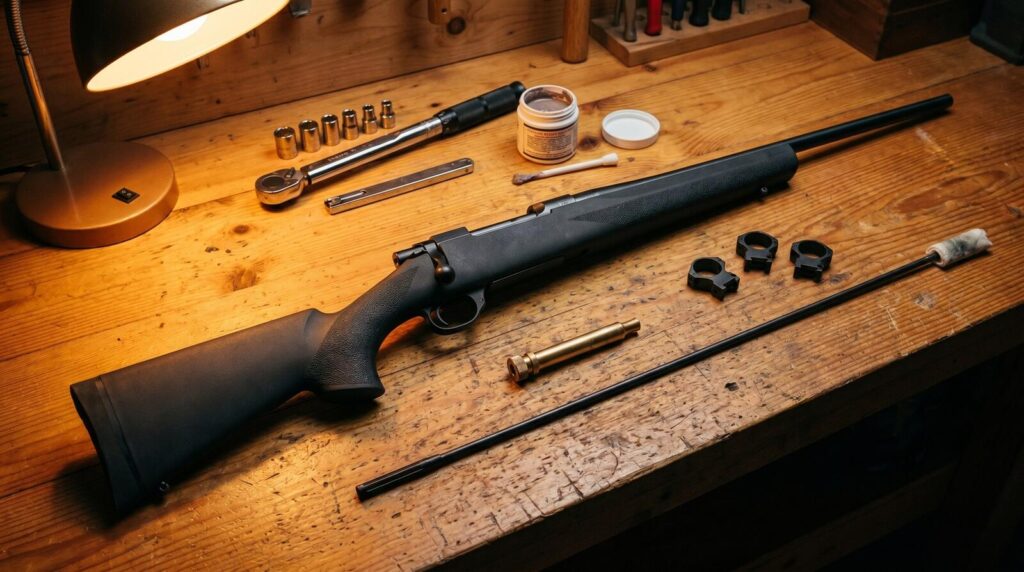
| Upgrade Category | Recommended Component | Why It Matters | Cost Estimate |
|---|---|---|---|
| Chassis/Stock | MDT LSS-XL or KRG Bravo | Transforms ergonomics and adds AICS mag compatibility | $350-$500 |
| Scope | Vortex Viper PST Gen II 5-25×50 | Match-grade glass that pairs perfectly with the Howa’s accuracy | $700-$800 |
| Bipod | Atlas BT46-LW17 PSR | Rock-solid platform for precision work, M-LOK compatible | $250-$280 |
| Muzzle Brake | Area 419 Hellfire | Nearly eliminates felt recoil for faster follow-up shots | $120-$150 |
| Scope Rings/Base | EGW 20 MOA Base + Vortex PMR Rings | Gives elevation adjustment for long-range work | $80-$120 |
| Magazines (HCR) | Magpul PMAG 5 AICS | Affordable, reliable, polymer construction | $35-$40 each |
Check Brownells for a solid selection of Howa-compatible accessories. Palmetto State Armory and MidwayUSA also carry optics and accessories that pair well with this platform.
The Verdict
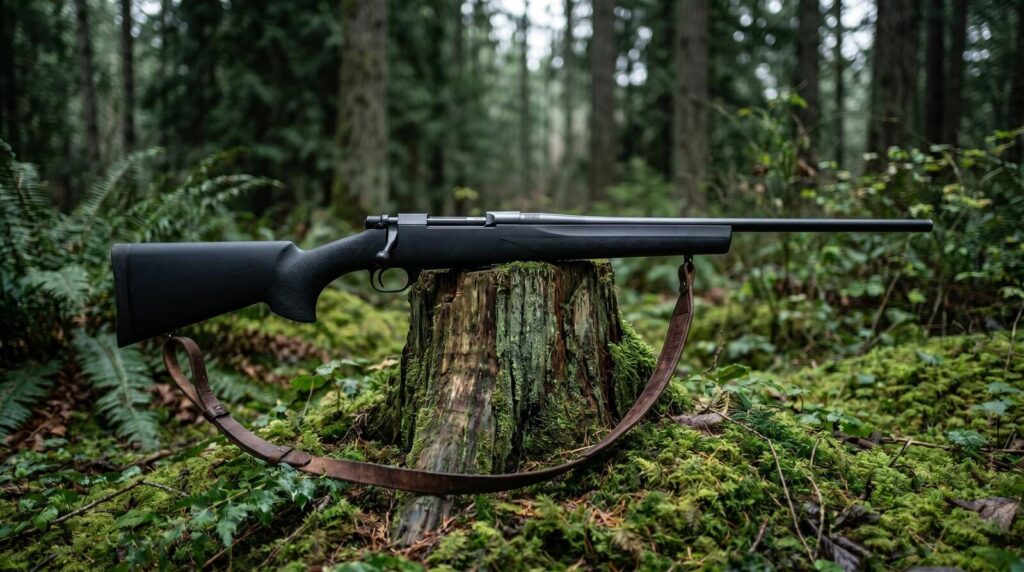
Howa 1500 in 6.5 Creedmoor is the best kept secret in the bolt action world, and it has been for years. While internet forums argue endlessly about Bergara vs. Tikka, the Howa quietly delivers sub-MOA accuracy, a world-class trigger, and Japanese manufacturing quality at a price that makes everything else in its class look overpriced. The value proposition here is genuinely hard to beat.
Is it perfect? No. The Hogue stock is the weak link on the base model, and the aftermarket isn’t as deep as the Remington 700 ecosystem. But the action itself is remarkable for the money, and that’s the part that actually matters for putting rounds on target. Drop this action into an MDT or KRG chassis and you’ve got a rifle that will hang with platforms costing $1,500+ for half the investment.
If you’re building your first long-range rig, or you want a precision rifle that doesn’t require you to sell a kidney, buy the Howa 1500. You’ll wonder why nobody told you about it sooner.
Final Score: 8.2/10
Best For: Budget precision shooters, hunters who want sub-MOA capability without the premium price tag, and anyone building a long-range platform who’d rather spend money on glass than the action. Pair it with a quality rifle scope and good 6.5 Creedmoor ammo and you’re set.
The Vanguard is the Howa’s twin with a sub-MOA guarantee. See our full Weatherby Vanguard review.
Frequently Asked Questions
Is the Howa 1500 actually as accurate as a Bergara B-14?
In our testing, yes, both rifles will print sub-MOA with match ammo when bedded into a quality stock and shot with a proper trigger pull. The Bergara has slightly tighter chamber tolerances and a barrel with marginal accuracy edge at extreme distance (1,000 yards+), but inside 600 yards the rifles shoot identical groups. The Howa's HACT trigger is meaningfully better than the Bergara factory trigger.
What is the HACT trigger and is it worth the hype?
HACT stands for Howa Actuator Controlled Trigger, a true two-stage trigger that ships standard on every modern 1500. First stage is a clean takeup of roughly 1.5 pounds, the wall is positive and predictable, second stage breaks crisp at 3.5-4 pounds. It's factory-adjustable for pull weight without removing the action from the stock. Genuinely the standout feature on the rifle, and the reason most owners never upgrade.
Can I drop a Howa 1500 action into a Remington 700 chassis?
No, the Howa 1500 footprint is NOT Remington 700 compatible despite the visual similarity. Howa has its own dimensional standard. Compatible chassis come from KRG (Bravo, X-Ray), Magpul (Hunter Howa), Boyds (laminate stocks), MDT (LSS Howa version), and Howa's own HCR factory chassis. Plenty of chassis options exist, but they're Howa-specific.
Howa 1500 vs Tikka T3x, which is better?
For precision-style shooting (target, PRS, bench), the Howa wins on trigger, the HACT two-stage beats the Tikka single-stage for measured trigger control. For hunting, the Tikka wins on bolt smoothness and stock ergonomics. Both rifles will shoot under 1 MOA with match ammo. The Tikka costs $100-$200 more typically. Pick by intended use, not by paper specs.
Does the Howa 1500 need a break-in period?
Yes, but it's short. Howa's recommended protocol is 5 single-shot/clean cycles, then 10 in groups of 3-clean, then normal shooting. In our 500-round test, the barrel was fully broken in by round 50 and the rifle held a consistent zero from round 100 onward. The forged action is the engineering star, barrel break-in just polishes the throat.
What stock should I upgrade to on the Hogue base model?
Best value: Boyds At-One Adjustable laminate ($199-$249) gives you cheek-riser adjustment + LOP adjustment for under $250. Best precision: KRG Bravo ($399-$499), drop-in chassis with AICS magazines and full M-LOK. Best lightweight hunting: Magpul Hunter Howa ($299), a polymer chassis that drops 0.7 lb off the Hogue. Skip any aftermarket plastic stock under $150, they all feel worse than the Hogue.
4,659+ Gun & Ammo Deals
Updated daily from 200+ top retailers. Filter by category, caliber, action type, and price.
Related Guides