

Affiliate disclosure: This article contains affiliate links. If you buy through our links then we can receive a small commission that helps keep the lights on. You don’t pay anything more.
Quick Answer: Massachusetts has restrictive gun laws in 2026. All firearm owners must hold a License to Carry (LTC) or Firearm Identification (FID) card issued by local police chiefs. Massachusetts bans semi-automatic rifles defined as “assault weapons” (Section 131M of the 1998 ban plus the 2024 expanded definition), magazines over 10 rounds, and most NFA items.
Concealed carry is “shall-issue” post-Bruen but local police have significant discretion on training requirements and restrictions on the LTC. Standard handgun purchases require a 7-day waiting period (handgun roster compliance also required for new sales).
The biggest mistake new Massachusetts gun owners make is missing the requirement to register firearms within 60 days of becoming a resident. The 2024 omnibus law (Chapter 135) expanded sensitive places, prohibited 3D-printed firearms, and tightened storage requirements. Massachusetts honors no out-of-state CCW permits.
Last updated July 2026 · By Nick Hall, CCW instructor tracking Massachusetts’s Chapter 135 (H.4885) overhaul, the expanded assault-style firearm ban, and the 2026 ballot referendum that could repeal the law
Disclaimer: This is an editorial round-up of Massachusetts gun laws. We do our best to make sure it’s correct, but do not rely on this as legal advice. Massachusetts gun law changed dramatically under Chapter 135 of the Acts of 2024 and remains in active litigation and ballot-referendum territory. Consult a Massachusetts-licensed firearms attorney for any specific question.
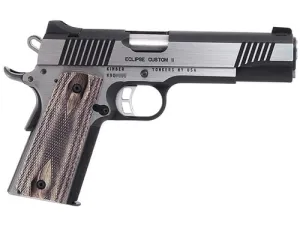
Best-priced firearms across 200+ retailers · Updated every 4 hours
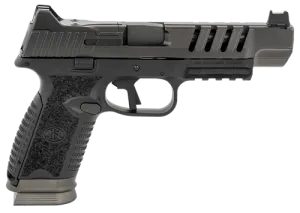
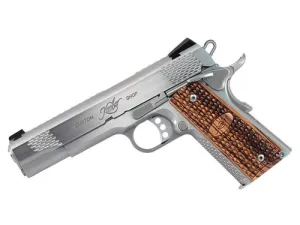
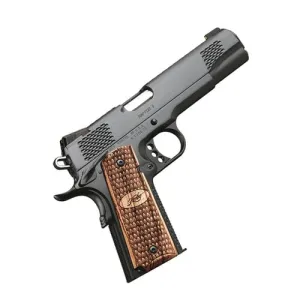
Looking for a brick-and-mortar shop in Massachusetts? See our best gun stores in Massachusetts guide for verified FFL dealers, ranges, and gunsmiths near you.
Best-priced ammunition across 200+ retailers · Updated every 4 hours


Table of Contents
Intro
TL;DR: Massachusetts gun laws in 2026 are among the most restrictive in the country. Massachusetts requires multiple licenses and bans many common firearms. FID card required for long guns, LTC required for handguns and concealed carry, expanded “assault-style firearm” ban under Chapter 135 of 2024, 10-round magazine cap, red flag law, strict sensitive-places list, and duty to retreat outside the home. A 2026 ballot referendum could repeal Chapter 135 if passed by voters.
Massachusetts gun laws were overhauled in July 2024 when Governor Maura Healey signed H.4885 into law. Codified as Chapter 135 of the Acts of 2024 (“An Act Modernizing Firearms Laws”), the bill took effect October 2, 2024. It replaced the older “assault weapon” definition with a broader “assault-style firearm” definition, expanded registration requirements, added sensitive-places restrictions, required basic firearms safety training for both FID and LTC applications, and tightened private-transfer and ghost-gun rules.
Gun-rights organizations responded by launching a ballot referendum campaign to repeal Chapter 135 of the Massachusetts gun laws. The Massachusetts Firearm Regulations Referendum qualified for the November 2026 ballot. A “yes” vote retains the 2024 law; a “no” vote repeals it. Until the referendum is decided, Chapter 135 remains in effect.
If you’re a Massachusetts resident, moving here, or passing through, this page covers the 2026 rules with statute citations and official sources.
Massachusetts Gun Laws: The Highlights
TL;DR: Massachusetts gun laws require an FID for long guns, LTC for handguns and concealed carry, assault-style firearm ban, 10-round magazine cap, red flag law, sensitive-places restrictions, duty to retreat outside home, strong state preemption, 2026 ballot referendum pending.
- Firearm Identification Card (FID) required for long guns under MGL c. 140, § 129B. Basic firearms safety certificate required as of Chapter 135 (2024).
- License to Carry (LTC) required for handguns, concealed carry, and semiautomatic rifles/shotguns that aren’t banned assault-style firearms. Shall-issue post-Bruen under MGL c. 140, § 131.
- Assault-style firearm ban (broadened in Chapter 135) under MGL c. 140, § 121 and § 131M. Pre-August 1, 2024 assault weapons grandfathered if registered.
- 10-round magazine cap (large capacity feeding device) under MGL c. 140, § 131M.
- Red flag law (Extreme Risk Protection Order) under MGL c. 140, § 131R since 2018.
- Sensitive places (prohibited areas) defined broadly in Chapter 135. Includes government buildings, schools, polling places, many state-owned properties.
- Duty to retreat outside the home. Castle Doctrine applies only within a dwelling under MGL c. 278, § 8A.
- Ghost guns and unserialized firearms prohibited. Serial numbers required on all firearms manufactured or sold in the state.
- 2026 ballot referendum could repeal Chapter 135 if voters approve the “no” option.
For the official state resource, see the Massachusetts law about guns and other firearms page.
Key Information at a Glance
Key Information: Massachusetts Gun Laws at a Glance (2026)
Fast answers first, with official sources at the bottom.
| Permitless Carry | No, LTC required |
|---|---|
| Open Carry | Not recognized in practice (LTC authorizes concealed) |
| Concealed Carry | Shall-issue LTC post-Bruen, 21+ |
| Firearm Identification Card (FID) | Required for long guns, non-large-capacity |
| License to Carry (LTC) | Required for handguns and all semi-auto rifles/shotguns |
| Background Checks | Universal on all firearm transfers |
| Purchase Age | 21+ handguns, 18+ long guns (FID 15+ limited) |
| Magazine Capacity Limit | 10 rounds (MGL c. 140, § 131M) |
| Assault-Style Firearm Ban | Yes (Chapter 135 of 2024, pre-Aug 2024 grandfathered) |
| Red Flag Law | Yes (MGL c. 140, § 131R) |
| Registration | Yes, all firearms registered with state |
| Sensitive Places | Broad (Chapter 135 extended list) |
| Stand Your Ground | No, Duty to Retreat outside home |
| Castle Doctrine | Yes (MGL c. 278, § 8A, in dwelling only) |
| State Preemption | Strong |
| NFA Items (Suppressors/SBRs) | Suppressors BANNED for civilian use |
Official Massachusetts Resources
Chapter 135 of 2024: What Changed
TL;DR: Chapter 135 (H.4885), signed July 2024, effective October 2, 2024, is the most significant overhaul of Massachusetts gun law in a decade. It replaced “assault weapon” with “assault-style firearm,” expanded registration, tightened private transfers and ghost gun rules, and added sensitive-places restrictions. A 2026 ballot referendum could repeal the law.
Key changes under Chapter 135:
- Expanded assault-style firearm ban. The definition now includes firearms with interchangeable parts, receivers compatible with prohibited models, and features designed to evade prior bans. Post-August 1, 2024 sale or transfer is prohibited. Pre-August 2024 firearms are grandfathered if registered.
- Mandatory basic firearms safety certificate. Required before applying for an FID or LTC. Replaces the older voluntary safety course and imposes a minimum training standard statewide.
- Licensing for semi-auto rifles/shotguns not already banned. Chapter 135 moved certain semi-automatic long guns from FID to LTC category, requiring the higher-tier license to purchase.
- Ghost gun and unserialized firearm prohibitions. Expanded to cover 80% receivers, privately manufactured firearms, and 3D-printed components. All firearms must be serialized and registered.
- Prohibited areas (sensitive places) list broadened. Includes government buildings, schools, polling places, most state-owned properties.
- Private transfer rules tightened. Universal background checks already existed; Chapter 135 extended reporting and documentation requirements.
The Gun Owners’ Action League (GOAL) led a successful ballot petition to put Chapter 135 on the November 2026 ballot as a referendum. A “yes” vote retains the law; a “no” vote repeals it. Until the vote, Chapter 135 remains in effect.
FID Card vs. LTC: The Two-License System
TL;DR: Massachusetts requires one of two licenses to possess most firearms. FID card (Firearm Identification Card) authorizes rifles and shotguns. LTC (License to Carry) authorizes handguns, concealed carry, and all semi-auto long guns under Chapter 135.
The FID card under MGL c. 140, § 129B is the entry-level license for long gun possession. It requires:
- Age 15 or older (restricted FID for 15-20 year olds)
- Basic firearms safety certificate
- Background check
- Massachusetts residency or employment
The LTC under MGL c. 140, § 131 authorizes ownership and concealed carry of handguns plus ownership of all semi-auto rifles and shotguns under Chapter 135’s reclassification. Requirements include:
- Age 21 or older
- Basic firearms safety certificate
- Background check, fingerprints
- Live-fire qualification
- No disqualifying criminal history
- Shall-issue post-Bruen to any qualifying applicant
Fees run about $100 for the LTC and $25 for the FID, plus training costs (typically $100-$200 for the basic firearms safety course). Both licenses are valid for 6 years.
Assault-Style Firearm Ban
TL;DR: Chapter 135 broadened Massachusetts’s assault weapons ban by replacing “assault weapon” with “assault-style firearm.” Definition includes firearms with interchangeable parts with banned models. Post-August 1, 2024 sale/transfer prohibited. Grandfathered if registered.
Massachusetts had an assault weapons ban modeled on the 1994 federal ban since 1998, but Chapter 135 substantially broadened it. The new “assault-style firearm” definition under MGL c. 140, § 121 includes:
- All firearms previously classified as assault weapons
- Firearms with interchangeable parts or receivers compatible with prohibited models (e.g., any AR-15 platform variant)
- Semi-automatic rifles and shotguns with specific features (detachable magazines, adjustable stocks, pistol grips, etc.)
- Copies and duplicates of named firearms
Assault-style firearms lawfully owned before August 1, 2024 must be registered with the Massachusetts Firearms Records Bureau. Post-registration, they can be kept and used but not sold or transferred within the state. The First Circuit Court of Appeals upheld the Chapter 135 ban in May 2025 against Second Amendment challenges.
Magazine Capacity: 10-Round Limit
TL;DR: Large capacity feeding devices (magazines over 10 rounds) are prohibited under MGL c. 140, § 131M. Pre-1994 devices grandfathered under federal definitions, but Massachusetts tightened state-level rules.
Massachusetts law defines a “large capacity feeding device” as any magazine or similar device capable of holding or readily converted to hold more than 10 rounds of ammunition. Manufacturing, selling, transferring, or possessing a post-1994 large capacity magazine is generally prohibited except for law enforcement and narrow statutory exceptions.
Pre-September 13, 1994 (the effective date of the federal AWB) magazines are grandfathered under Massachusetts law for lawful owners. In practice, the grandfathering provision is complex and documentation-intensive. New retail purchase in Massachusetts is capped at 10 rounds.
Purchasing a Firearm in Massachusetts
TL;DR: FID required for long guns, LTC required for handguns and semi-auto rifles/shotguns. Universal background checks. Age 21+ for handguns, 18+ for long guns (FID allows 15-17 year olds with parental consent). All firearms registered with the state.
Here’s the step-by-step for a first-time Massachusetts buyer:
- Complete the basic firearms safety certificate course. Required under Chapter 135 before applying for either FID or LTC.
- Apply for FID or LTC. FID for long guns, LTC for handguns or any semi-auto long gun. Process goes through your local police department.
- Background check, fingerprints, live-fire qualification (LTC only). Passes through the Firearms Records Bureau.
- Receive license. FID/LTC mailed after approval. Valid 6 years.
- Choose a licensed dealer. All firearm purchases must go through a Massachusetts FFL or follow the state’s private-transfer process. For local shops, see our best gun stores in Massachusetts guide.
- Complete paperwork. ATF Form 4473 plus Massachusetts-specific transfer forms.
- Take delivery. Firearm is delivered and transfer is recorded with the Firearms Records Bureau.
Private sales between Massachusetts license holders must be recorded through the state’s FA-10 form or an FFL. Undocumented transfers are criminal.
Sensitive Places (Prohibited Areas)
TL;DR: Chapter 135 expanded Massachusetts’s sensitive-places list. Concealed carry with an LTC is prohibited in most government-owned properties, schools, polling places, and other categorized areas.
Under Chapter 135’s new prohibited-area provisions, concealed carry is prohibited in:
- K-12 schools and colleges/universities
- Government buildings (state, county, municipal)
- Courthouses and court administrative facilities
- Correctional facilities
- Polling places on election days
- Federal buildings under 18 U.S.C. § 930
- Posted private property where the owner has communicated a no-firearms policy
An exception exists for state-owned public land available for hunting (state forests, wildlife management areas during lawful hunting activity). Outside that exception, assume government-owned property is off-limits.
State Preemption
TL;DR: Massachusetts has strong state preemption on firearms regulation. Cities and towns cannot enact their own licensing schemes, magazine limits, or registration requirements beyond state law.
Firearm regulation is largely preempted at the state level in Massachusetts. Boston, Cambridge, Worcester, and other municipalities cannot create their own FID or LTC schemes, magazine limits, or ban specific firearms types. Local authorities retain some narrow authority over firearm discharge and property-specific prohibitions (like “no firearms” signs on municipal buildings).
Federal Law Still Sets the Ceiling
TL;DR: Massachusetts’s restrictive laws operate inside federal constraints. Federal prohibited-person rules and gun-free federal buildings apply. Massachusetts also adds its own state-level prohibitions, including a civilian suppressor ban.
Federal prohibited-person rules under 18 U.S.C. § 922(g) apply. Federal buildings remain gun-free zones under 18 U.S.C. § 930. Unlike most states, Massachusetts adds its own restrictions on top of federal law, including the suppressor ban for civilians (see NFA section below) and enhanced registration and tracking requirements.
Massachusetts Gun Laws for Out-of-State Visitors
Massachusetts does not honor any other state’s concealed carry permit. Non-residents must apply for a Massachusetts Non-Resident LTC through the State Police Firearms Records Bureau (FRB), which requires in-person processing, fingerprints, fees, and is valid only one year. Federal FOPA transport protections apply, unloaded, locked, inaccessible, traveling continuously between two states where possession is legal. The assault-style firearm ban and 10-round magazine cap under Chapter 135 apply to anyone present in Massachusetts, regardless of residency.
Reciprocity: Out-of-State Permits
Massachusetts Concealed Carry at a Glance
Constitutional carry: No
Honors non-resident permits: No — out-of-state permits not honored
Classification: No reciprocity
Map base: Wikimedia Commons (CC BY-SA). Color overlay and reciprocity data by USA Gun Shop.
Can I Carry in Massachusetts?
Select your home state to see if your permit authorizes carry in Massachusetts.
TL;DR: Massachusetts does NOT recognize concealed carry permits from other states. Out-of-state permit holders cannot carry in Massachusetts without a Massachusetts LTC. Non-residents can apply for a non-resident LTC with significant documentation requirements.
Massachusetts is among the most restrictive states on reciprocity. It does not recognize any out-of-state concealed carry permits. If you have a permit from any other state, it does not authorize carry in Massachusetts.
Non-residents can apply for a Massachusetts non-resident LTC through the Firearms Records Bureau. Requirements include the basic firearms safety certificate, a demonstrated connection to Massachusetts (property ownership, regular employment, or other qualifying ties), fingerprints, and payment of fees. The non-resident application is subject to shall-issue standards post-Bruen but remains administratively burdensome.
Outgoing: the Massachusetts LTC is recognized in roughly 30 other states through their reciprocity provisions.
Massachusetts Self-Defense Laws: Duty to Retreat Outside Home
TL;DR: Massachusetts requires duty to retreat before using deadly force outside the home. Castle Doctrine applies only within your dwelling under MGL c. 278, § 8A. No Stand Your Ground statute.
Massachusetts is a duty-to-retreat state for self-defense outside the home. If a safe avenue of retreat is available, you must take it before using deadly force. Case law has developed around the standard: prosecutors and courts will examine whether retreat was possible and whether the defendant’s use of force was proportional and necessary.
Inside your dwelling, MGL c. 278, § 8A provides explicit Castle Doctrine protection. A person in their own home has no duty to retreat before using deadly force against an unlawful intruder, provided the person reasonably believes the intruder intends to commit a violent felony or cause serious injury.
Outside the home, deadly force requires:
- Reasonable belief of imminent death or serious bodily injury
- Force proportionate to the threat
- You must not have been the initial aggressor
- You must have attempted to retreat if a safe retreat was available
Red Flag Law: Extreme Risk Protection Orders
TL;DR: Massachusetts has had a red flag law since 2018 under MGL c. 140, § 131R. Family members, household members, and licensing authorities can petition courts to temporarily remove firearms.
Massachusetts’s Extreme Risk Protection Order (ERPO) statute allows a narrow set of petitioners, primarily family and household members, to petition courts for removal of firearms from a person deemed a danger to themselves or others. A temporary order can be issued ex parte; a final order requires a hearing with counsel.
NFA Items: Suppressors Banned, SBRs Restricted
TL;DR: Massachusetts prohibits civilian ownership of suppressors (silencers) under state law. SBRs and SBSs are legal with federal ATF approval. Pre-1986 machine guns are legal for LTC holders with additional state approval.
Massachusetts is one of a small number of states that bans civilian suppressor ownership entirely. Even with a federal tax stamp and ATF Form 4 approval, a Massachusetts civilian cannot lawfully own a suppressor. Only law enforcement and federally licensed entities may possess them.
Short-barreled rifles (SBRs) and short-barreled shotguns (SBSs) are legal with federal ATF approval through the standard Form 4 process. Lawfully registered pre-1986 civilian machine guns are legal for LTC holders, subject to additional state notification and approval.
Massachusetts Suppressor Facts & Figures
| Suppressor ownership | Illegal for civilians. M.G.L. c. 269, § 10A bars possessing or using a firearm silencer, only licensed manufacturers and law enforcement are exempt, and a federal ATF Form 4 or tax stamp gives no exception. |
| Hunting with a suppressor | Prohibited, possession is itself a crime, so there is no lawful hunting use. |
| Bringing one in from out of state | Not allowed. Possessing a suppressor in Massachusetts is a felony regardless of where it was bought or registered. |
| 2026 federal $0 tax stamp | Does not apply here. The federal change removed only the $200 federal tax; it does not affect Massachusetts’s state ban. |
Do not attempt to buy, build, import, or possess a suppressor in Massachusetts. Even a fully ATF-registered, tax-stamped suppressor is illegal to possess here. To see where suppressors are and are not legal, see our suppressor laws by state guide. This page is general information, not legal advice, consult a Massachusetts firearms attorney about your specific situation.
Recent Changes (2024-2026)
TL;DR: Chapter 135 of 2024 overhauled Massachusetts firearm law, effective October 2, 2024. First Circuit upheld the assault-style firearm ban in May 2025. A 2026 ballot referendum could repeal Chapter 135.
- Chapter 135 / H.4885 (July 2024): “An Act Modernizing Firearm Laws.” Effective October 2, 2024. Expanded AWB, added safety certificate, tightened registration and private transfers.
- First Circuit ruling (May 2025): Upheld the Chapter 135 assault-style firearm ban and magazine restrictions against Second Amendment challenges.
- 2026 Ballot Referendum (November 2026): Voters will decide whether to keep or repeal Chapter 135. “Yes” retains the law; “no” repeals it.
For current legislative and court status, see the Massachusetts General Court and Gun Owners’ Action League (GOAL) for updates on the referendum campaign.
Our Take
TL;DR: Massachusetts sits at or near the top of the most-restrictive-state list. Plan for extensive licensing, a mandatory safety certificate, broad assault-style firearm ban, 10-round magazine cap, civilian suppressor ban, and duty to retreat outside the home. The November 2026 ballot referendum is the single biggest unresolved variable for 2026 planning.
For a regulatory comparison, the most directly comparable state on restrictiveness is New York, with its CCIA framework and SAFE Act assault weapons ban.
For a regulatory comparison, the closest regulatory analog in the Northeast is New Jersey’s FPIC and PPH system.
Massachusetts gun law isn’t just restrictive, it’s layered. You need a safety certificate before you can apply for a license, two license tiers depending on what you want to own, universal background checks even on private transfers, an expanded assault-style firearm ban, and a magazine cap that makes most factory-spec firearms effectively illegal for new sale.
The 2026 ballot referendum adds a wildcard. If voters repeal Chapter 135, Massachusetts would revert to its pre-October 2024 framework, still restrictive, but without the expanded assault-style definition, the additional safety certificate requirement, and some of the Chapter 135 sensitive-places provisions. Track the referendum before making major firearm purchase or sale decisions in late 2026.
Practical takeaways:
- Complete your basic firearms safety certificate before attempting any license application.
- Apply for LTC over FID if you might ever want to own a handgun or semi-auto rifle.
- Understand the assault-style firearm definition and what’s banned, the broader Chapter 135 definition catches many firearms that were legal under the prior statute.
- No suppressor ownership. If you want a suppressor, you’ll need to be in another state.
- Duty to retreat matters. Your self-defense legal posture is materially different from Stand Your Ground states.
- Track the 2026 ballot referendum. A repeal of Chapter 135 would meaningfully change the rules.
Bookmark the Mass.gov firearms law overview and the full text of Chapter 135 for current law.
Massachusetts-Specific Carry Questions
What is the difference between the Massachusetts FID and LTC?
The Firearm Identification Card authorizes possession and purchase of non-large-capacity rifles, shotguns, and ammunition. The License to Carry authorizes possession and purchase of handguns and concealed carry. The LTC has historically been issued in three classes, A, B, and Class A is the practical carry permit. The 2024 firearm law reforms restructured some of the permit framework, and applicants should verify the current class structure with their local licensing authority.
Does the 2024 Massachusetts firearm reform law apply to existing LTCs?
Existing LTCs remain valid through their original expiration date. The 2024 reforms expanded training requirements for new applicants, added registration requirements for certain firearms, and tightened sensitive-location restrictions. Renewing licensees should expect the renewal process to follow the new framework rather than the pre-2024 process.
What is Massachusetts’s magazine-capacity standard?
Massachusetts restricts new magazines to 10 rounds. Magazines lawfully owned and registered before September 13, 1994 are grandfathered. Possession of a non-grandfathered post-1994 magazine over 10 rounds is a felony offense, and the statute applies the same standard to long-gun and handgun magazines.
Does Massachusetts honor any out-of-state concealed permits?
Massachusetts does not extend reciprocity to standard out-of-state concealed carry permits. Non-residents traveling to Massachusetts can apply for a Non-Resident License to Carry, which involves a similar process to the resident LTC. Firearms transported through Massachusetts must comply with the federal FOPA transport rules and Massachusetts’s own restrictions on storage during transit.
Frequently Asked Questions
What is Chapter 135 of 2024 in Massachusetts?
Chapter 135 of the Acts of 2024, also known as H.4885 or 'An Act Modernizing Firearms Laws,' was signed by Governor Healey in July 2024 and took effect October 2, 2024. It replaced the state's older 'assault weapon' ban with a broader 'assault-style firearm' definition, expanded registration requirements, required a basic firearms safety certificate before FID or LTC applications, tightened private-transfer and ghost-gun rules, and added sensitive-places restrictions. A 2026 ballot referendum could repeal Chapter 135.
What is the difference between an FID card and an LTC in Massachusetts?
The Firearm Identification Card (FID) under MGL c. 140, § 129B authorizes long gun possession (rifles, shotguns) and is available at age 15+ with parental consent (restricted) or 18+. The License to Carry (LTC) under MGL c. 140, § 131 is required for handguns, concealed carry, and all semi-automatic rifles/shotguns under Chapter 135's reclassification. LTC requires age 21+, a basic firearms safety certificate, background check, fingerprints, and live-fire qualification. Both licenses are valid for 6 years.
Does Massachusetts have an assault weapons ban?
Yes. Under Chapter 135 of the Acts of 2024, Massachusetts prohibits the manufacture, sale, or transfer of 'assault-style firearms' as defined in MGL c. 140, § 121. The definition includes firearms with interchangeable parts or receivers compatible with banned models, making most AR-15 platform variants prohibited. Pre-August 1, 2024 assault-style firearms are grandfathered if registered with the Firearms Records Bureau. The First Circuit Court of Appeals upheld the ban in May 2025.
What is Massachusetts's magazine capacity limit?
Massachusetts prohibits 'large capacity feeding devices' (magazines over 10 rounds) under MGL c. 140, § 131M. Manufacturing, selling, transferring, or possessing a post-September 13, 1994 large capacity magazine is generally prohibited except for law enforcement and narrow statutory exceptions. Pre-1994 magazines may be grandfathered under complex documentation rules. New retail purchase in Massachusetts is capped at 10 rounds.
Are suppressors legal in Massachusetts?
No. Massachusetts prohibits civilian ownership of suppressors (silencers) under state law. Even with a federal ATF Form 4 tax stamp, a Massachusetts civilian cannot lawfully possess a suppressor. Only law enforcement and federally licensed entities may possess them. Short-barreled rifles (SBRs) and pre-1986 civilian machine guns remain legal with federal approval.
Does Massachusetts recognize out-of-state concealed carry permits?
No. Massachusetts does not recognize concealed carry permits from any other state. Out-of-state permit holders cannot carry concealed in Massachusetts without a Massachusetts LTC. Non-residents can apply for a Massachusetts non-resident LTC through the Firearms Records Bureau, but the process is administratively burdensome and requires a demonstrated connection to Massachusetts.
Does Massachusetts have Stand Your Ground?
No. Massachusetts is a Duty to Retreat state outside the home. If a safe avenue of retreat is available before using deadly force in self-defense, you must take it. The Castle Doctrine applies only within your dwelling under MGL c. 278, § 8A, where a person has no duty to retreat before defending against an unlawful intruder who reasonably appears to intend serious harm.
Is Chapter 135 being repealed by referendum in 2026?
Possibly. The Gun Owners' Action League (GOAL) successfully qualified a ballot measure to put Chapter 135 on the November 2026 ballot as a referendum. Voters will decide whether to retain or repeal the law. A 'yes' vote retains Chapter 135; a 'no' vote repeals it. Until the vote, Chapter 135 remains in effect as Massachusetts's current firearms statute.
Explore More States
Alabama Gun Laws (2026): Constitutional Carry, Stand Your Ground & Full Freedom, Alaska Gun Laws, Arizona Gun Laws (2026): Constitutional Carry, No Limits & Stand Your Ground, Arkansas Gun Laws (2026): Constitutional Carry, No Limits & Stand Your Ground, Bruen Decision Explained (2026): NYSRPA v. Bruen, History-and-Tradition Test & Downstream Litigation, California Gun Laws (2026): CCW, AWB, Roster & Everything You Need to Know, Castle Doctrine Explained (2026): All 50 States, Civil Immunity & Presumption of Reasonable Fear, Colorado Gun Laws (2026): 15-Round Cap, SB25-003 Semi-Auto Ban & Red Flag Law, Connecticut Gun Laws (2026): Permits, Carry Rules & Restrictions, Constitutional Carry States (2026): Complete List of 29 Permitless Carry States, Florida Gun Laws (2026): Constitutional Carry, Open Carry & Stand Your Ground, Georgia Gun Laws (2026): Constitutional Carry, No Limits & Full Freedom, Hawaii Gun Laws (2026): Registration, Permits & The Strictest State, Idaho Gun Laws (2026): Constitutional Carry, Stand Your Ground & Full Freedom, Illinois Gun Laws (2026): FOID Card, CCL, AWB & What You Need to Know, Indiana Gun Laws (2026): Constitutional Carry, Free Lifetime License & Stand Your Ground, Iowa Gun Laws (2026): Constitutional Carry, Strict Scrutiny & Full Freedom, Kansas Gun Laws (2026): Constitutional Carry, Stand Your Ground & Full Immunity, Kentucky Gun Laws (2026): Constitutional Carry, CDWL & Stand Your Ground, Louisiana Gun Laws (2026): Constitutional Carry at 18, CHP & Stand Your Ground, Louisiana Lets 18-Year-Olds Carry, Then Won’t Issue Them a Permit, Maine Gun Laws (2026): Constitutional Carry, 72-Hour Wait & Red Flag Law, Maryland Gun Laws (2026): HQL, Wear and Carry Permit, AWB & Sensitive Places, Michigan Gun Laws (2026): CPL, License to Purchase, Red Flag & Safe Storage, Minnesota Gun Laws (2026): Permit to Carry, Permit to Purchase & Red Flag, Mississippi Gun Laws (2026): Constitutional Carry, Enhanced Permit & Stand Your Ground, Missouri Gun Laws (2026): Constitutional Carry, Lifetime CCW & Stand Your Ground, Montana Gun Laws (2026): Constitutional Carry (HB 102), MCWP & Stand Your Ground, Nebraska Gun Laws (2026): Constitutional Carry (LB 77), CHP, HPC & Castle Doctrine, Nevada Gun Laws (2026): CCW, Universal Background Checks, Red Flag & Ghost Gun Ban, New Hampshire Gun Laws (2026): Constitutional Carry, PRL & Stand Your Ground, New Jersey Gun Laws (2026): FPIC, PPH, Chapter 131 CCP & Sensitive Places, New Mexico Gun Laws (2026): CHL, Universal Background Checks, HB 129 Status & Article 2 Section 6, New Mexico’s Waiting Period Lost in Court and Still Applies to You, New York Gun Laws (2026): CCIA, Pistol License, SAFE Act & Sensitive Locations, North Carolina Gun Laws (2026): CHP, SB 41 Repeal & Stand Your Ground, North Dakota Gun Laws (2026): Constitutional Carry, Class 1 & Class 2 CWL, Ohio Gun Laws (2026): Constitutional Carry (SB 215), CHL & Stand Your Ground, Oklahoma Gun Laws (2026): Constitutional Carry (HB 2597), SDA License & Make My Day, Oregon Gun Laws (2026): CHL, Measure 114 Status, SB 243 & Sandoval, Pennsylvania Gun Laws (2026): LTCF, PICS, Crawford & 18 Pa.C.S. § 6109, Red Flag Laws by State (2026): Complete List of 21 ERPO States, Rhode Island Gun Laws (2026): Blue Card, Dual Permits, 10-Round Cap & 2026 AWB, South Carolina Gun Laws (2026): Constitutional Carry, CWP & Stand Your Ground, South Dakota Gun Laws (2026): Constitutional Carry, Three-Tier Permits & Stand Your Ground, Stand Your Ground States (2026): Complete List of 38 SYG States, Tennessee Gun Laws (2026): Constitutional Carry, Enhanced HCP & Stand Your Ground, Texas Gun Laws (2026): Constitutional Carry, LTC, Castle Doctrine & Civil Immunity, Universal Background Check States (2026): Complete List of 22 UBC States, Utah Gun Laws (2026): Constitutional Carry, CFP, Stand Your Ground & Reciprocity, Vermont Gun Laws (2026): “Vermont Carry,” Universal Background Check & Magazine Cap, Virginia Gun Laws (2026): CHP, Universal Background Checks & Substantial Risk Order, Virginia Halts Private-Sale Background Checks Again (2026), Washington Gun Laws (2026): CPL, Universal Background Checks, Magazine Cap & 2023 AWB, West Virginia Gun Laws (2026): Constitutional Carry, CHL & Stand Your Ground, Wisconsin Gun Laws (2026): CCL, Castle Doctrine & Reciprocity, Wyoming Gun Laws (2026): Constitutional Carry, CFP, Stand Your Ground & 2A Sanctuary
4,009+ Gun & Ammo Deals
Updated daily from 200+ top retailers. Filter by category, caliber, action type, and price.