
Last updated May 20, 2026. This page contains affiliate links. If you buy through them, we earn a small commission at no extra cost to you. Full disclaimer.
- Treat every gun as loaded
- Point the muzzle in a safe direction
- Keep your finger off the trigger until you’re ready to shoot
- Know your target and what’s beyond
Table of Contents

Why Used Handguns Are the Best Value in the Used Market
Handguns depreciate harder than any other firearm class. A new Sig P320 leaves the dealer with a $700 price tag, gets carried for two years by an original owner who fires 400 rounds total at the range, and then enters the used market at $450. The mechanical clock on that pistol still reads near zero. Modern striker-fired duty handguns are rated for 20,000 to 50,000 rounds of service life. A 400-round pistol with cosmetic holster wear is functionally new and priced 35-40% under retail.
The math gets better in the police trade-in segment. A retired Sig P226 from a state agency might have ridden in a Level III duty holster for ten years, fired a 50-round qualification course twice a year for that whole time, and never seen civilian-style range volume.
That is a 1,000-round pistol with twenty years of paperwork showing professional armorer inspections. It will outlast you. And it lists in our index for around $400.
Two factors flip this value math for the worse, and they are worth naming. First, modulars (P320, M&P, FN 509 etc.) can have their fire control units swapped, so a used grip module with brand-new internals is not actually a used gun in any meaningful sense. Pay attention to the serial-numbered FCU/chassis, not just the polymer. Second, polymer subcompact carry pistols (Glock 43, Sig P365 first-gen, S&W Shield) get carried hard and fired light. Holster wear on the slide is normal and benign. Cracks on the polymer frame are not. We will get to those red flags below.
Used Handgun Categories Explained
Not all used handguns enter the market the same way. The route matters because it tells you what kind of wear to expect, what kind of paperwork to expect, and what kind of price to expect.
Police Trade-Ins: The Sweet Spot
State and municipal police agencies typically run a duty handgun for 7-12 years before contracting a wholesale upgrade. The retiring fleet (often a few hundred to a few thousand identical pistols) goes to a single firearms broker, gets inspected and graded, then enters the used retail channel at 40-50% below new-pistol MSRP.
The classic examples are Sig P226 (federal and state agencies including Navy SEALs and FBI HRT, 1980s-2010s), Glock 22 in .40 S&W (the dominant US police duty pistol 1990-2015), and the S&W M&P (currently retiring from several mid-size departments). Holster wear shows on the slide. The action remains effectively new because qualification courses fire less ammunition in a year than a serious enthusiast shoots in a Saturday.
Military Surplus
Surplus handguns hit the civilian market when a military branch retires a contract. The Beretta M9 (standard US Army service pistol 1985-2017, replaced by the Sig M17/M18 Modular Handgun System and retired into civilian market via Beretta USA and CMP) is the most visible recent example.
Older surplus includes the Browning Hi-Power (Belgian, Canadian, British service), the 1911A1 (US Army WW2 through 1985), and Soviet-bloc TT-33 / Makarov / CZ-82 imports. Surplus pistols come with patina that is not cosmetic damage, it is provenance. Most surplus handguns are sold on a fair to good condition basis and require inspection assumptions different from a modern trade-in.
Pre-Owned Civilian (Dealer Consignment)
The largest used-handgun category by volume. A civilian owner trades in or consigns the pistol; a licensed dealer inspects it, lists it at a retail price, and pays the original owner once it sells. Condition varies enormously: a target pistol fired weekly for three years looks very different from a nightstand 9mm that was bought during the 2020 surge and never holstered. Treat dealer consignment listings the same way you treat private classifieds plus a paper trail: ask about round count, ask about modifications, ask about original box and paperwork.
Factory Refurbs and Certified Pre-Owned
A handful of manufacturers operate formal certified pre-owned programs. Sig Sauer’s Custom Shop refurbishes trade-ins to like-new condition with new internals, recoil springs, and slide refinish. Glock’s Blue Label program is a related but distinct LE/Military discount channel for current production. S&W’s Performance Center handles selected refurbs. CPO and refurb pistols typically run 15-25% under MSRP and carry a manufacturer warranty equivalent to (or sometimes equal to) new-pistol coverage.
Curio & Relic and Vintage
Handguns over 50 years old qualify for Curio & Relic (C&R) classification under ATF rules. A pre-1968 S&W Model 10, a 1960s Colt Python, a WW2-era Walther P38 , these are collectible firearms first and shooters second. C&R pistols can be sold and shipped direct to a C&R licensee (an 03 FFL is the home-delivered alternative to standard 01 FFL transfer) without going through a local dealer. Pricing is set by collector market dynamics, not utility. For a buyer who wants a shooter, the modern police trade-in is a better buy. For a buyer who wants history, the C&R market is the right path.
Top Used Handgun Models on the Market
These are the eight models that dominate the used-handgun inventory in our current index. Each represents real volume, not a curated wishlist. Listing counts reflect what is actually buyable today across the dealer network.
Glock 19 and Glock 17 (the volume kings)
The Glock 19 is the single most-traded used handgun in America. Our complete used Sig P226, used 1911, used Sig P226, used Glock 19 buying guide covers generation-by-generation pricing, the 7-point inspection checklist, and where to find police trade-ins. Police agencies cycle through Gen 3 (basket-weave grip texture, single recoil spring, smaller non-reversible mag release) and Gen 4 (RTF-2 grip texture, finger grooves on the front strap, dual recoil spring, reversible mag release) pistols in lots of hundreds, civilian owners trade in for the new Gen 6, and the consignment market is deep.
Used Gen 3 and Gen 4 G19s run $380-$480 depending on condition and accessories. Used Glock 17s (full-size duty) cluster $400-$520. Both are mechanically simple, parts are universal across generations for the most part, and a competent gunsmith can refresh one to like-new condition for $80 in parts. See our Glock 19 Gen 6 review for the current-production reference point.
Sig Sauer P226 / P228 / P229
The classic federal-service handgun. The US Navy SEALs Mk25 variant, FBI Hostage Rescue Team, ICE, Federal Air Marshals, and a long list of state agencies have all carried the P226 family. The used market is rich with retired federal service pistols, many with original NSN stamps and CHP-spec or DOJ-spec markings.
Price range $380-$550 for clean specimens. The decocker-only DAK trigger variants tend to run cheaper than the standard DA/SA. The P229 (compact frame) is the most common state-police trade. The P228 (M11 designation in US military service) is the most collectible of the three.
Smith & Wesson M&P (1.0 and 2.0)
The current police duty pistol for a large slice of US law enforcement. M&P 1.0 trade-ins (2005-2017 production) have started arriving in the used market in volume; M&P 2.0 trades are still rare but coming. Used M&P 9 and .40 1.0 runs $320-$420. The grip-angle conversation that dogs the M&P (smaller hands prefer it over Glock; larger hands often prefer Glock) means the secondary market is segmented , buy what fits your hand. Our women’s self-defense handgun guide covers grip-angle considerations.
Beretta 92FS and M9
The 92FS is the civilian designation; the M9 is the military version. Both are now leaving service in volume , US Army adoption of the Sig M17 ended the M9 contract in 2017, and used M9s are flowing onto the civilian market via Beretta USA’s direct surplus program and through dealers. Price range $380-$520 for the M9; commercial 92FS trade-ins run a bit higher at $450-$600 because they are typically less worn. The Beretta open-slide design produces distinctive holster wear patterns but the action is famously reliable.
1911 Platforms (Colt, Springfield, Kimber, Auto Ordnance)
The 1911 secondary market is huge and frustrating. The platform is over 100 years old, parts interchange between manufacturers in theory but rarely in practice without fitting, and quality varies wildly between a Wilson Combat custom and a $400 import. For a used 1911, buy a name brand from a dealer who specifies the production decade: 1980s Colt Series 70s, 1990s Springfield GI/Loaded, and 2010s Kimber Custom II are the safer buys. Price range $400-$900 for a shooter-grade 1911; collector-grade prewar Colt runs into four figures.
CZ-75 and CZ P-01
The CZ-75 is the most-imitated handgun design in the world. Used Czech-production CZ-75 B and CZ-75 BD pistols run $400-$520 and are characterized by exceptional fit and finish for the price point. The P-01 (NATO-compact, Czech police duty) is the harder-to-find but mechanically identical compact variant. Older 75s with the short rail and small-frame proportions are particularly sought after by collectors.
S&W K-Frame and L-Frame Revolvers
The revolver used market is where the deals get genuinely surprising. A 1980s-era S&W Model 19 (.357 K-frame) lists at $550-$750; a similar Model 686 (L-frame .357) runs $650-$850. Both were standard service revolvers before the police transition to semi-autos in the 1990s and many specimens have very low round counts because they came out of agency service when 9mm semi-autos took over. The action on a well-maintained Smith K-frame is significantly smoother than any out-of-the-box new revolver because the parts are hand-fitted in older production years.
Sig Sauer P320 (post-2020 production)
The P320 is unique in the used market because the serialized component is the fire control unit, not the grip module. A used P320 grip module is essentially a $30 plastic shell; a used FCU with the original M17/M18 markings or X-Series internals is the real purchase. Used P320s with M17/M18 markings (federal service trades) run $480-$620; X-Compact and X-Carry civilian trades cluster $400-$540. Always verify the FCU is the original component, not a refurb swap, and check that the trigger group has not been replaced with an aftermarket flat-trigger kit (which voids the warranty).
What to Inspect on a Used Handgun
Five-point inspection. Run this checklist before you take possession at the dealer counter or before you commit on an online sale. The whole pass takes about five minutes and catches 90% of meaningful issues.
1. Slide and Frame Rails
Strip the slide off the frame and look at the rail surfaces on both halves. You want even wear, no peening (mushroomed metal at the contact points), and no visible cracking. On striker-fired polymer pistols, the frame rails are short metal inserts pinned into the polymer; if those inserts are loose or sloppy, the gun will not return to battery reliably. Reassemble and rack the slide briskly: it should feel smooth, not gritty. Gritty usually means dry rails, not damaged rails, but it can also mean a bent recoil spring guide or worn slide stop.
2. Extractor and Ejector
The extractor is the small claw on the breech face that pulls the spent case out of the chamber. Look for chipping on the leading edge, tension when you push a dummy round into the breech face, and proper return to position. Weak extractor tension is the single most common cause of used-handgun feed failures and is a $30 part to replace if the dealer will not include it in the deal. The ejector is the smaller protrusion further back; a bent or worn ejector causes erratic brass ejection patterns and is a yellow flag for round-count abuse.
3. Barrel Throat and Crown
Drop the barrel out (most semi-autos field-strip to expose the barrel without tools). Hold the chamber end up under a light and look at the throat where the case mouth seats. Erosion here looks like fine cratering and indicates a very high round count, especially with hot loads. Look down the bore for visible rifling clarity , sharp clean lands and grooves on a good pistol, soft rounded grooves on a tired one. Check the muzzle crown: any nicks or dings at the muzzle ruin accuracy and require a recrowning service (~$60).
4. Trigger and Internals
Dry-fire the action multiple times (with empty chamber and the dealer’s permission). The trigger should feel consistent , no creep, no grit, no shifting wall position. A trigger that drops the striker without warning or a sear that does not reset reliably is a safety issue, walk away. On hammer-fired pistols, the hammer should cock smoothly to single-action position and fall crisply. On DA/SA pistols, exercise both modes. Excessive over-travel or a soft trigger break can indicate worn sear engagement surfaces.
5. Magazine Condition
The magazine is one of the most overlooked failure points on any used handgun. Pop the included magazines out and check: spring tension when you press the follower down, feed lip geometry (lips should be parallel and undented), and follower travel (no binding). A worn magazine spring causes failures to feed that get blamed on the gun. New magazines run $25-$40 each from the factory; ask the dealer if you can substitute new mags for the used ones in the deal.
Red Flags: Used Handguns to Walk Away From
- Cracks on the polymer frame at the rail inserts, dust cover, or grip area. Repairs are not a thing; the gun is scrap.
- Mismatched serial numbers between slide and frame on legacy pistols (1911, Browning Hi-Power, military surplus). Original matching numbers carry significant collector value; mismatched numbers cut the price in half.
- Refinished slide or frame on a numbers-matching collectible. A refinish on a 1980s Colt Python or a WW2 1911A1 destroys the value proposition. Original finish even with wear is worth more.
- Replaced aftermarket trigger group on duty-grade pistols (Glock connectors, Apex M&P kits, P320 flat triggers). Reverts to factory parts before purchase or buy with the understanding that the manufacturer warranty is voided.
- Hammer follow or trigger drop on dry-fire. Sear engagement issue. Safety problem. Walk.
- Missing original box, paperwork, or magazines. Not deal-breaking but worth 10-15% off the listed price.
- Drilled-and-tapped slide on a non-optics-cut model. Visible holes from a hobby red dot install destroy resale and may indicate other amateur gunsmithing.
Price Expectations by Category
| Category | Typical Discount vs New | Price Range (mid-grade) | Warranty | Best For |
|---|---|---|---|---|
| Police Trade-In | 40-50% off MSRP | $320-$500 | Dealer 30-90 days | Best dollar value; expect holster wear, low round count |
| Military Surplus | 30-60% off equivalent new | $380-$700 | As-is, generally | Provenance and history; tolerate patina |
| Civilian Consignment | 15-30% off MSRP | $400-$800 | Dealer policy varies | Modern guns in like-new condition |
| Factory CPO / Refurb | 15-25% off MSRP | $480-$900 | Manufacturer warranty | Like-new with paperwork; lowest risk |
| Curio & Relic (50+ yr) | Collector pricing | $400-$3,000+ | None | Historical interest; not utility shooters |
Where to Buy Used Handguns
The dealer network for used handguns is dominated by a few volume players. The full pillar covers all of them; here are the three most relevant for handguns specifically. To buy a used pistol, you do not need a local “used handguns near me” search, the FFL transfer system established by the Gun Control Act of 1968 means any licensed dealer in the country can ship to your local FFL for pickup.
- Guns.com: The volume leader in used handgun inventory. Their police trade-in program is the biggest in the country and they list thousands of Glocks, Sigs, and S&W M&Ps at any given time. Returns within 30 days, all transfers via local FFL.
- Classic Firearms: The surplus specialist. Beretta M9s, Walther P38s, CZ-82s, Soviet-bloc imports, and 1911 surplus. Inventory rotates quickly and condition grading is honest.
- Local LE auctions: Many state agencies sell retired duty firearms directly via public auction (PropertyRoom, GovDeals). The buy-in process requires patience, but pricing can run 20-30% below the broker resale market. Verify FFL transfer is part of the auction terms before bidding.
Current Used Handgun Inventory
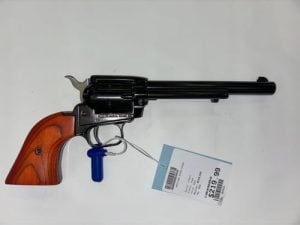
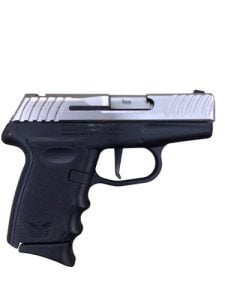
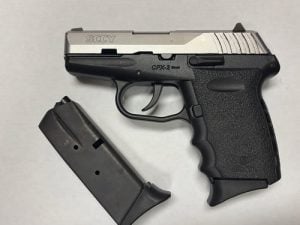
Live inventory from our partner dealer network. Use the brand and price filters to narrow to the model you want. New listings post every few hours as dealers update their stock. Every dealer in this carousel ships to your local FFL where you complete ATF Form 4473 and pass a NICS background check operated by the FBI Criminal Justice Information Services Division.
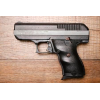
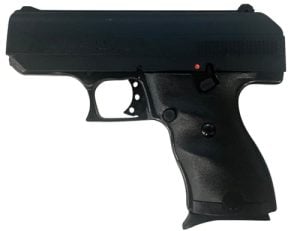
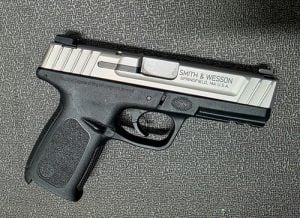
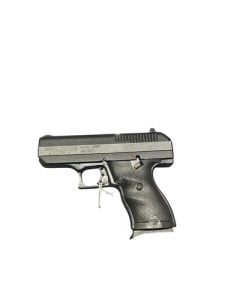
Hi-point CF380 380 ACP Police Trade-In Pistol
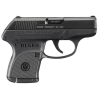 -17%
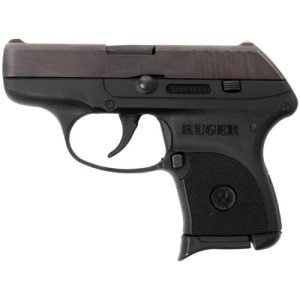
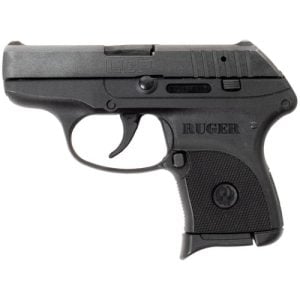
-17%Ruger LCP, 380 ACP, 2.75" Barrel, 6+1 Capacity, Black Finish - Law Enforcement Used - Good to Very Good Condition
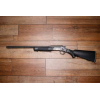
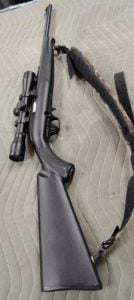
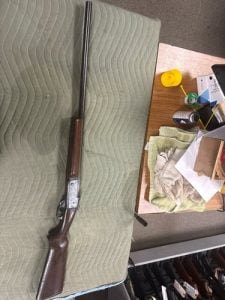
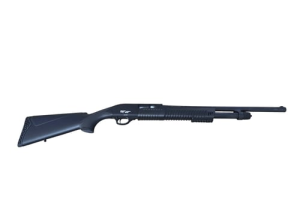
Rossi S201220BS 20GA Police Trade-In Shotgun
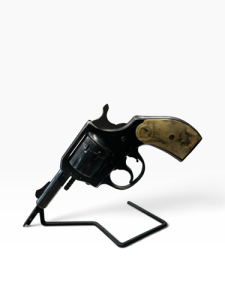
 -10%
-10%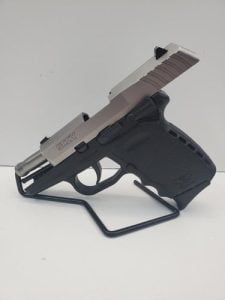
Related Reading
- Used Guns Pillar: Surplus, Police Trade-Ins, and the Full Used Market
- Used vs New Guns: When to Buy Each
- Best Online Gun Stores: Where to Buy
- Glock 19 Gen 6 Review: The Current-Production Reference
- Best Guns for Home Defense in 2026
- Best Gun for Women’s Self Defense
- US Gun Laws by State
Frequently Asked Questions
What is the best used handgun to buy under $400?
A Glock 22 Gen 3 police trade-in chambered in .40 S&W. They run $320-$380 at major dealers, were carried for a decade by state police but fired roughly 500 rounds total in qualification courses, and the mechanical action is near-new despite cosmetic holster wear on the slide. A close runner-up is the Smith & Wesson M&P 40 1.0, which has started flooding the used market as departments transition to M&P 2.0 and 9mm.
Are police trade-in handguns reliable?
Yes. Police trade-ins are inspected by department armorers quarterly for the entire service life, fire only the qualification course twice a year (typically 50 rounds per session, 100 rounds annually), and are retired on a wholesale agency-replacement cycle rather than because of individual gun problems. Holster wear is cosmetic; the mechanical condition is typically excellent, often better than a high-mileage civilian-owned pistol with the same age.
How many rounds does a typical used Glock have through it?
A police trade-in Glock typically has 500-2,500 documented rounds. A civilian consignment Glock might have anywhere from 100 to 20,000 depending on owner habits. Glock pistols are rated for 50,000+ rounds of service life either way, so even a high-mileage example is functionally a long way from end-of-life.
Do used handguns come with a warranty?
Most major dealers (Guns.com, Classic Firearms, Sportsman's Outdoor Superstore) offer a 30-day return window on used handguns. Manufacturer warranties typically transfer to the second owner on Glock, S&W, and Sig Sauer (subject to model and condition). Factory Certified Pre-Owned programs (Sig Custom Shop, S&W Performance Center refurbs) include a full manufacturer warranty equivalent to new-pistol coverage.
What is the difference between police trade-in and surplus?
Police trade-in means a US law enforcement agency duty firearm, retired on a wholesale agency-replacement cycle (Sig P226, Glock 22, S&W M&P are the classic examples). Surplus means a military firearm, retired from active service inventory (Beretta M9, 1911A1, Walther P38). Police trades are usually modern production (1990-2020); surplus runs older (1940-1990 for most listings).
Can I buy a used handgun online?
Yes. Licensed dealers ship the firearm to your local FFL, you complete ATF Form 4473 and pass a NICS background check there, and pick up the gun once cleared. The "used" designation has no impact on the transfer process. Same paperwork as a new firearm purchase.
Should I buy a used handgun for concealed carry?
Yes, with one caveat: replace the recoil spring and magazine springs before you rely on it for daily carry. Recoil springs are $15 from Glock, $25 from Sig. Fresh springs guarantee feed reliability, which is the single thing that matters most in a defensive pistol. Otherwise a used handgun is just as suitable for CCW as a new one, and the savings can fund a quality holster and training ammunition.
What inspection points matter most on a used handgun?
Five points in order of importance: slide and frame rails (looseness, peening at contact points), extractor tension (the leading edge should bite into a dummy round positively), barrel throat (no excessive erosion at the chamber mouth), trigger feel (no creep, no shifting wall, consistent break), and magazine springs (tension under pressure, intact feed lips, smooth follower travel). The full inspection takes about five minutes and catches 90% of meaningful issues.
4,659+ Gun & Ammo Deals
Updated daily from 200+ top retailers. Filter by category, caliber, action type, and price.