

Last updated May 21, 2026 · By Nick Hall, who has owned four used 1911s: a 1980 Series 70 Colt Government bought from an estate sale, a 2008 Springfield Loaded, a Dan Wesson Specialist that taught him what a real trigger feels like, and a Tisas A1 he keeps as a beater range gun
Affiliate disclosure: USA Gun Shop is reader-supported. When you buy through links on our site, we may earn a small commission at no extra cost to you. Full disclaimer.
- Treat every gun as loaded
- Point the muzzle in a safe direction
- Keep your finger off the trigger until you’re ready to shoot
- Know your target and what’s beyond
Table of Contents
The Widest Price Spread in Handguns
A serviceable used 1911 starts around $300 (Tisas A1, Rock Island GI); a custom Wilson Combat or Nighthawk T4 runs $4,000-plus. The platform itself was designed by John Moses Browning with collaborator Frederick Augustus Hewitt at Colt’s Patent Firearms Manufacturing Company and adopted by the US Army Ordnance Department in 1911 as the standard sidearm; the 1924 update to the M1911A1 introduced the arched mainspring housing and shorter trigger that remained the GI standard through 1985. That is a 13x ratio, the widest brand-tier ladder of any handgun platform on the used market. Used Glock 19 spans roughly 2x ($350-$700). Used Sig P226 spans roughly 2.4x ($500-$1,200). Used AR-15 spans roughly 5x ($500-$2,500).
The 1911 is the only handgun where the brand ladder genuinely runs from starter gun to heirloom. A Tisas A1 at $300 is a perfectly functional range gun and the cheapest legitimate door into the platform.
A Wilson Combat CQB at $3,079 used is a hand-fit duty pistol that will be on someone’s hip in 2055. Both are dimensionally identical 1911s; they share parts compatibility; they accept the same magazines. The price spread reflects fit-and-finish, hand-fitting hours, materials, and ownership pedigree, not platform difference.
This is also what makes the used 1911 market the most rewarding and the most punishing of any handgun platform. A wrong brand-tier purchase at $800 can leave you with a frame that wears out in 10,000 rounds. A right brand-tier purchase at $1,400 buys a pistol that gets handed down. For the broader used-handgun decision framework, see our used handguns buyer guide and the used guns hub. For the platform-level used-vs-new economics, our used vs new guns deep-dive covers the cross-platform comparison framework.
What Used 1911s Actually Cost in 2026
The average used 1911 across all brands sits at $672.58 (TrueGunValue 12-month trailing average across all reported transactions). A used Colt 1911 Government averages $1,375.61, a 2x premium for the badge alone. That spread reflects the brand-tier ladder: half the platform sells under $700, a quarter sells between $700 and $1,500, and the top quarter runs from $1,500 to $4,000-plus.
| Tier | Used Price (2026) | Representative Brands | What You Get | Best For |
|---|---|---|---|---|
| Mil-Spec / GI Tier | $300-$550 | Tisas A1, Rock Island GI, Auto-Ordnance, Girsan MC1911, Springfield Mil-Spec | Forged or cast steel frame, parkerized or matte finish, GI sights, plain trigger, no beavertail, 7-round mag. | First 1911, range plinker, parts donor |
| CMP M1911A1 Surplus | $1,200-$1,300 | US Army M1911A1 surplus (Colt, Remington Rand, Ithaca, Union Switch, Singer) | Authentic WWII or Cold War-era GI, mil-spec markings, CMP grading certificate (Service or Field). | Collector, history buff, true GI provenance |
| Production Tier | $700-$1,500 | Colt (Series 70/80), Springfield (Loaded, Garrison, Ronin, Emissary), Kimber (Custom II, Stainless II, Eclipse), Ruger SR1911, Sig 1911 (Emperor Scorpion, TACOPS), S&W Performance Center, Para Ordnance | Forged frame, beavertail grip safety, extended thumb safety, factory sights (often fiber-optic or night), 8-round mag, polished feed ramp. | Daily driver, competition starter, EDC |
| Semi-Custom Tier | $1,500-$2,800 | Dan Wesson (Specialist, Valor, Bruin, A2, Pointman, Vigil), Les Baer (Premier II, Thunder Ranch, Ultimate Tactical Carry), Guncrafter Industries | Hand-fit slide-to-frame tolerances, premium finishes (tin oxide, Cerakote, ION-bonded), match-grade barrel, custom-style controls, 8-9 round mags. | Duty carry, serious competition, no-compromise range gun |
| Custom Tier | $2,500-$5,000+ | Wilson Combat (CQB, Professional, Hackathorn, EDC X9), Nighthawk Custom (Fire Hawk, T3, T4, Talon, GA Precision), Ed Brown (Special Forces, Executive Carry, Kobra Carry, Evo), Cabot Guns | One-pistolsmith-built, fully hand-fit, match-grade barrel + bushing, frontstrap checkering, custom sights, lifetime warranty. | Heirloom, duty carry by serious professional, collector |
| Legacy / Imported Tier | $250-$700 | Norinco NP-29, Llama Max-I / Omni, STAR Model B (Spanish), older Para Ordnance | Variable forged or cast frame, variable QC, often parts-incompatible with modern aftermarket. Norinco hard-steel forged is the diamond in this rough. | Collector, parts donor, Cold War history |
| Used 2011 (Double-Stack) | $1,800-$4,500 | Staccato (P, C2, XC), STI (legacy), Atlas, Phoenix Trinity, Springfield Prodigy | Modular polymer grip module + steel upper, 17-21 round 9mm capacity, accessory rail, optic-ready slide. | Competition shooter, high-capacity 1911 fan |
| Used Colt Government (avg) | $1,375.61 | Colt Government, Combat Commander, Defender, Gold Cup | 12-month trailing average per TrueGunValue. The Colt badge premium is 2x the cross-brand 1911 average. | Brand loyalist, traditionalist, resale-conscious buyer |
The spread within a single tier comes down to brand, era, condition, and source. A 2005 Springfield Loaded with original walnut grips and minimal holster wear runs $725 at a private GunBroker sale. The same pistol from Guns.com with in-house gunsmith grading runs $895. A pre-Series 80 Colt Series 70 (1970-1983 production) commands a $200-300 collector premium over an equivalent post-1983 Series 80 Colt of identical age and condition.
The Five Brand Tiers, Ranked
Five tiers run from GI mil-spec at the bottom to custom heirloom at the top, with semi-custom in the middle as the sweet spot for most serious shooters. Tier matters more than brand within a tier; a Dan Wesson Valor and a Les Baer Premier II are functionally interchangeable for most buyers, but a Tisas A1 and a Wilson Combat CQB are not the same gun even though they share parts.
Tier 1: Mil-Spec / GI ($300-$550 Used)
This is where new 1911 buyers should start, and where the platform earns the “starter gun” framing. used 1911 Tisas A1 (Turkish, SDS Imports) and used 1911 Rock Island Armory GI Standard (Filipino, Armscor) are the volume leaders, both shipping for $300-450 used. Auto-Ordnance (now Kahr) and Springfield Armory Mil-Spec round out the tier at $450-550 used. For the broader sub-$500 1911 landscape, see cheap 1911 pistols under $500. My Tisas A1 cost $325 new in 2023; I have put 4,000 rounds through it without a malfunction and the slide-to-frame fit is still tight enough to count.
What you give up at this tier: hand-fit tolerances, premium finishes, beavertail grip safety on most models, polished feed ramps, factory night sights, and the parts pedigree that lets you sell the pistol for what you paid. What you get: a working 1911 with the original Browning manual of arms, parts compatibility with the broader aftermarket, and 1,000-2,000 rounds of break-in before the pistol settles into its long-term reliability profile.
Tier 2: Production ($700-$1,500 Used)
used 1911 Colt (Series 70 and Series 80 both produced today), used 1911 Springfield Armory (Loaded, Garrison, Ronin, Operator, Emissary, TRP), used 1911 Kimber (Custom II, Stainless II, TLE II, Pro Carry, Eclipse, Ultra Carry), used 1911 Ruger SR1911, Smith & Wesson Performance Center 1911, and used 1911 Sig Sauer (Emperor Scorpion, TACOPS, Spartan, Nightmare) all live here. Used pricing runs $725 for a basic Springfield Loaded to $1,450 for a Sig Emperor Scorpion or Kimber TLE II. Our $1,000 budget 1911 ladder covers the new-market floor that sets these used prices, and our PSA 1911 review and Springfield Armory 1911 Defender review cover the specific budget-and-production-tier entrants in depth.
Tier 2 is where most cross-shoppers should be looking. A used 2008 Springfield Loaded with the original Novak rear sight + dovetail front, beavertail grip safety, extended thumb safety, and the long-trigger arrangement that came as standard runs $750-825.
That is a fully kitted-out 1911 at less than the cost of a new Mil-Spec, and the trigger has 1,500 rounds of break-in already done. The Kimber Custom II at $825-950 used is the most-sold 1911 of the modern era and the platform that taught most of the current generation what the 1911 trigger feels like.
Tier 3: Semi-Custom ($1,500-$2,800 Used)
used 1911 Dan Wesson (CZ-USA subsidiary) is the tier benchmark. The Specialist, Valor, Bruin, Pointman PM-45, and Vigil run $1,500-2,400 used and represent the cleanest fit-and-finish per dollar in the 1911 market. Les Baer Custom Premier II runs $2,400-2,800 used and represents the older, slower, hand-fit approach. Guncrafter Industries rounds out the tier at $2,200-2,600. My Dan Wesson Specialist (purchased used in 2018 for $1,650) is the pistol that taught me what a 1911 trigger is supposed to feel like; every Tier 1 and Tier 2 pistol I have shot since feels gritty by comparison.
This is the sweet spot for serious shooters who do not want to step into the $3,000-plus custom tier. Slide-to-frame tolerances are hand-fit. Frontstrap checkering is standard. Match-grade barrels are standard. Trigger pulls run 3.5-4.5 lbs out of the box. The pistol shoots better than 95% of shooters can shoot, and the resale market is liquid because the brand recognition is universal among 1911 enthusiasts.
Tier 4: Custom ($2,500-$5,000+ Used)
used 1911 Wilson Combat (CQB, Professional, Hackathorn Special, EDC X9), used 1911 Nighthawk Custom (Fire Hawk, T3, T4, Talon, GA Precision), Ed Brown (Special Forces, Executive Carry, Kobra Carry, Evo), and Cabot Guns. Used pricing runs $2,500 for a base Wilson CQB to $5,000-plus for a Cabot or Nighthawk T4 with engraving and custom finish. For the new-market context, see our custom 1911 roundup; the used market generally tracks 60-75% of MSRP.
This is the heirloom tier. Each pistol is built by a single pistolsmith over 40-80 hours.
Slide-to-frame fit is hand-lapped. Barrel bushings are hand-fit. Frontstrap checkering is done at 25 or 30 lines-per-inch. Frame finishes vary by builder: blued steel and parkerized are the traditional finishes; hard chrome resists corrosion and shows wear gracefully; Cerakote, KG Gun-Kote, tin oxide, and ION-Bonded finishes are the modern hard-coat options that resist holster wear better than blued. Triggers break at 3.0-3.5 lbs with no creep.
Grip material choices on the used 1911 market run from traditional walnut and polymer/rubber on production-tier pistols to G10 and micarta on semi-custom and custom builds; collectors can also find mother-of-pearl and ivory grips on heirloom-grade pistols (banned for new ivory but legal on existing 1911s pre-1990). Sight options run from drift-adjustable rear, target adjustable, fixed combat, fiber-optic front, tritium night sight, and suppressor-height for threaded-barrel custom builds. Magazine wells are radiused. The pistol carries a lifetime warranty from the original maker. The resale market is small but stable because owners do not sell these guns lightly.
Tier 5: Legacy / Imported ($250-$700 Used)
This tier is the grab bag. Norinco NP-29 (Chinese forged hard-steel 1911) is the diamond in the rough at $400-600 used; the Norinco Type 1911A1 is widely regarded as more reliable than many Tier 1 mil-spec guns and is occasionally collected as a Cold War curiosity. Llama Max-I and Omni (Spanish, soft-steel forged) run $250-450; the Llama Omni 9mm is the cheapest 9mm 1911 in the used market and historically prone to feed-ramp issues. STAR Model B (Spanish) is a 1911-influenced design (not a true 1911) and runs $300-500 as a curio.
Para Ordnance was the original double-stack 1911 maker before the modern 2011 platform took over. Used Para LTC (double-stack alloy frame) and P14-45 run $450-750 and are worth considering if double-stack capacity matters and 2011 pricing is out of budget.
Frame Sizes: Government, Commander, Officer, Defender
The Government is 5-inch barrel on a full-size frame. The Commander is 4.25-inch barrel on the same full-size frame. The Officer is 3.5-inch barrel on a shortened frame. The Defender is 3-inch barrel on the Officer frame. These four sizes cover 95% of the used 1911 market.
- Government Model (5″ barrel): the original 1911 size and the most-produced. Best for range, competition, duty, home defense. Used Government Models run the full price spread of the platform, $300-$5,000+. The most common chambering is .45 ACP. Most 1911 buyer guides default to Government unless otherwise noted.
- Commander (4.25″ barrel): the carry compromise. Same full-size frame, shorter slide. Quicker to clear a holster, slightly less muzzle weight to manage. Used Commander pricing tracks Government by tier within $50. Colt Combat Commander, Springfield Range Officer Champion, and Kimber Pro Carry are the most common production-tier examples.
- Officer (3.5″ barrel): the original concealed-carry 1911. Shortened frame holds 7-round magazines instead of 8. The Officer trade-off: shorter sight radius and shorter dwell time degrade accuracy and reliability on hot loads. Our Officer 1911 roundup covers the new-market ladder.
- Defender (3″ barrel): the Officer frame with the shortest available barrel. Colt Defender and Kimber Ultra Carry are the volume leaders. Defenders tend to be ammunition-sensitive; require break-in and ammunition testing. Used $850-$1,400 depending on brand and condition.
- Mid-Size (4″ barrel): a less-common size that splits the difference between Commander and Officer. Springfield Champion and Kimber Pro Carry II are the main entrants. Used $800-$1,300.
The carry decision matters more than the size label. A Commander on a full-size frame conceals worse than an Officer on a shortened frame because the grip is the harder part to conceal, not the slide. If concealed carry is the goal, prioritize the shortened frame (Officer or Defender) over the shortened slide (Commander).
Series 70 vs Series 80
Series 80, introduced by Colt in 1983, added a passive firing-pin block triggered by the trigger bow; Series 70 lacks it and isn’t drop-safe with a chambered round. This is the single highest-volume buyer question on the platform and it has a clean technical answer.
The Series 70 fire control group is the original Browning design with a frame-mounted hammer, sear, and disconnector. When the hammer is cocked and a round is chambered, only the sear engagement holds the hammer back.
A hard impact to the muzzle (drop on a hard floor, butt strike, projectile impact) can shear the firing pin off its spring and drive the floating firing pin forward into a primer. The 1911 platform was never designed for chambered-round drop safety; the original 1911 manual of arms specified condition 3 (hammer down on empty chamber) carry.
Colt was sued in the early 1980s after a series of accidental discharges. The 1983 Series 80 introduced a passive firing-pin block that physically prevents the firing pin from moving forward unless the trigger is depressed (which pushes the trigger bow into a small lever that lifts the firing-pin block out of the firing pin channel). Series 80 is drop-safe; Series 70 is not. Both Series 70 and Series 80 pistols are still produced today by Colt; both are widely available in the used market.
For trigger feel, the Series 70 has a slightly cleaner break because there is no firing-pin block transfer between trigger and sear. Series 80 triggers can feel “grittier” if the firing-pin block plunger is dirty or worn. Custom pistolsmiths often remove the Series 80 firing-pin block during accuracy work; doing so voids drop safety but improves trigger feel. The 1980 Series 70 Colt Government I bought at an estate sale has the original trigger and breaks cleaner than every Series 80 I have shot, but I carry condition 1 (cocked-and-locked) only at the range, never as EDC. For depth, see our discussion in our Colt 1911 roundup.
Forged vs Cast Frames: The Inspection Point Most Buyers Miss
Forged frames (Tisas, Colt, Springfield, Dan Wesson, Wilson, Nighthawk, Ed Brown, Les Baer, old Norinco) outlast cast frames (Rock Island Armory, some Auto-Ordnance, Llama) in round-count durability tests. The forged-vs-cast distinction is the #1 inspection point most buyers do not know to check.
The difference is metallurgy. A forged frame starts as a steel billet that is hot-formed under pressure into the rough frame shape, then machined to final dimensions. The grain structure of the steel aligns with the load paths during the forging process, creating a frame with directional strength along the frame rails.
A cast frame is poured molten into a mold, cooled to solid, and machined to final dimensions. The grain structure is more random, and there is a higher probability of internal voids, especially around stress concentration points (rail intersections, mainspring housing pin holes, slide stop holes).
Visually identifying the difference: look inside the magazine well with a flashlight. A forged frame shows clean, smooth interior surfaces with consistent machining marks. A cast frame often shows visible casting “skin” or texture (faint stippling, slightly grainier surface), and sometimes shows the location of the casting gate where the molten steel entered the mold. Cast frames are not inherently bad for a range pistol; Rock Island Armory cast-frame 1911s see 5,000-10,000 rounds without issue. They are worse for high-round-count duty use where rail wear and frame stress matter.
The 7-Point Used 1911 Inspection Checklist
Plunger tube staking, barrel-link wear, sear engagement, and recoil spring life are the four most common failure points on a worn 1911. Plus three more inspection points that catch the rest. The full inspection takes 6-10 minutes at the dealer counter.
- 1. Plunger tube staking. The plunger tube on the left side of the frame holds the thumb safety and slide stop detent springs. Look at the two staked pin heads inside the frame; they should be flush or slightly proud, never sunken or wobbly. Loose plunger tubes shift under recoil and cause thumb safety failures. Re-staking is a $40-60 gunsmith job.
- 2. Slide-to-frame fit. Strip the slide off the frame, then check vertical and lateral play. A well-fit 1911 has minimal play in both directions. Significant vertical movement (visible up-and-down rocking when slide is on frame) indicates worn rails. Lateral play (slide moves side-to-side) is normal in small amounts but excessive movement indicates rail wear. Tier 2+ pistols typically have less play than Tier 1.
- 3. Barrel hood lockup. With the slide assembled to the frame and the action in battery, look at the rear of the barrel hood where it locks into the slide breechface. There should be solid metal-on-metal contact with no visible gap. A loose lockup indicates worn barrel lugs or worn slide locking surfaces, which degrade accuracy and can lead to unsafe out-of-battery firing.
- 4. Barrel link and pin. The link is the small steel piece that hangs below the barrel and rotates the barrel up into lockup during cycling. Inspect the link for cracks at the pin holes (the most common 1911 failure mode after 10,000+ rounds). Inspect the pin for shear marks or galling. Link replacement runs $15-25 in parts.
- 5. Sear engagement. With the slide locked back, the magazine empty, and the chamber visibly clear, ease the slide forward and slowly squeeze the trigger while watching the hammer. The hammer should move only the small amount of sear engagement before breaking cleanly. Excessive creep, a gritty release, or “follow-down” (the hammer follows the slide forward without a fresh trigger pull) indicates sear or hammer hook wear. This is a gunsmith repair, not a field fix.
- 6. Recoil spring life. Pull the recoil spring assembly and measure or compare to spec. Standard Government 5″ recoil springs are 16-pound rated and should be replaced every 3,000-5,000 rounds. A spring shorter than spec, or one that shows visible compression set, has used up its service life. Replacement runs $12-20 OEM, $25-40 for premium (Wolff Gunsprings).
- 7. Beavertail grip safety fit. If the pistol has a beavertail grip safety, press it inward and check that it engages and disengages smoothly with no binding. Verify the tang of the beavertail does not extend so far down that it can hit the web of the hand during cycling. A poorly fitted beavertail bites the hand at every shot and is a tell that the pistol was not professionally hand-fit.
Bring a flashlight, a 1911-specific armorer’s tool (or a small Allen wrench set), and snap-cap dummies if you want to inspect to this depth. Most reputable dealers will let you inspect a used 1911 thoroughly because they want the sale to stick. Walk away from sellers who refuse to let you field-strip.
Calibers: .45 ACP, 9mm, 10mm, .38 Super
The original chambering, the used 1911 .45 ACP, still dominates: roughly 65% of the used market is .45 ACP. The used 1911 9mm has grown to about 25% of the used market over the past decade as ammunition costs widened the practice-vs-defense gap. The used 1911 10mm sits at about 5% and is the hunting / hot-load niche. The used 1911 .38 super is a collector and IPSC competition niche at 3-5%. Other calibers (.22 LR conversions, .400 Cor-Bon, 9×23 Winchester) round out the remainder.
Used 9mm 1911s typically run $50-100 below equivalent-tier .45 ACP examples because there is less collector demand for the chambering. A used 10mm 1911 typically runs $100-200 above the equivalent .45 ACP because hunting-grade hot-load 10mm requires a heavier recoil spring, often a stronger ramped barrel, and the platform is more demanding. .38 Super examples vary wildly based on whether the pistol is a competition build (often premium price) or an older sporting variant.
The .22 LR caliber appears as a dedicated frame (rare) or as a conversion unit (common): Kimber Rimfire Target, Ciener .22 conversion kits, and Marvel Custom .22 conversions let a centerfire 1911 fire .22 LR for cheap practice. Used .22 LR conversion kits run $200-450; a dedicated .22 LR 1911 frame typically runs $500-800 used.
For caliber-specific ammunition selection, our $1,000 budget 1911 roundup covers chambering-specific picks at the new-market floor that sets these used prices.
The CMP M1911A1 Surplus Program (Restarted 2025)
The Civilian Marksmanship Program resumed surplus 1911 sales in February 2025; Service Grade is $1,300, Field Grade $1,200, with a four-pistol lifetime cap raised from two in May 2025. The program was suspended in 2024 and restarted under the new administration with revised terms.
The CMP M1911A1 surplus pool is the original US Army M1911A1 production from Colt, Remington Rand, Ithaca, Union Switch & Signal, and Singer (the Singer pistols are extreme collector pieces and not part of the standard CMP rotation). Each pistol is graded by CMP armorers and sold with a grading certificate documenting condition and originality. Service Grade pistols are mechanically sound, shootable, and typically retain at least 75% of original finish with all original parts. Field Grade pistols may have refinish work or non-original parts swapped during military service refurbishment cycles. Rack Grade (when offered) covers pistols with significant cosmetic wear, refinish work, or non-original parts but with mechanically sound action. The grading certificate is the document that determines secondary-market value, not just the pistol itself.
Eligibility requirements: CMP membership, completion of marksmanship safety course, and a clean federal background check. The application process runs 4-8 weeks. Pistols ship to your FFL of record (not direct to home). Each CMP 1911 is a one-of-a-kind piece with documented provenance, and the lifetime cap of 4 pistols ensures collector demand keeps secondary-market pricing strong. A CMP-graded Service Grade M1911A1 sold privately on GunBroker typically commands $1,500-1,800, a $200-500 premium over the CMP purchase price.
1911 vs 2011: The Modular Double-Stack Distinction
The 1911 is a single-stack steel frame; the 2011 is a steel upper paired with a polymer grip module accepting double-stack magazines (17-21 rounds in 9mm). They are not the same gun, and conflating them is a 1911-forum trip-wire that catches new buyers.
The 2011 platform originated at STI in the 1990s and has been refined by Staccato (the renamed STI), Atlas, Phoenix Trinity, Phoenix Custom, Cheely Custom, and most recently Springfield Armory (Prodigy).
The defining 2011 design feature is the modular grip frame: the steel slide, barrel, and fire control group are 1911-compatible (most parts interchange with single-stack 1911s), but the grip frame is a separate polymer module that holds the double-stack magazine. This lets the manufacturer offer different grip sizes, textures, and colors without re-machining the steel frame.
Used 2011 pricing runs $1,800 for a base Staccato C2 to $4,500+ for a Phoenix Trinity or Atlas Chaos. For depth on the modern double-stack tier, see our next-gen 1911 double-stack 9mm guide. The legacy Para Ordnance double-stacks (P14-45, LTC, Tac-Four) are the historical predecessor and are NOT 2011s; they are double-stack 1911s with a different grip-frame approach (steel monolithic frame, not modular polymer).
Where to Buy a Used 1911 in 2026
The honest hierarchy is the CMP for original M1911A1 surplus, Guns.com and GunsInternational for graded collector-grade inventory, GunBroker for the widest depth across all tiers, Classic Firearms for budget Tisas and RIA inventory, and your local FFL for the gun you can actually hold before paying.
Tier 1: Authoritative + Graded
- Civilian Marksmanship Program: original M1911A1 surplus with grading certificate. $1,200-1,300, four-pistol lifetime cap. Best path for documented WWII / Cold War-era GI pistols.
- Guns.com: curated used inventory hand-inspected by in-house gunsmith and condition-graded. Best path for production-tier pistols (Colt, Springfield, Kimber, Sig). Pricing $40-80 above raw private-sale but with inspection assurance.
- Guns International: collector-grade marketplace. Pre-1945 Colt Government models, Wilson Combat and Ed Brown semi-custom listings, sub-gauge sets. Pricing reflects collector market not shooter market.
Tier 2: Volume Auction + Mid-Range Retail
- GunBroker: the deepest 1911 listing pool. All tiers from $300 Tisas to $5,000 Cabot. Verify seller feedback (500+ transactions, 99%+ positive), require photos of magazine well casting marks (for forged-vs-cast verification), slide rollmarks, and serial range.
- Sportsman’s Warehouse: mid-volume used 1911 inventory at brick-and-mortar locations. Best for hands-on inspection of Tier 2 production pistols.
- Bud’s Gun Shop: 3-day inspection-and-return policy makes Bud’s the safest mail-order option for premium Tier 3 and Tier 4 pistols.
Tier 3: Budget Specialist + Local
- Classic Firearms: highest volume of Tisas, Rock Island Armory, and Auto-Ordnance budget-tier inventory in 2026. Inventory rotates by batch at $290-450.
- Local independent gun shops and gun shows: variable pricing and condition; best for hands-on inspection and building a relationship with one dealer over time. Always inspect the magazine well casting before paying.
- Estate sales and private-party transactions: the best deals on Tier 3 and Tier 4 pistols come from estate sales where the seller does not know the value. My 1980 Series 70 Colt Government cost $475 at an estate sale in 2019; the same pistol on GunBroker would have run $1,100-1,300.
Live Used 1911 Inventory
Live inventory from our partner dealer network, filterable by tier, brand, frame size, caliber, and condition. CMP surplus batches refresh monthly when allocation cycles renew; GunBroker auction listings rotate hourly; Guns.com graded used inventory refreshes Mondays. Use the filter to isolate the tier you care about: Mil-Spec for first-1911 or beater duty, Production for daily driver or competition starter, Semi-Custom for the no-compromise sweet spot, Custom for heirloom or duty by serious professional.
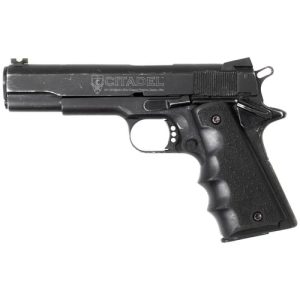
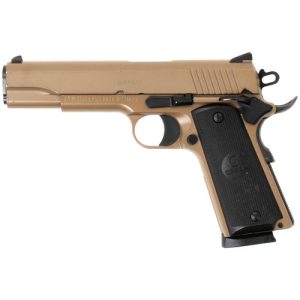
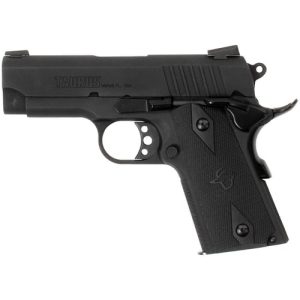
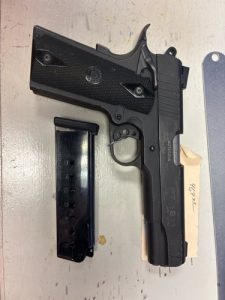
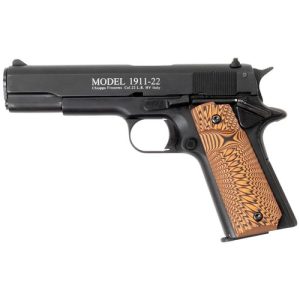
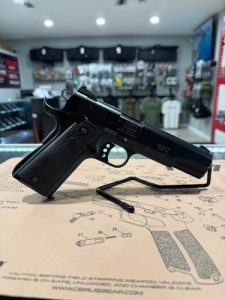
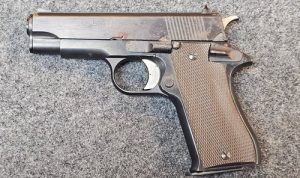
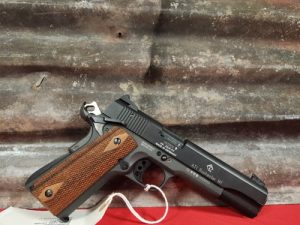
Tisas A1 (Mil-Spec Tier) $300-$350 used
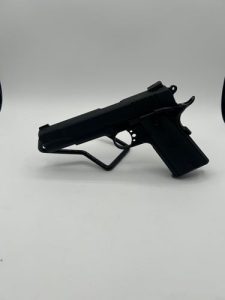
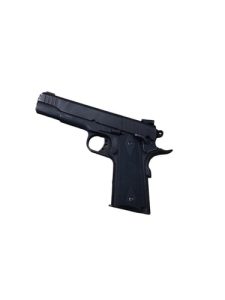
Rock Island Armory GI Standard (Mil-Spec Tier) $300-$450 used
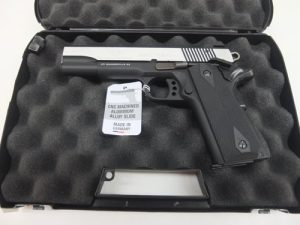
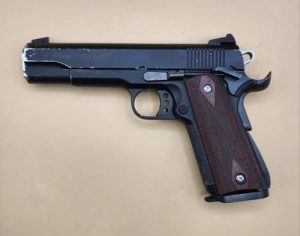
Dan Wesson Valor (Semi-Custom Tier) $1,500-$2,400 used
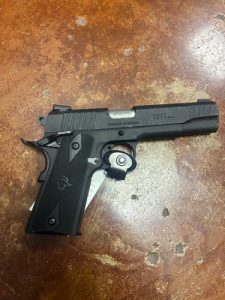
Wilson Combat CQB (Custom Tier) $2,500-$3,500 used

 -20%
-20%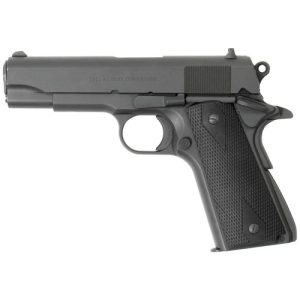
 -15%
-15%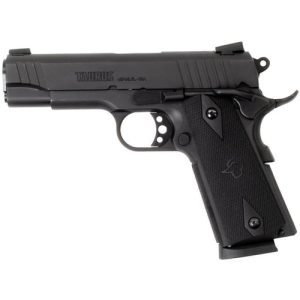
 -10%
-10%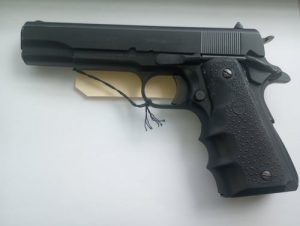
Should You Buy a Used Glock 19 Instead?
The Glock 19 is the modern striker-fired counter-argument to the 1911. Same general role (handgun-of-everything), totally different operating system, totally different price spread. The right gun depends on what you want from the platform.
The 1911 gives you the original Browning trigger (cocked-and-locked or hammer-down carry, 4-5 lb single-action break), all-steel construction (more weight, less recoil), and the deepest aftermarket / customization ecosystem in handgun shooting sports. The Glock 19 gives you a polymer frame (lighter, cheaper, more rust-resistant), a striker-fired trigger (consistent 5.5 lb every round), 15-round flush-fit magazines (vs the 1911’s 7 or 8), and a price floor of $350 used that the 1911 cannot match without giving up build quality.
For carry, the Glock 19 wins on weight and capacity. For range, competition, and shooting-as-hobby, the 1911 wins on trigger feel and customization. For duty use, both work; agencies like the LAPD SWAT carried the 1911 for decades before the Glock 19 / 17 took over the mainstream. Our used Glock 19 buyer guide, used Sig P226 guide, used AR-15 guide, and · used M1 Garand buyer guideused Remington 870 guide cover the equivalent tier ladders in their respective markets. The 1911 is unique among them for the depth of its price spread.
Who Should NOT Buy a Used 1911
The 1911 rewards study and investment but punishes inattention. Four buyer profiles should walk away from the used market and either buy new (with warranty), buy a different gun entirely, or wait until they have done more homework.
- First-time handgun buyers with no 1911-specific knowledge. The platform demands an understanding of Series 70 vs 80, forged vs cast, plunger-tube staking, sear engagement, and the manual of arms. A new shooter is better served by a used Glock 19 ($350-700, point-and-shoot reliability) or a used S&W M&P 2.0 ($450-650). Come back to 1911s after 5,000 rounds of pistol experience.
- Buyers who want maximum capacity. Single-stack 1911s hold 7 or 8 rounds of .45 ACP, 9 or 10 of 9mm. If your priority is rounds-on-tap, a Glock 19 (15+1) or a 2011 (17-21+1) is the right answer; the single-stack 1911 is the wrong gun.
- Shooters who refuse to maintain a pistol. The 1911 needs lubrication at the slide rails, the barrel hood, the disconnector, and the link every 200-500 rounds. Dirty 1911s fail. A used Glock 19 will run unmaintained for thousands of rounds without complaint. If your maintenance discipline is poor, buy the Glock.
- Buyers expecting Glock-tier reliability from Tier 1 budget 1911s. A random Tisas A1 is less likely to be 100% reliable out of the box than a random Glock 19. Budget 1911s typically need 500-1,500 rounds of break-in plus magazine sorting (Wilson, Chip McCormick, Tripp, and Mec-Gar magazines work; some no-name mags do not). If you want a $300 reliable handgun, buy a used S&W M&P Compact instead of a Tisas A1.
Used 1911 Buyer Glossary
- Government Model: the original 5-inch barrel 1911 size on a full-size frame. The default 1911 size and most common chambering is .45 ACP.
- Commander: a 4.25-inch barrel 1911 on the same full-size frame as the Government. Same grip and magazine capacity, shorter slide. Named for the original Colt Lightweight Commander adopted as a US Air Force issue pistol.
- Officer: a 3.5-inch barrel 1911 on a shortened frame holding 7-round magazines. The original concealed-carry 1911 size. Officer-frame pistols tend to be ammunition-sensitive.
- Defender: a 3-inch barrel 1911 on the Officer frame, the shortest mainstream 1911. Colt Defender and Kimber Ultra Carry are the volume leaders. Used $850-$1,400.
- Series 70 (Colt fire control): the original Browning 1911 fire control without a passive firing-pin block. Not drop-safe with a chambered round. Discontinued in 1983 but reintroduced by Colt in 2001 and still produced today alongside Series 80.
- Series 80 (Colt fire control): introduced 1983, added a passive firing-pin block triggered by the trigger bow. Drop-safe with a chambered round. The current Colt standard alongside Series 70.
- Swartz Safety (Kimber FPB): Kimber’s equivalent of the Series 80 firing-pin block, but actuated by the grip safety instead of the trigger. Mechanically different from Series 80 but achieves the same drop-safe outcome.
- Beavertail Grip Safety: an extended grip safety with an upward-curved tang that prevents hammer bite on the web of the hand. Standard on production-tier and above; absent on most GI/Mil-Spec pistols.
- Plunger Tube: the small tube on the left side of the frame that holds the thumb safety and slide stop detent springs. Loose plunger tube staking is one of the most common 1911 failure modes.
- Forged Frame: a steel frame produced by hot-pressing a billet under high pressure, then machining to final dimensions. Stronger and more durable than cast frames. Standard on Colt, Springfield, Dan Wesson, Wilson Combat, Nighthawk, Ed Brown, Les Baer, and Tisas.
- Ramped Barrel: a 1911 barrel with an integrated feed ramp built into the barrel itself, instead of relying on the frame’s feed ramp. Increases reliability with hot loads (10mm, .38 Super) and short-OAL hollow points. Most modern production 1911s use ramped barrels; older GI pistols use frame feed ramps.
- 2011 Platform: a modular 1911-pattern handgun with a steel slide and barrel paired with a polymer grip module accepting double-stack magazines. Originated at STI (now Staccato) in the 1990s. NOT a synonym for double-stack 1911; the Para Ordnance double-stacks were 1911s, not 2011s.
Related Reading
- Used handguns buyer guide: the full used-handguns sub-hub covering 1911s, Glock 19s, Sig P226s, and more.
- USA Gun Shop’s used guns hub: the pillar guide covering handguns, rifles, and shotguns across the used market.
- Used Glock 19 buyer guide: the sibling spoke covering the modern striker-fired alternative.
- Used Sig P226 guide: the sibling spoke covering federal trade-in hammer-fired handguns.
- Used AR-15 buyer guide: the rifle-cluster sibling with the same brand-tier framework.
- · used M1 Garand buyer guideUsed Remington 870 guide: the shotgun-cluster sibling covering Wingmaster/Express tier ladder.
- Best Colt 1911 pistols: the Colt-specific brand deep-dive across Government, Combat Commander, Defender, and Gold Cup variants.
- Best Kimber 1911 pistols: the Kimber-specific brand deep-dive across Custom II, Stainless II, TLE II, and Eclipse variants.
- Best custom 1911 handguns: the Tier 4 custom roundup across Wilson Combat, Nighthawk, Ed Brown, and Cabot.
- Next-gen 1911 double-stack 9mm guide: the 2011 platform deep-dive across Staccato, Springfield Prodigy, and aftermarket builders.
Frequently Asked Questions
What should I look for when buying a used 1911?
Run a 7-point inspection: plunger tube staking, slide-to-frame fit, barrel hood lockup, barrel link and pin condition, sear engagement, recoil spring life, and beavertail grip safety fit. Also check whether the frame is forged or cast (look inside the magwell, forged shows clean machined surfaces, cast shows casting texture). Identify Series 70 vs Series 80 by inspecting the firing-pin block plunger inside the slide. Verify the brand tier matches the asking price.
How much does a used 1911 cost?
A used 1911 averages $672.58 across all brands (TrueGunValue 12-month trailing). Five tiers: Mil-Spec / GI (Tisas, RIA, Auto-Ordnance) $300-$550; CMP M1911A1 surplus $1,200-$1,300; Production (Colt, Springfield, Kimber, Sig, Ruger, S&W) $700-$1,500; Semi-Custom (Dan Wesson, Les Baer) $1,500-$2,800; Custom (Wilson Combat, Nighthawk, Ed Brown, Cabot) $2,500-$5,000+. Used Colt Government averages $1,375.61, a 2x premium for the badge.
What is the difference between Series 70 and Series 80 1911s?
Series 80, introduced by Colt in 1983, added a passive firing-pin block triggered by the trigger bow; Series 70 lacks it and is not drop-safe with a chambered round. Colt added Series 80 after a series of accidental discharge lawsuits in the early 1980s. Series 70 has a slightly cleaner trigger break because there is no firing-pin block transfer. Both are still produced by Colt and widely available used. Series 70 fans value the trigger; Series 80 buyers value drop safety.
Is a used 1911 a good investment?
Yes, in Tier 3 (Semi-Custom) and Tier 4 (Custom). A used Dan Wesson Valor purchased today holds 90-95% of its value over 5 years if maintained. A used Wilson Combat CQB or Nighthawk Fire Hawk often appreciates because new production runs cannot keep up with demand. Tier 1 (Mil-Spec / GI) and Tier 2 (Production) typically depreciate 30-50% over 5 years like most production handguns. Pre-1945 Colt Government models and Singer M1911A1 surplus pistols are documented collector investments.
What is the difference between Government, Commander, and Officer 1911?
The Government Model has a 5-inch barrel on a full-size frame and is the original 1911 size. The Commander has a 4.25-inch barrel on the same full-size frame (same grip and magazine capacity, shorter slide). The Officer has a 3.5-inch barrel on a shortened frame holding 7-round magazines (vs the 8-round Government). The Defender is a 3-inch barrel on the Officer frame. Government for range and duty, Commander for carry compromise, Officer or Defender for true concealed carry.
Are forged 1911 frames better than cast?
Yes, in round-count durability. Forged frames (Tisas, Colt, Springfield, Dan Wesson, Wilson Combat, Nighthawk, Ed Brown, Les Baer, old Norinco) outlast cast frames (Rock Island Armory, some Auto-Ordnance, Llama) because forging aligns the steel grain structure with the load paths. Visually identify by looking inside the magazine well with a flashlight: forged shows clean machined surfaces, cast often shows casting texture or skin. Cast frames are fine for range guns (5,000-10,000 rounds without issue); they are worse for high-round-count duty.
What is the best brand of 1911 to buy used?
For value: a 2005-2015 Springfield Loaded or Kimber Custom II in the $750-950 range. For tier-best: a Dan Wesson Specialist or Valor in the $1,500-2,400 range delivers the cleanest fit-and-finish per dollar in the entire 1911 market. For custom: Wilson Combat CQB and Nighthawk Custom Fire Hawk hold value better than any other handgun. For pure budget: Tisas A1 at $300-350 is the cheapest reliable 1911. The "best brand" depends on your target tier and intended use.
What is the difference between a 1911 and a 2011?
The 1911 is a single-stack steel frame; the 2011 is a steel slide and barrel paired with a polymer grip module accepting double-stack magazines (17-21 rounds in 9mm). The 2011 platform originated at STI in the 1990s, refined by Staccato (renamed STI), Atlas, Phoenix Trinity, Cheely Custom, and Springfield Armory (Prodigy). The 1911 and 2011 share the same slide, barrel, and fire control group; only the grip frame differs. Para Ordnance double-stack 1911s (steel monolithic frame) are NOT 2011s, they are the historical predecessor.
4,659+ Gun & Ammo Deals
Updated daily from 200+ top retailers. Filter by category, caliber, action type, and price.