

Last updated August 2026 · By Nick Hall, USPSA and PRS competitor
The best competition trigger upgrade depends on your platform: a drop-in Apex or Overwatch trigger for a striker pistol, a TriggerTech or Geissele for an AR-15 or PCC, and a TriggerTech Diamond for a precision rifle. A trigger is the single highest-value upgrade you can make to almost any competition gun, taking a mushy factory pull and turning it into a flat, light, crisp break with a fast reset for around 100 to 300 dollars. This guide covers the best drop-in triggers by platform, what to look for, and which ones genuinely improve your scores.
If you can only upgrade one thing on a competition gun, make it the trigger. A great trigger does not just feel nice; it directly improves your accuracy and speed by letting you break the shot without disturbing the sights, and the reset lets you run faster splits. Most factory triggers are built for liability and durability, not competition, so they are heavier and mushier than they need to be. A drop-in competition trigger fixes that for a fraction of the cost of a new gun. This guide is organized by platform, since the right trigger for a Glock is nothing like the one for a precision rifle. For the guns these go in, see my best competition pistols and best PRS rifles roundups.
Table of Contents
Best Competition Triggers by Platform
| Platform | Top trigger picks | Type | Typical price |
|---|---|---|---|
| Striker pistol (Glock etc.) | Apex, Overwatch TAC, Johnny Glock | Drop-in flat | $100-$200 |
| AR-15 / PCC | Geissele, TriggerTech, Hiperfire, Timney | Drop-in cassette | $130-$300 |
| Precision rifle | TriggerTech Diamond, Bix’n Andy, Timney | Bolt-action drop-in | $200-$400 |
| 2011 / 1911 | Factory-tuned or gunsmith | Internal fit | Gunsmith work |
Prices move with the market. The big rule is that a drop-in trigger is one you can install yourself with basic tools, while a 2011 or 1911 trigger job is gunsmith work. I cover each platform below, then what to look for and how to choose.
Best Striker Pistol Triggers
Striker-fired pistols like the Glock, and the optic-ready guns that dominate Carry Optics, benefit enormously from a drop-in trigger because the factory pull is the weakest link. A good aftermarket trigger flattens the face, lightens and cleans the break, and shortens the reset.
Apex and Overwatch: The Carry Optics Standards
The Apex Action Enhancement Trigger and the Overwatch Precision TAC are the two most popular drop-in triggers for competition Glocks and similar strikers. Both give you a flat-faced trigger with a lighter, crisper break and a shorter, more positive reset, installed with basic punches in a few minutes. They are the single best upgrade for a Glock 34 or similar Carry Optics gun, turning a mediocre factory trigger into something you can actually shoot fast and accurately. Johnny Glock triggers are the premium tuned option for shooters who want a gunsmith-grade pull.
Pros
- Transforms a mushy factory striker pull
- Flat face, lighter break, fast reset
- Easy drop-in install
- Affordable at 100 to 200 dollars
Cons
- Not a true single-action feel
- Quality varies by brand
- Some are not legal in every division, check rules
Shop Pistol Triggers
Top Accessories Deals
Best-scored accessories across 200+ retailers · Updated every 4 hours
Best AR-15 and PCC Triggers
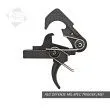
For an AR-15 in 3-Gun or a PCC, a drop-in cassette trigger is the highest-value upgrade you can make, and the options are excellent. These self-contained units drop into the lower with two pins and give you a flat, light, crisp break that the mil-spec trigger can’t touch.
Geissele, TriggerTech and Hiperfire
Geissele set the standard for AR competition triggers, with the SSA-E and Super 3-Gun models offering a clean two-stage pull beloved by 3-Gun shooters. TriggerTech uses a frictionless roller for one of the cleanest, crispest single-stage breaks available, and Hiperfire makes the Hipertouch Competition that ships in the Stag 15 3-Gun and is a favorite for its fast, light pull. Timney rounds out the field with reliable drop-in single and two-stage units. Any of these transforms a budget AR or PCC for around 130 to 300 dollars. See the rifles in my best 3-Gun rifles and best competition PCCs roundups.
Pros
- Drop-in cassette, easy two-pin install
- Clean flat break, fast reset
- Single or two-stage options
- Transforms budget ARs and PCCs
Cons
- Premium models cost up to 300 dollars
- Two-stage takes practice to master
- Match to your division and use
Best Precision Rifle Triggers
On a PRS or precision rifle, the trigger is critical because you are breaking a careful shot from an unstable position, and any creep or weight disturbs your aim. You’re fighting your own pulse out there. A great bolt-action trigger lets you press straight through cleanly without moving the rifle.
TriggerTech Diamond and Bix’n Andy
The TriggerTech Diamond is the benchmark precision-rifle trigger, with a frictionless release that breaks like a glass rod at a feather-light, fully adjustable weight, and it drops into most popular actions. Bix’n Andy makes the premium gunsmith-grade option with a trigger feel many consider the finest available, at a higher price. Timney offers excellent value bolt-action triggers for shooters who want a big upgrade without the flagship cost. Any of these is a transformative upgrade on a factory precision rifle. See the rifles in my best PRS rifles roundup.
Pros
- Glass-rod clean break
- Fully adjustable, very light
- Drops into most actions
- Transforms factory precision rifles
Cons
- Premium models are pricey
- Very light pulls demand discipline
- Confirm action compatibility
What to Look For in a Competition Trigger
Across every platform, the same qualities separate a great competition trigger from a stock one.
- A clean, crisp break. The trigger should break without creep or grittiness, so the shot releases exactly when you expect without disturbing the sights.
- A short, positive reset. A fast, tactile reset lets you run quicker splits, since you do not have to release the trigger far before the next shot.
- The right weight. Lighter is faster but demands more discipline. Most competition pistol triggers land around 3 to 4 pounds, AR triggers 2.5 to 3.5, and precision rifle triggers can go well under 2.
- A flat face, often. Many shooters prefer a flat trigger for consistent finger placement and a feel of a lighter pull through better leverage.
- Division legality. Some divisions set minimum trigger weights or restrict modifications, so confirm your trigger is legal before a match.
Drop-In vs Gunsmith Trigger Work
There are two paths to a better trigger, and which one applies depends on your gun. A drop-in trigger is a self-contained unit you install yourself with basic tools, available for striker pistols, AR-15s, PCCs, and most bolt-action precision rifles. It’s the fast, affordable, no-gunsmith route, and for those platforms it’s what almost everyone uses. You order the trigger, punch out a couple of pins, drop it in, and function-check it.
A 1911 or 2011, by contrast, doesn’t take a drop-in trigger the same way; its trigger pull is created by hand-fitting the internal sear, hammer, and trigger components, which is gunsmith work. That’s part of why a quality 2011 like a Staccato ships with such a good trigger already, and why you don’t see cheap drop-in 2011 triggers. If you shoot a 2011 and want a better pull, it’s a gunsmith job, not a parts swap. For everything else, a drop-in is the answer.
The Bottom Line
A trigger is the highest-value upgrade you can make to almost any competition gun, and the right one depends on your platform. For a striker pistol, a drop-in Apex or Overwatch transforms the gun for around 150 dollars. For an AR-15 or PCC, a Geissele, TriggerTech, or Hiperfire cassette is the single best change you can make. For a precision rifle, a TriggerTech Diamond breaks like glass. Match the trigger to your platform and your division rules, install it, and dry-fire it in, because a better trigger only helps if you put in the reps. New to the sport? Start with my complete guide to competition shooting.
Frequently Asked Questions
- Treat every gun as loaded
- Point the muzzle in a safe direction
- Keep your finger off the trigger until you’re ready to shoot
- Know your target and what’s beyond
What is the best competition trigger?
It depends on your platform. For a striker pistol like a Glock, a drop-in Apex or Overwatch TAC is the standard. For an AR-15 or PCC, a Geissele, TriggerTech or Hiperfire cassette is the top choice. For a precision rifle, the TriggerTech Diamond breaks like a glass rod. A trigger is the highest-value upgrade on almost any competition gun, usually 100 to 300 dollars.
Is a trigger upgrade worth it for competition?
Yes, a trigger is widely considered the single highest-value upgrade you can make to a competition gun. A good aftermarket trigger gives you a cleaner break and faster reset, which directly improves accuracy and speed by letting you fire without disturbing the sights and run quicker splits. For 100 to 300 dollars it transforms a mushy factory gun far more than most pricier upgrades.
What is the best Glock trigger for competition?
The Apex Action Enhancement Trigger and the Overwatch Precision TAC are the two most popular competition Glock triggers, both giving a flat face, lighter and crisper break, and shorter reset in an easy drop-in install. Johnny Glock triggers are the premium tuned option. Any of these transforms a Glock 34 or similar Carry Optics gun for around 100 to 200 dollars.
What is the best AR-15 trigger for 3-Gun?
Geissele, TriggerTech, Hiperfire and Timney make the best AR-15 competition triggers. The Geissele Super 3-Gun and SSA-E are beloved two-stage options, TriggerTech offers an exceptionally crisp single-stage break, and the Hiperfire Hipertouch Competition ships in the Stag 15 3-Gun. Any drops in with two pins and transforms a budget AR for around 130 to 300 dollars.
How light should a competition trigger be?
It varies by platform and division. Competition pistol triggers usually land around 3 to 4 pounds, AR-15 triggers around 2.5 to 3.5, and precision rifle triggers can go well under 2 pounds. Lighter is faster but demands more discipline to shoot safely. Always check your division rules, since some set minimum trigger weights, especially for carry-style and duty divisions.
Can you put a drop-in trigger in a 2011?
Not the same way you can in a striker pistol or AR. A 1911 or 2011 trigger pull is created by hand-fitting the internal sear, hammer and trigger parts, which is gunsmith work rather than a drop-in swap. That is why quality 2011s like the Staccato ship with excellent triggers already. If you want a better 2011 trigger, it is a gunsmith job, not a parts upgrade.
What is the best precision rifle trigger?
The TriggerTech Diamond is the benchmark precision-rifle trigger, with a frictionless release that breaks like glass at a feather-light, fully adjustable weight and drops into most popular actions. Bix'n Andy is the premium gunsmith-grade option, and Timney offers excellent value. Any of these is a transformative upgrade over a factory precision-rifle trigger for around 200 to 400 dollars.
Are aftermarket triggers legal in competition?
In most divisions, yes, but with limits. Many divisions allow drop-in competition triggers freely, while some set a minimum trigger weight or restrict modifications, particularly carry-style and duty-oriented divisions. Precision rifle and 3-Gun divisions are generally permissive. Always confirm your specific division's trigger rules before a match, since an illegal trigger can bump you to another division or disqualify a stage.
Not competition legal: Forced reset triggers sit outside the rules for most action shooting sports, but they are legal to own federally. Our FRT trigger guide explains the court rulings, the state bans and how to tune a rifle for one.
4,015+ Gun & Ammo Deals
Updated daily from 200+ top retailers. Filter by category, caliber, action type, and price.
Related Guides