

Last updated September 2026 · By Nick Hall, USPSA PCC and Steel Challenge competitor
The Sig MPX is the best competition PCC for most shooters in 2026, a gas-piston 9mm carbine that runs softer than any blowback gun, but the JP Enterprises GMR-15 is the dedicated race gun the top PCC shooters run. For value, the CZ Scorpion 3 is the benchmark; the Ruger PC Carbine is the best budget pick because it takes Glock magazines; and the Daniel Defense PCC 916 is the premium AR-pattern choice. This guide ranks 11 pistol-caliber carbines for USPSA and Steel Challenge with full specs, pros and cons, live prices, and a deep look at the action systems and magazine costs that actually decide which one is right for you.
A pistol-caliber carbine, or PCC, has become one of the fastest-growing ways into the shooting sports. A 9mm carbine has almost no recoil, runs cheap ammo, and lets a newer shooter post fast, flat runs at minor power factor while building skill. USPSA, Steel Challenge and most local matches all field a PCC division, and the gun you bring decides a surprising amount of your experience: how soft it shoots, whether you can share magazines with your pistol, and how much you spend feeding it over a season.
I have run several of these in matches and against people who shoot them at a high level, and the list below covers every budget from a folding Kel-Tec to a national-level race carbine. One quick note so nobody buys the wrong thing: this roundup is about the competition use of a PCC. That is a different job from a home-defense carbine, even though many guns do both. If you want a carbine for the house, see my best 9mm carbine rifles roundup instead. For the sport itself, start with my complete guide to competition shooting.
Table of Contents
How we tested: Every pick here is ranked against our testing methodology. Minimum round counts, accuracy and reliability protocols, the failures that disqualify a gun.
Why Shoot the PCC Division?
The PCC division exploded in popularity for a reason: it is the most forgiving, lowest-recoil way to post fast, accurate runs, which makes it both a brilliant on-ramp for new competitors and a genuinely competitive discipline at the top. A 16-inch barrel and a stock give you a longer sight radius and far less muzzle rise than a pistol, so a newer shooter can hold a red dot on target through a string in a way that takes years to master with a handgun. That confidence is addictive, and it is why so many people who came to try one match end up shooting PCC every week.
It is also cheap to run. A PCC feeds on the same 9mm as your pistol, often from the same magazines, and the soft recoil means you can shoot a full match without fatigue. The flip side is that PCC is its own division, scored against other carbines, so you are not competing directly against pistol shooters. If you want to understand exactly how the scoring and divisions work, my guide on what USPSA is breaks it down, and what Steel Challenge is covers the speed game where PCCs also shine.
Best Competition PCCs 2026: Quick Comparison
| PCC | Best for | Action | Magazines | Weight | From |
|---|---|---|---|---|---|
| JP GMR-15 | Best race PCC | Tuned blowback | Glock | ~6.5 lb | $1,600+ |
| Sig MPX | Best overall | Gas piston | Proprietary | ~6.5 lb | $1,574 |
| Daniel Defense PCC 916 | Best premium AR-pattern | Roller delayed | Glock | ~6.7 lb | $1,647 |
| CZ Scorpion 3 | Best value | Blowback | Proprietary (cheap) | ~6 lb | $621 |
| CMMG Banshee | Best AR-pattern value | Radial delayed blowback | Glock / CMMG | ~6.5 lb | $999 |
| Grand Power Stribog | Best sleeper | Blowback / roller | Proprietary / Glock | ~6.6 lb | $649 |
| Grand Power Kuna | Best new compact | Roller delayed | Glock | ~5.9 lb | $949 |
| Ruger PC Carbine | Best budget / Glock mag | Blowback | Glock / Ruger | ~6.8 lb | $549 |
| Foxtrot Mike FM-9 | Best budget AR-pattern | Blowback | Glock | ~5.5 lb | $555 |
| PSA AK-V | Best AK-pattern | Blowback | Scorpion / CZ | ~6.8 lb | $699 |
| Kel-Tec Sub-2000 | Best folding / cheapest | Blowback | Glock / others | ~4 lb | $419 |
Prices move with the market. The single biggest divider in this list is the action system, which controls how soft the gun shoots, and magazine compatibility, which controls how much you spend over time. I cover both in detail after the picks. Now, ranked from the dedicated race gun down to the budget on-ramps.
1. JP Enterprises GMR-15: The Dedicated Race PCC
If you want to win, the JP GMR-15 is the gun. It is the dedicated competition PCC that roughly a fifth of serious PCC shooters run, built from the ground up around a tuned trigger, a competition compensator, a properly balanced buffer system and JP’s legendary fit. Out of the box it is closer to match-ready than anything else here, and it takes Glock magazines so you can share mags with your pistol. It is the benchmark the rest of this list is measured against.
On a stage, the GMR-15 simply disappears: the comp and balanced reciprocating mass keep the dot almost motionless through a string, so you can call your hits and run splits that a blowback gun cannot touch. The catch is price and availability. A GMR-15 costs as much as a nice optic on top of the gun, often north of 1,600 dollars, and JP builds them in smaller numbers, so you may have to order through a dealer. But if PCC is your home division, this is the buy-once gun.
Pros
- Flattest-shooting PCC out of the box
- Match-ready trigger and compensator
- Takes Glock magazines
- Holds value extremely well
Cons
- Premium price, often over 1,600 dollars
- Limited availability, may need to order
- Overkill for a casual shooter
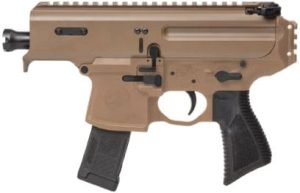
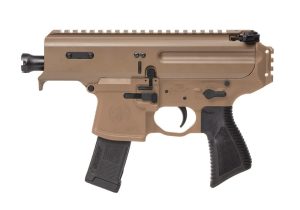
2. Sig MPX: Best Overall Competition PCC
The Sig MPX is the gun that proved a PCC could feel refined. Instead of the crude blowback action most carbines use, it runs a short-stroke gas piston, which makes recoil softer, the action cleaner, and suppressed shooting genuinely pleasant. It uses AR-style controls so your pistol-to-carbine muscle memory carries straight over, and it is a fixture on Steel Challenge and USPSA PCC podiums. For most shooters who want a top gun without chasing a dedicated race build, this is the pick.
The gas system is the MPX’s party trick: it vents gas to cycle the action rather than relying on a heavy bolt slamming back, so the recoil impulse is a gentle push instead of a sharp jolt. That keeps the dot flat and makes it the easiest gun here to run fast. Price starts around 1,575 dollars and climbs with a brace or stock and an optic, and the magazines are proprietary rather than Glock, which adds to the cost of building out a match supply. But you are buying the smoothest-running production PCC on the market. See the lineup at Sig Sauer.
Pros
- Gas piston shoots exceptionally soft
- Familiar AR controls
- Superb suppressed performance
- Proven competition track record
Cons
- Proprietary magazines add cost
- Pricey once optic-equipped
- Heavier than budget options
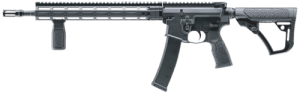
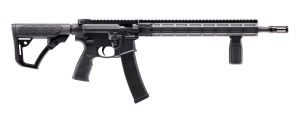
3. Daniel Defense PCC 916: Best Premium AR-Pattern
Daniel Defense entered the PCC world late and got it right. The PCC 916 uses a roller-delayed action for a soft, flat impulse, true AR ergonomics, and DD’s renowned build quality, and it feeds from Glock magazines. For an AR shooter who wants a premium PCC that handles exactly like their rifle, it is the standout new gun on this list, and it is purpose-built for competition rather than adapted to it.
Roller-delayed actions, made famous by the MP5, slow the bolt with a pair of rollers instead of sheer mass, so the 916 shoots flatter than a blowback gun while staying mechanically simple. At around 1,650 dollars it sits at the premium end, and the roller-delayed system is newer to the US market than the proven MPX, so the long-term parts picture is still filling in. But the shooting quality and Glock-magazine compatibility make it a serious contender for the top of the division.
Pros
- Roller-delayed action shoots flat
- True AR-15 ergonomics
- Glock-magazine compatible
- Daniel Defense build quality
Cons
- Premium price near 1,650 dollars
- Newer platform, smaller aftermarket
- Heavier roller system
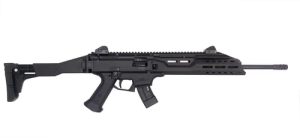
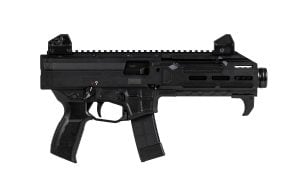
4. CZ Scorpion 3: Best Value Competition PCC
Nothing has won more club PCC matches per dollar than the CZ Scorpion, and the latest Scorpion 3 fixes the old gun’s biggest weakness with a much-improved factory trigger. It is utterly reliable, its magazines are cheap and everywhere, and the aftermarket is deep. At around 620 dollars the carbine version with a 16-inch barrel is the value benchmark of the whole division, and you will see racks of them at any local match.
The Scorpion runs a simple blowback action, so it is not as flat as the MPX or a roller gun, but the Scorpion 3’s updated ergonomics and trigger close much of the gap. Even the improved trigger benefits from a drop-in upgrade if you chase the podium, but out of the box the Scorpion 3 is more race-ready than any previous version, and its low magazine cost makes it the cheapest gun here to feed across a season. See the platform at CZ-USA.
Pros
- Outstanding value around 620 dollars
- Cheap, plentiful magazines
- Improved Scorpion 3 trigger
- Huge aftermarket
Cons
- Blowback recoil firmer than gas or roller guns
- Proprietary magazines (but cheap)
- Still benefits from a trigger upgrade
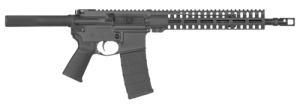
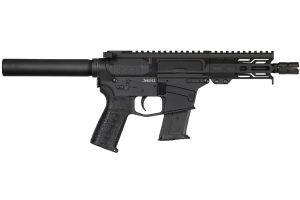
5. CMMG Banshee: Best AR-Pattern Value
If you live behind an AR-15 and want a PCC that feels exactly the same for less than a DD or MPX, the CMMG Banshee is your gun. It uses true AR ergonomics and CMMG’s radial delayed blowback action, which tames the recoil impulse that makes cheaper blowback guns bounce. It runs Glock or CMMG magazines depending on the model, and it is a favorite for shooters who want one manual of arms across their rifle and their PCC.
CMMG’s radial delayed system rotates the bolt to delay unlocking, splitting the difference between a soft roller gun and a simple blowback, and it works well enough that the Banshee shoots noticeably flatter than a Scorpion. It is pricier than the value picks at around 1,000 dollars, and the cost climbs as you add a better trigger and optic, but the AR familiarity and soft action are worth it for a dedicated AR shooter crossing into PCC.
Pros
- Radial-delayed action softens recoil
- Identical AR-15 controls
- Glock or CMMG magazine options
- Many barrel and caliber configurations
Cons
- Pricier than value picks
- Better trigger costs extra
- Some configs use proprietary mags
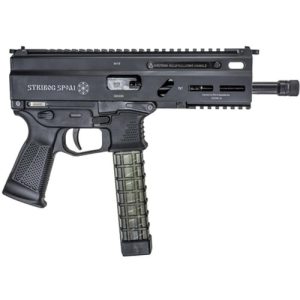
6. Grand Power Stribog: Best Sleeper Pick
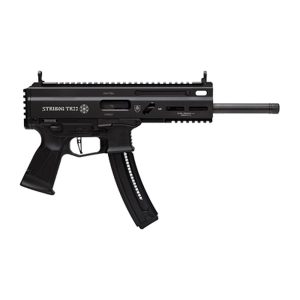
The Grand Power Stribog has earned a cult following for delivering near-MPX shooting manners at a CZ Scorpion price. The roller-delayed versions in particular run remarkably soft and flat, the triggers are good and easily upgraded, and it has become a serious sleeper pick in PCC. For around 650 dollars it punches well above its weight, and a tuned Stribog will keep pace with guns costing twice as much.
The catch is the ecosystem. Parts and aftermarket support are thinner than the CZ or AR-pattern guns, so you will hunt a little harder for accessories and a few magazines, and the proprietary mags cost more than Scorpion mags. But the raw shooting quality for the money is hard to ignore, which is exactly why it has the following it does.
Pros
- Roller-delayed models shoot very flat
- Excellent value around 650 dollars
- Good factory trigger, easy to upgrade
- Glock-mag versions available
Cons
- Thinner aftermarket and parts supply
- Proprietary magazines cost more
- Less common at clubs
7. Grand Power Kuna: Best New Compact PCC
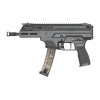
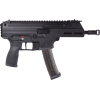
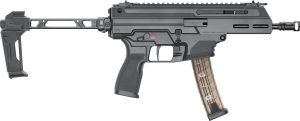
The Grand Power Kuna is the newer, more compact sibling to the Stribog, a roller-delayed 9mm that takes Glock magazines and has quickly become one of the most talked-about PCCs in the sport. It shoots soft, balances well, and brings Glock-magazine convenience to the Grand Power line, which solves the Stribog’s one real drawback.
At around 950 dollars it slots between the value and premium tiers, and it is a strong pick for a shooter who wants something a little different that still runs the universal Glock mag. As a newer release the long-term track record is still being written, but early competitive use and reviews have been very positive, and the compact size makes it fast to run on a tight stage.
Pros
- Roller-delayed, shoots soft and flat
- Takes Glock magazines
- Compact and fast-handling
- Strong early reputation
Cons
- Newer, still proving long-term durability
- Mid-tier price near 950 dollars
- Smaller aftermarket so far
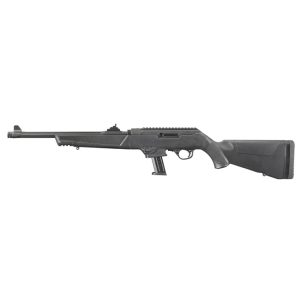
8. Ruger PC Carbine: Best Budget PCC
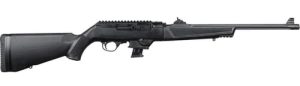
The Ruger PC Carbine is the smart first PCC. It takes Glock magazines out of the box, which means your pistol and carbine can share mags and ammo, it breaks down for easy transport, and it runs with Ruger’s usual boring reliability. At around 550 dollars it is the value king, and a new competitor can show up to a PCC match with one and never feel under-gunned.
It is heavier than a race PCC and the simple blowback action plus the stock trigger and handguard leave room to upgrade, so it is not a national-level gun out of the box. The dead-blow tungsten weight in the bolt does soften the recoil more than a basic blowback, though, and it is genuinely pleasant to shoot. As a do-everything, share-your-Glock-mags entry into the division, nothing touches it. Read the full Ruger PC Carbine review, or see specs at Ruger.
Pros
- Takes Glock magazines out of the box
- Excellent value around 550 dollars
- Takedown design for transport
- Ruger reliability
Cons
- Heavy for a race gun
- Basic stock trigger and handguard
- Not match-ready without upgrades
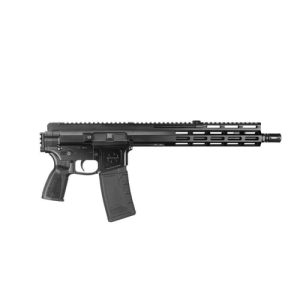
9. Foxtrot Mike FM-9: Best Budget AR-Pattern PCC
The Foxtrot Mike FM-9 is the budget AR-pattern surprise, a lightweight side-charging 9mm that takes Glock magazines and runs a monolithic upper for under 600 dollars. For a shooter who wants the AR layout and Glock-mag convenience without the CMMG or DD price, the FM-9 delivers a remarkable amount of gun for the money, and at around 5.5 pounds it is one of the lighter, faster-handling options here.
It is a straightforward blowback, so it is not as flat as a roller or gas gun, and the budget price shows in the furniture and trigger. But the value and the light weight make it a legitimate entry into AR-pattern PCC competition, and the aftermarket of AR parts means you can upgrade the trigger and grip easily.
Pros
- AR-pattern at a budget price
- Takes Glock magazines
- Light and fast-handling
- Side-charging upper
Cons
- Blowback recoil is firmer
- Basic factory trigger and furniture
- Less refined than premium AR PCCs
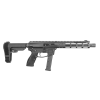
10. PSA AK-V: Best AK-Pattern PCC
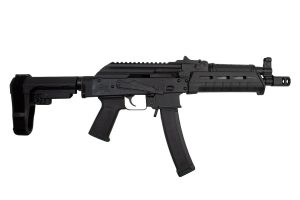
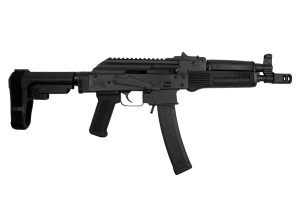
For something different, the PSA AK-V brings the AK manual of arms to the PCC world. It is a 9mm built on an AK-pattern receiver that feeds from CZ Scorpion magazines, and at around 700 dollars it is a reliable, soft-enough shooter for a competitor who prefers the AK layout or just wants a rugged, affordable carbine. Palmetto State Armory’s value reputation carries over, and the Scorpion-mag compatibility means cheap, plentiful magazines.
The AK ergonomics are not as fast for competition as an AR layout, and the trigger is basic, so it is more a value and novelty pick than a podium gun. But it runs reliably, costs little to feed, and gives an AK fan a way into the PCC division without learning a new manual of arms.
Pros
- AK manual of arms for AK fans
- Uses cheap CZ Scorpion magazines
- Affordable around 700 dollars
- Rugged and reliable
Cons
- AK ergonomics slower for competition
- Basic trigger
- Not a podium-level race gun

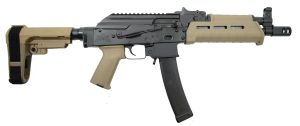
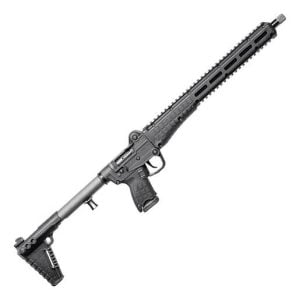
11. Kel-Tec Sub-2000: Best Folding and Cheapest PCC
The Kel-Tec Sub-2000 is the budget on-ramp and the ultimate truck gun. It folds in half for storage, takes common pistol magazines including Glock depending on the model, and costs around 420 dollars. For a shooter who wants to try the PCC division without committing real money, it is the cheapest legitimate way to get on the line, and at around four pounds it is by far the lightest gun here.
The ergonomics are crude, mounting an optic takes work because the gun was designed around iron sights, and it will not keep up with a tuned MPX on a long stage. But it runs, it is cheap, it folds into a backpack, and there is real charm in showing up to a match with one and still ringing steel. As a first taste of PCC competition on a tight budget, it is unbeatable.
Pros
- Cheapest way into PCC competition
- Folds in half for storage
- Very light at around four pounds
- Takes common Glock magazines
Cons
- Crude ergonomics
- Awkward to mount an optic
- Not competitive at higher levels
Best Competition PCC by Use Case
If you want the short version sorted by what you actually need, here is how these guns stack up for the most common goals.
- Best for winning matches: JP Enterprises GMR-15, with the Sig MPX close behind.
- Best soft-shooting: Sig MPX (gas piston), Daniel Defense PCC 916 and Grand Power Kuna (roller delayed).
- Best value: CZ Scorpion 3, with the Grand Power Stribog as the sleeper.
- Best budget: Kel-Tec Sub-2000 to dip a toe in, or the Ruger PC Carbine and Foxtrot Mike FM-9 for more capability.
- Best for Glock-magazine sharing: JP GMR-15, Daniel Defense PCC 916, Ruger PC Carbine, CMMG Banshee, Grand Power Kuna and Foxtrot Mike FM-9.
- Best suppressed: Sig MPX, whose gas system runs cleanest with a can.
- Best for AR shooters: CMMG Banshee or Daniel Defense PCC 916, which share AR controls.
PCC Action Systems Explained: Why Some Shoot Flatter
The single biggest reason one PCC shoots softer than another is its action system, and it is worth understanding before you spend money, because it matters far more than barrel length or brand. A 9mm carbine has to slow down the bolt after firing, and how it does that determines the recoil impulse you feel and how fast the dot settles for your next shot.
- Direct blowback. The simplest and cheapest system, used by the CZ Scorpion, Ruger PC Carbine, Foxtrot Mike and Kel-Tec. A heavy bolt is held closed only by its own mass and a spring, so firing slams it back hard. It works and it is reliable, but the impulse is the sharpest of the bunch, which is why budget PCCs bounce more.
- Gas piston. The Sig MPX vents propellant gas to cycle the action, like an AR-15, so the bolt does not need to be heavy. The result is the softest, flattest impulse here and the cleanest suppressed running, at a higher price.
- Roller delayed. Made famous by the MP5 and used by the Daniel Defense PCC 916 and Grand Power Kuna and Stribog, this system uses rollers to delay the bolt opening. It shoots nearly as flat as a gas gun while staying mechanically simple, which is why it has surged in popularity.
- Radial delayed blowback. CMMG’s system rotates the bolt to delay unlocking, splitting the difference between a soft roller gun and a simple blowback. It noticeably softens recoil over a plain blowback while keeping AR compatibility.
For pure competition, a gas-piston or roller-delayed gun gives you a real edge on a long string, because the flatter the gun, the faster you can confirm your sights and break the next shot. A blowback gun can absolutely win matches, especially with a comp and a tuned buffer, but you are working a little harder for it.
Magazine Compatibility and the Hidden Cost of a PCC
The sticker price is only half the story. A serious competitor wants six to ten magazines, and magazine cost varies enormously across these guns, so it pays to think about it before you buy. A PCC that takes Glock magazines is the cheapest and most convenient to feed: Glock-pattern mags are inexpensive, available everywhere, and you can share them with your pistol, so your match bag carries one type of magazine for both guns.
The Ruger PC Carbine, CMMG Banshee, Daniel Defense PCC 916, JP GMR-15, Grand Power Kuna and Foxtrot Mike FM-9 all run Glock magazines. The CZ Scorpion and PSA AK-V use cheap, plentiful Scorpion-pattern magazines, which is nearly as economical. The Sig MPX and roller Stribog use proprietary magazines that cost more and are less common, so factor a full set of mags into the total price of those guns. Over a season of competition, the magazine math can make a more expensive Glock-mag gun cheaper to own than a budget gun on pricey proprietary mags.
How to Set Up a Competition PCC
Buying the carbine is only half the job. A few smart additions turn any of these guns into a real race tool, and none of them costs much next to the gun itself.
- A red dot, not irons. The whole point of the PCC division is fast, both-eyes-open shooting, so mount a non-magnified red dot with a large window. A small magnifier helps only on long steel. See my best competition red dots picks, which work on a carbine too.
- A drop-in trigger. Most blowback PCCs ship with a mushy trigger that a 100-dollar drop-in kit transforms. It is the single best upgrade for the CZ Scorpion, Stribog and budget guns.
- A compensator. A comp or brake on the heavier guns keeps the dot flat between targets, shaving real time on a long string.
- A sling and mag pouches. A two-point sling lets you stage the gun safely, and a good belt with carbine mag pouches keeps reloads fast and predictable.
- Zero at 25 to 50 yards. That range keeps your point of aim and point of impact close enough across the distances a PCC stage throws at you.
Common PCC Competition Mistakes to Avoid
After watching a lot of new PCC shooters at club matches, the same handful of buying and setup mistakes come up again and again. Sidestep these and you will save money and skip a frustrating first season.
- Buying the gun and forgetting the total cost. A 550-dollar carbine becomes a 1,000-dollar setup once you add a red dot, a trigger and six magazines. Budget for the whole package, not just the sticker.
- Choosing proprietary mags without doing the math. A cheaper gun on expensive proprietary magazines can cost more to own than a pricier Glock-magazine gun once you buy a full match supply. Count the magazines into your decision.
- Skipping the trigger upgrade. The mushy factory trigger on most budget blowback PCCs is the single biggest thing holding back your splits. A 100-dollar drop-in kit transforms the gun.
- Running too small an optic window. A carry-style micro dot makes you hunt for the dot on a carbine. Mount a large-window competition red dot so the dot is there when the gun comes up.
- Bringing untested ammo to a match. Budget guns can be ammo-picky. Confirm your match ammo runs clean in practice before you trust it on the clock.
How to Choose a Competition PCC
Pull it all together and the decision comes down to a few questions, answered in this order.
- What is your budget, all in? Remember to add an optic, a trigger upgrade, and six or more magazines to the gun price. A 550-dollar Ruger can become a 900-dollar setup once it is match-ready.
- Glock mags or proprietary? If you already shoot a Glock-pattern pistol, a Glock-mag PCC saves real money and simplifies your bag.
- How soft do you want it? Gas-piston and roller guns shoot flattest; blowback guns are firmer but cheaper.
- How serious are you? A casual shooter is well served by a CZ Scorpion 3 or Ruger PC Carbine; a committed competitor should look hard at the JP GMR-15 or Sig MPX.
The Bottom Line
If PCC is your home division and you want the best, the JP GMR-15 is the dedicated race gun, with the Sig MPX as the best all-around production pick just behind it. If value matters, the CZ Scorpion 3 gets you 90 percent of the way for a third of the price. And if you are starting out, the Ruger PC Carbine takes your Glock mags and will not hold you back. Pick the one that fits your budget, your magazines and how soft you want it to shoot, then go shoot a PCC match, because the reps matter far more than the gun.
Frequently Asked Questions
- Treat every gun as loaded
- Point the muzzle in a safe direction
- Keep your finger off the trigger until you’re ready to shoot
- Know your target and what’s beyond
What is the best competition PCC?
For a dedicated race gun, the JP Enterprises GMR-15 is the best competition PCC, run by roughly a fifth of serious PCC shooters and built around a tuned trigger and compensator. For the best all-around production gun, the Sig MPX leads with its smooth gas-piston action. The CZ Scorpion 3 is the value benchmark, and the Ruger PC Carbine is the best budget pick because it takes Glock magazines.
What PCC do most USPSA competitors use?
At the top level, the JP GMR-15 and Sig MPX dominate, with the JP used by about 20 percent of serious PCC shooters. At club level you see far more CZ Scorpions, Ruger PC Carbines and CMMG Banshees because of their value. The common thread is a soft-shooting 9mm with a red dot and, ideally, Glock-magazine compatibility.
What is a PCC in competition shooting?
PCC stands for Pistol Caliber Carbine, a rifle-style gun chambered in a pistol cartridge, almost always 9mm. USPSA, Steel Challenge and many local matches field a dedicated PCC division scored at minor power factor. The low recoil and cheap ammo make it one of the most popular and beginner-friendly ways to compete.
What is the best budget competition PCC?
The Ruger PC Carbine is the best budget competition PCC at around 550 dollars, and it takes Glock magazines so you can share mags with your pistol. The Foxtrot Mike FM-9 offers an AR layout for a similar price, the Kel-Tec Sub-2000 is even cheaper at around 420 dollars, and the CZ Scorpion 3 sits just above them as the value benchmark.
Should a competition PCC take Glock magazines?
It is a real advantage. A PCC that accepts Glock magazines lets you share magazines and ammunition between your carbine and your pistol, which simplifies your match bag and lowers cost. The JP GMR-15, Daniel Defense PCC 916, Ruger PC Carbine, CMMG Banshee, Grand Power Kuna and Foxtrot Mike FM-9 all offer it, while the MPX and CZ Scorpion use proprietary mags.
Why is the Sig MPX better than a blowback PCC?
The MPX uses a short-stroke gas piston instead of the simple blowback action most carbines use. That gas system reduces felt recoil, keeps the gun cleaner, and makes suppressed shooting much more pleasant, so the gun stays flatter between shots. Roller-delayed guns like the Daniel Defense PCC 916 and Grand Power Kuna achieve a similar soft impulse a different way.
What is the difference between blowback and roller-delayed PCCs?
A direct blowback PCC holds the bolt closed only with mass and a spring, so it recoils sharply and is the cheapest to build. A roller-delayed PCC uses rollers to delay the bolt opening, like the MP5, which spreads out the impulse and shoots noticeably flatter while staying simple. For competition, roller-delayed and gas-piston guns give you a real edge over plain blowback.
What optic is best for a competition PCC?
A non-magnified red dot is the standard choice for a competition PCC, giving you fast target acquisition with both eyes open across the close-to-medium ranges these matches use. A larger-window dot suits the carbine well. Some shooters add a small magnifier for longer steel, but a quality red dot handles the vast majority of PCC stages.
How much does a competition PCC cost to own?
The gun is only part of it. Budget for an optic, often 200 to 500 dollars, a trigger upgrade around 100 dollars on budget guns, and six or more magazines. Glock-magazine guns are far cheaper to feed than proprietary-mag guns over time, so a 550-dollar Ruger PC Carbine can end up cheaper to own fully kitted than a budget gun on expensive proprietary magazines.
Is a PCC a rifle or a pistol for competition?
In competition a PCC shoots in its own dedicated division, separate from both handgun and rifle divisions, so it is scored against other pistol-caliber carbines at minor power factor. Legally a 16-inch-barrel PCC is a rifle, while shorter braced versions are pistols, but on the scoreboard the PCC division stands on its own. Check your match's rules for the exact configuration allowed.
What is the lightest competition PCC?
The Kel-Tec Sub-2000 is the lightest at around four pounds and it folds in half, though it is a budget gun. Among more competitive options, the Foxtrot Mike FM-9 at about 5.5 pounds and the Grand Power Kuna at around 5.9 pounds are the lightest, which helps with fast transitions on a stage. Lighter guns move quicker but can feel less stable than a heavier carbine.
Can you suppress a competition PCC?
Yes, and many shooters do, since 9mm suppresses very well. The Sig MPX is the standout suppressor host because its gas-piston action runs cleanest with a can, but most of these guns can be suppressed with the right barrel threading. A suppressor adds weight to the muzzle, which actually helps keep the gun flat, though match rules and your hearing both favor good ear protection regardless.
Do you need a special PCC for Steel Challenge versus USPSA?
No, the same PCC works for both. Steel Challenge has dedicated PCC Optics and PCC Iron divisions, and USPSA has a PCC division, and a soft-shooting 9mm carbine with a red dot is ideal for either. Steel Challenge rewards a fast first shot and quick transitions on fixed plates, while USPSA adds movement and reloads, but the gun setup is essentially identical.