

9mm is the cheapest and most forgiving cartridge to learn handloading on. It runs on small pistol primers, a 115 to 147 grain bullet, a fast-burning pistol powder, and clean once-fired brass, and the straight-wall case sizes easily on a carbide die with no lube. This guide covers what 9mm specifically needs, how to prep the brass, the pitfalls unique to the cartridge, and where to pull verified load data. One thing up front: I do not publish charge weights here, and the section near the bottom explains why that is the responsible call.
Some of the links below are affiliate links, meaning at no additional cost to you, we may earn a commission if you click through and make a purchase.
Table of Contents
How we tested: Every pick here is ranked against our testing methodology. Minimum round counts, accuracy and reliability protocols, the failures that disqualify a gun.
Why 9mm is the best caliber to learn on
If you are starting out, 9mm is the easy answer. Components are cheap and everywhere, you shoot enough of it to actually benefit from loading your own, and the cartridge is forgiving of a beginner’s pace. The straight-wall case sizes on an inexpensive carbide die without case lube, which removes a whole messy step. And because 9mm is the most-loaded cartridge in the country, published data and component options are deep. If you want the full overview of the process first, start with our complete guide to reloading ammunition.
The components you need to reload 9mm
Every 9mm round comes down to four parts. Here is what the cartridge specifically wants from each.
Brass
Once-fired range brass is perfectly good, and you can mix headstamps for plinking ammo. For loads you care about, sort by headstamp, because case capacity varies a little between brands. The good news is that 9mm runs at modest pressure for a pistol round, so the brass lasts many loadings. Inspect every case, decap, and tumble it clean before sizing.
Primers
9mm uses small pistol primers. Standard small pistol, not magnum, covers every normal load. CCI 500, Federal, Winchester WSP, and Remington all work fine, so buy whatever you can actually find. Seat each primer flush with the case head or just below it. A high primer is a misfire at best and a slamfire risk at worst.
Bullets
Three weights cover almost everything. 115 grain is the cheapest and fastest, ideal for high-volume range practice. 124 grain is the do-everything weight that most factory ball ammo uses, and it is where I steer most new 9mm reloaders. 147 grain is the heavy, subsonic option that shines for suppressed shooting. For range ammo use full metal jacket or plated bullets, and save jacketed hollow points for defensive loads. One caution: traditional bare-lead cast bullets and polygonal barrels, like the ones in many Glocks, do not always get along, so use jacketed or plated bullets or confirm your barrel is fine with lead.
Powder
9mm runs on fast to medium-fast pistol powders. The names you will see over and over are Hodgdon Titegroup, Winchester 231 and its twin HP-38, Hodgdon CFE Pistol, Alliant Power Pistol, Vihtavuori N320, Accurate No. 5, and Ramshot Silhouette, with Hodgdon Longshot popular for heavy and +P loads. Pick one your published data covers for your exact bullet, and pull the actual charge from that data, never from this page or your memory.
9mm brass prep, overall length, and crimp
9mm is a straight-wall case, so a carbide sizing die resizes it with no lubricant. The cartridge barely stretches in normal use, so most 9mm brass never needs trimming, though it is still worth measuring a sample now and then. Two things matter far more on 9mm than trimming.
The first is cartridge overall length. 9mm is short and high-pressure, and it is sensitive to seating depth, so different bullet profiles need different overall lengths. Seat to the length your data specifies for your exact bullet, then confirm the finished round drops freely into your barrel with a plunk test before you load a batch.
The second is crimp. 9mm headspaces on the case mouth, which means you taper crimp only, never roll crimp. All you are doing is removing the flare you added to seat the bullet, just enough to let the round chamber. A roll crimp ruins headspacing and function on this cartridge.
Pitfalls unique to 9mm
- Double-charge risk. 9mm is a small case and the popular powders are fast, so a double charge often fits without overflowing the case. That is the mistake that destroys pistols. Charge cases in a loading block and visually check every single one under good light before you seat bullets.
- Bullet setback. A high-pressure little case punishes setback hard, and a bullet pushed deeper spikes pressure fast. Make sure you have enough neck tension and a proper taper crimp, then check that chambering a round does not shove the bullet deeper.
- Case bulge from unsupported chambers. Brass fired in guns with unsupported chambers, the classic Glock bulge, can swell near the base. Cull bulged cases or run them through a bulge-buster die, or they may not chamber.
- Feeding and overall length. Seat too long and the round will not feed or chamber. Seat too short and pressure climbs. The plunk test in your own barrel is the cheap insurance here.
The gear you need to load 9mm
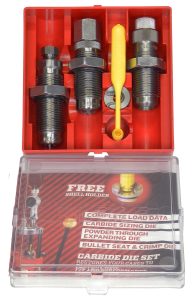
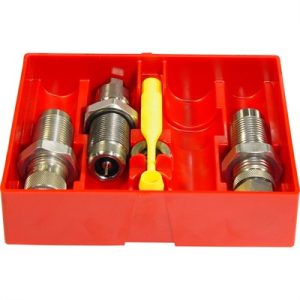
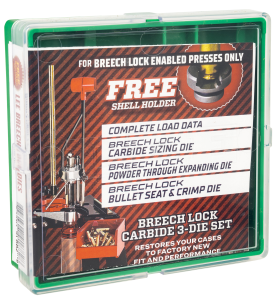
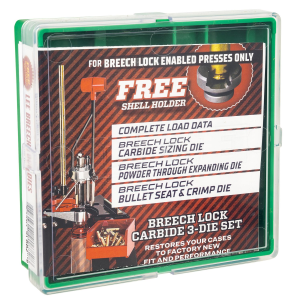
Loading 9mm does not take much, which is half of why it is the cartridge everyone starts on. You need a press, a 9mm die set, a scale, a set of calipers, and a way to clean brass. Because the case is straight-walled, a carbide die set sizes it with zero case lube, so you skip the messy spray-and-wipe step that bottleneck rifle calibers force on you. That one detail makes 9mm the most pleasant caliber to load in volume.
A turret or progressive press earns its keep fast on 9mm, because you will shoot more of it than anything else you own. I break down the picks in our best reloading presses guide, the die options in the best reloading dies roundup, and if you would rather buy everything in one box, the best reloading kits guide bundles the press, scale, and tools together. A simple vibratory tumbler is all pistol brass needs, and the best brass tumblers guide covers that end of the bench.
Cleaning and maintaining your 9mm brass
9mm brass is about the easiest there is to keep in service. A dry vibratory tumbler with corncob media polishes a few hundred cases while you do something else, and that is all the cleaning a plinking round ever needs. You do not have to scrub primer pockets for range ammo, and the straight wall means the case basically never needs trimming in normal use. Decap first if you want clean pockets, then tumble, then size.
Because 9mm runs at modest pressure for a pistol round, the brass lasts many loadings, and mixed once-fired range brass is perfectly good for practice ammo. Inspect as you go: toss any case cracked at the mouth, bulged at the base, or showing a stress ring above the rim, and you will get years out of a single bucket of range pickup. If you want to set up the cleaning side properly, the best brass tumblers guide walks through dry, wet, and ultrasonic options.
Practice loads versus defensive loads
Be clear with yourself about what you are loading 9mm for, because it changes every choice. The overwhelming reason to handload 9mm is volume practice: a soft-shooting, accurate, cheap round tuned to your gun, built on inexpensive full metal jacket or plated bullets in 115 or 124 grain. That is where the cartridge shines, and that is what most 9mm reloaders are actually making, by the thousand.
Defensive handloads are a different conversation. You can build a heavy 147 grain subsonic that is wonderful through a suppressor, and load development for accuracy is genuinely satisfying. But for ammunition you bet your life on, most people are better served carrying proven factory hollow points and saving the handloads for the range, both for reliability and for the liability questions a defensive handload can raise. Load 9mm to shoot more and shoot better, and let the factory cover carry duty.
How to work up a 9mm load safely
Working up a 9mm load is simple if you respect the order of operations. Start at the starting charge your data lists for your exact bullet and powder, never the maximum, and load a handful of test rounds. Shoot them, confirm they feed and lock the slide back on an empty mag, and look the brass over for pressure signs: flattened or cratered primers, sticky extraction, or a shiny bulged head. Step the charge up in small increments and stop the moment something looks off or you reach a load you like.
Two checks matter more on 9mm than on almost anything else. Run the plunk test in your own barrel at whatever overall length you settle on, dropping a finished round in to confirm it seats fully and spins freely. And watch for a double charge, because the fast powders and small case mean a double often fits without spilling. Charge in a loading block and eyeball every case under good light before a bullet goes on. Pull your actual numbers from the verified sources in the next section.
Loading your first batch of 9mm, step by step
Here is how a first 9mm loading session actually goes, so you know what you are getting into before you buy a thing. The point of walking through it is that 9mm is forgiving enough to learn on, but the sequence still matters, and doing it in order is what keeps you safe and sane.
Start with clean brass. Collect your once-fired range brass, give it a once-over for cracks and bulges, and tumble it clean in a vibratory tumbler. Clean brass protects your dies and lets you actually see what you are working with. While it tumbles, you have time to set up the rest of the bench.
Deprime and size. Run each case through the carbide sizing die, which resizes the case and pushes out the spent primer in one stroke, no lube required. This is where the straight-wall pistol case earns its easy reputation. Check that the sized cases drop freely into your barrel or a case gauge.
Prime and flare. Seat a fresh small pistol primer into each pocket, flush or just below the case head, and add a small flare to the case mouth so the bullet starts straight. A high primer is a problem, so run your thumb across the head to confirm each one is seated properly.
Charge and check. Set your powder measure to the charge your verified data lists for your exact bullet and powder, throw a charge into each case standing in a loading block, then look into every single case under good light. Every case should hold the same level of powder. This visual check is the habit that prevents the double-charge that wrecks pistols.
Seat and crimp. Seat the bullet to the overall length your data specifies, then taper crimp just enough to remove the flare. Drop the finished round into your barrel for the plunk test to confirm it chambers and spins freely. Box them, label the box with the load, and you have made your first ammunition. Pull the charge weight from the verified sources in the next section before you start.
Where to get verified 9mm load data
This is the part that matters most, so read it before you touch a powder scale. We deliberately do not print charge weights on this page, for three reasons. Load data is specific to your exact combination of bullet, powder, primer, and brass, so a generic number is worthless and dangerous. It is safety-critical, where a wrong charge can injure you. And the authoritative sources already publish it free and keep it current.
Pull your 9mm data from the source that made your components. Hodgdon’s Reloading Data Center is free, official, and covers most common powders. The bullet makers, Hornady, Sierra, and Berger, publish data for their own projectiles, and the powder makers like Alliant and Vihtavuori publish for theirs. A current printed manual from Lyman or Hornady is the other gold standard. Whatever you use, start at the listed starting charge, work up a little at a time while watching for pressure signs, and cross-reference two sources when you can.
Safety note: reloading is done at your own risk. Always confirm your load against current data from your component manufacturer, reduce for your specific components, start low, work up, and watch for pressure signs.
Common 9mm reloading mistakes to avoid
- Skipping the visual charge check. The single most dangerous 9mm mistake is a double charge that fits in the small case without spilling. Charge in a loading block and look into every case under good light before seating a single bullet.
- Roll crimping instead of taper crimping. 9mm headspaces on the case mouth, so a roll crimp ruins function. Taper crimp only enough to remove the flare you added to seat the bullet.
- Ignoring the plunk test. Seating to a length that will not chamber in your specific barrel is a common rookie error. Drop a finished round into your barrel to confirm it seats and spins freely.
- Loading bulged Glock brass without checking. Cases fired in unsupported chambers can swell at the base. Cull or bulge-bust them or they may not chamber.
- Chasing a defensive handload. For carry, proven factory hollow points are the smarter call. Load 9mm to shoot more and shoot better, not to bet your life on.
Tuning a 9mm load for accuracy and soft recoil
Once you can load safe, reliable 9mm, the fun part is tuning it to your gun. Most shooters are after a soft-shooting, accurate practice load, and 9mm responds well to the effort. A 124 grain bullet over a moderate charge of a clean-burning powder is the classic starting point for a load that feels gentle and groups well, and many find their pistol simply prefers one bullet weight over another for no obvious reason. Let the target decide.
Seating depth and overall length affect both accuracy and feeding, so once you have a charge you like, small changes in seating can tighten groups, as long as you re-run the plunk test at each length. Keep notes on what your gun likes, because a load that prints well in your pistol is not automatically the best in someone else’s. The reward for the tuning is a round that costs less than factory, recoils softer, and shoots better, which is the whole point of loading your own.
Running an efficient 9mm loading session
9mm is the caliber where good bench habits pay off, because you load it in volume. Batch your steps: deprime and tumble a big lot of brass at once, size and prime in one sitting, then charge and seat in another. A turret or progressive press turns that into real output, but even on a single-stage, processing in batches keeps you in rhythm and cuts the chance of a missed step. Keep your components and finished rounds clearly labeled so a powder change never sneaks up on you.
Set a routine and stick to it, because consistency is a safety feature, not just a speed one. The same motions every time mean you notice immediately when something feels off, like a primer that did not seat or a case that charged twice. Clean the press occasionally, check your scale against a known weight at the start of each session, and keep your loading manual open. The reloaders who never have a scare are the ones with boring, repeatable habits.
Is reloading 9mm worth it?
Honestly, the per-round savings on 9mm are real but modest, because factory 9mm is already cheap. The case for loading 9mm is volume and tuning. If you shoot a lot of it, the savings add up over a year, and you can build a soft-shooting practice load or a heavy subsonic load that no factory offers. We ran the full numbers in our cost-per-round breakdown, and if you still need a press, our best reloading presses guide covers the picks. If you are deciding between 9mm and a revolver round, our .357 Magnum vs 9mm comparison lays out the trade-offs.
Where to go from here with 9mm
9mm is the perfect on-ramp to handloading, and once you are comfortable making safe, reliable practice ammo, the rest of the craft opens up fast. The natural next step is deciding how you want to load in volume, because you will shoot more 9mm than anything else, and the press is what determines whether loading a thousand rounds is a pleasant evening or a slog.
If you have not committed to a press yet, our best reloading presses guide walks through single-stage, turret, and progressive options and who each suits, while the best reloading dies roundup covers the carbide pistol sets that make 9mm so easy. If you would rather start with everything in one box, the best reloading kits guide bundles the essentials a 9mm loader needs, and the best brass tumblers guide covers keeping your range pickup clean.
For the bigger picture, our complete guide to reloading ties the whole process together from brass to finished round, and the cost-per-round breakdown runs the real numbers on whether loading your own pays off for how much you shoot. If you are weighing 9mm against a revolver round for your next pistol, our .357 Magnum vs 9mm comparison lays out the trade-offs. Start with safe practice ammo, build good bench habits, and 9mm will reward you for years.
Last updated June 2nd 2026
What primer does 9mm use for reloading?
9mm uses small pistol primers. Standard small pistol primers cover every normal load, and you do not need magnum primers. CCI, Federal, Winchester, and Remington small pistol primers all work, so use whichever you can find.
What bullet weight is best for reloading 9mm?
124 grain is the best all-around weight and matches most factory ball ammo. 115 grain is the cheapest and fastest for high-volume range practice, and 147 grain is the heavy subsonic choice that suits suppressed shooting. Most new reloaders are happiest starting with 124 grain.
Do you need to trim 9mm brass?
Rarely. 9mm barely stretches in normal use, so most brass never needs trimming. It is still worth measuring a sample occasionally, but trimming is not a routine step for this cartridge the way it is for bottleneck rifle brass.
What is the best powder for reloading 9mm?
9mm runs on fast to medium-fast pistol powders. Common choices include Hodgdon Titegroup, Winchester 231 and HP-38, CFE Pistol, Alliant Power Pistol, and Vihtavuori N320. Choose one your published load data covers for your exact bullet, and always take the charge weight from that official data.
Can you reload 9mm brass fired in a Glock?
Usually yes, but check it. Guns with unsupported chambers can leave a bulge near the case base. Inspect for bulging, cull anything badly swollen, or run the brass through a bulge-buster die so it chambers reliably.
Why doesn't this guide list 9mm charge weights?
Because a safe charge depends on your exact bullet, powder, primer, and brass, and publishing a generic number would be both dangerous and a misuse of the powder makers' proprietary data. Pull your charges from Hodgdon's Reloading Data Center, your bullet or powder maker, or a current printed manual, and start low and work up.
What press is best for reloading 9mm?
For 9mm specifically, an auto-indexing turret like the Lee Classic Turret or a progressive like the Dillon RL 550C or XL 750 makes the most sense, because you will load a lot of it. A single-stage works fine to learn on, but high pistol volume is exactly what turret and progressive presses are built for.
How many times can you reload 9mm brass?
Because 9mm runs at modest pressure, the brass commonly survives a great many loadings, often well into the double digits for range loads. Inspect each case for mouth cracks, base bulges, or a stress ring above the rim, and retire any that show them. Sorted, well-treated brass lasts far longer than most shooters expect.
4,015+ Gun & Ammo Deals
Updated daily from 200+ top retailers. Filter by category, caliber, action type, and price.
Related Guides