

If you have spent a night in a deer blind or a hog field in the last ten years, there is a good chance the glowing screen in someone’s hands had PULSAR printed across the housing. Pulsar builds the thermal and night-vision optics that turned after-dark hunting from a novelty into a mainstream pursuit: the Thermion 2 thermal riflescopes that look like normal scopes until you switch them on, the pocketable Axion and full-size Telos thermal monoculars for scanning a field, the twin-eyepiece Merger binoculars, and the Krypton clip-on that bolts thermal onto the day scope you already own. Here is who they are, what they make, and what is worth buying.
Pulsar Deals — 33% Off or Better
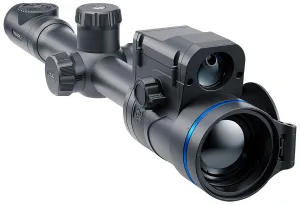
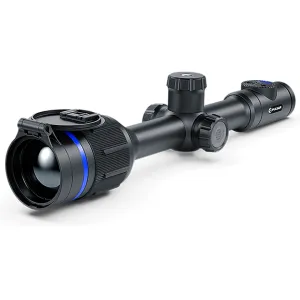
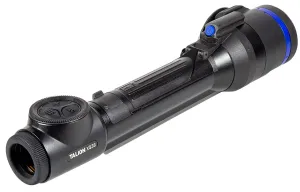
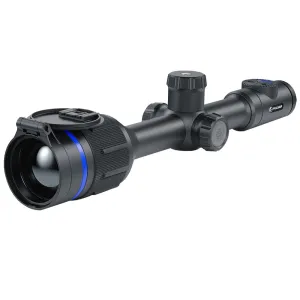
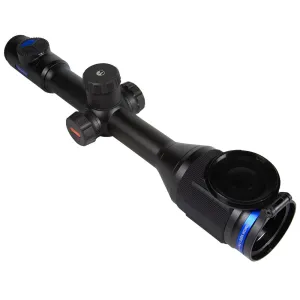

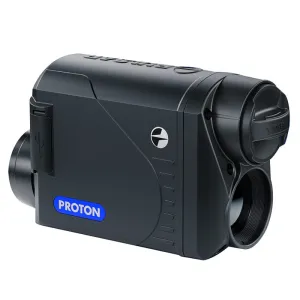
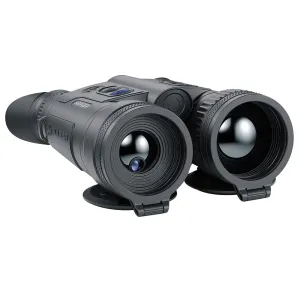
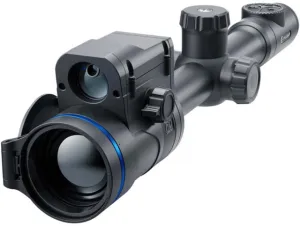
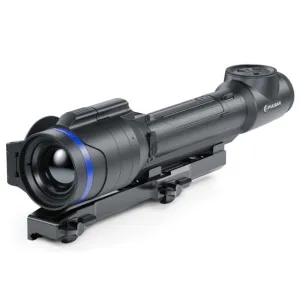
Table of Contents
Who Pulsar is
Pulsar is the brand that turned after-dark hunting from a novelty into a mainstream pursuit, building the thermal and night-vision optics found in deer blinds and hog fields nationwide. It is best known for the Thermion 2 thermal riflescopes and the Axion handheld thermal monoculars.
Pulsar is the flagship optics brand of Yukon Advanced Optics Worldwide, a European technology group whose head office sits in Vilnius, Lithuania. The company traces its roots to 1991, when a small team of engineers began working in Lida, Belarus — one of the old Soviet Union’s centers of advanced optics research. The origin story is genuinely humble: the first products were wooden observation tubes assembled by hand in the basement of an unfinished apartment building. Three decades later the group runs nine companies, employs more than a thousand people, and ships to over seventy countries.
That European base matters to how Pulsar markets itself. The company proudly carries a “Made in Europe” flag — its devices are developed, designed, manufactured, and packed in European factories rather than sourced overseas, which is unusual in a category where a lot of glass and sensors come out of Asia. Pulsar was also one of the pioneers of civilian thermal imaging, taking technology that used to be military-only and putting it in the hands of hunters and farmers. In North America the brand has been handled since 2009 by Sellmark Corporation of Mansfield, Texas, which runs U.S. distribution and warranty service.
On price, Pulsar sits firmly at the premium end. You are not buying the cheapest thermal you can find — you are paying for better sensors, sharper displays, longer detection ranges, and software that gets updated for years after you buy. If your budget is tight, value brands like ATN and AGM will get you into thermal for less. If you want the image quality and the resale value to match the money, Pulsar is the name people reach for.
What Pulsar makes
Thermal riflescopes
This is the heart of the lineup. The Thermion 2 is the flagship — a thermal scope built into a traditional 30mm-style tube so it mounts in normal rings and balances like a day optic. The Trail 2 uses a bridge-style body, and the Talion is the more affordable way into a dedicated thermal scope. Model names tell you the sensor: XQ units use a 384×288 core, while XP and the newer XG units step up to a higher-resolution 640×480 sensor for longer detection range and a cleaner picture. An LRF in the name means a built-in laser rangefinder.
Thermal monoculars
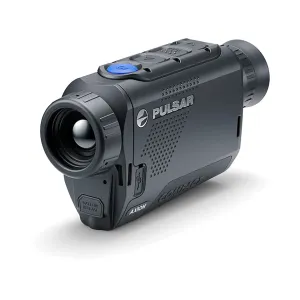
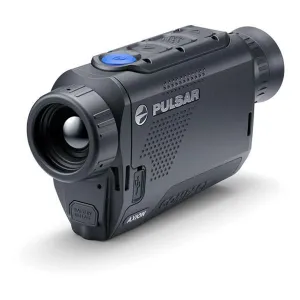
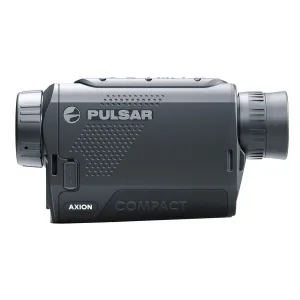
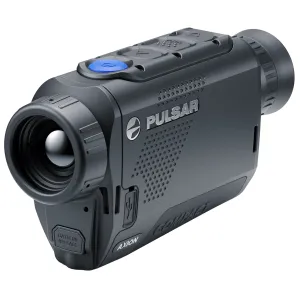
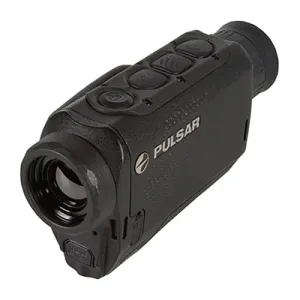
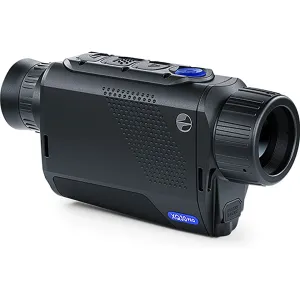
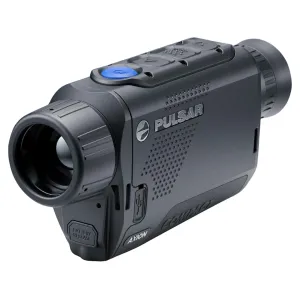
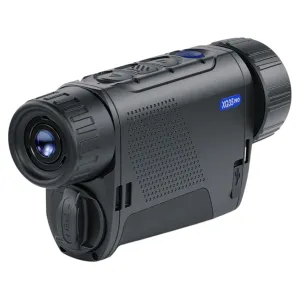
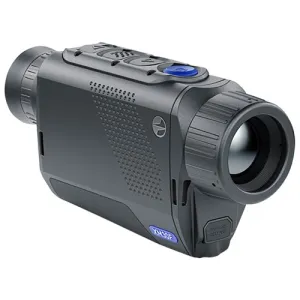
For scanning, spotting, and walking up game, Pulsar makes handheld thermal monoculars. The Axion is the compact, pocket-sized option; the Helion 2 is the larger, longer-range handheld; and the Telos is the newest and most interesting. The Telos is the first thermal monocular line designed to be hardware-upgradeable — its modular architecture lets you send the unit back to have internal components swapped for better ones as the technology improves, instead of buying a whole new device. In a category where optics go out of date fast, that is a real, verified differentiator.
Thermal binoculars
The Merger is Pulsar’s premium thermal binocular: two eyepieces instead of one, which is far more comfortable for long nights of glassing because your eyes are not fighting a single ocular. Many Merger models add the LRF rangefinder. The older Accolade filled the same role before it.
Clip-on thermal attachments
If you do not want to buy a dedicated thermal scope, the Krypton 2 and Proton are front attachments that mount ahead of your existing day scope and convert it to thermal for the night, then come off in the morning. It is the budget-conscious way to add thermal capability to a rifle you have already zeroed.
Digital night vision
Thermal is not the only path. Pulsar’s Digex riflescope and Forward attachment are digital night-vision devices — they use a light-sensitive sensor and an infrared illuminator, show a true-to-life image in daylight, and cost noticeably less than thermal. They see detail (faces, markings, a clear silhouette) that thermal cannot, at the cost of needing some ambient or IR light.
Build quality and the software behind it
Pulsar devices are built around microbolometer thermal sensors and crisp AMOLED displays, housed in bodies rated to take the recoil of magnum hunting calibers and shrug off weather. The part that sets the brand apart, though, is the software. Pulsar treats a thermal optic like a small computer: onboard video and still recording, Wi-Fi, and the Stream Vision 2 app that streams the view to your phone, stores footage, and pushes firmware updates that add features long after purchase. The company has a history of firsts here — its 2009 Digisight introduced one-shot zeroing and an in-view menu system that the rest of the industry followed. You pay a premium for Pulsar, but a meaningful chunk of that premium is the picture quality and the years of software support.
How Pulsar compares
Against the value brands — ATN and AGM Global Vision — Pulsar is more expensive but generally wins on image clarity, reliability, software polish, and resale value; ATN and AGM win purely on getting you into thermal for less money. Against the other premium names — Trijicon (the IR Hunter and REAP-IR line) and N-Vision — the comparison is closer. Those American makers carry serious military and ruggedness pedigree, while Pulsar tends to offer more features and resolution per dollar and a deeper software ecosystem. InfiRay competes hard on raw sensor specs at the high end. For most hunters weighing image quality, feature set, and price together, Pulsar lands in the sweet spot.
Who should buy what
- The dedicated night hog or predator hunter: a Thermion 2 (or the Talion to save money) — a purpose-built thermal scope that mounts and zeroes like a normal optic.
- The hunter on a budget who scouts first: an Axion compact monocular to find the animals before committing to a shot.
- The all-night glasser: a Merger binocular — two eyepieces save your eyes over hours of scanning.
- The shooter who loves the rifle they already have: a Krypton 2 clip-on, so you keep your day scope and add thermal only when you need it.
- The buyer who hates obsolescence: a Telos monocular, which can be hardware-upgraded instead of replaced.
- The shooter who wants daytime-realistic night vision for less: a Digex digital riflescope rather than thermal.
Who should look elsewhere? If your budget is under roughly $1,500, an entry Pulsar will feel like a stretch and a value brand like AGM or ATN is the sensible call. And before you buy any thermal or night-vision optic, check your state’s hunting regulations — many states restrict thermal and night vision for big game while allowing it for hogs, coyotes, and other non-game species.
The Pulsar philosophy
Pulsar’s throughline is that a modern optic is as much software as glass. The company designs devices that keep improving after you own them — firmware updates that add reticles and features, an app ecosystem that ties everything together, and with the Telos, hardware you can actually upgrade. The goal is a tool that stays current through several seasons rather than one you replace the moment a better sensor ships. It is a more expensive way to think about optics, and it is exactly why Pulsar owners tend to stay Pulsar owners.
How to choose your Pulsar setup
Start with the format: do you want a weapon-mounted scope (Thermion, Trail, Talion), a handheld for scanning (Axion, Helion, Telos, Merger), or a clip-on to keep your day scope (Krypton, Proton)? Next, pick the sensor: an XQ 384-resolution core is plenty for closer-range hog and predator work and saves money, while an XP or XG 640 core gives you longer detection range and a finer image for open country. Decide whether you want the built-in LRF rangefinder, which matters more for longer shots. Finally, plan for power — Pulsar’s swappable APS and IPS battery packs let you carry spares for an all-night sit. Match those four choices to how and where you hunt and the model nearly picks itself.
From a Belarus basement to the night-hunting mainstream
It is a long way from hand-built wooden observation tubes in an unfinished basement to a thermal scope that records 4K-grade footage to your phone, but that is the arc of this company. Pulsar grew up alongside the technology it sells, moving from Soviet-era optics know-how in Lida to a modern European manufacturing group in Lithuania, and then bridging into the huge American hunting market through its Texas partner. Today thermal hunting is normal — farmers protect crops from hogs at 2 a.m., predator hunters call coyotes in pitch dark — and a large share of that gear says Pulsar on the side. The brand did not just ride that wave; it helped create it.
Shop Pulsar Optics & Prices
Live Pulsar products and current prices, organized by department and updated automatically.
Thermal Imaging
Where Pulsar Fits in Our Buying Guides
- 6 Best Night Vision Devices for 2026: Digital & Analog Ranked
- 6 Best Rangefinders for Hunting & Long Range
- 9 Best Hog Hunting Rifles: AR-15s, Bolt Guns & Night Rigs
- 9 Best Varmint Rifles: Prairie Dogs to Coyotes
- 6 Best Scope Rings & Mounts
Pulsar FAQ
Where is Pulsar based and where are its optics made?
Pulsar is part of Yukon Advanced Optics Worldwide, headquartered in Vilnius, Lithuania. The company carries a “Made in Europe” flag — its thermal and night-vision devices are developed, designed, and manufactured in European factories.
Who owns Pulsar, and who handles it in the United States?
Pulsar is the flagship brand of the Yukon Advanced Optics Worldwide group. In North America it has been distributed and serviced since 2009 by Sellmark Corporation, based in Mansfield, Texas.
What is the best Pulsar thermal scope?
For most hunters the Thermion 2 is the flagship choice; step up to an XP or XG model for a higher-resolution 640 sensor and longer detection range. The Talion is the budget-friendlier dedicated thermal scope.
What is the difference between Pulsar thermal and Pulsar digital night vision?
Thermal units like the Thermion read heat and work in total darkness, fog, and brush, but show less fine detail. Digital night-vision units like the Digex use a sensor plus IR light, look true-to-life in daylight, and cost less, but need some light to see.
Is Pulsar better than ATN or AGM?
Generally yes on image quality, reliability, software, and resale value — but Pulsar costs more. ATN and AGM are the value play if you want to get into thermal for the least money.
What is Stream Vision 2?
It is Pulsar’s free app that connects to your device over Wi-Fi to stream the live view to your phone, store photos and video, and push firmware updates that add features after purchase.
What does a Pulsar thermal’s detection range really tell you?
Detection range is the distance at which the optic can pick up a heat signature, which is much farther than the range at which you can actually identify or ethically shoot an animal. Judge a scope by its recognition range, not the headline detection number.
What tier is Pulsar?
Premium. Pulsar is the high-end, software-rich choice in consumer thermal and digital night vision, priced above value brands and competitive with the other premium names.
Related Optics, Sights & Lasers Brands
USA Gun Shop may earn a commission on purchases made through the links on this page, at no extra cost to you. We list products on merit; prices and availability are pulled live and can change.
5,743+ Gun & Ammo Deals
Updated daily from 200+ top retailers. Filter by category, caliber, action type, and price.