

Affiliate disclosure: This Ruger M77 Hawkeye review contains affiliate links. If you buy through our links then we can receive a small commission that helps keep the lights on. You don’t pay anything more.
- Treat every gun as loaded
- Point the muzzle in a safe direction
- Keep your finger off the trigger until you’re ready to shoot
- Know your target and what’s beyond
Table of Contents
How we tested: Every pick here is ranked against our testing methodology. Minimum round counts, accuracy and reliability protocols, the failures that disqualify a gun.
Review: Ruger M77 Hawkeye, the M77 You Can Still Buy New
Our Rating: 8.1/10
- MSRP: $1,499 for every Hawkeye Hunter on Ruger’s site, including the model 57107 tested here
- Street Price: Our live card starts at $1,189.99 for the .308 Hawkeye Hunter (57107) at Palmetto State Armory on October 8, 2026 (Use our live pricing for the best up to date deal)
- Caliber: .308 Win tested; Ruger’s Hawkeye Hunter list also includes .204 Ruger, .243 Win, 6.5 Creedmoor, .30-06, 7mm Rem Mag and .300 Win Mag
- Action: Bolt action, Mauser-type controlled-round feed with a non-rotating claw extractor and fixed blade ejector
- Barrel Length: 20 in., cold hammer-forged stainless steel, free-floated
- Rifling/Twist Rate: 5 grooves, 1:10 in. right hand
- Muzzle: Threaded 5/8-24 with a factory thread protector
- Capacity: 4 rounds, internal box magazine with a hinged steel floorplate
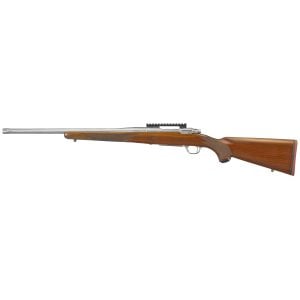
- Receiver: Stainless steel, satin finish, integral scope mounts with a 20 MOA Picatinny rail on top
- Safety: Three-position, on the bolt sleeve
- Trigger: Ruger LC6
- Stock: American walnut, wrap-around checkering, 13.5 in. length of pull
- Overall Length: 40 in.
- Weight: 7 lb
Pros
- Controlled-round feed ran without a stoppage
- Stainless steel, walnut and threaded muzzle
- Sells about $300 under list
Cons
- Heavy trigger for the money
- Most catalog models are unavailable
- Pricier than most walnut rivals
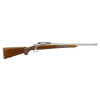
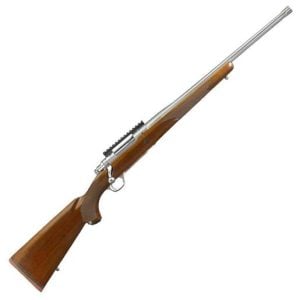
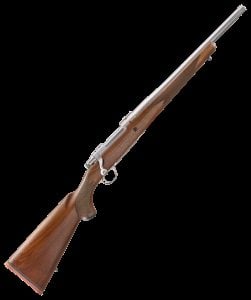
Quick Take
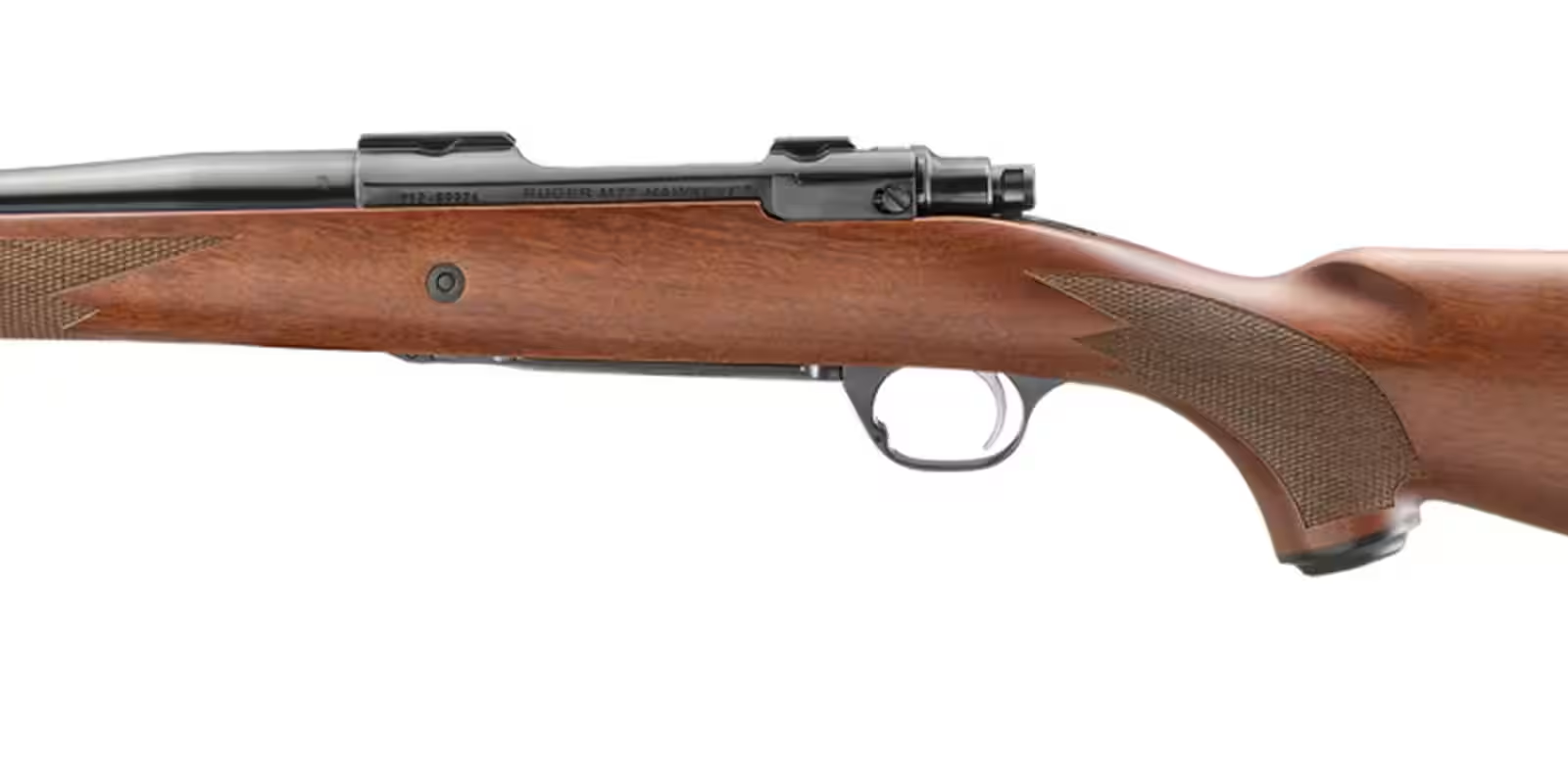
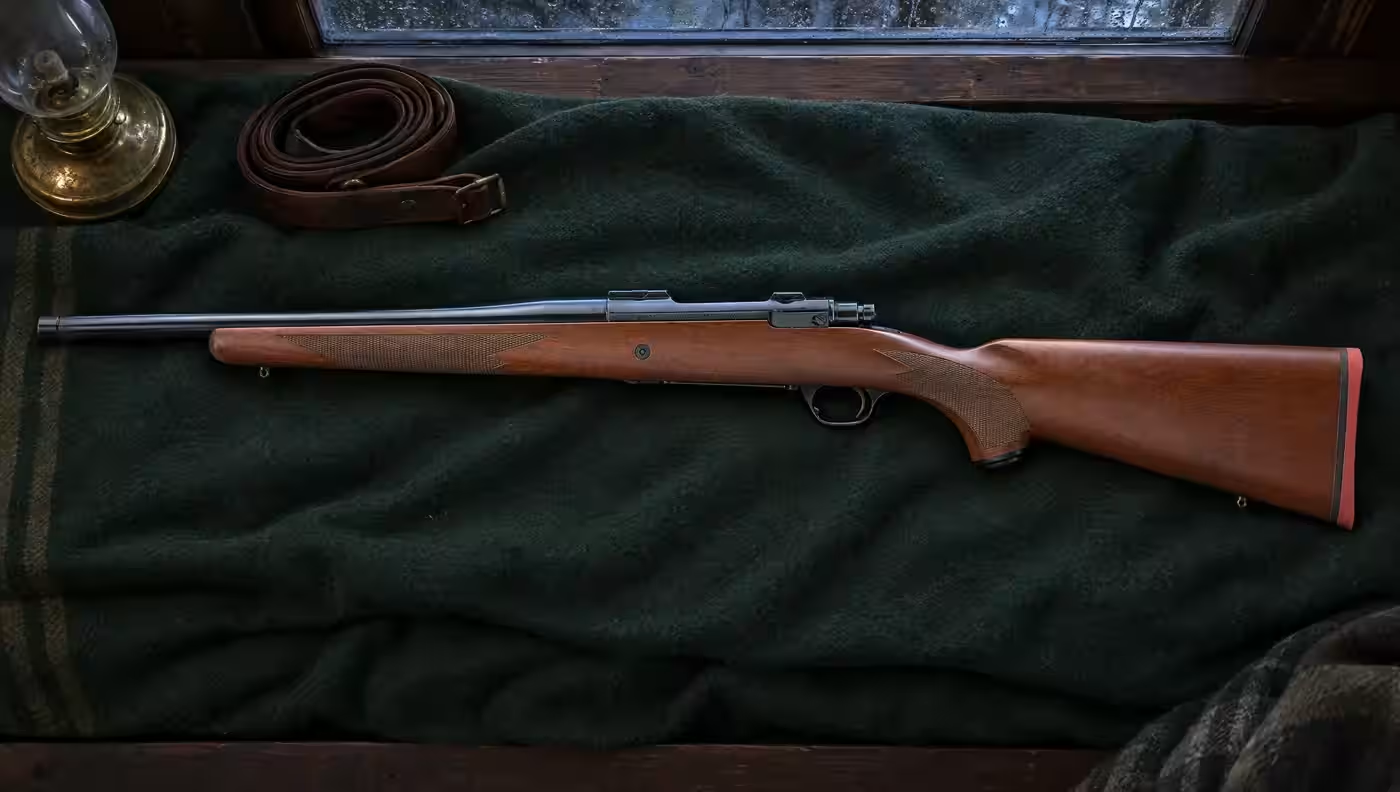
If you searched for a Ruger M77, here’s the short version. Ruger doesn’t have an “M77” page anymore. The rifle is sold as the Hawkeye, but it’s the same family, and Ruger still rolls RUGER M77 HAWKEYE into the left side of the receiver. You can read it in Ruger’s own product photo of the current Hawkeye Hunter. So a new M77 exists. It just isn’t filed under that name.
I shot a new Hawkeye Hunter in .308 Win (model 57107) for 320 rounds over five sessions, and ran 80 rounds through a used M77 Mark II in .30-06 beside it, 400 rounds in all. The Hawkeye never failed to feed, fire, extract or eject. Hornady Precision Hunter 178 gr ELD-X averaged 0.9 in. for three shots at 100 yards, and nothing I fed it opened past 1.6 in. The trigger is the weak spot: mine broke at 4 lb 6 oz, clean but heavy.
Price is where you need to pay attention. List is $1,499, but Palmetto State Armory had the .308 at $1,189.99 on October 8, 2026. Used M77s start far lower, and some of them sit in dealer feeds with no “used” label at all. I’ll show you how to tell them apart below.
Best For: Hunters who want a walnut and steel controlled-feed rifle that’s still in production, and M77 owners who want the same manual of arms in a new gun. Not for buyers chasing the lightest trigger or the lowest price in a bolt action.
M77, M77 Mark II, Hawkeye: Which Ruger Is Which
Three rifles wear the M77 name, and the easiest way to sort them is Ruger’s own serial number records. I pulled all three pages. The dates below are Ruger’s, not mine.
| Generation | Ruger’s serial table | Serial prefix | How to spot it |
| M77 (Ruger calls it the “Original Tang Safety Model”) | 1968 to 1984 | Starts at 1, then 70- through 77- | Safety on the tang, behind the bolt |
| M77 Mark II | 1989 to 2013 | 780- through 792- | Three-position safety beside the bolt sleeve |
| Hawkeye (receiver marked RUGER M77 HAWKEYE) | 2006 onward | 710- onward | Three-position safety plus the LC6 trigger |
Those tables come from Ruger’s M77 serial number history, its M77 Mark II history and its Hawkeye history. The first Hawkeye serial Ruger lists is 710-00501, shipped in 2006. Notice the overlap: the Mark II table keeps running to 2013, so for several years Ruger shipped both.
What changed with the Hawkeye? Put Ruger’s two manuals side by side and the answer is short. The Mark II manual lists “a three-position safety, a fast lock-time steel trigger mechanism, a patented bedding system, quick release hinged floorplate with a newly designed floorplate latch.” The Hawkeye manual repeats that list nearly word for word and adds two things: “a new LC6 trigger” and “a newly contoured cut-checkered walnut stock with red rubber recoil pad.” Both manuals describe the same integral scope mounts and the same included rings. So by Ruger’s own description, the Hawkeye is a Mark II with a new trigger and a reshaped stock. The bones are the same.
And the name never left. The receiver on the Hawkeye Hunter in Ruger’s current product photos reads RUGER M77 HAWKEYE. Ruger’s page for the FTW Hunter says it “combines a stainless Ruger M77 Hawkeye barreled action with an H-S Precision stock.” Several dealers still list new rifles as “Ruger M77 Hawkeye” too. That’s why this page uses both names.
What Ruger Sells Today, and What’s Really Available
Here’s the part the model name hides. On October 8, 2026 I went through every Hawkeye page on Ruger’s site and counted what Ruger marks as available. The catalog is long. The list of rifles you can order is short.
| Ruger family | Models listed | Marked “Available” | List price |
| Hawkeye Hunter | 19 | 3 (all 16.6 in. barrels) | $1,499 |
| Hawkeye FTW Hunter | 9 | 1 (.375 Ruger) | $2,099 |
| Hawkeye Alaskan | 5 | 0 (3 limited, 2 unavailable) | $1,699 |
| Hawkeye African | 7 | 0 (4 limited exclusives, 3 unavailable) | $1,699 |
| Ruger Guide Gun | 5 | 0 (1 limited, 4 unavailable) | $1,699 |
| Hawkeye Standard | 2 | 0 (both distributor exclusives) | Not listed |
| Hawkeye 250th Anniversary | 2 | 0 (both limited) | $1,659 and $4,499 |
Of the 19 Hawkeye Hunters, 12 read “Currently Unavailable” and four read “Limited Availability.” The three Ruger marks plain “Available” are all the short 16.6 in. threaded rifles: a blued 6.5 Creedmoor (67101), a blued .243 Win (67102) and a stainless 6.5 Creedmoor (67105). Every 20, 22 and 24 in. stainless Hunter, including the .308 I tested, is in the unavailable column on Ruger’s side.
Dealers tell a different story. The .308 Ruger calls unavailable was in stock at Palmetto State Armory. Three whole families Ruger no longer gives a page to, the Hawkeye Predator, the Hawkeye Compact and the Hawkeye Long-Range Hunter, were still on dealer shelves. The old Ruger URLs for those three return a “not found” page, and so do their spec sheets. If you want one of those, the clock is running.
Design Intent: Why Ruger Built It This Way
The M77 line has always been Ruger’s take on the Mauser idea. A long claw extractor grabs the case rim as the cartridge comes up out of the magazine and holds it all the way into the chamber and back out. Ruger describes it on the Hawkeye Hunter spec sheet as a “non-rotating, Mauser-type controlled round feed extractor” with “a fixed blade-type ejector that positively ejects empty cases as the bolt is moved fully rearward.” A fixed ejector means you control how hard the brass leaves. Pull the bolt gently and the case drops by your hand. Run it hard and it flies.
Two other choices set it apart from most rifles at this price. Scope mounts are machined into the receiver, so there are no base screws to shear or shoot loose. And the safety has three positions. Ruger’s manual names them “Fire,” “Load-Unload” and “Safe.” In the middle position the trigger is blocked but the bolt still opens, so you can empty the chamber with the safety on. All the way back, the bolt handle is locked down too.
The Hawkeye Hunter adds modern touches to that old pattern: a stainless barreled action, a free-floated barrel threaded 5/8-24, and on the 20 to 24 in. models a 20 MOA Picatinny rail screwed down over the integral mounts with four #8-40 screws. Ruger’s manual also notes that the company gives no written warranty on its firearms, a long-standing Ruger policy worth knowing before you buy.
Ruger M77 Hawkeye Variants
Every line below is taken from the Ruger spec sheet for that model number. Prices are Ruger’s list.
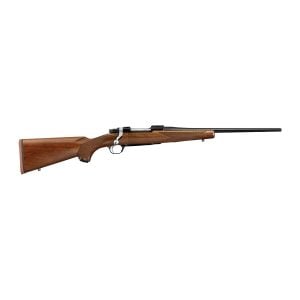
Hawkeye Hunter 57107: .308 Win, 20 in. stainless, 20 MOA rail, walnut, 40 in., 7 lb, 4 rounds $1,499 list
Hawkeye Hunter 67101: 6.5 Creedmoor, 16.6 in. satin blued, integral mounts with rings, walnut, 36.6 in., 6.7 lb $1,499 list
Hawkeye FTW Hunter 57157: .375 Ruger, 22 in. stainless, H-S Precision stock, muzzle brake system, 8.2 lb, 3 rounds $2,099 list
Ruger Guide Gun 47125: .375 Ruger, 20 in. stainless, Green Mountain laminate, express sights, 8.1 lb, 3 rounds $1,699 list
Hawkeye Alaskan 57100: .375 Ruger, 20 in. stainless, black Hogue OverMolded stock, express sights, 8.1 lb $1,699 list
Hawkeye African 37186: .375 Ruger, 23 in. satin blued, walnut with ebony forend cap, 8 lb, 3 rounds $1,699 list
The two Hunters show the split in the line. The 57-series rifles carry the Picatinny rail and longer barrels. The newer 67-series rifles drop the rail, go back to plain integral mounts with Ruger rings in the box, and cut the barrel to 16.6 in. A 67101 is 3.4 in. shorter and 0.3 lb lighter than my 57107. For a tree stand or thick timber, that short blued rifle is the closest thing Ruger makes to the handy walnut M77 carbines people remember.
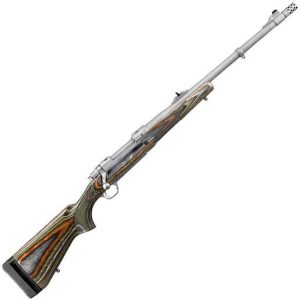
For the three families Ruger no longer lists, dealer stock is the whole market. The cheapest new Hawkeyes on our cards are the Compact and the Predator. Ruger’s manual describes the Compact as having “a specially designed stock with a 12-3/4 in. length of pull, shorter forend, and a 16-1/2 in. lightweight barrel.” Palmetto State Armory had the walnut 7mm-08 (37140) at $985.99.
The Predator is the varmint and long-shot version: a 24 in. stainless barrel in 6.5 Creedmoor on a Green Mountain laminate stock, which Ruger’s 77-series page still describes as having a “two-stage, adjustable target trigger.” It was $985.99 at Palmetto State Armory as well, and it’s the only Hawkeye on this page that Ruger describes with a target trigger.
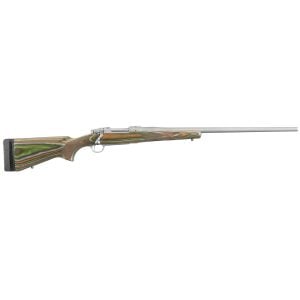
At the heavy end, the Guide Gun is the one that’s easiest to find. Sportsman’s Warehouse had the .375 Ruger at $1,399.99, about $300 under list. It’s a staple of our best dangerous game rifles list for good reason. Elsewhere on October 8: Brownells listed an FTW Hunter in 7mm PRC at $1,449, Palmetto State Armory had the Long-Range Hunter in 6.5 Creedmoor at $1,231.99, and neither the Alaskan nor the African was at any of the five retailers that can lead our cards. Primary Arms listed each at $1,259.99.
Buying a Used M77: What the Listings Don’t Say
Plenty of people who type “Ruger M77” want an older rifle, and that’s a sound plan. Just know what the feeds do with them. On October 8, Guns.com had a listing titled only “Ruger M77” at $719.99 and another titled “Ruger M77 Hawkeye” at $940.49. Neither title says used. Both links go to the used section of the site. A price that low on an M77 is a used gun until proven otherwise.
Do the math on that second one. A used Hawkeye at $940.49 is $45.50 less than a new Hawkeye Compact at $985.99. For that gap I’d take the new rifle every time. The used value is in the older guns: the same day there was a consignment M77 Mark II at $549.99, and Sportsman’s Outdoor Superstore had a police trade-in Mark II in .25-06 with a scope on it at $799.99.
That card shows used and consignment rifles, one at a time, so the price moves every time one sells. Check the condition line on each row before you click. More options are on our used guns page.
A Used M77 Checklist
- Date it by serial: Match the prefix to Ruger’s tables above. My used Mark II’s serial starts 787-, which Ruger’s table puts in 2000.
- Find the safety: On the tang means an original M77. Beside the bolt sleeve with three positions means a Mark II or a Hawkeye.
- Tang-safety rifles, look under the bolt handle: Ruger issued a notice to owners of M-77 rifles about a trigger overtravel set screw that “may not be securely tightened.” Ruger says rifles with the fix have “a ‘T’ inscribed on the underside of the bolt handle,” and it asks owners of any M-77 without the T to contact the company for a free replacement screw before using the rifle.
- Ask for the rings: The integral mounts take Ruger-pattern rings. Both manuals say a set of two steel one-inch rings is included with the rifle, and used guns often show up without them.
- Work the safety and the floorplate: With the rifle empty, check that the safety clicks firmly into each position and that the floorplate latches shut and stays shut.
Competitor Comparison
Walnut-stocked hunting rifles at $1,000 to $1,400 are a small club now. These are the ones I’d cross-shop, each priced on its own card the same day.
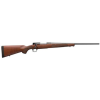
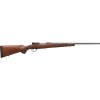
Winchester Model 70 Featherweight (from $1,089.99)
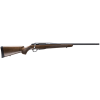
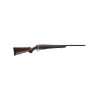
The other American controlled-feed classic. Winchester lists the Featherweight with “Pre-’64 style controlled round feed with claw extractor,” a three-position safety and its M.O.A. trigger, at 6 lb 12 oz in .308 with a 22 in. barrel and five rounds in the magazine. List is $1,369.99 in .308. So it’s a quarter pound lighter than my Hawkeye with a longer barrel and one more round. What the Ruger adds is stainless steel and a threaded muzzle; Winchester’s Featherweight spec table lists neither. Palmetto State Armory had a Featherweight in 6.8 Western at $1,089.99. Our Winchester Model 70 review has the full test.
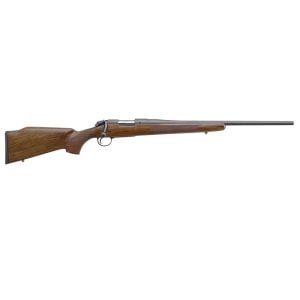
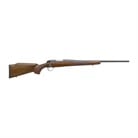
Bergara B-14 Timber (from $1,117.99)
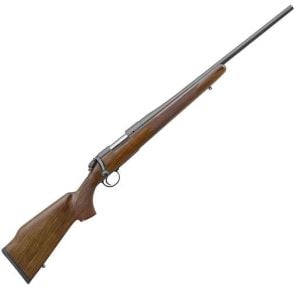
Bergara’s walnut hunting rifle starts at $1,169 list and 7.2 lb, with a Monte Carlo stock and a Graphite Black Cerakote barrel. Bergara puts a sub-MOA guarantee on it, something Ruger doesn’t offer on the Hawkeye. The action is a different idea, though. Bergara describes it as “a two-lug system with a sliding plate extractor,” not a Mauser claw. If a printed accuracy promise matters more to you than a claw extractor, the Timber is the pick. Palmetto State Armory had the .270 Win at $1,117.99.
Tikka T3x Hunter (from $1,000.99)
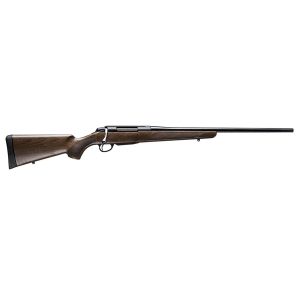
The walnut Tikka is the smooth one. Palmetto State Armory’s cheapest was a .223 with a 16 in. barrel at $1,000.99, and other dealers had .308 and .243 rifles right around $999 to $1,069. It feeds from a three-round detachable polymer magazine in most calibers, where the Ruger holds four under a steel floorplate. We covered the synthetic version in our Tikka T3x Lite review.
Ruger American Rifle Gen II (from $629.99)
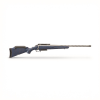
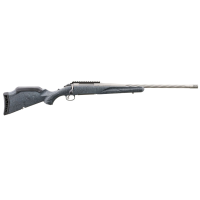
Ruger’s own answer to “why does the Hawkeye cost so much.” The standard American Gen II lists at $769, about half the Hawkeye Hunter’s $1,499, and Sportsman’s Guide had the 250th Anniversary Edition in .308 at $629.99. It’s a synthetic-stocked rifle built to a price, and it shoots very well for the money, as our Ruger American Rifle Gen II review found. You buy the Hawkeye over it for the steel floorplate, the claw extractor, the walnut and the feel. Group size isn’t the reason.
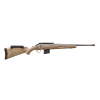
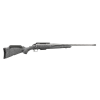
Verdict: The Hawkeye is the only one of these that pairs controlled feed with stainless steel and a threaded barrel. The Model 70 is lighter and prettier. The Bergara backs its accuracy in writing. The American costs half as much. Outside this group, our Christensen Arms Evoke review covers a polymer-stocked rifle with a TriggerTech trigger, and our Beretta BRX1 review covers a straight-pull. See where it lands among its stablemates in our best Ruger rifles roundup.
Testing Protocol
We shot one new Hawkeye Hunter in .308 Win (57107) for 320 rounds across five range sessions in September, in temperatures from 48°F to 81°F, and one used M77 Mark II in .30-06 for 80 rounds in two of those sessions. I mounted a Leupold VX-3HD 3.5-10×40 in Picatinny rings on the Hawkeye’s factory rail. Groups were three shots from a bench with a front bag and rear bag at 100 yards, five groups per load, with the barrel allowed to cool between groups. I also shot from sticks and offhand at 100 and 200 yards. The bore was cleaned every 80 rounds.
Ammunition Log
| Rifle and load | Rounds | Result at 100 yards |
| Hawkeye, Hornady Precision Hunter 178 gr ELD-X | 60 | 0.9 in. average, best 0.7 in. |
| Hawkeye, Federal Premium 165 gr Trophy Bonded Tip | 60 | 1.1 in. average |
| Hawkeye, Federal Fusion 150 gr | 80 | 1.2 in. average |
| Hawkeye, Barnes VOR-TX 168 gr TTSX | 40 | 1.3 in. average |
| Hawkeye, Winchester Super-X 150 gr Power-Point | 80 | 1.6 in. average |
| Mark II (.30-06), Federal Fusion 165 gr | 40 | 1.4 in. average |
| Mark II (.30-06), Remington Core-Lokt 180 gr | 40 | 1.7 in. average |
Phase 1: Break-In
Out of the box the bolt felt dry and a little gritty on the back half of its travel. I wiped it down, put a light film of oil on the lugs and the extractor collar, and shot the first 80 rounds of Federal Fusion without cleaning. By the end of that first session the grit was gone. The floorplate latch was stiff for the first dozen openings and then settled. Nothing else needed attention.
Phase 2: Reliability
Zero stoppages in 320 rounds. I tried to trip it up. I ran the bolt slowly, ran it as fast as I could from the shoulder, and cycled it with the rifle tipped on its side and upside down over a mat. Every round came up under the claw and went into the chamber. Ejection did what a fixed ejector does: a slow pull laid the case on the bench, a hard pull threw it about six feet.
One thing people get wrong about these rifles: you can drop a round straight into the chamber. Ruger’s manual covers it under “To single-load”: place a cartridge in the chamber and close the bolt. The extractor snapped over the rim every time I did it, 20 times in all. The used Mark II also ran clean for its 80 rounds, with a bolt that 26 years of use had worn glass smooth.
Phase 3: Accuracy
The 1:10 twist liked heavy bullets. Hornady’s 178 gr ELD-X averaged 0.9 in. with a best group of 0.7 in. Federal’s 165 gr Trophy Bonded Tip averaged 1.1 in., Fusion 150 gr 1.2 in., and the Barnes 168 gr TTSX 1.3 in. Plain Winchester Power-Points were the worst at 1.6 in., which is still a clean kill on a deer at any distance I’d shoot one with a 20 in. .308. At 200 yards the ELD-X load held 2.1 in.
The thin barrel does walk when it’s hot. Shooting five rounds fast, the fourth and fifth shots climbed about an inch at 100 yards. It’s a hunting barrel, and the first two shots from a cold bore landed in the same place all month. The Mark II in .30-06 shot 1.4 in. with Fusion and 1.7 in. with Core-Lokt, close enough to the new rifle that I wouldn’t pick between them on accuracy.
Tracking & Observations
After 320 rounds the satin stainless showed no marks beyond a faint ring where the bolt handle meets the receiver. The four rail screws were still tight when I checked them at the end. The walnut picked up one small dent from a truck door, which is on me. The red recoil pad is firm, and after 80 rounds in a session from the bench my shoulder knew about it. The action screws had not moved; Ruger’s manual calls for 90 to 95 in-lb on the front screw and 45 to 60 in-lb on the center and rear, and mine checked out in that range.
What This Means for You
- Reliability: It feeds at any speed and any angle I tried.
- Ammo Preference: 165 to 178 gr bullets grouped best in the 1:10 barrel.
- Accuracy Expectation: About 1 to 1.5 in. at 100 yards with good hunting ammo.
- Maintenance: Oil the bolt lightly and check the rail screws once a season.
- Upgrade Impact: A scope, rings and a sling. The trigger is the only part I’d think about changing.
Performance Testing Results
Reliability (9/10)
No failures of any kind in 320 rounds across five loads, including deliberate slow and fast cycling. It loses a point only because 320 rounds is not a lifetime.
Accuracy (8/10)
Sub-inch with one load and 1.1 to 1.6 in. with four others. That’s honest hunting accuracy. Rifles that cost less will match it or beat it from a bench, and Ruger makes no accuracy promise for the Hawkeye.
Ergonomics & Recoil (8/10)
At 7 lb bare and 40 in. long, the 20 in. Hunter carries like a much smaller rifle. With the scope and rings mine weighed 8 lb 3 oz. The stock is slim through the grip, and the safety falls under the thumb. Recoil in .308 is a firm shove through the hard pad. The trigger, at 4 lb 6 oz on my gauge, is the reason this isn’t a 9.
Fit, Finish, and Quality Control (8/10)
The satin stainless is even from muzzle to bolt shroud, the checkering is sharp and wraps the forend cleanly, and the wood-to-metal fit is tight around the tang. The barrel channel gap is a little wider on the left than the right on my rifle. It’s free-floated, so it doesn’t matter to the bullet, but you can see it.
Value (7/10)
At $1,499 I’d hesitate. At the $1,189.99 our card showed, it’s a fair price for a stainless controlled-feed rifle in walnut, and the $985.99 Compact and Predator are better buys still if they suit you.
Features (8/10)
Threaded muzzle, 20 MOA rail over integral mounts, three-position safety, hinged steel floorplate, sling studs. No iron sights on the Hunter.
Technical Deep Dive
Action and Extractor
The bolt is one piece of stainless steel. The claw extractor rides in a collar and doesn’t turn with the bolt, so it stays lined up with the cartridge from magazine to chamber. Because the rim is held the whole way, a round can’t be left loose in the action if you stop the bolt halfway and pull it back. That’s the practical case for controlled feed, and it’s the same action Ruger uses for its .375 Ruger and .416 Ruger rifles.
LC6 Trigger
Ruger’s spec sheet says the LC6 “features smooth, crisp performance right out of the box.” Half of that held up. Mine had no creep I could feel and broke cleanly, at an average of 4 lb 6 oz over ten pulls. Ruger publishes no pull weight for it, and the Hawkeye manual gives no adjustment procedure. The used Mark II’s trigger measured 5 lb 2 oz with some drag before the break, so the LC6 is a real step up from what it replaced. It’s still heavier than I want on a rifle at this price.
Scope Mounting
This is the part of the M77 that confuses new owners. The scope bases are part of the receiver. Ruger’s rings have a lug that drops into a recess on top of the receiver and a clamp that locks into cuts on its sides, and Ruger’s manual warns that each ring “is a mated assembly of a top and a base” whose parts shouldn’t be mixed. On the 57-series Hunter, Ruger bolts a 20 MOA Picatinny rail over those cuts, so any Picatinny ring works. On the 67-series and on older M77s, you need the Ruger rings.
| Component | Specification | Benefit |
| Action | Controlled-round feed, non-rotating claw extractor, fixed blade ejector | Holds the case from magazine to ejection |
| Barrel | 20 in. cold hammer-forged stainless, 5 grooves, 1:10 RH, free-floated | Handy length, suits 150 to 180 gr bullets |
| Muzzle | 5/8-24 thread with protector | Ready for a brake or suppressor |
| Optics | 20 MOA Picatinny rail, four #8-40 screws, over integral mounts | Takes any Picatinny rings |
| Safety | Three-position: Fire, Load-Unload, Safe | Unload with the trigger blocked |
| Magazine | 4 rounds, hinged solid-steel floorplate, flush latch | Dump the magazine without cycling rounds |
| Stock | American walnut, 13.5 in. length of pull, sling studs | Slim, classic handling |
| Size | 40 in., 7 lb | Easy to carry all day |
Thread Patterns Across the Line
Not every Hawkeye shares the Hunter’s 5/8-24 muzzle. Ruger’s manual lists the Guide Gun at 1/2-24 in .30-06 and .300 Win Mag, 1/2-32 in .338 Win Mag, 5/8-18 in .375 Ruger and 5/8-28 in .416 Ruger. The current FTW Hunter is 5/8-24 in everything except the .375 Ruger, which is 11/16-24. Check your model before you order a muzzle device.
New Hawkeye vs Used Mark II on the Same Bench
I brought the old rifle to answer one question: what do you give up by buying used? Less than I expected. The Mark II has the same three-position safety, the same claw extractor and the same integral mounts. Working the two bolts back to back, the manual of arms is identical. If you grew up on one, the other is home.
The differences I could measure were the trigger, 4 lb 6 oz against 5 lb 2 oz, and the stock. The Hawkeye’s is trimmer through the forend and grip and has a softer pad than the hard rubber on my 2000 rifle. On paper they were 0.2 to 0.3 in. apart with comparable ammo, in different calibers, so call it even. What the new rifle adds is stainless steel, a threaded muzzle and a rail. If you don’t need those, a clean Mark II at $550 to $800 is a lot of rifle.
Which Hawkeye Caliber and Barrel to Pick
For deer and black bear inside 300 yards, the .308 with the 20 in. barrel is the one I’d buy again. It’s short enough for a blind and it shot every weight I tried. Our best .308 rifles guide has more options in that caliber. The 6.5 Creedmoor is the pick for lighter recoil, and it’s the caliber Ruger is keeping in stock in the 16.6 in. rifles.
For elk, the 7mm Rem Mag Hunter (57124) has a 24 in. barrel, holds three rounds and weighs 8.1 lb on Ruger’s sheet. Palmetto State Armory had it at $1,088.99 on October 8, which made the magnum $101 cheaper than my .308. Odd, but that’s dealer stock on a model Ruger marks unavailable. Our best elk rifles roundup covers the alternatives. For anything that bites back, skip the Hunter and go straight to the Guide Gun or Alaskan in .375 Ruger.
Parts, Accessories and Upgrades
| Upgrade Category | Recommended Component | Why It Matters | Cost Estimate |
| Scope | A 2-10x or 3-9x hunting scope | Matches the rifle’s range and weight | $300 to $900 |
| Rings | Picatinny rings (57-series) or Ruger-pattern rings (67-series, used M77s) | The wrong pattern won’t fit | $40 to $120 |
| Sling | A leather or padded sling for the factory studs | The studs are there, the sling isn’t | $25 to $60 |
| Recoil pad | A softer slip-on or fitted pad | The factory pad is firm on the bench | $20 to $50 |
| Ammunition | Hornady Precision Hunter 178 gr ELD-X | Best group in our rifle | $40 to $55 per 20 |
Common Problems & Solutions
- Heavy trigger: Mine measured 4 lb 6 oz. Dry practice helps more than you’d think; a gunsmith can advise on replacement options.
- Rings don’t fit: M77 receivers without the rail take Ruger-pattern rings. Keep each ring’s top and base together, as Ruger’s manual says.
- Gritty bolt when new: A light film of oil and the first 80 rounds cleared it on my rifle.
- Groups open up when hot: The slim barrel walks after three fast shots. Let it cool between groups when you sight in.
- Can’t find the model you want: Ruger marks most Hawkeyes unavailable. Search dealers by model number, like 57107, instead of by name.
- Unlabeled used listings: A bare “Ruger M77” title at a low price is a used rifle. Read the condition line.
Who Should NOT Buy This Gun
It’s a good rifle. It isn’t the right one for everybody.
- Budget hunters: The Ruger American Rifle Gen II lists at about half the price.
- Buyers who want an accuracy guarantee: The Bergara B-14 Timber comes with a sub-MOA promise from the maker.
- Hunters counting ounces: The Winchester Model 70 Featherweight is a quarter pound lighter with a 22 in. barrel.
- Shooters who want a detachable magazine: The Tikka T3x Hunter feeds from one.
Final Verdict
The Ruger M77 never went away. It picked up a better trigger and a new name in 2006, and the receiver still says M77. The Hawkeye Hunter I tested fed 320 rounds without a stoppage, put Hornady’s 178 gr ELD-X into 0.9 in. at 100 yards and carried like a rifle a pound lighter than it is.
It asks real money for steel and walnut, the trigger is heavier than it should be, and Ruger’s own availability list is thin. Shop it by model number, pay the street price and not the list price, and look hard at the $985.99 Compact and Predator while dealers have them. If your heart is set on an older M77, a clean Mark II will do nearly everything this one does.
Final Score: 8.1/10. A dependable controlled-feed hunting rifle in stainless and walnut, held back by its trigger and its list price.
FAQ: Ruger M77 Hawkeye
Does Ruger still make the M77?
Yes, as the Hawkeye. Ruger's catalog no longer has an M77 page, but the current rifle's receiver is still marked RUGER M77 HAWKEYE, and Ruger's serial records show the Hawkeye shipping from 2006.
What is the difference between a Ruger M77, an M77 Mark II and a Hawkeye?
The original M77 has a tang safety and Ruger's serial table for it runs 1968 to 1984. The Mark II (table 1989 to 2013) has a three-position safety beside the bolt. The Hawkeye, by Ruger's manuals, adds the LC6 trigger and a newly contoured stock.
How much does a Ruger M77 Hawkeye cost?
Ruger lists every Hawkeye Hunter at $1,499. On October 8, 2026, Palmetto State Armory had the .308 Win model 57107 at $1,189.99, and the Hawkeye Compact and Predator were $985.99.
How do I find out what year my Ruger M77 was made?
Match the serial prefix to Ruger's serial number history tables. Prefixes 70- to 77- are original M77s, 780- to 792- are Mark IIs, and 710- and up are Hawkeyes. Ruger's Serial Number Lookup gives the ship date.
How accurate is the Ruger M77 Hawkeye?
Our .308 Hawkeye Hunter averaged 0.9 in. at 100 yards for three shots with Hornady Precision Hunter 178 gr ELD-X, and 1.1 to 1.6 in. with four other hunting loads.
Can I use standard scope rings on a Ruger M77?
Only on models with the Picatinny rail, such as the 20 to 24 in. Hawkeye Hunters. Other M77s use Ruger-pattern rings that clamp to the integral mounts machined into the receiver.
5,395+ Gun & Ammo Deals
Updated daily from 200+ top retailers. Filter by category, caliber, action type, and price.
Related Guides