

Affiliate disclosure: This Stoeger Condor review contains affiliate links. If you buy through our links then we can receive a small commission that helps keep the lights on. You don’t pay anything more.
- Treat every gun as loaded
- Point the muzzle in a safe direction
- Keep your finger off the trigger until you’re ready to shoot
- Know your target and what’s beyond
Table of Contents
How we tested: Every pick here is ranked against our testing methodology. Minimum round counts, accuracy and reliability protocols, the failures that disqualify a gun.
Review: Stoeger Condor, a $350 Over-Under That Earns Its Keep
Our Rating: 7.5/10
- MSRP: $399 Condor Field black synthetic (31444, 31453); $549 Condor Field walnut (31030, 31035, 31040, 31031, 31042)
- Street Price: $349.99 for a new Condor Field Synthetic at Guns.com on October 8, 2026 (Use our live pricing for the best up to date deal)
- Gauge: 12 gauge and 20 gauge with 3 in. chambers, 28 gauge with 2-3/4 in. chambers, or .410 bore
- Action: Break-open over-under with extractors and an automatic tang safety
- Barrel Length: 28 in. or 26 in., depending on the model
- Choke: Screw-in Improved Cylinder and Modified tubes (12, 20 and 28 gauge); Stoeger lists the .410 as “F, Fixed F”
- Capacity: 2
- Trigger: Single trigger
- Overall Length: 44 in. with 28 in. barrels, 42 in. with 26 in. barrels
- Weight: 7.4 lb (12 gauge walnut), 7.3 lb (12 gauge synthetic), 6.8 to 7.4 lb (20 gauge), 6 lb (28 gauge and .410)
- Stock Material: A-Grade satin walnut or black synthetic; 14-1/2 in. length of pull (13 in. on the .410), 1-1/2 in. drop at comb, 2-1/2 in. drop at heel
- Sights: Brass bead
Pros
- Among the cheapest new over-unders
- Screw-in chokes on most models
- Ran 1,000 shells with two misfires
Cons
- Extractors only on the Field
- Stiff action and heavy trigger
- No barrel selector on our guns


Quick Take
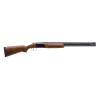
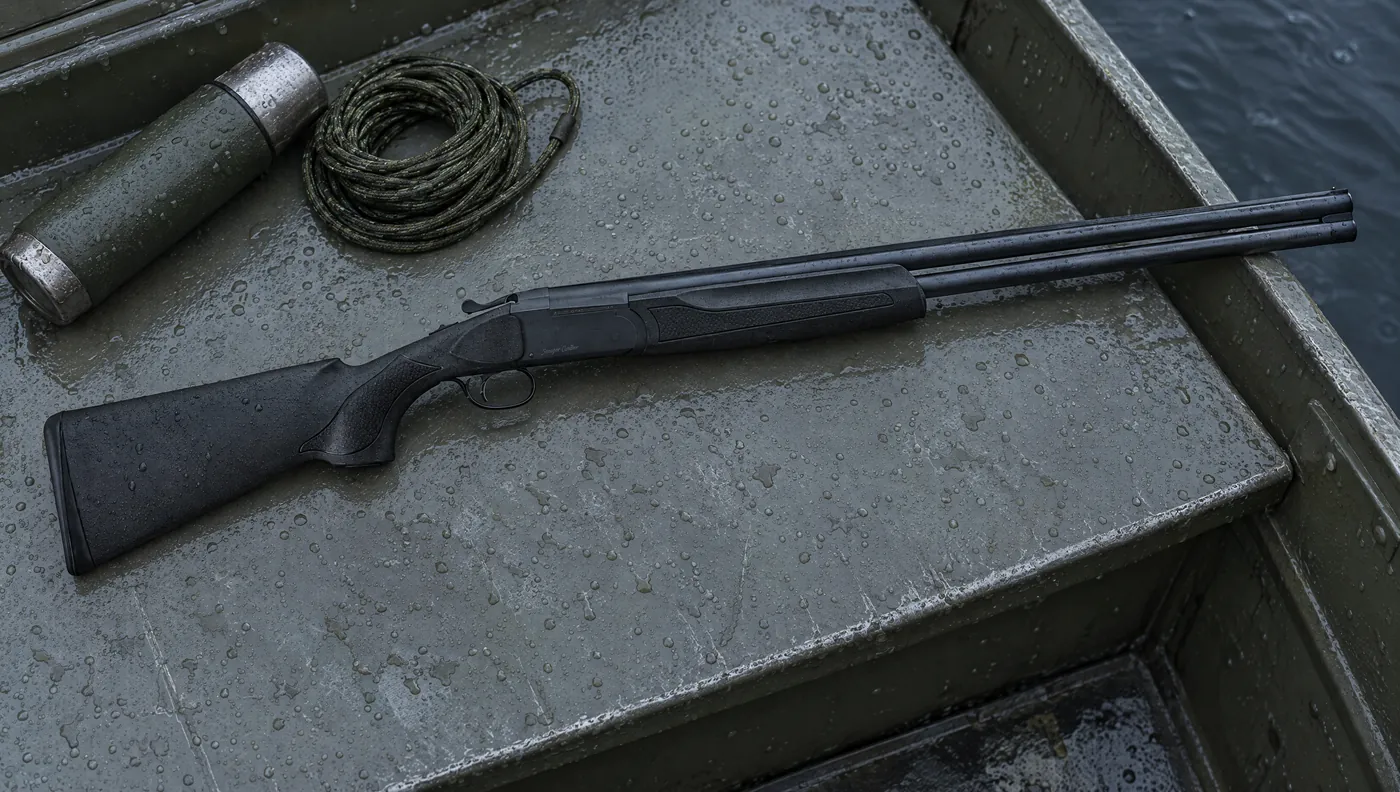
The Stoeger Condor is the over-under people buy when they want two stacked barrels and don’t want to spend $700 to get them. It’s a plain gun. Blued receiver, brass bead, single trigger, extractors, and two choke tubes in the box. Stoeger pitches it at “upland hunters and waterfowlers,” and plenty of them end up on skeet fields too.
I shot two Condor Field 12 gauges for 1,000 shells over six sessions: a walnut gun with 28 in. barrels (31030) for 600 shells and the black synthetic version (31444) for 400. The walnut gun fired every shell. The synthetic gun had two light strikes on the top barrel in its first 50 shells and none after that. Both were stiff to open for the first 150 shells or so, and both triggers broke at well over six pounds.
Here’s what the name hides. Stoeger sells the Condor in four lines plus a Longfowler, with list prices from $399 to $899, and the cheapest one is the newest. On October 8, 2026, our card started at $349.99 for the Condor Field Synthetic at Guns.com. That puts it among the cheapest new over-unders we track. So does it hold up? Yes, if you accept what it is: a working gun with a rough edge or two.
Best For: First-time over-under buyers, casual skeet and five-stand shooters, and hunters who want a break-action for doves, ducks over decoys or a truck gun they won’t baby. Not for anyone who shoots registered targets every weekend or wants ejectors and a barrel selector.
Seven Condor Fields, Two Prices: What the Name Hides
Dealers file a lot of different guns under “Stoeger Condor,” and some listings don’t say which one you’re looking at. Start with the Field, because it’s the one most people mean. Stoeger’s Condor Field page lists seven item numbers. Every one has a blued receiver and barrels, a single trigger, a brass bead and the same 1-1/2 in. drop at comb and 2-1/2 in. drop at heel.
| Item | Gauge | Stock | Barrels | Chokes | Length | Weight | MSRP |
| 31444 | 12 | Black synthetic | 28 in. | IC, M | 44 in. | 7.3 lb | $399 |
| 31453 | 20 | Black synthetic | 28 in. | IC, M | 44 in. | 7.4 lb | $399 |
| 31030 | 12 | A-Grade satin walnut | 28 in. | IC, M | 44 in. | 7.4 lb | $549 |
| 31035 | 20 | A-Grade satin walnut | 26 in. | IC, M | 42 in. | 6.8 lb | $549 |
| 31040 | 20 | A-Grade satin walnut | 28 in. | IC, M | 44 in. | 6.9 lb | $549 |
| 31031 | 28 | A-Grade satin walnut | 26 in. | IC, M | 42 in. | 6 lb | $549 |
| 31042 | .410 | A-Grade satin walnut | 26 in. | F, Fixed F | 42 in. | 6 lb | $549 |
Three things jump out. First, the black synthetic guns list $150 under walnut with the same barrels, chokes and stock dimensions. Stoeger flags both as new, and says the 12 gauge’s “durable, textured synthetic stock” is “designed to provide a secure grip in foul weather.”
Second, the weights don’t follow the gauges. Stoeger’s copy calls the new synthetic 20 gauge “lightweight,” and its own table puts that gun at 7.4 lb. That’s a tenth of a pound more than the 12 gauge synthetic and half a pound more than the walnut 20 gauge with the same 28 in. barrels. If you want a light Condor, the walnut 20 gauge with 26 in. barrels is 6.8 lb, and the 28 gauge and .410 are 6 lb.
Third, Stoeger’s own menu and its own table disagree on price. The site menu advertises the Condor Field at a “Starting Price: $329.” The cheapest gun in the spec table on that page is $399. We found the same kind of gap on the Stoeger Coach Gun, so treat the menu numbers as old news and read the table.
One more wrinkle: dealers still sell a walnut 12 gauge with 26 in. barrels (31025) that Stoeger’s page no longer lists. Kentucky Gun Co and EuroOptic both had it at $419.99 on October 8, 2026, which made it the cheapest walnut Condor we could find.
Design Intent: Why Stoeger Built It This Way
An over-under costs more to build than a pump or a semi-auto. Two barrels have to be joined and regulated to hit the same place, and the action has to lock up tight against both of them. Most makers answer that with a four-figure price tag. Stoeger answers it by leaving things off.
The Condor Field has no engraving, only a small “Stoeger Condor” script on the receiver. The Condor Series page describes a “blued receiver with high-polish finish,” “machine-turned, monobloc sides” and a “ventilated rib.” There are no ejectors on the Field. The owner’s manual is titled for the “single trigger extractor model,” and it says fired shells “will be automatically extracted from gun and may be removed by hand.” You get two choke tubes, Improved Cylinder and Modified.
What Stoeger didn’t cut is the part that matters in the field. The 12 and 20 gauge guns have 3 in. chambers and take screw-in chokes, so one gun covers clay targets, doves and steel shot for ducks. That’s the whole pitch.
Stoeger Condor Variants
Stoeger’s site splits the family into Condor Field, Condor Compact, Condor Supreme and Condor Competition, and gives the Longfowler its own series page even though dealers sell it as a Condor. Here’s the current lineup with Stoeger’s list prices.
Condor Field Synthetic (31444 12 gauge, 31453 20 gauge): black synthetic stock, 28 in. barrels, IC and M tubes, extractors $399 list
Condor Field walnut (12, 20 and 28 gauge, .410): A-Grade satin walnut, 26 or 28 in. barrels, extractors $549 list
Condor Compact (31036 20 gauge, 31037 .410): 22 in. barrels, 13 in. length of pull, 5.5 lb $549 list
Longfowler (31061): 12 gauge, 30 in. barrels, extended IC and M tubes, extractors, 8.1 lb $549 list
Condor Supreme (31005): 12 gauge, 28 in. barrels, AA-Grade satin walnut, automatic ejectors, single selective trigger $599 list
Condor Competition (31045): 12 gauge, 30 in. ported barrels, adjustable comb, automatic ejectors, 8.85 lb $899 list
Stoeger Condor Supreme (from $619.99)
The Supreme fixes the two things people complain about on the Field. Stoeger’s page says it “comes with auto-ejectors for quick ejection of empty hulls and faster reloading of fresh shells,” and lists a “single selective trigger,” so you can pick which barrel fires first. It also gets AA-Grade walnut. Stoeger now lists one Supreme, a 12 gauge with 28 in. barrels at 7.6 lb, for $599. That’s only $50 over a walnut Field at list.
The street price tells a different story. Guns.com had a new Supreme at $619.99 on October 8, 2026, which is more than Stoeger’s own list price and about $150 more than a walnut Field at Kentucky Gun Co. If you can find one near $599, it’s the Condor I’d buy for clays.
Stoeger Condor Competition (from $679.99)
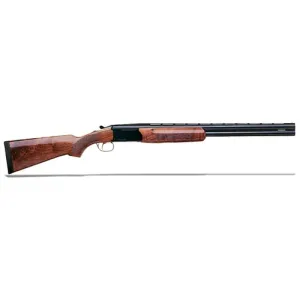
The Competition is a different gun on the same action. Stoeger’s Competition page lists ported 30 in. barrels, automatic ejectors, a “fully adjustable comb,” a right-handed palm swell, a 47 in. overall length and 8.85 lb. It ships with extended Improved Cylinder, Modified and Full tubes, two of each. The list price is $899, though the site menu still says it starts at $699.
Two notes on that page. The copy says the Competition is “available in 12- or 20-gauge,” and the spec table lists the 12 gauge only. And the features list calls the wood gloss while the table calls it satin. At $679.99 on our card it costs nearly twice what the Field Synthetic does, and at almost nine pounds it’s a target gun, full stop. Our best shotguns for trap guide covers where it fits on a trap line.


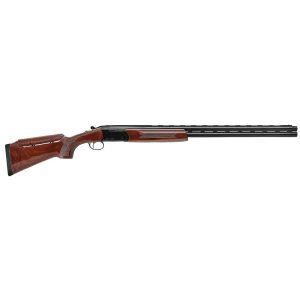
Stoeger Condor Compact, Sold as the Youth (from $498.99)
Stoeger calls it the Condor Compact and most dealers call it the Condor Youth. It’s the same gun: 22 in. barrels, a 13 in. length of pull and 5.5 lb in 20 gauge or .410, at $549 list. Stoeger says it’s “a perfect fit for small-statured beginners and adults.” The 20 gauge takes the same Improved Cylinder and Modified tubes as the full-size gun. Our best youth shotguns roundup has the pumps and semi-autos it competes with.
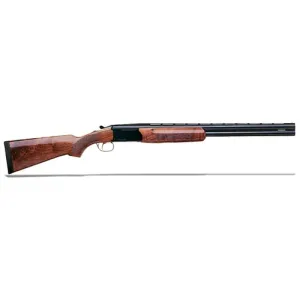
The Longfowler has no card because no trusted retailer we track had one in stock. Stoeger describes it as “designed with waterfowlers in mind,” with 30 in. barrels, extended tubes, a 46 in. overall length and 8.1 lb. Kentucky Gun Co listed it at $470.99 on October 8, 2026.
Competitor Comparison
Every rival here costs more than a Condor Field Synthetic, so the question is what the extra money buys. Our best over-under shotguns under $1,000 roundup ranks the wider field.
Charles Daly 202A (from $497.99)
The 202A is the closest thing to a Condor with the options added. Chiappa’s Charles Daly page lists an aluminum receiver, steel barrels, five Mobil-thread choke tubes from Cylinder to Full, an extractor and a single selective trigger, and says it’s made in Turkey. The 20 gauge with 26 in. barrels is 6.95 lb. Palmetto State Armory had the .410 at $497.99 on October 8, 2026. You get three more chokes and a barrel selector than the Stoeger gives you, for about $150 more than the synthetic Condor.
TriStar Setter S/T (from $610.99)
TriStar lists the 12 gauge Setter S/T with 28 in. barrels at 7.2 lb and $759. It comes with five Mobil-style tubes, a fiber-optic front sight, extractors and a single selective trigger with the barrel selector built into the tang safety. TriStar backs it with “a five year mechanical warranty” against Stoeger’s one year. Palmetto State Armory had that gun at $610.99 on October 8, 2026. For a hunter who wants to choose the tight barrel first on a going-away bird, the selector alone is worth a look.

CZ Drake (from $697.99)
The Drake is what most people step up to. CZ describes “extractor operation,” a single selective trigger, laser-checkered Turkish walnut and “low weight due to the deletion of the mid-rib between barrels,” and it ships with five choke tubes and a lockable hard case. Brownells had the 12 gauge at $697.99 on October 8, 2026. That’s twice the price of a Condor Field Synthetic. It’s a nicer gun to handle and it still doesn’t have ejectors.
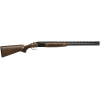
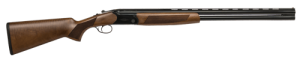
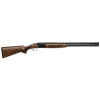
Stevens 555 (from $779.99)
The 555 wins on weight. Savage lists the 12 gauge with 28 in. barrels at 6.2 lb with an aluminum receiver, a Turkish walnut stock and Mobil-thread chokes, at $869. That’s more than a pound lighter than a 12 gauge Condor, and you’ll feel it by the end of a long walk. You’ll also feel it in your shoulder with heavy loads. Brownells had it at $779.99 on October 8, 2026. Our Stevens 555 review has the full test.
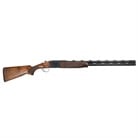
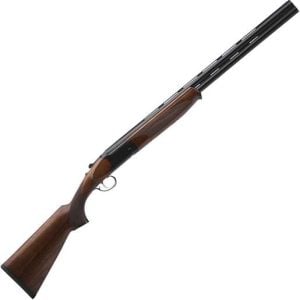
One more to read up on: our Mossberg Silver Reserve review covers another extractor over-under in this price band.
Verdict: The Condor Field is the cheapest gun in this group by a wide margin, and it’s the only one with a synthetic stock option. The Charles Daly, TriStar and CZ each add a barrel selector and three more choke tubes, and all three still use extractors. The Stevens saves more than a pound. If none of that matters to you, keep the money and buy shells.
Testing Protocol
We shot two Condor Field 12 gauges with 28 in. barrels for 1,000 shells over six sessions in late August and September: a walnut 31030 for 600 shells and a black synthetic 31444 for 400. Temperatures ran from 58°F to 91°F. Two sessions were skeet, two were five-stand, one was a pattern board, and one was a mixed afternoon of hunting loads on clays. Patterns were shot on 48 in. paper at 40 yards and counted inside a 30 in. circle. On both guns the first pull of the trigger fired the bottom barrel and the second pull fired the top barrel.
Ammunition Log
| Load | Shells | Result |
| Winchester AA 2-3/4 in. 1-1/8 oz #8 target | 300 | No stoppages; 46% (IC) and 59% (M) at 40 yards |
| Federal Top Gun 2-3/4 in. 1-1/8 oz #7.5 | 300 | Three hulls stuck in a hot bottom chamber |
| Remington Gun Club 2-3/4 in. 1 oz #8 | 200 | Two light strikes in the synthetic gun’s first 50 shells |
| Winchester Super-X 2-3/4 in. 1-1/4 oz #6 lead | 75 | No stoppages; 63% from the Modified barrel |
| Kent Fasteel 3 in. 1-1/4 oz #2 steel | 75 | No stoppages; 71% from the Modified barrel |
| Federal Speed-Shok 3 in. 1-1/4 oz #3 steel | 50 | No stoppages; sharp recoil |
Phase 1: Out of the Box
Both guns came apart in the box. The manual says the shotgun “is shipped from the factory with barrel assembly and forearm assembly removed from gun,” and tells you to “clean lubrication from metal parts and barrel bores” before you put it together. That took ten minutes with solvent and patches. The chokes came installed and snug.
Both were stiff. The top lever on each gun stopped well right of center when closed, and neither gun would drop open under its own weight. The manual covers the lever: when the gun is new, “the lock lever may not return to a precise center position when action is closed,” to allow for “gradual adjustment of locking surfaces.” Stoeger’s FAQ says only its M3500, M3000 and M2000 need a break-in, and the Condor fired fine from shell one. I still worked each action open and closed about 100 times at home before the first range trip.
Phase 2: Reliability
The walnut gun fired all 600 of its shells. No misfires, no doubling, and the second barrel always set after the first.
The synthetic gun wasn’t perfect. Twice in its first 50 shells the top barrel went click with a 1 oz Remington Gun Club load. Both primers showed a shallow dent, and both shells fired when I closed the gun and tried again. It never happened in the next 350 shells, including 100 more of the same load. My read is that a new, tight gun needed a couple of boxes to settle in, but I’m reporting it because it happened.
Extraction is where you notice the price. The extractor lifts both shells about a quarter inch, fired or not, and you pull them out by hand. Three Federal Top Gun hulls stuck in the walnut gun’s bottom chamber during a hot skeet round and needed a fingernail. Winchester AA hulls never stuck. A wipe of the chambers between rounds ended it.
I checked the choke tubes every 50 shells, as the manual asks. The Modified tube in the walnut gun had backed out a quarter turn at about shell 300. I snugged it and it stayed put.
Phase 3: Patterns and Point of Impact
With Winchester AA #8s at 40 yards, the Improved Cylinder tube put 46% of its pellets in the 30 in. circle and the Modified tube put 59%. Both are right where those chokes should be. Kent Fasteel #2 steel from the Modified tube ran 71%, which is what you’d expect from steel, since it patterns tighter than lead through the same choke.
Point of impact matters more on a cheap double than pattern percentage does. At 25 yards the bottom barrel centered its pattern 3 in. above the bead and the top barrel 1.5 in. above and 1 in. left. The two centers were inside 2 in. of each other. That’s a gun that shoots a touch high, which most clay shooters like, and whose barrels agree.
The triggers are the weak spot. On the walnut gun the first pull broke at 6.4 lb and the second at 7.1 lb. The synthetic gun measured 6.9 lb and 7.4 lb. All four had creep you could feel. My skeet scores with the walnut gun were 21 and 22 out of 25, and 20 with the synthetic, which is two or three birds under what I shoot with my own gun.
Tracking & Observations
By 150 shells the walnut gun opened with a normal push on the lever, and by 600 the lever had moved most of the way back toward center. The synthetic gun was a little behind it and still tight at 400. The bluing wore bright on the forend iron of both guns, which is normal for any break-action. The walnut picked up one dent on the comb from a skeet-field gun rack. The synthetic stock came through without a mark.
Our scale put the walnut gun at 7.5 lb and the synthetic at 7.2 lb, each within a tenth of a pound of Stoeger’s figures.
What This Means for You
- Reliability: Expect it to fire every time once it has a few boxes through it. Work the action at home first.
- Ammo Preference: 1-1/8 oz target loads ran cleanest. Smooth hulls come out easier than ribbed promo hulls.
- Pattern Expectation: About 46% and 59% at 40 yards with the two factory tubes, shooting a little high.
- Maintenance: Pull and clean the choke tubes every 100 shots and check them every 50, as the manual says.
- Upgrade Impact: A Skeet or Cylinder tube and a better recoil pad do more than anything else you can add.
Performance Testing Results
Reliability (8/10)
One thousand shells, two guns, two light strikes, both in one gun’s first 50 shells. No doubling and no failure of the second barrel to set. Three sticky promo hulls. It loses two points for the early misfires and for an action that needs breaking in before it feels right.
Patterns and Accuracy (7/10)
The tubes pattern to their markings and the two barrels print within 2 in. of each other at 25 yards. Heavy triggers cost me targets, and two tubes isn’t much to work with out of the box.
Ergonomics & Recoil (7/10)
At 7.4 lb the 12 gauge is no featherweight. On a skeet field that’s a plus: the gun swings smoothly and soaks up target loads all afternoon. Our explainer on trap vs skeet vs sporting clays covers what each game asks of a gun. The 3 in. steel loads were sharp but manageable, and the rubber butt pad is thin. Carried all day behind a dog, you’ll know you have it. The automatic safety resets every time you open the gun, which takes some getting used to on clays.
Fit, Finish, and Quality Control (6/10)
The bluing on both guns was even and deep. The walnut is plain and straight-grained with shallow checkering, and the wood stood a little proud of the metal at the tang on ours. The synthetic stock is hollow-sounding but solid, with useful texture panels. Neither gun looks expensive. Neither one is.
Value (9/10)
A new over-under with screw-in chokes from $349.99 on our card. The next cheapest gun in the comparison above starts about $150 higher.
Features (6/10)
Choke tubes, 3 in. chambers and a vent rib on the walnut gun. No ejectors, no selector and only two tubes.
Technical Deep Dive
Action and Safety
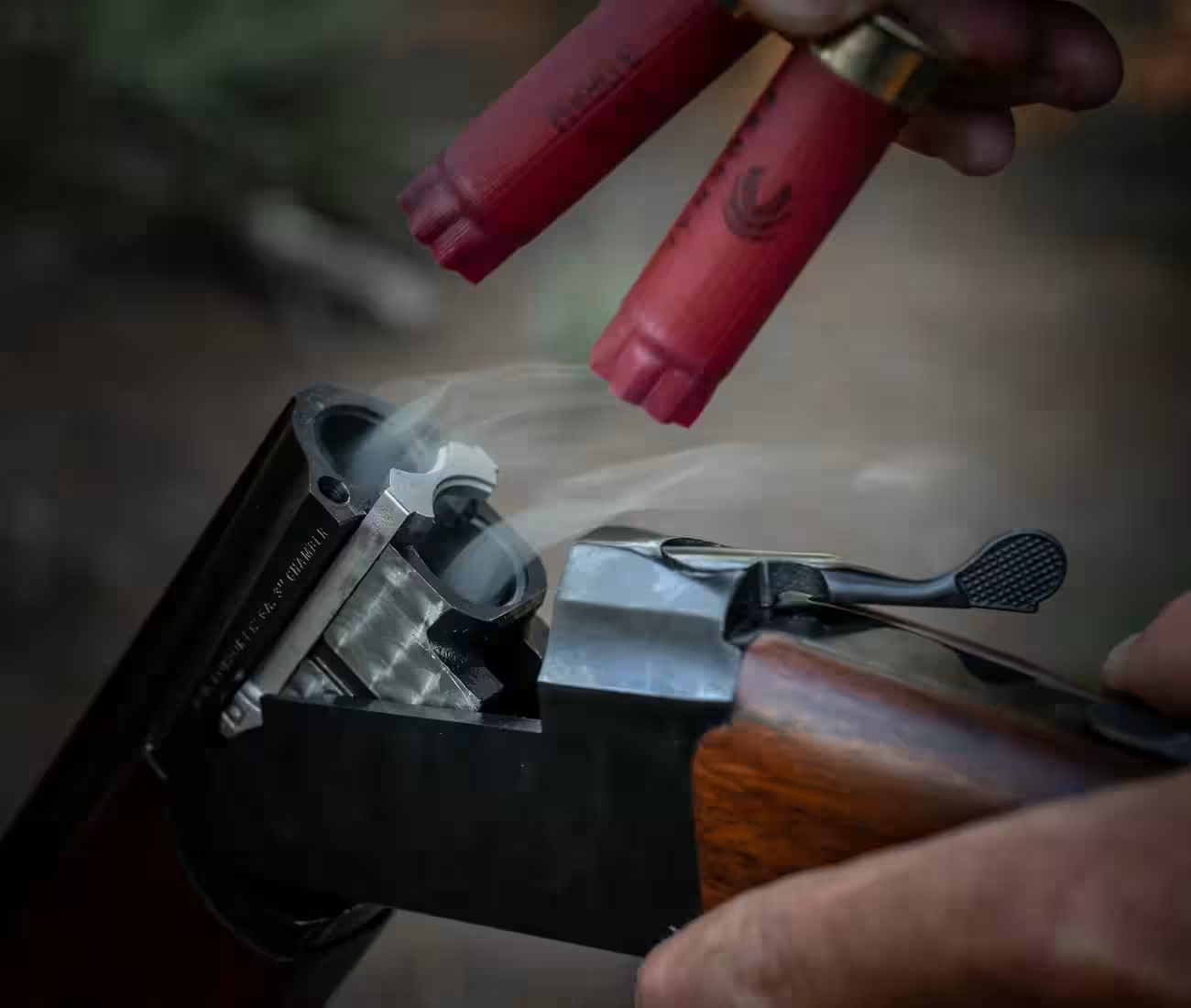
Push the top lever to the right and the barrels pivot open on two pins in the frame. Opening the gun cocks it and, per the manual, “the safety button moves to the ‘S’ position” on its own. So a Condor is on safe every time you close it. That’s a sensible default in a duck blind. On a skeet field it’s one more thing to do before you call for the bird.
The manual has one warning worth repeating: the top lever has to be firmly in position as you close the gun, or the locking lugs “will remain exposed and may damage the extractor.” Close it with a steady hand and let the lever seat.
The Single Trigger
Stoeger’s wording on the trigger isn’t consistent. The Condor Series page says “single trigger (single-selective trigger).” The Condor Field’s feature list says only “single trigger,” while the Supreme’s says “single selective trigger.” Neither of our Field guns had a barrel selector. Bottom barrel first, top barrel second, every time. With the tubes as shipped I put the Improved Cylinder in the bottom and the Modified on top, which is the right order for most going-away targets. If you want to choose the order shot by shot, that’s the Supreme or one of the rivals above.
Barrels, Chokes and Steel Shot
The 12, 20 and 28 gauge Field guns ship with Improved Cylinder and Modified tubes. Stoeger sells Cylinder, Improved Cylinder, Modified, Improved Modified and Full tubes as options, standard or extended. The tubes are marked with notches, and Stoeger’s FAQ decodes them: three notches is Modified and four is Improved Cylinder.
- Steel shot: The FAQ recommends Modified, Improved Cylinder or Cylinder for steel and adds, “There is no benefit shooting steel through a choke tighter than modified, and we do not recommend doing so.” Both factory tubes are fine for duck loads.
- Full chokes: The manual prints one warning in capitals: “DO NOT SHOOT STEEL SHOT THROUGH A FULL CHOKED BARREL.” That matters for the .410, which Stoeger lists with Full chokes, and for anyone who buys an optional Full tube.
- Tube care: The manual says to remove and clean the tubes “each time after 100 shots” and to check that they’re tight every 50.
Our shotgun chokes explained guide covers what each constriction does, and the shotgun barrel length guide explains the choice between 26 in. and 28 in. barrels.
| Component | Specification | Benefit |
| Action | Break-open over-under, extractors | Few parts, easy to check empty |
| Safety | Automatic, on the tang | Resets to safe every time the gun opens |
| Trigger | Single; bottom barrel first on our guns | One trigger to learn |
| Chambers | 3 in. (12 and 20 gauge) | Takes 2-3/4 and 3 in. shells |
| Chokes | Screw-in IC and M supplied | Clays, upland birds and steel shot with one gun |
| Warranty | One year, per the manual | Covers defects in workmanship and materials |
Where It’s Made
The receiver on Stoeger’s product photos is marked with Stoeger’s name and Accokeek, Maryland, which is the company’s U.S. address. The owner’s manual says the warranty “is given by STOEGER” at a post office box in Veranópolis, in the Brazilian state of Rio Grande do Sul, and that guns go to Stoeger’s service center in Pocomoke City, Maryland, for repair.
Walnut or Synthetic, and Which Gauge
Start with the stock, because that’s where the money is. The synthetic Field lists $150 under walnut, and on October 8, 2026 the gap on the street was about $120: $349.99 for the synthetic at Guns.com against $470.99 for the walnut 12 gauge with 28 in. barrels at Kentucky Gun Co. In 12 gauge the two guns weigh almost the same. So the walnut buys looks and nothing else. If the gun is going in a duck boat or behind a truck seat, buy the synthetic.
Gauge is less obvious. The 12 gauge has the cheapest shells and the widest choice of steel loads, and it’s the one to buy for ducks and clays. The 20 gauge walnut guns are about half a pound lighter and kick less with field loads, which makes them the pick for doves and quail; our best 20 gauge shotguns guide makes the wider case, and the best dove hunting shotguns list has the competition. Skip the synthetic 20 gauge if weight is why you want a 20, since Stoeger lists it at 7.4 lb.
The 28 gauge and .410 are 6 lb guns at the same $549 as the walnut 12 gauge. The 28 has 2-3/4 in. chambers and the standard two tubes. The .410 has a 13 in. length of pull and Full chokes, so it’s a specialist. Our best 28 gauge shotguns and best .410 shotguns roundups cover the alternatives.
Buying Tips: New, Used and Which One
Read the listing before you read the price. Guns.com files several different guns under the bare title “Stoeger Condor,” and the gauge and barrel length are in the details, not the headline. The row that leads our card is titled Condor Field Synthetic, which is as specific as it gets.
Used guns are a poor deal right now. Guns.com had used Condors from $347.99 on October 8, 2026, which is $2 less than a new synthetic with a warranty. A used walnut gun only makes sense well under $350. If you look at one, check that the barrels lock up without wobble, that the top lever sits at or right of center, and that both barrels fire in order on snap caps.
Prices on budget doubles move around, so check our shotgun deals page before you buy. If the Condor turns out to be less gun than you want, the best over-under shotguns list starts where this one stops.
Parts, Accessories and Upgrades
| Upgrade Category | Recommended Component | Why It Matters | Cost Estimate |
| Chokes | Stoeger Cylinder and Full tubes | Opens the gun up for skeet and tightens it for long birds | $20 to $40 each |
| Recoil | A slip-on recoil pad | The factory pad is thin for 3 in. loads | $15 to $35 |
| Dry practice | Two 12 gauge snap caps | Lets you work the action, safety and trigger at home | $10 to $20 |
| Choke care | Choke tube lube | Stoeger’s FAQ recommends it to stop tubes seizing | $8 to $12 |
| Carrying | A padded break-action gun slip | Protects the bluing and the bead in the truck | $25 to $60 |
There isn’t much else to bolt on. The manual says Stoeger “is not responsible for alteration or modifications” made by anyone but authorized personnel, and a trigger job on a $350 gun rarely makes sense. Spend the money on a flat of target loads instead.
Common Problems & Solutions
- Stiff to open when new: Normal. Clean off the shipping grease, put a little gun grease on the pivot pins and forend iron, and work the action. Ours eased up by about 150 shells.
- Top lever sits right of center: The manual says a new gun’s lever may not return to center. It isn’t a defect.
- A light strike on the second barrel: We had two in one gun’s first 50 shells, both with a light 1 oz load. Close the gun firmly, keep the firing pin holes clean and give it a few boxes before you call the dealer.
- Gun won’t fire after closing: The automatic safety has reset. Push it forward. The manual also warns that dirt on top of the frame can keep the action from closing fully.
- Choke tube working loose: Check the tubes every 50 shots with the wrench. One of ours backed out a quarter turn.
- Loose stock after removal: Snug the stock bolt to no more than 5 ft-lb, the manual’s limit.
Who Should NOT Buy This Gun
The Condor does a few jobs well for very little money. It’s the wrong tool for these buyers.
- Weekly clay shooters: Hand extraction and a seven-pound trigger get old fast. The Stoeger Condor Supreme adds automatic ejectors and a selective trigger.
- Hunters who want to pick the barrel: Our Field guns fired bottom then top with no selector. The TriStar Setter S/T has one on the tang.
- Upland hunters who walk all day: A 7.4 lb 12 gauge is a lot to carry. The Stevens 555 is listed at 6.2 lb.
- Buyers who want nicer wood and a case: The CZ Drake comes with laser-checkered Turkish walnut, five tubes and a hard case.
- Trap shooters: The Field’s stock and two open chokes aren’t set up for rising targets. The Stoeger Condor Competition has the adjustable comb and a Full tube.
Final Verdict
The Stoeger Condor is an honest gun at an honest price. Ours patterned to their choke markings, put both barrels in the same place and got through 1,000 shells with two light strikes, both early and both in one gun. The action is stiff when new, the triggers are heavy, and you’ll pull every hull out with your fingers.
What makes it worth buying is the math. The Condor Field Synthetic was $349.99 on our card, the walnut gun costs about $120 more for the same barrels, and every rival with a barrel selector starts around $500. If you want to find out whether you like shooting an over-under, this is about the cheapest way to do it with a new gun, real chokes and a known name on the receiver. Buy the synthetic and a case of target loads.
Final Score: 7.5/10. A plain, stiff, dependable over-under that costs less than almost every other new one we track.
FAQ: Stoeger Condor
How much does a Stoeger Condor cost?
Stoeger lists the Condor Field Synthetic at $399, the walnut Condor Field at $549, the Condor Supreme at $599 and the Condor Competition at $899. On October 8, 2026, our card started at $349.99 for a new Condor Field Synthetic at Guns.com.
Does the Stoeger Condor have ejectors?
The Condor Field does not. It has extractors, which lift both shells when you open the gun so you can pull them out by hand. Stoeger lists automatic ejectors on the Condor Supreme and the Condor Competition.
Can you shoot steel shot in a Stoeger Condor?
Yes, through the supplied Improved Cylinder and Modified tubes. Stoeger's FAQ recommends Modified, Improved Cylinder or Cylinder chokes for steel, and the owner's manual warns against shooting steel through a Full choked barrel.
Does the Stoeger Condor have a barrel selector?
Neither of the Condor Field guns we tested had one. The first pull fired the bottom barrel and the second pull fired the top barrel. Stoeger lists a single selective trigger on the Condor Supreme.
What chokes come with a Stoeger Condor Field?
The 12, 20 and 28 gauge guns come with screw-in Improved Cylinder and Modified tubes. Stoeger sells Cylinder, Improved Cylinder, Modified, Improved Modified and Full tubes as options, and lists the .410's chokes as Full.
Is the Stoeger Condor good for skeet?
It works for casual skeet. The 12 gauge weighs 7.4 lb with 28 inch barrels and swings steadily, and we shot 21 and 22 out of 25 with the walnut gun. The limits are hand extraction, an automatic safety, heavy trigger pulls and no Skeet tube in the box.
5,395+ Gun & Ammo Deals
Updated daily from 200+ top retailers. Filter by category, caliber, action type, and price.
Related Guides