

Affiliate disclosure: This Beretta BRX1 review contains affiliate links. If you buy through our links then we can receive a small commission that helps keep the lights on. You don’t pay anything more.
- Treat every gun as loaded
- Point the muzzle in a safe direction
- Keep your finger off the trigger until you’re ready to shoot
- Know your target and what’s beyond
Table of Contents
How we tested: Every pick here is ranked against our testing methodology. Minimum round counts, accuracy and reliability protocols, the failures that disqualify a gun.
Review: Beretta BRX1, a Fast Straight-Pull With One Price Everywhere
Our Rating: 8.2/10
- MSRP: Beretta lists the BRX1 Black and BRX1 Green “Starting from $1,599.00”
- Street Price: Our live card starts at $1,500.99 for the black .308 Win (JBRX1E316/20) at Palmetto State Armory on October 8, 2026 (Use our live pricing for the best up to date deal)
- Caliber: .308 Winchester tested; dealers also list .243 Win, 6.5 Creedmoor, .30-06, .300 Win Mag and 7mm Rem Mag
- Action: Straight-pull bolt, 8-lug rotating bolt head (16-lug on magnum calibers), reversible for left-handed shooters
- Barrel Length: 20 in., cold hammer forged, interchangeable
- Rifling/Twist Rate: 1:10
- Muzzle: Threaded 5/8×24
- Capacity: 5 rounds, flush-fit orange polymer magazine you can also load from the top
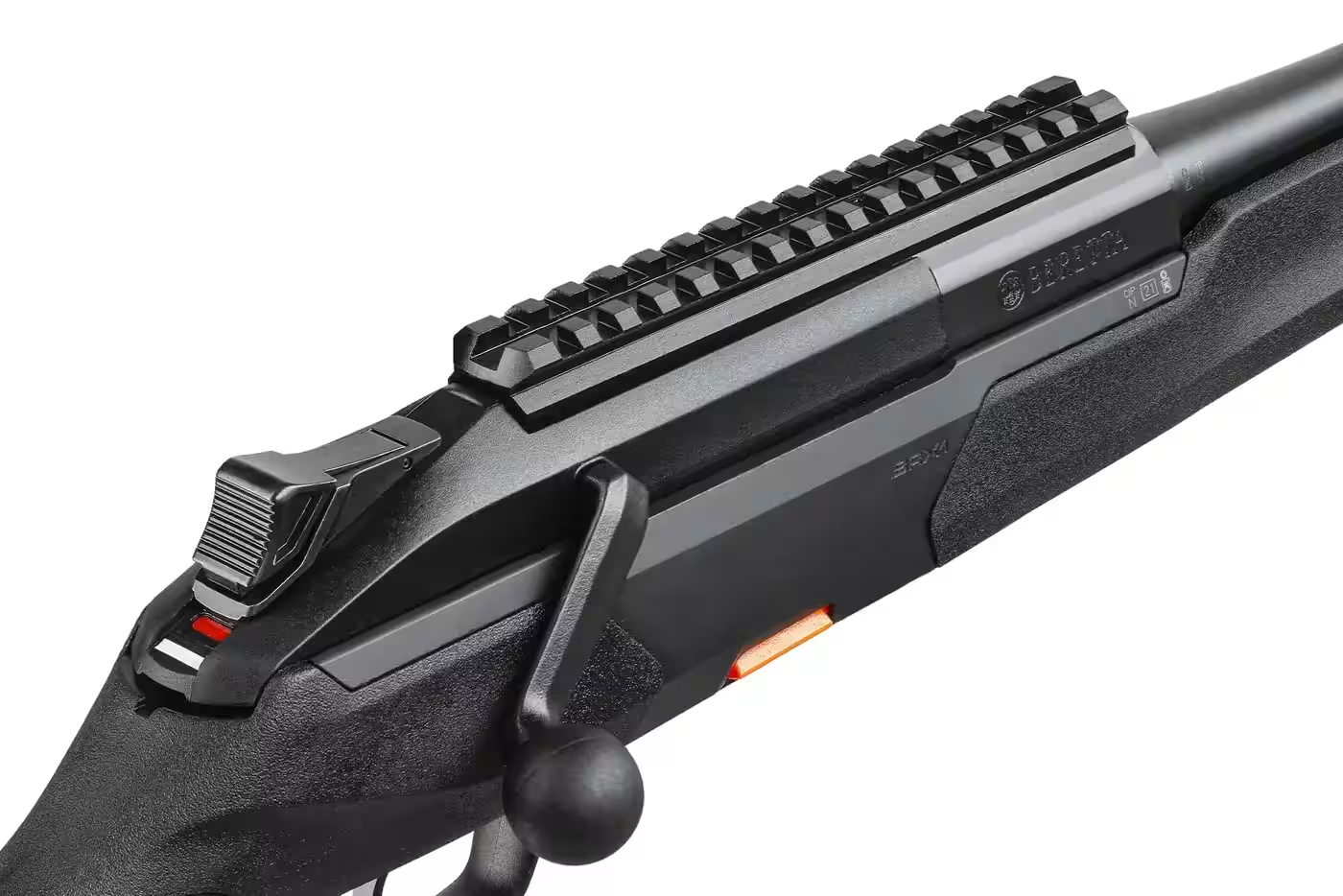
- Optics: Picatinny rail mounted on the barrel extension; no iron sights
- Stock: Black polymer, negative comb, modular length of pull and grip, Extralight recoil pad
- Trigger: Single stage, three weight settings
- Safety: Three-position, on the rear of the bolt carrier
- Overall Length: 41 in.
- Weight: 7.1 lb unloaded
Pros
- Fast, smooth straight-pull cycling
- Converts to left-handed at home
- Sub-MOA with good hunting ammo
Cons
- Same price at nearly every dealer
- Second caliber kit costs a lot
- No iron sights, scope is mandatory


Quick Take
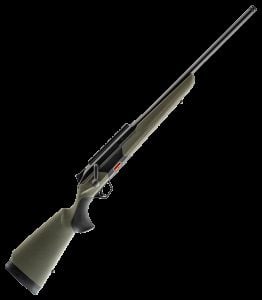
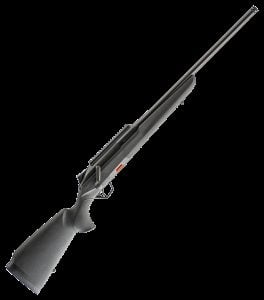
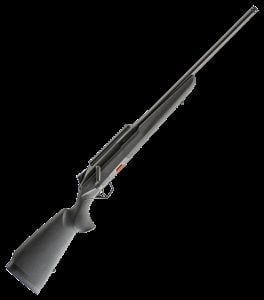
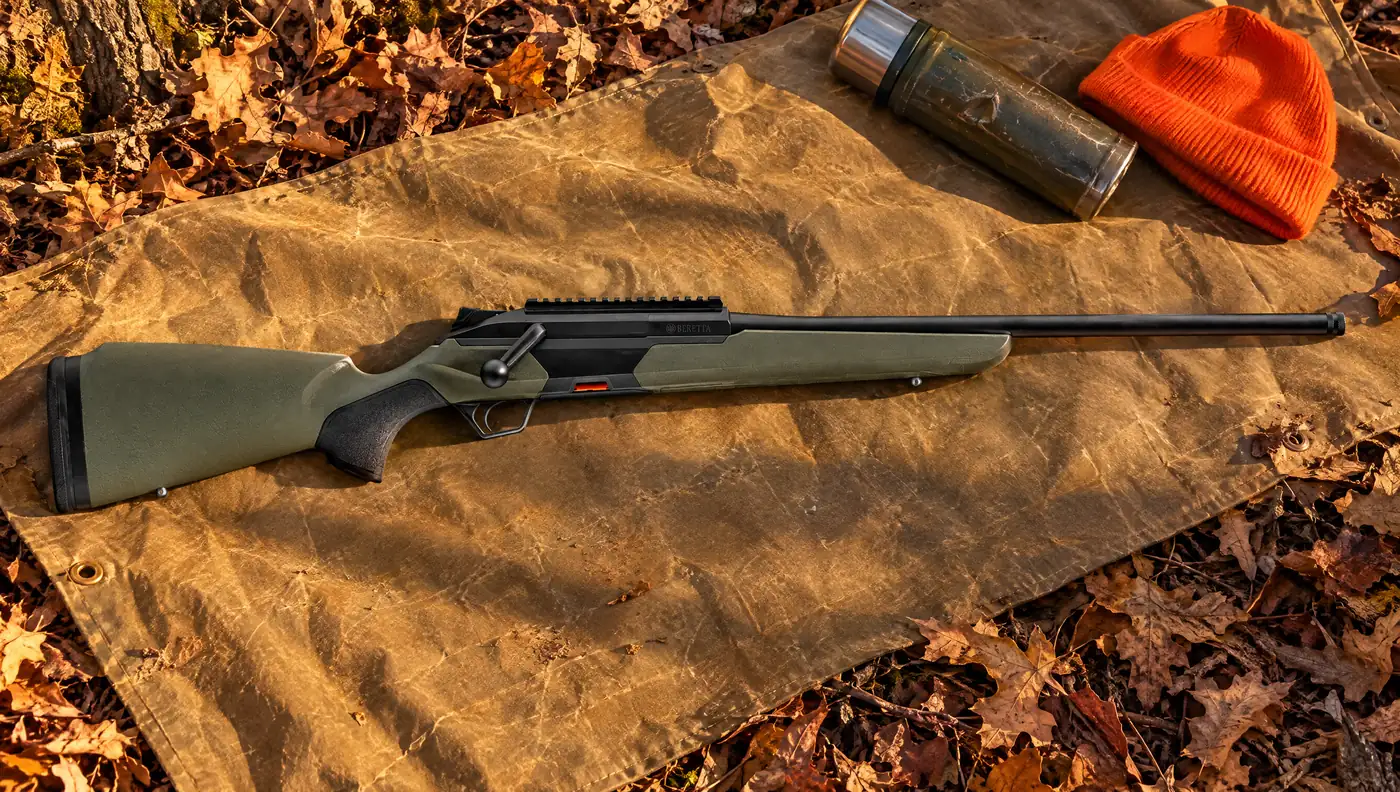
The Beretta BRX1 is a straight-pull hunting rifle: you pull the bolt handle straight back and shove it straight forward, with no lift and no turn. Beretta builds it around a rotating bolt head, a cold hammer forged barrel you can swap for another caliber, a three-position safety on the back of the bolt carrier and a polymer stock. The black .308 Win we tested has a 20 in. threaded barrel, weighs 7.1 lb and holds 5 rounds in a bright orange magazine.
I put 300 rounds of .308 through one over four range sessions. It short-stroked twice in the first 40 rounds while I was still learning the bolt, and it didn’t stop again. Hornady Precision Hunter 178 gr ELD-X averaged 0.9 in. for five shots at 100 yards. In a timed two-shot drill, my second shot came 0.6 seconds sooner than it did with a turn-bolt Tikka.
Two things surprised me, and neither is on the spec sheet. First, the price barely moves: almost every dealer we track sells every caliber within a couple of dollars of $1,499. Second, the swap-barrel idea is real but not cheap. Beretta sells a .243 conversion kit for $779, more than half the price of a second rifle. So is it worth it? If you want the fastest manual action under $2,000 from a current catalog, yes.
Best For: Hog, deer and driven-game hunters who want a quick second shot, left-handed shooters who are tired of special-order rifles, and anyone who’ll use a suppressor on a short 20 in. barrel. Not for bargain hunters, and not for anyone who wants backup iron sights.
The $1,499 Wall: Every BRX1 Costs the Same
Here’s what I found when I priced the BRX1 across the retailers we track on October 8, 2026. Beretta’s own page says “Starting from $1,599.00.” Kentucky Gun Co, Classic Firearms, EuroOptic, Bass Pro Shops and Midway USA all had the standard rifle at $1,499.00. Palmetto State Armory had it at $1,499.99 or $1,500.99 depending on caliber and color. That’s the same $100 under list at store after store, in black or green, in .243 or .300 Win Mag. Battlehawk Armory was the exception on the high side, at $1,528.80 to $1,592.50.
When a dozen listings agree to the dollar, you’re looking at a price floor set by the maker’s dealer policy, not a market. The practical upshot is simple. Don’t waste a weekend shopping this rifle around. Pick the dealer you like, check shipping and transfer fees, and buy the caliber you want.
I found one outlier. GritrSports listed the black .308 at $1,349.10 on the same day, about $150 under everyone else. It isn’t one of the retailers that can lead our card, so you may not see it at the top, but it’s worth a look in the full list. The table below shows what each chambering looked like.
| Chambering | Barrel | Twist | Beretta magazine type | Price we found |
| .243 Win | 20 in. | 1:10 on Beretta’s chart, 1:8 on EuroOptic’s listing | D | $1,499.99 (Palmetto State Armory) |
| 6.5 Creedmoor | 22 in. per dealer listings | 1:8 per EuroOptic | D | $1,499.99 (Palmetto State Armory) |
| .308 Win (tested) | 20 in. | 1:10 | C | $1,500.99 (Palmetto State Armory) |
| .30-06 | 20 in. | 1:10 | B | $1,499.99 (Palmetto State Armory, green) |
| .300 Win Mag | 22 in. per dealer listings | 1:10 per EuroOptic | A | $1,499.99 (Palmetto State Armory, green) |
| 7mm Rem Mag | 22 in. per dealer listings | 1:9 per EuroOptic | A (magnum) | $1,499.00 (EuroOptic) |
A word on sources, because Beretta’s own documents don’t line up. The marketing paragraph on the BRX1 Black page says the rifle is “Available in 6.5 Creedmoor, .308 Winchester, and .300 Win. Mag.” The spec chart on the same page lists .308 Win, .243 Win and .30-06. Dealers stock all six chamberings above. The chart also gives the black .30-06 a weight of 7.3 lb and the green .30-06 a weight of 7.1 lb, and it’s the same rifle in a different color. I’ve used the chart for the .308 we tested and labeled everything that comes from a dealer listing.
Design Intent: Why Beretta Built It This Way
Beretta’s BRX1 Black page calls it “the fastest manually repeating platform available” and promises “guaranteed sub-MOA accuracy.” Strip away the sales pitch and the idea is practical. In much of Europe, hunters shoot driven boar that cross a gap in the trees in a second or two, and a rifle you can cycle without breaking your grip or your cheek weld gets you a second shot. Straight-pulls have owned that job for years, mostly at prices well above this one.
In Beretta’s design the bolt head rotates to lock into the barrel extension, with 8 lugs on standard calibers and 16 on magnums, while the carrier just slides back and forth. Because the lockup is in the barrel and not the receiver, the barrel can come off with two screws, and a different bolt head and magazine turn the rifle into a different caliber. The Picatinny rail rides on the barrel extension too, which Beretta says lets you “swap barrels without removing the zeroed scope.”
The BRX1 user manual names Fabbrica d’Armi P. Beretta in Gardone Val Trompia, Italy, as the manufacturer. For American buyers, the pitch is a little different from the European one: hogs instead of boar, a threaded 5/8×24 muzzle for a suppressor, and a short 20 in. barrel that keeps a suppressed rifle handy. If you’ve read our Steyr RMS Wild or Walther RS3 coverage, you’ve seen other makers chase the same hunter.
Beretta BRX1 Variants
Beretta’s US site lists four BRX1 pages: Black, Green, Carbon and Ranch. Dealers also carry a 500 Years anniversary rifle. Specs below are from Beretta’s charts unless noted.
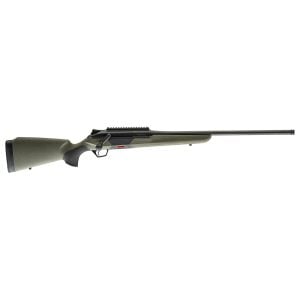
BRX1 Black (JBRX1E316/20): .308 Win, 20 in., 41 in. overall, 7.1 lb, 5 rounds, black polymer stock $1,599 list
BRX1 Green (JBRX1G316/20): .308 Win, 20 in., 41 in. overall, 7.1 lb, 5 rounds, green polymer stock $1,599 list
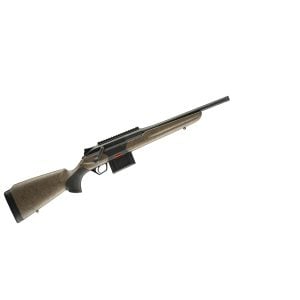
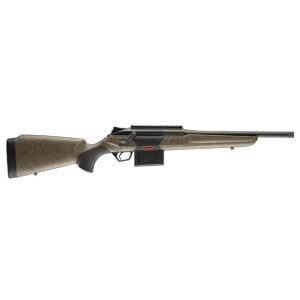
BRX1 Ranch (JBRX1VE316SB): .308 Win, 16 in., 37 in. overall, 6.3 lb, 10 rounds, tan stock with black webbing $1,669 list
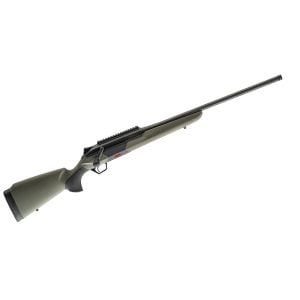
BRX1 Carbon (JBRX1W331/24): .300 Win Mag, 24 in. carbon-wrapped barrel, 45 in. overall, 6.7 lb, 5 rounds $1,899 list
The Black and Green rifles are the same gun in two stock colors, and they cost the same. If you’d rather have the 22 in. 6.5 Creedmoor for deer and antelope at longer range, Palmetto State Armory had the black one at $1,499.99, a dollar under the .308.

BRX1 Ranch (from $1,569.99)
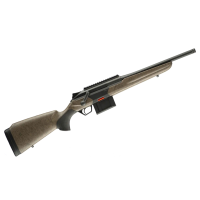
The Ranch is the one built for American truck and ranch use. Beretta lists a 16 in. barrel, 37 in. overall length and 6.3 lb, which makes it 4 in. shorter and about three quarters of a pound lighter than the standard .308. It ships with a 10-round magazine setup; Beretta’s chart describes it as a “High-Vis Detachable 10-round Magazine With P-MAG Adapter.” Palmetto State Armory had it at $1,569.99 against a $1,669 list, the same $100 gap as the standard rifle. If most of your shots are inside 200 yards and the rifle lives behind a truck seat, this is the version I’d buy.
BRX1 Carbon (from $1,843.99)
The Carbon comes in .300 Win Mag only, with a 24 in. carbon-wrapped barrel. Beretta says it “reduces the overall weight by 9.5oz,” and its chart puts the rifle at 6.7 lb and 45 in. long. This is the odd one on price. Midway USA, Classic Firearms and EuroOptic all had it at $1,799.00, but the trusted retailer that leads our card, Palmetto State Armory, was at $1,843.99. It’s the one BRX1 where our trusted retailer sits well above the pack, so read the full list on the card.
The 500 Years rifle is a .308 with a 22 in. barrel that EuroOptic listed at $2,699.00. It’s a commemorative model, and I haven’t shot one.
Competitor Comparison
There aren’t many straight-pull hunting rifles on American shelves, so the real choice is between the BRX1, one American straight-pull, one very expensive German one and a good turn-bolt for half the money.
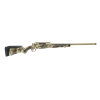
Savage Impulse Big Game (from $888.99)
Savage’s straight-pull is the obvious American rival, and we shot one for 300 rounds in our Savage Impulse Big Game review. Palmetto State Armory had the 6.5 Creedmoor at $888.99, about $610 less than the BRX1. There are two catches. Savage lists the Big Game as out of production, so you’re buying a closeout, and it weighs 8.8 lb against the Beretta’s 7.1 lb. The Impulse shot slightly tighter groups for us and has a trigger I liked better. The BRX1 is 1.7 lb lighter, is still in Beretta’s catalog and can change calibers.
Blaser R8 (about three times the price)
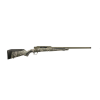
The R8 is the rifle that made straight-pulls famous among driven-game hunters, and it’s the one the BRX1 gets measured against. The cheapest complete new R8 we found was the Professional 2 American Package at EuroOptic for $4,650.00. Most of the R8 listings we track aren’t complete rifles at all; they’re stock-and-receiver sets and separate barrels, which is how that rifle is sold, so there’s no live card here. At roughly three times the money, the R8 is a different purchase. If you’ve always wanted a straight-pull and couldn’t justify the Blaser, the Beretta is the rifle that makes the idea affordable.
Blaser R8 Professional 2 American Package: complete straight-pull rifle as listed by EuroOptic on October 8, 2026 $4,650
Benelli Lupo (from $2,199.99)
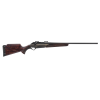
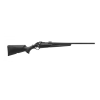
The Lupo is the other modern bolt gun I’d cross-shop at this price, and it’s a conventional turn-bolt. Our card leads with the dressed-up one, a .308 with a 22 in. barrel, BE.S.T. finish and walnut stock at Palmetto State Armory for $2,199.99. The plain black .308 is the fairer match for the BRX1: Kentucky Gun Co listed it at $1,344.99, about $155 under the Beretta. If you don’t care about cycling speed, look at that one.

Tikka T3x Lite (from $749.00)
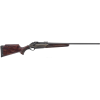
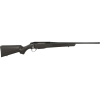
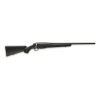
This is the honest question to ask yourself: do you need a straight-pull at all? The Tikka T3x Lite is a conventional turn-bolt, and Palmetto State Armory had one at $749.00, half the price of the BRX1. It was my control rifle for the timed drill below. Tikka is listed alongside Sako on Beretta’s own US site, so you’re staying in the same family either way. The T3x Lite is the better buy for a hunter who takes one careful shot from a stand. The BRX1 earns its premium on moving game and for left-handed shooters. Our Tikka T3x Lite review covers that rifle in full.

Verdict: The Impulse is cheaper while closeout stock lasts, the R8 is the luxury choice, and the T3x Lite and the black Lupo are the sensible turn-bolts. The BRX1 sits in the middle: a current-production straight-pull at a price most serious hunters can reach. Our best .308 rifles roundup covers the wider field. If you’d rather have a turn-bolt in stainless steel and walnut, see our Ruger M77 Hawkeye review.
Testing Protocol
We shot one BRX1 Black in .308 Win (JBRX1E316/20) for 300 rounds over four sessions in late September and early October at a 300-yard range, in temperatures from 48°F to 81°F. I mounted a Leupold VX-3HD 3.5-10×40 in medium rings on the factory Picatinny rail and left the trigger on its factory setting for the accuracy work. I shot five-shot groups from a bench at 100 yards, then field positions and timed drills at 100 and 200 yards. The bore got cleaned after the first 20 rounds and every 100 after that.
Ammunition Log
| Load | Rounds | Result at 100 yards |
| Hornady Precision Hunter 178 gr ELD-X | 60 | 0.9 in. average, best 0.7 in. |
| Federal Fusion 150 gr | 80 | 1.2 in. average |
| Winchester Deer Season XP 150 gr | 60 | 1.3 in. average |
| Hornady American Whitetail 150 gr InterLock | 100 | 1.5 in. average; two short-strokes in the first 40 rounds |
Phase 1: Break-In
I started with 40 rounds of Hornady American Whitetail, mostly to learn the bolt. A straight-pull wants a firm, full stroke in both directions. Twice in those first 40 rounds I eased the carrier forward like I would on a turn-bolt, and it stopped just short of locked. A push on the handle closed it both times. After that first session I ran the bolt hard and never had another one. The carrier felt gritty for the first box and noticeably slicker by round 100.
Phase 2: Reliability
Two stoppages in 300 rounds, both mine, both in the first 40. The remaining 260 rounds fed, fired, extracted and ejected without a problem, including strings where I cycled as fast as I could. Ejection was strong and threw brass about six feet to the right. The orange magazine dropped free every time I squeezed both release tabs, and I topped it off through the open action often, which is handy from a bench.
The session at 48°F was the one I watched most closely, because polymer magazines and cold fingers don’t always get along. Nothing changed. The magazine seated with a firm click and I could work the tabs with gloves on.
Phase 3: Accuracy
Beretta guarantees sub-MOA, and with the right load ours delivered. Hornady Precision Hunter 178 gr ELD-X averaged 0.9 in. across six five-shot groups at 100 yards, with a best of 0.7 in. Federal Fusion 150 gr averaged 1.2 in., Winchester Deer Season XP 1.3 in. and Hornady American Whitetail 1.5 in. At 200 yards the ELD-X held 2.1 in.
So the rifle is a one-inch gun with premium ammunition and a 1.2 to 1.5 in. gun with ordinary soft points. That’s good for a 20 in. sporter-weight barrel, and it’s plenty for any shot I’d take on game with a .308. It isn’t a target rifle, and the cheaper Savage shot a little tighter for us.
Tracking & Observations
After 300 rounds the bolt head lugs showed even, bright contact, and the carrier rails had a light polish where they ride in the receiver. The rail hadn’t moved and the scope held zero from session to session. The stock picked up a few scuffs from the bench bags but nothing came loose, and the recoil pad spacers stayed tight.
What This Means for You
- Reliability: Run the bolt hard both ways and it runs. Baby it and it’ll stop short.
- Ammo Preference: The heavy 178 gr ELD-X grouped best; 150 gr soft points were fine for deer distances.
- Accuracy Expectation: About 1 in. at 100 yards with premium ammo, 1.2 to 1.5 in. with basic loads.
- Maintenance: Wipe and lightly oil the carrier rails and the bolt head, and clean the locking shoulders in the barrel breech.
- Upgrade Impact: A scope and rings are required. Everything else is optional.
Performance Testing Results
Reliability (9/10)
Two short-strokes while I was learning the action, then 260 rounds with nothing to report. I can’t blame the rifle for either one, but a new owner will probably do the same thing, so it costs a point.
Accuracy (8/10)
It met Beretta’s sub-MOA promise with one load out of four. That’s honest hunting accuracy from a light 20 in. barrel, and the 1:10 twist handled 178 gr bullets well.
Ergonomics & Recoil (8/10)
The bolt handle sits right where your hand wants it, and the throw is short. At 7.1 lb bare, the rifle carries easily and still soaks up .308 recoil without fuss; the Extralight pad is soft and helps. Beretta calls the stock’s comb “negative,” and in practice it never slapped my cheekbone. I lost a point on the safety. It lives on the back of the bolt carrier, not on the tang or beside the bolt where American hunters expect it, and it took me a full session to stop hunting for it with my thumb.
Fit, Finish, and Quality Control (8/10)
Metalwork is clean and evenly finished, and the barrel-to-receiver fit shows no gaps. The polymer stock is stiff enough that the forend didn’t touch the barrel off a bipod. It’s also plain. At this price a few buyers will want something that looks more expensive.
Value (7/10)
You get a lot of engineering for about $1,500. But a closeout Savage straight-pull is roughly $610 less, a good turn-bolt is half the price, and you can’t shop your way to a discount.
Features (9/10)
Interchangeable barrels, a bolt you can flip to left-handed, a threaded muzzle, a factory rail, a three-weight trigger and a magazine you can load from the top. Few rifles at any price pack in this much.
Technical Deep Dive
How the Straight-Pull Saves Time
A turn-bolt takes four motions to reload: lift, pull, push, turn down. The BRX1 takes two. Pull the handle back and the bolt head rotates out of the barrel extension on its own; push it forward and the head turns back into lock. Your firing hand never leaves the grip area for long, and your face stays on the stock.
| Component | Specification | Benefit |
| Action | Straight-pull, 8-lug rotating bolt head | Two-motion cycling |
| Barrel | 20 in., cold hammer forged, 1:10, 5/8×24 thread | Handy with a suppressor |
| Optics rail | Picatinny, on the barrel extension | Scope stays with the barrel |
| Trigger | Single stage, three settings | Tune it for bench or field |
| Safety | Three-position, on the bolt carrier | Lock the bolt, or unload on safe |
| Magazine | 5-round orange polymer, top-loadable | Easy to find, easy to top off |
| Size | 41 in., 7.1 lb | Light enough to carry all day |
Timed Follow-Up Shots
Speed is the whole pitch, so I put a timer on it. The drill was two shots on a 10 in. steel plate at 100 yards from a seated position: first shot on the beep, cycle, second shot. Over ten runs my split averaged 1.2 seconds with the BRX1 and 1.8 seconds with a Tikka T3x Lite in .308 wearing the same model of scope. My best single split with the Beretta was 1.0 second.
Six tenths of a second is the difference between a second shot at a hog before it reaches the brush and watching it leave. On a deer that’s standing still, it’s worth nothing. Be honest about which kind of hunting you do.
The Trigger: Two Sets of Numbers
Beretta’s product page says the trigger has “3 different weights from 2.1lbs, 2.6lbs, to 3.3lbs.” The user manual describes it differently: position A is the factory setting, position B is “reduced by 7 oz” and position C is “reduced by 14 oz.” Those don’t quite agree, because 7 oz and 14 oz under 3.3 lb would be about 2.9 lb and 2.4 lb. Beretta’s BRX1 Ranch page gives a third description, a “2-4lb trigger pull.”
Our rifle sided with the manual. On my gauge it broke at 3 lb 4 oz on A, 2 lb 13 oz on B and 2 lb 6 oz on C, averaged over ten pulls each. The break is clean with a little take-up and no grit. To change it you pull the trigger group out of the receiver and move a button on its left side; the manual walks you through it, and it takes about five minutes the first time. I hunted on A and shot groups on A, and I’d leave it there in gloves.
The Three-Position Safety
The manual lays out three positions. In the rearmost one, both the carrier and the trigger are locked. In the middle, the trigger is locked but the carrier is free, so you can load and unload with the rifle on safe. Fully forward, a red latch shows and the rifle will fire. Pushing it forward to fire is quiet and natural. Coming back to safe takes a deliberate push up and forward before the selector slides rearward, and that’s the part I had to practice.
Left-Handed Setup: No Special Order Needed
This is the feature I’d put on the box. Left-handed bolt guns are often special-order items in a handful of calibers. The BRX1 ships set up for right-handed use, and the manual shows how to convert it yourself: take the bolt head out of the carrier, turn it 180 degrees, and move the bolt handle to the other side. The manual says the procedure “repositions both the extractor and the ejector and sets shell ejection from the left side.”
I did it at the bench with a pen tip to release the bolt handle, exactly as the manual suggests. It took me about four minutes, and switching back took two. A left-handed shooter helped me run 20 rounds that way, and brass cleared to the left with the same force. One caution from the manual: push the bolt handle all the way in until its marks disappear, or it isn’t seated.
What a Second Caliber Really Costs
Swap-barrel rifles sound like two guns for the price of one. They aren’t. Beretta’s US store lists a BRX1 Caliber Conversion Kit in .243 Win for $779.00. The page says it includes a bolt head, a barrel “with 0 MOA Picatinny rail mounted” and a 5-round magazine, and that it’s compatible with all BRX1 rifles. That’s 52 percent of the price of a whole second rifle at $1,499.
What you get for the money is one stock, one trigger and one set of habits across two calibers, and a rifle that packs flat for travel. The manual’s conversion steps are short: remove the magazine and bolt carrier, swap the bolt head, loosen two barrel screws, slide the barrel off, fit the new one and tighten the screws to 10 Nm. The manual is blunt that the bolt head, barrel and magazine must all match the caliber.
Magazines are their own puzzle. Beretta’s magazine page sorts them into four types: A for magnums like the .300 Win Mag, B for long standard cartridges like the .30-06, C for the .308 Win, and D for the 6.5 Creedmoor and .243 Win. A spare 5-round magazine is $59.00 from Beretta. So a .308 owner who buys the .243 kit ends up with two magazine types, C and D, and Beretta makes them only in high-visibility orange. Mark them. I didn’t have a second barrel for this test, so I can’t tell you how well zero returns after a swap.
In the Field
I carried the BRX1 on two evening hog sits and one morning walk through cutover pine. At 7.1 lb plus a scope, it’s a rifle you can sling for miles, and the 41 in. length was easy to manage in a box blind. I shot one boar at 110 yards with the 178 gr ELD-X and had the second round chambered before he’d finished falling, without lifting my head. I didn’t need it. That’s the point of the action, though: the second shot is there if you do.
The orange magazine looks odd on a hunting rifle until you drop one in tall grass at dusk. Then it makes sense. The lack of iron sights matters more than I expected on a rifle sold for close, fast shooting; a low-power variable scope or a red dot on the rail suits it better than the 3.5-10x I used. Our best hog hunting rifles, best deer hunting rifles and best elk rifles roundups show what else is out there for each job.
Which Caliber to Buy
Since every chambering costs the same, the caliber decision is purely about your hunting. The .308 Win is the easy answer for hogs and deer inside 300 yards, and it pairs well with the 20 in. barrel and a suppressor. Our SilencerCo Omega 36M review covers a can we ran on a 20 in. .308 bolt gun. The 6.5 Creedmoor gets a 22 in. barrel and kicks less, which suits open-country deer and antelope. The .30-06 and .300 Win Mag make sense for elk. The .243 Win is the soft-recoil pick for younger or smaller hunters.
Think about the conversion kit before you choose. If you might add a second barrel later, check which magazine type each caliber uses in the table above, and remember that magnums use the 16-lug bolt head. Our .308 vs .30-06 and 6.5 Creedmoor vs .308 comparisons go deeper on the cartridges, and our best .308 ammo guide covers loads.
Parts, Accessories and Upgrades
Prices in this table are Beretta’s own US store prices on October 8, 2026, except where I’ve given a range for third-party gear.
| Upgrade Category | Recommended Component | Why It Matters | Cost Estimate |
| Scope | A 1-6x or 2-10x hunting scope | The rifle has no iron sights | $300 to $900 |
| Spare magazine | Beretta 5 Round Magazine for BRX1 (type C for .308) | A second loaded magazine in your pocket | $59.00 |
| Magazine adapter | Beretta BRX1 Magazine Adapter | Lets a .308 BRX1 use Magpul LR/SR magazines, sold separately | $29.00 |
| Bolt knob | Beretta BRX1 Metal Bolt Knob, Hunting or Tactical | A different feel under your palm | $39.00 |
| Long-range rail | Beretta BRX1 Picatinny Rail, 20 MOA | More elevation for longer shots | $149.00 |
| Second caliber | Beretta BRX1 Caliber Conversion Kit, .243 Win | Bolt head, barrel with rail and magazine | $779.00 |
Beretta also lists a vertical grip, a standard grip and Extralight recoil pads in 10, 15, 20 and 25 mm thicknesses. If you need help with the glass, our best rifle scopes guide and our walkthrough on how to sight in a rifle scope will get you started.
Common Problems & Solutions
- Short-stroking the bolt: Pull the handle fully back and drive it fully forward. Practice with an empty rifle until it’s a habit. It cost me two stoppages in the first 40 rounds.
- Fumbling the safety: It’s on the back of the bolt carrier. Spend ten minutes working it with an unloaded rifle before your first hunt.
- Mixing up magazines: Every BRX1 magazine is the same orange. If you own two calibers, label each magazine; the manual says the caliber is marked on the back of the magazine and the left side of the barrel.
- Bolt handle not seated after a left-hand swap: Push it in until the marks can’t be seen, as the manual warns.
- Handloads and the warranty: The manual says the use of reloaded ammunition voids the manufacturer’s warranty. Stick to factory loads if that matters to you.
- No discount to be found: Nearly every dealer is at the same price, so compare shipping, transfer fees and stock, not the tag.
Who Should NOT Buy This Gun
The BRX1 is a specialist. It’s the wrong rifle for a few kinds of buyer.
- Hunters who take one careful shot from a stand: A Tikka T3x Lite does that job for half the money.
- Buyers who want the cheapest straight-pull: The Savage Impulse Big Game costs about $610 less while closeout stock lasts.
- Shooters who want a truck gun: The Beretta BRX1 Ranch is 4 in. shorter, lighter and holds 10 rounds.
- Buyers who want the prestige straight-pull: The Blaser R8 is the famous one, at about three times the price.
Final Verdict
The Beretta BRX1 does what Beretta says it does. It cycles faster than a turn-bolt, it shot under an inch with good ammunition, and after I learned to run the bolt with authority it didn’t miss a beat for 260 rounds. The do-it-yourself left-hand conversion is a real advantage that no spec sheet number captures.
It also asks you to accept a few things. The price is the price, at nearly every store. A second caliber is $779, not pocket change. And the safety and the lack of sights take some getting used to. If your hunting involves moving animals, thick cover or a suppressor, those are small costs for a rifle this quick. If it doesn’t, buy the turn-bolt and a better scope.
Final Score: 8.2/10. A fast, well-made straight-pull that earns its price on moving game, held back by a fixed street price and a costly second barrel.
FAQ: Beretta BRX1
How much does the Beretta BRX1 cost?
Beretta lists the BRX1 Black and Green starting from $1,599. On October 8, 2026, nearly every dealer we track had the standard rifle at $1,499, and Palmetto State Armory had the black .308 Win at $1,500.99.
Is the Beretta BRX1 accurate?
Yes. Beretta guarantees sub-MOA accuracy, and our .308 averaged 0.9 in. at 100 yards with Hornady Precision Hunter 178 gr ELD-X. Three 150 gr hunting loads averaged 1.2 to 1.5 in.
Can the Beretta BRX1 be set up for left-handed shooters?
Yes. The user manual shows how to turn the bolt head 180 degrees and move the bolt handle to the other side, which switches ejection to the left. It took us about four minutes with a pen tip.
What calibers does the Beretta BRX1 come in?
Dealers we track list the standard BRX1 in .243 Win, 6.5 Creedmoor, .308 Win, .30-06, .300 Win Mag and 7mm Rem Mag. The BRX1 Ranch is a .308 and the BRX1 Carbon is a .300 Win Mag.
How much is a Beretta BRX1 caliber conversion kit?
Beretta's US store lists the .243 Win conversion kit at $779. The page says it includes a bolt head, a barrel with a 0 MOA Picatinny rail mounted and a 5-round magazine.
Is the Beretta BRX1 faster than a regular bolt action?
In our timed two-shot drill at 100 yards, follow-up shots averaged 1.2 seconds with the BRX1 against 1.8 seconds with a turn-bolt rifle, because the straight-pull cycles in two motions, not four.
5,395+ Gun & Ammo Deals
Updated daily from 200+ top retailers. Filter by category, caliber, action type, and price.
Related Guides