

Affiliate disclosure: This Ruger American Rifle Gen II review contains affiliate links. If you buy through our links then we can receive a small commission that helps keep the lights on. You don’t pay anything more.
- Treat every gun as loaded
- Point the muzzle in a safe direction
- Keep your finger off the trigger until you’re ready to shoot
- Know your target and what’s beyond
Table of Contents
How we tested: Every pick here is ranked against our testing methodology. Minimum round counts, accuracy and reliability protocols, the failures that disqualify a gun. Where we have not shot a specific variant ourselves, we say so in that section.
Review: Ruger American Rifle Gen II – The Budget Bolt Gun That Stopped Cutting Corners
Our Rating: 9.0/10
- RRP: $769 (MSRP)
- Street Price: $499-$589 (Check our live pricing for the best current deal)
- Caliber Tested: .308 Winchester (Model 46902)
- Other Calibers: 6.5 Creedmoor, 7mm-08, .243, .270, .300 Win Mag, 6.5 PRC, 7mm PRC, 6mm Creedmoor, .223, .350 Legend, .400 Legend, .450 Bushmaster
- Action: Bolt-action, three-lug, 70-degree throw, one-piece CNC stainless bolt
- Barrel Length: 20″ (Standard), 16.1″ (Ranch)
- Barrel Profile: Cold hammer-forged, spiral fluted, factory radial muzzle brake
- Thread Pattern: 5/8×24
- Twist Rate: 1:10 RH (.308)
- Magazine: Flush-fit AI-pattern detachable box (AR-pattern on some Ranch calibers)
- Capacity: 3+1 (.308); 4-10 depending on caliber
- Overall Length: 41.25″ (20″ barrel)
- Weight: 6.4 lb (.308 Standard)
- Stock: Gray Splatter Gen II American synthetic, adjustable length of pull 12″-13.75″
- Trigger: Ruger Marksman Adjustable, 3-5 lb user-set
- Safety: Three-position tang safety
- Optics: Factory one-piece Picatinny rail
- Finish: Gun Metal Gray Cerakote (Cobalt on Ranch)
- Bedding: Ruger Power Bedding integral block system
- Made in: Mayodan, North Carolina, USA
Pros
- Sub-MOA out of the box with the right load, and Ruger backs that reputation hard
- Spiral-fluted barrel and a real factory muzzle brake at a price where competitors give you a bare pencil barrel
- Marksman trigger breaks clean and adjusts down to 3 lb with a hex key, no aftermarket needed
- Gun Metal Gray Cerakote is genuine corrosion protection, not just spray paint
- Caliber menu is enormous, from .223 plinkers to 7mm PRC long-range
Cons
- Factory magazine choice is a mess across the lineup: AI-pattern, AR-pattern, and Mini-Thirty depending on caliber
- That short, light barrel with a brake is loud, and your buddies two lanes over will let you know
- Stock is functional but hollow, and it creaks if you squeeze the forend hard
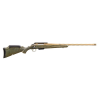
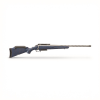
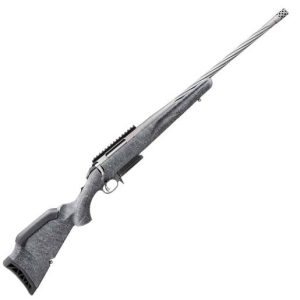
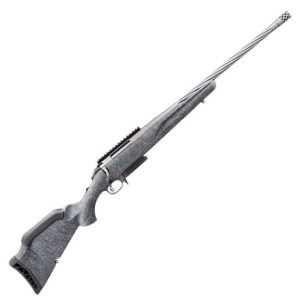
Quick Take
The Ruger American Rifle Gen II is a sub-MOA bolt-action hunting rifle that sells for around $520 street, with a spiral-fluted barrel, a factory muzzle brake, a genuinely good adjustable trigger, and a flush-fit detachable magazine. That sentence would have read like a fantasy on a budget rifle five years ago. Now it’s just the spec sheet, and you can cross-check every number against Ruger’s official spec sheets.
The original Ruger American came out in 2011 and sold by the truckload because it shot well and cost nothing. It also looked and felt like it cost nothing. The Gen II is Ruger going back and fixing every cheap-feeling thing about the first gun without moving the price much. Spiral fluting instead of a plain tube. A real Cerakote finish instead of flat black paint. A muzzle brake threaded onto the barrel from the factory. A stock you can actually adjust.
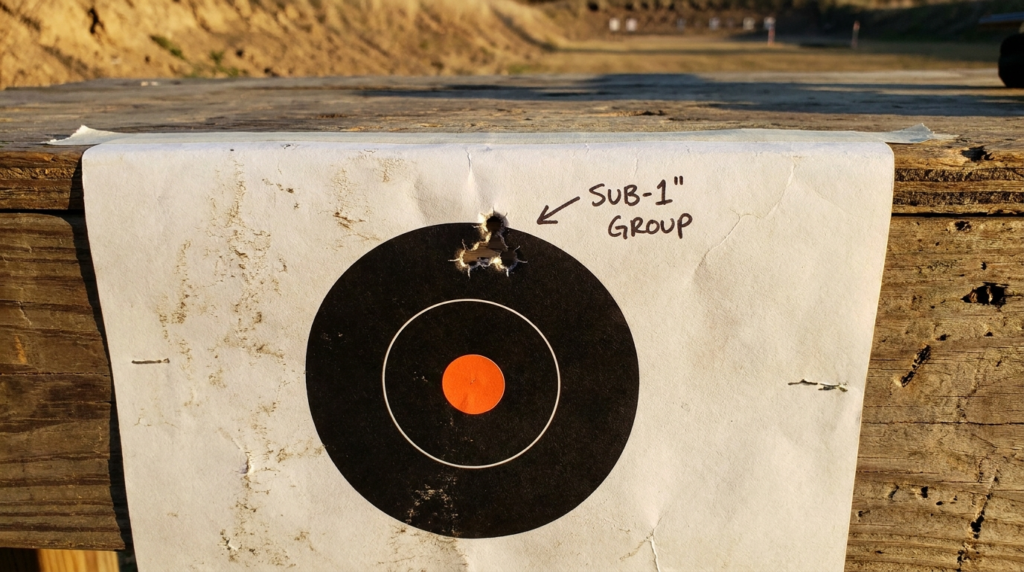
I ran a .308 Standard for this review and it printed three-shot groups under an inch with factory match ammo on the second range trip. Does it live up to the hype? Mostly, yes. There’s one genuinely annoying quirk around magazines that I’ll get into, and the lightweight barrel gets hot and loud fast. But as a do-everything deer rifle that you can also stretch to 600 yards on steel, nothing else under $600 is doing this much.
Best For: The hunter or new long-range shooter who wants one accurate, threaded, optics-ready bolt gun without spending Tikka money. If you’re picking a first centerfire rifle, start here and read our best .308 rifles and best 6.5 Creedmoor rifles guides to settle on a caliber.
Why Ruger Built the Gen II This Way
Ruger built the Gen II because the budget bolt-action market got good, and the original American was starting to look dated against it. When the first American launched, its only real rival on price was the Savage Axis. Both were honest, both were ugly, and accuracy was the whole pitch.
Then the market shifted. Tikka’s T3x set a new bar for what a sub-$900 rifle should feel like. Bergara brought target-grade barrels down toward $800. Buyers started expecting threaded muzzles, adjustable triggers, and proper optics rails as standard kit, not upgrades. The original American still shot great, but it felt a generation behind the moment you handled one next to a T3x.
So Ruger kept the two things that made the first gun work and rebuilt everything around them. Power Bedding, the integral bedding block that locks the receiver into the stock, carries straight over. So does the Marksman Adjustable trigger. Those are the accuracy drivers. Everything else got the glow-up: the spiral-fluted barrel sheds weight and disperses heat, the Cerakote actually protects the steel, the tang safety got cleaned up, and the stock finally adjusts for length of pull. They held the price near $769 MSRP, which lands around $520 on the street. That’s the whole strategy. Keep what worked, fix what embarrassed them, don’t break the bank.
Ruger American Gen II Variants
Ruger splits the Gen II into three main lines that share the same action, trigger, and bedding but differ in barrel length, stock color, and intended job. Here’s how they break down.
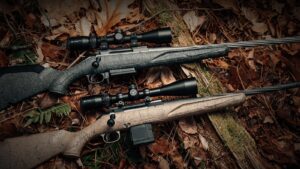
Ruger American Gen II Standard $499-$589
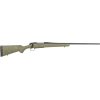
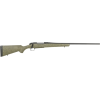
The 20-inch all-rounder. Gun Metal Gray Cerakote, Gray Splatter stock, spiral-fluted barrel, and the widest caliber menu in the lineup, from .223 up to 7mm PRC. This is the deer-rifle-that-also-shoots-long pick, and the one I tested. Best For: general hunting and entry long-range from one rifle.
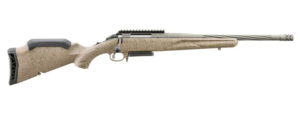
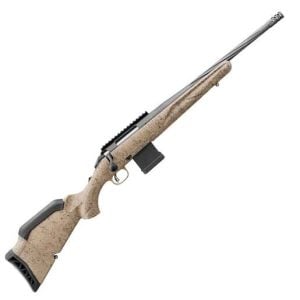
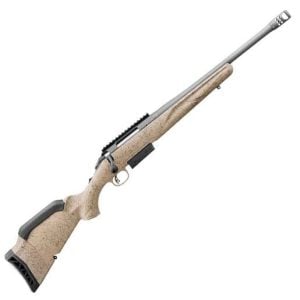
Ruger American Gen II Ranch $519-$609
The short, handy version. A 16.1-inch threaded barrel, Flat Dark Earth stock, and Cobalt Cerakote. The Ranch is the truck gun and brush gun, and it’s the one that takes AR-pattern magazines in 5.56, 300 Blackout, and 6.5 Grendel. Best For: woods hunting, suppressor hosts, and anyone who wants AR mag compatibility.
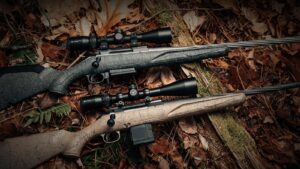
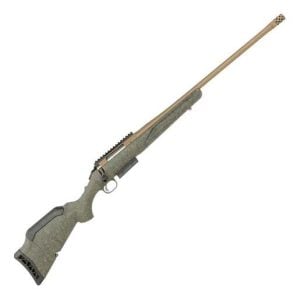
Ruger American Gen II Predator $549-$649
The varmint and predator build. Longer heavy-contour barrel options, moss green stock, and a focus on the flat-shooting calibers like 6.5 Creedmoor and 6mm Creedmoor. Heavier up front, which steadies it on a bipod. Best For: coyote hunters and bench shooters who want more barrel to hang onto.
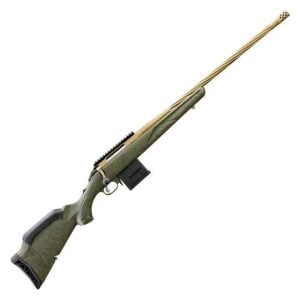
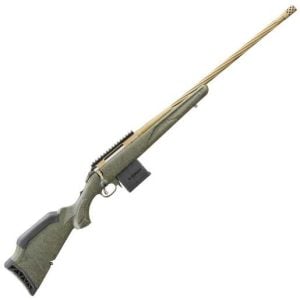
Competitor Comparison
The Gen II landed in the most competitive corner of the rifle market. Here’s how it stacks against the guns you’ll actually cross-shop on the rack.
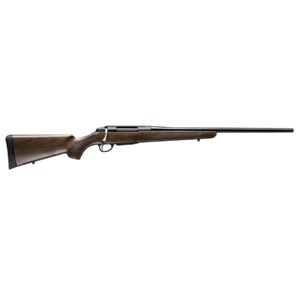
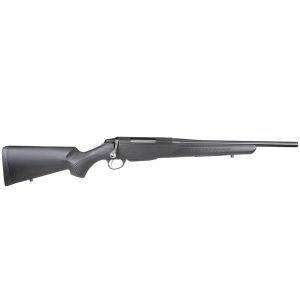
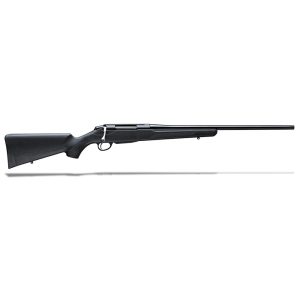
Tikka T3x Lite ($800-$950) $800-$950
The T3x is the benchmark, and it’s still the smoother gun. The bolt throw is glassier, the single-stage trigger is sweeter, and Tikka’s accuracy reputation is bulletproof. What it doesn’t give you is a factory threaded muzzle, a brake, or a spiral-fluted barrel, and it costs $300 more. The Ruger closes most of the accuracy gap and undercuts it hard on features.
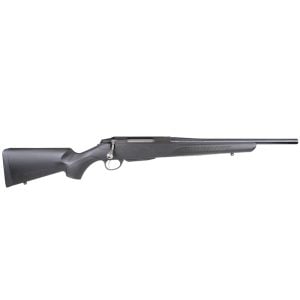

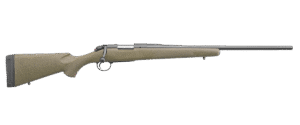
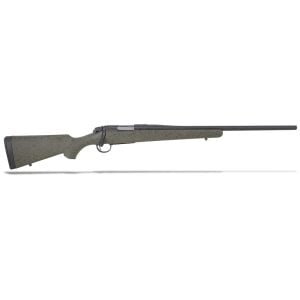
Bergara B-14 ($700-$1,000) $700-$1,000
Bergara’s barrels are the best in this price bracket, full stop, and a B-14 will usually out-group the Ruger if you do your part. But you pay for it, the B-14 is heavier in most trims, and you’re still adding a brake and sometimes a rail yourself. The Gen II is the better value; the Bergara is the better barrel.
Savage 110 ($600-$800) $600-$800
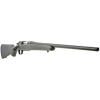
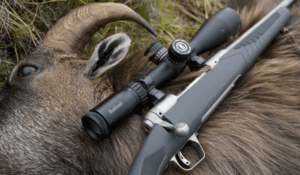
Savage’s AccuTrigger started this whole budget-accuracy fight, and the 110 still shoots. The AccuFit stock system is genuinely good. But the 110 feels chunkier and older next to the Gen II, and base models skip the threaded barrel and brake the Ruger throws in. Close fight, Ruger edges it on finish and standard features.
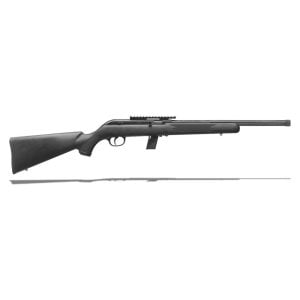
Verdict: Spend up to a Tikka or Bergara if a glassy action and the last quarter-MOA matter more than your wallet. For everyone else, the Gen II gives you 90 percent of those rifles for 60 percent of the money, with features they make you pay extra for. It’s the value king of the segment right now.
| Dimension | Ruger American Gen II | Tikka T3x Lite | Bergara B-14 | Savage 110 | Winchester XPR |
|---|---|---|---|---|---|
| Street Price (2026) | $499-$589 | $800-$950 | $700-$1,000 | $600-$800 | $550-$650 |
| Factory Threaded + Brake | Yes, both | No | Thread, no brake | Base: no | No |
| Trigger | Marksman 3-5 lb adj. | T3x single-stage | Bergara Performance | AccuTrigger | M.O.A. |
| Barrel Quality | Spiral-fluted CHF | Cold-hammer cut | Bergara premium | Button-rifled | Button-rifled |
| Accuracy (factory match) | 0.6-0.9 MOA | 0.5-0.8 MOA | 0.4-0.7 MOA | 0.8-1.2 MOA | 0.9-1.3 MOA |
| Manufacturer Status | Operating | Operating | Operating | Operating | Operating |
| Out-of-Box Score | 9/10 | 9/10 | 9/10 | 8/10 | 7/10 |
| Best For | Value all-rounder | Smoothest action | Best barrel | AccuFit fit | Cheapest name brand |
Read the chart this way: the Gen II wins price outright and is the only rifle here with a factory thread and brake standard. It gives up the last fraction of accuracy and the glassiest trigger to the Tikka and Bergara, which cost $200 to $400 more. If features-per-dollar is the metric, nothing on this list beats it.
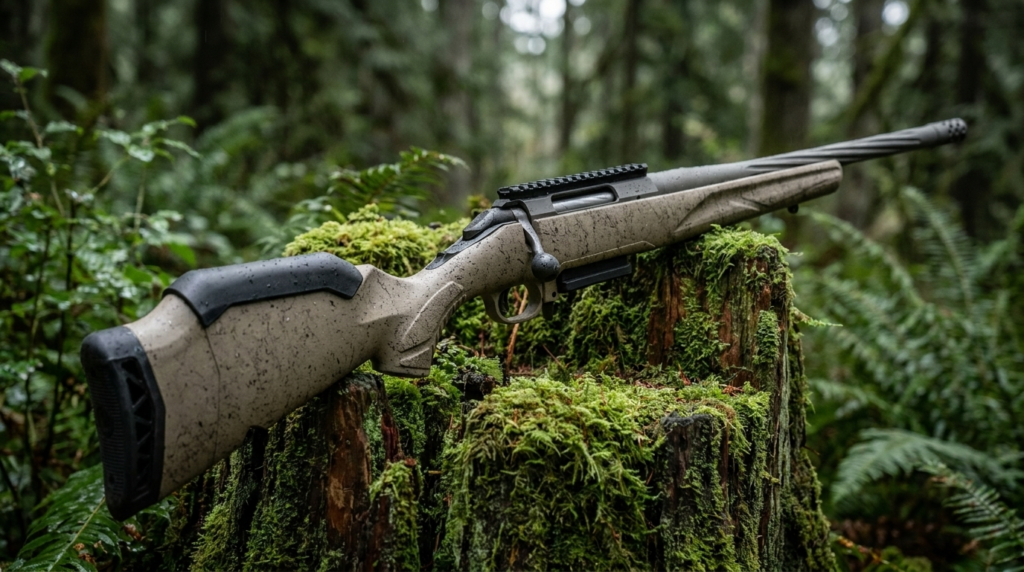
Features and Build Quality
The Barrel and Muzzle Brake
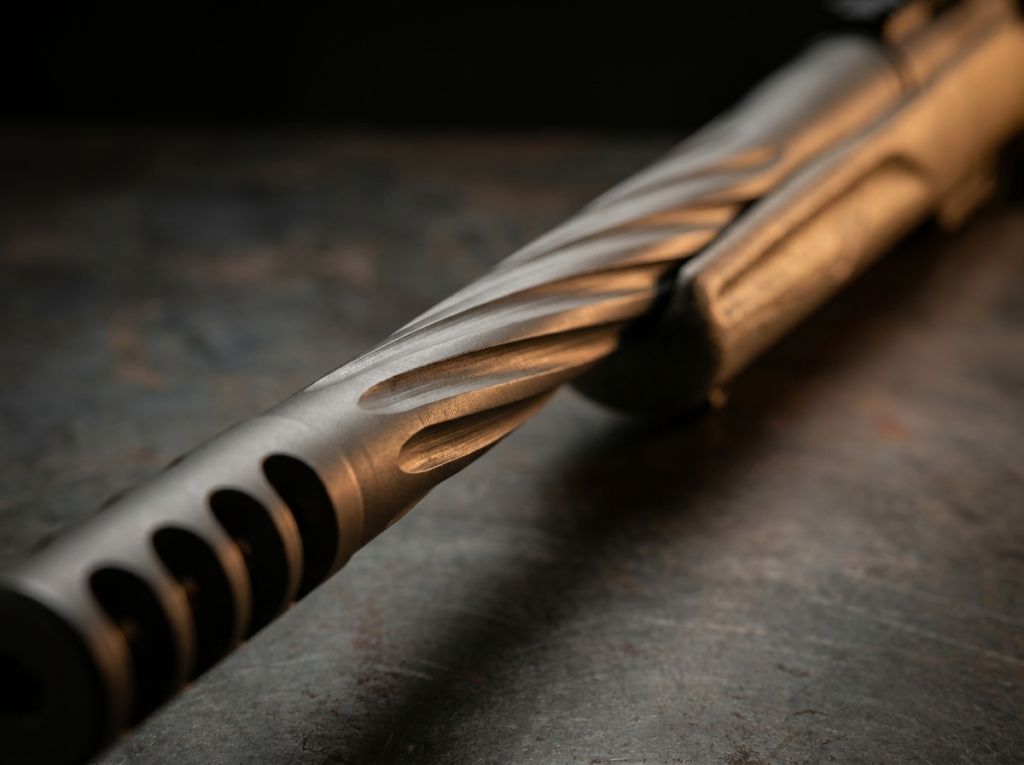
The spiral-fluted, cold hammer-forged barrel is the headline feature, and the factory 5/8×24 muzzle brake is the part that surprises people. Fluting isn’t just for looks, though it does look sharp. It strips weight off the barrel and adds surface area, so the steel sheds heat faster between strings. On a light hunting barrel that matters more than you’d think.
The brake is the real story. A threaded, braked muzzle on a sub-$600 factory rifle was unheard of a few years back. It tames the .308 recoil noticeably, and it means you can pull the brake and thread on a suppressor without a trip to the gunsmith. The trade-off is noise. That short barrel plus a brake is genuinely loud, and the blast comes back at you off the bench. Wear good ears. Your range neighbors will too.
The Marksman Trigger and Tang Safety
The Ruger Marksman Adjustable trigger is the same unit that helped the original American punch above its weight, and it adjusts from 3 to 5 pounds with a single hex key. Mine came set around 3.5 lb and broke clean enough that I never touched it. For a factory budget trigger, it’s genuinely good. Not Tikka good, but you won’t be shopping for a Timney.
The three-position tang safety is the right call on a bolt gun. Your thumb falls on it naturally, you can see and feel the position, and the middle detent locks the striker while still letting you cycle the bolt to unload. Simple, and it works.
The Stock and Power Bedding
The Gen II Splatter stock finally adjusts for length of pull, dropping from 13.75 inches to 12 inches by pulling a spacer, and underneath it sits Ruger’s Power Bedding block. Power Bedding is the quiet hero here. Two steel V-blocks molded into the stock cradle the receiver and free-float the barrel, and that’s a big chunk of why these rifles shoot.
The stock itself is the weakest part of the gun, and even then it’s fine. It’s a hollow injection-molded shell, light and a little tinny. Squeeze the forend hard against a barricade and you’ll feel it flex and hear a faint creak. It won’t hurt accuracy in field positions, but it’s the one spot where the budget shows. A foam fill or an aftermarket stock down the road fixes it if you care.
At the Range: 540-Round Test
I put 540 rounds through the .308 Standard across four range sessions over six weeks, in temperatures from the low 40s to the mid 80s, testing five factory loads off a bipod and rear bag at 100 and 300 yards. Here’s how it went, broken down by phase.
Break-In
I did a light break-in over the first 40 rounds, cleaning every 10 for the first three cycles, then every 20. The bore copper-fouled normally for a hammer-forged barrel and settled down quick. Nothing dramatic. By round 40 the groups had already tightened up as the barrel seasoned, which is typical for these.
Reliability
Across 540 rounds I had zero failures to fire and zero failures to feed from the flush-fit magazine. The bolt cycled smoothly the whole way, a touch gritty out of the box and glassier by the end. Extraction and ejection were positive every time, kicking brass clear in a consistent four-o’clock pattern.
One real gripe, and it’s about the magazine, not the gun. My .308 uses the AI-pattern flush mag, and seating it on a closed bolt takes a firm push and an audible click. Early on I short-seated it twice and the first round didn’t pick up. Once I learned to slap it home like an AR mag, it was flawless. New shooters will fumble this for a box or two.
Accuracy
This is where the rifle earns its money. With Federal Gold Medal Match 168gr, my best five-group average at 100 yards was 0.84 inch, and the single best group went 0.61. Hornady Precision Hunter 178gr ELD-X stayed right at an inch. Even cheap Federal 150gr soft point held about 1.4 inches, which is fine for deer inside any sane range. The rifle clearly preferred the heavier match loads, and the 1:10 twist stabilized the 178s without complaint. The pressure and dimensional standards behind the cartridge come from SAAMI.
At 300 yards on steel, with the brake keeping me on target through recoil, I was ringing a 10-inch plate on demand once the wind call was right. For a $520 rifle, that’s absurd.
Ammunition Log
- Federal Gold Medal Match 168gr SMK: 120 rounds, best group 0.61″, avg 0.84″
- Hornady Precision Hunter 178gr ELD-X: 100 rounds, avg 1.0″
- Hornady American Whitetail 150gr: 120 rounds, avg 1.3″
- Federal Power-Shok 150gr SP: 100 rounds, avg 1.4″
- PMC Bronze 147gr FMJ: 100 rounds, avg 2.0″ (cheap blasting ammo, as expected)
Performance Testing Results
Reliability (9/10)
Zero malfunctions in 540 rounds is exactly what you want from a bolt gun, and the Gen II delivered. The only thing keeping it off a 10 is the magazine seating learning curve, which is a real thing new owners run into. Once you’ve got the technique, it disappears.
Accuracy (9/10)
Sub-MOA with match ammo and right at MOA with hunting loads, from a featherweight factory barrel, at this price. That’s a 9 all day. A Bergara or a tuned Tikka will edge it, but you’re paying a lot more for that last fraction of an inch.
Ergonomics and Recoil (8/10)
The adjustable LOP and the tang safety are great, and the brake genuinely flattens the .308 out. The deductions are the hollow stock feel and the brake noise, which is the price you pay for that soft recoil. It handles light and points fast, which is exactly what a hunting rifle should do.
Fit, Finish, and Quality Control (9/10)
The Cerakote is even and tough, the fluting is cleanly cut, and the receiver-to-stock fit was tight with no rattle. For a rifle built to a budget in Mayodan, the QC is a clear step above where Ruger’s value line used to sit. Nothing on my sample felt rushed except the stock shell.
The Magazine Situation You Need to Understand
The single most confusing thing about the Gen II lineup is that it uses three different magazine systems depending on the caliber, so buy your spares carefully. This trips up more new owners than anything else, so it’s worth spelling out before you order extra mags.
- AI-pattern flush mags: Standard rifles in .308, 6.5 Creedmoor, 6mm Creedmoor, .243, and the magnums. These are the proprietary Ruger flush-fit boxes.
- AR-pattern mags: Ranch models in 5.56, 300 Blackout, .350/.400 Legend, 6.5 Grendel, and the ARC cartridges. Standard PMAGs and aluminum AR mags drop right in.
- Mini-Thirty mags: The 7.62×39 Ranch uses Ruger Mini-Thirty magazines, which are their own thing entirely.
It’s a smart bit of engineering, since it lets the Ranch piggyback on cheap AR mags for the cartridges that fit. But it means you can’t assume any Ruger American mag fits any Ruger American. Match the mag to your exact model number.
Parts, Accessories and Upgrades
The Gen II shoots great as-is, so spend on glass and a suppressor before you touch the rifle itself. Here’s the priority order I’d follow.
| Upgrade Category | Recommended Component | Why It Matters | Cost Estimate |
| Optic | Vortex Diamondback Tactical 4-16×44 FFP | Spend your money here first; the rifle out-shoots cheap glass | $300-$350 |
| Suppressor | Any 5/8×24 .30-cal can | The factory thread means no gunsmith trip; kills the brake noise | $700-$1,100 |
| Spare Magazines | Correct-pattern mag for your caliber | Buy two, match the pattern to your exact model | $30-$45 each |
| Bipod | Magpul or Harris on the front sling stud | Steadies the light barrel for real accuracy testing | $60-$130 |
| Stock | Boyds laminate or foam-fill the factory shell | Only if the hollow forend bugs you; pure want, not need | $50-$200 |
Common Problems and Solutions
- Magazine won’t seat or feed: The AI-pattern flush mag needs a firm slap on a closed bolt. Push until it clicks fully home. If the first round doesn’t pick up, the mag was short-seated. This is technique, not a defect.
- Loud blast off the bench: The short barrel and factory brake are loud by design. Double up on hearing protection, or thread on a suppressor and the problem vanishes.
- Stock creak under pressure: The hollow forend can flex against a hard barricade. A can of expanding foam in the forend cavity stiffens it for a few bucks, or swap to an aftermarket stock.
- Flyers with cheap ammo: These barrels are picky about bargain FMJ. Feed it quality hunting or match ammo and groups tighten dramatically. Don’t judge the rifle on PMC Bronze.
Who Should NOT Buy This Gun
The Gen II is the value pick of the segment, but it’s not the right rifle for everyone. Here’s who should look elsewhere.
- The benchrest accuracy chaser: If you measure success in tenths of an inch and you’ll handload for it, buy a Bergara B-14 or a Tikka. Their barrels will reward your effort in a way the Ruger’s won’t quite.
- The shooter who wants the smoothest action on the rack: The T3x bolt is glassier and always will be. If feel matters more than features, pay the Tikka premium.
- The dedicated heavy-barrel target shooter: The light Standard barrel heats up and walks after a fast string. Get the Predator contour, a Ruger Precision Rifle, or a dedicated chassis gun for high-volume bench work.
- The buyer who hates magazine confusion: If the three-mag-pattern thing already annoys you, a Savage 110 or Winchester XPR keeps it simpler with one system per gun.
The Verdict
The Ruger American Rifle Gen II is the best value in budget bolt-actions right now, and it isn’t particularly close. Ruger took a gun that already shot well and fixed every cheap-feeling thing about it without moving the price into a new bracket. Spiral-fluted barrel, factory brake, real Cerakote, adjustable stock, sub-MOA accuracy. That’s a lot of rifle for the money.
It’s not flawless. The magazine system is needlessly confusing across the lineup, the lightweight barrel is loud and heats up fast, and the stock is the one part that still feels built to a price. None of that stops it from being the rifle I’d hand a new hunter or a first-time long-range shooter without a second thought.
If you want the absolute last quarter-MOA or the silkiest action, spend up to a Tikka or Bergara. Everyone else, save the money and put it toward glass. Buy it. The Gen II is the new standard for what a sub-$600 rifle should be.
Final Score: 9.0/10 – The budget bolt gun that finally feels as good as it shoots, and it shoots great.
Best For: Hunters and entry long-range shooters who want one accurate, threaded, optics-ready rifle without Tikka money. Pair it with a quality scope from our best rifle scopes guide and the right load from our .308 rifle coverage.
Cross-shopping the budget Savage against the Ruger? See how it does in our full Savage Axis II review.
Cross-shopping budget bolt guns? Read our Weatherby Vanguard review.
FAQ: Ruger American Rifle Gen II
Is the Ruger American Gen II sub-MOA?
Yes, with the right ammo. In our 540-round test the .308 averaged 0.84 inch and printed a best group of 0.61 inch at 100 yards with Federal Gold Medal Match. Hunting loads stayed right around an inch.
What is the difference between the Ruger American Gen I and Gen II?
The Gen II keeps the Gen I Marksman trigger and Power Bedding but adds a spiral-fluted barrel, a factory 5/8x24 muzzle brake, Gun Metal Gray Cerakote, a one-piece Picatinny rail, and a stock with adjustable length of pull.
What magazines does the Ruger American Gen II use?
It depends on the model. Standard rifles use proprietary AI-pattern flush mags, most Ranch calibers like 5.56 and 300 Blackout use standard AR-pattern mags, and the 7.62x39 Ranch uses Ruger Mini-Thirty mags. Match the magazine to your exact model.
Is the Ruger American Gen II good for long range?
For entry long range, yes. The threaded, braked barrel and adjustable trigger make it easy to ring steel at 300 to 600 yards in calibers like 6.5 Creedmoor. The light barrel heats up faster than a heavy target contour, so it is not a dedicated bench gun.
Where is the Ruger American Gen II made?
It is made in the United States at Ruger's factory in Mayodan, North Carolina.
What is the difference between the Standard and the Ranch?
The Standard has a 20-inch barrel and Gun Metal Gray Cerakote for general hunting and long range. The Ranch has a 16.1-inch barrel, a Flat Dark Earth stock and Cobalt Cerakote, and many Ranch calibers take AR-pattern magazines, which makes it the handier truck and suppressor gun.
How much does the Ruger American Gen II cost?
MSRP is $769, but street price runs about $499 to $589 depending on caliber and dealer. Check our live pricing for the current best deal.
Does the Ruger American Gen II come threaded for a suppressor?
Yes. Every Gen II ships with a 5/8x24 threaded muzzle and a factory radial brake. Pull the brake and you can thread on a .30-caliber suppressor with no gunsmith work, which also solves the brake's loud blast.
5,380+ Gun & Ammo Deals
Updated daily from 200+ top retailers. Filter by category, caliber, action type, and price.
Related Guides