

Last updated October 10, 2026
Some of the links below are affiliate links, meaning at no additional cost to you, we may earn a commission if you click through and make a purchase.
- Treat every gun as loaded
- Point the muzzle in a safe direction
- Keep your finger off the trigger until you’re ready to shoot
- Know your target and what’s beyond
A Kentucky rifle is a long, slim, small-bore muzzleloader that Pennsylvania gunsmiths developed in the 1700s for hunters heading into the backcountry. It was made in Pennsylvania and named for Kentucky, and you can still buy one new. Palmetto State Armory had a Traditions Kentucky rifle in percussion at $535.99 when I checked.
Below I’ll explain what makes a Kentucky rifle, why it carries the wrong state’s name and how to tell one at a glance. Then I rank eight Kentucky and Pennsylvania rifles you can buy new today in flint and percussion, plus the kit I’d build, with a live price card on every one our dealers stock.
How we tested: Every pick here is ranked against our testing methodology. Minimum round counts, accuracy and reliability protocols, the failures that disqualify a gun.
Kentucky Rifles at a Glance
Five of the nine rifles on this list that our dealers stock, with the lock each one uses and what the maker charges.
| Rifle | Who It Suits | Key Facts | Check Price |
|---|---|---|---|
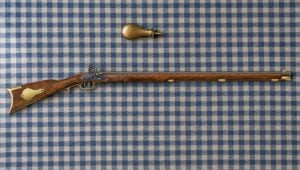 |
BEST OVERALL
Traditions Deluxe Kentucky Rifle
Anyone who wants one long rifle and wants the patch box and set trigger on it. |
Lock: Flintlock Caliber: .50 List price: $719.95 |
Check Price ↓ |
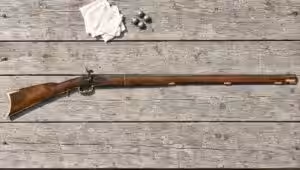 |
BEST FIRST LONG RIFLE
Traditions Kentucky Rifle, Percussion
First-time muzzleloader shooters who want the long rifle shape without the flintlock learning curve. |
Lock: Percussion Caliber: .50 List price: $599.95 |
Check Price ↓ |
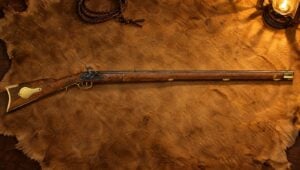 |
BEST PERCUSSION KENTUCKY
Traditions Deluxe Kentucky Rifle, Percussion
Shooters who want the patch box and set trigger with a lock that fires in any weather. |
Lock: Percussion Caliber: .50 List price: $659.95 |
Check Price ↓ |
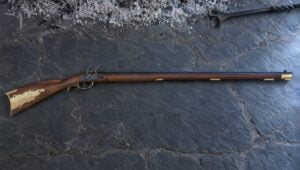 |
BEST BUILT
Pedersoli Kentucky Rifle
Shooters who want a one-piece walnut stock and a quicker lock, and will pay double for them. |
Lock: Flintlock Caliber: .50 List price: $1,213.09 |
Check Price ↓ |
 |
BEST KIT TO BUILD
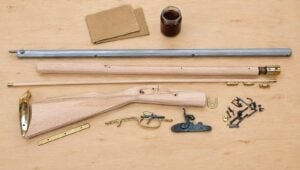
Traditions Kentucky Rifle Kit
Patient builders who want a long rifle for the least money and a winter project with it. |
Lock: Percussion Caliber: .50 List price: $474.95 |
Check Price ↓ |
Table of Contents
What Is a Kentucky Rifle?
The Kentucky rifle, the Pennsylvania rifle and the American long rifle are three names for one gun. It’s a muzzleloader with a long rifled barrel, a bore much smaller than a military musket’s, and a slender stock that runs all the way to the muzzle.
The NRA National Firearms Museum says historians agree that Lancaster cradled Pennsylvania’s gunmaking, and that in Lancaster County the long rifle evolved from a clumsy European ancestor into what it calls the graceful and unique American Kentucky. That ancestor was the short, thick Jaeger hunting rifle of central Europe.
The museum lists what the Pennsylvania makers changed. They lengthened the barrel and shrank the bore, slimmed the stock, curved the butt into a crescent, swapped European walnut for native maple and replaced wooden patch box covers with hinged brass lids. The result, in the museum’s words, was more accurate, used less powder and lead, and had longer range.
Range was the point. A National Park Service lesson on the musket and the rifle puts the musket’s accuracy at 80 to 90 yards and gives the long rifle an effective range of up to 300. It adds that the rifle weighed 7 to 8 pounds and wouldn’t take a bayonet.
Why a Pennsylvania Rifle Carries Kentucky’s Name
So why Kentucky? Pennsylvania has the better claim, and it wrote that claim into law. In 2014 the state made the Pennsylvania Long Rifle its official firearm, and the act credits the design to gunsmiths in the Moravian communities of Christian’s Spring in Northampton County and to riflemaker Martin Meylin of Lancaster County.
American Rifleman dates Meylin’s barrel-boring mill to 1719 and says Swiss gunsmiths, then Germans, brought the rifled barrel to Lancaster. The same Pennsylvania statute says frontiersmen carried the rifle west and south as they pushed the country’s boundaries outward. Kentucky was where a lot of those rifles ended up.
They went to war too. American Rifleman says rifle companies picked off British troops from cover at Great Bridge and Moore’s Creek Bridge, and that muskets still armed most Continental soldiers because they were cheaper and quicker to make. The long rifle was a specialist’s gun, slow to load and deadly at a distance.
The name was fixed at New Orleans in January 1815. The Kentucky National Guard’s history office says about one fourth of Andrew Jackson’s command there were Kentucky riflemen, and the NRA museum says frontier riflemen with long rifles took a fearful toll on British officers and infantry.
Then came the song. Samuel Woodworth’s ballad The Hunters of Kentucky has Jackson knowing what aim we take with our Kentucky rifles. The Library of Congress holds a printed song sheet with that line and sheet music it dates to about 1824. Kentucky’s history office says the tune became Jackson’s presidential campaign song.
The Kentucky Rifle Association says on its own site that researchers agree the rifle was born in Pennsylvania, and that the name comes from that victory song. It keeps the name anyway, on the grounds that everybody knows what a Kentucky rifle is. I’m with them.
How to Tell a Kentucky Rifle
You can spot one across a room. These are the features to check, with the figures the NRA museum gives for originals and how today’s reproductions compare.
- A long barrel. The museum’s survey of 200 original barrels found most ran 40 to 44 inches. Today’s Traditions rifles are 33.5 inches, and Pedersoli’s Pennsylvania is 41.63.
- A small bore. Pennsylvania makers cut the European average of about .65 caliber down to about .45. Most new ones are .50, and Pedersoli still offers .32 and .45.
- A patch box. A hinged brass lid in the butt covers a recess for greased patches. Plain rifles skip it, and fancy ones pierce and engrave it.
- A crescent butt. The brass butt plate curves like a crescent moon, a shape the Pennsylvania makers developed from the straight musket butt.
- A full-length stock. The wood runs to the muzzle. Originals were maple, often striped, and reproductions use walnut, stained hardwood or maple.
- A slow twist. The rifling turns gently to suit a patched round ball. Traditions uses one turn in 66 inches, and Pedersoli one in 48.
Flintlock or Percussion?
Kentucky rifles were built as flintlocks for most of their history and as percussion guns at the end of it. Plenty of originals were converted. The NRA museum shows a Pennsylvania long rifle made about 1838 by Elisha Pancost that was changed from flint to percussion in 1840.
A flintlock throws sparks from flint and steel into a pan of priming powder. A percussion lock drops a hammer on a small cap. Percussion fires faster after the trigger breaks, shrugs off damp weather and is far easier to learn.
Flint is the lock the rifle is famous for, and a flintlock-only hunting season won’t accept anything else. My advice: buy percussion if you want to shoot more than you fiddle, and flint if the history is why you’re here.
Every Traditions rifle below comes both ways, and percussion runs $60 to $90 cheaper at list. For flintlocks beyond this one pattern, muskets and pistols included, see our guide to flintlock guns.
Kentucky Rifles You Can Buy New
Eight finished rifles, ranked. I’ve put the ones I’d spend my own money on first. That means the Traditions rifles lead, because they cost half what the Italian guns do and shoot nearly as well. Kentucky pistols are a different page, and our flintlock guns guide covers them.
1. Traditions Deluxe Kentucky Rifle: Best Overall
- Caliber: .50
- Barrel: 33.5 inches, blued octagonal, 1:66 twist
- Lock: Flintlock, color case hardened
- Trigger and sights: Double set trigger, fixed blade sights
- Maker’s price: $719.95 from Traditions, model R2030
| Category | Rating |
|---|---|
| Value | 5/5 |
| Period Look | 4/5 |
| Ease of Use | 4/5 |
Pros
- Brass patch box in the butt
- Double set trigger
- Costs $30 over the plain rifle
Cons
- Two-piece stock shows a joint
- Fixed sights only
- No big-box dealer stocks it

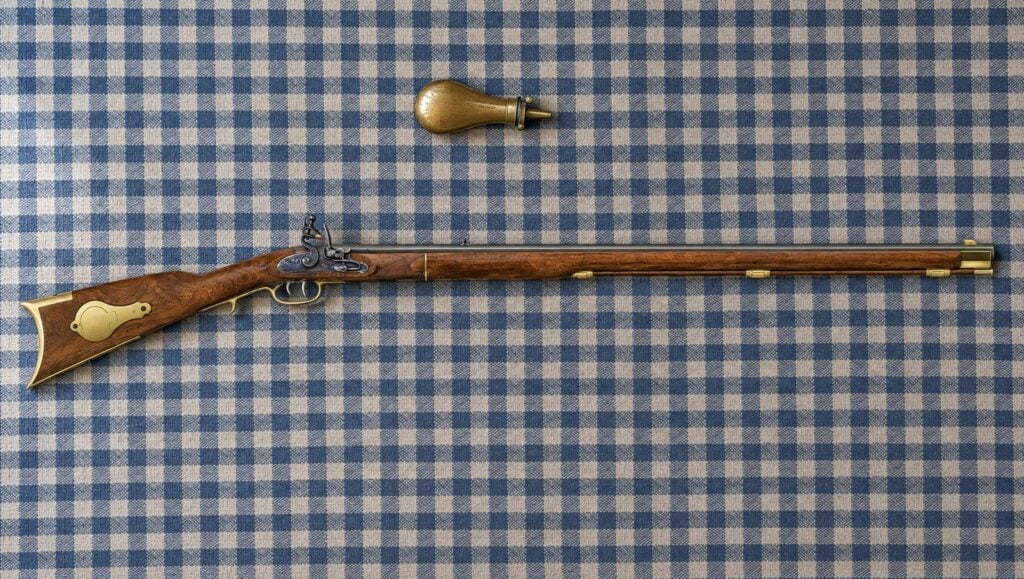
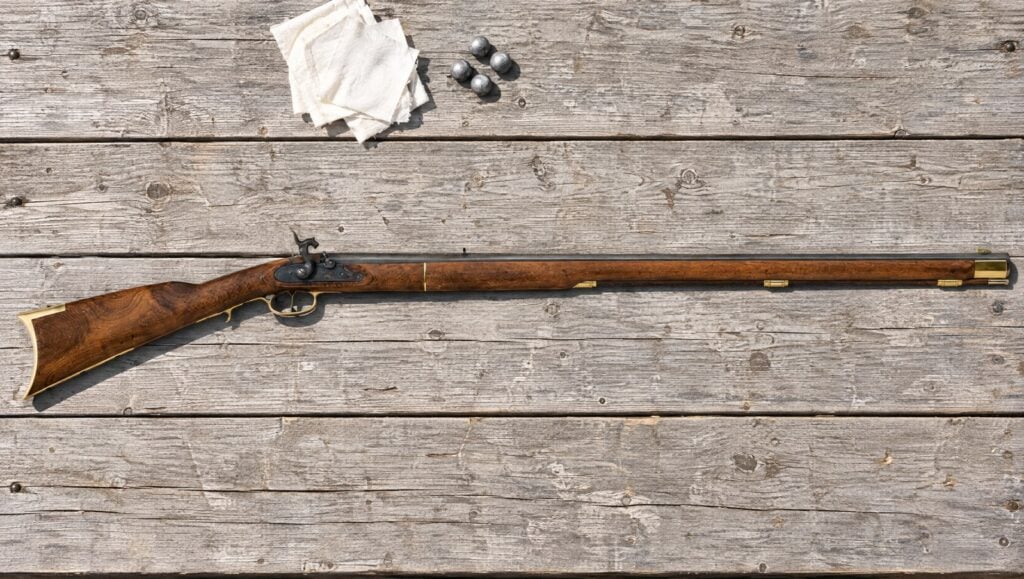
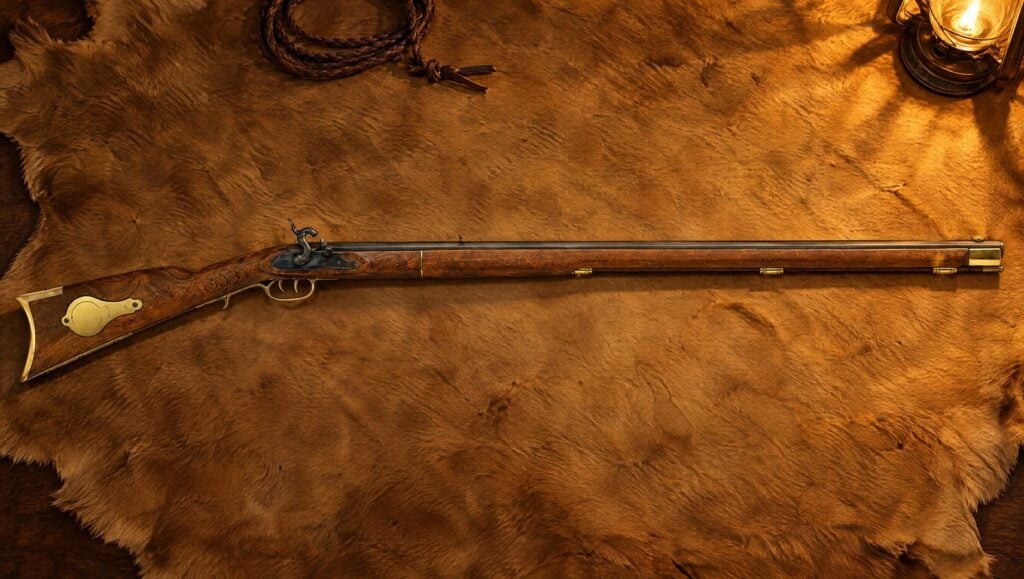
If I could keep one Kentucky rifle, this is it. The Deluxe is Traditions’ standard .50 caliber Kentucky with two additions that matter: a brass patch box in the butt and a double set trigger. Traditions asks $719.95 for it, only $30 more than the plain flintlock.
That $30 buys the two things I’d miss most. The patch box is what makes one of these rifles look right. The set trigger lets you fire with a touch, and on a flintlock that’s worth more than any sight upgrade.
Farnsworth Firearms had it at $503.64 when I checked, Battlehawk Armory at $579.00 and Kentucky Gun Co at $638.43. None of the big chains listed the Deluxe flintlock, so shop the smaller dealers on the card above.
Mine shoots a .490 ball and a .015 patch into 2.25 inches at 50 yards from a rest, a touch tighter than the plain rifle because of that trigger. Traditions lists no manual on this model’s page, so I worked up from the charge its sidelock manual gives for the plain Kentucky with the same barrel.
Best For: Anyone who wants one long rifle and wants the patch box and set trigger on it.
2. Traditions Kentucky Rifle, Percussion: Best First Long Rifle
- Caliber: .50
- Barrel: 33.5 inches, blued octagonal, 1:66 twist
- Lock: Percussion, color case hardened
- Trigger and sights: Single trigger, fixed blade sights
- Maker’s price: $599.95 from Traditions, model R2020
| Category | Rating |
|---|---|
| Value | 5/5 |
| Period Look | 3/5 |
| Ease of Use | 5/5 |
Pros
- Cheapest finished rifle here
- Caps beat flint in the wet
- Sold by a big dealer
Cons
- No patch box
- Plain single trigger
- Percussion is the later lock
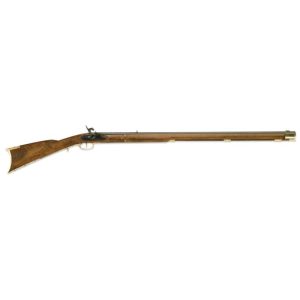
This is where I’d start a new shooter. It’s the plain Kentucky with a percussion lock, and it’s the cheapest finished rifle on this page. Palmetto State Armory had it at $535.99 when I checked, and Classic Firearms listed it at $479.82. Traditions asks $599.95.
A cap lock takes the hardest part out of learning a muzzleloader. There’s no flint to knap, no pan to prime and no flash beside your eye. You press a cap on the nipple, cock the hammer and shoot.
I loaded mine with a .490 ball, a .015 patch and 70 grains of 2F, the bottom of the most accurate range in Traditions’ sidelock manual for a .50 with a barrel over 30 inches. It put five shots into 2.5 inches at 50 yards, and I had one misfire in 50 shots, a cap that didn’t go.
You give up the look. There’s no patch box, and the stock is two pieces of stained hardwood joined at a brass band. If that bothers you, the Deluxe percussion rifle further down fixes half of it.
Best For: First-time muzzleloader shooters who want the long rifle shape without the flintlock learning curve.
3. Traditions Kentucky Rifle, Flintlock: Cheapest Flintlock Kentucky
- Caliber: .50
- Barrel: 33.5 inches, blued octagonal, 1:66 twist
- Lock: Flintlock, color case hardened
- Trigger and sights: Single trigger, fixed blade sights
- Maker’s price: $689.95 from Traditions, model R2010
| Category | Rating |
|---|---|
| Value | 4/5 |
| Period Look | 4/5 |
| Ease of Use | 3/5 |
Pros
- Lowest-priced flintlock Kentucky
- Stocked by Palmetto State Armory
- Maker’s manual gives a load
Cons
- No patch box
- Single trigger, long pull
- Deluxe costs only $30 more
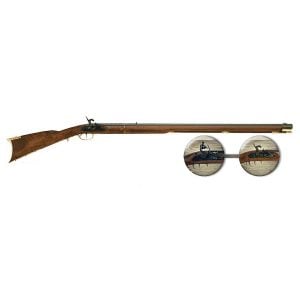

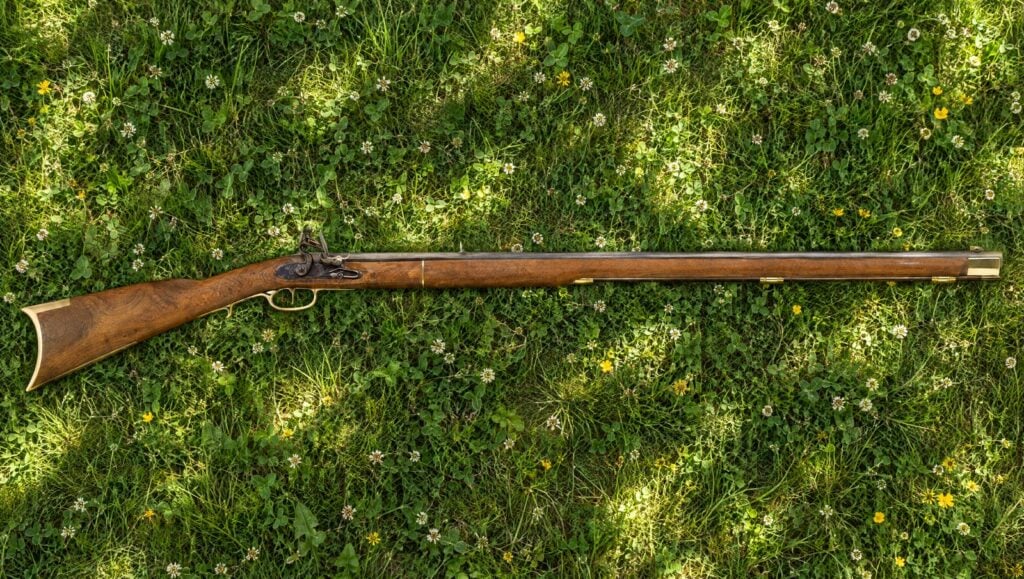
The plain flintlock is the same rifle as the percussion gun above with the lock the pattern is known for. Palmetto State Armory had it at $589.99 when I checked, Battlehawk Armory at $550.67 and Farnsworth Firearms at $470.29. Traditions’ own price is $689.95.
It ranks third only because of the Deluxe. At list price the two are $30 apart, and the Deluxe adds the patch box and the set trigger. When dealer prices put a bigger gap between them, this one makes more sense.
The load is the same 70 grains of 2F under a .490 ball and a .015 patch, from the same page of Traditions’ manual. My five-shot groups run 2.5 inches at 50 yards. At 100 yards they open to about 6, and the single trigger’s long pull is most of the reason.
Expect a slower lock than the Italian rifles. I count three flashes in the pan across 40 shots, all early on, before I got into the habit of wiping the frizzen and picking the touch hole every few rounds.
Best For: Buyers who want flint for the least money and can live without a patch box.
4. Traditions Deluxe Kentucky Rifle, Percussion: Best Percussion Kentucky
- Caliber: .50
- Barrel: 33.5 inches, blued octagonal, 1:66 twist
- Lock: Percussion, color case hardened
- Trigger and sights: Double set trigger, fixed blade sights
- Maker’s price: $659.95 from Traditions, model R2040
| Category | Rating |
|---|---|
| Value | 5/5 |
| Period Look | 4/5 |
| Ease of Use | 5/5 |
Pros
- Patch box and set trigger
- Four dealers list it
- Easiest rifle here to shoot well
Cons
- Fixed sights only
- Two-piece stock
- Cap lock, not flint
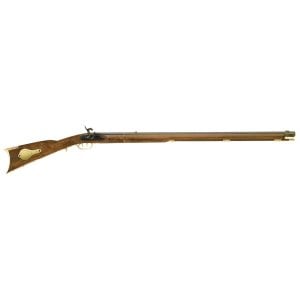
Take the Deluxe, swap the flintlock for a cap lock, and you have the easiest rifle on this page to shoot well. It keeps the brass patch box and the double set trigger, and Traditions lists it at $659.95, which is $60 under the flint version.
It’s also the easiest to find. Palmetto State Armory had it at $582.99 when I checked, Battlehawk Armory at $513.00, Classic Firearms at $525.78 and Kentucky Gun Co at $585.74.
A set trigger and a cap lock together make a muzzleloader that fires the instant you want it to. Mine gave me my best Traditions groups, 2 inches at 50 yards and 5 at 100, with the same ball and patch as the others.
The fixed sights are the weak point. Mine shot 3 inches low at 50 yards out of the box, and the cure was a file on the front blade. Go slowly, because you can’t put metal back.
Best For: Shooters who want the patch box and set trigger with a lock that fires in any weather.
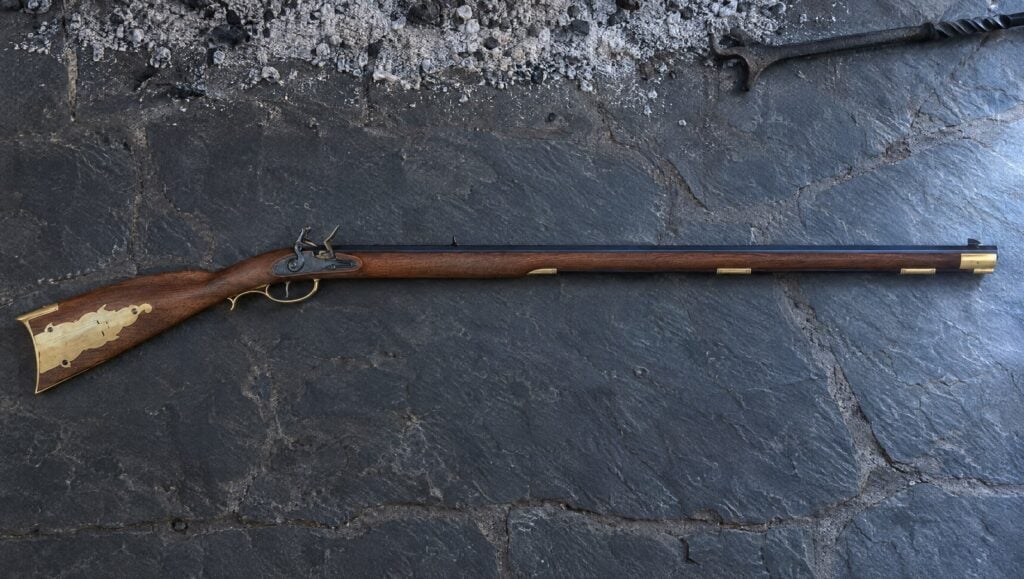
5. Pedersoli Kentucky Rifle: Best Built
- Caliber: .50, also made in .32 and .45
- Barrel: 35.56 inches, blued octagonal, 1:48 twist
- Lock: Flintlock, case hardened
- Stock: One-piece oil-finished walnut, large brass patch box
- Importer’s price: $1,213.09 from Taylor’s
| Category | Rating |
|---|---|
| Value | 3/5 |
| Period Look | 5/5 |
| Ease of Use | 4/5 |
Pros
- One-piece walnut stock
- Large brass patch box
- Fastest lock of the flintlocks
Cons
- About double the Traditions price
- One dealer listing
- Single trigger
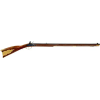
Pedersoli’s Kentucky is where the Italian rifles start, and the difference shows in the wood. The stock is one piece of oil-finished walnut from butt to muzzle with no joint, and the patch box is a big shaped brass plate in place of a plain oval.
Taylor’s and Company imports it and lists the .50 flintlock at $1,213.09, in stock when I checked. Among our dealers only Battlehawk Armory had it, at $1,087.22. Pedersoli also makes the rifle in percussion and as a kit, and Taylor’s lists .32 and .45 versions.
Pedersoli’s load table gives 55 grains of black powder for the .50 flintlock Kentucky, with a .490 ball and a .010 patch. At that charge mine shoots 1.8 inches at 50 yards and just under 4 at 100. The faster 1:48 twist seems to like the lighter load.
The lock is the best reason to pay up. It sparks hard and fires fast, and I’ve had one misfire in 30 shots. The trigger is a single, though, and at this price I’d want a set.
Best For: Shooters who want a one-piece walnut stock and a quicker lock, and will pay double for them.
6. Pedersoli Pennsylvania Rifle: Closest to an Original
- Caliber: .45, also made in .32 and .50
- Barrel: 41.63 inches, octagonal, 1:48 twist
- Overall length: 56.13 inches
- Trigger and sights: Double set trigger, adjustable buckhorn rear sight
- Importer’s price: $1,331.29 from Taylor’s
| Category | Rating |
|---|---|
| Value | 3/5 |
| Period Look | 5/5 |
| Ease of Use | 3/5 |
Pros
- Barrel length matches the originals
- True small bore in .45
- Set trigger, adjustable rear sight
Cons
- Not stocked by our dealers
- Out of stock at the importer
- Nearly five feet long
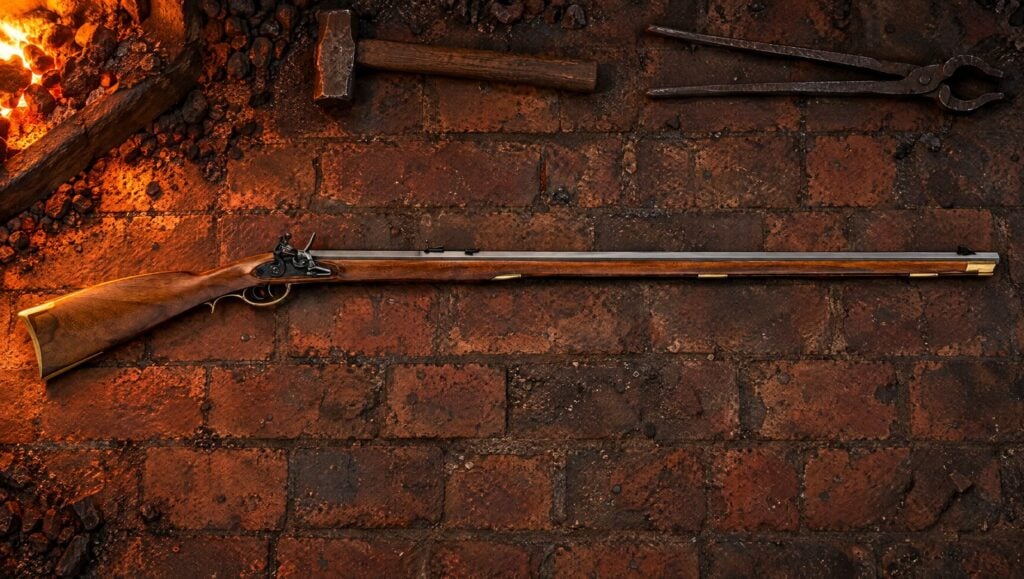
This is the rifle on the page that’s sized like the old ones. The NRA museum’s survey put most original barrels at 40 to 44 inches, and Pedersoli’s Pennsylvania has a 41.63-inch barrel on a rifle 56.13 inches long. In .45 caliber it also matches the bore the museum calls average for Pennsylvania-made guns.
None of our dealers listed it when I checked, so there’s no price card here. Taylor’s lists the .45 flintlock at $1,331.29 and showed it out of stock, and Taylor’s Pennsylvania rifle page takes back orders and says no FFL dealer is required.
The stock is plain one-piece walnut with a brass butt plate and no patch box, so it’s the plainest of the Italian rifles here. You get a double set trigger and a rear sight that adjusts for elevation.
Pedersoli’s table lists 42 grains of black powder for the .45 flintlock, with a .445 ball and a .010 patch. That small charge is the economy the old makers were after. Mine groups 2 inches at 50 yards, and the long sight radius makes offhand shooting steadier than you’d expect from a gun this length.
Best For: Reenactors and history-minded shooters who want original proportions and a true small bore.
7. Traditions Pennsylvania Rifle: Best Dressed for the Money
- Caliber: .50
- Barrel: 33.5 inches, blued, 1:66 twist
- Overall length: 49 inches
- Trigger and sights: Double set trigger, adjustable rear sight
- Maker’s price: $1,159.95 flintlock, $1,099.95 percussion
| Category | Rating |
|---|---|
| Value | 3/5 |
| Period Look | 5/5 |
| Ease of Use | 4/5 |
Pros
- Pierced patch box, brass inlays
- Adjustable rear sight
- Comes in flint or percussion
Cons
- Same short barrel as the Kentucky
- Thin dealer supply
- Won’t ship to nine places

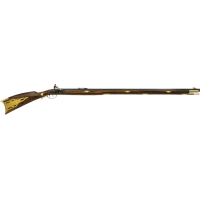
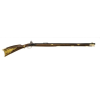
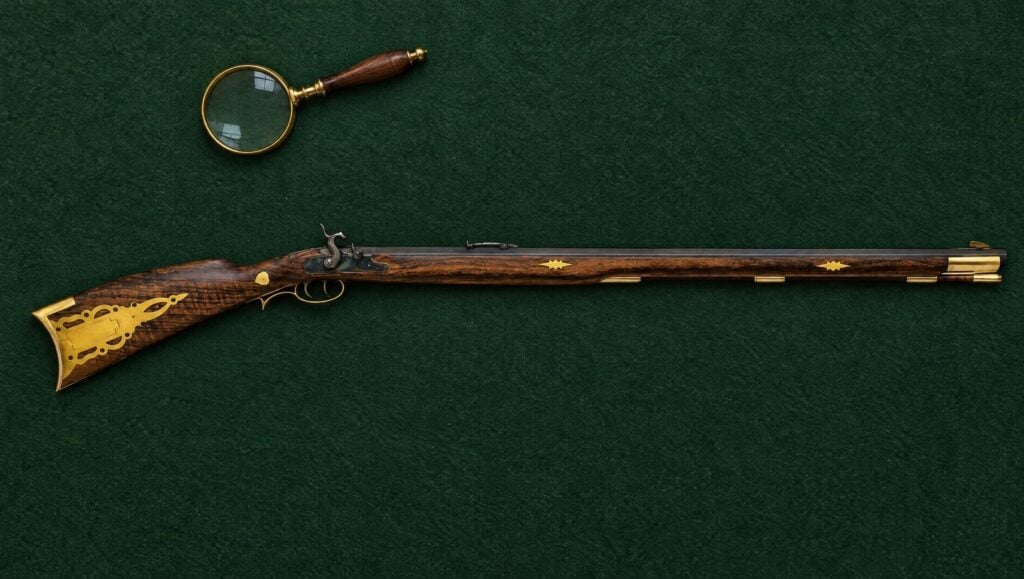
The Traditions Pennsylvania is the Kentucky’s barrel in a far fancier stock. It has a pierced brass patch box, brass inlays along the forestock, a toe plate, a double set trigger and the only adjustable rear sight in the Traditions long rifle line. The photo shows the percussion model, R2100C.
Supply is thin. Farnsworth Firearms had the percussion rifle at $756.64 when I checked and Kentucky Gun Co had the flintlock at $994.67. A third listing at Shooting Surplus didn’t say which lock it was, so ask before you order. Traditions asks $1,159.95 for flint and $1,099.95 for percussion.
It ranks below the plainer rifles because of what you don’t get for the money. The barrel is the same 33.5 inches, and the rifle is 49 inches overall, which Traditions says it shortened to make it handier. A real Pennsylvania rifle is a good deal longer.
It does shoot. With the set trigger and a rear sight I could adjust without a file, mine holds 2 inches at 50 yards. Traditions won’t ship it to Rhode Island, Hawaii, California, New Jersey, New York, Illinois, Michigan, Ohio or Canada.
Best For: Buyers who want the pierced patch box and inlays without paying Italian prices.
8. Pedersoli Frontier Maple: The Heirloom Pick
- Caliber: .50
- Barrel: 39 inches, browned octagonal, 1:48 twist
- Overall length: 54.75 inches
- Stock and trigger: American maple, brass patch box, double set trigger
- Importer’s price: $2,555.15 from Taylor’s
| Category | Rating |
|---|---|
| Value | 2/5 |
| Period Look | 5/5 |
| Ease of Use | 4/5 |
Pros
- Striped maple like the originals
- Browned 39-inch barrel
- Stocked by Palmetto State Armory
Cons
- Costs four plain Traditions rifles
- Listing titles skip the word maple
- Too nice to scratch
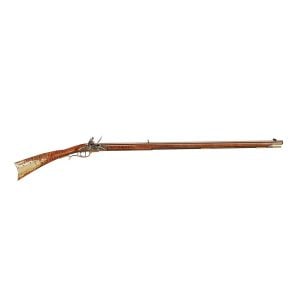
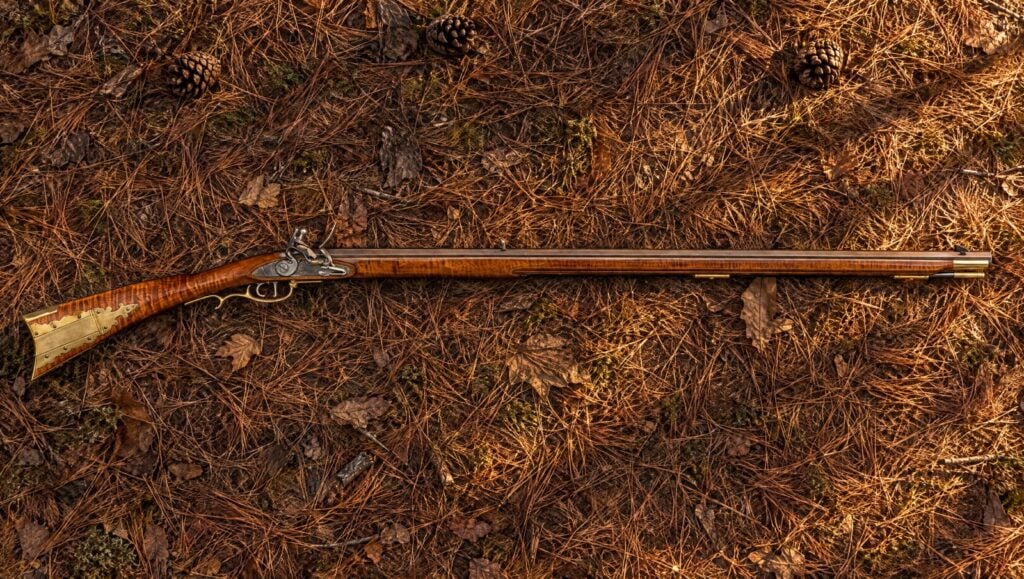
Originals were stocked in maple, and this is the production rifle that does it properly. Taylor’s says the Frontier Maple is stocked in select American maple and reproduces rifles from the golden age of the American long rifle. The barrel is 39 inches and browned, and the lock is case hardened.
It’s priced like a custom gun. Palmetto State Armory had it at $2,474.99 when I checked and Battlehawk Armory at $2,258.54, against $2,555.15 from Taylor’s, which showed it in stock.
Read the listing before you buy. Palmetto’s title says only Frontier .50 Cal Flintlock Rifle, but the model number, 210012, is Taylor’s number for the maple rifle. Pedersoli makes a plainer walnut Frontier too, which Taylor’s lists at $1,202.18.
Pedersoli’s table lists 55 grains of black powder for the .50 flintlock Frontier with a .490 ball and a .010 patch. Mine shoots 1.9 inches at 50 yards, right with the Pedersoli Kentucky. You’re paying for the wood, and the wood is worth looking at.
Best For: Buyers who want a maple-stocked rifle to hand down and have the budget for it.
Kentucky Rifle Kits
A kit is the cheapest way into a long rifle and the most satisfying. You get the same barrel and lock as the finished gun, with the wood left bare for you to shape, stain and oil.
9. Traditions Kentucky Rifle Kit: Best Kit to Build
- Caliber: .50
- Barrel: 33.5 inches, octagonal, 1:66 twist
- Lock: Percussion
- Sights and weight: Fixed blade sights, 7 pounds
- Maker’s price: $474.95 from Traditions, model KRC52206
| Category | Rating |
|---|---|
| Value | 5/5 |
| Period Look | 4/5 |
| Ease of Use | 2/5 |
Pros
- Cheapest way into a Kentucky
- You choose the finish
- Three dealers stock it
Cons
- Twenty-plus hours of work
- Plain single trigger
- No patch box in this kit
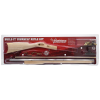
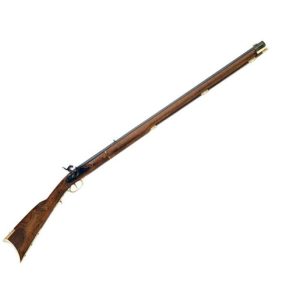
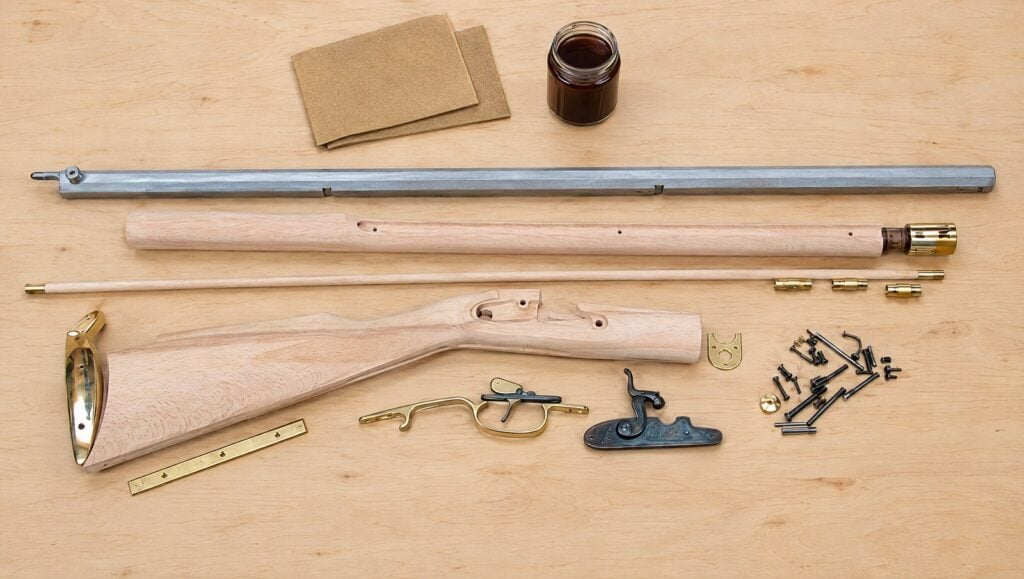
The Kentucky kit is the percussion rifle in pieces: barrel, lock, trigger, brass furniture and a two-piece stock in bare, unfinished wood. Traditions says its kits are pre-assembled at the factory to make sure the parts fit.
Palmetto State Armory had it at $434.99 when I checked, Battlehawk Armory at $373.00 and Sportsman’s Warehouse at $469.99. Traditions lists it at $474.95, about $125 under the finished percussion rifle.
Mine took about 25 hours across two weeks. Most of that went on the wood: sanding, fitting the brass flush, staining and six coats of oil. The lock and trigger went in with a screwdriver and no drama.
If you’d like a patch box and a double set trigger to fit, Traditions sells a Deluxe Kentucky kit for $559.95, and Pedersoli makes Kentucky kits in flint and percussion. I’d still start with this one. Mistakes are cheaper on a plain rifle.
Best For: Patient builders who want a long rifle for the least money and a winter project with it.
Kentucky Rifle Loads From the Makers
Powder charges are the one thing you must not guess. These are the lowest charges each maker lists for the exact rifles named: the bottom of Traditions’ most accurate range and Pedersoli’s standard charge. They’re a place to start, not a recipe.
| Rifle | Ball | Patch | Lowest listed charge | Source |
|---|---|---|---|---|
| Traditions Kentucky Rifle, .50 flintlock, 33.5 inch barrel | .490 | .015 | 70 grains of 2F | Traditions sidelock manual, page 48 |
| Traditions Kentucky Rifle, .50 percussion, 33.5 inch barrel | .490 | .015 | 70 grains of 2F | Traditions sidelock manual, page 48 |
| Pedersoli Kentucky Rifle, .50 flintlock | .490 | .010 | 55 grains | Pedersoli black powder loads |
| Pedersoli Pennsylvania Rifle, .45 flintlock | .445 | .010 | 42 grains | Pedersoli black powder loads |
| Pedersoli Frontier, .50 flintlock | .490 | .010 | 55 grains | Pedersoli black powder loads |
Sources: Traditions’ sidelock manual and Pedersoli’s suggested black powder loads, both read on October 10, 2026. Confirm every figure against the manual that comes with your rifle, measure by volume, start at the listed charge and never go past the maximum your maker prints.
Traditions prints it in capital letters: never use smokeless powder of any type or in any quantity in a muzzleloader. Its manual calls for 2F in rifles from .45 to .58 caliber and 4F in a flintlock’s pan. Pedersoli’s manual says FFg for rifles of .45 caliber and larger.
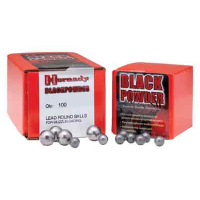
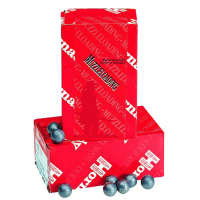
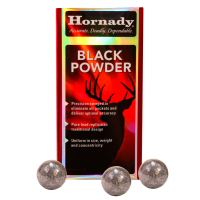
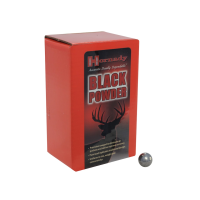
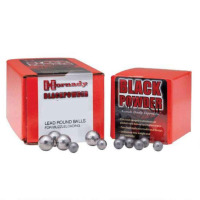
Every .50 on this page takes a .490 round ball. Brownells had a box of 100 Hornady balls at $13.99 when I checked, and the card below lists the other dealers.
Original Kentucky Rifles
An original Kentucky rifle is a different purchase from anything above. Each one was made by hand, no two are alike, and the maker’s name does a lot of the pricing. The NRA museum’s long rifle case holds rifles by J. P. Beck, Jacob Albright, Melchior Fordney and John Hagy, who worked in Lancaster County from 1800 to 1806.
The Smithsonian has a Pennsylvania flintlock rifle that Nathan Kile made for Daniel K. Defenbaugh in 1817. Its record lists the bore at .43 inch, which shows how small these rifles ran next to a .75 caliber musket.
I’m not going to quote prices for originals. They sell one at a time through auction houses and specialist dealers, and a figure that’s right for one signed rifle is wrong for the next. Condition, the maker and whether the lock is still flint or was converted to percussion all move the number a long way.
The law is simpler. Under federal law any firearm made in or before 1898 is an antique, so an original Kentucky rifle isn’t a firearm for federal purposes, and neither is a modern muzzleloader designed for black powder that can’t use fixed ammunition. State rules vary. Our guides to antique firearms and gun values cover the buying side.
Which Kentucky Rifle Should You Buy?
Buy the Traditions Deluxe Kentucky in flint if you want one rifle that looks right and shoots well. Farnsworth Firearms had it at $503.64 when I checked. If you’ve never loaded a muzzleloader, start with the plain percussion Kentucky at $535.99 and learn on caps.
Spend more only for a reason. The Pedersoli Kentucky buys a one-piece walnut stock and a quicker lock, the Pedersoli Pennsylvania buys original proportions, and the Frontier Maple buys the wood. And if you’d enjoy building it as much as shooting it, the kit is the best money on the page.
For half-stock Hawkens and hunting muzzleloaders, our best traditional muzzleloaders roundup ranks those. The muskets that fought beside these rifles are in our flintlock guns guide, Civil War guns picks up the percussion era that followed, and the history of firearms has the longer story.
Frequently Asked Questions
What is a Kentucky rifle?
A Kentucky rifle is a long-barreled, small-bore muzzleloading rifle with a slim full-length stock, developed by Pennsylvania gunsmiths in the 1700s. It is also called the Pennsylvania rifle or the American long rifle. Originals were flintlocks, and many were later converted to percussion.
Why is it called a Kentucky rifle if it was made in Pennsylvania?
The name stuck after the Battle of New Orleans in 1815, where Kentucky riflemen fought under Andrew Jackson. Samuel Woodworth's ballad The Hunters of Kentucky sang of our Kentucky rifles, and the Kentucky Rifle Association credits that song with the name. The rifles themselves came from Pennsylvania shops, above all in Lancaster County.
Is a Kentucky rifle the same as a Pennsylvania rifle?
Yes. Kentucky rifle, Pennsylvania rifle and American long rifle all describe the same pattern. Pennsylvania made the Pennsylvania Long Rifle its official state firearm in 2014. Makers today use both names, and Traditions sells its fancier model as the Pennsylvania Rifle.
Can you still buy a Kentucky rifle?
Yes. Traditions and Pedersoli both make new Kentucky and Pennsylvania rifles in flintlock and percussion. List prices on this page run from $599.95 for a Traditions percussion Kentucky to $2,555.15 for a Pedersoli Frontier Maple, and Traditions sells a build-it-yourself kit for $474.95.
What caliber is a Kentucky rifle?
Most new ones are .50 caliber, and Pedersoli also makes .32 and .45. Originals were smaller than military muskets. The NRA National Firearms Museum says Pennsylvania makers brought the bore down to an average of about .45 caliber.
How accurate is a Kentucky rifle?
A new .50 caliber reproduction shoots 2 to 2.5 inch groups at 50 yards with a patched round ball, and my Pedersoli Kentucky shot 1.8 inches. A National Park Service lesson gives the original long rifle an effective range of up to 300 yards, against 80 to 90 yards of accuracy for a musket.
Should I buy a flintlock or percussion Kentucky rifle?
Buy percussion if you want the easier gun. A cap lock fires faster, handles damp weather and costs $60 to $90 less at Traditions' list prices. Buy flint if history is the point, or if your reenactment group or hunting season asks for it.
Do you need a background check to buy a Kentucky rifle?
Federal law doesn't require one for a muzzleloader of this kind. 18 U.S.C. 921(a)(16) treats a muzzleloading rifle that is designed for black powder and cannot use fixed ammunition as an antique firearm, and antiques are not firearms under that law. State and local rules vary, so check yours before you order.
5,473+ Gun & Ammo Deals
Updated daily from 200+ top retailers. Filter by category, caliber, action type, and price.