

Last updated September 28, 2026
Some of the links below are affiliate links, meaning at no additional cost to you, we may earn a commission if you click through and make a purchase.
Gun values come down to four things: what the gun is, what shape it’s in, how original it is, and how many people want one right now. Get the first three right and a price guide will get you close. Get one wrong and you can be off by half.
I’ve watched people price a worn police trade-in like a new gun, and I’ve watched people sell a matching-numbers collector piece for the price of a shooter. Both mistakes come from the same place. They skipped the grading step.
So this guide does the grading step properly. You’ll get the NRA condition standards word for word, a plain-English way to grade your own gun at the kitchen table, and our own numbers on how far used prices sit below new. Then we’ll cover where to look a value up, when to pay for an appraisal, and where to get a real offer if you’re selling.
Gun Values at a Glance
| Question | Answer |
|---|---|
| What sets the price | Make, model and variant first, then condition, originality and demand |
| Condition scale | NRA modern grades: New, Perfect, Excellent, Very Good, Good, Fair |
| Collector scale | NRA antique grades and percentage of original finish |
| Biggest value killer | Refinishing, altering or swapping parts on a collectible |
| Used vs new, our data | Used guns listed 2% to 29% under new on 9 of 11 models |
| Best free check | Recent sold prices, not asking prices |
| Selling fast | Online buyers make an offer from photos and pay after inspection |
Table of Contents
How Much Is My Gun Worth? The Short Answer
Your gun is worth what a buyer will pay for it this month, in the condition it’s in, with the parts it has. That sounds obvious. But it rules out the three numbers people quote most: what they paid, what the box says the MSRP was, and the highest asking price they found online.
For a common modern gun, the fastest honest number is the median of recent used listings for the same model and variant, adjusted for condition. For anything older, rarer or engraved, condition grading carries far more weight, and a factory letter or an appraisal starts to earn its fee.
Here’s the order I work in. Identify the exact gun, grade it honestly and check what the same gun in the same grade has sold for. Then decide if you want the fastest sale or the highest one, because those are rarely the same buyer.
Want current prices for a specific model right now? Our price check pulls live offers from 200+ retailers in one search:
Find the Best Price in Seconds
Search once, compare 200+ trusted retailers instantly.
What Sets a Gun’s Value
Five things move the number, and they don’t carry equal weight. On a Glock 19, condition barely matters beyond “works and looks decent.” On a 1950s Colt, a few percent of finish can move it into a different price column in the Blue Book.
- Identity. Make, model, caliber, barrel length, finish and generation. A Colt Python from the original run and a Python made since 2020 are different guns to a buyer.
- Condition. Finish, bore, mechanics, wood and markings, graded on the NRA scale below.
- Originality. Factory finish, factory parts and matching serial numbers. On a collectible this can matter more than condition.
- Extras. The original box, manual, spare magazines, factory letter and paperwork that ties the gun to a person or a unit.
- Demand. What’s popular, what’s newly discontinued, what a new law just made harder to buy, and what everyone else is trying to sell at the same time. Age on its own adds nothing, and plenty of 80-year-old guns are worth less than a new one.
Identity is where most bad valuations start, so read every marking on the gun before you look anything up. The model number on a Smith & Wesson revolver is stamped on the frame where the crane closes, and a dash number after it marks the engineering change. S&W only started stamping model numbers in 1957, so older revolvers don’t carry one. That dash can separate a common gun from a desirable one.
NRA Condition Standards for Modern Guns
The NRA condition standards are the closest thing the gun world has to a shared language. Dealers, auction houses and price guides all use the same words, so learn them exactly. These are the NRA modern descriptions as the Blue Book of Gun Values prints them.
| NRA modern grade | Description |
|---|---|
| New | not previously sold at retail, in same condition as current factory production. |
| Perfect | in new condition in every respect, may have previously been sold at retail. |
| Excellent | near new condition, shows little use, no noticeable marring of wood or metal, bluing near perfect (except at muzzle or sharp edges). |
| Very Good | in perfect working condition, no appreciable wear on working surfaces, no corrosion or pitting, only minor surface dents or scratches. |
| Good | in safe working condition, minor wear on working surfaces, no broken parts, no corrosion or pitting that will interfere with proper functioning. |
| Fair | in safe working condition, but well worn, perhaps requiring replacement of minor parts or adjustments which should be indicated in advertisement, no rust, but may have corrosion pits which do not render firearm unsafe or inoperable. |
Source: NRA modern condition descriptions as printed in the Blue Book of Gun Values NRA conversion guidelines.
Two words cause most of the arguments. Excellent means near new, not “it’s in great shape for its age.” And Very Good still means no appreciable wear on working surfaces and no pitting. Plenty of guns listed as Very Good are really Good.
Notice what the modern scale leaves out. It says almost nothing about the box, originality or finish percentage. That’s why collectors reach for two more scales, the NRA antique descriptions and percentage grading.
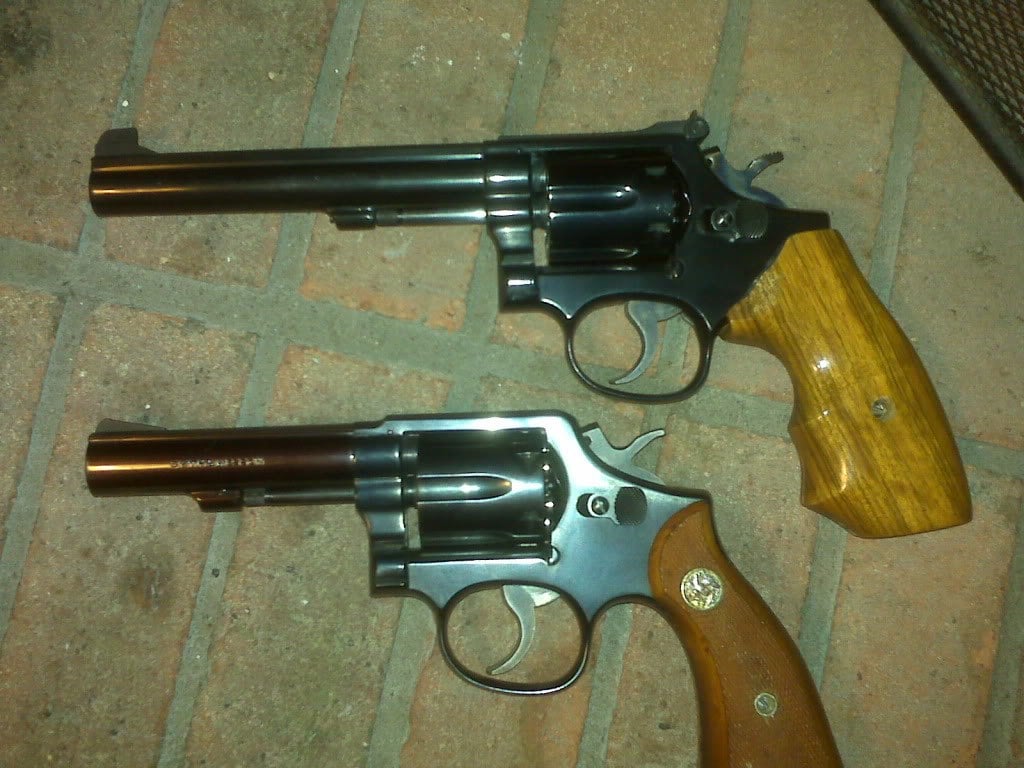
NRA Antique Condition Standards
The antique scale was written for collector guns, and it reads differently. Originality comes first in almost every line, and the bore stops mattering at Very Good. These are the NRA’s own antique condition descriptions, word for word.
| NRA antique grade | Description |
|---|---|
| Factory New | All original parts; 100 percent original finish; in perfect condition in every respect, inside and out. |
| Excellent | All original parts; over 80 percent original finish; sharp lettering, numerals and design on metal and wood; unmarred wood; good bore. |
| Fine | All original parts; over 30 percent original finish; sharp lettering, numerals and design on metal and wood; minor marks in wood; fine bore. |
| Very Good | All original parts; none to 30 percent original finish; original metal surfaces smooth with all edges sharp; clear lettering, numerals and design on metal; wood slightly scratched or bruised; bore disregarded for collector firearms. |
| Good | Some minor replacement parts; metal smoothly rusted or lightly pitted in places, cleaned or reblued; principal lettering, numerals and design on metal legible; wood refinished, scratched, bruised or minor cracks repaired; in good working order. |
| Fair | Some major parts replaced; minor replacement parts may be required; metal rusted, may be lightly pitted all over, vigorously cleaned or reblued; rounded edges of metal and wood; principal lettering, numerals and design on metal partly obliterated; wood scratched, bruised, cracked or repaired where broken; in fair working order or can be easily repaired and placed in working order. |
| Poor | Major and minor parts replaced; major replacement parts required and extensive restoration needed; metal deeply pitted; principal lettering, numerals and design obliterated; wood badly scratched, bruised, cracked or broken; mechanically inoperative, generally undesirable as a collector’s firearm. |
Source: NRA Antique Condition Descriptions, NRA Family.
Look at the jump between Very Good and Good. Very Good allows zero original finish as long as every part is original and the edges are sharp. Good is where replacement parts, pitting and refinishing arrive. That line is where collector value falls off a cliff.
One quirk: the NRA’s own page gives Excellent a good bore and Fine a fine bore. Some collector clubs print those two the other way round, so check which version a seller is quoting.
If you own anything made before 1899, our guide to antique firearms explains which guns count as antiques under federal law and how to date yours by serial number.
Percentage Grading and the Blue Book
The Blue Book of Gun Values prices guns by the percentage of original factory finish left on the metal. It’s a cleaner system for blued collector guns, because two people grading the same revolver should land close together.
The Blue Book publishes its own conversion from NRA modern grades to finish percentages, and it’s the most useful single table in gun valuation:
| Blue Book grade | Original finish | Notes |
|---|---|---|
| New / Perfect | 100% | With or without box. On current guns, assumes new in box and never sold at retail. |
| Mint | 99% or better | Almost no visible wear. Can include a gun sold at retail and shot a little. |
| Excellent | 95% to 98% | Near new. See the NRA Excellent description above. |
| Very Good | 80% to 95% | All parts and finish should be original. |
| Good | 60% to 80% | All parts and finish should be original. |
| Fair | 20% to 60% | Parts and finish may not be original, but the gun must work and shoot. |
| Poor | Under 20% | Shooting is not a factor. |
Source: Blue Book of Gun Values, NRA to PPGS conversion guidelines, condensed. The Standard Catalog caveat comes from the Virginia Gun Collectors Association.
Two warnings come with it. The percentage system only applies to original factory finish. A refinished gun can’t be graded on it at all, however good the new bluing looks. And the Gun Digest Standard Catalog of Firearms uses the same words as the NRA with different meanings in places, especially for antiques, so never mix grades from one guide with prices from another.
Gun Condition Grading, Step by Step
You don’t need a gunsmith to get within one grade. You need good light, a bore light or a white card, a magnifier and the discipline to write down what you see, not what you hope. Clear the gun first and keep ammunition in another room.
1. Estimate the finish
Hold the gun under daylight and turn it slowly. Look for holster wear on the muzzle, the front of the cylinder and the sharp edges of the frame, because that’s where finish goes first. The wartime Walther PPK at the top of this page shows it well, with bright steel on every edge the holster touched. Then estimate what share of the total metal surface still carries original finish.
Be honest about the backstrap and the grip frame. That’s where hands wear bluing away, and it’s the part people forget to count.
2. Check the bore and muzzle
Shine a light down the bore from the breech, or bounce it off a white card. You want bright, sharp rifling. Frosting, dark patches and pitting all cost money on a shooter. On a collector antique, the NRA scale disregards the bore from Very Good down, so don’t panic over a dark bore on a 130-year-old rifle.
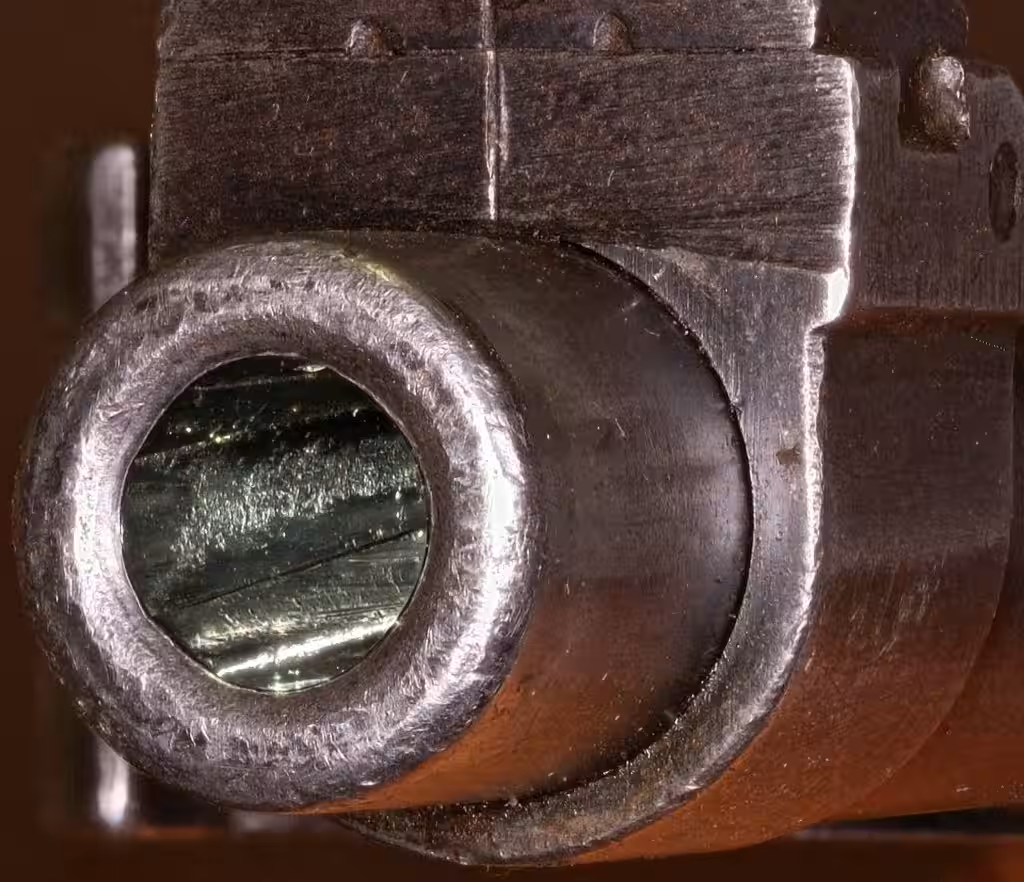
3. Test the mechanics
For a revolver, check timing and lockup on every chamber, and feel for end shake and play in the cylinder. Semi-autos get a check for slide play and a few cycles by hand, and a bolt gun gets a feel for binding. Anything that needs a minor part or an adjustment drops the gun to Fair at best. A gun that isn’t safe to fire falls off the modern scale entirely.
4. Read the markings and numbers
Sharp markings raise a grade, and soft or polished-out markings are the fastest tell of a refinish. Then find every serial number. Many older military guns carry the serial on the receiver, bolt and other parts, and a collector pays a lot more when they all match.
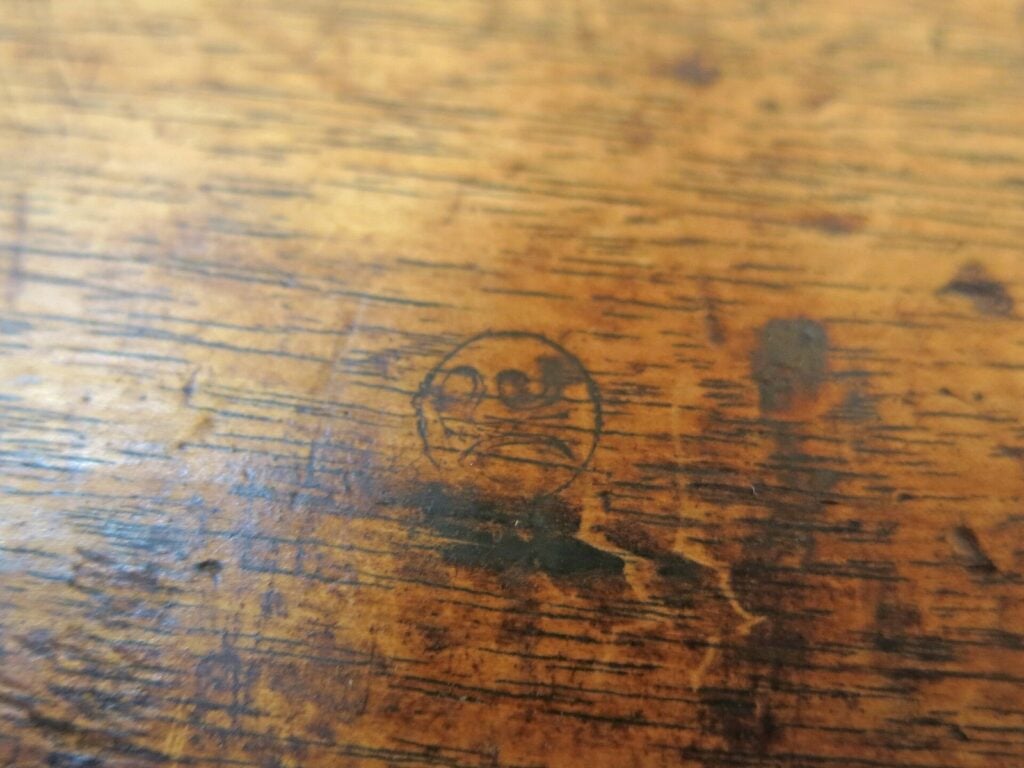
That rifle is a useful lesson. Its museum record lists matching serial numbers on the rifle and bolt, which a collector wants. It also lists a missing firing pin assembly and a broken rear sight, which knock it down the antique scale no matter how good the wood looks.
5. Look hard at the wood and grips
Check the wood for cracks at the wrist and behind the action, and for sanding that has rounded the edges. Original checkering should be sharp. Replacement grips are common on revolvers and pistols, so compare yours with factory photos of the same model before you count them.
6. Hunt for changes
Drilled and tapped holes for a scope, a cut stock, a shortened barrel, an aftermarket sight or a replaced trigger all move a collectible down. Some upgrades are neutral on a modern shooter. A collector piece is different, and almost every change costs more than it cost to make.
7. Adjust for the finish type
Percentage grading was built for bluing. Stainless doesn’t lose finish the same way, so grade it on scratches, turn lines and polish marks instead. Nickel is judged on flaking and bubbling, which is hard to fix. Parkerized military guns are graded on how even the gray finish is, and polymer frames on scuffs, cracks and wear at the grip.
A Worked Example: Grading the PPK at the Top of This Page
Here’s how I’d grade the wartime Walther PPK in our lead photo, working only from that one picture.
- Finish. Bright steel on the muzzle, the slide edges, the trigger guard and the front strap, with blue left on the flats. From this side I’d call it about 60% original finish.
- Markings. The slide legends and the Walther banner are worn but readable, which fits original finish rather than a refinish.
- Grips. The checkered grip shows light scratches and no cracks.
- Unknowns. The other side, the bore and the mechanics. A real grade needs all three.
On the Blue Book scale, 60% sits right on the line between Good and Fair. The weakest category sets the grade, so a frosted bore or a loose action would make it Fair. And because it’s more than 50 years old and in its original form, it qualifies as a curio and relic, which widens the pool of collectors who can buy it.
Used Gun Values vs New: Our Data
Price guides tell you what a gun should be worth. I wanted to see what the used market really asks. So on September 28, 2026, I pulled every new and used listing for 14 popular models in our price catalog and compared the median asking prices.
New prices come from every retailer we track, and the used side is mostly Guns.com, the biggest used seller in our catalog. I kept standard models only, stripping special editions, custom shop guns, optic packages and parts from both sides. I also dropped three Glock rows, because Glock has moved to Gen 6 and the few new Gen 5 and Gen 3 guns still listed were odd stock at odd prices.
| Model | New median | Used median | Used vs new |
|---|---|---|---|
| SIG Sauer P365 44 new / 68 used | $615 | $500 | -19% |
| SIG Sauer P320 69 new / 154 used | $570 | $480 | -16% |
| S&W M&P9 Shield 28 new / 148 used | $493 | $350 | -29% |
| Ruger 10/22 69 new / 60 used | $375 | $400 | +7% |
| Mossberg 500 61 new / 91 used | $460 | $400 | -13% |
| Beretta 92FS 21 new / 12 used | $717 | $700 | -2% |
| S&W Model 686 13 new / 41 used | $907 | $860 | -5% |
| Ruger GP100 25 new / 22 used | $950 | $773 | -19% |
| Ruger Mini-14 17 new / 20 used | $1,110 | $1,000 | -10% |
| Colt Python 88 new / 55 used | $1,417 | $2,301 | +62% |
| Ruger LCP 11 new / 42 used | $251 | $230 | -8% |
Median asking prices in our price catalog on September 28, 2026. New: every retailer we track. Used: listings flagged used, mostly Guns.com. Standard models only, same filters on both sides.
Nine of the 11 models listed 2% to 29% cheaper used than new. The S&W M&P9 Shield had the biggest gap at 29%, then the SIG P365 and Ruger GP100 at 19% each. There are a lot of Shields and P365s out there, a used one shoots the same, and a buyer can walk into any shop and buy a new one.
The Beretta 92FS barely moved at 2%, and the S&W 686 only 5%. Both are guns people keep, but the 92FS had just 12 used listings, so treat it as a thin sample. The Ruger 10/22 went the other way and listed 7% higher used, because a new one is cheap enough that a used one has no room to fall.
Then there’s the Colt Python. Its used median sat 62% above new. Colt ended regular Python production in 1999, kept building them in its custom shop until 2005 and brought the model back in 2020. Several used listings named their year of manufacture, from 1963 to 1983, so a lot of that used column is originals that collectors chase.
That’s the whole lesson of this guide in one gun. Identity comes first, and condition only makes sense once you know which gun you’re grading. Our Colt Python review covers how the two runs differ.
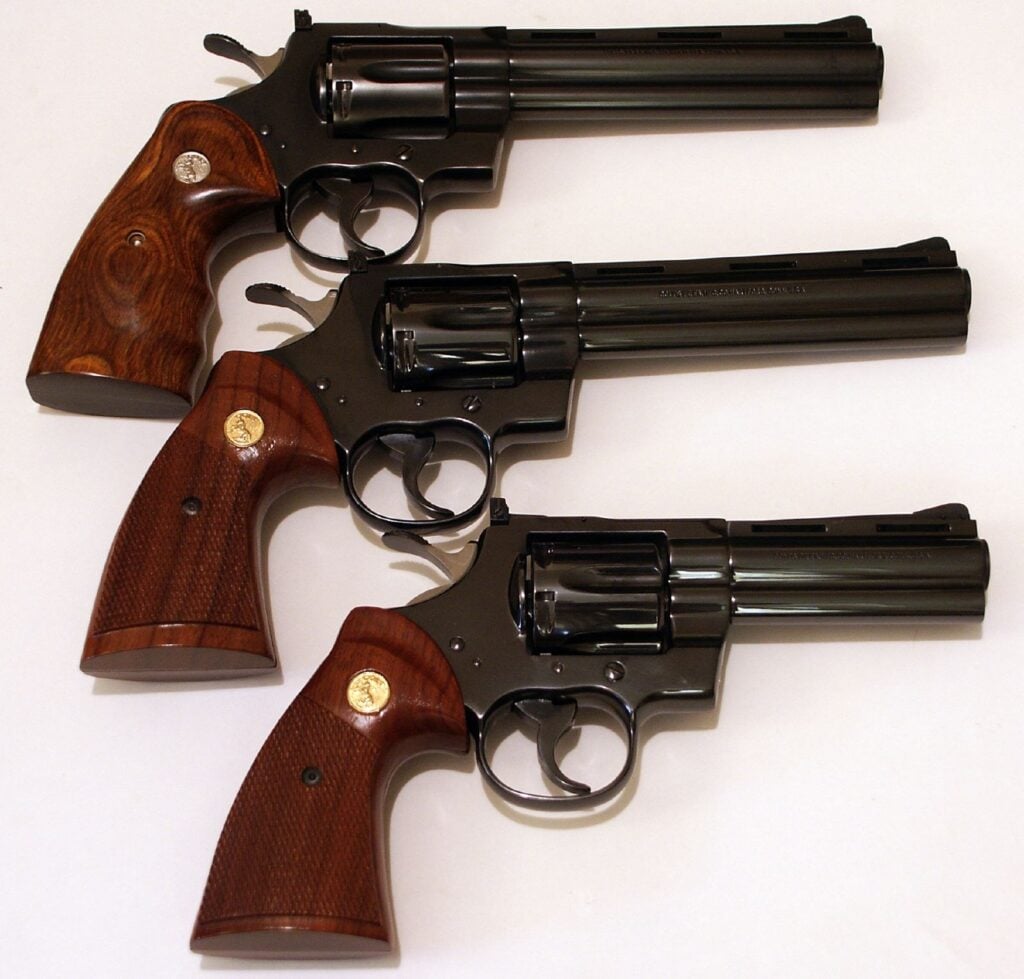
If you’re on the buying side, our used vs new guns breakdown covers when that discount is worth taking.
A few caveats. These are asking prices, not sold prices, and the used side mixes every condition grade. Samples ran from 11 listings to 154, and the thinnest are the LCP with 11 new and the 92FS with 12 used. Treat the gaps as a direction, not a formula.
Box, Papers and Provenance
On a modern gun, the box and manual add a little and make the gun easier to sell. On a collectible, a correct original box can add real money, and a box that matches the serial number on the gun adds more. Early Glock boxes are a good example. Collectors of first-generation guns want the original box, cleaning rod and paperwork with it.
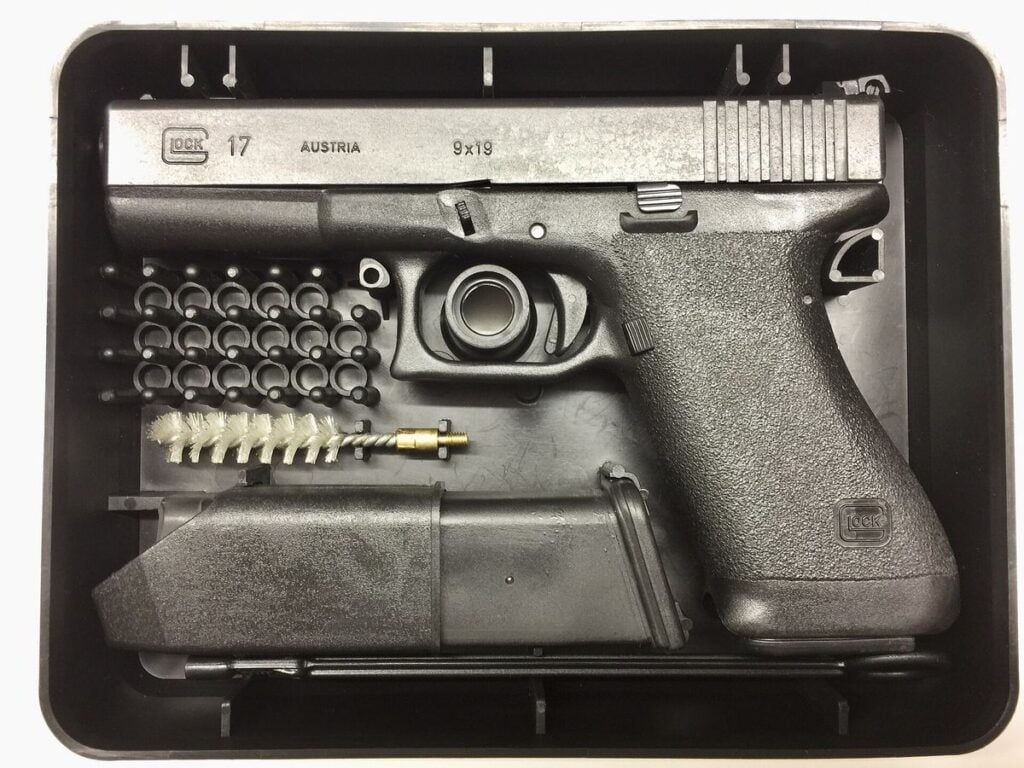
Provenance is what separates the grail guns collectors fight over from ordinary examples. It’s anything that ties the gun to a person, a unit or an event, and it has to be documented to count. A family story adds nothing to the price. A factory letter, a bring-back certificate, a unit marking or a photo of the original owner with that exact gun can add a lot.
Factory letters are the cheapest provenance you can buy. Colt letters come from Colt’s archive, Winchester records for many models sit at the Cody Firearms Museum, and the Smith & Wesson Historical Foundation letters S&W guns. A letter confirms how the gun shipped, and it can prove a finish or barrel length is original.
What Kills a Gun’s Value
Most value damage happens with good intentions. Someone wants the old gun to look nice, so they fix it.
- Refinishing. New bluing on a collectible can take a big bite out of its value, often far more than the refinish cost, and it can’t be graded on the Blue Book percentage system at all. Military rifles are the exception, because an arsenal refinish done in service is part of the gun’s history.
- Over-cleaning. Steel wool, wire wheels and harsh solvents strip original finish and soften markings. Oil and a soft cloth are enough.
- Alterations. Drilling and tapping, cutting a barrel, sporterizing a military rifle or reshaping a stock.
- Mismatched or replaced parts. Especially on military collectibles, where collectors pay for matching numbers.
- Poor storage. Rust from a damp safe or a foam case that traps moisture. Pitting is permanent.
- Missing parts. A missing magazine, firing pin or sight turns a clean gun into a project.
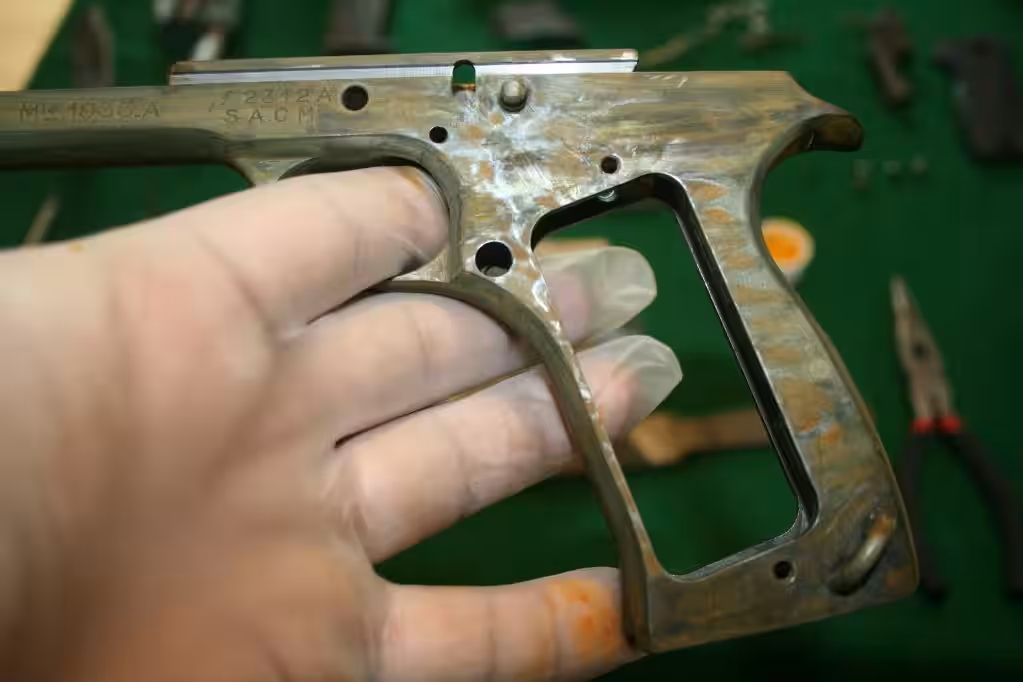
That frame is mid-refinish. It will come out looking beautiful, and to a collector it will be worth less than the tired original was. If a gun’s value matters to you, clean it, oil it, store it dry and leave the finish alone. Our guide to how to store guns covers the basics, and our gun cleaning supplies page compares prices on oils and cleaning kits.
Where to Look Up Gun Values
No single source is right on its own. I cross-check at least two before I trust a number.
- The Blue Book of Gun Values. Values by percentage of original finish, in print and online. It’s strongest on older and collector guns.
- The Gun Digest Standard Catalog of Firearms. A photo-illustrated price guide from Gun Digest, which also runs an online values site. Remember its condition words don’t always mean what the NRA’s do.
- Sold auction results. What people really paid. Guns.com recently ended auctions show final prices on everyday guns, and the big collector auction houses publish prices realized for rare pieces.
- Current used listings. Good for common modern guns, but they are asking prices, and the guns that sell fast never sit there long enough to be counted.
- Online valuation tools. Handy for a starting point. Check what data a tool uses, because a tool built on asking prices will run high.
Gun Values by Serial Number
People search for gun values by serial number all the time, and here’s the honest answer: a serial number doesn’t carry a price. What it does is tell you when the gun was made and sometimes which variant it is, and that’s what moves the price.
Ruger has a serial number lookup on its website. Colt and Smith & Wesson answer the same question in far more detail through factory letters. Once you know the year and the variant, go back to the Blue Book or sold results for that exact version. A 1960s Python and a 2020 Python share a name and not much else on price.
Asking Price vs Sold Price
This is the mistake that costs sellers the most. An asking price is a hope. A sold price is a fact. The guns still listed are, by definition, the ones that haven’t sold at that price yet.
When I price a gun, I throw out the highest asking prices first. Then I look for sold results on the same model and grade from the last few months. If I can only find asking prices, I start 10% to 15% under the median and see who bites.
Also think about who the buyer is. A dealer who buys your gun has to resell it at a profit, so a dealer offer sits below private-sale value. A private sale can bring more money but takes more time, and you carry the legal steps yourself.
When to Get a Professional Appraisal
For a common modern gun, an appraisal costs more than it tells you. For anything that could be worth serious money, it’s cheap insurance. I’d pay for one in these cases:
- Insurance. A written value makes a claim on a stolen or damaged collection far easier to prove.
- Estates and divorces. An independent written value keeps the peace between heirs.
- Engraved, cased or documented guns. Engraving and provenance are hard to price from a book.
- Military collectibles. Matching numbers, markings and fakes need an expert eye.
- Anything that grades Excellent or better on a rare model. A few percent of finish is real money there.
Pick an appraiser who specializes in your kind of gun and charges a flat fee, not a share of the value. Be wary of an appraiser who also offers to buy the gun at the number they just gave you.
Ready to Sell? Where to Get a Real Offer
Once you know what your gun is worth, the next question is who pays the most with the least hassle. You’ve got four routes, and each one trades money for speed differently.
- Online gun buyers. Submit photos, get an offer, ship with a prepaid label and get paid after inspection. WeBuyGuns says most sellers are paid within 24 hours of inspection, and Cash for Arms says a firearms expert prices each gun and pays the day it arrives. Both send a prepaid, insured shipping label.
- Consignment or online auction. A dealer or auction site sells the gun for you and takes a commission. Slower, but it can bring more for collectibles.
- Trade-in at a gun shop. The fastest route, and the lowest price. Useful when you’re buying a replacement anyway.
- Private sale. The most money on paper. But the laws vary by state, and many states require the sale to go through a dealer with a background check.
Before a private sale, check our list of universal background check states and our FFL transfer guide. A gun sold to someone in another state has to ship to a licensed dealer, not straight to the buyer, and USPS won’t take a handgun from someone who isn’t licensed.
The last revolver I sold was a GP100. The online offer came in at $560, a local shop offered $450 in trade, and I sold it through a dealer transfer to a private buyer for $700. The online offer lost on price, but it set the floor I negotiated from.
My advice? Get an online offer first even if you plan to sell another way. It’s free, it’s a real number from a buyer with money, and it gives you a floor for every other conversation. For buying rather than selling, our used guns guide covers what to check before you hand over cash.
Frequently Asked Questions
How do I find out what my gun is worth?
Identify the exact make, model, caliber and variant from the markings, grade its condition on the NRA scale, then compare sold prices for the same model in the same grade. For common modern guns, recent used listings get you close. For rare, engraved or collector guns, use the Blue Book of Gun Values and consider a paid appraisal.
What are the NRA condition standards?
They are the grading scale most dealers and price guides use. The modern scale runs New, Perfect, Excellent, Very Good, Good and Fair. A separate antique scale runs Factory New, Excellent, Fine, Very Good, Good, Fair and Poor, and it weighs original parts and finish more heavily.
What percentage is Excellent condition for a gun?
The Blue Book of Gun Values converts NRA Excellent to 95% to 98% original finish. Very Good is 80% to 95%, Good is 60% to 80%, and Fair is 20% to 60%.
How much less is a used gun worth than a new one?
In our September 2026 check of our price catalog, used guns on 9 of 11 popular models listed 2% to 29% under the median new price, with the S&W Shield showing the biggest gap. A used Ruger 10/22 listed a little higher than new, and used Colt Pythons listed 62% higher because many are originals.
Does refinishing a gun lower its value?
On a collectible, yes, and by a lot. A refinish removes original finish, often softens the markings, and takes the gun out of the Blue Book percentage system entirely. On a common modern shooter, a quality refinish matters far less.
Is the Blue Book of Gun Values accurate?
It's one of the most trusted references, especially for older and collector guns, but it's a guide, not a price tag. Local demand, the current market and the exact condition all move real prices. Check it against recent sold results.
Do I need an appraisal to sell a gun?
Not for a common modern gun. It makes sense for insurance, estates, engraved or documented guns, military collectibles and rare models in high condition. Choose an appraiser who charges a flat fee and doesn't offer to buy the gun.
Does the original box add value to a gun?
A little on a modern gun, and sometimes a lot on a collectible, especially when the box is correct for the model and matches the serial number on the gun.
Where can I sell a gun for the best price?
A private sale or auction can bring the most money but takes longer and depends on your state's laws. Online buyers like WeBuyGuns and Cash for Arms make an offer from photos and pay after inspection. A shop trade-in is fastest and pays the least.
Can I look up a gun's value by serial number?
Not directly. A serial number tells you when the gun was made and sometimes which variant it is. Use a maker's serial lookup or a factory letter to find that, then check the Blue Book or recent sold results for that exact version.
What is matching numbers on a gun?
It means the serial numbers stamped on the major parts, such as the receiver, bolt and barrel, all match. Collectors of military guns pay much more for matching examples because it shows the gun has its original factory parts.