

Last updated October 11, 2026
Some of the links below are affiliate links, meaning at no additional cost to you, we may earn a commission if you click through and make a purchase.
- Treat every gun as loaded
- Point the muzzle in a safe direction
- Keep your finger off the trigger until you’re ready to shoot
- Know your target and what’s beyond
A musket is a long, muzzle-loading, smoothbore shoulder gun, and it was the standard infantry gun for about 300 years. You can still buy one new. Palmetto State Armory had the Traditions 1861 Springfield at $1,294.99 when I checked.
Below I’ll cover what counts as a musket, how it differs from a rifle and a rifle-musket, and how the lock changed from matchlock to percussion cap. Then I rank nine muskets you can buy new today, four smoothbores, four rifle-muskets and a kit, with a live price card on every one our dealers stock.
How we tested: Every pick here is ranked against our testing methodology. Minimum round counts, accuracy and reliability protocols, the failures that disqualify a gun.
Muskets at a Glance
The five muskets for sale at our dealers right now, with the bore, the lock and what the maker or importer charges.
| Musket | Who It Suits | Key Facts | Check Price |
|---|---|---|---|
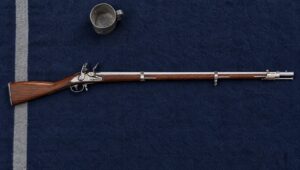 |
BEST SMOOTHBORE MUSKET
Pedersoli 1816 Harpers Ferry
Buyers who want a true smoothbore flintlock musket they can order from a dealer today. |
Bore: Smoothbore, .69 Lock: Flintlock List price: $2,107.80 |
Check Price ↓ |
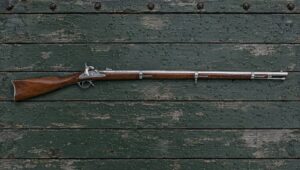 |
BEST CIVIL WAR RIFLE-MUSKET
Traditions 1861 Springfield
Civil War reenactors, skirmish shooters and anyone who wants a musket that groups like a rifle. |
Bore: Rifled, .58 Lock: Percussion List price: $1,479.95 |
Check Price ↓ |
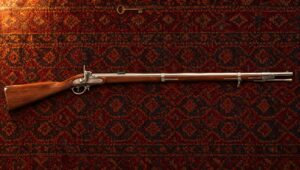 |
BEST BUILT RIFLE-MUSKET
Pedersoli Lorenz Infantry Type II
Shooters who want the best-finished rifle-musket here and reenactors with an Austrian-armed unit. |
Bore: Rifled, .54 Lock: Percussion List price: $2,229.64 |
Check Price ↓ |
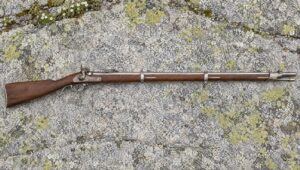 |
THE TARGET PICK
Pedersoli 1857 Wurttembergischen
Target shooters who want the most accurate musket-length muzzleloader on this page. |
Bore: Rifled, .54 Lock: Percussion List price: $2,473.32 |
Check Price ↓ |
 |
CHEAPEST WAY IN
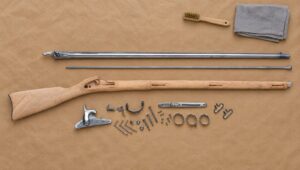
Traditions 1861 Springfield Musket Kit
Patient builders who want a Civil War rifle-musket for the least money. |
Bore: Rifled, .58 Lock: Percussion List price: $1,197.95 |
Check Price ↓ |
Table of Contents
What Is a Musket?
Britannica defines the musket as a muzzle-loading shoulder firearm that evolved in 16th-century Spain as a larger version of the harquebus. The first ones were about five and a half feet long, weighed around 20 pounds and were fired from a portable rest.
They got lighter. By the 1700s a musket was a nine or ten pound gun with a smooth barrel of .69 to .75 caliber, and it took a bayonet. Britannica says those later muskets could hit a man-sized target at 80 to 100 yards.
A loose ball in a smooth barrel was the quickest thing an army could load, and it was still slow. The National Park Service says even a trained soldier with a Brown Bess could only get off two or three shots a minute. Armies made up for the poor accuracy by standing men in lines and firing volleys.
Musket vs Rifle vs Rifle-Musket
Three words get mixed up here, and makers don’t help, because they sell rifled guns as muskets. American Rifleman’s Garry James draws the line this way: a musket was originally a smoothbore muzzleloader of large caliber, and a rifle-musket was a muzzleloader with a musket-length rifled barrel.
| Type | Barrel | What it fires | Effective range | Example on this page |
|---|---|---|---|---|
| Musket | Smooth, about 42 inches | A round ball of .69 or .75 caliber | 80 to 100 yards | 1816 Harpers Ferry, 1842 Springfield, Brown Bess, Charleville |
| Rifle | Rifled, shorter | A patched round ball | Up to 300 yards | None here, see our Kentucky rifle guide |
| Rifle-musket | Rifled, musket length | A hollow-based Minie bullet | About 250 yards | 1861 Springfield, 1853 Enfield, Lorenz |
The yardages come from three sources. Britannica gives the musket’s 80 to 100 yards, a National Park Service lesson on the musket and the rifle gives the rifle an effective range of up to 300, and the American Battlefield Trust says an average shot with a rifle-musket could expect a hit at 250.
So five of the nine guns below aren’t muskets in the strict sense. The Springfield 1861, the Enfield, the Lorenz, the Wurttemberg rifle and the Springfield kit all have rifled barrels. I’ve marked every pick as smoothbore or rifled, because the two load and shoot differently. Our Kentucky rifle guide covers the long rifle that fought beside the smoothbores.
From Matchlock to Rifle-Musket: A Short History
The barrel barely changed in three centuries. The lock changed three times, and then the barrel got rifling. Here’s the short version, with the gun on this page that stands for each step.
| When | Lock | What changed | Example |
|---|---|---|---|
| 1400s to 1600s | Matchlock | A trigger lowered a burning cord into the priming pan. Britannica calls it the first mechanical firing device, and says it was hard to use in wind or rain. | No production gun on this page |
| 1600s to 1840s | Flintlock | Flint struck steel and threw sparks into the pan. Britannica dates the true flintlock to early 17th-century France. | Brown Bess, Charleville, 1816 Harpers Ferry |
| 1840s | Percussion | A hammer hit a cap on a nipple. The flint, the steel and the priming powder all went away. | 1842 Springfield |
| 1855 onward | Percussion, rifled barrel | The rifle-musket kept the musket’s length and added rifling and the Minie bullet. | 1861 Springfield, 1853 Enfield, Lorenz |
The percussion step took a long time. Britannica says Alexander Forsyth discovered the principle of the percussion lock in 1805, and that Great Britain and the United States began making military arms with it only in the year before his death in 1843. That matches the US Model 1842.
The United States made its own muskets from the start. The National Park Service says the first national armory, at Springfield, Massachusetts, began making muskets in 1794, and its historic site still holds a rack of 647 Model 1861 rifle-muskets. A second armory at Harpers Ferry was in full production by about 1802.
The Army Historical Foundation says the French 1766 Charleville heavily influenced the Model 1795, the first regulation musket made in the United States. The American Battlefield Trust says the rifle-musket was first made here in 1855 and quickly replaced the smoothbores. Britannica says the breech-loading rifle replaced the musket for good in the mid-19th century.
Flintlock Musket or Percussion Musket?
Pick the lock first, because it decides how much fiddling you sign up for. A flintlock needs a sharp flint, a clean frizzen and dry priming in the pan. The Army Historical Foundation says soldiers changed flints about every thirty rounds, and that’s close to what I get.
A percussion musket needs a cap on the nipple and nothing else. The Park Service’s page on infantry weapons at Fort Scott says the percussion cap did away with the flint, the steel and the priming powder, and in time made flintlock arms obsolete.
My advice is the same as for any black powder gun. Buy flint if you reenact the Revolutionary War or the War of 1812, or if the shower of sparks is the whole appeal. Buy percussion if you’d like to spend the afternoon shooting. For flintlock rifles and pistols, see our guide to flintlock guns.
Smoothbore Muskets You Can Buy New
Four true muskets, three in flint and one in percussion. I’ve ranked the 1816 Harpers Ferry first because it’s the only smoothbore our dealers list. The 1842 Springfield is second because it’s the cheapest and the easiest to shoot.
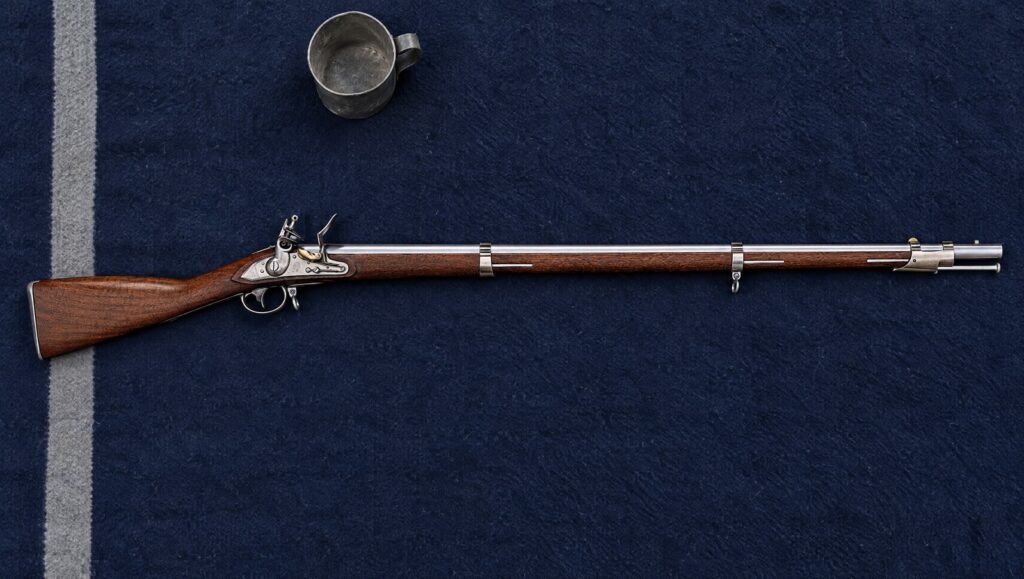
1. Pedersoli 1816 Harpers Ferry: Best Smoothbore Musket
- Type: Smoothbore musket, flintlock
- Caliber: .69
- Barrel: 41.75 inches, round, bright steel
- Weight and length: 9.7 pounds, 57.06 inches overall
- Importer’s price: $2,107.80 from Taylor’s
| Category | Rating |
|---|---|
| Value | 3/5 |
| Period Look | 5/5 |
| Ease of Use | 3/5 |
Pros
- Only smoothbore our dealers list
- American pattern, steel furniture
- Barrel bands ease cleaning
Cons
- Around $2,000
- Importer showed it out of stock
- No rear sight
If you want a real smoothbore and you want to order it from a dealer, this is the one. Palmetto State Armory had Taylor’s 1816 Harpers Ferry at $2,050.99 when I checked, and Battlehawk Armory listed it at $1,863.12. Taylor’s own price is $2,107.80, and its site showed it out of stock.
Read past the title on the Palmetto listing, which calls it a break action rifle. The model number, 210091, is Taylor’s number for the .69 flintlock musket. Taylor’s also sells a percussion conversion of this gun, and I’ve kept that one off the card.
This is the musket the United States made for itself after the War of 1812. Taylor’s says the national armories built it from 1816 to 1844, and the Park Service says infantry at Fort Scott were still issued .69 caliber flintlocks in the early 1840s.
Pedersoli’s table lists 70 grains of black powder with a .675 ball and a .007 patch. At 50 yards mine prints about 7 inches, and at 25 yards all five shots fit under my hand. A flint lasts me about 30 shots before it wants turning or replacing.
Best For: Buyers who want a true smoothbore flintlock musket they can order from a dealer today.
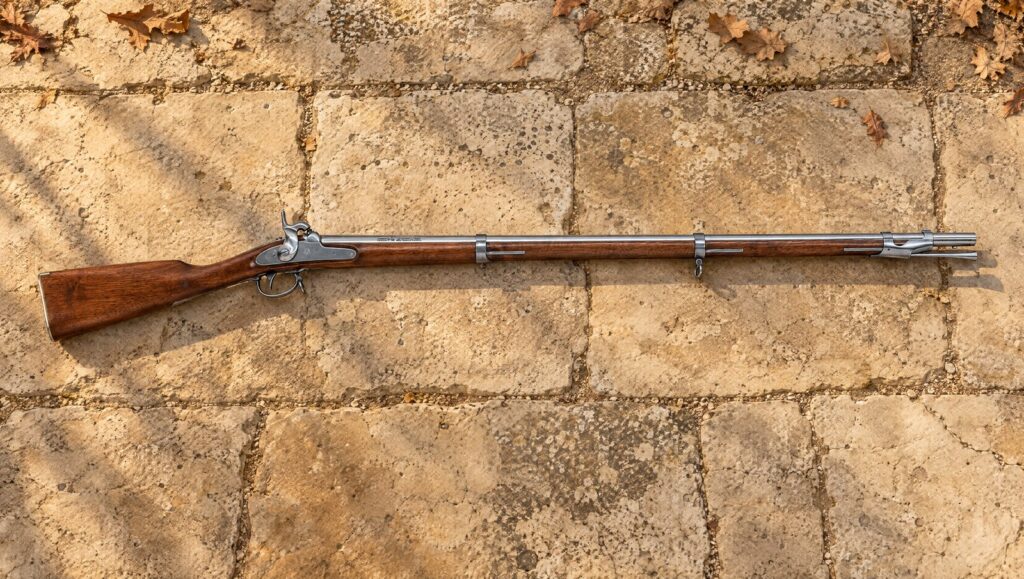
2. Traditions 1842 Springfield: Best Percussion Smoothbore
- Type: Smoothbore musket, percussion
- Caliber: .69
- Barrel: 42 inches, smoothbore, white finish
- Stock and length: Hand-oiled walnut, 58 inches overall
- Maker’s price: $1,479.95 from Traditions, model R184200
| Category | Rating |
|---|---|
| Value | 4/5 |
| Period Look | 5/5 |
| Ease of Use | 4/5 |
Pros
- Cheapest smoothbore on this page
- Cap lock, no flint to manage
- In stock at the maker
Cons
- Not stocked by our dealers
- Nearly five feet long
- Won’t ship to five states
The Model 1842 is the musket I’d hand a first-time smoothbore shooter. It has the big .69 bore and the full 42-inch barrel, and it fires with a cap. Traditions says the 1842 was the first US musket made with a percussion lock and the last US smoothbore.
None of our dealers listed it in a form a visitor can see when I checked, so there’s no price card here. Traditions sells it direct at $1,479.95, and Traditions’ 1842 page showed it in stock. A rifled version, model R184205, lists at $1,598.95.
Traditions’ musket manual gives 65 grains of 2F for the .69, with a .675 ball and a .015 patch. Loaded that way mine puts five shots into 5.5 inches at 50 yards, a little better than the flintlocks, because the cap fires the instant the hammer lands. I’ve had two caps fail in 60 shots.
Taylor’s says the national armories made more than a quarter of a million of the originals from 1844 to 1855, and that it was the first arm made at both armories with fully interchangeable parts. Traditions won’t ship black powder guns to New Jersey, New York, Illinois, Michigan or Ohio.
Best For: Shooters who want a smoothbore without the flintlock, and Mexican War or early Civil War reenactors.
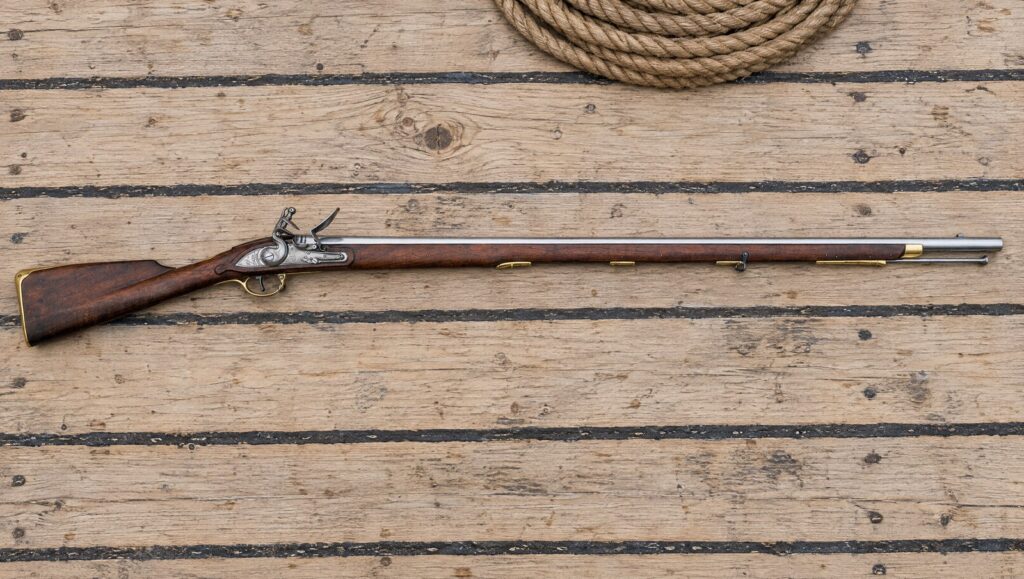
3. Pedersoli Brown Bess: The Revolutionary War Musket
- Type: Smoothbore musket, flintlock
- Caliber: .75
- Barrel: 41.75 inches, round, bright steel, no barrel bands
- Weight and length: 9.03 pounds, 57.69 inches overall
- Importer’s price: $1,873.21 from Taylor’s
| Category | Rating |
|---|---|
| Value | 3/5 |
| Period Look | 5/5 |
| Ease of Use | 3/5 |
Pros
- The biggest bore here
- Lightest of the three flintlocks
- In stock at the importer
Cons
- Not stocked by our dealers
- Slower to strip than banded guns
- No rear sight
Ask anyone to picture a musket and this is what they see. The Brown Bess is a .75 caliber flintlock with brass furniture and no barrel bands. Our flintlock guns guide tells its history, so I’ll stick to buying and shooting it here.
None of our dealers had one when I checked, so there’s no price card. Taylor’s lists Pedersoli’s Brown Bess at $1,873.21, and Taylor’s Brown Bess page showed it in stock and says no FFL dealer is required. That makes it the cheapest of the three Pedersoli flintlock muskets by about $180. Our Brown Bess guide covers the carbine, the kits and the Indian-made copies.
It’s the musket I shoot best. Pedersoli’s table lists 75 grains of black powder with a .732 ball and a .010 patch, and my five-shot groups run 6 inches at 50 yards. At 75 yards I put four of five on a man-sized silhouette, which squares with the 80 to 100 yards Britannica gives.
Cleaning is the chore. With no bands to slide off, I leave the barrel in the stock and plug the touch hole. Taylor’s sells the bayonet and scabbard separately.
Best For: Redcoat and militia reenactors, and anyone who wants the one musket everybody recognizes.
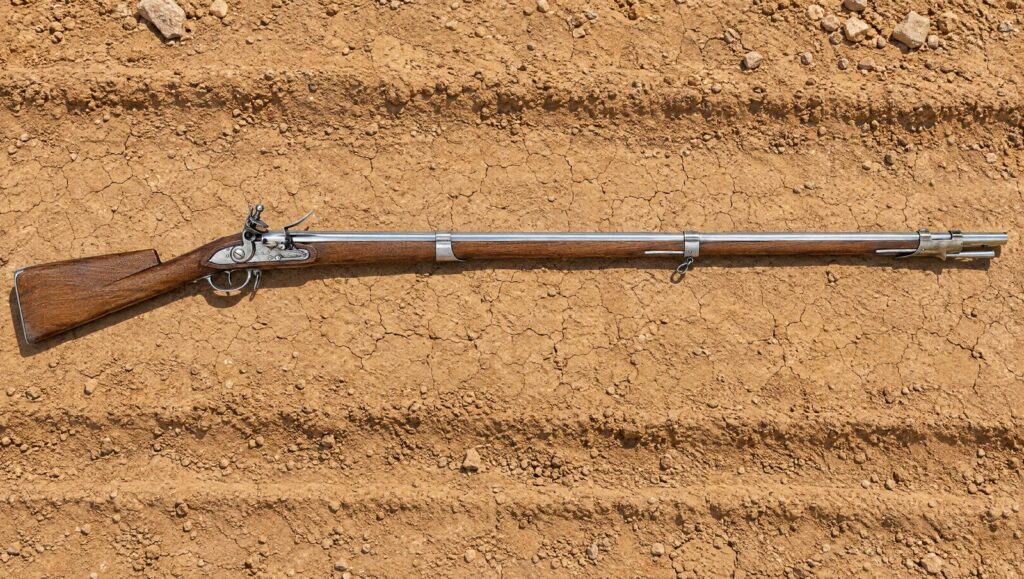
4. Pedersoli 1766 Charleville: The French Pattern
- Type: Smoothbore musket, flintlock
- Caliber: .69
- Barrel: 44.69 inches, round, bright steel, barrel bands
- Weight and length: 10.13 pounds, 59.13 inches overall
- Importer’s price: $2,053.24 from Taylor’s
| Category | Rating |
|---|---|
| Value | 2/5 |
| Period Look | 5/5 |
| Ease of Use | 3/5 |
Pros
- Longest barrel on this page
- Bands make stripping easy
- In stock at the importer
Cons
- Over $2,000
- Not stocked by our dealers
- Over ten pounds
The Charleville is the pattern American muskets were copied from. The Army Historical Foundation says the Continental Army carried the 1763 and 1766 models, and that the 1766 shaped the Model 1795, the first regulation musket made in the United States. Buy this one and you can see where the American pattern started.
Taylor’s lists it as the 1763 Leger 1766 Charleville at $2,053.24, and Taylor’s Charleville page showed it in stock. Our dealers didn’t list it when I checked, so there’s no price card. Taylor’s also lists a kit of the later 1777 pattern, the 1777 Revolutionnaire.
The foundation’s article says a Charleville could hit a formation at 200 yards and a single soldier at about 80. Mine agrees. With Pedersoli’s 70 grains of black powder, a .675 ball and a .007 patch, it shoots 7 inches at 50 yards.
At 10.13 pounds and just under five feet, it’s a lot of gun to hold offhand. The payoff comes at the cleaning bench, where the bands slide off and the barrel lifts out.
Best For: Reenactors on the French or Continental side, and buyers who want the musket the American patterns grew from.
Rifle-Muskets You Can Buy New
Four rifled muzzleloaders that makers and dealers sell as muskets. They’re longer-ranged and more accurate than the smoothbores above, and three of the four have dealer listings. Our Civil War guns guide covers who carried them.
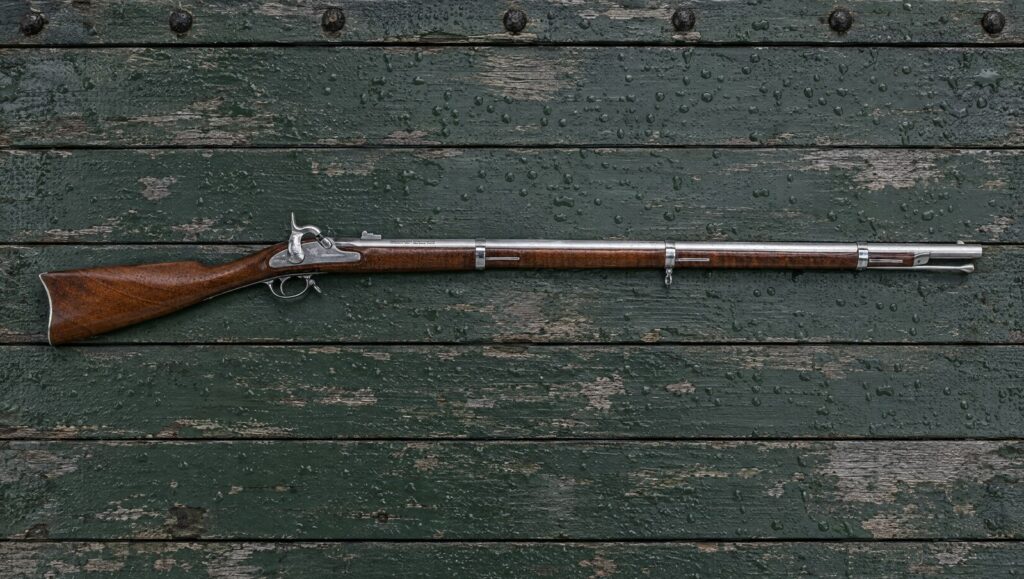
5. Traditions 1861 Springfield: Best Civil War Rifle-Musket
- Type: Rifle-musket, percussion
- Caliber: .58
- Barrel: 40 inches, rifled, 1:65 twist, white finish
- Sights and length: Flip-up leaf rear sight, 56 inches overall
- Maker’s price: $1,479.95 from Traditions, model R186100
| Category | Rating |
|---|---|
| Value | 4/5 |
| Period Look | 5/5 |
| Ease of Use | 4/5 |
Pros
- Cheapest finished gun with a card
- Rifled, with a real rear sight
- Two dealers list it
Cons
- A rifle-musket, not a smoothbore
- Dealer supply is thin
- One listing skips the model number
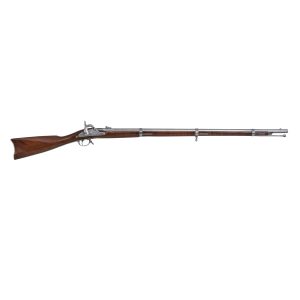
This is the one to buy if you want a musket-length gun that hits what you aim at. It isn’t a smoothbore. The 1861 Springfield has a rifled .58 caliber barrel and a flip-up rear sight, and it fires a Minie bullet.
Palmetto State Armory had the finished gun, model R186100, at $1,294.99 when I checked. Battlehawk Armory listed an 1861 Springfield musket at $1,194.00 with no model number in the title, so confirm it’s the finished gun before you order. Traditions’ own price is $1,479.95.
Traditions’ musket manual gives 60 grains of 2F under a lubricated .585 Minie bullet for the .58. Mine shoots that load into 3 inches at 50 yards and 5.5 at 100. That’s close to twice as tight as the best smoothbore on this page.
Loading is slower to learn than it looks. The bullet goes in without a patch and has to be seated firmly on the powder every time, and the big musket caps want a firm push onto the nipple. Our Civil War guns guide has the history of the original.
Best For: Civil War reenactors, skirmish shooters and anyone who wants a musket that groups like a rifle.
6. Pedersoli Lorenz Infantry Type II: Best Built Rifle-Musket
- Type: Rifle-musket, percussion
- Caliber: .54
- Barrel: 37 inches, rifled, four grooves, bright steel
- Weight and length: 9 pounds, 53 inches overall
- Importer’s price: $2,229.64 from Taylor’s
| Category | Rating |
|---|---|
| Value | 3/5 |
| Period Look | 5/5 |
| Ease of Use | 4/5 |
Pros
- Cheekpiece stock fits the face
- Two dealers list it
- In stock at the importer
Cons
- Odd .54 bullet size
- Big gap between dealer prices
- Shorter than a Springfield
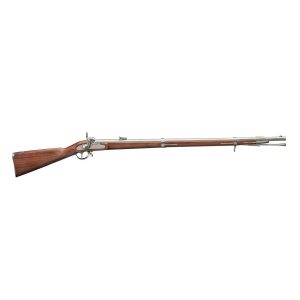
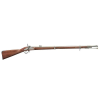
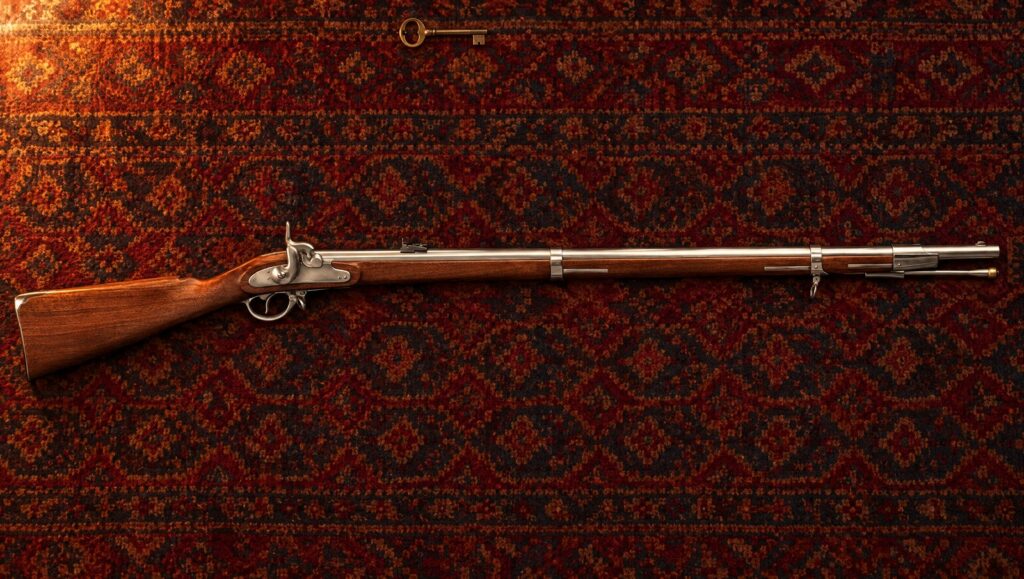
The Lorenz was Austria’s infantry rifle, and Taylor’s says large numbers were exported to America and armed both sides in the Civil War. Pedersoli’s copy is the best-finished rifle-musket on this page, with a cheekpiece on the butt and a four-groove barrel.
Shop this one carefully, because the two dealer prices are far apart. Palmetto State Armory had it at $1,931.99 when I checked and Battlehawk Armory at $1,434.99. Taylor’s lists it at $2,229.64 and showed it in stock.
Pedersoli’s table lists 50 grains of black powder for the Lorenz with a .547 bullet, and Taylor’s page gives the same starting figure. Mine shoots 2.5 inches at 50 yards with that load. The cheekpiece puts my eye behind the sights faster than a straight Springfield stock does.
The catch is the bore. A .54 Lorenz won’t take the .58 bullets the Springfield and the Enfield use. Like the Wurttemberg rifle below it needs a .547 bullet, so you’ll be casting your own or ordering from a specialist.
Best For: Shooters who want the best-finished rifle-musket here and reenactors with an Austrian-armed unit.
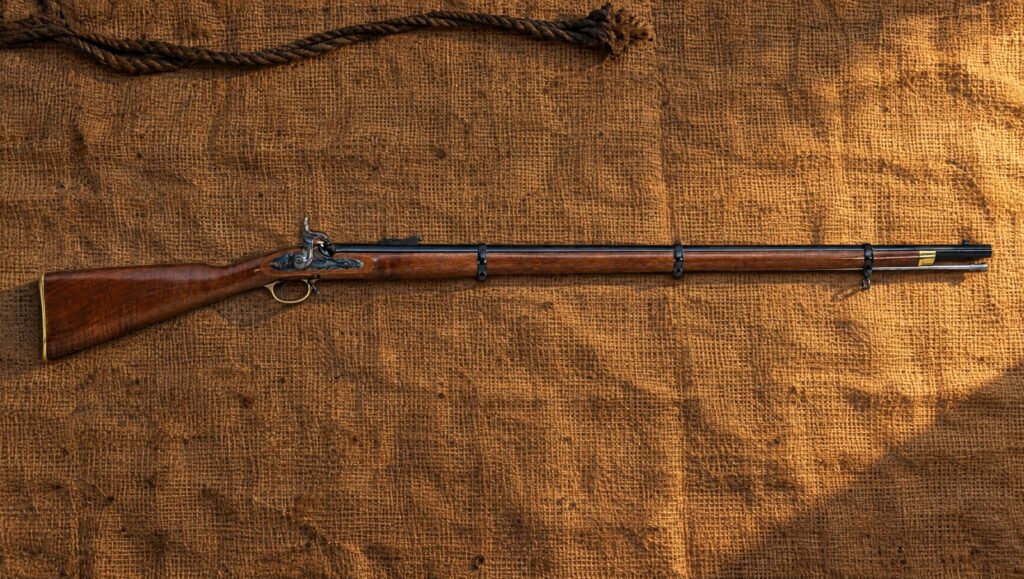
7. Traditions 1853 Enfield: Lowest List Price
- Type: Rifle-musket, percussion
- Caliber: .58
- Barrel: 39 inches, rifled, 1:65 twist, blued
- Sights and length: Ladder rear sight, 55 inches overall
- Maker’s price: $1,269.95 from Traditions, model R185303
| Category | Rating |
|---|---|
| Value | 4/5 |
| Period Look | 5/5 |
| Ease of Use | 4/5 |
Pros
- Lowest list price, finished guns
- Blued barrel, brass furniture
- Ladder sight for longer shots
Cons
- Not stocked by our dealers
- Sold through dealers only
- Blued barrel shows wear
The three-band Enfield is the British rifle-musket that fought beside the Springfield, and Traditions says it was the second most used rifle of the Civil War. It’s the best-looking gun on this page to my eye, with a blued barrel, a case hardened lock and brass at the butt, trigger guard and nose.
Our dealers didn’t show one a visitor could see when I checked, so there’s no price card here. Traditions lists it at $1,269.95, the lowest list price of any finished gun on this page, and Traditions’ Enfield page marks it as available from a dealer. A kit, model KR6185303, lists at $1,059.95.
It takes the same load as the Springfield in Traditions’ manual, 60 grains of 2F under a lubricated .585 Minie bullet. Mine groups 3.5 inches at 50 yards. The ladder sight is the difference, and it makes 100 and 200 yard shooting far less of a guess.
Blued steel shows handling marks sooner than bright steel does, so wipe it down after every outing. Taylor’s also sells Enfields from Pedersoli and Chiappa if you’d like a second opinion on fit.
Best For: Confederate and British reenactors, and shooters who like a ladder sight and brass furniture.
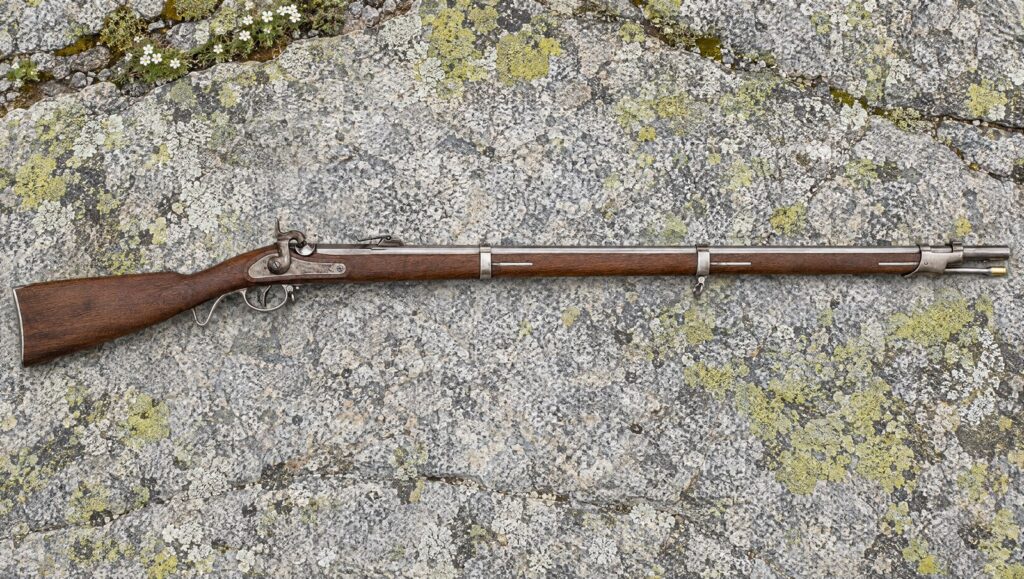
8. Pedersoli 1857 Wurttembergischen: The Target Pick
- Type: Rifled infantry rifle, percussion
- Caliber: .54
- Barrel: 39.38 inches, rifled, five grooves, 1:55 twist
- Weight and length: 10.14 pounds, 54.75 inches overall
- Importer’s price: $2,473.32 from Taylor’s
| Category | Rating |
|---|---|
| Value | 2/5 |
| Period Look | 4/5 |
| Ease of Use | 4/5 |
Pros
- Rear sight adjusts both ways
- Most accurate gun here
- Two dealers list it
Cons
- Priciest gun on this page
- Importer showed it out of stock
- Little known in the US
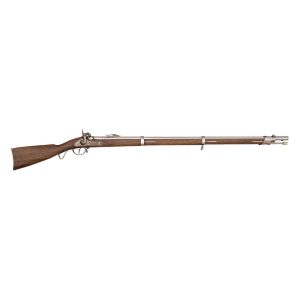
I’ll say it plainly: this one is a rifle. Taylor’s describes the 1857 Wurttembergischen as a military rifle made at Oberndorf from 1857 to 1866 for the German states of Wurttemberg and Baden. It belongs here because it’s a full-length infantry muzzleloader of the rifle-musket age, and dealers stock it.
Palmetto State Armory had it at $2,293.99 when I checked and Battlehawk Armory at $1,945.46. Taylor’s lists it at $2,473.32 and showed it out of stock, so the dealer cards are the way to buy.
Taylor’s says Pedersoli built it to compete in 100 meter Minie rifle matches, and the rear sight adjusts for windage and elevation. Pedersoli’s table lists 50 grains of black powder with a .547 Minie bullet. Mine shoots 2 inches at 50 yards and 4 at 100, the best on this page.
You pay for that. It’s the most expensive gun here and it weighs just over ten pounds, and nobody at a Civil War event will know what it is. Buy it to shoot scores.
Best For: Target shooters who want the most accurate musket-length muzzleloader on this page.
A Musket Kit
One kit, and it’s the cheapest gun on this page with a dealer price. You finish the wood and the steel yourself.
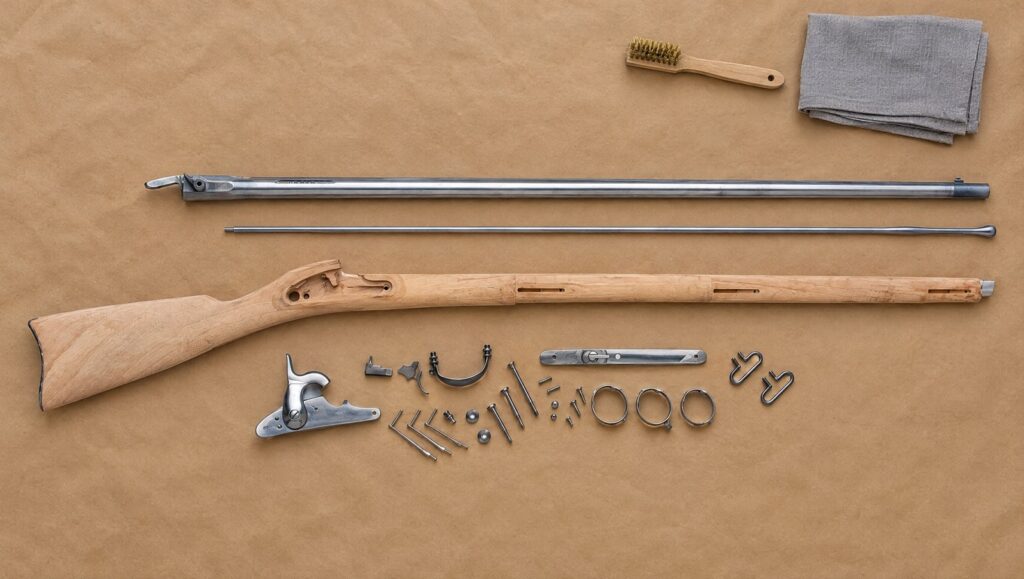
9. Traditions 1861 Springfield Musket Kit: Cheapest Way In
- Type: Rifle-musket kit, percussion
- Caliber: .58
- Barrel: 40 inches, rifled, in the white
- Stock and weight: Unfinished walnut, 56 inches overall, 8.4 pounds
- Maker’s price: $1,197.95 from Traditions, model KR6186100
| Category | Rating |
|---|---|
| Value | 5/5 |
| Period Look | 5/5 |
| Ease of Use | 2/5 |
Pros
- Lowest dealer price on this page
- Same barrel as the finished gun
- You pick the finish
Cons
- Hours of sanding and polishing
- Listing title doesn’t say kit
- One dealer listing
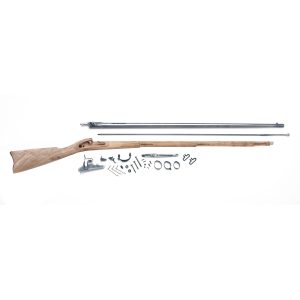
The kit is the 1861 Springfield above with the work left for you. Traditions ships the barrel and the steel parts unfinished, in the white, with a bare walnut stock, and says its kits are pre-assembled at the factory to make sure the parts fit.
Palmetto State Armory had it at $1,051.99 when I checked. That listing’s title doesn’t use the word kit, so look for the model number, KR6186100, which is Traditions’ number for the kit. Traditions lists it at $1,197.95, about $280 under the finished gun.
Mine took about 30 hours. Traditions sells the finished gun bright, in what it calls a white finish, so I skipped the bluing. Most of the time went into polishing the barrel, the bands and the lock plate and oiling the stock. The lock went in with two screws.
Traditions lists no manual on the kit’s page, so I haven’t printed a charge for it. The finished 1861 has the same .58 caliber, 40-inch rifled barrel, and its manual is the place to start. Traditions also sells 1842, 1853 and 1863 musket kits.
Best For: Patient builders who want a Civil War rifle-musket for the least money.
Musket Loads From the Makers
A powder charge is the one number you must not guess, and a smoothbore is no place to experiment. These are the lowest charges each maker lists for the exact guns named: the bottom of Traditions’ most accurate range and Pedersoli’s target-shooting charge. They’re where to start, not a recipe.
| Musket | Projectile | Patch | Lowest listed charge | Source |
|---|---|---|---|---|
| Pedersoli 1816 Harpers Ferry, .69 flintlock | .675 ball | .007 | 70 grains | Pedersoli black powder loads |
| Traditions 1842 Springfield, .69 smoothbore | .675 ball | .015 | 65 grains of 2F | Traditions musket manual, page 46 |
| Pedersoli Brown Bess, .75 flintlock | .732 ball | .010 | 75 grains | Pedersoli black powder loads |
| Pedersoli 1766 Charleville, .69 flintlock | .675 ball | .007 | 70 grains | Pedersoli black powder loads |
| Traditions 1861 Springfield, .58 rifled | .585 Minie bullet | None, lubricated | 60 grains of 2F | Traditions musket manual, page 46 |
| Pedersoli Lorenz, .54 | .547 bullet | None | 50 grains | Pedersoli black powder loads |
| Traditions 1853 Enfield, .58 rifled | .585 Minie bullet | None, lubricated | 60 grains of 2F | Traditions musket manual, page 46 |
| Pedersoli 1857 Wurttembergischen, .54 | .547 Minie bullet | None | 50 grains | Pedersoli black powder loads |
Sources: Traditions’ musket manual and Pedersoli’s suggested black powder loads, both read on October 11, 2026. Confirm every figure against the manual that comes with your gun, measure the way your powder’s maker instructs, start at the listed charge and never go past the maximum your maker prints. Pedersoli says its figures were worked up with Swiss black powder.
Traditions’ manual calls for 2F black powder or Pyrodex RS in .58 to .69 caliber guns and 4F in a flintlock’s pan. It also prints a warning in capitals never to exceed the recommended maximum charge. Smokeless powder never goes in any of these.
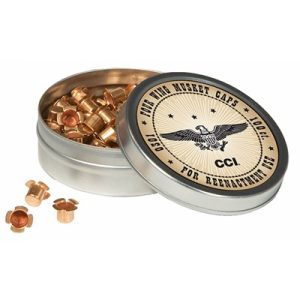
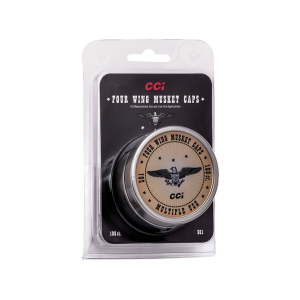
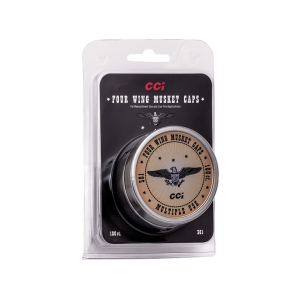
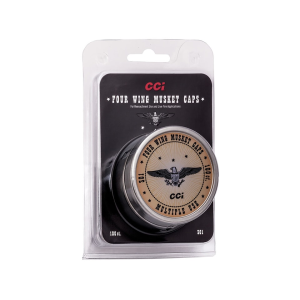
Every percussion gun on this page takes the large musket cap, not the small cap a sporting rifle uses. Brownells had a tin of 100 CCI four-wing musket caps at $15.99 when I checked and MidwayUSA had a can of 100 at $19.99, and the card below lists the other dealers.
What You Need to Shoot a Black Powder Musket
A musket comes with a ramrod and not much else. Here’s what I carry to the range, and none of it is expensive next to the gun.
- Black powder. Real 2F, or Pyrodex RS in a percussion gun where the maker’s manual allows it. Flintlocks want real black powder, plus 4F for the pan.
- Balls or bullets. A .675 ball for the .69 muskets and a .732 for the Brown Bess, or the Minie bullet your maker lists for a rifled gun.
- Patches or lube. Thin cotton patches for round balls. Minie bullets load bare and need lubricant in their grooves.
- Musket caps or flints. Four-wing musket caps for percussion guns, or a few spare musket-sized flints and a leather to hold them.
- A powder measure. An adjustable brass measure, so you never pour from the can or the flask into the barrel.
- Cleaning gear. Hot water, patches, a bore brush and oil. Black powder fouling rusts steel overnight, so clean the same day.
Musket Laws: Do You Need an FFL?
Federal law treats most of these guns differently from a modern rifle. Under 18 U.S.C. 921(a)(16), an antique firearm includes any muzzle-loading rifle, shotgun or pistol that is designed to use black powder or a substitute and cannot use fixed ammunition. The same law says the term firearm does not include an antique firearm.
In practice the makers will ship a new musket to your door in most states with no dealer transfer. Taylor’s pages for every Pedersoli gun above say no FFL dealer is required. The statute carves out a weapon that incorporates a firearm frame or receiver, a firearm converted into a muzzleloader, and a muzzleloader that can be readily converted to fire fixed ammunition.
State and local rules vary, and some are stricter. Traditions says it won’t ship black powder guns to New Jersey, New York, Illinois, Michigan, Ohio or Canada. That’s the maker’s shipping policy, not a summary of state law, so check yours before you order.
Originals follow the same rule by a different route. Any gun made in or before 1898 is an antique under the same section, and our antique firearms guide covers buying those.
Which Musket Should You Buy?
Buy the Traditions 1861 Springfield if you want one musket-length gun that shoots well and costs the least. Palmetto State Armory had it at $1,294.99 when I checked. If you’d enjoy the building, the kit was $1,051.99.
Buy a smoothbore if the smooth bore is the point. The 1816 Harpers Ferry at $2,050.99 is the one a dealer will ship you, the 1842 Springfield is the easiest to live with, and the Brown Bess is the icon. Spend on the Lorenz or the Wurttemberg rifle only if you care about groups.
Rifles, pistols and half-stock hunting guns are on other pages. Our best traditional muzzleloaders roundup ranks hunting sidelocks, flintlock guns covers flint rifles and pistols, and the history of firearms tells the longer story.
Frequently Asked Questions
What is a musket?
A musket is a muzzle-loading shoulder gun with a long, smooth barrel that fires a round lead ball. It was the standard infantry weapon from the 1500s to the mid-1800s. Military muskets ran from .69 to .75 caliber and were fired by a matchlock, then a flintlock, then a percussion cap.
What is the difference between a musket and a rifle?
A musket has a smooth bore and a rifle has spiral grooves that spin the bullet. A smoothbore musket loads faster and is accurate to about 80 to 100 yards. A National Park Service lesson gives the long rifle of the same era an effective range of up to 300 yards.
What is a rifle-musket?
A rifle-musket is a muzzleloader with a rifled barrel as long as a musket's. It fires a hollow-based Minie bullet that expands to grip the rifling when fired. The Springfield 1861 and the Enfield 1853 are rifle-muskets, and the American Battlefield Trust says the type was first made in the United States in 1855.
Can you still buy a musket?
Yes. There are new muskets for sale from Traditions and Pedersoli, smoothbore and rifled. List prices on this page run from $1,197.95 for a Traditions 1861 Springfield kit to $2,473.32 for a Pedersoli 1857 Wurttembergischen, and a finished Traditions 1853 Enfield lists at $1,269.95.
How accurate is a musket?
A smoothbore musket is accurate to about 80 to 100 yards on a man-sized target. My Brown Bess shoots 6 inch groups at 50 yards and my Charleville 7 inches. A rifle-musket does far better, and my Traditions 1861 Springfield groups 3 inches at 50 yards.
How fast can you fire a musket?
The National Park Service says a trained soldier could fire a Brown Bess two or three times a minute. The Army Historical Foundation gives three shots a minute, and as many as four, for the Charleville. The rate dropped as powder fouling built up in the barrel.
Do you need a background check to buy a musket?
Federal law doesn't require one for a traditional muzzle-loading musket. 18 U.S.C. 921(a)(16) treats a muzzleloader that is designed for black powder and cannot use fixed ammunition as an antique firearm, and antiques are not firearms under that law. Guns built on a firearm receiver or readily converted to fixed ammunition are excluded. State and local rules vary, so check yours before you order.
What is the best musket to buy?
For most buyers it's the Traditions 1861 Springfield, a .58 caliber rifle-musket with two dealer listings and the tightest groups for the money. For a true smoothbore, the Pedersoli 1816 Harpers Ferry is the one our dealers list, and the Traditions 1842 Springfield is the cheapest at $1,479.95 from the maker.
5,031+ Gun & Ammo Deals
Updated daily from 200+ top retailers. Filter by category, caliber, action type, and price.