

Last updated October 11, 2026
Some of the links below are affiliate links, meaning at no additional cost to you, we may earn a commission if you click through and make a purchase.
- Treat every gun as loaded
- Point the muzzle in a safe direction
- Keep your finger off the trigger until you’re ready to shoot
- Know your target and what’s beyond
The Brown Bess is the British army’s .75 caliber flintlock musket, the gun the redcoats carried for more than a century. It armed both sides of the American Revolution, and you can still buy one new. Taylor’s and Company lists Pedersoli’s Brown Bess at $1,873.21.
I’ve shot the Pedersoli for three seasons. Below I’ll cover what a Brown Bess is, where the name comes from, the patterns and how to tell them apart, how it loads and shoots, and its part in the Revolution. Then comes the buying advice: reproductions, kits, Indian-made muskets, what originals bring at auction, and what to check before you pay.
Quick take
A Brown Bess is a big, plain, smoothbore flintlock that is more fun to shoot than its accuracy suggests. Buy Pedersoli’s if you want the best-finished reproduction and a walnut stock, buy an Indian-made Long Land if you reenact on a budget, and buy an original only with a dated auction record or a trusted dealer behind it.
- New price: $1,873.21 list for Pedersoli’s musket at Taylor’s and Company, $1,850.00 at Muzzle-Loaders.com when I checked
- Caliber: .75 smoothbore, with a .732 ball in the Pedersoli
- In service: First issued in 1730 and carried for more than a century
- Legal status: A muzzle-loading antique under federal law, so no dealer transfer in most states
Brown Bess Pros and Cons
Pros
- The musket everybody recognizes
- Big .75 bore, mild recoil
- Ships to most states direct
Cons
- Near $1,900 new
- Pinned barrel slows cleaning
- No rear sight at all
Brown Bess at a Glance
| Spec | Pedersoli Brown Bess, model S.260 |
|---|---|
| Type | Smoothbore flintlock musket, muzzle-loading, single shot |
| Caliber | .75 |
| Barrel | 41.75 inches, round, bright steel with a satin finish, pinned to the stock with no barrel bands |
| Overall length | 57.69 inches |
| Weight | 9.03 pounds |
| Stock and furniture | Oil-finished walnut, brass butt plate, trigger guard, ramrod pipes and nose cap |
| Sights | Fixed blade front that doubles as the bayonet lug, no rear sight |
| Lock | Flintlock signed Grice and dated 1762, with a crown and the letters GR |
| Importer’s price | $1,873.21 from Taylor’s and Company |
Table of Contents
What Is a Brown Bess?
Brown Bess is a nickname, not a model. The gun’s official name was the Land Pattern musket, and the National Army Museum calls the Long Land Pattern the standard British Army musket for most of the eighteenth century. The National Park Service says British foot soldiers marched into battle with it for more than 100 years.
Every Brown Bess shares the same bones. It’s a muzzle-loading flintlock with a smooth .75 caliber barrel, a walnut stock that runs almost to the muzzle, and brass furniture. The barrel is held by cross pins through the stock, not by bands, which is the quickest way to tell a Bess from a French or American musket.
It was built to a system as much as a design. American Rifleman’s George Neumann traces it to a Board of Ordnance contract of 1714, which set up a pattern musket that private contractors had to copy. He writes that the design was approved in 1722 as the King’s Pattern and first issued in 1730 as the Long Land.
The numbers are big by modern standards. The National Army Museum says the Long Land weighed about five kilograms, fired a ball of about 40 grams and had an effective range of about 80 meters. It also notes the musket was unreliable in wet or windy weather, which anyone who has shot a flintlock in the rain will confirm.
Why Is It Called a Brown Bess?
Nobody can prove where the name came from, and you’ll read several confident stories that don’t hold up. The Smithsonian’s page on its Short Land musket lists the usual guesses: the brown walnut stock, a browned barrel, Queen Elizabeth I, a highwayman’s horse, or a mangled Dutch or German word for gun.
The best work on it is by Jonathan Ferguson, the firearms curator at the Royal Armouries. In a summary of his research he rules out the browned barrel, because musket barrels weren’t browned until at least 1808, and he rules out the queen. His reading is that Bess was a common nickname for a working woman and brown meant plain, so the name cast the musket as the soldier’s plain, faithful companion.
The earliest uses he found are older than most books say. A letter of October 17, 1763, by John Grose, an East India Company clerk, mentions being issued a musket, alias Brown Bess. A book published in 1767 has a character handle Brown Bess with tolerable dexterity. The Connecticut Courant printed the name in April 1771.
For years the first known use was Francis Grose’s slang dictionary of 1785, which defines Brown Bess as a soldier’s firelock. Ferguson also found the name was used well past the Land Pattern guns. Soldiers called the New Land musket of 1802 and even the percussion Pattern 1842 a Brown Bess.
Brown Bess Patterns: Long Land, Short Land and India Pattern
Collectors sort the Brown Bess into three main patterns by barrel length, and they call them the first, second and third models. The dates below are when each pattern was approved or became standard. Older patterns stayed in service for decades after a new one arrived.
| Pattern | Also called | Dates | Barrel | How to tell it |
|---|---|---|---|---|
| Long Land | First model | First issued 1730, updated 1742 and 1756 | 46 inches | About 62 inches overall, wooden ramrod and no nose cap on early guns, steel ramrod and brass nose cap from 1756 |
| Short Land | Second model, Pattern 1769 | Standard for infantry from 1768 | 42 inches | Flat side plate, shorter butt plate tang, steel ramrod |
| India Pattern | Third model | Taken up by the Board of Ordnance in 1793 | 39 inches | Simpler furniture, three ramrod pipes on most, side plate with no tail |
| Sea Service | Sea pattern | Made alongside the land patterns | Varies | The navy’s version, 54 inches overall on the Smithsonian’s example |
The barrel lengths come from Britannica, which gives the Long Land a 46-inch barrel, the Short Land a 42-inch barrel from 1768, and the India Pattern a 39-inch barrel. The details in the last column come from Neumann’s article in American Rifleman and from Middlesex Village Trading, which sells copies of the first and third.
Two dates disagree between good sources, and I’d sooner show you than pick one quietly. Britannica says the India Pattern succeeded the Short Land in 1797, and the National Army Museum says the Long Land design stayed in use with slight changes until 1797. The Royal Armouries’ curator dates the Board of Ordnance India Pattern to 1793. The Short Land is 1768 in Britannica and Pattern 1769 at the American Revolution Institute.
Long Land Pattern, 46-Inch Barrel
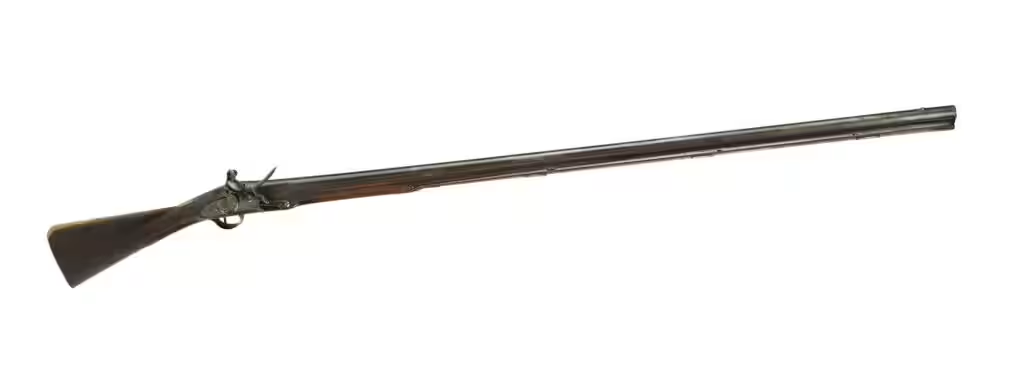
The Long Land is the Brown Bess of the French and Indian War and the first years of the Revolution. Neumann writes that the 1730 and 1742 versions were the main British infantry arms in America from 1754 to 1763, and that the 1756 version saw most of its American service in the Revolutionary War.
It’s a long gun. The Smithsonian’s Richard Wilson musket above is a colony contract gun of the same length, about 62 inches overall. The museum says it was made in London about 1761 for the colony of New Jersey, which later issued it to patriot forces. Neumann puts the weight of a Land Pattern musket at 10 to 11 pounds.
Short Land Pattern, 42-Inch Barrel
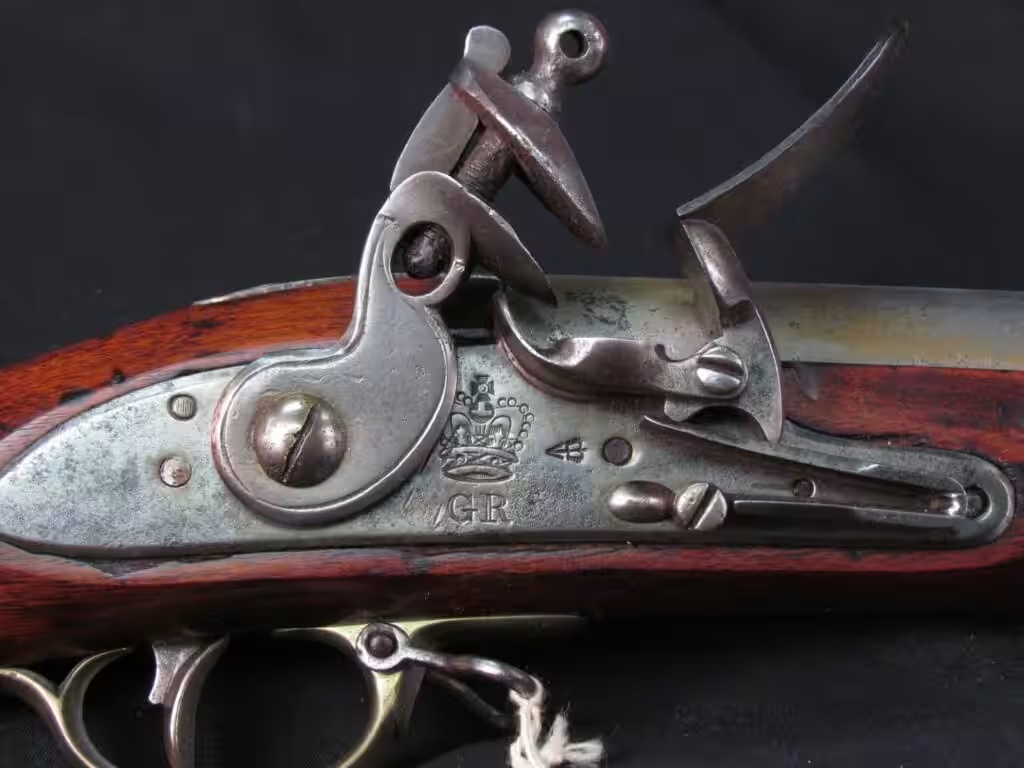
The Short Land is the redcoat’s musket of the later Revolution, and it’s the pattern Pedersoli copies. The American Revolution Institute says it was the standard-issue infantry weapon of the British army when the war began, and that patriots seized large numbers of them from colonial storehouses in the first months.
Neumann says the infantry was already sawing four inches off Long Land barrels before the shorter pattern was approved, and that barrel stubs turn up at French and Indian War sites. A 1777 update fitted a cheaper lock. The Smithsonian’s second model above, dated about 1790, is 57 and a half inches overall, within a quarter inch of the Pedersoli.
India Pattern, 39-Inch Barrel
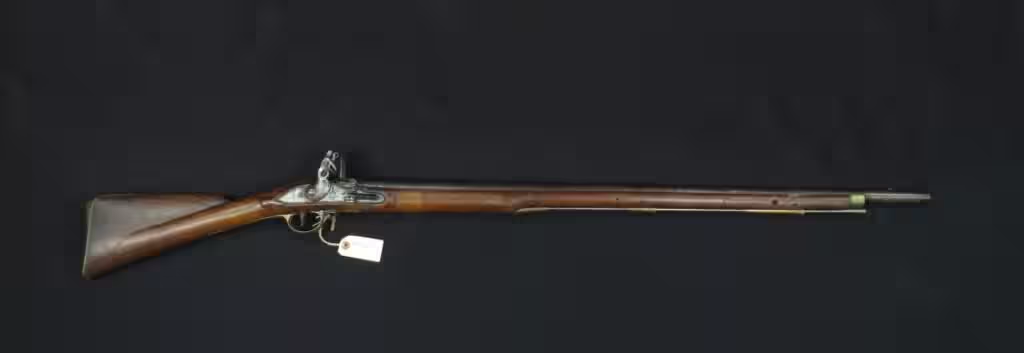
The India Pattern began as the East India Company’s own musket. American Rifleman’s Garry James says the Company brought it into service from 1771, and that the army bought Company guns to arm itself in a hurry once war with revolutionary France was coming. It became the musket of the Napoleonic Wars and the War of 1812.
It’s also the pattern you’re most likely to find for sale, because it was made in enormous numbers and sold off as surplus. James says the Mexican army bought them and carried them at the Alamo and in the war of 1846 to 1848. The Smithsonian’s Tower-marked example above, dated about 1800, is 56 inches overall.
Carbines and sea service muskets round out the family. Neumann notes that British carbines and fusils followed the Brown Bess layout in smaller sizes, and Taylor’s says shorter versions with barrels from 26 to 37 inches were made between 1756 and 1813 for dragoons, artillery and volunteers. Pedersoli sells a carbine on that idea, covered below.
How a Brown Bess Was Loaded and How Fast It Fired
A soldier loaded from a paper cartridge that held the powder and the ball together. When I shoot cartridges I tear the end off, shake a little powder into the pan, close the frizzen, pour the rest down the barrel, and ram the ball and the paper on top. There’s no patch and no measuring.
The ball was made loose on purpose. American Rifleman’s staff describe the Bess as a .75 caliber musket built to fire a .69 caliber ball from a paper cartridge, and Neumann says the average ball ran four to six hundredths of an inch under the bore so it would still go down a fouled barrel.
How fast depends on who you ask. The National Park Service says even trained soldiers managed only two or three shots a minute. Neumann says troops were drilled to average four. My best with paper cartridges is three shots in a minute, and by the fifteenth round the fouling had me down to two.
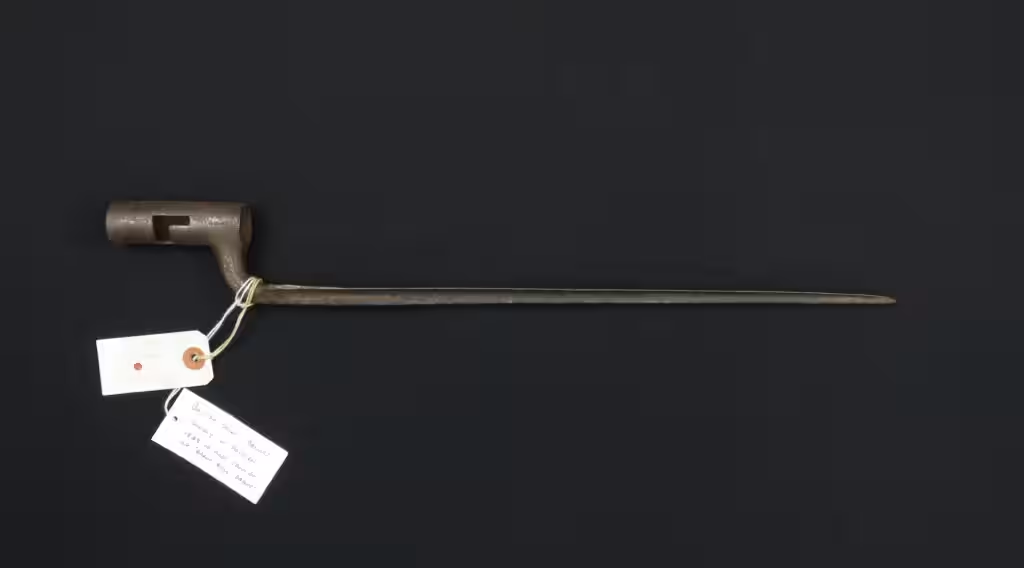
The bayonet finished the job. A socket bayonet slid over the muzzle and locked on the square stud that also serves as the front sight, which turned a five-foot musket into a pike. Taylor’s sells Pedersoli’s bayonet, with a blade just under 17 inches, for $278.46 and the scabbard for $162.58.
Brown Bess Range and Accuracy
The honest answer on range is 50 to 100 yards. That’s the figure the National Park Service gives from soldiers of the day, and the National Army Museum’s 80 meters falls inside it. Neumann is harder on the gun: past 60 yards, he writes, the loose ball could no longer be counted on to hit a man-sized target.
My Pedersoli does better than that with a tight load, which is the difference between a patched ball and a rattling one. I shoot Pedersoli’s listed 75 grains of black powder under a .732 ball in a .010 patch, with 4F in the pan. Five shots go into 6 inches at 50 yards from a rest.
At 75 yards I put four of five on a man-sized silhouette. At 100 it’s two of five, and I can’t call where the misses go. With period-style paper cartridges and a bare .690 ball over the same 75 grains, the 50-yard group opens to 14 inches, which is about what the old accounts describe.
Reliability is better than the gun’s reputation. Over 120 shots in three range sessions I had nine failures to fire, seven of them a dull flint and two a flash in the pan on a damp 55-degree morning. A flint lasts me about 30 shots before it wants turning or replacing. The trigger breaks at about nine pounds on my gauge, and recoil is a slow shove.
The Brown Bess in the American Revolution
Both armies carried it. The National Park Service says British redcoats used the Brown Bess to fight the War of Independence and that many of their opponents in the Continental army used it as well. The American Revolution Institute goes further and calls the Short Land the most common firearm used by American troops in the Revolution.
The Americans got theirs three ways. Neumann writes that the muskets on hand in 1775 were mostly worn Long Lands left from earlier wars, that at least 17,000 newer ones were captured during the fighting, and that colonial gunsmiths copied the pinned-barrel British pattern for the first locally made muskets. He adds that England made more than 218,000 Land Service long arms during the war.
French muskets changed the mix from 1777 on. The Army Historical Foundation says the Charleville became the main infantry arm of the Continental Army, and Neumann says French aid re-equipped most of the Continental Line. State troops and militia kept their Brown Besses to the end. Our muskets guide covers the Charleville and the American muskets copied from it.
The Bess outlasted the war by half a century. The Park Service calls it the principal firearm of the infantry who fought the War of 1812, on both sides. Our guide to the history of firearms picks up the story from the percussion cap onward.
Brown Bess Variants You Can Buy New
Davide Pedersoli of Italy makes the Brown Bess reproduction most American shooters buy, in four versions. All four are .75 caliber flintlocks, and Taylor’s and Company, the US importer, says none of them needs an FFL dealer. The prices on these cards are Taylor’s list prices, read on October 11, 2026.
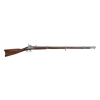
Pedersoli Brown Bess Musket (S.260): .75 caliber, 41.75 in. barrel, 57.69 in. overall, 9.03 lb, walnut and brass $1,873.21 list
Pedersoli Brown Bess Carbine (S.262): .75 caliber, 30.5 in. barrel, 47.25 in. overall, 7.93 lb $1,813.20 list
Pedersoli Brown Bess Kit (K.260): the full-length musket with wood and brass left for you to finish $1,405.85 list
Pedersoli Brown Bess Carbine Kit (K.262): the 30.5 in. carbine as a kit $1,349.48 list
Pedersoli Brown Bess Musket
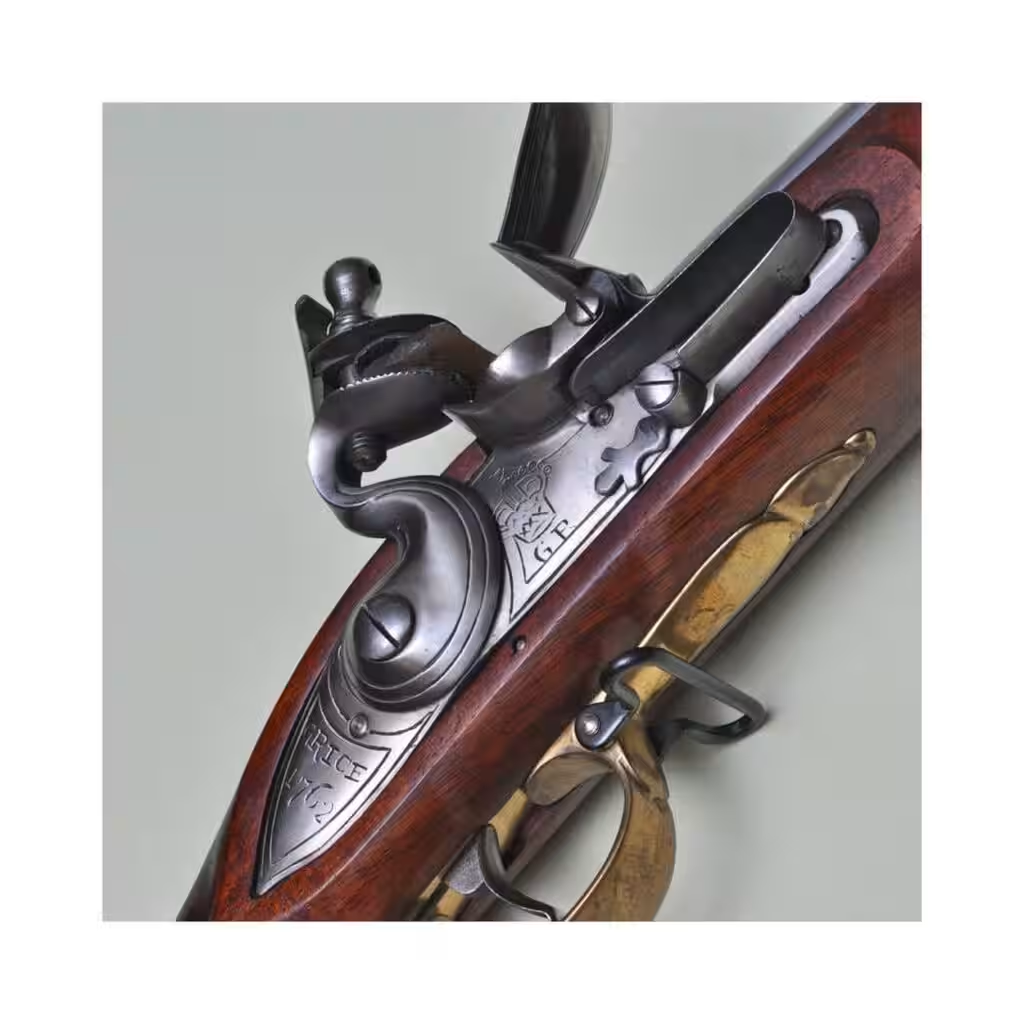
The full-length musket is the one to buy if you only buy one. It’s a Short Land in everything that matters, with a 41.75-inch barrel and the right brass, and at 9.03 pounds it’s lighter than the originals were. The lock on mine sparked well from the first flint, and the oil-finished walnut is better wood than anything else at the price.
None of the dealers on our price cards listed the musket when I checked, so there’s no price card for it here. Taylor’s Brown Bess page showed it in stock at $1,873.21. Muzzle-Loaders.com had it at $1,850.00, marked down from $1,969.00, and Dixie Gun Works listed it in stock at $1,925.00 plus a $20.00 oversize charge.
Pedersoli Brown Bess Carbine
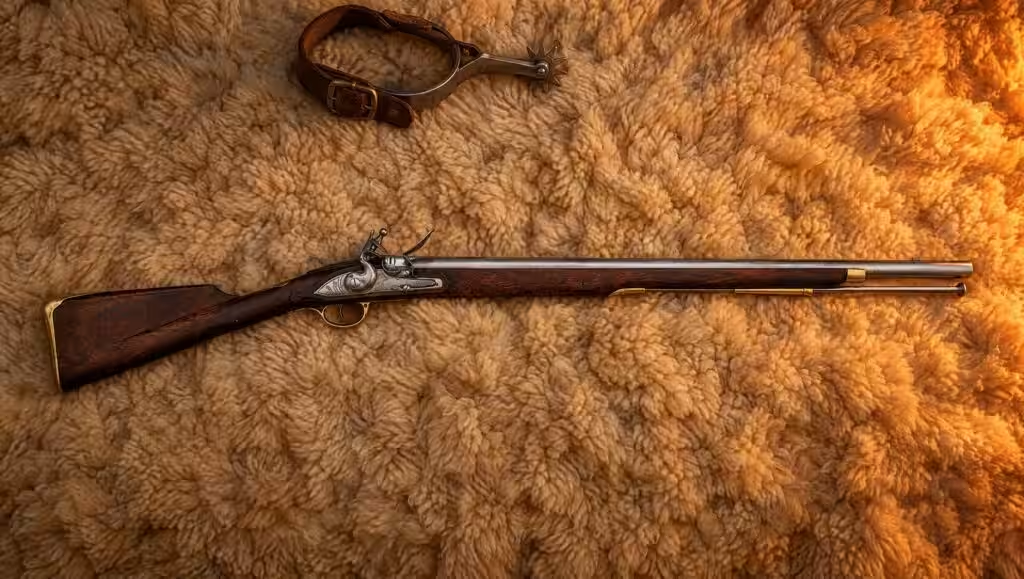
The carbine is the same gun with eleven inches off the barrel. It weighs 7.93 pounds and measures 47.25 inches overall, so it fits in a car trunk and comes up faster. If you hunt with a smoothbore or you’re short in the arm, it’s the easier gun to live with.
It’s also the one version with a live dealer listing. MidwayUSA listed the carbine at $1,999.99 when I checked, which is above Taylor’s list price of $1,813.20, and Taylor’s showed it out of stock. Confirm it’s in stock on the MidwayUSA page before you count on it. The MidwayUSA title calls the barrel stainless, and Pedersoli describes it as steel with a satin finish.
Brown Bess Kits
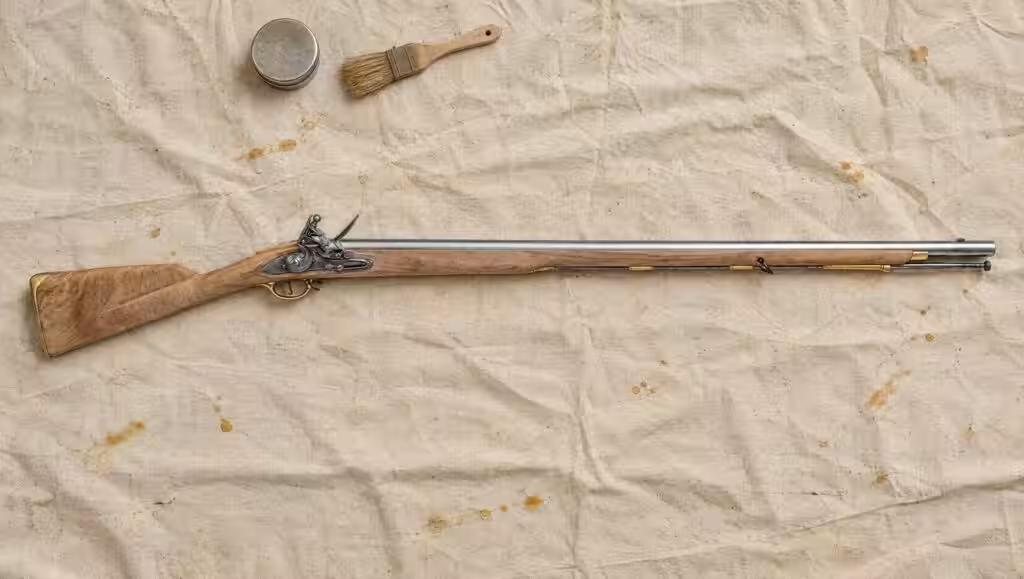
The kits save about $470 and cost you a few weekends. Taylor’s carbine kit page says the gun arrives already assembled, with the lock finished and the barrel treated against rust. The stock needs smoothing, staining and oiling, and the brass needs polishing. Nothing in that list calls for special tools.
Taylor’s listed the musket kit at $1,405.85 and the carbine kit at $1,349.48, both out of stock with back orders open. Muzzle-Loaders.com had the musket kit at $1,399.00. Mine took about 25 hours, most of it sanding the wrist and the lock panels and rubbing in six coats of oil.
Indian-Made Brown Bess Reproductions
Indian-made muskets are the other way in, at well under half the price. Middlesex Village Trading of New Hampshire lists its Long Land Brown Bess, a copy of the 1756 pattern with a 46-inch barrel, at $775.00. Veteran Arms of Georgia says most of its muskets are made in India and finished in its own shop.
Go in with open eyes. Both sellers say the stocks are teak stained to look like walnut, which runs heavier. Middlesex says its barrels aren’t proof tested, because the United States has no proof house, and that it vents, inspects and tests each gun before shipping. It also says each musket is built to order, so plan on waiting.
What you get for the wait is a pattern Pedersoli doesn’t make. If your unit portrays 1758 or 1775, a Long Land is the correct musket and the Pedersoli Short Land isn’t. That’s the main reason reenactors buy Indian guns, and Middlesex also lists a shortened Ranger musket and an East India Pattern.
What an Original Brown Bess Costs
Original Brown Besses sell all the time, and the spread is wide. These are five sales from the auction houses’ own lot pages. Pattern and markings drive the price far more than condition does.
| Sale | Musket | Price |
|---|---|---|
| Morphy Auctions, September 2026, lot 2067 | Long Land Pattern 1756, Galton lock dated 1762, 46-inch barrel | $24,000.00 with buyer’s premium |
| Brunk Auctions, November 17, 2023, lot 988 | First model Long Land, Galton lock dated 1761, 46-inch barrel | $7,500 hammer |
| Morphy Auctions, September 2026, lot 2070 | Short Land Pattern 1769 marked to the 17th Regiment, 41.75-inch barrel | $5,280.00 with buyer’s premium |
| Brunk Auctions, September 26, 2024, lot 105 | Brown Bess of about 1795, 39-inch barrel | $2,200 hammer |
| Vogt Auction, August 29, 2026, lot 481 | Tower third model, 39-inch barrel, no ramrod | $1,300 hammer |
Read the price column closely. Morphy prints its results with the buyer’s premium included, while Brunk and Vogt print the hammer price and add the premium on the invoice, so you pay more than the figure shown.
The pattern is plain in those numbers. The 39-inch muskets are the common ones, and these two brought $1,300 and $2,200. The regiment-marked Short Land brought more than twice that. A dated Long Land with a maker’s name on the lock is the prize, and the best one here brought $24,000.00.
That means an original India Pattern can cost less than a new Pedersoli. I still wouldn’t fire one without a gunsmith’s inspection, and most collectors never do. Our antique firearms guide covers buying guns of this age.
What to Check Before You Buy a Brown Bess
On an original
- Measure the barrel. 46 inches is a Long Land, 42 a Short Land and 39 an India Pattern. A length in between means it was cut down, which was common in service. The National Army Museum has a Long Land shortened from 46 inches to 45.
- Read the lock. Morphy’s lot notes say locks carried a contractor’s name and a date until 1764 and the word Tower after that. Look for the crown over GR in the middle of the plate.
- Look for a conversion. The Smithsonian holds several Brown Besses that were converted to percussion. I check for fresh metal around the pan and the touch hole, which can mean one was turned back into a flintlock to sell.
- Check the stock around the lock and along the barrel channel. Cracks are common. The Morphy and Vogt lot notes above both describe cracks or splits in the wood.
- Ask what is replaced. Ramrods, top jaws, trigger guards and side plate screws are often later. Three of the five lots above had a replacement or missing ramrod.
On a reproduction
- Spark first. Dry fire it with a sharp flint in a dark room. A good frizzen throws a shower of sparks into the pan every time.
- Check the vent. It should sit level with the top of the pan and be clear. Some imported muskets ship with no vent drilled at all.
- Sight down the barrel channel. The stock should hold the barrel evenly with no gaps at the pins.
- Look in the bore. A used black powder gun that was put away dirty will be pitted. Walk away from a rough bore.
- Confirm the model. Pedersoli’s musket is model S.260 and the carbine is S.262. Kits start with a K, and a finished kit is worth less than a factory gun.
What You Need to Shoot a Brown Bess
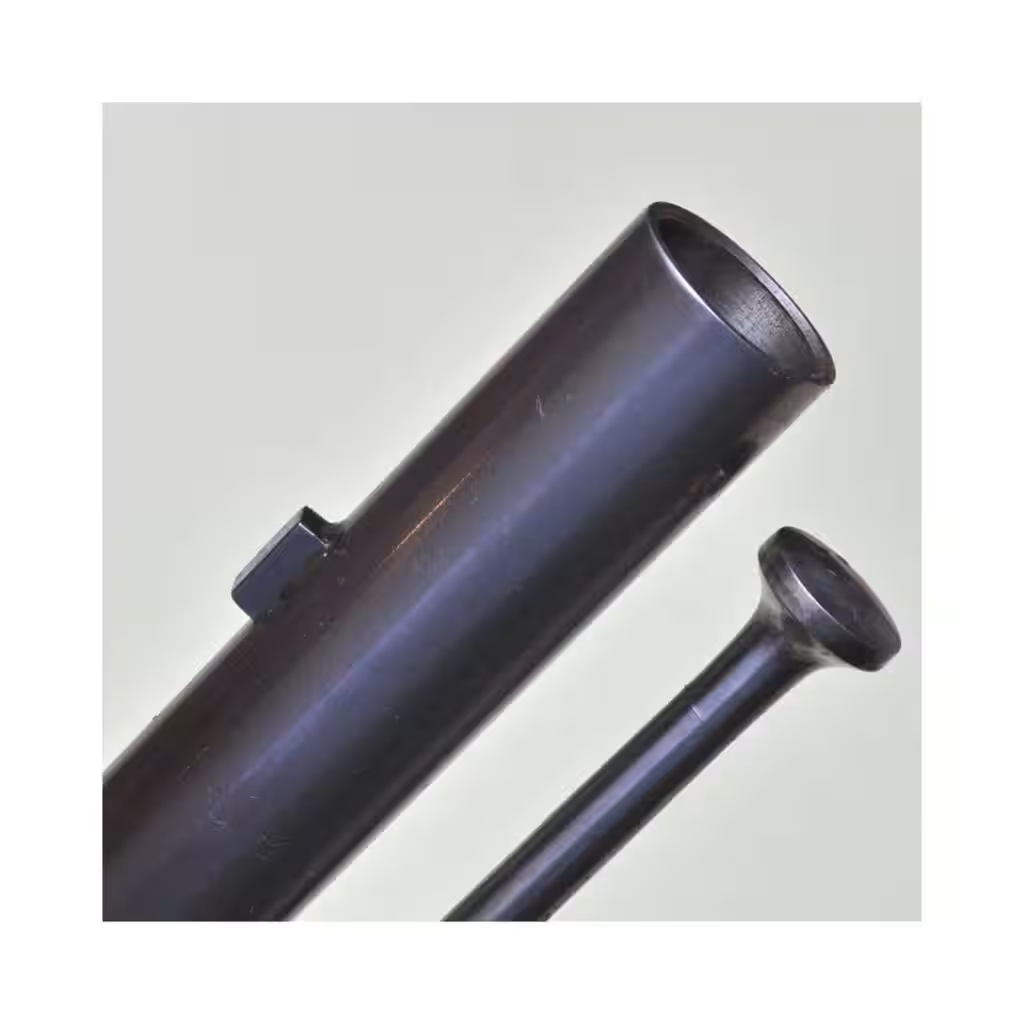
A Brown Bess comes with a ramrod and nothing else. Here’s the kit I carry, with the one load figure the maker gives for this exact gun.
| Gun | Ball | Patch | Powder charge | Source |
|---|---|---|---|---|
| Pedersoli Brown Bess musket, .75 | .732 round ball | .010 | 75 grains of black powder | Pedersoli’s suggested black powder loads |
That figure is from Pedersoli’s suggested black powder loads, read on October 11, 2026, and it’s the lower of the two numbers Pedersoli prints for the Brown Bess. Start there, confirm it against the manual that comes with your gun, and never go past the maximum your maker lists. Pedersoli says its loads were worked up with Swiss black powder.
I haven’t printed a charge for the carbine or for any Indian-made musket. Each maker publishes its own, and Veteran Arms says every musket it ships comes with a manual that gives the charge and ball size. Use the figure for your gun and no other.
- Real black powder. A flintlock needs it. Veteran Arms tells its buyers to use genuine black powder only, and smokeless powder never goes in a muzzleloader.
- Balls and patches. A .732 ball and a .010 patch for the Pedersoli. Pedersoli sells a set of 100 balls and a single-cavity mold.
- Musket flints. Pedersoli lists a one-inch flint for the Brown Bess. The small flints sold for rifles won’t span the jaws.
- A powder measure. One that adjusts past your charge, so you never pour from a flask or a can into the barrel.
- A vent pick and a pan brush. Most misfires are a blocked vent or a damp, dirty pan.
- Cleaning gear. Hot water, patches, a .75 caliber jag and oil. Clean it the same day.
The measure is the one accessory our dealers stock in depth. Brownells had the Traditions adjustable measure at $11.49 when I checked, and MidwayUSA had it at $10.99.
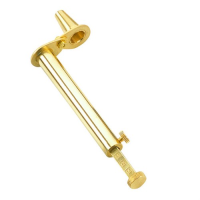
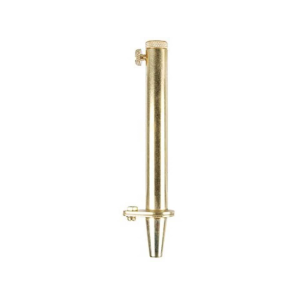

Cleaning is the chore with this gun. With no bands to slide off, I leave the barrel in the stock, plug the touch hole with a toothpick, and scrub the bore with hot water from the muzzle. Pulling the cross pins every time wears the stock, so I only do it once a season.
Brown Bess Laws: Do You Need an FFL?
Federal law treats a muzzle-loading Brown Bess differently from a modern rifle. Under 18 U.S.C. 921(a)(16), an antique firearm includes any muzzle-loading rifle, shotgun or pistol that is designed to use black powder or a substitute and cannot use fixed ammunition. The same law says the term firearm does not include an antique firearm.
The statute has three carve-outs. A weapon that incorporates a firearm frame or receiver isn’t an antique, nor is a firearm converted into a muzzleloader, nor a muzzleloader that can be readily converted to fire fixed ammunition. A Brown Bess reproduction is none of those, and Taylor’s pages for all four Pedersoli versions say no FFL dealer is required.
Originals qualify by a second route, because the same section covers any firearm made in or before 1898. The Vogt lot above was sold with a note that no FFL or background check was required.
State and local rules vary, and some are stricter than federal law. Veteran Arms says a handful of states and cities have additional requirements for muzzleloaders. Check yours before you order, and check again before you hunt with one.
Brown Bess vs Charleville
This is the question every Revolutionary War reenactor asks, and the two Pedersoli guns make it easy to answer with numbers.
| Pedersoli Brown Bess | Pedersoli 1766 Charleville | |
|---|---|---|
| Caliber | .75 | .69 |
| Barrel | 41.75 inches, pinned | 44.69 inches, held by bands |
| Overall length | 57.69 inches | 59.13 inches |
| Weight | 9.03 pounds | 10.13 pounds |
| Furniture | Brass | Steel |
| Taylor’s list price | $1,873.21 | $2,053.24 |
| My five-shot group at 50 yards | 6 inches | 7 inches |
The reproductions flip the history. The Army Historical Foundation says the original Charleville weighed about nine pounds and was thought the better musket because it was lighter and a little more accurate. Neumann puts an original Land Pattern at 10 to 11 pounds. Pedersoli’s Bess is the lighter of the two by more than a pound.
On the bench the Charleville wins one thing: cleaning. Its barrel bands slide off and the barrel lifts out, while the Bess barrel stays pinned. The Bess wins on price by about $180, on weight, and on brass that looks better with age.
Buy for the side you portray. If you don’t reenact, buy the Bess. It’s cheaper, lighter and I shoot it better. Our flintlock guns guide ranks both among nine other flintlocks.
Who Should Not Buy a Brown Bess
I like this gun, and I’d still talk some buyers out of it. If one of these is you, the alternative has a live price below.
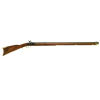
- The deer hunter who wants a flintlock. A smoothbore with no rear sight is a 50-yard gun. A Traditions Kentucky rifle is rifled, has real sights and costs about a third as much.
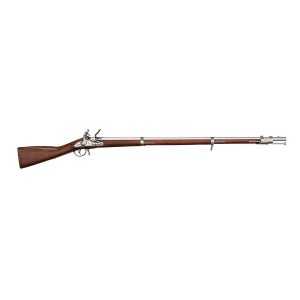
- The buyer who wants a dealer to ship it this week. No dealer on our cards stocks the full-length Bess. The Pedersoli 1816 Harpers Ferry is the smoothbore flintlock musket they do stock.
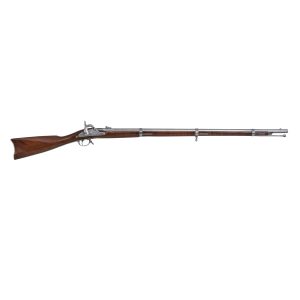
- The shooter who cares about groups. Six inches at 50 yards is as good as it gets. A Traditions 1861 Springfield is a rifled musket that shoots half that.
- The reenactor on the French or Continental side. You need a Charleville, and Taylor’s lists Pedersoli’s at $2,053.24.
- Anyone who hates cleaning. Black powder rusts steel overnight and the pinned barrel makes the job slower. A percussion gun with barrel bands, like the 1861 Springfield, is quicker to strip.
Palmetto State Armory had the Traditions Kentucky flintlock at $589.99 when I checked, the 1816 Harpers Ferry at $2,050.99 and the finished 1861 Springfield at $1,294.99. Battlehawk Armory listed the Harpers Ferry at $1,863.12. Our Kentucky rifle guide and our Civil War guns guide cover the first and the last in depth.

Final Verdict
The Brown Bess is the right first musket for most people who want one. Pedersoli’s is well made, it’s the lightest of the big flintlock muskets, and nothing else on a range draws a crowd like it. Buy the musket at $1,873.21 or thereabouts, add a bayonet if you reenact, and buy flints by the dozen.
Buy the carbine if length is a problem and the kit if you’d enjoy the work. Buy an Indian-made Long Land if your unit needs that pattern and you can live with teak. Buy an original India Pattern only for the wall, unless a gunsmith tells you otherwise.
Brown Bess FAQ
What is a Brown Bess?
A Brown Bess is the British army's Land Pattern musket, a .75 caliber muzzle-loading smoothbore flintlock. It was first issued in 1730 and served for more than a century. Brown Bess is a nickname that covers the Long Land, Short Land and India Pattern muskets, and soldiers used it for later muskets too.
What caliber is a Brown Bess?
A Brown Bess is .75 caliber, which means a smooth bore three-quarters of an inch across. Soldiers fired a smaller ball of about .69 caliber from a paper cartridge so it would load in a dirty barrel. Pedersoli's reproduction is .75 and uses a .732 ball with a .010 patch.
What is the range of a Brown Bess?
The effective range of a Brown Bess is about 50 to 100 yards. The National Park Service gives that figure from soldiers of the period, and the National Army Museum says about 80 meters. My Pedersoli Brown Bess groups 6 inches at 50 yards and puts four of five shots on a man-sized target at 75.
Why is it called a Brown Bess?
Nobody knows for certain. The Royal Armouries' firearms curator, Jonathan Ferguson, argues that Bess was a common nickname for a working woman and brown meant plain, so the name made the musket the soldier's plain companion. The earliest written use he found is in a letter of 1763. The barrel was not browned until at least 1808, so that story is wrong.
How much does a Brown Bess cost?
A new Pedersoli Brown Bess lists at $1,873.21 at Taylor's and Company, and the kit lists at $1,405.85. Indian-made Long Land muskets start at $775.00 from Middlesex Village Trading. Original India Pattern muskets brought $1,300 and $2,200 at two recent auctions, and a dated Long Land brought $24,000.00 at Morphy Auctions in 2026.
Can you still buy a Brown Bess musket?
Yes. There are new Brown Bess muskets for sale from Davide Pedersoli of Italy, imported by Taylor's and Company and sold by Dixie Gun Works and Muzzle-Loaders.com. Pedersoli makes a full-length musket, a carbine and a kit of each. Middlesex Village Trading and Veteran Arms sell Indian-made reproductions, and originals come up at auction every year.
Do you need a background check to buy a Brown Bess?
Federal law doesn't require one. 18 U.S.C. 921(a)(16) treats a muzzleloader that is designed for black powder and cannot use fixed ammunition as an antique firearm, and antiques are not firearms under that law. Guns built on a firearm receiver or readily converted to fixed ammunition are excluded. State and local rules vary, so check yours before you order.
Is the Brown Bess better than the Charleville?
It depends on which you mean. The Army Historical Foundation says the original French Charleville was lighter and a little more accurate. Among Pedersoli's reproductions it's the reverse: the Brown Bess weighs 9.03 pounds against 10.13, lists for about $180 less, and shoots 6 inch groups at 50 yards for me against 7 for the Charleville.
5,031+ Gun & Ammo Deals
Updated daily from 200+ top retailers. Filter by category, caliber, action type, and price.