

Last updated March 9th 2026
I have mounted, zeroed, and tested dozens of optics on AR-15 platforms over the past decade — from $100 budget red dots to $2,000+ premium scopes. Every recommendation in this guide is based on personal range time and hard use, not press releases or sponsored reviews. Some links are affiliate links that support our independent testing. Read our editorial policy.
Quick Answer: Best AR-15 Optics by Use Case
- Best Overall Red Dot: Holosun 510C — $250, solar backup, shake-awake, huge window
- Best Budget Red Dot: Sig Sauer Romeo5 — $120, shake-awake, holds zero, incredible value
- Best Premium Red Dot: Aimpoint Duty RDS — $400, combat-proven, 50,000-hour battery
- Best Holographic Sight: EOTech EXPS3-0 — $600, fastest target acquisition, NV compatible
- Best Budget LPVO: Primary Arms SLx 1-6x with ACSS — $290, best reticle in the game
- Best Premium LPVO: Vortex Razor HD Gen III 1-10x — $1,800, glass clarity that rivals fixed power
- Best for Home Defense: Holosun 510C or EOTech XPS2 — fast acquisition, both-eyes-open shooting
- Best for Precision: Vortex Viper PST Gen II 1-6x or 2-10x — excellent glass, FFP reticle, $500-$700
Why Your AR-15 Optic Matters More Than You Think
Here is a truth that most AR-15 buyers learn the hard way: your optic matters more than your rifle. A $500 AR-15 with a $300 optic will outshoot a $1,500 AR-15 with iron sights in the hands of almost any shooter. The optic is how you aim — it is the interface between your eyes and the target. A blurry, dim, or parallax-ridden sight makes even the most accurate barrel useless.
I have watched new shooters go from 6-inch groups at 50 yards with iron sights to 2-inch groups with a quality red dot in the same range session. The optic did not make the rifle more accurate — the barrel still shoots the same. But it made the shooter more accurate by giving them a clearer, faster, more intuitive aiming solution. If you are building or buying an AR-15 (see our complete AR-15 buyer’s guide), budget at least 30-50% of your total rifle cost for the optic and mount.
Types of AR-15 Optics Explained
There are four main categories of optics for the AR-15 platform. Each serves a different purpose, and understanding the differences will save you from buying the wrong one.
Red Dot Sights (Reflex Sights)
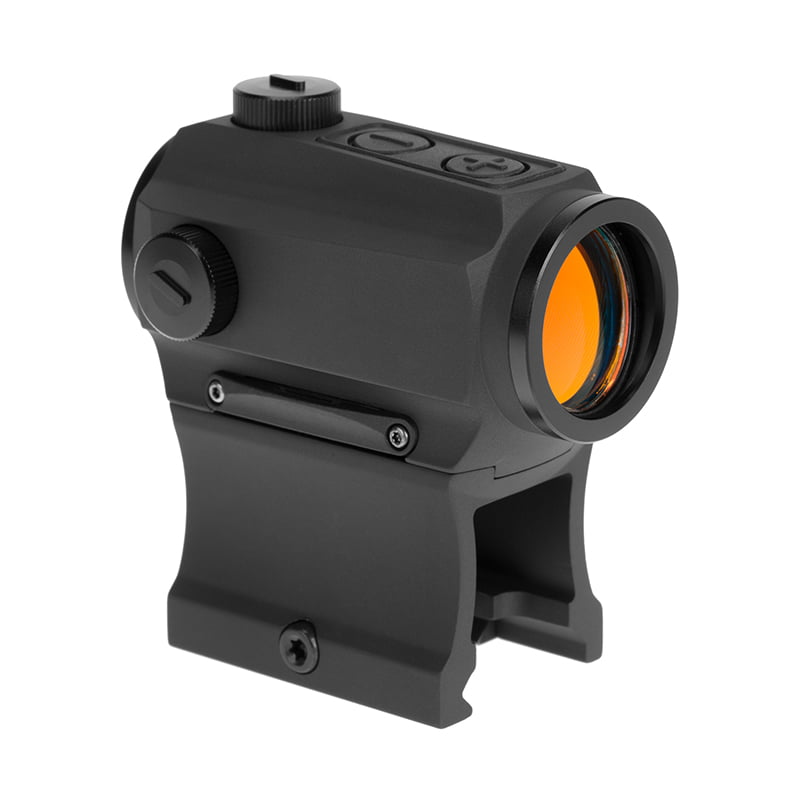
A red dot sight projects an illuminated dot (or circle-dot reticle) onto a lens, creating a simple aiming point. You keep both eyes open, put the dot on the target, and press the trigger. There is no magnification — what you see through the optic is 1x (same as your naked eye). Red dots are the fastest optic type for target acquisition at close to moderate range.
How they work: An LED emitter bounces light off a specially coated lens back toward your eye. The dot appears to float on the target. Modern red dots use incredibly efficient LEDs — the Aimpoint T-2 runs for 50,000 hours (over 5 years) on a single CR2032 battery.
Best for: Home defense (0-50 yards), general purpose, competition (3-Gun close stages), patrol rifles, and any AR-15 that needs to be fast at close to moderate range. If you are only going to own one optic for your AR-15, a quality red dot is the answer.
Limitations: No magnification means target identification and precise aiming past 200 yards is challenging. The dot covers approximately 2 MOA at 100 yards — fine for combat accuracy, but it hides fine aiming points at distance. Adding a flip-to-side magnifier (3x or 6x) solves this, but adds weight and cost.
Key specs to compare: MOA dot size (2 MOA is the sweet spot — visible but precise), battery life (20,000+ hours is the standard in 2026), night vision compatibility (if applicable), shake-awake feature (auto-on when moved), and lens coating quality (determines brightness and clarity).
Holographic Sights
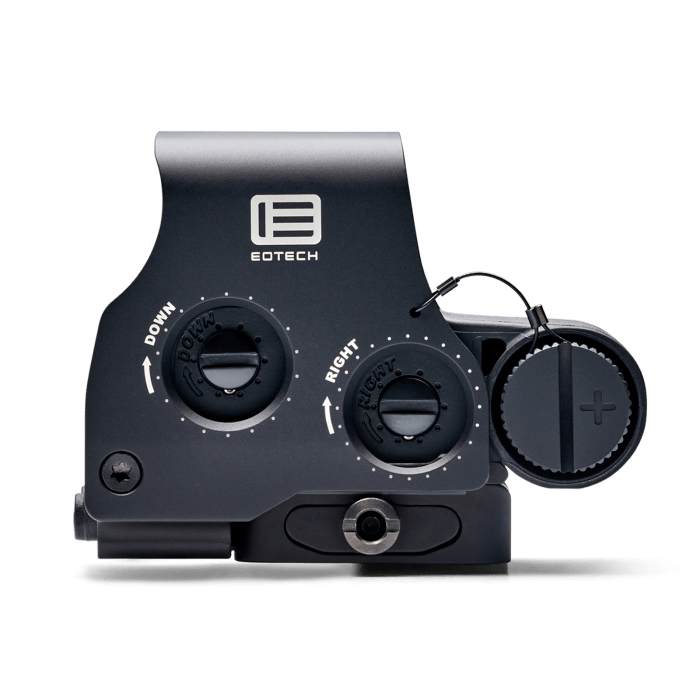
Holographic sights use a laser to project a holographic reticle pattern onto a heads-up display. The result looks similar to a red dot, but the technology is fundamentally different. The reticle is projected at infinity, which means the dot stays on target regardless of your eye position — there is virtually zero parallax error.
How they differ from red dots: Holographic sights have a larger viewing window, virtually no parallax shift (the reticle stays on target even if your eye is off-center), and the reticle remains crisp for shooters with astigmatism (red dots often appear as a starburst or smeared shape for people with this condition). The trade-offs: shorter battery life (600-1,000 hours vs. 50,000+ for red dots), heavier weight, and higher price.
Best for: Shooters with astigmatism who see red dots as starbursts, fast CQB shooting (the 68 MOA ring on EOTech reticles is incredibly fast at close range), and anyone who pairs their optic with a magnifier (holographic sights maintain full clarity behind a magnifier, while some red dots appear fuzzy).
The players: EOTech dominates this category. The EXPS3-0 ($600) is the professional standard. The XPS2-0 ($450) is the value option without night vision compatibility. Vortex’s AMG UH-1 Gen II ($500) is the only real competitor, and it is excellent — with a rechargeable battery and USB-C charging.
LPVOs (Low Power Variable Optics)
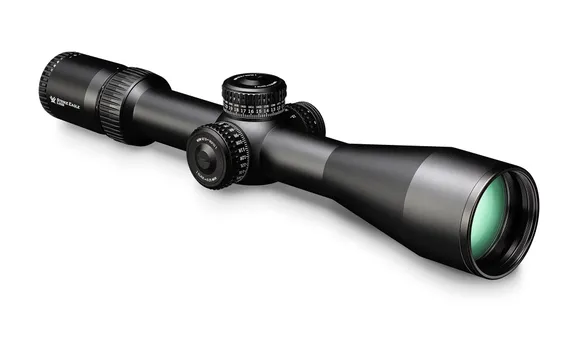
LPVOs are variable-magnification scopes that start at 1x (true 1x, like a red dot) and zoom to 6x, 8x, or 10x. They give you the speed of a red dot at 1x and the precision of a magnified optic at range. This versatility has made LPVOs the fastest-growing optic category in the AR-15 world.
The appeal: At 1x, you shoot both-eyes-open like a red dot. Crank the magnification to 6x and you can positively identify targets and make precise shots at 300-500 yards. One optic, two roles, no compromises. USSOCOM adopted the 1-6x LPVO as the standard combat optic, and competition shooters have largely abandoned red dots in favor of LPVOs for 3-Gun.
The trade-offs: LPVOs are heavier (12-22 oz with mount vs. 4-8 oz for a red dot), more expensive, and the 1x is never quite as fast or natural as a true red dot. The eyebox at higher magnifications can be finicky — your eye needs to be in the right position or the image blacks out. And a budget LPVO with bad glass is worse than a good red dot at any distance.
FFP vs. SFP: First Focal Plane (FFP) reticles scale with magnification — the holdover marks are accurate at any power setting. Second Focal Plane (SFP) reticles stay the same size regardless of magnification — holdovers are only accurate at one specific power (usually maximum). For a 1-6x, SFP is generally preferred (the reticle is visible and usable at 1x). For 1-8x and 1-10x, FFP becomes more practical.
Magnified Scopes (Fixed and Variable)
Traditional magnified scopes (3-9x, 4-16x, 5-25x) are designed for precision shooting at extended ranges. On an AR-15, they are most commonly used on SPR (Special Purpose Rifle) builds with 18-20 inch barrels, dedicated precision setups in .224 Valkyrie or 6.5 Grendel, or designated marksman configurations.
Best for: Precision rifle shooting, long-range target work, hunting from a fixed position, and bench rest accuracy testing. Not ideal for general-purpose use — the minimum magnification (3x or 4x) makes close-range shooting awkward.
For dedicated magnified scopes, see our best rifle scopes under $1,000 guide and our best thermal scopes for night hunting.
Iron Sights (BUIS)
Backup iron sights (BUIS) are folding metal sights that serve as a fallback if your primary optic fails. Every serious AR-15 should have them — batteries die, electronics break, and Murphy’s Law applies to optics on bad days. The Magpul MBUS Gen 3 ($60-$80 for the set) are the industry standard for polymer flip-ups. The Daniel Defense fixed iron sights ($110-$130 for the set) and Scalarworks PEAK sights ($250 for the set) are the premium options.
Some shooters run iron sights as their primary optic — especially on retro or clone builds. For a first AR-15 on a tight budget, quality iron sights are a perfectly acceptable starting point. You can always add a red dot later.
Best Red Dots for AR-15 (2026 Picks)
These are the red dots I have personally tested and recommend for AR-15 use:
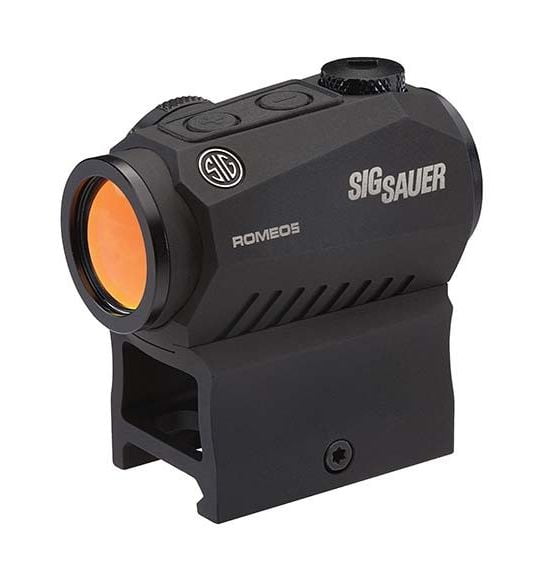
Best Budget: Sig Sauer Romeo5 ($119)
The Romeo5 is the best value in the red dot market — period. For $119, you get a 2 MOA dot, MOTAC shake-awake technology (auto-off after inactivity, instant-on when moved), 40,000-hour battery life, and it holds zero. I have run a Romeo5 on a training rifle for over 5,000 rounds and it has never shifted zero. It includes both low and co-witness mounts. If your budget is under $200, buy the Romeo5 and spend the savings on ammo.
Best Overall: Holosun 510C ($249)
The 510C is the most feature-rich red dot under $300. It has a large open-frame window (the biggest in its class), solar backup power, shake-awake, a switchable circle-dot reticle (2 MOA dot, 65 MOA circle, or both), and titanium housing. The solar panel means the sight stays on even if the battery dies, as long as there is ambient light. The open frame makes it faster than tube-style red dots. I run this optic on my general-purpose AR-15 and recommend it more than any other red dot.
Best Premium: Aimpoint Duty RDS ($399)
The Duty RDS brings Aimpoint’s legendary reliability and battery life to a price point that was previously occupied by the PRO. The 2 MOA dot is clean and bright, the housing is bombproof, and the 50,000-hour battery life means you turn it on and forget about it for over five years. Aimpoint’s track record with the military and law enforcement is unmatched. If you want a “set it and forget it” optic you can trust your life to, this is it.
Best Professional-Grade: Aimpoint T-2 ($850)
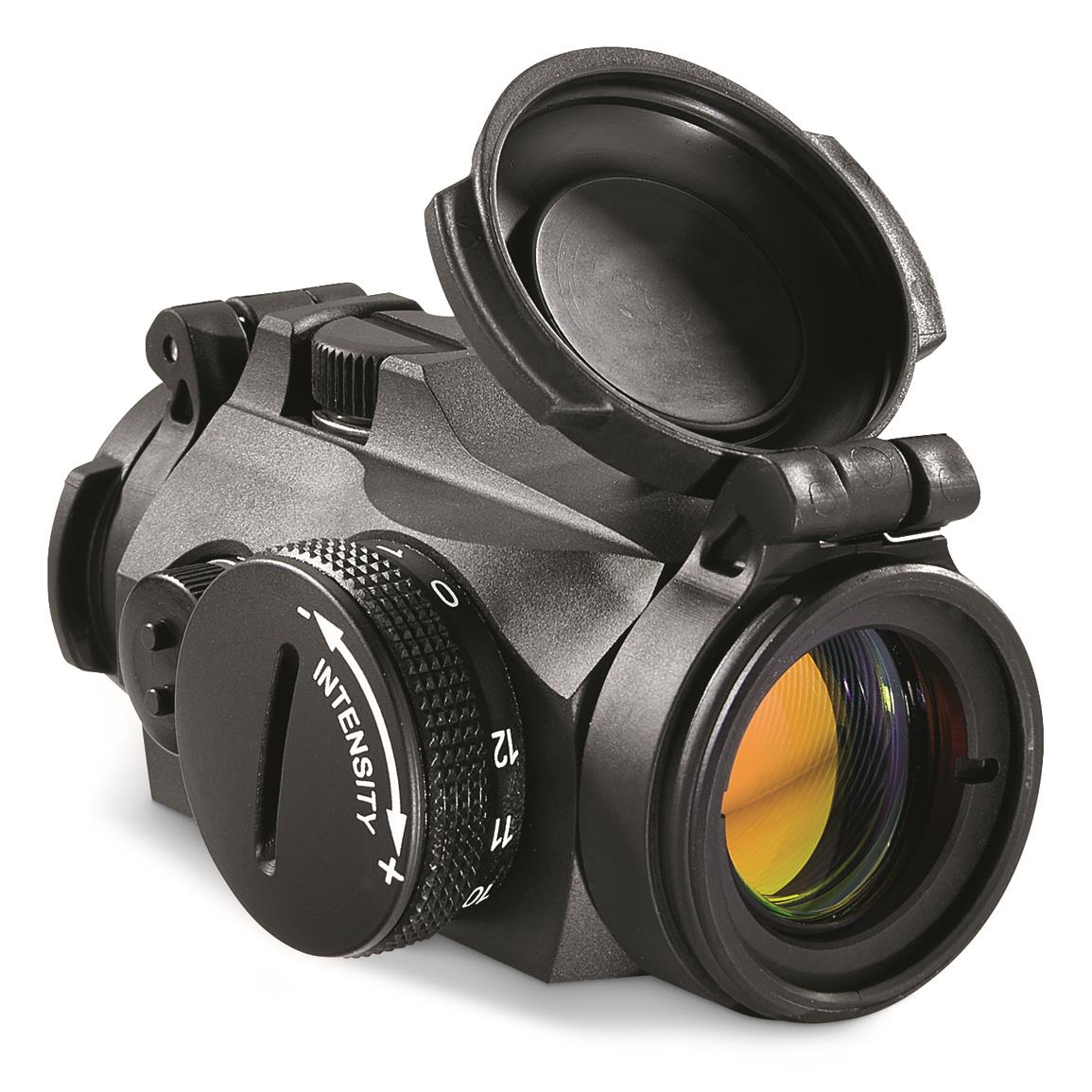
The T-2 is the standard by which all red dots are measured. Weighing just 3 oz (without mount), it packs 50,000-hour battery life, NV-compatible brightness settings, and a dot clarity that makes everything else look washed out. Every tier-1 SOF unit in the world uses Aimpoint. The price is steep, but you will never need to replace it. If you buy once and cry once, the T-2 is the answer.
For the complete red dot comparison including models I did not cover here, see our best AR-15 red dot sights guide.
Best LPVOs for AR-15 (2026 Picks)
Best Budget LPVO: Primary Arms SLx 1-6×24 with ACSS Raptor ($289)
The ACSS (Advanced Combined Sighting System) reticle is the best reticle design in the LPVO market at any price. It gives you a center chevron for precise aiming, a horseshoe for fast CQB, bullet drop compensation marks calibrated for 5.56, and moving target leads — all without cluttering the sight picture. The glass quality is good (not great), the 1x is passable, and the eye relief is generous. At under $300, nothing else comes close for a first LPVO.
Best Value LPVO: Vortex Strike Eagle 1-6×24 ($249)
The Strike Eagle has been the best-selling budget LPVO for years. The glass is slightly below the Primary Arms SLx, but the illumination is brighter and the build quality is excellent. Vortex’s unlimited lifetime warranty (the VIP warranty — no questions asked, no receipt needed) is the best in the industry. If you break it, they replace it. Period. For a first LPVO where you want warranty peace of mind, the Strike Eagle wins.
Best Mid-Range LPVO: Vortex Viper PST Gen II 1-6×24 ($499)
The step up from budget to mid-range is dramatic. The Viper PST Gen II has noticeably better glass clarity, a crisper reticle, better edge-to-edge sharpness, and a true daylight-bright illuminated reticle (most budget LPVOs wash out in direct sunlight). The eyebox is more forgiving at 6x, and the turret tracking is precise enough for competition. This is the LPVO I recommend to serious shooters who want real quality without spending $1,500+.
Best Premium LPVO: Vortex Razor HD Gen III 1-10x ($1,799)
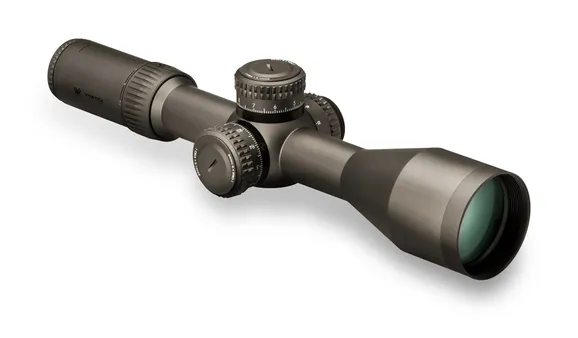
The Razor HD Gen III is what happens when a scope company decides to make the best LPVO regardless of cost. The 1x is as clean as a red dot. The 10x has glass clarity that rivals fixed-power scopes. The FFP reticle is usable at every magnification. At 21 oz, it is heavy — but the optical performance is unmatched. USSOCOM selected the Razor HD as their squad-level optic. If you are willing to spend $1,800+ and carry the weight, this is the best AR-15 optic made.
Also worth considering at the premium level: the Nightforce ATACR 1-8x ($2,600) for duty/professional use, and the Trijicon VCOG 1-8x ($2,000) for its ruggedized military-spec construction.
Red Dot + Magnifier Combos
If you want the speed of a red dot with the option to zoom in, a red dot paired with a flip-to-side magnifier is an excellent solution. The magnifier sits behind the red dot and flips to the side when not needed, giving you an instant transition between 1x and 3x (or 6x).
Best combos:
- Budget: Sig Romeo5 + Juliet3 Micro 3x ($300-$350 combo) — Sig often bundles these at a discount
- Mid-range: EOTech EXPS3 + G33 3x Magnifier ($950-$1,050) — the classic USSOCOM setup
- Premium: Aimpoint T-2 + Aimpoint 3X-C Magnifier ($1,200-$1,400) — the most rugged combo available
Red dot + magnifier vs. LPVO: The magnifier combo is faster at 1x (a true red dot is quicker than a 1x LPVO), lighter in most configurations, and lets you stay at 1x without the “tunnel vision” effect of a scope tube. An LPVO gives you continuously variable magnification (not just 1x or 3x), is optically superior at high magnification, and is one piece of equipment instead of two. For home defense and short-to-mid range, I prefer the red dot + magnifier. For versatility across all distances, the LPVO wins.
Choosing the Right Optic for Your Purpose
Your use case should drive your optic choice. Here is my recommendation matrix:
Home Defense (0-50 yards)
Best choice: Red dot or holographic sight. Speed is everything in a home defense scenario — you need to acquire the target, confirm identification, and fire accurately in 1-3 seconds. A red dot or holographic sight with a weapon-mounted light is the fastest possible setup. The Holosun 510C ($250) or EOTech XPS2 ($450) are my top picks. Magnification is unnecessary — no room in your house is longer than 25 yards. For the complete home defense rifle setup, see the home defense section of our AR-15 buyer’s guide.
General Purpose / Range Use (0-300 yards)
Best choice: Red dot or 1-6x LPVO. If most of your shooting is inside 200 yards, a quality red dot is all you need. If you regularly shoot out to 300 yards or want the versatility of magnification, a 1-6x LPVO is the better investment. The Primary Arms SLx 1-6x ($289) or Vortex Viper PST Gen II 1-6x ($499) are outstanding for this role.
Competition (3-Gun, Practical Rifle)
Best choice: 1-6x or 1-8x LPVO. 3-Gun competition requires engaging targets from 5 yards to 500+ yards in the same stage. A quality LPVO with a daylight-bright illuminated reticle is the standard. The Vortex Razor HD Gen II-E 1-6x ($1,100) is the 3-Gun standard, and the Primary Arms SLx 1-6x ACSS is the budget entry. Mount it in a quality quick-throw lever mount (Scalarworks LEAP, Badger Ordnance C1, or Geissele Super Precision) for fast magnification changes.
Precision / Designated Marksman (200-600 yards)
Best choice: 1-8x or 1-10x LPVO, or a dedicated 3-15x/4-16x scope. For an SPR build with an 18-20 inch barrel, you need magnification to exploit the rifle’s accuracy potential. The Vortex Razor HD Gen III 1-10x ($1,799) is the do-everything choice. For dedicated precision, a Vortex Viper PST Gen II 3-15x ($700) or Nightforce NX8 2.5-20x ($1,800) brings more magnification and better reticle options. See our best rifle scopes under $1,000 for more options.
Hunting
Best choice: 1-6x LPVO or 2-7x/3-9x traditional scope. For hunting with an AR-15, you need enough magnification to positively identify and ethically shoot game, plus a clear reticle that is visible in dawn/dusk conditions. A 1-6x LPVO with an illuminated reticle covers close-range brush hunting to 300-yard field shots. The Primary Arms SLx 1-6x with ACSS reticle includes BDC marks calibrated for common hunting calibers. For hunting-specific optics beyond the AR-15, see our best rifle scopes guide.
Optic Mounts: Do Not Cheap Out
Your mount is the mechanical connection between your optic and your rifle. A $300 optic in a $15 Amazon mount will not hold zero. Period. The mount must be rigid, repeatable, and appropriate for your optic type.
Red Dot Mounts
Most red dots ship with an adequate mount. The Sig Romeo5 includes both a co-witness and low mount. Holosun 510C includes a QD mount. For premium upgrades: the Scalarworks LEAP ($130-$150) is the lightest, strongest red dot mount made — it uses a two-lever QD system and returns to zero perfectly when removed and reattached. The Unity FAST Mount ($160) puts the optic at a 2.26″ height — the “heads-up” mounting position used by many SOF units for faster target acquisition with a more natural head position.
LPVO Mounts
LPVO mounts are where skimping will cost you. A quality cantilever mount holds 30mm or 34mm tube scopes and provides the correct eye relief and height. My recommendations:
- Budget: Aero Precision Ultralight ($70) — best value, lightweight, solid construction
- Mid-range: Badger Ordnance C1 ($280-$330) — modular (accepts offset red dots, J-arms), extremely rigid, the competition standard
- Premium: Scalarworks LEAP/Scope ($350-$400) — lightest in class, QD with return-to-zero, gorgeous machining
- Also excellent: Geissele Super Precision ($325), Reptilia AUS ($250-$300)
Mount Height
Absolute co-witness (1.41″): The red dot co-witnesses directly with your iron sights when they are flipped up. Traditional standard, but requires you to “turtle” your neck for a cheek weld.
Lower 1/3 co-witness (1.57″): The iron sights sit in the lower third of the red dot window. This is the most common and generally recommended height — comfortable head position with iron sights available as a reference.
1.93″ height: The “heads-up” or “high mount” position. Faster to get behind, more natural head posture, better for use with night vision, ear protection, or gas masks. Increasingly popular with professionals and enthusiasts. The Unity FAST mount popularized this height.
How to Zero Your AR-15 Optic
Zeroing is the process of aligning your optic’s point of aim with the bullet’s point of impact at a specific distance. Here is how to do it efficiently:
The 50/200-Yard Zero (Recommended)
Zero your AR-15 at 50 yards. Due to the trajectory of 5.56 NATO, a 50-yard zero also puts you on target at approximately 200 yards. Between 0 and 250 yards, your bullet will never be more than 2 inches above or below your point of aim. This is the most versatile zero for a general-purpose AR-15 and is what most military units use (the USMC 36-yard battlesight zero achieves a similar result).
The 25-Yard Zero Method
If you only have access to a 25-yard range, you can approximate a 50/200 zero by zeroing 1.5 inches high at 25 yards (for a red dot mounted at standard height). This accounts for the height-over-bore offset and the bullet’s trajectory. Most optic manufacturers include instructions for 25-yard zeroing in their manuals.
Zeroing Process
- Bore sight first. Remove the bolt carrier group and look through the barrel at the target. Adjust the optic until the reticle is centered on the same point as the bore. This gets you on paper and saves ammunition.
- Fire a 3-round group. From a stable position (bench rest or prone with support), fire three rounds at the center of your target.
- Adjust the optic. Most red dots and scopes adjust in 1 MOA clicks (1 click = ~1 inch at 100 yards, or ~0.5 inch at 50 yards). Measure the distance between your group center and the desired point of impact, then click the appropriate number of clicks.
- Fire another 3-round group. Confirm the adjustment. Repeat if necessary.
- Fire a confirmation group. Once zeroed, fire a final 5-round group to verify consistency. You should be able to zero a red dot with 15-20 rounds.
Common Optic Mistakes to Avoid
- Buying a cheap Amazon optic. The $35 “red/green dot” sights on Amazon will not hold zero, have terrible glass clarity, and break within months. A Sig Romeo5 at $119 is the minimum investment for a functional optic. Cheap optics waste ammo and frustrate new shooters.
- Mounting on the handguard. Your optic must be mounted on the receiver — not the handguard. Handguards can flex under sling pressure, heat, or grip changes, causing zero shifts. The only exception is for offset backup red dots, which can ride on the handguard if necessary.
- Wrong mount height. If you have to strain your neck to see through the optic, the mount is too low. If you cannot get a consistent cheek weld, the mount may be too high. Try a 1/3 co-witness height first (1.57″) — it works for the vast majority of shooters.
- Not running backup irons. Batteries die. Electronics fail. Always have backup iron sights on a defensive AR-15. Magpul MBUS Gen 3 front and rear costs $70 total — cheap insurance.
- Ignoring astigmatism. If red dots appear as starbursts, commas, or smeared shapes, you likely have astigmatism. Try a holographic sight (EOTech or Vortex UH-1) or an LPVO with an etched reticle — both appear crisp regardless of eye conditions. Get your eyes checked before blaming the optic.
- Over-magnifying. A 4-16x scope on a 16″ general-purpose AR is overkill. You will never use 16x on a standard 5.56 rifle — the cartridge runs out of effective energy well before you run out of magnification. Match your optic magnification to your realistic engagement range and your rifle’s capability.
Frequently Asked Questions
Red dot or LPVO for a first AR-15?
Red dot. It is simpler, lighter, cheaper, and forces you to learn fundamentals at practical ranges (0-200 yards) before adding magnification complexity. The Sig Romeo5 ($119) or Holosun 510C ($250) are the best starting points. Add an LPVO to your second AR-15 or upgrade later when you know what magnification range you actually need.
How much should I spend on an AR-15 optic?
Plan to spend 30-50% of your rifle’s cost on the optic and mount. For a $500 rifle, a $150-$250 optic is appropriate (Romeo5 or Holosun 510C). For a $1,000 rifle, budget $300-$500 (Holosun 510C, EOTech XPS2, or PA SLx 1-6x). For a $1,800+ rifle, you should be looking at $500+ (Vortex Viper PST, Aimpoint Duty RDS, or higher). A premium optic on a budget rifle is fine — a cheap optic on a premium rifle is a waste.
What MOA dot size is best?
2 MOA is the sweet spot for most shooters. It is large enough to acquire quickly at close range but small enough for precise aiming at 200-300 yards (a 2 MOA dot covers a 2-inch circle at 100 yards). A 1 MOA dot is better for precision but harder to see quickly. A 3-4 MOA dot is faster at close range but obscures targets at distance. For home defense only, a larger dot (3-4 MOA) or a circle-dot reticle is ideal for speed.
Do I need night vision compatible optics?
Only if you own or plan to own night vision devices. NV-compatible optics have additional very-low brightness settings that do not bloom or wash out under image intensification. If you do not currently own NVGs, save the money and buy a standard optic. If you are building a dedicated NV setup, budget for Aimpoint T-2, EOTech EXPS3, or Holosun optics with NV settings.
Can I use a pistol red dot on my AR-15?
Technically yes, but I do not recommend it. Pistol red dots (Holosun 507C, Trijicon RMR, Sig Romeo1 Pro) have smaller windows, shorter battery life, and less robust construction than rifle-specific optics. They are designed for the lower recoil and shorter engagement distances of handgun shooting. Use a rifle-rated red dot on your AR-15. For pistol optics, see our best pistol red dot sights guide.
How often should I re-zero my optic?
A quality optic in a quality mount should hold zero indefinitely under normal use. Confirm your zero every 500-1,000 rounds or after any drop, hard impact, or mount removal/reinstallation. If your optic shifts zero after normal range sessions, the mount is likely the culprit — upgrade to a quality mount before blaming the optic.
Final Thoughts
The best AR-15 optic is the one that matches your intended use, fits your budget, and comes from a manufacturer that stands behind their product. For most people, a Holosun 510C or Sig Romeo5 red dot is the right starting point — simple, reliable, and effective at the distances most shooters actually engage targets.
When you are ready for magnification, a 1-6x LPVO from Primary Arms or Vortex opens up the AR-15’s full potential without breaking the bank. And remember: the optic is only as good as the mount it sits in and the shooter behind it. Invest in a quality mount, zero properly, and train regularly.
Use our price comparison tool to find the best deal on your next optic, and check the daily gun deals for current discounts. For the complete AR-15 buying and building process, see our AR-15 buyer’s guide. And for optics on pistols, our pistol red dot guide covers the best options for handgun mounting.