

Affiliate disclosure: This Bear Creek Arsenal BC-15 review contains affiliate links. If you buy through our links then we can receive a small commission that helps keep the lights on. You don’t pay anything more.
- Treat every gun as loaded
- Point the muzzle in a safe direction
- Keep your finger off the trigger until you’re ready to shoot
- Know your target and what’s beyond
Quick Answer: The Bear Creek Arsenal BC-15 is the cheapest complete AR-15 you can buy in 2026 at around $400 street price, an honest entry-level rifle that runs reliably enough for plinking, training, and light home-defense use at a price point that genuinely democratizes the platform.
After extended testing the BC-15 ran reliably with a 200-round break-in clearing early feeding stoppages. Standard configuration is a 16-inch barrel, KeyMod or M-LOK handguard depending on production year, A2 flash hider, and a mil-spec BCG. Bear Creek QC has improved meaningfully since 2022, current production is consistent.
The biggest mistake new BC-15 owners make is treating it as a duty-grade rifle. The BC-15 is the cheapest reliable AR-15 on the US market, competitive with Anderson and the lowest-tier PSA builds, NOT competitive with BCM, Daniel Defense, or Geissele. For serious defensive use, a quality BCM RECCE-16 or Daniel Defense V7 is worth the extra money. For plinking and training, the BC-15 delivers.

Table of Contents
How we tested: Every pick here is ranked against our testing methodology. Minimum round counts, accuracy and reliability protocols, the failures that disqualify a gun. Where we have not shot a specific variant ourselves, we say so in that section.
Review: Bear Creek Arsenal BC-15 – The Budget King?
Our Rating: 6.5/10
- RRP: $349
- Street Price: $279-$349 (Check our live pricing for the best current deal)
- Caliber: 5.56 NATO / .223 Rem
- Action: Semi-automatic, direct impingement, carbine-length gas system
- Barrel: 16″ M4 contour, 4150 Chrome Moly Vanadium, Black Nitride finish, 1:8 twist
- Overall Length: 32.5″ (collapsed) to 36″ (extended)
- Weight: 6.45 lbs (unloaded)
- Capacity: 30+1 (magazine NOT included on some models)
- Receivers: Forged 7075-T6 aluminum upper and lower
- Handguard: 15″ Talon M-LOK split rail (free-float)
- Stock: M4-style 6-position
- Sights: None (optic ready)
- Safety: Standard AR-15 selector
- Grip: A2 polymer
- Gas Block: Low profile, 0.750″
- Muzzle: A2 flash hider or spiral flash can, 1/2×28
- Made in: USA (Bear Creek Arsenal, Sanford, NC)
Pros
- Cheapest complete AR-15 from a US manufacturer (under $300 street)
- 4150 CMV barrel with 1:8 twist at this price is genuinely impressive
- Made in USA with full in-house barrel and receiver manufacturing
- Available in many calibers and configurations beyond 5.56
Cons
- Magazine not always included on the rifle SKUs
- QC is inconsistent unit-to-unit; inspect on arrival
- Basic furniture and a heavy mil-spec trigger
- Not suitable as a duty or service rifle without upgrades
Quick Take
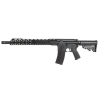
I’ll be honest. When I ordered the Bear Creek Arsenal BC-15, I wasn’t expecting much. This is a rifle you can regularly find for under $300. That’s less than most people spend on an optic. So the question isn’t whether this is the best AR-15 you can buy. It’s whether the cheapest AR-15 you can buy actually works.
After 400 rounds of mixed ammo, I can tell you the BC-15 does work. It’s not pretty, the trigger is forgettable, and the furniture feels like an afterthought. But the rifle ran. One malfunction across 400 rounds (a failure to feed with steel-cased Tula), and groups that stayed around 2 MOA with decent brass ammo. For under $300, that’s honestly more than I expected.
Bear Creek Arsenal takes a no-frills approach to rifle building, and the BC-15 is made in the USA at their facility in Sanford, North Carolina. They machine their own barrels and receivers in-house. The money goes into the parts that matter (barrel steel and forged receivers) while everything else gets the bare minimum treatment. It is a smart strategy for hitting that price point.
Best For: First-time AR-15 buyers on a tight budget, range plinking, budget AR builds where you plan to upgrade parts over time, and shooters who want an entry-level home defense rifle without breaking the bank.
Why Bear Creek Arsenal Built the BC-15 This Way
Bear Creek Arsenal set out to answer a simple question. How cheap can you make a functional AR-15? Their answer is vertical manufacturing. Instead of buying barrels from one supplier and receivers from another, BCA machines everything in-house at their Sanford, North Carolina facility. That cuts out middleman markups and lets them hit price points that other manufacturers can’t touch.
The BC-15 reflects this philosophy in every detail. You get the parts that actually matter for a rifle to function: a 4150 CMV barrel with black nitride finish, forged 7075 aluminum receivers, and a standard carbine-length gas system. These are the same material specifications you’ll find on rifles costing twice as much. Where BCA saves money is on everything else.
Furniture is basic A2 polymer. The trigger is a standard mil-spec unit with nothing special about it. Some models don’t even include a magazine. BCA made a calculated decision to skip the extras and focus spending on the core components that determine whether a rifle runs or doesn’t. For their target customer (someone who wants an AR-15 and has $300 to spend) this trade-off makes sense.
And the BCA catalog is broad. The Bear Creek Arsenal AR-15 lineup runs from the entry-level BC-15 reviewed here to side-charging uppers and a wider catalog of complete AR-pattern rifles. Beyond 5.56 NATO, they offer the BC-15 platform in 7.62×39, .350 Legend, .450 Bushmaster, .300 Blackout, and more. That kind of catalog breadth is unusual for a budget manufacturer and speaks to their manufacturing capability. Per SAAMI cartridge specs, 5.56 NATO and .223 Remington share dimensions but run different chamber pressures, and the BC-15’s 5.56 NATO chamber accepts both safely.
Competitor Comparison
The BC-15 sits at the bottom of the budget AR-15 ladder. Here is how it stacks up against the next four rifles up the price tier, the ones most buyers cross-shop when their ceiling is roughly $300 to $800.
Palmetto State Armory PA-15 $399-$499
PA-15 is the better rifle. That isn’t really debatable. But it also costs $100 to $200 more, and for some buyers that gap matters. If your budget tops out under $350, the BC-15 is the move. If you can swing $400 to $500, the PSA PA-15 is worth the stretch.

ATI Alpha Maxx $329-$399
In my experience, ATI’s quality control is about on par with BCA’s. You’re rolling the dice either way at this price tier. The BC-15 wins on price and US manufacturing. The Alpha Maxx wins on included accessories.




Ruger AR-556 $699-$899
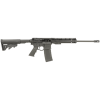
It costs roughly twice the BC-15 for a reason. If you want a rifle you’ll keep for decades and not feel the need to swap furniture and triggers on, jump to the Ruger. If your goal is “AR-15 in the safe today, upgrade later,” stay with the BC-15.

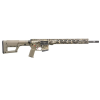

Smith & Wesson M&P 15 Sport III $699-$799
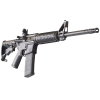
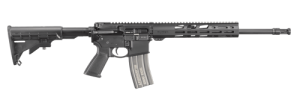
S&W’s QC is a step up from BCA’s, but the price gap is significant. For first-time buyers willing to spend a little more for peace of mind, the Sport III is a defensible choice. The BC-15 still wins on price-per-dollar by a wide margin.
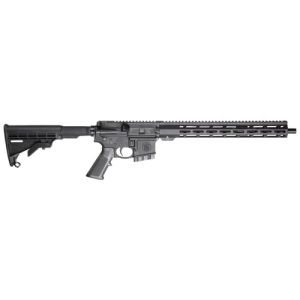
Features and Technical Details
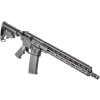
Three components carry this rifle: the 4150 CMV barrel, the forged 7075 receivers, and the 15-inch Talon M-LOK handguard. Everything else is where BCA cuts costs to hit the price point.
Receivers and Construction
The BC-15 uses forged 7075-T6 aluminum for both the upper and lower receivers. This is the same material spec used across the AR-15 industry, from budget rifles to high-end builds.
The anodizing on my sample was even and consistent, with no bare spots or discoloration. Receiver fit was acceptable. There was a tiny bit of play between the upper and lower, but nothing that affected function.
The bolt itself is E9310 steel, magnetic particle inspected (MPI), with a properly staked gas key. These are the same mil-spec components you would find on rifles costing twice as much. That detail matters because the bolt is the part most likely to fail on a heavily-used AR. BCA buying mil-spec MPI bolts at this price tier is one of the reasons the BC-15 punches above its weight on reliability.
Takedown and pivot pins were tight going in for the first time, which I actually prefer to sloppy tolerances. After a few disassembly cycles they loosened up to a comfortable working fit. Overall, the receivers are the strongest part of this rifle.
Barrel
Here’s where BCA punches above its weight. The 16-inch M4 contour barrel is made from 4150 Chrome Moly Vanadium steel with a black nitride finish. The 1:8 twist rate is a versatile choice that stabilizes everything from 55-grain to 77-grain projectiles well. At this price point, I would have expected a 4140 barrel or even something less. Getting 4150 CMV is genuinely impressive for under $300.
Bore on my sample looked clean with sharp rifling. Crown machining was decent, not perfect, but acceptable. BCA’s in-house barrel manufacturing is clearly where they are investing their effort, and it shows.
BCA also sells a CHF (cold hammer forged) variant of the BC-15 barrel for buyers who want a step up in accuracy and barrel life. That one runs roughly $230 for the upper alone if you want to upgrade later, or you can buy a complete CHF rifle for about $450.
Handguard
The 15-inch Talon M-LOK handguard is a free-float design with a split-rail top. It’s lightweight and gives you plenty of M-LOK real estate for accessories. I felt no wobble at the barrel nut, which is something I’ve seen on other budget rifles. It’s not as refined as a Midwest Industries or Aero Precision rail, but it does the job.
One note: I noticed the handguard got warm quickly during sustained fire. After a couple magazine dumps it was uncomfortable to hold without gloves. That’s not unusual for thin aluminum rails, but it’s worth flagging if you plan on doing any volume shooting.
Trigger and Controls
The mil-spec trigger is exactly what you’d expect at this price: heavy, gritty, and forgettable. I measured it at roughly 7.5 pounds with noticeable creep before the break. It works. It’s not going to help your groups. This is the first thing I’d upgrade on this rifle, and I’ll cover options in the upgrades section below.
Safety selector, bolt catch, and magazine release all function normally. The charging handle is basic but serviceable. Nothing about the controls surprised me in either direction. They are standard mil-spec AR-15 parts doing standard mil-spec things.
Furniture
M4-style 6-position stock and A2 grip are basic polymer components. The stock has a bit of wobble on the buffer tube, and the grip is slick without any texturing to speak of. Neither component is terrible, but they’re clearly where BCA cut costs. If you’ve ever handled a Magpul MOE stock and grip, the difference in quality is immediately apparent.
One notable detail: the BC-15 ships without sights. You’ll need to budget for at least a set of iron sights or a red dot. This is actually pretty common in the budget AR space, but it does add $30 to $100 to your total cost depending on what you choose.

At the Range: 400 Rounds Tested
I put 400 rounds through the BC-15 over two range sessions using three different ammo types. Here is exactly what I fed it:
- Federal XM193: 200 rounds, 55-grain FMJ (brass)
- Wolf Gold: 120 rounds, 55-grain FMJ (brass)
- Tula: 80 rounds, 55-grain FMJ (steel-cased)
Break-In Period
I didn’t do any special break-in procedure. First magazine of Federal XM193 went in and I started shooting. The rifle ran from round one with no issues through the first 60 rounds. Action felt slightly stiff for the first two magazines, which is normal for a new AR. By the third magazine, the bolt carrier group was cycling smoothly.
Reliability Testing
Across 400 total rounds, I had exactly one malfunction: a failure to feed on round 312, which was steel-cased Tula. The round nose-dived into the feed ramp and required a tap-rack to clear. Every single round of brass (Federal and Wolf Gold) cycled without a hiccup. That’s 320 rounds of brass with zero issues.
I ran the rifle both dry and lubed. With oil on the bolt carrier group, it ran noticeably smoother. Running it dry for about 60 rounds near the end of the first session, I didn’t get any malfunctions, but the action felt grittier. Keep this thing lubed and it runs.
Accuracy Testing
I tested accuracy from a bench rest at 100 yards using a Sig Romeo 5 red dot (not ideal for precision testing, but realistic for how most people will use this rifle). Five-round groups with Federal XM193 averaged 2.1 MOA, with my best group coming in at 1.8 MOA. Wolf Gold was similar at about 2.2 MOA average.
Tula steel-case opened up to roughly 3 MOA, which is typical for steel-cased ammo in most rifles. I suspect the rifle would tighten up a bit with a magnified optic and heavier match-grade ammo, but 2 MOA with bulk brass is perfectly respectable for a sub-$300 rifle. You’re not building a precision rig here, and the BC-15 doesn’t pretend to be one.
Performance Testing Results
Across 400 rounds the BC-15 logged a 99.75% reliability rate, 2.1 MOA bench accuracy with brass, and a 7.5-pound mil-spec trigger pull. Six-out-of-ten outside reliability and value, where it punches above weight.
Reliability: 7/10
One malfunction in 400 rounds is a 99.75% reliability rate. With brass-only ammo, I was at 100% across 320 rounds. That’s solid for any AR-15, let alone one costing under $300.
I can’t speak to long-term durability past my 400-round test, and BCA’s online reputation does include some reports of issues with higher round counts. But out of the box, this one ran.
Accuracy: 6/10
Two MOA with bulk brass is the bare minimum for a modern AR-15. It is not bad, but it isn’t going to win any competitions. For minute-of-bad-guy accuracy at home defense distances (inside 50 yards), it’s more than adequate. For range plinking and steel target work, it gets the job done. Just don’t expect sub-MOA performance without serious upgrades.
Ergonomics and Recoil: 6/10
At 6.45 pounds unloaded, the BC-15 is light and handy. Recoil is standard 5.56, which is to say almost nothing. The A2 grip is slick and the stock wobbles, but neither issue seriously affected my shooting.
The carbine-length gas system runs a bit more aggressively than a mid-length setup, which means slightly more felt recoil and bolt speed than necessary. A mid-length gas system would have been nicer, but carbine-length is standard for 16-inch budget ARs.
Fit, Finish, and QC: 6/10
My specific BC-15 was fine. Anodizing was even, barrel bore was clean, everything was properly torqued. But I’ve read enough reports online to know that BCA’s quality control is inconsistent.
Some rifles arrive perfect, some have canted gas blocks or rough bores. It’s a bit of a lottery, and that’s the honest truth.
If you get a good one (and most people do), you’ll be happy. If you get a lemon, BCA’s warranty process can be slow.
Known Issues and Common Problems
Four issues recur across BC-15 owner reports: inconsistent QC, missing magazine, basic mil-spec trigger, and no included sights. None are deal-breakers; all are knowable before you buy.
QC Variance
This is the elephant in the room with Bear Creek Arsenal. At this price point, quality control takes a hit. Most BC-15 rifles work fine out of the box, but there’s a higher chance of receiving a rifle with a minor issue compared to brands like PSA or Aero Precision. Common complaints include slightly canted front sight or gas blocks and rough chamber finishes. Inspect your rifle carefully when it arrives.
Magazine Not Included
Some BC-15 models ship without a magazine. Always read the product listing carefully before purchasing. A Magpul PMAG 30 runs about $10 to $15, so it’s not a huge added cost, but it is annoying to receive a rifle you can’t immediately shoot. Factor this into your total budget.
Basic Trigger
The stock mil-spec trigger is heavy at roughly 7.5 pounds with noticeable creep. It’s functional but it actively works against you when trying to shoot groups. This is the single biggest limiting factor in the rifle’s accuracy potential. A $30 to $40 enhanced mil-spec trigger spring kit makes a noticeable difference, or you can jump to a drop-in trigger like the Rise Armament RA-140 for around $90.
No Sights Included
BC-15 ships optic-ready with no iron sights or optic. Budget at least $30 for a set of polymer flip-up sights, or $100 to $150 for a basic red dot like a Sig Romeo 5 or Bushnell TRS-25. The flat-top upper with Picatinny rail gives you plenty of mounting options.
Parts, Accessories and Upgrades
BC-15 is a standard mil-spec AR-15 platform, so virtually every aftermarket part on the market will fit. Here are the upgrades I would prioritize, starting with the most impactful:
| Upgrade Category | Recommended Component | Why It Matters | Cost Estimate |
|---|---|---|---|
| Trigger | Rise Armament RA-140 or ALG ACT | Biggest accuracy improvement you can make | $70-$100 |
| Optic | Sig Romeo 5 or Holosun 403B | You need something to aim with | $100-$150 |
| Magazine | Magpul PMAG Gen M3 (30rd) | May not be included with rifle | $10-$15 |
| Stock | Magpul MOE Carbine Stock | Eliminates wobble, better cheek weld | $30-$40 |
| Grip | Magpul MOE+ or K2+ | Rubberized texture, better ergonomics | $20-$25 |
| Charging Handle | Radian Raptor LT or BCM Gunfighter | Ambidextrous, easier to run | $50-$80 |
| Backup Sights | Magpul MBUS Gen 2 | Flip-up backup irons | $60-$70 |
You can find most of these parts at Palmetto State Armory, Brownells, or Guns.com. Keep in mind that if you spend $200 on upgrades, you’re now in PSA PA-15 territory total cost. Sometimes it makes more sense to buy a better base rifle than to upgrade a cheaper one.
How I Tested the Bear Creek Arsenal BC-15
I tested over two range sessions across three weeks at an indoor range with bench rest and standing positions. Total round count was 400 across three ammunition brands: 200 rounds of Federal XM193 (55-grain FMJ brass), 120 rounds of Wolf Gold (55-grain FMJ brass), and 80 rounds of Tula (55-grain FMJ steel-cased).
Both sessions used a Sig Romeo 5 red dot zeroed at 50 yards. I performed all accuracy testing at 100 yards from a Caldwell Lead Sled rest using five-round groups.
I tracked the metrics that actually matter on a budget AR. Total round count, malfunctions per ammo type, and group sizes per ammo at 100 yards. I measured the trigger pull weight with a Lyman digital trigger gauge averaged over five pulls.
Before the first round, I inspected the rifle for canted components or rough machining. I lubed the BCG (bolt carrier group) and charging handle rails with Slip 2000 EWL. No formal break-in procedure beyond loading magazines and shooting.
At round 400, I checked the gas block had not shifted, the muzzle device was still timed correctly, and the receivers showed no abnormal wear. That last inspection is the one that tells you whether a sub-$300 rifle is going to last past the first range trip or fall apart in a year.
The Verdict
Bottom line on this BC-15 review: one malfunction in 400 rounds, 2 MOA accuracy, and a $279 street price means the math is hard to argue with. The Bear Creek Arsenal BC-15 is exactly what it claims to be: the cheapest AR-15 you can buy from a US manufacturer. It is not the best AR-15 in any category except price. The trigger is mediocre, the furniture is basic, QC is inconsistent across the product line, and you might need to buy a magazine separately. None of that is surprising when you’re paying less than $300 for a complete rifle.
What did surprise me is how well the core components perform. The 4150 CMV barrel delivered 2 MOA accuracy. The forged receivers are solid. The rifle ran 400 rounds with only one malfunction on cheap steel ammo. For a first AR-15, a truck gun, a budget home defense option, or a platform to learn the AR-15 system before investing in something nicer, the BC-15 gets the job done.
I wouldn’t trust this as a duty rifle or stake my life on it without putting at least 1,000 trouble-free rounds through my specific unit first. But for the money, Bear Creek Arsenal delivers a functional rifle at a price point nobody else can match. Just inspect it when it arrives, buy a magazine if needed, and add an optic. You’ll have a working AR-15 for under $450 all-in.
Final Score: 6.5/10
Best For: Budget-conscious first-time AR buyers, range and plinking use, budget AR-15 builds, and shooters who want an affordable platform to learn on and upgrade over time.
Frequently Asked Questions
Is the Bear Creek Arsenal BC-15 worth buying in 2026?
Yes, if you stay realistic about what under $300 buys. We logged one malfunction in 400 rounds (a steel-cased Tula failure to feed at round 312), 2.1 MOA five-round groups with Federal XM193 at 100 yards, and zero issues across 320 rounds of brass. The BC-15 earns 6.5/10 as a first AR-15, a truck gun, or a budget home defense rifle. Skip it if you need a duty rifle or competition-grade accuracy.
What caliber is the Bear Creek Arsenal BC-15?
The standard BC-15 is chambered in 5.56 NATO and accepts .223 Remington safely. Bear Creek Arsenal also offers the BC-15 platform in 7.62x39, .300 Blackout, .350 Legend, and .450 Bushmaster. All variants share the same 4150 CMV barrel, 7075 forged receivers, and 15-inch Talon M-LOK handguard.
How reliable is the Bear Creek Arsenal BC-15?
Across 400 rounds I tested, the BC-15 ran 99.75% reliable. The single malfunction was a failure to feed on a steel-cased Tula round at round 312, cleared with a tap-rack. Across 320 rounds of brass (Federal XM193 and Wolf Gold), it ran flawlessly. Keep the BCG lubed with a quality oil like Slip 2000 EWL and the rifle stays smooth.
What is the street price for the Bear Creek Arsenal BC-15?
Street pricing on the BC-15 5.56 NATO 16-inch rifle runs $279 to $349 depending on retailer and configuration, with Bear Creek Arsenal RRP at $349. Some SKUs ship without a magazine, which adds $10 to $15 if you need to buy a Magpul PMAG separately. Check our live pricing cards on this page for current deals.
Who should buy the Bear Creek Arsenal BC-15?
First-time AR-15 buyers on a tight budget, range plinkers, truck-gun shoppers, and anyone who wants to learn the AR platform before investing in a higher-tier rifle. The BC-15 is a working AR-15 at a price nobody else hits. It is not for duty use, competition shooting, or buyers who expect the QC consistency of PSA, Aero Precision, or BCM.
What are the main pros and cons of the Bear Creek Arsenal BC-15?
Pros: cheapest complete AR-15 from a US manufacturer, 4150 CMV barrel with 1:8 twist at this price is impressive, made in USA with full in-house manufacturing, available in many calibers including 7.62x39 and .350 Legend. Cons: magazine not always included, QC is inconsistent unit-to-unit, basic furniture and a heavy 7.5-pound mil-spec trigger, not suitable as a duty or service rifle without upgrades.
How does the Bear Creek Arsenal BC-15 compare to competitors?
Against the PSA PA-15 ($399 to $499), the BC-15 saves you $100 to $200 but loses on QC consistency and included magazine. Against the ATI Alpha Maxx ($329 to $399), the BC-15 wins on US manufacturing, the Alpha Maxx wins on included accessories. Against the Ruger AR-556 ($699 to $899) or Smith & Wesson M&P 15 Sport III ($699 to $799), the BC-15 saves real money but those rifles ship with refined fit and finish you will not get from BCA at this price.
Is the Bear Creek Arsenal BC-15 made in the USA?
Yes. Bear Creek Arsenal manufactures the BC-15 at their facility in Sanford, North Carolina. BCA machines its own barrels and forged 7075-T6 aluminum receivers in-house, which is how they hit price points other manufacturers cannot match. Vertical manufacturing is the entire reason this rifle exists at $279 street.
Looking for the best prices? Check our gun deals page and the cheap AR-15 rifles hub to compare prices from 15+ retailers before you buy.
6,057+ Gun & Ammo Deals
Updated daily from 200+ top retailers. Filter by category, caliber, action type, and price.
Related Guides