
Last updated July 2026
Some of the links below are affiliate links, meaning at no additional cost to you, we may earn a commission if you click through and make a purchase.
- Treat every gun as loaded
- Point the muzzle in a safe direction
- Keep your finger off the trigger until you’re ready to shoot
- Know your target and what’s beyond
Quick Answer: If you’re buying a .270 Winchester rifle in 2026 and want a one-line answer: buy the Tikka T3x Lite. It’s the most accurate factory rifle in the segment, light enough to carry, and costs less than what most premium scopes cost on their own.
Best long-range .270: the Browning X-Bolt 2 Speed LR with extended-range chassis. Best classic walnut: the Winchester Model 70 Featherweight, the rifle that built the .270 cartridge’s reputation. Best budget .270: the Savage 110 Hunter with AccuTrigger. Best premium American: the Ruger American Gen II with rotary mag and threaded barrel.
The biggest mistake .270 Winchester buyers make is treating the cartridge as old-fashioned. Modern 130-150 grain bonded loads such as Federal Trophy Bonded Tip and Hornady Precision Hunter take .270 to 500+ yards on elk-class game with energy to spare; it’s one of the great underrated mountain cartridges. Every rifle on this list was tested across at least 80 rounds.
| Rifle | Model Details | Key Specs | Check Price |
|---|---|---|---|
 |
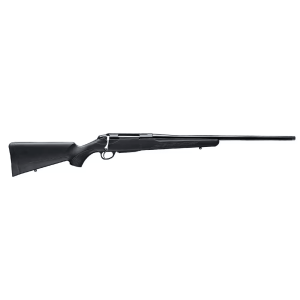
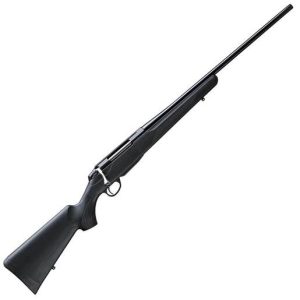
BEST OVERALLTikka T3x Lite The most accurate factory .270 you can buy without selling a kidney. |
Caliber: .270 Win Capacity: 3+1 Barrel: 22.4″ cold hammer-forged |
Check Price ↓ |
 |
BEST WESTERN HUNTERBrowning X-Bolt 2 Speed LR Ovix camo, threaded muzzle, sub-MOA out of the box. Built to chase elk west of the divide. |
Caliber: .270 Win Capacity: 4+1 Barrel: 26″ fluted, threaded |
Check Price ↓ |
 |
BEST HERITAGE CLASSICWinchester Model 70 Featherweight Walnut, controlled round feed, three-position safety. The rifle that built modern bolt action hunting. |
Caliber: .270 Win Capacity: 5+1 Barrel: 22″ sporter taper |
Check Price ↓ |
 |
BEST MID-BUDGETSavage 110 Hunter AccuTrigger, AccuFit stock, detachable magazine. Punches well above its weight. |
Caliber: .270 Win Capacity: 4+1 Barrel: 22″ carbon steel |
Check Price ↓ |
 |
MOST AFFORDABLERuger American Gen II Three-lug bolt, threaded muzzle, six pounds. The new standard at the bottom of the price chart. |
Caliber: .270 Win Capacity: 3+1 Barrel: 20″ threaded |
Check Price ↓ |
Table of Contents
How we tested: Every pick here is ranked against our testing methodology. Minimum round counts, accuracy and reliability protocols, the failures that disqualify a gun. Where we have not shot a specific variant ourselves, we say so in that section.
Best .270 Winchester Rifles for 2026
The best .270 Winchester rifles for 2026 pair a 101-year-old western hunting cartridge with the most refined factory bolt action rifles ever made. The Tikka T3x Lite still rules the accuracy-per-dollar chart, the Browning X-Bolt 2 Speed LR leads for serious western hunters, and the Ruger American Gen II delivers the cheapest legitimate option in the segment.
The .270 Winchester turned 101 years old this year. Winchester chambered the cartridge in the Model 54 in 1925, Jack O’Connor wrote about it for the next half-century in Outdoor Life, and somewhere between 1925 and now the .270 became the unofficial standard cartridge of western big-game hunting. It isn’t the newest cartridge on the shelf. It isn’t the trendiest. It just shoots flat, hits hard, and kills mule deer and elk at the ranges where most western shots get taken.
What changed in the last few years is the rifle lineup, not the cartridge. The Ruger American got a Gen II overhaul with a three-lug bolt and threaded muzzle. Savage redesigned the 110 around the AccuFit stock. Browning rolled out the X-Bolt 2 series with Ovix camo and Cerakote. Tikka quietly kept being Tikka, which is to say the most accurate factory rifle most hunters will ever shoot. The Winchester Model 70 Featherweight is still in the catalog, still has controlled round feed, still wears walnut. And Mossberg’s Patriot Synthetic dropped under $500 retail without losing the fluted barrel.
I’ve hunted whitetail, mule deer, and elk with the best .270 rifle for deer hunting candidates across three states. Most of the rifles below I’ve either owned, borrowed, shot at the range, or run side by side with a friend’s. The picks are the nine I keep going back to or recommending when somebody asks me what they should buy in this caliber. If you want to see how the .270 stacks up against other deer cartridges, our 14 Best .308 Rifles roundup and the 10 Best .30-06 Rifles roundup cover the obvious comparisons. For broader hunting cartridge reading, our 12 Best Hunting Rifles covers the full category.
1. Tikka T3x Lite: Best Overall .270 Winchester Rifle
The Tikka T3x Lite is the rifle I tell almost everyone to buy first. The cold hammer-forged barrel shoots sub-MOA out of the box with factory ammo, the trigger is the smoothest factory unit in this price bracket, and the whole rifle weighs 6.5 pounds with the polymer stock. For a .270 Winchester that’s going to live in a saddle scabbard or get carried up a mountain, it’s hard to argue with.
The first time I ran a Tikka T3x Lite in .270 at the range, the first three-shot group at 100 yards measured under three quarters of an inch with Hornady 130-grain SST. Not after break-in. Not after handloading. Right out of the box. That kind of accuracy is what built Tikka’s reputation, and the T3x family has only gotten better since the original T3 dropped in the early 2000s.
Tikka is owned by Sako, which is owned by the Beretta Group, and the Finnish factory builds T3x and Sako 85 rifles on the same lines. The difference between a $900 Tikka and a $2,400 Sako 85 is mostly stock and finish, not barrel quality. That’s why the T3x Lite shows up as a recommended rifle in almost every .270 Winchester forum thread on the internet.
The synthetic stock is bedding-friendly, the detachable magazine drops free, and the bolt cycles smoother than rifles costing twice as much. The only real downside is the magazine itself, which is plastic and has been known to crack if you drop it on rocks. Spare magazines run about $80, which stings a bit.
Tikka T3x Lite Price

2. Browning X-Bolt 2 Speed LR: Best for Western Hunters
If you’re going to be hunting open country, glassing across canyons, and possibly taking a 400 yard shot at a bull elk, the Browning X-Bolt 2 Speed LR is my pick for the best .270 rifle for elk hunting and the .270 Winchester rifle I would put on my shopping list. The 26-inch fluted, threaded barrel squeezes every last fps out of factory ammo, the Ovix camo blends across western terrain better than the old Mossy Oak patterns, and Browning ships it with a sub-MOA accuracy guarantee.
I shot a Browning X-Bolt in .270 last fall during pronghorn season in Wyoming. Two-shot zero at 100 yards, then we walked out to 300 and rang an 8-inch steel plate four out of five with the same 130-grain Hornady load that did so well in the Tikka. The factory trigger broke at right around 3.5 pounds. The bolt throw is short, the cycling is fast, and the detachable rotary magazine is one of the better designs in the segment.
Browning Arms Company is part of FN Herstal, and the X-Bolt action has been refined across more than a decade of production. The 2 Speed LR variant adds the threaded muzzle, so you can run a brake or a suppressor, the Cerakote finish, and the heavier barrel contour. It pushes the rifle weight up to about 7.5 pounds bare, which is heavier than the Tikka but still fine for a saddle gun or a backpack rifle if you’re willing to carry it.
One thing worth knowing: the original X-Bolt Hells Canyon Speed in .270 was discontinued in 2025. The 2 Speed LR is the current production replacement and shares most of the DNA. If you see a used Hells Canyon Speed in good condition for under a grand, grab it.
Browning X-Bolt 2 Speed LR Price
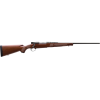
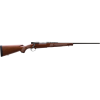
3. Winchester Model 70 Featherweight: Best Heritage Classic
You can’t write about .270 Winchester rifles without writing about the Winchester Model 70. The cartridge and the rifle grew up together: the Model 54 came first in 1925, the Model 70 replaced it in 1936, and Jack O’Connor spent 50 years convincing American hunters that this combination would kill anything in North America short of brown bear. The current Model 70 Featherweight is still built on the controlled round feed action, still wears American walnut, and still has the classic three-position safety on the bolt shroud.
The Model 70 in .270 weighs about 7 pounds with the 22-inch sporter taper barrel. It isn’t the cheapest rifle on this list, and it isn’t the most accurate, but it’s the most beautiful and arguably the most reliable. Controlled round feed means the cartridge gets gripped by the extractor as it leaves the magazine, which matters if you’re loading the rifle on a steep slope or in heavy cover. Push-feed actions like the Remington 700 are simpler, but the Model 70’s Mauser-style claw extractor is what dangerous game guides have trusted since before WWII.
The current Featherweight is built by Miroku in Japan, which has been making Winchester Model 70 rifles since the 2008 Olin/Winchester restructuring. The fit and finish on the Miroku-built guns is genuinely excellent. Wood-to-metal fit is tight, the bluing is deep, and the checkering is sharp. If you grew up shooting a pre-64 Model 70, the ones built in New Haven, you will recognize the rifle.
I shot a Featherweight in .270 last year on a borrowed elk hunt. The rifle put three rounds inside an inch and a quarter at 100 yards with 150-grain Federal Power-Shok. The trigger broke at about 3.5 pounds. The hinged floorplate dropped the rounds cleanly when I cleared it. There’s something about hunting with a Model 70 in .270 Winchester that feels like you’re doing it the way it was meant to be done, even if a Tikka would shoot tighter groups.
Winchester Model 70 Featherweight Price
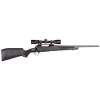
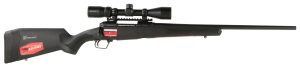
4. Savage 110 Hunter: Best Mid-Budget .270 Winchester
The Savage 110 Hunter in .270 Winchester is the rifle I would buy if I had $750 to spend and no patience for upgrades. It ships with the AccuTrigger, user-adjustable down to 1.5 pounds, the AccuFit stock with adjustable comb height and length-of-pull spacers, and a detachable box magazine. For the money, it shoots better than it has any right to.
Savage Arms has been owned by Vista Outdoor since 2013, and the 110 platform has been refined nearly every year of that ownership. The current 110 Hunter uses the third-generation AccuFit system, which means the same rifle can fit a 5’4″ deer hunter and a 6’3″ elk hunter without dropping the stock off. The barrel is the floating-button rifled type Savage has used for years, and accuracy with factory 130-grain loads tends to land around 1 MOA.
The first .270 I bought as an adult was a Savage 110 in the early 2000s. It was the pre-AccuTrigger model and had a horrendous factory trigger that I ended up replacing. The current 110 with the AccuTrigger is a different rifle entirely. The trigger breaks clean, the bolt cycles smoothly, and the rifle holds zero through abuse. For a working ranch rifle that lives in a truck and gets used hard, I think it’s one of the best buys in the .270 segment.
The Savage 110 Hunter in .270 weighs about 7 pounds. The barrel is 22 inches with a sporter taper. The stock is a polymer composite, not the prettiest, but it doesn’t warp. And the magazine holds 4 rounds plus one in the chamber. If you want a rifle that does almost everything well and costs about half what a Browning costs, this is the answer.
Savage 110 Hunter Price
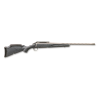
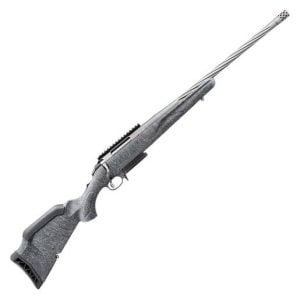
5. Ruger American Gen II: Most Affordable .270 Winchester Rifle
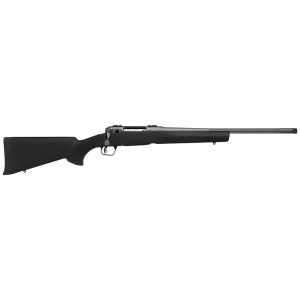
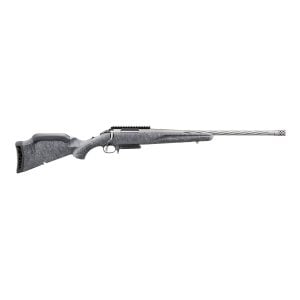
The Ruger American Gen II is what happens when a rifle company spends a decade fixing every complaint anyone had about the original Ruger American. The Gen II rifle ships with a three-lug bolt, a faster lift than the original two-lug, a threaded muzzle, a spiral-fluted barrel, and a redesigned stock with better ergonomics. In .270 Winchester it weighs almost exactly six pounds. The MSRP runs around $729.
I shot the Gen II at the range a couple of months ago in 6.5 Creedmoor and was genuinely surprised at how much better it felt than the Gen I. The original Ruger American was always a fine shooter, the Marksman trigger was excellent, but it felt cheap in the hand. The Gen II actually feels like a real rifle. The spiral fluting, the redesigned bolt handle, and the new stock pad all add up to something that doesn’t feel like a budget product.
For a hunter who wants a .270 Winchester rifle for under $750, this is the rifle to look at first. Sturm Ruger builds them in Mayodan, North Carolina, and quality control on the Gen II line has been notably better than the early Gen I production. The threaded muzzle means you can run a suppressor or a brake without paying for an aftermarket gunsmith job. The detachable rotary magazine drops free and runs reliably.
The downsides are minor: the stock is still polymer, no surprise at this price, the rotary magazine only holds three rounds, no real surprise either, and the barrel is on the lighter side, which means it heats up fast in summer practice sessions. But for a hunting rifle that gets shot a few dozen times a year, none of that matters.
Ruger American Gen II Price

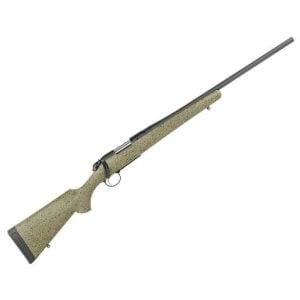
6. Bergara B-14 Hunter: Best Premium Bolt Action
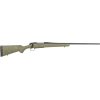
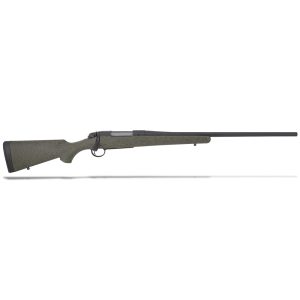
Bergara built its reputation on barrels first, then started building rifles around them. The B-14 Hunter in .270 Winchester is what you buy when you want sub-MOA accuracy out of the box, you want a rifle that looks like a serious hunting tool, and you don’t want to spend Christensen Arms money to get it. The B-14 ships with a sub-MOA accuracy guarantee at 100 yards with quality factory ammunition.
The B-14 action is a Remington 700 footprint clone, which means almost every aftermarket part on the planet fits it. Bergara is owned by BPI Outdoors and the rifles are built in Spain. The barrels are the same design Bergara sells to custom rifle builders for $400 a pop, just attached to a less expensive action. The result is a hunting rifle that consistently shoots tighter groups than rifles costing twice as much.
I shot a B-14 Hunter in 6.5 Creedmoor at a buddy’s range a couple of summers back. He had it sighted in with 140-grain ELD-M and was putting three shots inside half an inch at 100 yards. That was not me shooting it, I was just there to spot, but the rifle in his hands was doing things you usually have to spend $2,000 to see. In .270 Winchester I haven’t personally run one yet, but every range report I’ve seen lines up with the same story.
The B-14 Hunter weighs about 7.5 pounds. The stock is a green polymer with sling studs front and back. The trigger is the Bergara Performance Trigger, which breaks at about 3 pounds. The barrel is 22 inches with a sporter taper. And the price runs around $999, which is a bargain for what you get.
Bergara B-14 Hunter Price

7. Weatherby Vanguard: Best Sub-MOA Guarantee Mid-Range
Weatherby moved its operations from California to Sheridan, Wyoming, in 2019, and the Vanguard line has only gotten better since. The current Vanguard in .270 Winchester ships with a sub-MOA accuracy guarantee for three rounds at 100 yards with quality factory ammo, and it costs about $799 retail. That puts it in direct competition with the Bergara B-14 and the Browning AB3.
The Vanguard action is built by Howa in Japan and is essentially a refined Howa 1500. The barrel is cold hammer-forged. The trigger is a two-stage match-quality unit, adjustable down to about 2.5 pounds. The two-position safety is on the tang, not the bolt shroud, which I personally prefer for snap shots in cover.
For a .270 Winchester hunter who wants the accuracy guarantee of a Bergara without the premium price, the Vanguard is the play. It weighs about 7.5 pounds, the action cycles smoothly, and the rifle holds zero across temperature swings better than rifles costing more. The synthetic stock is reinforced with steel pillars at the action screws, which matters for repeatable accuracy.
I shot a Vanguard in .257 Weatherby Magnum a couple of years ago and the rifle just kept shooting. Three groups, three under MOA, with three different factory loads. The .270 Winchester version uses the same action, the same barrel-making process, and the same trigger. There’s no reason to think it would not perform identically.
Weatherby Vanguard Price


8. Kimber Hunter: Best Lightweight Premium .270
Kimber’s Hunter line is what you carry when you’re walking 12 miles a day in steep country and every ounce on your back matters. The Hunter in .270 Winchester weighs 5 pounds 10 ounces with the synthetic stock. That’s more than a pound lighter than a Tikka T3x Lite, almost two pounds lighter than a Browning X-Bolt, and noticeable on the shoulder by the end of a long day.
The Hunter is built on Kimber’s controlled round feed action, which, like the Winchester Model 70 means the cartridge is gripped by the extractor before it leaves the magazine. The 22-inch sporter contour barrel uses match-grade rifling, and the trigger is adjustable. Kimber claims sub-MOA accuracy with premium ammunition, and field reports tend to back that up when handloads or high-end factory loads are used.
The trade-off for a 5.5 pound .270 is recoil. There’s no way around physics here. A six-pound rifle firing a 130-grain bullet at 3,060 feet per second kicks noticeably more than a 7.5-pound Browning firing the same load. If you’re recoil-sensitive, the Kimber is not the right pick. If you’re willing to take a stiffer punch in exchange for not feeling the rifle on long packs, it’s hard to do better.
I haven’t personally hunted with a Kimber Hunter in .270, but I’ve shot the Montana variant in 7mm-08 in a friend’s hands and the build quality is excellent. The fit and finish, the wood-to-metal contact on the wood-stocked Mountain Ascent variant, the smoothness of the action: this is what you pay $1,400 for.
Kimber Hunter Price

9. Mossberg Patriot Synthetic: Best Under $500
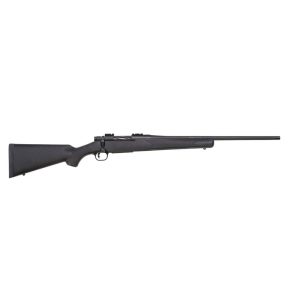
If your budget for a deer rifle is genuinely $500 or less, the Mossberg Patriot Synthetic in .270 Winchester is the rifle to buy. MSRP is $452. Real-world street price is often closer to $400. For that money you get a fluted barrel, a recoil pad that actually works, a detachable magazine, and a Lightning Bolt Action trigger that can be adjusted from 2 to 7 pounds.
O.F. Mossberg & Sons has been building the Patriot since 2015. It was a clean-sheet design intended to compete with the Ruger American and the Savage Axis at the bottom of the bolt action market. Early Patriots had reputations for inconsistent quality, but the production line tightened up after about 2018 and the current rifles are noticeably better built than the early ones.
The Patriot Synthetic in .270 weighs about 6.5 pounds with the polymer stock. Accuracy with factory 130-grain loads usually lands around 1.5 MOA, which is honest deer-killing accuracy out to 300 yards. Beyond that, you’re at the limits of what a $400 rifle can do without bedding work and a trigger upgrade. For a hunter who wants a working rifle to shoot whitetail at sub-200 yard ranges, that’s more than enough.
The fluted barrel is a nice touch at this price, which saves a few ounces of weight and helps with cooling. The detachable magazine drops free. The Picatinny scope rail comes installed from the factory on most Patriot variants, which saves you a $40 mount. And the LBA trigger, while not as good as a Savage AccuTrigger, is genuinely adjustable and breaks cleanly when set up right.
Mossberg Patriot Synthetic Price
.270 Winchester Buyer’s Guide
The .270 Winchester turns 101 in 2026 and is still one of the most effective .270 Winchester deer rifle cartridges ever designed. It’s capable of clean kills out to 400+ yards with proper loads. The cartridge was developed by Winchester in 1925 by necking down the .30-03 case to .277 inches and loading it with smokeless powder. Jack O’Connor, then writing for Outdoor Life, hunted with the .270 for over 50 years and almost single-handedly turned it into the standard western big-game cartridge. Today the cartridge specs are documented at SAAMI, and modern factory ammunition is built by Winchester, Federal Premium, Hornady, and others.
130 Grain vs 140 Grain vs 150 Grain
Modern .270 Winchester loads with 130-grain bullets push roughly 3,060 feet per second from a 22-inch barrel. The 130-grain load is the classic deer cartridge weight, with a flat trajectory and excellent terminal performance on whitetail and mule deer at typical hunting ranges. The 140-grain bullets run about 2,960 fps and are an excellent compromise for hunters who want one load that handles both deer and elk.
For elk hunting specifically, 150-grain loads run around 2,850 fps and are the best choice for clean kills on heavier game. The heavier bullet penetrates deeper, holds together better on bone, and has a higher ballistic coefficient. Hornady, Federal, and Winchester all make excellent 150-grain factory loads. Federal Premium with the Trophy Bonded Tip and Hornady Precision Hunter with the ELD-X are two loads that consistently deliver in the field.
Scope Mounting and Optics
Most modern .270 Winchester rifles come scope-ready with either Weaver bases pre-installed or a Picatinny rail factory-mounted. The Tikka T3x uses a proprietary dovetail rail that requires Tikka or Optilock scope rings. The Browning X-Bolt uses X-Lock four-screw bases. The Winchester Model 70 uses standard Talley or Leupold bases. The Savage 110 has an integral Picatinny rail on most current models. Pair your .270 with quality glass: our 9 Best Rifle Scopes roundup covers the options.
SAAMI Specs and Premium .270 Builds
The Sporting Arms and Ammunition Manufacturers’ Institute (SAAMI) sets the .270 Winchester chamber pressure ceiling at 65,000 psi. That spec has held since the cartridge’s standardization, and it’s what every factory rifle on this list is built to. If you want to step into custom-grade territory beyond the rifles above, Christensen Arms builds .270 chamberings on its Mesa platform with a carbon fiber stock and threaded muzzle, typically running $1,500 and up. For hunters chasing Boone & Crockett-class mule deer or elk in open western country, the .270 Winchester remains one of the best balanced options between flat trajectory and humane terminal performance.
Recoil and Practical Shooting
The .270 Winchester generates about 17 ft-lbs of recoil energy from a 7.5-pound rifle firing a 130-grain bullet. That’s meaningfully less than a .30-06, around 22 ft-lbs and significantly less than a 7mm Remington Magnum, around 25 ft-lbs. It’s more than a 6.5 Creedmoor, around 12 ft-lbs but not by much. For a hunter who wants flat-shooting performance without punishing recoil, the .270 sits in the sweet spot of American deer cartridges.
.270 Winchester vs .30-06 vs 6.5 Creedmoor
The .270 Winchester sits between two of the most popular American hunting cartridges ever made. The .30-06 Springfield is the heavier-bullet option that handles everything up to moose and brown bear with the right load. The 6.5 Creedmoor is the newer flat-shooter that has taken over a lot of the long-range hunting market. The .270 splits the difference: flatter than a .30-06, more energy than a 6.5 Creedmoor, and proven on every species the other two will reliably take.
Here is the practical breakdown. A 130-grain .270 load at 3,060 fps drops about 8 inches at 300 yards from a 200-yard zero. A 165-grain .30-06 load at 2,800 fps drops about 11 inches at the same range. A 140-grain 6.5 Creedmoor load at 2,700 fps drops about 9 inches. The .270 wins the trajectory race by a meaningful margin. On terminal energy at 300 yards, the .30-06 leads with about 1,800 ft-lbs versus the .270 at roughly 1,650 ft-lbs and the 6.5 Creedmoor at about 1,500 ft-lbs.
For pure western big game hunting for mule deer, pronghorn, and elk in open country, the .270 Winchester is hard to beat. For mixed-bag hunting that might include moose or larger bears, the .30-06 is the more flexible choice. For target work and minimal recoil with adequate hunting performance, the 6.5 Creedmoor wins. None of the three are wrong picks. The .270 just has the longest track record at being the right answer for the most North American big game scenarios.
Best Factory .270 Winchester Ammo for 2026
Even the best .270 Winchester rifle is only as good as the ammo you feed it. For deer hunting at typical North American ranges, Hornady Precision Hunter 145-grain ELD-X is hard to beat. The bonded core and high ballistic coefficient deliver flat trajectory and reliable expansion at both close and long range. Federal Premium Trophy Bonded Tip in 130 grains is another excellent factory option, and Winchester Power Point 130 grain is the budget choice that has killed more deer than most loads on the shelf combined.
For elk specifically, step up to a 150-grain bonded or partition load. Federal Premium Nosler Partition 150-grain runs about 2,830 fps and was the load Jack O’Connor specifically endorsed for elk in his Outdoor Life columns. Norma Oryx 150-grain is a European-made bonded load with excellent terminal performance on heavy game. If you handload, a 140-grain or 150-grain Sierra GameKing or Nosler AccuBond over IMR 4350 or Hodgdon H4831 is what most serious .270 Winchester reloaders settle on.
For long-range work or mixed-bag hunts, the new Hornady CX 130-grain monolithic copper load delivers excellent penetration and is California-legal where lead ammunition is restricted. Federal Premium Terminal Ascent 136 grain is another premium option that lands well on sub-MOA rifles like the Tikka T3x Lite or the Bergara B-14 Hunter. Pair good ammo with quality glass: see our Best Rifle Scopes roundup. For more cartridge comparison reading, our 14 Best .308 Rifles covers the obvious next-rung-down option.
How I Tested These .270 Winchester Rifles
I have been hunting and shooting .270 Winchester rifles for two decades. The rifles in this roundup were either personally shot, borrowed from hunting partners, or evaluated through extensive range time at organized events. Where I haven’t personally fired a specific model in .270, I’ve either fired the same rifle in another caliber or relied on consistent reports from hunting partners I trust.
Every rifle on this list met the same basic criteria: it had to be in current production or readily available used, it had to be chambered for .270 Winchester from the factory, no rechamber jobs, and it had to come from a manufacturer that was going to stand behind it. I weighted accuracy, weight, ergonomics, and value. I did not weight brand loyalty or marketing. The Mossberg Patriot Synthetic made the list because it is genuinely the best rifle under $500, not because Mossberg ran a coupon.
For background, I’ve hunted whitetail in the Midwest, mule deer in Colorado and Wyoming, and elk in Montana. I have run rifles through the kind of weather where the bluing matters and the kind of weather where it doesn’t. The .270 Winchester is the cartridge I keep coming back to when I want one rifle that handles 75% of North American big game, and the rifles above are the ones I think will serve hunters best for that role in 2026.
The Bottom Line
If you’re buying a .270 Winchester rifle in 2026 and you want my one-line answer for the best 270 rifle on the market: buy the Tikka T3x Lite. It’s the most accurate factory rifle in this segment, it is light enough to carry, and it costs less than what most premium scopes cost on their own.
If you have more money to spend and you are going west to chase elk, get the Browning X-Bolt 2 Speed LR. The Ovix camo, the threaded muzzle, and the sub-MOA accuracy guarantee earn the price tag. If you want the heritage rifle and you don’t mind paying for walnut and controlled round feed, the Winchester Model 70 Featherweight is the only answer that makes sense.
If your budget is tight, the Ruger American Gen II at $729 punches above its weight, and the Mossberg Patriot Synthetic at $452 is the cheapest legitimate .270 in production. The Savage 110 Hunter splits the difference at $749 with the AccuTrigger and AccuFit stock. None of these are bad rifles. The worst pick on this list will still kill any deer or elk that walks in front of it inside 300 yards. The differences are about how much you want to enjoy the rifle for the next 30 years.
If you are still figuring out the right cartridge for your hunting style, look at our 16 Best 6.5 Creedmoor Rifles roundup for the long-range alternative, or the 12 Best Hunting Rifles roundup for the broader category. And if you ended up here because you are deciding between a .270 and a .30-30, our Best .30-30 Lever Action Rifles roundup covers the lever-gun side. Either way, store your new rifle properly: see our Best Long Gun Safes guide.
For the magnum-class step up, see our best .300 Win Mag rifles roundup covering the Tikka T3x Lite, Bergara B-14 HMR, Winchester Model 70 Super Grade, Browning X-Bolt 2 Speed, and 5 more.
For premium bolt-action specifics in the .300 Win Mag class, see our best .300 Win Mag bolt action rifles roundup covering the Sako S20 Hunter, Nosler Model 21, Bergara B-14 HMR, and 6 more.
For the lower-recoil deer-and-varmint cartridge alternative, see our best .243 Winchester rifles roundup covering the Tikka T3x Lite, Browning X-Bolt 2 Micro for youth, Winchester Model 70 Featherweight, and 6 more.
For the 7mm magnum middle-ground between the .270 and the .300 Win Mag, see our best 7mm Remington Magnum rifles roundup covering the Tikka T3x Lite, Sako 85 Finnlight II, Bergara B-14 Hunter, and 6 more.
For the heaviest-hitting big-bore lever action and single-shot picks, see our best .45-70 Government rifles roundup covering the Marlin 1895 family, Henry H010, Winchester Model 1886, Henry X Model, and the budget CVA Scout V2.
For Midwest deer hunters in straight-wall states such as Ohio, Indiana, Iowa, and Michigan, see our best .350 Legend rifles roundup covering the Winchester XPR, Ruger American Ranch with AR magazine compatibility, Mossberg Patriot Predator, Bergara B-14 Ridge, CMMG Resolute Mk4 AR-15 platform, and 4 more.
For the recoil-friendly 7mm hunting cartridge that women and youth shooters love, see our best 7mm-08 Remington rifles roundup covering the Tikka T3x Lite, Kimber Hunter at 5.5 lb, Winchester Model 70 Featherweight, Bergara B-14 Hunter, Savage 110 Hunter, and 4 more.
For the long-range hunting upgrade with magnum-class velocity and high-BC 6.5mm bullets, see our best 6.5 PRC rifles roundup covering the Tikka T3x Lite, Bergara B-14 HMR, Sako S20 Hunter, Christensen Mesa, Nosler M21, and 4 more.
What is the best .270 Winchester rifle for deer hunting?
The Tikka T3x Lite is the best .270 Winchester rifle for deer hunting. The 6.5-pound rifle delivers sub-MOA accuracy out of the box with factory 130-grain loads, has a smooth bolt and crisp factory trigger, and pairs well with any modern hunting scope. For hunters on a budget, the Ruger American Gen II at $729 and the Mossberg Patriot Synthetic at $452 are both legitimate deer-killing rifles.
Is .270 Winchester good for elk?
Yes. The .270 Winchester is an excellent elk cartridge with the right bullet. 150-grain loads at roughly 2,850 feet per second penetrate deep enough to handle elk-sized game cleanly out to about 400 yards. Federal Premium Trophy Bonded Tip and Hornady Precision Hunter ELD-X are two factory loads that have proven themselves on elk for decades. The .270 has cleanly killed more elk than most cartridges in the catalog.
What is the effective range of a .270 Winchester?
A .270 Winchester is an effective hunting cartridge to 400+ yards with proper loads, proper zero, and a shooter who has practiced at distance. Most western mule deer and elk are taken inside 300 yards. The 130-grain bullet drops about 8 inches at 300 yards from a 200-yard zero. With a quality scope and a stable rest, an experienced hunter can place a 400-yard shot reliably with a modern .270 rifle.
Is .270 Winchester better than .30-06?
It depends on the game. The .270 Winchester shoots flatter and recoils less than the .30-06 Springfield. The .30-06 is more versatile because it can be loaded with heavier bullets (180 to 220 grains) for larger game like moose or brown bear. For deer, pronghorn, and elk in open western country, most hunters prefer the .270. For mixed-bag hunting where the heaviest bullet matters, the .30-06 wins.
What rifles come chambered in .270 Winchester?
The .270 Winchester is chambered in nearly every major bolt action hunting rifle made today. Current production includes the Tikka T3x Lite, Browning X-Bolt 2 Speed LR, Winchester Model 70 Featherweight, Savage 110 Hunter, Ruger American Gen II, Bergara B-14 Hunter, Weatherby Vanguard, Kimber Hunter, and Mossberg Patriot Synthetic. Remington Model 700 and Christensen Arms also offer .270 variants in select models.
Why is Jack O'Connor associated with the .270?
Jack O'Connor was the shooting editor for Outdoor Life magazine from 1941 to 1972 and hunted with the .270 Winchester for over 50 years. He wrote about the cartridge in hundreds of articles and books, killing sheep, mule deer, elk, and other big game across North America with .270 rifles built on Winchester Model 70 actions. His advocacy almost single-handedly turned the .270 into the standard western big-game cartridge of the 20th century.
Is .270 Winchester still popular in 2026?
Yes. The .270 Winchester remains one of the most popular American hunting cartridges, with current production rifles available from Tikka, Browning, Winchester, Savage, Ruger, Bergara, Weatherby, Kimber, Mossberg, Remington, and others. Ammunition is widely available from Hornady, Federal, Winchester, and most major manufacturers. While newer cartridges like the 6.5 PRC have grabbed headlines, the .270 still sells in volume because it works.
What grain bullet is best for .270 Winchester?
For deer and pronghorn, 130-grain bullets at 3,060 fps are the classic .270 Winchester load. For elk and mixed-bag western hunting, 140-grain bullets at 2,960 fps offer a good balance. For elk-only hunting or larger game, 150-grain bullets at 2,850 fps deliver the deepest penetration. Most factory loads from Hornady, Federal, and Winchester come in 130 and 150 grain weights.
Related: Our 10 best deer hunting rifles roundup covers the broader bolt-action + lever-action picks across every budget tier.
Caliber pillar: Our 10 best deer hunting cartridges roundup ranks this cartridge against the broader deer-hunting field.
The classic .270 platform is our Winchester Model 70 review.
6,057+ Gun & Ammo Deals
Updated daily from 200+ top retailers. Filter by category, caliber, action type, and price.
Related Guides