

The Harris S-BRM is the best bipod for most shooters, a proven, near-indestructible sling-stud bipod that has steadied rifles for decades. If you want modern features for less, the Magpul Bipod is the value pick, and for precision competition the MDT Ckye-Pod rules the PRS line. Here are the six best bipods for 2026, across hunting, precision, and budget, and how to choose between them.
Some of the links below are affiliate links, meaning at no additional cost to you, we may earn a commission if you click through and make a purchase.
Table of Contents
How we tested: Every pick here is ranked against our testing methodology. Minimum round counts, accuracy and reliability protocols, the failures that disqualify a gun.
Best bipods at a glance
| Bipod | Best for | Mount | Pan/cant? |
|---|---|---|---|
| Harris S-BRM | Overall | Sling stud | Cant only |
| Magpul Bipod | Value | M-LOK, Pic, stud | Pan and tilt |
| Atlas BT10 | Premium | Picatinny QD | Pan and cant |
| MDT Ckye-Pod | PRS | Picatinny, ARCA | 360 pan, leg cant |
| Caldwell XLA | Budget | Sling stud | Pivot model only |
| Accu-Tac SR-5 | Durability | Picatinny QD | Cant only |
How to choose a bipod
A bipod is the cheapest, simplest upgrade that tightens your groups, because most misses at distance come from an unsteady hold rather than the rifle or the ammo. The right one depends on what you shoot: a hunter wants light and simple, a precision competitor wants total adjustability, and a magnum shooter wants toughness under recoil. The big choices are the mounting system, the leg material and weight, and whether you need pan and cant. If you want the wider optics and gear picture, our gun optics guide ties it together.
1. Harris S-BRM: Best Overall
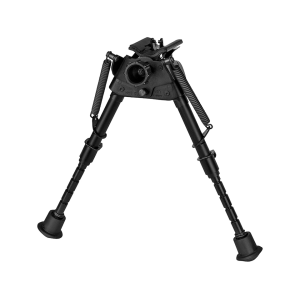
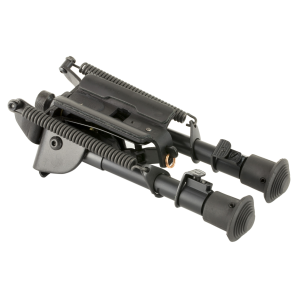
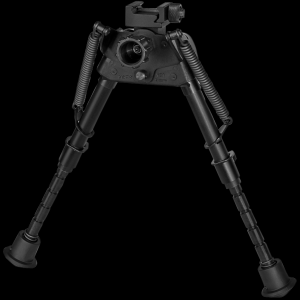
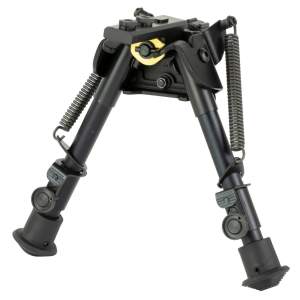
The Harris S-BRM is the bipod that earned the legend, and it is still the one I hand most shooters first. It is a sling-swivel-stud bipod with spring-return legs that deploy fast and notch out from roughly 6 to 9 inches, which covers prone and low-bench shooting. The all-metal build is close to indestructible, and decades of field use have proven it does exactly what a bipod should without drama.
The BRM designation adds the swivel feature, which lets the rifle cant side to side so you can level the gun on uneven ground without moving the legs. That single function is worth a lot in the field, where flat ground is rare. The legs are spring-loaded, so a tug deploys them and they fold back tight against the stock when you are done.
It mounts to the standard sling-stud most hunting rifles already wear, so it drops on without adapters, and the aftermarket of Pod-loc knobs and rails is enormous. It is not the lightest or the most adjustable bipod here, but for a do-everything hunting and range bipod that will outlast the rifle, the Harris is still the benchmark.
Pros
- Proven, near-indestructible all-metal build
- Swivel lets you level on uneven ground
- Mounts to standard sling stud, no adapter
- Huge aftermarket support
Cons
- Heavier than polymer options
- Sling-stud mount less rigid than Picatinny for some uses
Best for: Hunters and shooters who want one proven bipod that lasts a lifetime.
2. Magpul Bipod: Best Value
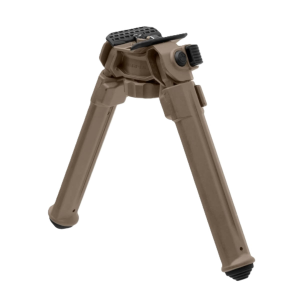
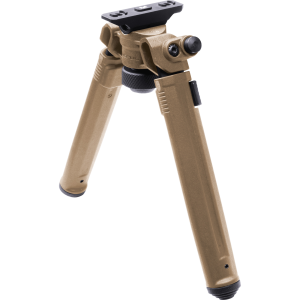
The Magpul Bipod is the value champion, delivering features that used to cost a lot more in a light, tough package. Built from aluminum and polymer, it offers a full range of leg adjustment, plus pan and tilt that let you track and level without breaking position. For the money, nothing matches the blend of weight, function, and durability.
It comes in several mounting versions, including M-LOK, Picatinny, and sling stud, so it fits anything from a modern precision rifle to a classic hunting stock. The legs deploy and lock positively, the tension is adjustable, and the whole thing shrugs off field abuse the way Magpul gear tends to.
It is not as feature-dense as a dedicated PRS bipod, and the pan and tilt are smooth rather than match-grade precise, but for the overwhelming majority of shooters it does everything they need at a price that makes the premium options hard to justify. This is the bipod I recommend to most people building a capable rifle.
Pros
- Outstanding features for the price
- Light aluminum and polymer build
- Pan and tilt plus full leg adjustment
- M-LOK, Picatinny, and sling-stud versions
Cons
- Pan/tilt smooth rather than match-precise
- Not as feature-dense as PRS-specific bipods
Best for: Most shooters who want premium function without the premium price.
3. Atlas BT10: Best Premium
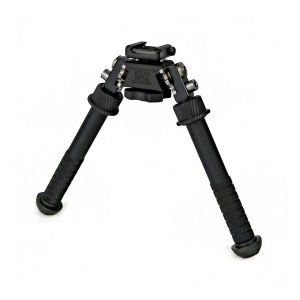
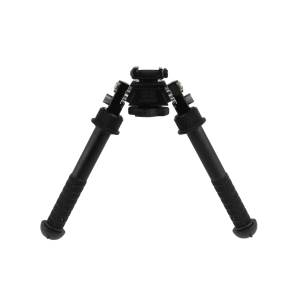
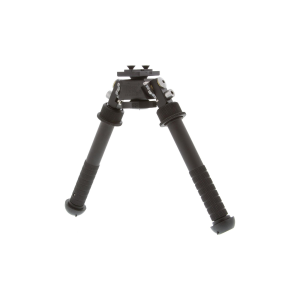
The Atlas BT10 is the bipod precision and tactical shooters reach for when they want the best, and it has earned that reputation. The legs articulate to a huge range of angles, fold forward and back, and lock with a satisfying solidity, while the pan and cant let you level and track a target with no slop at all. It is the gold standard for adjustability.
Machined from aluminum to tight tolerances, the BT10 is effectively bombproof, and the ADM quick-detach lever option lets you pull it off and reattach to zero on a Picatinny rail in seconds. The legs deploy to multiple detented positions, so you can set it up prone, on a barricade, or anywhere in between.
It costs real money, and for a casual hunter it is more bipod than the job requires. But for a precision rifle, a PRS or tactical setup, or anyone who simply wants the most capable and durable bipod made, the Atlas justifies its price every time you settle behind the rifle. Pair it with a quality scope from our best PRS scopes guide.
Pros
- Unmatched leg articulation and adjustability
- Rock-solid pan and cant with no slop
- Bombproof machined-aluminum build
- Quick-detach Picatinny mounting option
Cons
- Premium price
- Overkill for a casual hunting rifle

Best for: Precision and tactical shooters who want the most capable bipod made.
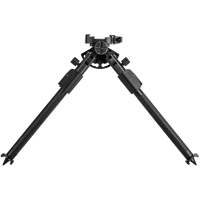
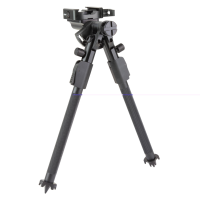
4. MDT Ckye-Pod: Best for PRS
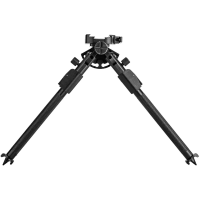
The MDT Ckye-Pod is the bipod that dominates the PRS firing line, and once you handle one you understand why. It offers full 360-degree panning, independent leg cant, and a clever single-pull or dual-pull leg deployment that lets you drop into position fast on a clock. For competition where seconds and stability decide stages, it is purpose-built.
Everything adjusts: leg length, leg angle, the pan tension, even the foot type. That total adjustability lets you build a rock-steady platform on awkward barricades and uneven props, which is exactly what a PRS match throws at you. The build quality matches the price, with smooth, precise mechanisms throughout.
It is heavy and expensive, and for a hunter it is far more bipod than needed. But for the precision rifle competitor, or the long-range shooter who wants the most adjustable platform available, the Ckye-Pod is the tool the top of the leaderboard runs. If you handload for that rifle, our reloading guide covers the consistent ammo a match setup deserves.
Pros
- Full 360-degree pan and independent leg cant
- Single or dual-pull rapid deployment
- Total adjustability for barricades and props
- Built to competition standards
Cons
- Heavy and expensive
- Far more than a hunter needs
Best for: PRS competitors and long-range shooters who want maximum adjustability.
5. Caldwell XLA: Best Budget
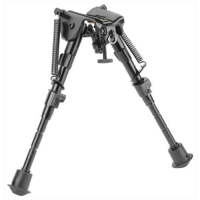
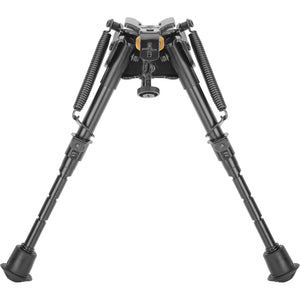
If you want a working bipod for the least money, the Caldwell XLA is the honest budget pick. It is a sling-stud pivot bipod with spring-loaded legs, available in fixed and pivot models and a couple of height ranges, and it does the core job of steadying your rifle for prone shooting at a price that is hard to argue with.
It will not match the precision or durability of the premium bipods, and the adjustments are basic, but for a hunting rifle that lives in the safe most of the year, or a first bipod to learn on, it delivers real stability for very little outlay. The pivot model adds cant for leveling on uneven ground.
Think of it as the bipod that removes every excuse to shoot off a wobbly rest. It is not a forever tool for a serious precision shooter, but as a budget hunting bipod or an entry point, the Caldwell XLA punches above its modest price and gets the job done.
Pros
- Lowest credible price for a real bipod
- Sling-stud mount fits most hunting rifles
- Pivot model adds cant for uneven ground
- Light and simple
Cons
- Basic adjustments and materials
- Not built for heavy precision use
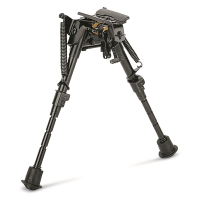
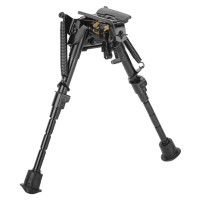
Best for: Budget hunters and first-time bipod buyers.
6. Accu-Tac SR-5: Best for Durability
Accu-Tac builds some of the toughest bipods on the market, and the SR-5 is the one to know. Machined from aircraft aluminum with a wide stance and burly legs, it is built to take recoil from big calibers and hard field use without flinching. If you shoot a magnum or a heavy rifle and want a bipod that will not budge, this is it.
The legs deploy to multiple detented angles and lock hard, and the wide footprint gives it excellent stability under recoil. It mounts via Picatinny with a quick-detach option, and the build feels like it was made to be run over and keep working. Accu-Tac’s reputation for durability is well earned.
It is heavier and pricier than a basic bipod, and the adjustment range is less elaborate than a PRS-specific unit, but for sheer toughness and stability under big recoil, the SR-5 is hard to beat. For a hard-use hunting or tactical rifle, it is a buy-once choice.
Pros
- Extremely tough machined-aluminum build
- Wide stance for stability under recoil
- Handles magnum recoil without shifting
- Quick-detach Picatinny mount
Cons
- Heavy
- Less adjustable than dedicated PRS bipods
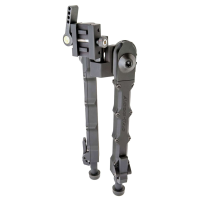
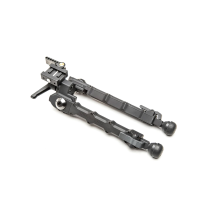
Best for: Magnum and hard-use shooters who want maximum toughness and stability.
Bipod buyer’s guide
Mounting: sling stud vs Picatinny vs M-LOK and ARCA
How the bipod attaches decides what rifles it fits and how rigid it is. Sling-stud bipods like the Harris and Caldwell drop onto the stud most hunting rifles already have, with no adapter needed. Picatinny bipods clamp to a rail for a more rigid, repeatable mount favored on precision rifles and ARs. M-LOK mounts suit modern handguards and chassis, and ARCA rails, common in PRS, let the bipod slide fore and aft for balance. Match the mount to the rifle you actually own.
Pan, cant, and leveling
Flat ground is rare in the field, so the ability to level and track matters. Cant lets the rifle tilt side to side so you can level it on a slope without moving the legs. Pan lets the rifle swivel to follow a moving target or transition between targets. A basic bipod offers neither, a Harris adds cant, and the premium units add smooth, lockable pan and cant. For hunting, cant is the priority; for tracking game or shooting stages, pan earns its keep.
Leg material, weight, and height
Aluminum legs are stiff and tough, polymer saves weight and money, and the choice trades durability against ounces. Height range matters too: a short bipod is steadier prone, while a taller one lets you shoot seated or over low cover. Think about how you actually shoot. A backcountry hunter counts every ounce, while a bench or barricade shooter wants the stiffest, most adjustable platform regardless of weight.
Spiked vs rubber feet
Rubber feet grip hard surfaces like a bench or a barricade and do not mar them, while spiked feet dig into dirt, grass, and soft ground for a planted, no-slip stance. Many bipods offer interchangeable feet so you can swap to suit the ground. If you shoot mostly prone in the field, spikes help; if you shoot off hard props and benches, rubber is the better default.
When a bipod is not the right tool
A bipod shines prone and on flat rests, but it is not always the answer. For steep field positions and improvised rests, a rear bag and a tripod often beat a bipod, which is why PRS shooters carry all three. For offhand and quick shots, no support beats practice. Buy a bipod for the prone and bench work it excels at, and do not expect it to solve every field position.
How I evaluated these bipods
I weighed these on the things that decide whether a bipod earns a permanent place on your rifle: how solidly the legs lock and how steady the platform is under recoil, the quality and slop-free feel of any pan and cant, build durability over years of field abuse, weight against the way you actually carry and shoot, and the mounting options that decide what rifles each one fits. Price counted against real capability, because a featherweight hunter and a PRS competitor need very different tools, and the best bipod is the one matched to your shooting, not the one with the most knobs.
Mistakes to avoid when buying a bipod
- Buying the wrong mount. A Picatinny bipod will not fit a bare sling stud and vice versa without an adapter. Confirm your rifle’s mounting interface before you buy.
- Overbuying for hunting. A heavy PRS bipod is a burden in the backcountry. Match weight and features to how far you pack the rifle.
- Skipping cant on uneven ground. Without the ability to level the rifle, a slope throws your shot. For field shooting, cant is close to essential.
- Ignoring foot type. Rubber slips on dirt and spikes mar a bench. Match the feet to the surfaces you actually shoot from, or buy a bipod with swappable feet.
- Expecting it to do everything. A bipod is a prone and bench tool. For steep field positions, plan to add a rear bag and a tripod rather than forcing the bipod.
Bottom Line
For one bipod that does almost everything and lasts forever, the Harris S-BRM is still the benchmark, with the Magpul Bipod the value pick that gives most shooters modern pan-and-tilt features for less. Precision competitors should look at the MDT Ckye-Pod or the Atlas BT10, magnum and hard-use shooters at the Accu-Tac SR-5, and budget hunters at the Caldwell XLA. A good bipod is the cheapest accuracy upgrade you can make. Pair it with the right glass from our best rifle scopes guide, a quality rangefinder, and for precision work, our best PRS scopes guide.
Last updated August 2nd 2026
What height bipod do I need?
For prone shooting, a short bipod in the 6 to 9 inch range is the steadiest and most common choice. If you shoot seated, over low cover, or off berms, a taller 9 to 13 inch or extendable bipod gives you more flexibility. Match the height to the positions you actually shoot from most often.
Sling stud or Picatinny bipod, which is better?
Sling-stud bipods like the Harris drop onto the stud most hunting rifles already have and are simple and proven. Picatinny bipods clamp to a rail for a more rigid, repeatable mount preferred on precision rifles and ARs. Choose sling stud for a traditional hunting rifle and Picatinny or ARCA for a chassis or rail-equipped precision setup.
What is the difference between pan and cant on a bipod?
Cant lets the rifle tilt side to side so you can level it on a slope without moving the legs. Pan lets the rifle swivel left and right to track a target or transition between targets. Cant matters most for field and hunting shots on uneven ground, while pan is valued in competition and for following moving game.
Do I need a bipod for hunting?
A bipod is not essential, but it noticeably steadies prone and rested shots, which tightens groups and improves your odds of a clean hit. For a hunter, a light sling-stud bipod like the Harris or Caldwell adds real stability without much weight. Many hunters pair it with shooting sticks or a pack for steep positions a bipod cannot cover.
Are expensive bipods worth the money?
For precision and tactical shooting, yes: the adjustability, pan and cant, and rock-solid build of an Atlas or MDT directly improve stability on awkward positions. For a hunter taking prone shots, a proven Harris or even a budget Caldwell does the core job. Buy the level of adjustability and toughness your shooting actually demands.
What are spiked versus rubber bipod feet for?
Spiked feet dig into dirt, grass, and soft ground for a planted, no-slip stance in the field. Rubber feet grip hard surfaces like benches and barricades without marring them. Many bipods offer swappable feet so you can match the surface, which is the most versatile option if you shoot in varied conditions.
Can you use one bipod on multiple rifles?
Yes, if they share a mounting interface or you use an adapter. A Picatinny or ARCA bipod with a quick-detach lever moves between rail-equipped rifles in seconds. A sling-stud bipod swaps between any rifles wearing a standard stud. Quick-detach mounts make sharing one good bipod across several rifles easy.
Is a bipod or a shooting tripod better?
They serve different jobs. A bipod is light, mounts to the rifle, and excels at prone and bench shooting. A tripod is heavier but supports steep, seated, and standing field positions a bipod cannot. Precision and serious field shooters often carry both, plus a rear bag, and pick the right support for each position.
4,021+ Gun & Ammo Deals
Updated daily from 200+ top retailers. Filter by category, caliber, action type, and price.
Related Guides