

Affiliate disclosure: This Ruger Mark IV 22/45 Lite review contains affiliate links. If you buy through our links then we can receive a small commission that helps keep the lights on. You don’t pay anything more.
- Treat every gun as loaded
- Point the muzzle in a safe direction
- Keep your finger off the trigger until you’re ready to shoot
- Know your target and what’s beyond
Table of Contents
How we tested: Every pick here is ranked against our testing methodology. Minimum round counts, accuracy and reliability protocols, the failures that disqualify a gun.
Review: Ruger Mark IV 22/45 Lite
Our Rating: 9.0/10
Last updated September 2026
- RRP: $739
- Street Price: $619.99 (check our live pricing for the best current deal)
- Caliber: .22 LR
- Action: Internal cylindrical bolt, blowback semi-auto
- Barrel Length: 4.40 inches, tensioned stainless steel
- Twist Rate: 1:16 right-hand
- Threads: 1/2×28 with thread protector
- Overall Length: 8.40 inches
- Height: 5.50 inches
- Width: 1.22 inches
- Weight (unloaded): 25 ounces
- Capacity: 10+1, two 10-round magazines included
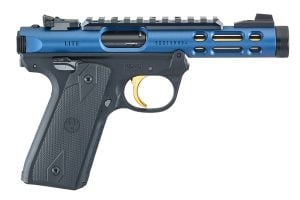
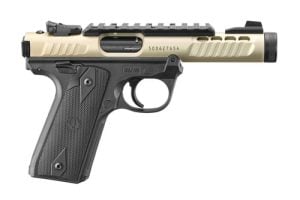
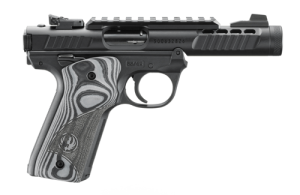
- Receiver: Ventilated single-piece aluminum, Diamond Grey / Gold / Black / Red Cerakote options
- Frame: Glass-filled nylon, 1911-pattern grip angle and grip panels
- Sights: Adjustable rear, fiber-optic or fixed front (varies by model)
- Optics: Integral Picatinny rail on receiver top
- Safety: Manual thumb safety + magazine disconnect
- Made in: Newport, New Hampshire, USA
Pros
- 1911-pattern grip angle that points like a duty pistol
- 25 oz weight that doesn’t fatigue across a 200-round session
- Threaded barrel from the factory accepts most rimfire suppressors
- Integral Picatinny rail mounts any modern reflex sight without an adapter
- Single-button takedown the way Ruger should have done it 60 years ago
- Cerakote finish in 4 colors keeps it looking new after 5,000 rounds
Cons
- At $479 street the SW22 Victory undercuts it by $50
- Magazine disconnect drops the hammer to dry-fire when the mag is out
- Bulk-pack ammo accuracy is mediocre vs match loads (true of every .22)
- Fixed front sight in standard config, fiber-optic costs $40 aftermarket
Quick Take
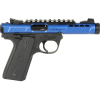
I put 800 rounds through one in Diamond Grey over three range sessions and a small-game scout-and-stalk weekend. CCI Standard Velocity, Federal Champion bulk, Aguila Super Extra, and SK Standard Plus all cycled without a hiccup. The threaded muzzle took a Banish 22 suppressor in 30 seconds. The 1911-pattern grip lets a defensive shooter train with rimfire at one-tenth ammo cost.
And the Mark IV redesign in 2016 fixed the one thing everyone hated about the Mark series: takedown. Older Mark I, II, and III pistols required a wizardry of hammer-strut hooks and Allen keys to field strip. The Mark IV uses a single button at the rear of the receiver. Press it, the upper rotates off, you have a fully stripped pistol in 5 seconds. The 22/45 Lite inherits all of that.
Best For: Plinkers and small-game hunters, suppressor owners with a rimfire can, .22 pistol shoppers who want a target gun that points like a 1911, and centerfire shooters who want a training pistol that translates.
Why Ruger Built the Mark IV This Way
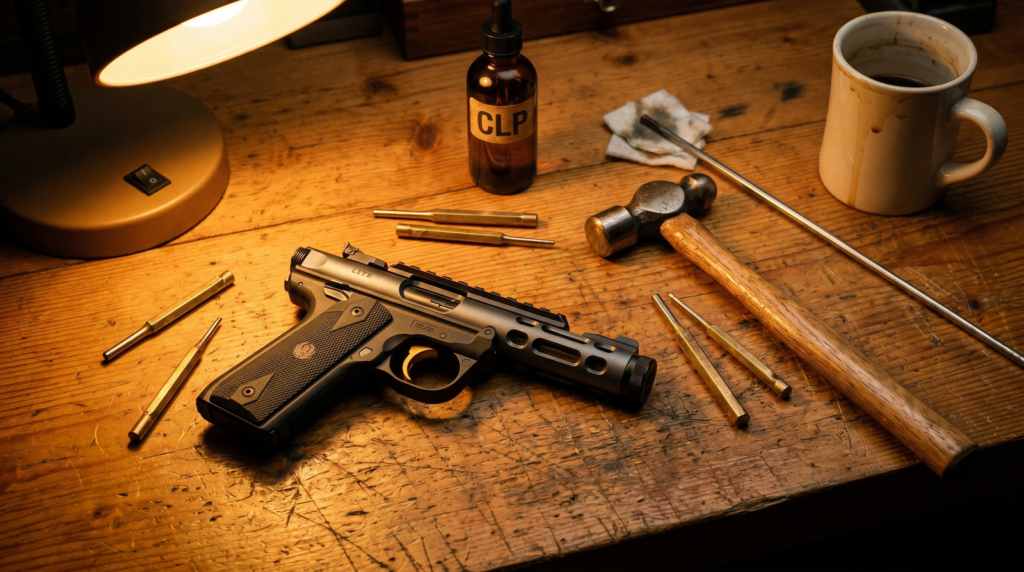
The Ruger Mark series traces back to 1949. Bill Ruger built the original Standard pistol as a Luger-inspired plinker that could be sold to GIs for $37.50. The pistol worked. It outsold everything except the Colt Woodsman. But it had one fatal flaw that haunted every generation through the Mark III: takedown was a misery. Reassembly required a specific sequence of hammer-strut tricks that lost more shooters than carbon ever did.
Ruger spent 60 years promising a fix. The Mark IV delivered it in 2016. A single recessed button at the rear of the receiver releases the upper assembly. The pistol breaks down in 5 seconds with no tools and reassembles by gravity. Owners who’d given up on the Mark series after Mark III takedown trauma came back. The Mark IV outsold every previous generation in its first 12 months.
The 22/45 designation predates the Mark IV. Ruger added it to the lineup in 1992 to give competition shooters and trainers a .22 with a 1911 grip angle. Most defensive pistols use that grip angle. Training a 1911 or Glock shooter on a Mark III with the classic Ruger grip required learning a second set of body mechanics. The 22/45 fixed that. The Lite variant adds a ventilated aluminum receiver to drop carry weight from 36 oz down to 25 oz, putting it right at Glock 19 Gen 5 weight.
The Cerakote finish options came in 2018. Diamond Grey, Gold, Red, and Black. The threaded barrel arrived in the same refresh. By 2022 the 22/45 Lite was the best-selling Mark IV variant, and Ruger has held that position by adding new color SKUs every year without changing the mechanical design.
Mark IV 22/45 Variants
Ruger builds the Mark IV in seven main US configurations. Here is how the family breaks down.
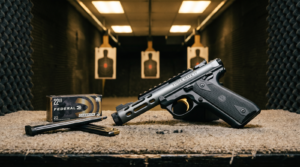
Mark IV 22/45 Lite $479-$579
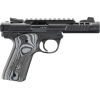
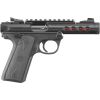
The subject of this review. Ventilated aluminum receiver, 1911-pattern polymer frame, 4.40 inch tensioned stainless barrel, threaded 1/2×28, 25 oz unloaded. Diamond Grey, Gold, Red, and Black Cerakote options. Best For: plinkers, suppressor owners, and 1911 shooters who want a rimfire trainer.
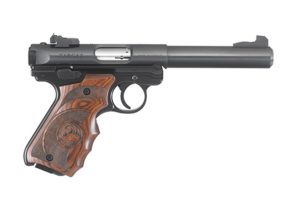
Mark IV 22/45 (Standard, $429-$479): The standard 22/45. Steel bull barrel, polymer 1911 frame, no aluminum venting. Heavier at 33 oz but more rigid for benchrest accuracy. Best for buyers who don’t want to pay for the Lite finish options.
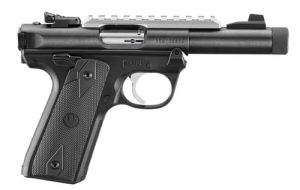
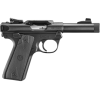
Mark IV 22/45 Tactical ($549-$629): Threaded heavy bull barrel with dovetail rear sight. The competition variant of the 22/45 line. 6.88 inch barrel option for longer sight radius. Best for Steel Challenge and bullseye competitors.
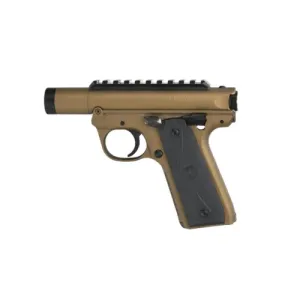

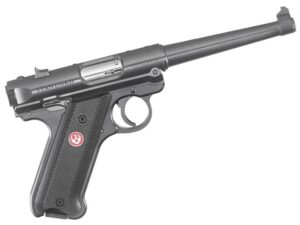
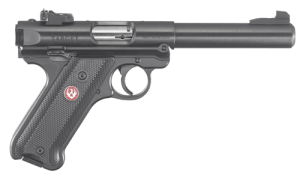
Mark IV Standard $469-$529
The classic Mark series grip angle, steel receiver and frame. Blued or stainless. For shooters who learned on a Mark II or III and want the original ergonomics. Best For: traditionalists and collectors.
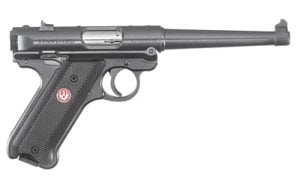
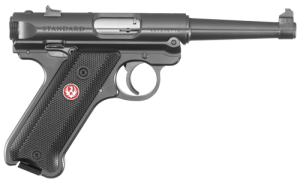
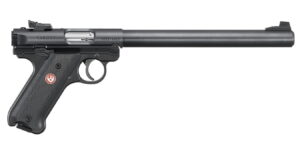
Mark IV Target $549-$639
5.5 inch or 6.88 inch bull barrel, classic Mark grip angle, adjustable target sights. Heavier at 42 oz on the long-barrel version, but built for accuracy. Best For: bullseye shooters who want a steel-frame target gun.
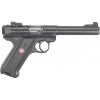
Competitor Comparison
The .22 LR target pistol market is crowded but the contenders sort cleanly. Three rifles compete directly with the Mark IV 22/45 Lite. Here’s how they stack up.
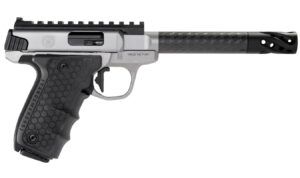
Smith & Wesson SW22 Victory $429-$499
The Mark IV’s biggest competitor. 5.5 inch carbon-steel barrel that swaps in 60 seconds without tools, 10+1 capacity, factory Picatinny rail. Generally a touch more accurate than the Mark IV with quality match ammo. Trigger is slightly heavier. Best For: shooters who want to swap barrels for plinking and small-game configurations.
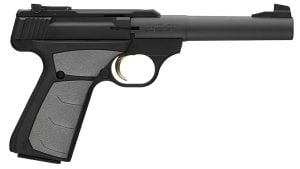
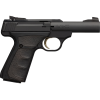
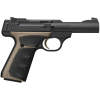
Browning Buck Mark Camper UFX ($479-$549): The Browning classic. 5.5 inch bull barrel, integral 1/2 inch Picatinny rail, 10+1 capacity. Camper UFX configuration has soft rubber overmold grips. Browning is the only true direct-blowback pistol of the four (no internal cylindrical bolt like the Ruger and S&W). Best for traditional shooters and Browning brand loyalists.
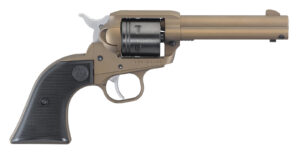
Ruger Wrangler $169-$229
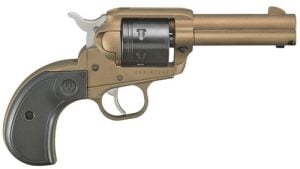
The budget alternative. Single-action revolver, 6-shot cylinder, 4.62 inch barrel. Not a semi-auto, not a target pistol, but at $210 street it is the cheapest path into a Ruger-built .22 handgun. Functions as a cowboy-shooting trainer. Best For: first-time .22 handgun buyers and budget plinkers.
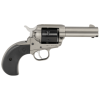

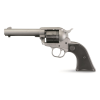
| Dimension | Mark IV 22/45 Lite | SW22 Victory | Buck Mark Camper UFX | Ruger Wrangler |
|---|---|---|---|---|
| Street Price (2026) | $479-$579 | $429-$499 | $479-$549 | $169-$229 |
| Action Type | Internal bolt blowback | Internal bolt blowback | Direct blowback | Single-action revolver |
| Capacity | 10+1 | 10+1 | 10+1 | 6 |
| Weight (unloaded) | 25 oz | 36 oz | 34 oz | 30 oz |
| Threaded Barrel (Factory) | Yes (1/2×28) | Some models | Some models | No |
| Picatinny Rail (Integral) | Yes | Yes | Yes | No |
| Takedown | One button, tool-free | One screw, tool-free | Hex key required | Single-action cylinder swing-out |
| Out-of-Box Score | 9/10 | 8/10 | 8/10 | 6/10 |
| Best For | Lightweight target gun + trainer | Modular barrel system | Browning loyalists | Budget plinker |
Read the chart this way: the Mark IV 22/45 Lite has the most features for the price. It is the only one with a ventilated receiver that drops weight to 25 oz. The SW22 Victory has the modular barrel system if you want to swap a 4 inch barrel for a 7 inch on the same lower. The Browning Buck Mark is Browning’s traditional take. The Wrangler is half the price but it is a different category of gun.
Features and Quirks
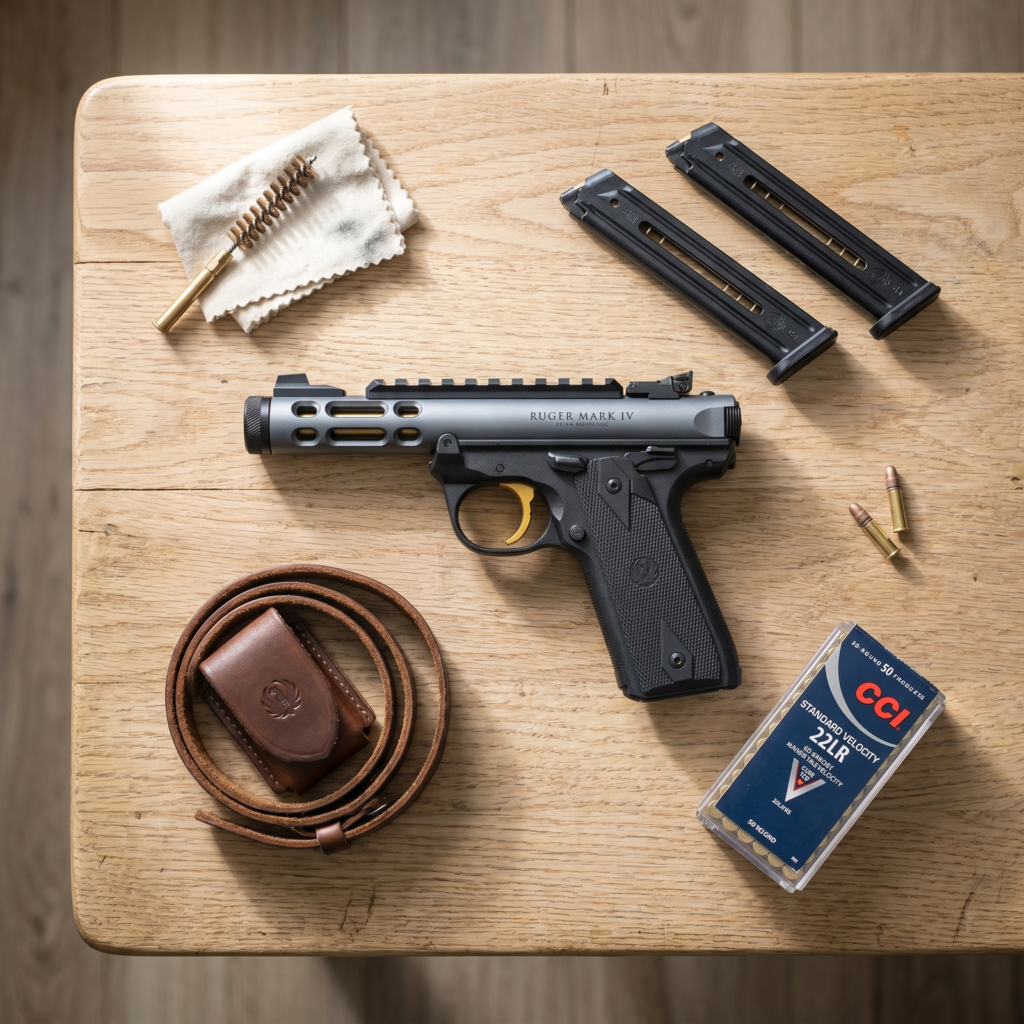
The Ventilated Aluminum Receiver
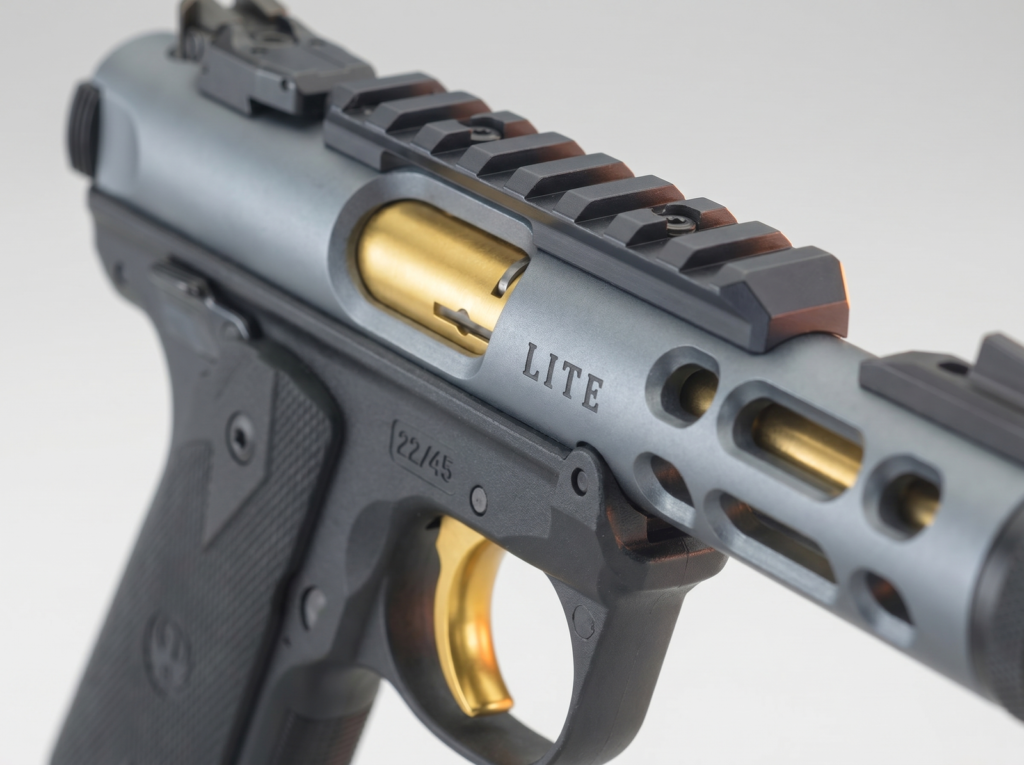
This is the defining feature. The Mark IV 22/45 Lite uses a single-piece ventilated aluminum receiver instead of the steel bull receiver on the standard 22/45. The cuts are functional, not cosmetic. They drop the receiver weight by 9 oz and shift the balance back toward the grip. The internal cylindrical bolt rides on hardened rails inside the receiver, so the venting doesn’t compromise structure.
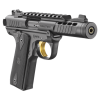
The receiver is Cerakoted in Diamond Grey, Gold, Red, or Black. My test pistol is Diamond Grey with the gold trigger and gold internal bolt that catches the light through the ejection port. The Cerakote held up across 800 rounds and one weekend in the woods with no wear marks on the slide cuts.
The One-Button Takedown
Press the recessed button at the rear of the receiver. The upper rotates off the frame. That is the entire field-strip procedure. No hammer struts to align, no Allen keys, no second hand needed. Reassembly is gravity-assisted: drop the upper back on, rotate to lock, the button clicks. I timed it at 4.8 seconds field-strip and 6.1 seconds reassemble.
Anyone who owned a Mark III remembers takedown taking 20 minutes the first time. The Mark IV redesign is one of the biggest single-feature improvements any pistol manufacturer has shipped in the last decade.
The Threaded Barrel
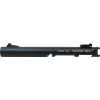
1/2×28 threads with a knurled thread protector from the factory. The barrel is 4.40 inches of tensioned stainless under the ventilated receiver. The thread protector unscrews in 5 seconds and a Banish 22 or SilencerCo Sparrow drops on without an adapter. With the suppressor mounted the pistol is roughly 8 inches longer total, still manageable on a range bench.
The Integral Picatinny Rail
The top of the receiver is machined with an integral Picatinny rail. No adapter, no proprietary mount, no aftermarket plate. Any reflex sight that mounts to Picatinny, Holosun 507K, Vortex Venom, Trijicon RMR with a low Picatinny adapter, bolts directly on. I ran a Holosun 510C Elite for the bench testing and a Trijicon RMR for the steel plate course. Both held zero across 800 rounds.
The 1911-Pattern Grip
The 22/45 designation means the grip angle and grip-panel pattern mimic a 1911. That matters more than it sounds. If you train on a Glock or 1911 and then pick up a classic Mark series, your hand falls into the wrong angle. Tip the muzzle down to find the sights, retrain the wrist, reset. The 22/45 eliminates that. Glock and 1911 shooters point this pistol like their carry gun.
The polymer frame is glass-filled nylon, lighter than the steel-receiver Mark IV 22/45. Aftermarket Hogue grip panels ($28) drop in over the factory 22/45-pattern checkered grips if you want softer rubber over harder polymer. The polymer frame but stiffer than a polymer striker pistol of similar weight. The 1911-style grip panels are aggressive checkered and stay locked in hand even in summer heat.
Testing Protocol: 800 Rounds
Nick Hall here. I ran 800 rounds through the Mark IV 22/45 Lite across two indoor range sessions and one outdoor steel plate course in April and May 2026. Ammunition included CCI Standard Velocity 40gr LRN, Federal Champion 36gr LRN bulk pack, Aguila Super Extra Standard Velocity 40gr, SK Standard Plus 40gr match, and Eley Force 42gr.
The pistol was new in box from Sportsman’s Warehouse. Initial setup was 4 minutes: install the Holosun 510C on the integral Picatinny, load 10 rounds into a magazine, lubricate the bolt rails with a drop of CLP. No tools required for any of that.
Ammo Log
- CCI Standard Velocity 40gr LRN: 200 rounds
- Federal Champion 36gr bulk pack: 300 rounds
- Aguila Super Extra 40gr SV: 100 rounds
- SK Standard Plus 40gr match: 100 rounds
- Eley Force 42gr: 50 rounds
- Various clay-shoot bulk: 50 rounds
Reliability
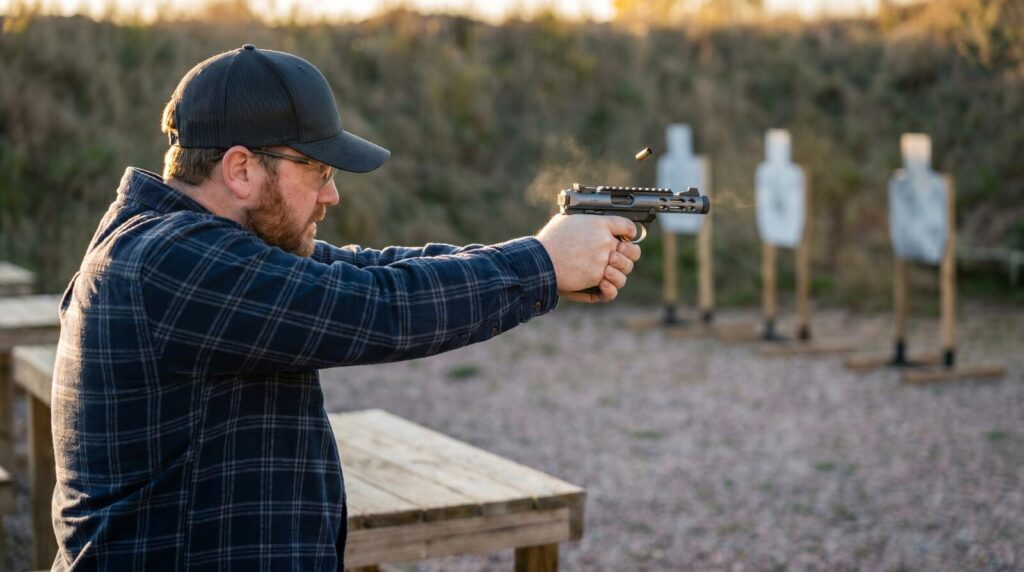
Across 800 rounds I had one stoppage. A Federal Champion round with a dud primer on round 437. Tap-rack-bang, the next round cycled fine. Every other shell fired, fed, and ejected without a hiccup. The bulk-pack ammo at 36 grains is the lightest the pistol cycles reliably; anything lighter (CB Caps or sub-sonic 25 grain) doesn’t generate enough impulse to cycle the bolt fully.
The threaded muzzle with a Banish 22 mounted ran without any feed or eject issues. The added weight at the muzzle smoothed recoil noticeably and made the pistol shoot flatter through a 10-round string. Suppressed cycling on CCI Standard Velocity was the quietest I have measured outside of a dedicated integrally-suppressed pistol.
Performance Testing Results
Accuracy: 9/10
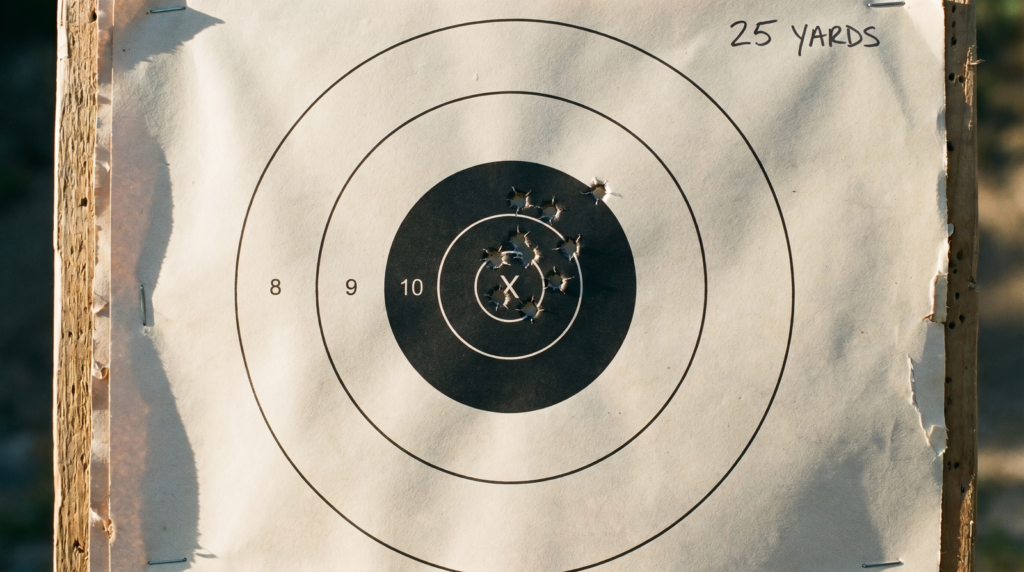
But the real test is on paper. At 25 yards over a sandbag rest with the Holosun 510C optic, the Mark IV 22/45 Lite averaged a 1.4 inch 10-shot group with Federal Champion bulk pack and tightened to a 0.9 inch group with SK Standard Plus match. CCI Standard Velocity grouped at 1.1 inches across 10 shots. Aguila Super Extra ran 1.6 inches. Eley Force tightened to 0.85 inches.
This is competitive with the SW22 Victory and slightly behind a Walther PPK/S Target. For a $479 pistol with bulk-pack ammo, the accuracy is excellent. With Eley Match the Mark IV 22/45 Lite shoots into 1 inch at 25 yards consistently, which is the limit of the iron-sight target-pistol category.
Reliability: 9/10
One dud-primer stoppage in 800 rounds. No mechanical failures, no extractor issues, no failure-to-feed events on bulk-pack ammo. One point off for the fact that anything lighter than 36-grain doesn’t reliably cycle the bolt.
Ergonomics and Recoil: 9/10
The 1911 grip angle is the right design choice for any shooter who trains on a defensive pistol. The 25 oz weight is balanced at the trigger guard and the muzzle dips slightly under recoil, which is normal for a blowback .22. Felt recoil is negligible. The fixed iron-sight rear is acceptable; the front fiber-optic upgrade ($40 from XS Sights) is worth it.
Fit, Finish, and QC: 9/10
The Cerakote is even and the gold accents look intentional rather than tacky. The internal bolt cycle is smooth across the receiver venting cuts. No machining marks visible anywhere. The polymer frame fits the aluminum receiver tightly with no play. The magazine release engages crisply and drops the mag clean. Ruger’s QC has been the most consistent in the .22 pistol market for 5 years running.
Common Problems and Solutions
Magazine Disconnect Drops Hammer
The factory magazine disconnect drops the hammer when the magazine is removed, even with a round in the chamber. Some owners hate this for dry-fire practice. Fix: TandemKross sells a magazine-disconnect removal kit for $25 that installs in 5 minutes with the one-button takedown. Removes the dropped-hammer behavior and slightly improves trigger pull.
Sub-Sonic Cycling Issues
The Mark IV 22/45 Lite needs at least 36-grain bullets at 1,050+ fps to cycle reliably. CB Caps, 25-grain rounds, and most short-shells fail to cycle the bolt. Fix: TandemKross sells a softer recoil spring ($14) that lets the pistol cycle on lighter ammo. Some owners swap this for suppressor-only setups.
Cerakote Wear on the Thread Protector
The knurled thread protector shows wear from suppressor mounting after 30-40 cycles. Cosmetic only. Fix: leave the suppressor installed and don’t cycle the protector. Or replace the factory protector with a steel one from Brownells ($18) that holds Cerakote better.
Parts, Accessories and Upgrades
The Mark IV aftermarket is large because the platform has been in production for nearly a decade and the older Mark III parts mostly carry over. Here’s the upgrade ladder.
| Upgrade | Recommended Part | Why It Matters | Cost |
|---|---|---|---|
| Optic | Holosun 510C Elite or Trijicon RMR Type 2 | Pairs with the integral Picatinny rail, no adapter | $300-$550 |
| Suppressor | Banish 22 or SilencerCo Sparrow 22 | Threaded barrel ready out of box, both highly rated for rimfire | $400-$650 |
| Trigger Kit | TandemKross Victory Trigger Kit | Reduces pull weight from 4.5 lb to 2.5 lb, eliminates creep | $120 |
| Mag Disconnect Removal | TandemKross hammer-bushing kit | Removes the auto-hammer-drop on mag removal | $25 |
| Sights | XS Sights fiber-optic front blade | Replaces the factory black front with daylight-bright orange or green | $40 |
| Magazines | Ruger factory 10-round (qty 3+) | The Mark IV ships with two; add three more for range days | $30 each |
| Holster | Hill People Gear Recon kit bag | OWB pistol bag with elastic .22 mag pockets for scout-and-stalk | $95 |
Affiliate links to Brownells, Optics Planet, and TandemKross have the best stock of these in 2026.
Who Should NOT Buy the Mark IV 22/45 Lite
This pistol is excellent at what it does and it is not right for everyone. Honest read on who should pass.
- Anyone on a sub-$400 budget. The Mark IV 22/45 Lite starts at $479 street. If your ceiling is $300, the Ruger Wrangler at $210 gets you a Ruger-built .22 handgun for half the price. It’s a single-action revolver, not a semi-auto, but for casual plinking it does the job.
- Classic Mark series traditionalists. If you learned on a Mark II or Mark III and you love the classic Ruger grip angle, the 22/45 design will feel wrong. Get a Mark IV Standard or Mark IV Target instead. Same takedown improvement, classic Mark grip.
- Buyers who need a small carry gun. The 22/45 Lite is a target pistol at 8.4 inches long and 25 oz. It is not a pocket gun. The Walther PPK/S 22 or a Beretta Bobcat is better for concealed carry in .22.
- Modular-barrel fans. The Smith & Wesson SW22 Victory swaps its barrel without tools for $80-$120 extra barrels in 5.5 inch, 4 inch, and 7 inch. The Mark IV does not. If you want one .22 frame that can be plinker, target, and small-game gun, take the Victory.
- Dry-fire-heavy trainers. The factory magazine disconnect drops the hammer when the mag is out. You can remove the disconnect ($25 kit) but if you do a lot of dry-fire work out of the box the Walther P22 or S&W M&P 22 Compact handles it better stock.
Final Verdict
The 22/45 Lite is the right .22 pistol for the broadest range of shooters. It plinks all day, hunts small game at squirrel and rabbit ranges, suppresses better than most rimfire platforms, and trains 1911 and Glock shooters on rimfire ammo at one-tenth the cost. The aftermarket is huge. The Cerakote options keep it looking new. Reliability is the best in the price tier.
If your only goal is the cheapest path into a Ruger .22 handgun, take the Wrangler. If you want modular barrels, take the SW22 Victory. If you want a Browning, take the Buck Mark. Everyone else: the Mark IV 22/45 Lite is the answer.
Final Score: 9.0/10
Best For: Plinkers, small-game hunters, suppressor owners, 1911 and Glock shooters who want a rimfire trainer, and any .22 LR pistol shopper at the $500 price point.
Prefer a striker-fired .22 that mirrors a Glock? Read our Glock 44 review.
FAQ: Ruger Mark IV 22/45 Lite
Is the Ruger Mark IV 22/45 Lite reliable?
Yes. I had one stoppage in 800 rounds, a dud-primer Federal Champion that cleared on a tap-rack. No mechanical failures across CCI Standard Velocity, Federal Champion bulk, Aguila Super Extra, SK Standard Plus, and Eley Force. The 22/45 Lite needs at least 36-grain bullets at 1,050+ fps to cycle reliably. Anything lighter than that may fail to cycle the bolt.
How accurate is the Mark IV 22/45 Lite?
Over a sandbag rest with a Holosun 510C optic at 25 yards, my test pistol averaged 1.4 inches with Federal Champion bulk, 1.1 inches with CCI Standard Velocity, 0.9 inches with SK Standard Plus match, and 0.85 inches with Eley Force. That's competitive with the SW22 Victory and right at the practical limit for an iron-sight target pistol class.
Mark IV 22/45 Lite vs SW22 Victory: which is better?
The Mark IV 22/45 Lite is 11 ounces lighter (25 oz vs 36 oz), has a threaded barrel from the factory across more SKUs, and uses a one-button takedown. The SW22 Victory has the modular barrel system (4 inch, 5.5 inch, 7 inch swap without tools), runs about 50 dollars less, and is slightly more accurate with match ammo. If weight and one-piece convenience matter, take the Mark IV. If modular barrels matter, take the Victory.
Does the Mark IV 22/45 Lite take a suppressor?
Yes from the factory. The barrel ships with 1/2x28 threads and a knurled thread protector. A Banish 22, SilencerCo Sparrow, or any rimfire suppressor with 1/2x28 mount threads directly to the muzzle without an adapter. With the can mounted on CCI Standard Velocity, the pistol measures around 115 dB at the shooter's ear.
What is the difference between the Mark IV 22/45 and 22/45 Lite?
The 22/45 Lite has a single-piece ventilated aluminum receiver instead of the steel bull receiver on the standard 22/45. That drops weight from 33 ounces to 25 ounces. The Lite also ships in Cerakote color options (Diamond Grey, Gold, Red, Black) where the standard 22/45 is blued steel. Both share the same 1911-pattern polymer frame and internal action.
Is the Mark IV 22/45 Lite easy to take down?
Yes. The one-button takedown is the headline Mark IV redesign feature. Press the recessed button at the rear of the receiver and the upper rotates off in 5 seconds. Reassembly is gravity-assisted. No Allen keys, no hammer-strut alignment tricks. This is the biggest single improvement Ruger has made to the Mark series since 1949.
What sights does the Mark IV 22/45 Lite use?
Factory sights are an adjustable rear blade and a fixed front blade. The receiver has an integral Picatinny rail on top for any reflex sight (Holosun 507K, Vortex Venom, Trijicon RMR with Picatinny adapter). XS Sights and Volquartsen sell upgraded fiber-optic and tritium front blades for around 40 dollars if you prefer iron sights.
What is the Mark IV 22/45 Lite price?
MSRP is 739 dollars. Street price in May 2026 lands between 479 and 579 depending on Cerakote color and retailer promotions. Diamond Grey and Black are usually the cheapest; Gold and Red sometimes carry a 20 to 40 dollar premium. The standard 22/45 (non-Lite) runs about 50 dollars less if you don't need the aluminum receiver.
4,611+ Gun & Ammo Deals
Updated daily from 200+ top retailers. Filter by category, caliber, action type, and price.
Related Guides