
Last updated September 2026 · By Nick Hall, USPSA, PCC and PRS competitor
Federal Syntech is the best competition ammo for pistol and PCC shooters in 2026, a clean-running 9mm with a polymer-coated bullet that makes minor power factor softly and reduces barrel fouling. For rifle, Hornady Frontier and Federal Gold Medal lead in .223, and Hornady Match and Federal Gold Medal own 6.5 Creedmoor precision. The right ammo is the load that runs reliably, makes your division’s power factor, and groups well in your gun. This guide ranks the best competition loads by discipline, with power-factor explained, pros and cons, and live prices.
Ammo is the one piece of competition gear you buy over and over, so getting it right matters more than almost any single upgrade. The wrong load can fail to make power factor, foul your barrel, or simply fail to cycle on the clock, while the right one runs clean, shoots soft, and groups where you aim. What counts as the best ammo depends entirely on your sport: a pistol shooter wants soft, reliable 9mm that makes minor, while a precision rifle shooter wants match-grade consistency at a thousand yards. This guide sorts the best loads by discipline. New to the rules? My guide on what USPSA is explains power factor and scoring.
Table of Contents
How we tested: Every pick here is ranked against our testing methodology. Minimum round counts, accuracy and reliability protocols, the failures that disqualify a gun.
Best Competition Ammo 2026: Quick Comparison
| Ammo | Caliber | Best for | Bullet | From |
|---|---|---|---|---|
| Federal Syntech | 9mm | Best overall pistol / PCC | 150gr TSJ coated | $18 / 50 |
| Blazer Brass 9mm | 9mm | Best budget practice | 115gr FMJ | $9 / 50 |
| American Eagle 9mm | 9mm | Best value match-grade | 124gr FMJ | $14 / 50 |
| Magtech 9mm | 9mm | Best bulk practice | 115gr FMJ | $13 / 50 |
| PMC Bronze 9mm | 9mm | Best reliable budget | 115gr FMJ | $14 / 50 |
| Hornady Frontier | .223 / 5.56 | Best 3-Gun rifle value | 55-75gr | $10 / 20 |
| Federal Gold Medal .223 | .223 | Best match .223 | 69-77gr Sierra | $28 / 20 |
| Hornady Match 6.5 CM | 6.5 Creedmoor | Best PRS overall | 140-147gr ELD | $36 / 20 |
| Federal Gold Medal 6.5 CM | 6.5 Creedmoor | Best precision alternative | 130-140gr | $35 / 20 |
| Hornady Black 6.5 CM | 6.5 Creedmoor | Best value precision | 140gr ELD | $28 / 20 |
Prices move constantly with the ammo market and are shown per box. Power factor is the rule that shapes pistol ammo choice, so I explain it in full after the picks, then cover what to look for and how to test a load before you trust it on the clock.
Best 9mm Competition Ammo for Pistol and PCC
The vast majority of competition shooting happens with 9mm, across USPSA Carry Optics and Production, IDPA, Steel Challenge, and PCC. The goal is a load that reliably makes minor power factor, shoots soft and flat, and runs clean, since you fire thousands of rounds a season. These are the loads to look at.
1. Federal Syntech: Best Overall Competition 9mm
Federal Syntech is the load built for exactly this job, and it has become a fixture on the line. Its Total Synthetic Jacket, a red polymer coating over the bullet, eliminates the copper and lead fouling that builds up over a long range session, so your barrel and your gun stay cleaner. The Action Pistol and PCC versions are tuned to make minor power factor softly, with a consistent, low-recoil impulse that keeps your dot flat between shots.
For a pistol or PCC competitor who wants one load that shoots soft, runs clean, and makes minor reliably, Syntech is the default answer, and the dedicated competition lines are loaded for consistency. It costs more than bulk practice ammo, so many shooters train on cheaper FMJ and run Syntech at matches, but as a do-it-all competition load it’s the benchmark.
Pros
- Polymer coating runs very clean
- Soft, consistent minor-PF recoil
- Dedicated competition loadings
- Reduces barrel fouling
Cons
- Pricier than bulk FMJ
- Coated bullets not for all indoor ranges
- Overkill for pure practice
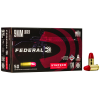
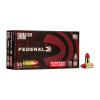
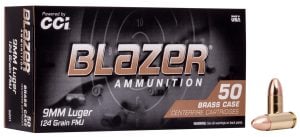
2. Blazer Brass 9mm: Best Budget Practice Load
For the thousands of practice rounds that build skill, Blazer Brass is the value workhorse. At around 9 dollars a box it is one of the cheapest reliable brass-cased 9mm loads, with a 115-grain FMJ bullet that cycles almost any gun and reloadable brass if you go that route. It won’t match Syntech for cleanliness or soft recoil, but for high-volume practice it’s hard to beat the price.
The honest take is that practice ammo and match ammo are different jobs. Blazer Brass is where you should spend your volume, drilling draws and transitions cheaply, then confirm your match load separately. It’s reliable, affordable, and brass-cased, which is exactly what you want for the bulk of your trigger time.
Pros
- Very cheap for brass-cased
- Reliable in most guns
- Reloadable brass
- Great for high-volume practice
Cons
- Not as clean as coated loads
- Recoil firmer than match ammo
- Not optimized for power factor
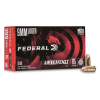
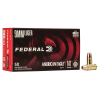
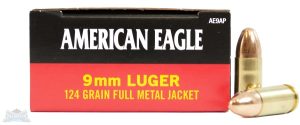
3. Federal American Eagle 9mm: Best Value Match-Grade
Federal American Eagle splits the difference between bulk practice ammo and premium competition loads. At around 14 dollars a box it offers Federal quality, clean primers, and consistent 124-grain FMJ performance that many shooters use for both practice and matches. The 124-grain weight is a popular competition choice, making minor comfortably with a soft, predictable push.
For a shooter who wants one reasonably priced load that works for both training and competition without running two separate supplies, American Eagle is a smart middle ground. It isn’t as clean-running as Syntech, but the consistency and value make it a default for a lot of club-level competitors.
Our American Eagle review has power factor strings for Syntech Action Pistol from a Glock 19, an M&P9 and a Ruger PC Carbine.
Pros
- Federal quality at a fair price
- Consistent 124gr loading
- Works for practice and matches
- Makes minor comfortably
Cons
- Less clean than coated loads
- Not a dedicated match load
- Recoil firmer than premium

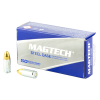
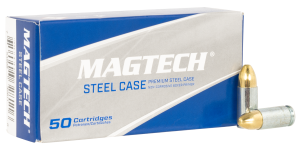
4. Magtech 9mm: Best Bulk Practice Value
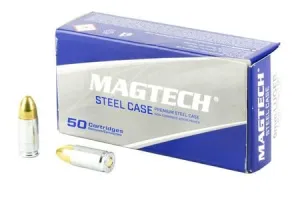
Magtech is the other budget benchmark, a Brazilian-made brass-cased load that runs reliably and costs little, making it a favorite for stocking up. The 115-grain FMJ is clean-igniting and cycles well, and Magtech’s reputation for consistency at a low price has made it a staple in many shooters’ practice rotation.
Like Blazer Brass, it is a practice load rather than a match load, so use it for volume and confirm your competition ammo separately. But for filling cans with reliable, affordable brass-cased 9mm to feed a season of drills, Magtech is exactly the kind of value that keeps the sport affordable.
Pros
- Affordable brass-cased
- Reliable and consistent
- Clean ignition
- Great for bulk practice
Cons
- Practice load, not match-tuned
- 115gr lighter than many prefer
- Recoil firmer than premium
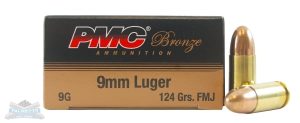
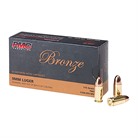
5. PMC Bronze 9mm: Best Reliable Budget Alternative
PMC Bronze rounds out the value picks, a Korean-made brass-cased load with a strong reputation for reliability and clean burning at a budget price. The 115-grain FMJ feeds well and the ammo is known for consistent ignition, making it another solid choice for high-volume practice or club-level matches where premium ammo is not required.
It sits alongside Blazer Brass and Magtech as an interchangeable value workhorse; which one you buy often comes down to whichever is cheapest and in stock. All three are reliable, affordable, brass-cased practice loads, and PMC Bronze has a slight edge in reputation for clean burning that some shooters prefer.
Pros
- Reliable, clean-burning
- Affordable brass-cased
- Consistent ignition
- Good practice value
Cons
- Practice grade, not match
- 115gr lighter loading
- Availability varies
Best .223 and 5.56 Competition Ammo for 3-Gun
3-Gun and multigun rifle shooters need a different load: cheap enough for the close, high-round-count stages, accurate enough for distant steel out to 500 yards. The sweet spot is quality FMJ for most targets with a heavier match load for the long shots.
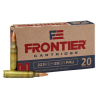
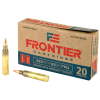
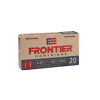
6. Hornady Frontier: Best 3-Gun Rifle Value
Hornady Frontier is the value benchmark for 3-Gun rifle ammo, loaded by Hornady with its own quality bullets at a price that makes high-volume rifle shooting affordable. Available in 55-grain for close, fast work and heavier 68 to 75-grain match-style loadings for distance, it lets you stock one brand across the range of targets a 3-Gun stage throws at you.
For a competitor who wants Hornady bullet quality without premium match pricing, Frontier is the smart everyday choice, accurate enough for the vast majority of 3-Gun rifle targets. The heavier loadings buck wind better for distant steel, so many shooters keep a few magazines of the 75-grain for long stages and run 55-grain for everything else.
Pros
- Hornady bullets at a value price
- 55 to 75gr options
- Affordable for high volume
- Accurate enough for 3-Gun
Cons
- Not full match-grade
- Heavier loads cost more
- Bulk availability varies
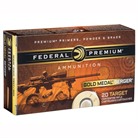
7. Federal Gold Medal .223: Best Match .223
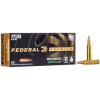
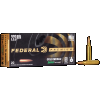
When a 3-Gun stage has small, distant rifle targets, or for a precision-leaning shooter, Federal Gold Medal is the match benchmark in .223. Loaded with Sierra MatchKing bullets in 69 and 77-grain, it delivers the consistency and accuracy to connect on far steel that bulk ammo can miss. It’s the load to carry for the long shots that decide close matches.
At around 28 dollars a box it costs more than Frontier, so it’s not a high-volume practice load, but for the handful of difficult distant targets on a stage it is worth the premium. Match the bullet weight to your barrel twist, since the heavy 77-grain needs a fast 1:7 or 1:8 twist to stabilize. A 1:8 twist, common on competition barrels, handles both.
Pros
- Sierra MatchKing accuracy
- 69 and 77gr match loads
- Connects on distant steel
- Federal consistency
Cons
- Pricey for high volume
- 77gr needs fast twist
- Overkill for close targets
Best 6.5 Creedmoor Competition Ammo for PRS
Precision rifle competition lives and dies on ammo consistency, because a flyer at a thousand yards is a clean miss. The 6.5 Creedmoor is the dominant cartridge, and match-grade factory loads have gotten good enough that you can compete in Production division without handloading. These are the loads to run.
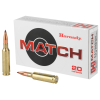
8. Hornady Match 6.5 Creedmoor: Best PRS Ammo Overall
Hornady essentially created the 6.5 Creedmoor, and Hornady Match is the load that proved factory ammo could compete at the top of precision shooting. Loaded with the superb 140 or 147-grain ELD Match bullet, it delivers the low standard deviation and tight groups that PRS demands, and it’s consistent enough that many shooters compete on it without ever touching a reloading press.
For a PRS or NRL shooter who wants match-grade performance from a box, Hornady Match is the benchmark, with the high ballistic coefficient ELD bullets bucking wind beautifully at distance. It costs around 36 dollars a box, which is the price of admission for serious long-range accuracy, and it is the load most factory-ammo competitors trust.
Pros
- ELD Match bullets, high BC
- Low standard deviation
- Production-division legal
- Proven at the top level
Cons
- Premium price per box
- Less consistent than handloads
- Availability can be tight

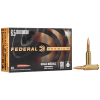
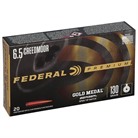
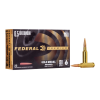
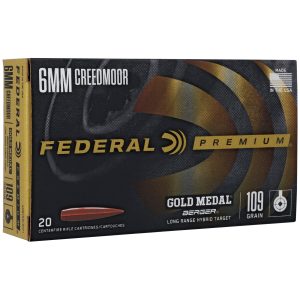
9. Federal Gold Medal 6.5 Creedmoor: Best Precision Alternative
Federal Gold Medal is the other premium 6.5 Creedmoor match load, built on Federal’s reputation for consistency and loaded with Berger or Sierra match bullets depending on the line. It rivals Hornady Match for accuracy and standard deviation, and which one shoots best is genuinely gun-dependent, so it’s worth testing both in your rifle.
For a precision shooter who finds their barrel prefers Federal, or who simply wants an alternative to Hornady, Gold Medal is an equally excellent match load. It carries a similar premium price, and like all match ammo, the real test is which load your specific rifle groups tightest with, so buy a box of each and shoot them side by side before committing to a case.
Pros
- Berger or Sierra match bullets
- Federal match consistency
- Rivals Hornady for accuracy
- Excellent low SD
Cons
- Premium price
- Gun-dependent which is best
- Availability varies
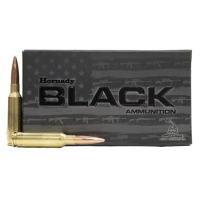
10. Hornady Black 6.5 Creedmoor: Best Value Precision Load
For a shooter starting in PRS or shooting NRL22’s bigger sibling on a budget, Hornady Black is the value 6.5 Creedmoor load. It uses the same excellent 140-grain ELD bullet as the premium Match line in a slightly less expensive package, delivering most of the accuracy for less money, which makes it a smart practice and entry-level match load.
It isn’t quite as consistent as full Hornady Match, but it is close enough to learn and compete on in Production division, and the price difference adds up over the high round counts of practice. Many shooters run Black for training and matches early on, then graduate to full Match ammo or handloads as they chase the last few percent of accuracy.
Pros
- Same ELD bullet as Match
- Lower price per box
- Great for practice and entry
- Production-division capable
Cons
- Slightly less consistent than Match
- Still a premium price
- Not for chasing the top
Related Guides
- Best Carry Optics Pistols, the USPSA CO guns this 9mm ammo feeds
- Best 3-Gun Rifles, where the .223 and 5.56 loads above go
- Best Steel Challenge Guns, minor-power-factor shooting on a budget
Power Factor Explained: Major vs Minor
If you shoot USPSA pistol or PCC, power factor is the single most important thing to understand about your ammo, because the wrong load can leave you unable to score in your division. Power factor is bullet weight in grains multiplied by velocity in feet per second, divided by 1,000, and my power factor explained guide covers it in full. It’s the sport’s way of measuring recoil and momentum, and it sorts loads into two scoring tiers.
- Minor power factor is 125 and up. Carry Optics, Production, and PCC all score at minor, so you want a load that clears 125 with margin but no more, since extra power just adds recoil with no scoring benefit. A 147-grain bullet around 900 fps or a 124-grain around 1,050 fps makes minor softly.
- Major power factor is 165 and up. Limited and Open shooters chase major because it scores peripheral hits higher, which means loading 9mm hot or running .40 S&W. Major recoils more, so it’s a deliberate trade of control for scoring.
- Make it with margin. Match chronographs can read lower than yours, so load to make your power factor with a cushion, often a few points above the floor, so a cold day or a slow chronograph doesn’t bump you to minor scoring or a zero.
For almost every new pistol and PCC shooter, the answer is simple: run a soft 9mm minor load like Federal Syntech and don’t overthink it. Steel Challenge and IDPA do not use major scoring, so minor is all you need there too. My guide on what USPSA is covers scoring in more depth.
What to Look for in Competition Ammo
Beyond power factor, a few qualities separate a good competition load from a bad one.
- Reliability above all. A load that fails to fire or eject even occasionally is useless on the clock, where a single malfunction blows your stage. Reliability beats every other quality.
- Consistency. Low velocity variation means consistent recoil and, for rifle, consistent impacts at distance. Match ammo is built for this; bulk practice ammo is not.
- Clean burning. Coated bullets like Federal Syntech and quality powders keep your gun running longer between cleanings over a high-round-count season.
- The right bullet weight. For pistol, heavier 147-grain bullets shoot softer at minor; for rifle, match the weight to your barrel twist. Test what your gun likes.
- Availability and price. You buy ammo constantly, so a load you can actually find and afford in bulk matters. Many shooters practice on cheap FMJ and run premium ammo only at matches.
Practice Ammo vs Match Ammo
One of the smartest things a budget-conscious competitor can do is separate practice ammo from match ammo. You fire the vast majority of your rounds in practice, drilling draws, reloads, and transitions, and for that you want the cheapest reliable load you can find, like Blazer Brass, Magtech, or PMC Bronze. There’s no need to burn premium competition ammo punching paper at the static range.
Save the premium load, your Federal Syntech or your match 6.5 Creedmoor, for matches and for the final practice sessions where you confirm your zero and your power factor. This split can cut your ammo costs dramatically while still putting your best, most consistent ammo on the line when it counts. The one rule: always do enough practice with your actual match load to confirm it runs flawlessly in your gun before you trust it on the clock, since different loads can run differently.
How to Test a Competition Load
Before you commit to a case of any ammo for matches, test it properly. Run at least 100 rounds through your competition gun to confirm it cycles and ejects flawlessly, because reliability is everything. For pistol, chronograph it if you can to verify it makes your power factor with margin. For rifle, shoot groups at distance to confirm it is accurate enough and check that it hits to your zero.
Different guns simply prefer different loads, especially rimfire and precision rifles, so the load that wins for one shooter may not group best in your gun. The small investment of a few boxes tested before you buy a case saves you from discovering a reliability or accuracy problem at a match. Once you find a load your gun loves and that makes your power factor, buy it by the case and stick with it, since consistency from lot to lot matters too.
The Bottom Line
For pistol and PCC, Federal Syntech is the best competition load, clean-running and soft at minor power factor, with Blazer Brass and Magtech as the budget practice workhorses. For 3-Gun rifle, Hornady Frontier covers most targets and Federal Gold Medal handles the distant ones. For precision rifle, Hornady Match and Federal Gold Medal own 6.5 Creedmoor, with Hornady Black as the value pick. Whatever your sport, choose a reliable load that makes your division’s power factor, test it in your gun, and split your cheap practice ammo from your premium match ammo. New to all of this? Start with my complete guide to competition shooting.
Choosing a cartridge? See my 6.5 Creedmoor vs .308 for PRS comparison.
Frequently Asked Questions
- Treat every gun as loaded
- Point the muzzle in a safe direction
- Keep your finger off the trigger until you’re ready to shoot
- Know your target and what’s beyond
What is the best competition ammo?
Federal Syntech is the best competition ammo for pistol and PCC shooters, a clean-running 9mm with a polymer-coated bullet that makes minor power factor softly and reduces fouling. For 3-Gun rifle, Hornady Frontier and Federal Gold Medal lead in .223, and for precision rifle, Hornady Match and Federal Gold Medal own 6.5 Creedmoor. The best load is the one that runs reliably and makes your division's power factor in your gun.
What is power factor in competition shooting?
Power factor is bullet weight in grains times velocity in feet per second, divided by 1,000, and it sorts loads into scoring tiers. Minor power factor is 125 and up, used by Carry Optics, Production, PCC, IDPA, and Steel Challenge. Major is 165 and up, chased by Limited and Open shooters because it scores peripheral hits higher. Most shooters run a soft 9mm minor load.
What grain 9mm is best for USPSA?
A 147-grain 9mm is popular for USPSA minor power factor because it shoots soft with a low, pushing recoil that keeps the dot flat, though 124 and 115-grain loads also make minor. Heavier bullets at lower velocity tend to feel softer than light, fast loads at the same power factor. The best weight is what feels flattest and runs reliably in your gun while making minor with margin.
What is the difference between minor and major power factor?
Minor power factor is 125 and up; major is 165 and up. Carry Optics, Production, PCC, IDPA, and Steel Challenge score at minor, so you just need to clear 125 with margin. Limited and Open reward major, which scores peripheral hits higher, but major loads recoil more. Most shooters run minor 9mm; major requires loading hot or shooting a larger caliber like .40 S&W.
Do you need special ammo for competition?
Not to start, but the right ammo helps. Any reliable load that makes your division's power factor works, and many shooters compete on quality FML like Federal American Eagle. Dedicated competition ammo like Federal Syntech runs cleaner and softer, which matters over a high-round-count season. For precision rifle, match-grade ammo is closer to a requirement for accuracy at distance.
What is the best 9mm ammo for competition?
Federal Syntech is the best competition 9mm overall, with its clean polymer-coated bullet and soft minor-power-factor loadings. Federal American Eagle is the best value match-grade option, and Blazer Brass, Magtech, and PMC Bronze are the budget practice workhorses. Run a soft minor load like Syntech at matches and cheaper FMJ for high-volume practice to control costs.
What is the best 6.5 Creedmoor ammo for PRS?
Hornady Match is the best 6.5 Creedmoor ammo for PRS, loaded with high-BC ELD Match bullets that deliver low standard deviation and tight groups straight from the box. Federal Gold Medal is an equally excellent alternative, and which shoots best is gun-dependent, so test both. Hornady Black is the value pick, using the same ELD bullet for less, ideal for practice and entry-level matches.
Should I use match ammo for practice?
No, save match ammo for matches. The smart approach is to practice on the cheapest reliable load you can find, like Blazer Brass or Magtech, and run premium competition ammo only at matches and final zero confirmation. This cuts ammo costs significantly. The one rule is to fire enough of your actual match load to confirm it runs flawlessly in your gun before you trust it on the clock.
How do you test competition ammo?
Run at least 100 rounds of a load through your competition gun to confirm it cycles and ejects flawlessly, since reliability is everything. For pistol, chronograph it to verify it makes power factor with margin. For rifle, shoot groups at distance to confirm accuracy and check it hits to your zero. Different guns prefer different loads, so test a few boxes before buying a case.
What ammo do you need for 3-Gun?
For 3-Gun rifle, a value load like Hornady Frontier in .223 or 5.56 covers most targets affordably, with a heavier match load like Federal Gold Medal 69 or 77-grain for distant steel. Match the bullet weight to your barrel twist. You also need 9mm for the pistol leg and 12-gauge shotshells, usually light target loads for close steel and clays, plus slugs or buckshot if a stage requires them.
Why is Federal Syntech good for competition?
Federal Syntech uses a Total Synthetic Jacket, a polymer coating over the bullet that eliminates the copper and lead fouling of traditional FMJ, so your gun stays cleaner over a high-round-count season. Its competition loadings make minor power factor softly with consistent, low recoil that keeps the dot flat. That combination of clean running and soft, consistent recoil makes it the benchmark pistol and PCC competition load.
How much competition ammo do you need?
A club pistol match uses roughly 100 to 250 rounds, but serious competitors shoot far more in practice, often 500 to 1,000 rounds a week. Budget for the practice volume, not just the match, and buy a reliable cheap load by the case for training. For rifle, a 3-Gun match might use 100 to 200 rifle rounds, while PRS uses fewer but pricier match-grade rounds per stage.
4,021+ Gun & Ammo Deals
Updated daily from 200+ top retailers. Filter by category, caliber, action type, and price.
Related Guides