

The Tactacam Reveal Pro 4.0 is the trail camera I would hang first, because it is the current generation, trusted retailers actually stock it, and Tactacam publishes what the data plan costs. If you can walk your ground, the Browning Dark Ops Pro X gives you a 0.22 second trigger and no monthly bill at all. And if the budget is per camera, the Wildgame Terra XT 3.0 is $44.99. Here are nine trail cameras for 2026, every price checked against what a trusted retailer will actually sell you today.
Some of the links below are affiliate links, meaning at no additional cost to you, we may earn a commission if you click through and make a purchase.
Table of Contents
How we tested: Every pick here is ranked against our testing methodology. Minimum round counts, accuracy and reliability protocols, the failures that disqualify a gun.
Best trail cameras in 2026 at a glance
| Camera | Best for | Type | Check price |
|---|---|---|---|
| Tactacam Reveal Pro 4.0 | Best Overall | Cellular | Check price |
| Spypoint Flex M2 | Best Value Cellular | Cellular | Check price |
| Moultrie Edge Solar | Best Solar | Cellular | Check price |
| Browning Dark Ops Pro X 1080 | Best Image Quality With No Fees | SD card | Check price |
| Bushnell CORE DS-4K | Best 4K Without a Plan | SD card | Check price |
How to choose a trail camera
A trail camera scouts for you, watching a trail or a food plot around the clock so you learn the pattern before you ever sit a stand. The first decision is cellular or not, and it is really a decision about access: can you walk in and pull a card without ruining the spot? After that it is trigger speed, night performance, battery life, and the part nobody prices, which is the monthly plan. Trail cameras pair naturally with the rest of your scouting kit, including good binoculars and a rangefinder.
1. Tactacam Reveal Pro 4.0: Best Overall
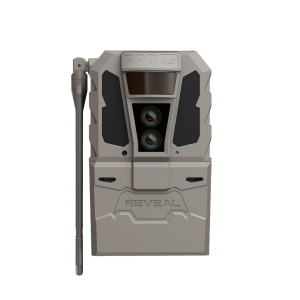
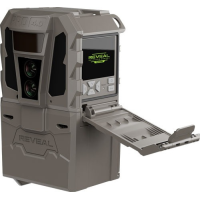
The Reveal Pro 4.0 is the cellular camera I would hang first, and the reason is boring in the best way: it is the current generation, it is stocked by the retailers whose prices readers can actually act on, and Tactacam publishes what the data costs instead of hiding it behind an account signup.
Reveal built its name on being the affordable cellular option, and the Pro 4.0 sits in the middle of the lineup rather than at the top of it. I checked eight live listings for this camera and the trusted-retailer price came in at $159.99, which is the number in the card below. Older Pro 3.0 and XPro stock still floats around at similar money, so read the generation on the listing before you buy.
What it costs to run matters more than what it costs to buy. Tactacam publishes a Starter plan at $5 monthly or $55 annually for 250 photos, an Intermediate at $8 or $85 for 500, and a Pro at $13 or $120 for unlimited. Three seasons on the Pro plan is $360, which is more than twice the camera.
Pros
- Photos arrive without walking the property
- Plans start at five dollars monthly
- Sold across every retailer we track
Cons
- Dearest cellular camera we can price
- Unlimited plan runs thirteen dollars monthly
- Overage adds five dollars per 250
Best for: Hunters who want current cellular hardware and published plan pricing.
2. Spypoint Flex M2: Best Value Cellular
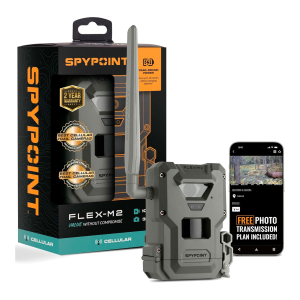
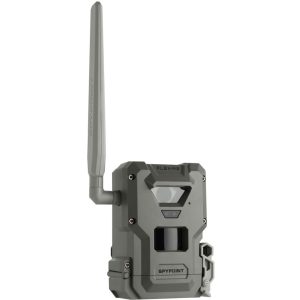
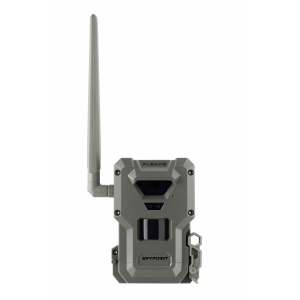
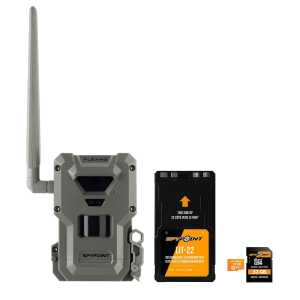
The Flex M2 is one of the cheapest cellular cameras on this page, at $59.99 from GritrSports. If the barrier to running cell cams has been the outlay, this is the one that removes it.
Spypoint has put more hunters onto cellular than any other brand, and the Flex line is why. Be careful with the name though: Flex, Flex M, Flex M2, Flex Plus and Flex G-36 are different cameras at different prices, and retailer listings mix them freely. The card below is filtered to the M2 so the price you see belongs to the camera named above it.
One honest gap. I could not reach Spypoint’s own plan pricing: their plans page returns a storefront shell to every route I tried, so I am not going to quote a figure I have not read. Budget for a plan on top of the camera and check the current rate in the app before you commit.
Pros
- Eighty dollars at a trusted retailer
- Cellular scouting without a big outlay
- Eight live rows across competing sellers
Cons
- Spypoint publishes no plan price we reached
- Resolution trails the dearer picks
- Flex naming spans several different cameras
Best for: A first cellular camera, or adding cameras without multiplying the spend.
3. Moultrie Edge Solar: Best Solar
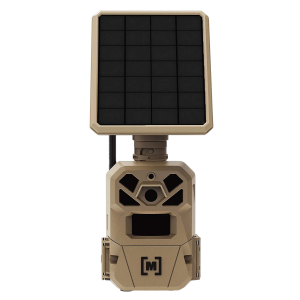
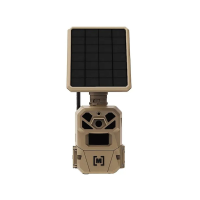
A camera that dies in November has cost you the season, and the Edge Solar is the answer to that on ground you cannot visit. The solar panel is part of the camera rather than a bolt-on accessory, so there is no extra bracket to buy or lose.
Palmetto State Armory has it at $79.99, which is the cheapest solar-equipped cellular camera I can put a trusted price against. Moultrie’s Edge naming is busy, with Edge 2, Edge 3, Edge 4 and Pro versions all in circulation, so the card below excludes the siblings.
Moultrie publishes its plans openly, and this is where the sums get uncomfortable. Standard is $8.99 per camera per month, Unlimited is $12.99 and Pro Series is $22.99. At $8.99 the plan overtakes the $79.99 camera around month nine. Over three years on Unlimited you are $467.64 into plans against $79.99 of hardware.
Pros
- Solar panel is built into it
- Eighty dollars at Palmetto State Armory
- Standard plan is nine dollars monthly
Cons
- Plan passes camera price by month nine
- Pro Series plan runs twenty three monthly
- Needs real sun on the panel
Best for: Remote ground you cannot get back to for months at a time.
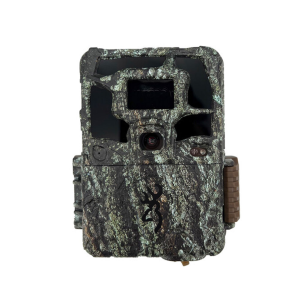
4. Browning Dark Ops Pro X 1080: Best Image Quality With No Fees
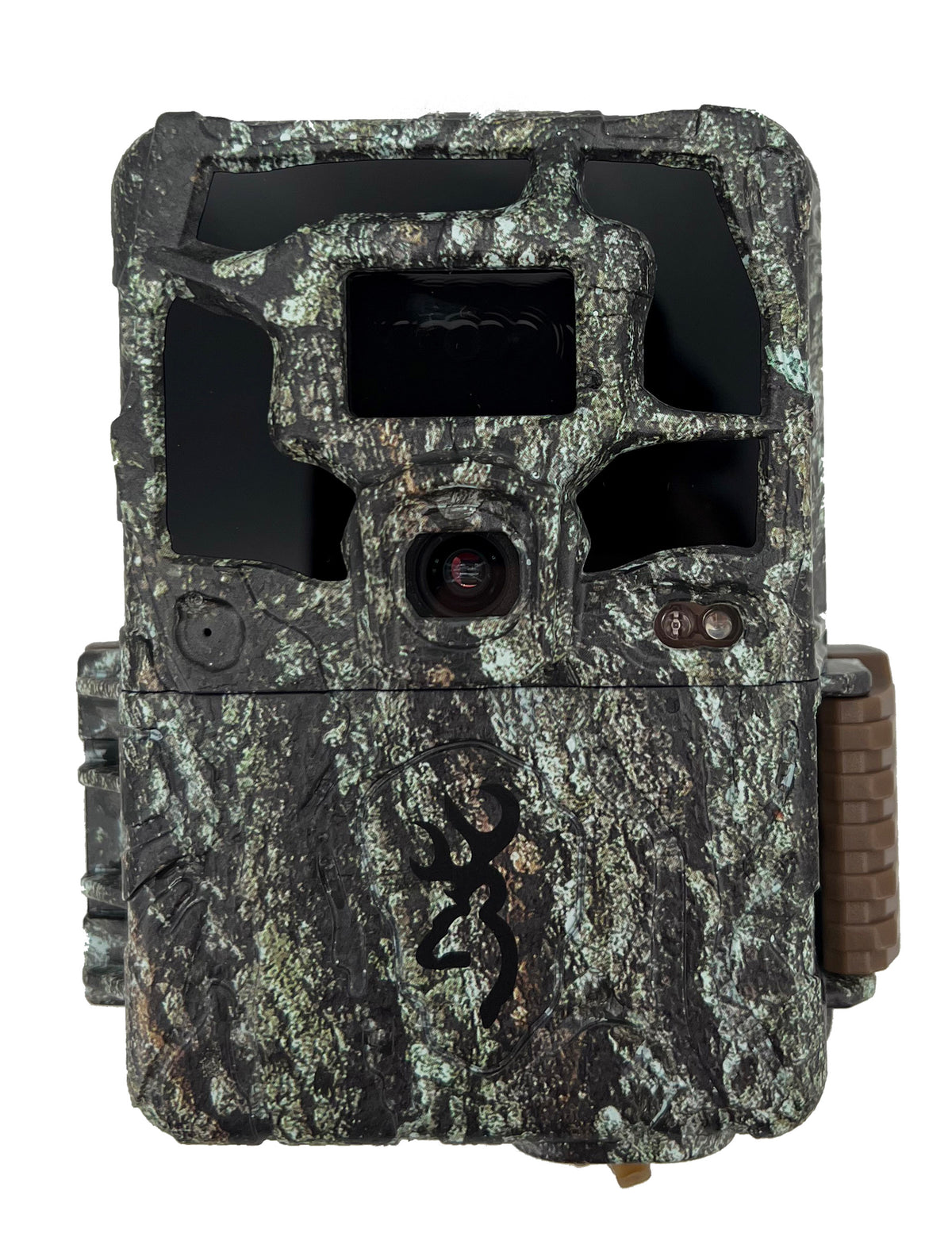
If you can walk your ground between hunts, the Dark Ops Pro X is the camera I would put on a trail, and it is the only pick here whose maker publishes the numbers that decide whether a camera catches an animal or photographs its tail.
Browning states a 0.22 second trigger speed, a 0.35 second recovery time and a 100 foot detection range, with 24MP stills, a 90 foot flash range, a 1.5 inch color screen and up to a year of battery life on eight AA cells. Those are the maker’s own figures, read off Browning’s product page rather than a retailer listing.
The trade is the walk. An SD card camera means visiting the camera, which means scent and disturbance on the spot you are trying to keep quiet. What you get back is $107.99 once and nothing after that, against three years of plan payments on every cellular camera above.
Pros
- Trigger fires in 0.22 of a second
- One hundred foot detection range
- No plan and no monthly cost
Cons
- You pull the card by hand
- Every visit leaves scent behind
- One fifty at trusted retailers
Best for: Ground you can check in person, where monthly fees make no sense.
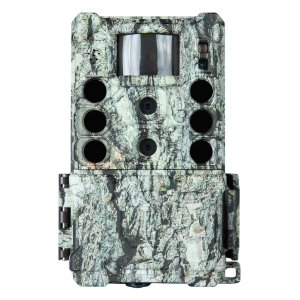
5. Bushnell CORE DS-4K: Best 4K Without a Plan
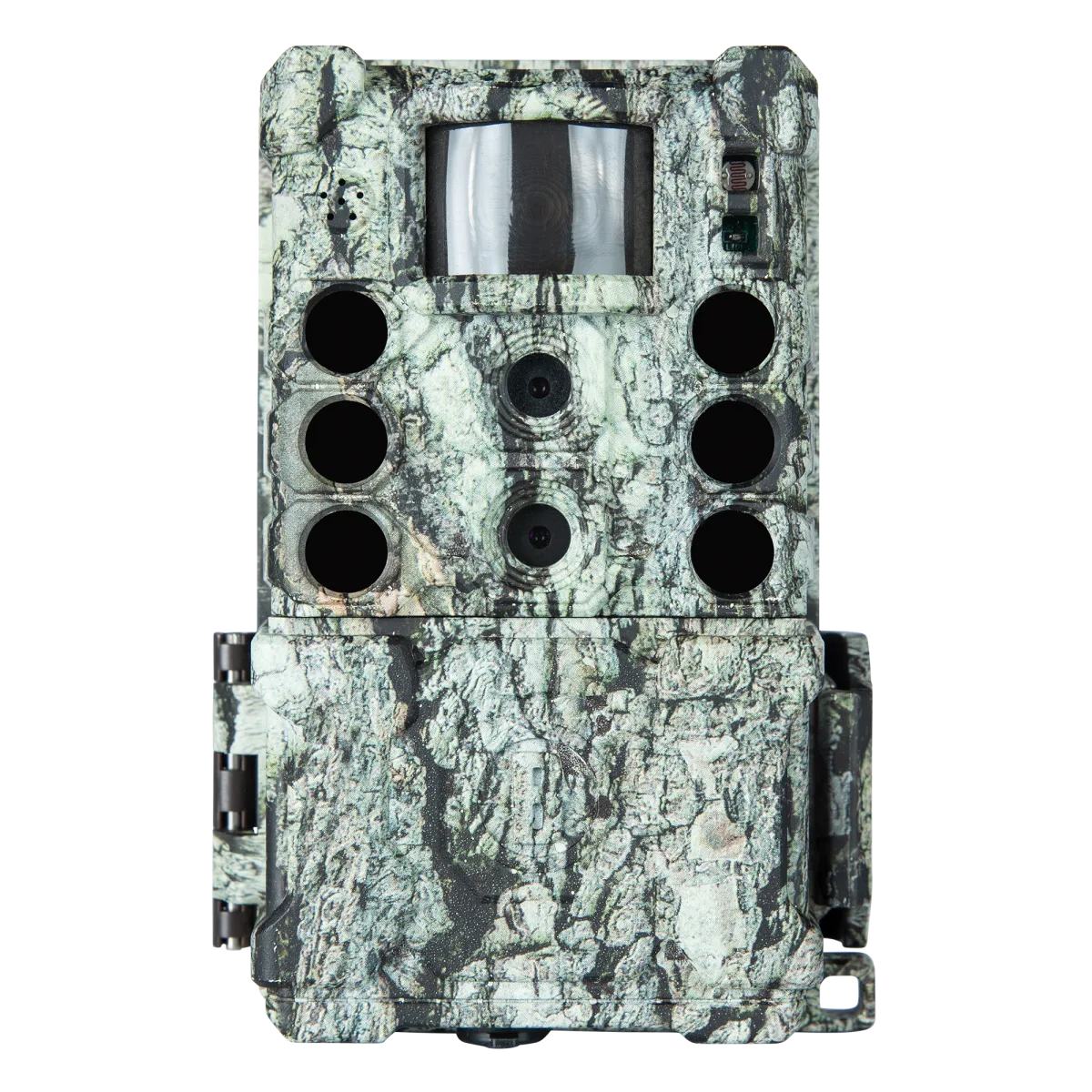
The CORE DS-4K is the picture-quality pick. Most trail cameras run one sensor and compromise it for night duty. This one carries separate day and night sensors, which is the hardware answer to the washed-out daytime photos that cheap cameras produce.
Bushnell publishes up to 32MP stills, 4K video, a 0.15 second trigger speed, a No-Glow LED array and a 1.5 inch color view screen, on AA batteries and with no cellular radio at all. At $179.99 from Sportsman’s Warehouse it is the most expensive camera on this page that carries no running cost whatsoever.
Worth knowing before you shop: Bushnell also sells a Core S-4K, a single-sensor camera with a very similar name, and some of the roundups ranking above us pick that one. No trusted retailer we track carries the S-4K, so the card below is the DS-4K only.
Pros
- Separate day and night sensors
- Trigger fires in 0.15 seconds
- Shoots 4K with no subscription
Cons
- Dearest non-cellular pick here
- Still an SD card walk in
- Only four live rows to compare
Best for: Hunters who care about image quality first and refuse a monthly bill.
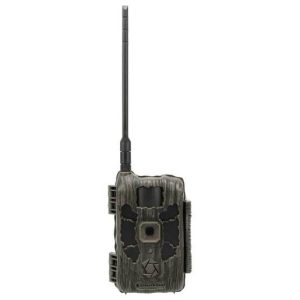
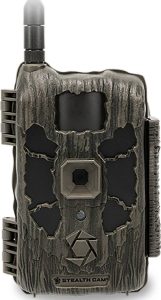
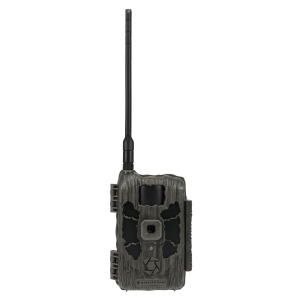
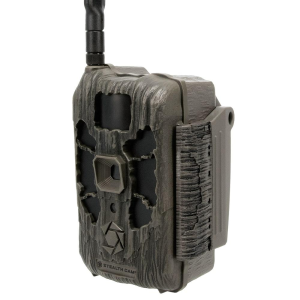
6. Stealth Cam Deceptor Max: Best No-Glow Cellular
The Deceptor Max is the no-glow cellular pick, and at $99.77 from Sportsman’s Warehouse it is priced like a mid-tier camera rather than a premium one. No-glow matters on pressured ground and on public land, where a visible flash tells deer and people exactly where your camera is.
Read the generation on the listing. Deceptor Max, Deceptor Max 2.0 and Deceptor Max 3.0 all sit in retailer inventory at once, and the prices overlap enough that the cheapest row is not reliably the newest camera.
Stealth Cam publishes plan pricing that scales with how many cameras you run: $20.00 a month for the first camera, $15.00 for the second, $11.00 for cameras three through seven and $8.00 for each one after that. On a single camera that is the most expensive plan on this page, and it is the one case where adding cameras genuinely lowers the per-camera cost.
Pros
- Hundred dollars at Sportsman’s Warehouse
- No-glow flash stays dark at night
- Nine live rows to compare
Cons
- Plan pricing blocked to outside requests
- Listings mix 2.0 and 3.0
- First camera costs twenty monthly
Best for: Pressured deer and public land, where a visible flash is a liability.
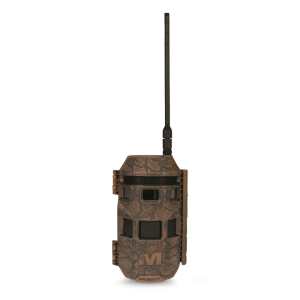
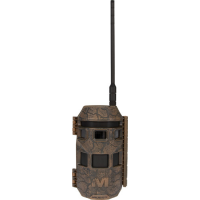
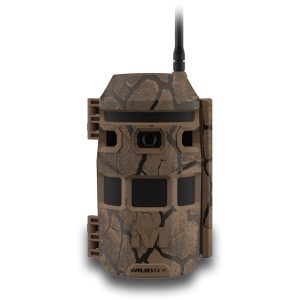
7. Muddy Trifecta 180: Best Cellular Under $80
The Trifecta 180 is one of the cheapest cellular cameras on this page, at $79.99 from Sportsman’s Warehouse. If you are covering several spots and the budget is per camera rather than per property, this is where the money goes furthest.
I am going to be straight about the limits. Muddy’s own product pages would not load for us through any route we tried, so there are no maker specifications in this entry, and I am not going to lift numbers off a retailer listing and present them as the manufacturer’s. What I can tell you is what it costs and who has it.
Five live rows is thin coverage compared to the ten behind the Cuddeback, and thin coverage means the price moves more when one retailer sells out. Check the card before you decide, because this is the pick most likely to have shifted since I wrote this.
Pros
- Seventy dollars at a trusted retailer
- Second cheapest cellular camera here
- Five clean rows, no kit confusion
Cons
- Thin coverage, only five live rows
- No maker specs we could verify
- Plan pricing not published where we looked
Best for: Covering several spots cheaply when per-camera cost is the constraint.
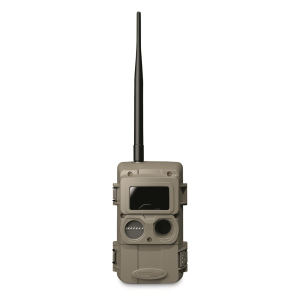
8. Cuddeback CuddeLink L: Best for Linking Cameras Together
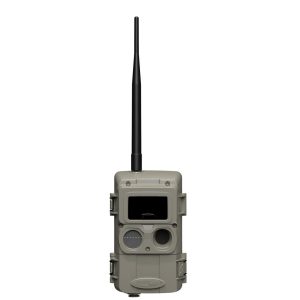
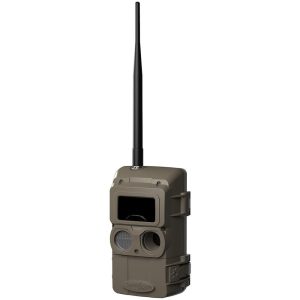
CuddeLink is the odd one out here and the reason it earns a place: instead of every camera carrying its own cellular plan, the cameras link to each other and report back through one unit. On a property running six or eight cameras that changes the arithmetic completely.
The individual CuddeLink L cameras run $99.99 at Sportsman’s Guide. The catch is the listings: our own feed carries a Cell Home Receiver, a Zoom model, a Strobe white-flash version and a $300 Starter Kit under nearly the same name, so the card below filters those out and shows the camera only.
This is a system rather than a camera, and it is the wrong answer for one camera on one trail. Across a managed property it is the pick that stops the monthly bill scaling with the number of cameras.
Pros
- Cameras relay back to one unit
- Hundred dollars at Sportsman’s Guide
- Ten live rows, the widest here
Cons
- Listings mix receivers, kits and zooms
- Starter kit runs three hundred dollars
- Only pays off across several cameras
Best for: Managed properties running several cameras that should share one connection.
9. Wildgame Terra XT 3.0: Cheapest Cellular We Can Price
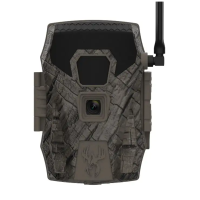
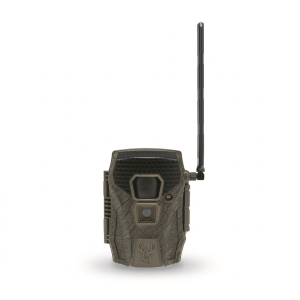
At $44.99 the Terra XT 3.0 is the cheapest camera on this page that a trusted retailer will sell you, and it is the one I would buy to cover a gate, a field edge or anywhere a stolen camera would annoy you rather than hurt.
Generation matters here more than anywhere else on the page. The 2.0 is still in inventory at around $39.97 and the 3.0 sits at $44.99, close enough that a listing sorted by price will hand you the older camera. The card below excludes the 2.0 so the price belongs to the camera in the heading.
You are buying down at this price, and the feature set says so. What you are not doing is gambling much money on a spot you are not sure about yet.
Pros
- Forty five dollars, cheapest here
- Current third generation, not the 2.0
- Every kept row at trusted retailers
Cons
- Budget build with fewer features
- Only four rows after filtering
- Older 2.0 still floats in listings
Best for: Low-risk spots, gates and field edges where theft would sting less.
What the data plan actually costs
Every roundup on this subject tells you the plan is an ongoing cost. None of them prices it. So here is the arithmetic, using each maker’s own published rates and the trusted-retailer prices from the cards above, over three seasons.
| Camera | Camera price | Plan | Plan over 3 years | Three-year total |
|---|---|---|---|---|
| Browning Dark Ops Pro X 1080 | $107.99 | None. SD card. | $0.00 | $107.99 |
| Bushnell CORE DS-4K | $179.99 | None. SD card. | $0.00 | $179.99 |
| Moultrie Edge Solar | $79.99 | Standard, $8.99 a month | $323.64 | $403.63 |
| Moultrie Edge Solar | $79.99 | Unlimited, $12.99 a month | $467.64 | $547.63 |
| Tactacam Reveal Pro 4.0 | $159.99 | Starter, $55 a year | $165.00 | $324.99 |
| Tactacam Reveal Pro 4.0 | $159.99 | Pro, $120 a year | $360.00 | $519.99 |
| Stealth Cam Deceptor Max | $99.77 | Unlimited, $20 a month | $720.00 | $819.77 |
Read the last column rather than the second. A $79.99 Moultrie Edge Solar on the Unlimited plan costs $547.63 over three years, and $467.64 of that is the plan. The $107.99 Browning, which has no plan at all, costs $107.99. That is the real decision on this page, and it is the one the specification sheets never show you.
The published rates, read from each maker’s own site: Tactacam lists Starter at $5 monthly or $55 annually for 250 photos, Intermediate at $8 or $85 for 500, and Pro at $13 or $120 for unlimited, with overage at $5 per 250 photos. Moultrie lists Standard at $8.99, Unlimited at $12.99 and Pro Series at $22.99 per camera per month. Stealth Cam charges $20.00 for the first camera, $15.00 for the second, $11.00 for cameras three through seven and $8.00 for each additional camera.
Two gaps I will not paper over. Spypoint’s plan page and Stealth Cam’s plan page both refuse outside requests, so the Stealth Cam figures above came from their published plan table and Spypoint’s are not quoted here at all. Check the current rate in the app before you buy.
Trail camera buyer’s guide
Cellular or not, and how to decide
A cellular camera sends photos to your phone, so you scout without walking in and leaving scent on the spot you are trying to protect. A non-cellular camera stores to an SD card you collect by hand, with no monthly cost at all. The honest test is access. If you can check a camera between hunts without ruining it, the SD card camera is cheaper by hundreds of dollars over a few seasons. If the ground is two hours away or the spot is too good to disturb, cellular earns its plan.
Trigger speed and detection range
Trigger speed is how quickly the camera fires after it senses movement, and it decides whether you photograph a buck or the back half of one. Browning publishes 0.22 of a second on the Dark Ops Pro X and Bushnell publishes 0.15 on the CORE DS-4K, which are the two makers on this page that state the figure at all. Detection range sets how much ground one camera covers, and Browning states 100 feet. Where a maker does not publish these numbers, I have not guessed them.
No-glow against low-glow at night
Infrared flash comes in two kinds. Low-glow emits a faint red light when it fires, which deer and people can see, and it gives brighter night photos. No-glow is invisible and costs you a little night brightness. On pressured ground, on public land, or anywhere theft is a worry, no-glow is worth the trade. The Bushnell CORE DS-4K and the Stealth Cam Deceptor Max are the no-glow picks here.
Batteries, solar and the season you actually hunt
Cellular cameras draw more power because transmitting costs energy, so a camera that lasts a season on an SD card may not last two months on cell. Lithium cells outlast alkaline badly in the cold. Browning states up to a year of battery life on eight AA cells in the Dark Ops Pro X, which is the kind of figure that decides how often you walk in. The Moultrie Edge Solar takes the question away by building the panel into the camera.
Theft, and why it changes the pick
Cameras on public or shared ground get stolen. A no-glow flash draws less attention at night, a python cable or a steel box slows a thief down, and a cellular camera has one real advantage here: if the unit walks, the photos are already on your phone. On ground you do not control, that is a genuine argument for cellular that has nothing to do with convenience.
Cameras we deliberately left out
Several cameras that rank highly on other lists are missing here, and the reason is the same in every case: no retailer we track carries them, so I cannot show you an honest price or a working link. Reconyx, Vosker, GardePro, Wosports, Sehmua, Lone Wolf and Ebitcam return nothing in our feeds at all. Spypoint’s Flex G-36 and Bushnell’s CelluCore Live do appear, but only at retailers whose prices never reach the headline slot, so a card for either would show you a number you could not act on.
Bushnell’s Core S-4K is the one worth naming twice. Two of the pages ranking above us pick it, and it is a good camera, but the only listings we carry are at retailers outside the trusted set. That is why the DS-4K is the pick above and the S-4K is a footnote here rather than a card.
How I picked these nine
I started from what could be priced honestly. Every camera here was checked on the live pricing path before it earned a place, and the price you see in each card is the cheapest offer from a retailer we trust, not the cheapest number anywhere on the internet. Six of the nine cards on the old version of this page were serving a whole product family rather than the camera named above them, which is how a Fusion X heading ends up quoting a Fusion Max price, so every query here is pinned to a single model and generation.
After that it was coverage: cellular and SD card, solar and mains-free, a hundred dollar camera and a forty five dollar one, plus one linked system for people running a whole property. Specifications came from the makers where the makers publish them, and where they do not, this page says so instead of inventing a number.
Mistakes to avoid when buying a trail camera
- Pricing the camera and ignoring the plan. Three years on a $12.99 plan is $467.64. The camera was $79.99. Read the three-year column above before you choose.
- Buying cellular for a dead zone. A cell camera with no signal sends nothing. Check coverage where the camera will actually hang, not at the truck.
- Chasing the megapixel number. Trigger speed and night flash decide whether you get a usable photo. Resolution decides how it looks once you have one.
- Buying last year’s model by accident. Terra XT 2.0 and 3.0, Deceptor Max and Max 3.0, Reveal Pro 3.0 and 4.0 all sit in stock together at prices close enough to confuse a sort-by-price.
- Running alkaline batteries in the cold. They fade fast. Lithium or solar is the difference between a camera that works in January and one that quit in November.
Bottom line
For one camera that covers everything, the Tactacam Reveal Pro 4.0 at $159.99 is the pick, with published plan pricing you can budget against. The Spypoint Flex M2 at $79.99 is the cheapest way into cellular from a trusted retailer. If you can check your ground in person, stop paying monthly: the Browning Dark Ops Pro X at $107.99 gives you a 0.22 second trigger and no plan, and the Bushnell CORE DS-4K at $179.99 adds dual sensors and 4K. For solar go Moultrie Edge Solar, for no-glow the Stealth Cam Deceptor Max, for a linked property the Cuddeback CuddeLink L, and if the budget is per camera the Wildgame Terra XT 3.0 is $44.99. Round out the kit with binoculars, a rangefinder and a hunting pack.
Last updated September 12th 2026
Do trail cameras need a monthly subscription?
Only cellular ones. A cellular camera needs a data plan to send photos, and that plan is the larger cost over time: Moultrie charges $8.99 to $22.99 per camera per month, Tactacam $5 to $13, and Stealth Cam $20 for a first camera. An SD card camera like the Browning Dark Ops Pro X or the Bushnell CORE DS-4K has no subscription at all.
Is a cellular or a non-cellular trail camera better?
It depends on whether you can walk in. Cellular sends photos to your phone so the spot stays undisturbed, which is worth real money on ground you cannot visit. Non-cellular costs nothing to run but every check leaves scent. Over three years a $79.99 cellular camera on a $12.99 plan totals $547.63, while a $107.99 SD card camera totals $107.99.
What is a good trigger speed for a trail camera?
Under half a second catches animals crossing the frame. Browning publishes 0.22 of a second for the Dark Ops Pro X and Bushnell publishes 0.15 for the CORE DS-4K. A slow trigger gives you photos of the space an animal has just left, which is the most common complaint about cheap cameras.
What is the difference between no-glow and low-glow?
Low-glow emits a faint red light when the flash fires and returns brighter night images. No-glow is invisible and gives slightly darker ones. On public land, or for deer that have been hunted hard, no-glow is the safer choice because it does not advertise the camera to animals or to thieves.
How much does a trail camera plan cost per year?
Tactacam publishes $55 a year for 250 photos a month, $85 for 500 and $120 for unlimited. Moultrie runs $8.99 to $22.99 per camera per month. Stealth Cam charges $20.00 a month for the first camera and less for each one after. Those are the makers published rates, and they are per camera unless stated.
Which carriers do cellular trail cameras use?
The major US networks, and many current cameras carry dual SIMs so they attach to whichever network is stronger where the camera hangs. Check signal at the tree rather than at the truck, because a cellular camera in a dead zone sends nothing and still bills you for the plan.
How long do trail camera batteries last?
It depends on the camera and how much it transmits. Browning states up to a year on eight AA cells for the Dark Ops Pro X, which does not transmit at all. Cellular cameras drain faster because sending photos costs power. Lithium cells hold up far better than alkaline in freezing weather, and a solar camera like the Moultrie Edge Solar sidesteps the question.
Can someone steal my trail camera?
Yes, and it is common on public and shared ground. A steel box or a python cable slows a thief down, and a no-glow flash keeps the camera from announcing itself at night. Cellular has a real advantage here, because the photos are already on your phone before the camera disappears.
How many trail cameras do I need?
One covers a single trail, scrape or food plot. Covering a property means several, and that is where plan pricing starts to hurt, because most plans bill per camera. A linked system like the Cuddeback CuddeLink L reports several cameras through one unit, which is why it is on this page.
Which trail camera is the cheapest to own?
Over three years, an SD card camera. The Browning Dark Ops Pro X costs $107.99 once and nothing after. The cheapest cellular camera we can price, the Wildgame Terra XT 3.0 at $44.99, will pass that total inside the second season once a plan is added.
4,021+ Gun & Ammo Deals
Updated daily from 200+ top retailers. Filter by category, caliber, action type, and price.
Related Guides