
The Swarovski ATS 80 HD is the best spotting scope money can buy, and at $2,744.98 it should be. For most people the answer is the Vortex Razor HD 27-60×85 at $1,599.99, which is 67 percent of its own list price and the widest view at 60x of any full-size scope here. If you are carrying it, the Vortex Razor HD 13-39×56 weighs 28.6 oz, less than half of everything else in this guide.
Below are eleven spotting scopes with every published field of view, weight and list price in one table, plus two things no other guide puts side by side: what happens to your field of view at maximum magnification, and how far below list each one actually sells. The second one reorders the whole list.
Some of the links below are affiliate links, meaning at no additional cost to you, we may earn a commission if you click through and make a purchase.
Table of Contents
How we tested: Every pick here is ranked against our testing methodology. Minimum round counts, accuracy and reliability protocols, the failures that disqualify a gun.
Best Spotting Scopes 2026 at a Glance
Field of view is the manufacturer’s published figure at 1,000 yards, at the lowest and highest magnification. Street is the lowest price on each live card below on October 16, 2026; the cards update, so check them before you buy.
| Spotting scope | Best for | Mag x obj | FOV at 1,000 yd | Weight | MSRP | Street, October 16, 2026 |
|---|---|---|---|---|---|---|
| Swarovski ATS 80 HD | Overall | 20-60×80 | 108 to 60 ft | 57.8 oz | not published | $2,744.98 |
| Vortex Razor HD 27-60×85 | Under $2,000 | 27-60×85 | 117 to 68 ft | 65.6 oz | $2,399.99 | $1,599.99 |
| Leupold SX-5 Santiam HD | Long-range glassing | 27-55×80 | 105 to 73 ft | 68.7 oz | $1,999.99 | $1,520.99 |
| Sig Sauer Oscar8 | Premium value | 27-55×80 | 105 to 73 ft | 68 oz | not published | $1,659.99 |
| Leupold SX-4 Pro Guide HD Gen 2 | Hunting | 15-45×65 | 131 to 68.1 ft | 62 oz | $999.99 | $739 |
| Vortex Razor HD 13-39×56 | Compact | 13-39×56 | 168 to 89 ft | 28.6 oz | $1,449.99 | $999 |
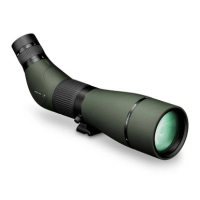
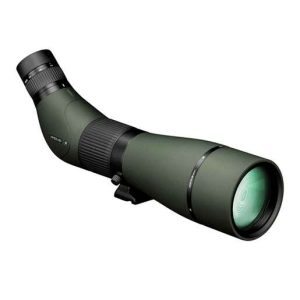
| Vortex Viper HD 20-60×85 | Under $1,000 | 20-60×85 | 101 to 50 ft | 76.6 oz | $1,349.99 | $764.99 |
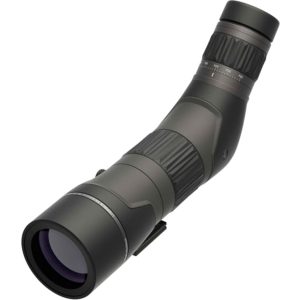
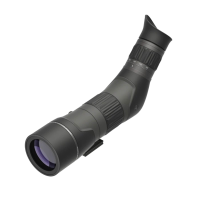
| Leupold SX-2 Alpine HD Gen 2 | Budget HD | 20-60×60 | 106.8 to 50.8 ft | 59.9 oz | $399.99 | $399.99 |
| Vortex Diamondback HD | Value | 16-48×65 | 138 to 72 ft | 49.8 oz | $599.99 | $349.49 |
| Vortex Crossfire HD | Budget 80 mm | 20-60×80 | 105 to 53 ft | 53.0 oz | $424.99 | $249 |
| Bushnell Trophy Xtreme | Cheapest worth buying | 20-60×65 | see note below | 37.9 oz | no longer listed | $177.99 |
Two columns in that table are worth staring at. Every scope that zooms to 60x shows between 50 and 68 feet at 1,000 yards at the top of its range. Every scope that stops short of 60x shows 68 to 89. And the MSRP column bears almost no relationship to the street column, which is the subject of the second chart below.
A note on the Bushnell. Bushnell published the Trophy Xtreme’s field of view as 100 ft at 20x and 48 ft at 60x at 100 yards, where every other maker in this guide quotes at 1,000 yards. Taken literally that would make it ten times wider than a Swarovski, which it plainly is not, so the unit label appears to have been an error on Bushnell’s own page. We have left it out of the field of view chart rather than silently correcting a manufacturer. Bushnell has since taken the Trophy Xtreme spotting scope off its own website, so there is no longer a maker list price either; retailers still stock it.
The Best High-End Spotting Scopes
Above about $1,500 you stop buying aperture and start buying glass. Every scope in this section has an 80 or 85 mm objective, so they all gather roughly the same amount of light. What separates them is coatings, edge sharpness and how little color fringing you see on a bright ridge line. For where a spotter fits alongside everything else, see our complete gun optics guide.
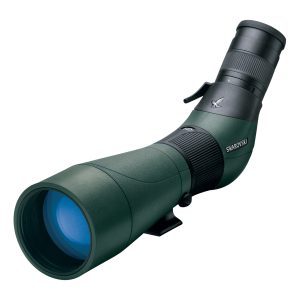
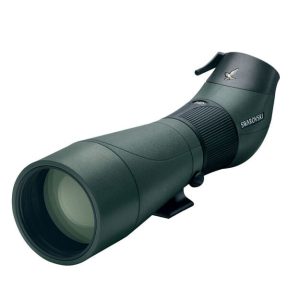
1. Swarovski ATS 80 HD. Best Spotting Scope Overall
Pros
- 57.8 oz for an 80 mm scope, lighter than several 60 and 65 mm scopes in this guide
- Fluoride HD glass with 86 percent published light transmission
- Submersible to 13 feet, far beyond the weatherproofing anything else here claims
- The only pick on this page named best overall by more than one expert round-up
- Swarovski publish exit pupil, 3.2 to 1.6 mm, which almost nobody does
Cons
- $2,744.98 to $3,199, roughly fifteen times the cheapest scope in this guide
- Swarovski publish no MSRP, so the street price is the only price there is
- 60 ft of view at 60x, narrower than the Razor HD’s 68 ft
The ATS 80 HD is what people mean when they say alpine glass. Swarovski publish 86 percent light transmission through fluoride HD lenses, a field of view of 108 to 60 feet at 1,000 yards, and a body submersible to 13 feet. It is the scope both of the serious expert round-ups we read put at or near the top, and having looked through one next to a $400 scope in flat light, the gap is not subtle.
The number that surprises people is the weight. At 57.8 oz this 80 mm scope is lighter than the 60 mm Leupold SX-2 Alpine further down this page, and nearly twenty ounces lighter than the 85 mm Vortex Viper HD. Aperture and mass are not the same thing, and this is where the money shows up in a way you can feel on a mountain rather than just see through the eyepiece.
Two honest caveats at this money. Swarovski publish no MSRP, so there is no list price to measure a discount against; on October 16, 2026 the card showed $2,744.98 at Bass Pro Shops and $3,199 for the Arca version at EuroOptic. And at 60x it shows 60 feet where the Vortex Razor HD below shows 68, because the Razor starts at 27x rather than 20x. You are not buying a wider view. You are buying a better one.
Best for: The hunter who glasses for hours in bad light and has already decided the money is not the issue.
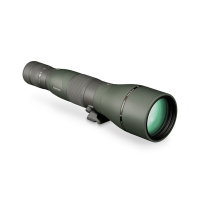
2. Vortex Razor HD 27-60×85. Best Spotting Scope Under $2,000
Pros
- 68 ft at 1,000 yards at 60x, the widest top-end view of any full-size scope here
- 117 ft at 27x from an 85 mm objective, the largest aperture in this guide
- $1,599.99 on the card against a $2,399.99 list, a 33 percent discount
- Attaches directly to Arca-Swiss heads with no adapter plate
- Vortex VIP warranty, which on a $1,600 optic is worth real money
Cons
- 65.6 oz, and a scope this size needs a serious tripod as well
- Starts at 27x, so it is a studying scope rather than a searching one
- 16.7 mm of eye relief at the low end, tight if you wear glasses
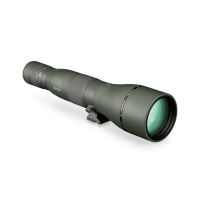
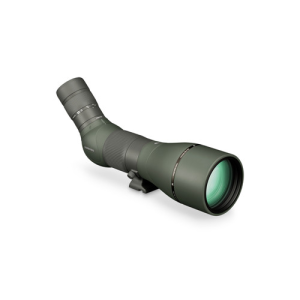
The Razor HD 27-60×85 is the one most people should actually buy, and the reason is in the field of view column. Vortex publish 117 to 68 feet at 1,000 yards. That 68 feet at 60x is the widest top-end view of any full-size scope in this guide, wider than the Swarovski’s 60 and 36 percent wider than the Viper HD’s 50. At the magnification where every spotting scope struggles, this one struggles least.
It is also the biggest aperture here at 85 mm, with XR Plus coatings, 16.4 feet of close focus, 15.5 inches of body and an Arca-Swiss foot that bolts straight to a decent tripod head. List is $2,399.99 and the card showed $1,599.99 on October 16, 2026, a 33 percent discount.
Understand what starting at 27x costs you. A scope that begins at 20x or lower is much easier to find an animal with; this one begins already zoomed in, which is why the Razor HD 13-39×56 further down shows 168 feet at its widest against this one’s 117. Many people glass with binoculars and then move to the spotter, and if that is you, 27x is not a problem. Pair it with something from our best binoculars guide and the workflow makes sense.
Best for: Serious glassing on a budget that stops short of Swarovski money.
3. Leupold SX-5 Santiam HD. Best for Long-Range Glassing
Pros
- 73 ft at 55x, the joint widest top-end view in this guide
- Stops at 55x rather than chasing 60x, which is why the view holds up
- 19.2 mm of eye relief at high magnification, the most generous here
- Designed and assembled in the USA with Leupold’s lifetime guarantee
- Arca-Swiss base and integrated quarter-twenty threads, so any tripod works
Cons
- 68.7 oz, among the heaviest scopes on this page
- $1,999.99 list; $1,520.99 at one retailer, $1,767.99 and up at the rest
- Starts at 27x, so like the Razor it is not a searching scope
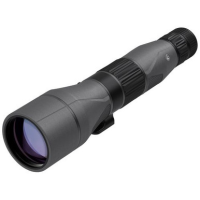
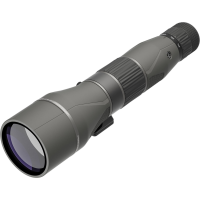
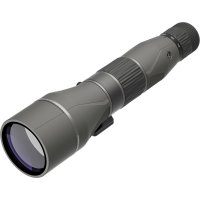
The SX-5 Santiam earns the long-range slot by refusing to chase a number. Leupold cap it at 55x rather than 60x, and the result is 73 feet of view at 1,000 yards at full magnification, the joint widest top-end figure in this guide alongside the Sig. Compare that to the 50 feet the Viper HD manages at 60x and you can see what the last five power costs.
It also has the most forgiving eyepiece here. Leupold publish 19.2 mm of eye relief at high magnification, which is the largest figure on this page and the difference between comfortable glassing in glasses and a headache. The body is 80 mm, DiamondCoat 2 coated, waterproof and fogproof, with an Arca-Swiss base and a lifetime guarantee, designed and assembled in the USA.
Where it loses is weight and discount. At 68.7 oz it is heavier than the 85 mm Razor HD, and at $1,520.99 against a $1,999.99 list its best price comes off list by 24 percent where the Razor’s comes off by 33. On the card the Razor HD is $79 more with a bigger objective, and most Santiam listings sit at $1,767.99 and up. Buy the Santiam for the eye relief and the top-end view; buy the Razor for the aperture.
Best for: Long sessions behind the glass, especially if you wear glasses.
4. Sig Sauer Oscar8 27-55×80. Best Premium Value
Pros
- 73 ft at 55x, the same top-end view as the Leupold Santiam
- Sig publish exit pupil, 2.96 to 1.45 mm, which most makers do not
- HDX optical design with extra-low dispersion glass and a Schmidt-Pechan prism
- Aircraft grade aluminum body, waterproof to a 1 m rating
- Named best value by a major expert round-up
Cons
- Every retailer on the card charges the same $1,659.99, so there is no deal to hunt
- Sig publish no MSRP, so there is no list price to measure against
- 68 oz and 15.27 inches, so it is a tripod-and-truck scope
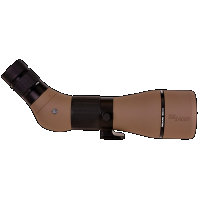
The Oscar8 is the quiet argument in this section. It is a 27-55×80 like the Leupold Santiam, publishes the same 105 to 73 feet of field of view, and sells for $1,659.99 against the Leupold’s $1,520.99 to $1,999.99. Same configuration, same top-end view, and it was named best value by one of the expert round-ups we checked; whether it is the cheaper of the two depends on where you find the Santiam.
Sig also do something rare and useful: they publish the exit pupil, 2.96 to 1.45 mm. That is exactly the textbook figure, the objective divided by the magnification, and it tells you plainly that at 55x this scope is delivering a 1.45 mm disc of light to an eye that can accept two or three. Almost nobody prints that number, and the section further down explains why it matters. Eye relief runs 17 to 16 mm across the zoom.
The catch is price discipline. Every retailer on the card listed it at $1,659.99 on October 16, 2026, so there is no sale to wait for and no cheaper store to find. Sig publish no MSRP either, so there is no list to judge the deal against. If you want a premium 80 mm and the Leupold and Vortex are both sold out, this is a genuinely equivalent scope rather than a consolation.
Best for: Santiam performance from a different maker, at one fixed price wherever you buy it.
The Best Mid-Range Spotting Scopes
Between about $740 and $1,000 sits the most interesting part of this market, because it is where you choose what to optimize. All three scopes in this section sit within about $260 of each other and none of them is trying to be the same tool.
5. Leupold SX-4 Pro Guide HD Gen 2 15-45×65. Best for Hunting
Pros
- 131 ft at 15x, the second widest low-end view in this guide
- 20 mm of eye relief at low magnification, the most generous figure here
- Starts at 15x, so you can actually find an animal with it before zooming
- Magnesium body, Guard-ion coating, Arca-Swiss adapter, lifetime guarantee
- $739 on the card against a $999.99 list, a 26 percent discount
Cons
- The discount is uneven: $739 at one retailer, $799.99 at most, $999.99 at a few
- 62 oz for a 65 mm scope, heavier than the 80 mm Swarovski
- 45x ceiling, so it will not reach as far as the 60x scopes
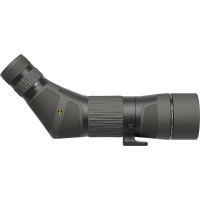
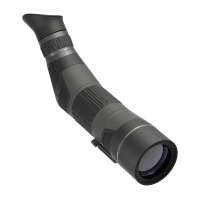
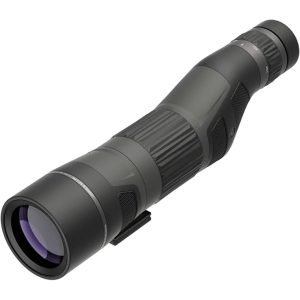
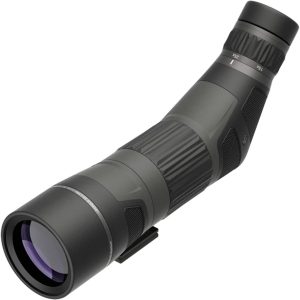
The SX-4 Pro Guide HD Gen 2 is the hunting pick because it is built around finding things rather than studying them. Leupold publish 131 feet at 1,000 yards at 15x, which is the second widest low-end view on this page, and 20 mm of eye relief at that setting, which is the most generous figure in the guide. A scope you can comfortably search a hillside with beats a scope that resolves better once you have already found the animal. Pair it with a rangefinder and you have the distance as well as the animal.
The Gen 2 upgrade is real: a magnesium body, Guard-ion coating that sheds water and smudges, phase-coated roof prisms, an Arca-Swiss adapter and interchangeable FormFit eyecups. It is 65 mm and 14.1 inches long, and it carries Leupold’s lifetime guarantee.
Two things to know before buying. It no longer sells at full list: when this guide was last updated in August every retailer we track asked $999.99, and on October 16, 2026 the card ran from $739 to $999.99 with most at $799.99. That puts it $260 under the Vortex Razor HD 13-39×56 on the street, where the two lists are $450 apart. And at 62 oz for a 65 mm scope it is heavier than the 80 mm Swarovski, which is a lot of weight for a mid-size objective. Buy the Gen 2 specifically: the earlier SX-4 and the 20-60×85 version are different scopes at different prices, and listings conflate all three.
Best for: Hunters who need to locate animals rather than count points on one they have already found.
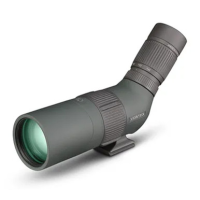
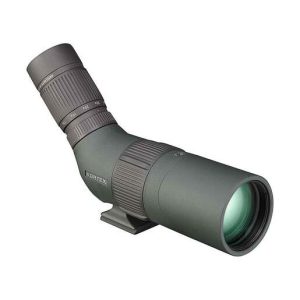
6. Vortex Razor HD 13-39×56. Best Compact Spotting Scope
Pros
- 28.6 oz, less than half the weight of every other scope in this guide
- 168 ft at 13x and 89 ft at 39x, both the widest figures on this page
- 10.4 inches long, so it fits in a pack rather than strapped to one
- 9.2 ft close focus, by far the shortest here
- $999 on the card against a $1,449.99 list, a 31 percent discount
Cons
- 56 mm objective, the smallest in this guide
- 39x ceiling, so it will not resolve fine detail at extreme range
- 15 mm of eye relief at the low end, the tightest figure here
The Razor HD 13-39×56 is the only scope on this page you would carry a long way without resenting it. Vortex publish 28.6 oz and 10.4 inches. The next lightest full-size option, the Bushnell Trophy Xtreme, is 37.9 oz, and everything else runs from 49.8 to 76.6. This is less than half the weight of the Viper HD.
It also holds the widest view figures in the guide at both ends: 168 feet at 13x and 89 feet at 39x. That 89 feet is 78 percent more than the Viper HD gives at 60x. Because it stops at 39x it never enters the range where every spotting scope’s view collapses, and because it starts at 13x you can genuinely search with it. Close focus is 9.2 feet, so it doubles as a birding or range scope.
The trade is aperture and reach. Fifty-six millimeters is the smallest objective here, so in the last minutes of legal light it will show you less than an 80 mm scope, and 39x will not pick out bullet holes at 600 yards the way a 60x will. Eye relief at the low end is 15 mm, the tightest on this page. The card showed $999 against a $1,449.99 list on October 16, 2026, a 31 percent discount, which is $260 more than the Leupold SX-4 now that the Leupold sells under its list.
Best for: Backcountry hunting, where the best spotting scope is the one you did not leave in the truck.
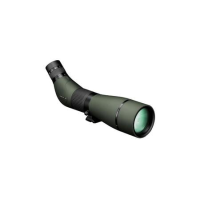
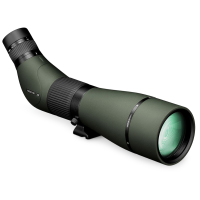
7. Vortex Viper HD 20-60×85. Best Spotting Scope Under $1,000
Pros
- An 85 mm objective for $764.99, the cheapest 85 mm scope in this guide
- 19.6 mm of eye relief at high magnification, second only to the Santiam
- $764.99 on the card against a $1,349.99 list, a 43 percent discount
- Full 20x to 60x range, so it searches and studies
- Vortex VIP warranty
Cons
- 76.6 oz, the heaviest scope on this page by eight ounces
- 50 ft at 60x, the narrowest top-end view here
- $764.99 is one retailer’s price; the rest ask about $899
The Viper HD 20-60×85 is the cheapest way to an 85 mm objective. At $764.99 against a $1,349.99 list it is a 43 percent discount, the biggest on this page, and it buys you the same aperture as the $1,599.99 Razor HD. If the priority is raw light-gathering per dollar, nothing else here competes.
It is also the clearest illustration of this guide’s main finding. Vortex publish 101 to 50 feet at 1,000 yards. That 50 feet at 60x is the narrowest top-end view of any scope on this page, against 68 for the Razor HD and 89 for the compact Razor. Fifty feet at 1,000 yards is about six elk lengths. You can study something in it. You cannot find anything with it.
And it is heavy. At 76.6 oz it is the heaviest scope in this guide by eight ounces, nineteen ounces more than the 80 mm Swarovski, and 17.5 inches long. The card below leads at $764.99 from one retailer and the others ask about $899, so check which one has it in stock. Buy this for aperture per dollar, on a solid tripod, and accept the rest.
Best for: Maximum aperture per dollar, from a fixed position, where weight is somebody else’s problem.
The Best Budget Spotting Scopes
Under $500 the honest expectation changes. These will all show you an animal, read a target at 200 yards and survive a season. None of them will hold up in the last ten minutes of light the way the top of this page does, and none of them pretends otherwise.
8. Leupold SX-2 Alpine HD Gen 2. Best Budget HD Glass
Pros
- $400 for genuine HD glass with Leupold’s lifetime guarantee
- 19.5 mm of eye relief at low magnification, better than scopes four times the price
- Magnesium body, Arca-Swiss adapter and FormFit eyecups at this money
- Named best budget pick by a major expert round-up
- Sold at $399.99 by most of the retailers we track, so it is easy to find
Cons
- 59.9 oz for a 60 mm objective, heavier than the 80 mm Swarovski
- 50.8 ft at 60x, among the narrowest top-end views here
- Sells at full list, $400 against a $399.99 MSRP
The SX-2 Alpine HD Gen 2 is the cheapest scope here that behaves like a proper optic. For $400 you get a magnesium body, HD glass, Guard-ion coating, an Arca-Swiss adapter and Leupold’s lifetime guarantee, and one of the expert round-ups we read makes it their outright budget pick.
The specification that punches above the price is eye relief. Leupold publish 19.5 mm at low magnification, which is more than the $1,599.99 Vortex Razor HD offers and roughly the same as the $1,520.99 Santiam. If you wear glasses, that single number matters more day to day than the coatings do.
What $400 does not buy is aperture or lightness. It is a 60 mm objective, the smallest full-size scope in this guide, and it weighs 59.9 oz, which is more than the 80 mm Swarovski. At 60x it shows 50.8 feet, near the bottom of the table. It also sells at full list, the only scope here that still does, so there is no discount to wait for. An 80 mm version exists if you want the aperture.
Best for: A first proper spotting scope, especially if you wear glasses.
9. Vortex Diamondback HD 16-48×65. Best Value Spotting Scope
Pros
- $349.49 on the card against a $599.99 list, a 42 percent discount
- 138 ft at 16x and 72 ft at 48x, both excellent for the money
- 49.8 oz and 14.3 inches, lighter than the $400 Leupold and the $2,744.98 Swarovski
- 20.3 mm of eye relief at high magnification, the best figure in this guide
- 16.4 ft close focus and a Vortex VIP warranty
Cons
- 65 mm objective, so it gives up light to the 80 and 85 mm scopes
- 48x ceiling, which is enough for hunting and short for target work
- $349.49 is one retailer’s price; most ask $399 to $399.99
The Diamondback HD 16-48×65 is the value answer and the discount is the headline. It lists at $599.99 and the card showed $349.49 on October 16, 2026, a 42 percent discount, one point behind the Viper HD for the largest gap between list and street in this guide. That is the whole argument for the second chart on this page: on MSRP this scope ranks above the Leupold SX-2 Alpine, and on the street it costs about fifty dollars less.
The numbers behind it are genuinely good. Vortex publish 138 to 72 feet at 1,000 yards, so it beats every 60x scope here at the top end because it stops at 48x. Eye relief runs to 20.3 mm at high magnification, the most generous figure anywhere in this guide including the Swarovski. And at 49.8 oz it is lighter than the $400 Leupold and lighter than the $2,744.98 Swarovski.
The limit is aperture. Sixty-five millimeters gathers meaningfully less light than an 80, and you will notice at dawn and dusk, which is when spotting scopes earn their keep. For a range scope, a coyote rig or a first hunting spotter it is hard to argue with, especially alongside something from our best rifle scopes guide. An 85 mm Diamondback HD exists too, at about $499 from the retailers we track.
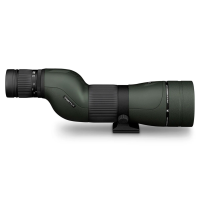
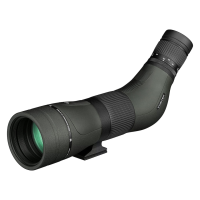
Best for: The best glass-per-dollar on this page, if you can live with a 65 mm objective.
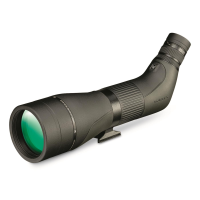
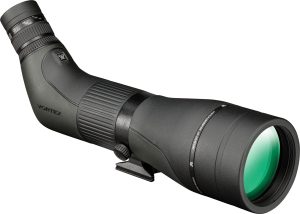
10. Vortex Crossfire HD 20-60×80. Best Budget 80 mm
Pros
- An 80 mm objective for $249, the cheapest big aperture anywhere in this guide
- 53.0 oz, lighter than the 60 mm Leupold SX-2 and the 65 mm SX-4
- 18 mm of eye relief across the whole magnification range
- $249 on the card against a $424.99 list, a 41 percent discount
- $249 at one retailer and $299.99 at the others
Cons
- 53 ft at 60x, near the bottom of the field of view table
- HD is doing lighter work here than it does on the Razor and Viper
- 26 ft close focus, the longest in this guide
The Crossfire HD 20-60×80 is the aperture bargain. Eighty millimeters for $249 is the cheapest big objective on this page by a wide margin, and it comes with 18 mm of eye relief across the entire zoom range, which is unusual and genuinely useful. List is $424.99, so the card price on October 16, 2026 was a 41 percent discount.
It is also lighter than it should be. At 53.0 oz this 80 mm scope weighs less than the 60 mm Leupold SX-2 Alpine and less than the 65 mm SX-4 Pro Guide, both of which cost more. The card leads at $249 from one retailer, with $299.99 the going price elsewhere.
Be realistic about the glass. HD in the Crossfire line means something less than HD in the Razor line, and at 60x it shows 53 feet at 1,000 yards, near the bottom of the table. Close focus is 26 feet, the longest here. What you are buying is 80 mm of aperture, a warranty and a fair price, and at $249 to $299.99 that is a perfectly honest transaction.
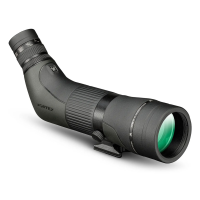
Best for: Getting a real 80 mm objective onto a tripod for the price of a decent red dot.
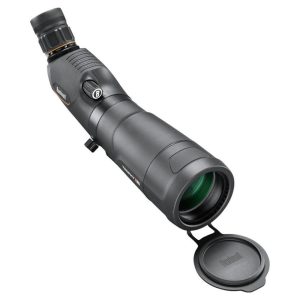
11. Bushnell Trophy Xtreme 20-60×65. Cheapest Worth Buying
Pros
- $177.99 on the card, about a fifteenth of the Swarovski
- 37.9 oz, the second lightest scope in this guide
- BaK-4 prisms and fully multi-coated lenses at a price where neither is a given
- Waterproof and fogproof, with 19.7 ft close focus
- Named in a major expert round-up as the cheapest they tested
Cons
- Bushnell published the field of view at 100 yards where everyone else uses 1,000
- Porro prism body, so it is bulkier for its aperture than a roof prism scope
- 65 mm and entry-level coatings, so low light is where it gives up
The Trophy Xtreme is the floor of this guide and it is an honest floor. Most retailers ask $229.95 and the card showed $177.99 on October 16, 2026, about a fifteenth of the Swarovski at the top of this page. It is 20-60×65 with BaK-4 prisms and fully multi-coated lenses, waterproof, fogproof, and it weighs 37.9 oz, the second lightest scope here.
At this money it does the basic job: it will show you an animal on a far hillside, let you count points once you have found it, and read a target at a couple of hundred yards. It has 17 mm of eye relief, 19.7 feet of close focus and a 14.6 inch body, and a major expert round-up names it as the cheapest scope they tested.
Two honest notes. Bushnell published this scope’s field of view at 100 yards, 100 ft at 20x and 48 ft at 60x, where every other manufacturer in this guide quotes at 1,000 yards. Read literally that would make it ten times wider than a Swarovski, so the unit label looked like an error on Bushnell’s page, which Bushnell has since taken down, and we have kept it out of the comparison chart rather than correcting a maker’s own specification. And it is a Porro prism design, which is why it is bulky for a 65 mm scope.
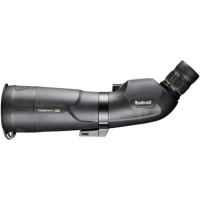
Best for: Finding out whether you need a spotting scope before spending like you already know.
What Happens to Your View at Maximum Magnification
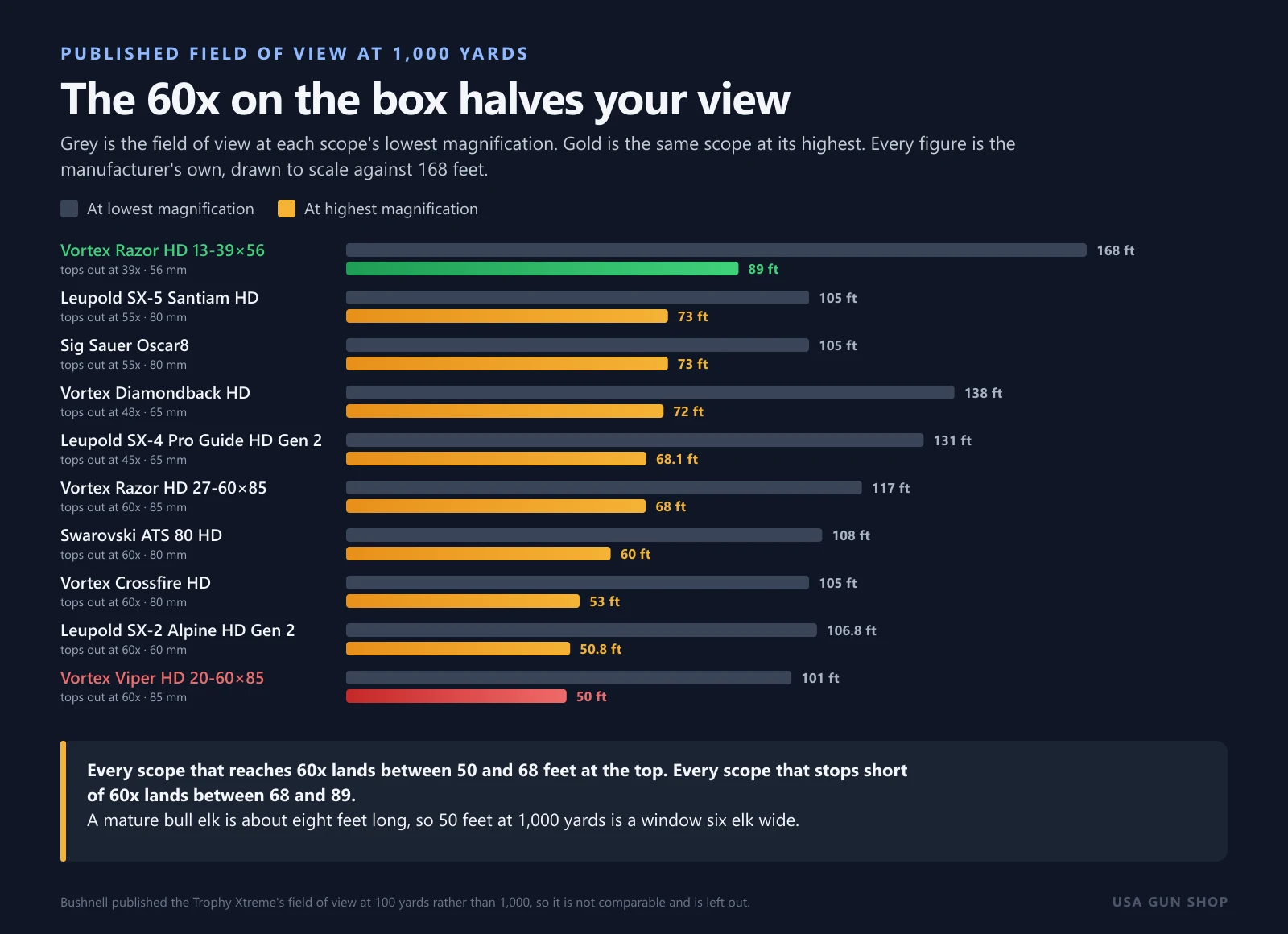
Every spotting scope is sold on its top number. Sixty power sounds like twice as much scope as thirty. What almost nobody puts in front of you is what that setting does to the amount of world you can see, and every manufacturer publishes the figure.
Here is the published field of view at 1,000 yards for every scope in this guide, at its lowest and its highest magnification.
| Spotting scope | Top magnification | FOV at widest | FOV at maximum | What you lose |
|---|---|---|---|---|
| Vortex Razor HD 13-39×56 | 39x | 168 ft | 89 ft | 47% |
| Leupold SX-5 Santiam HD | 55x | 105 ft | 73 ft | 30% |
| Sig Sauer Oscar8 | 55x | 105 ft | 73 ft | 30% |
| Vortex Diamondback HD | 48x | 138 ft | 72 ft | 48% |
| Leupold SX-4 Pro Guide HD Gen 2 | 45x | 131 ft | 68.1 ft | 48% |
| Vortex Razor HD 27-60×85 | 60x | 117 ft | 68 ft | 42% |
| Swarovski ATS 80 HD | 60x | 108 ft | 60 ft | 44% |
| Vortex Crossfire HD | 60x | 105 ft | 53 ft | 50% |
| Leupold SX-2 Alpine HD Gen 2 | 60x | 106.8 ft | 50.8 ft | 52% |
| Vortex Viper HD 20-60×85 | 60x | 101 ft | 50 ft | 50% |
Sort that column and the pattern is absolute. Every scope that zooms to 60x shows between 50 and 68 feet at the top. Every scope that stops short of 60x shows between 68 and 89. The $999 Razor HD 13-39×56 gives you 89 feet at maximum magnification, 78 percent more than the 85 mm Viper HD gives at its 50, and on October 16, 2026 the Razor cost $234 more.
Fifty feet at 1,000 yards is not much. A mature bull elk is about eight feet nose to tail. So at 60x on a Viper HD you are looking through a window roughly six elk wide, at an animal you have to have found already. Spotting scopes at maximum magnification are for confirming and counting, never for searching, and the manufacturers’ own numbers say so.
The practical rule: the top number sells the scope and the bottom number decides whether you enjoy using it. If you glass with binoculars first and only reach for the spotter once you have something in view, a 60x scope is fine. If the spotter is your search tool, buy one that starts low, and treat anything above about 40x as a setting you will use for a few seconds at a time.
MSRP Is Not the Ranking You Think It Is
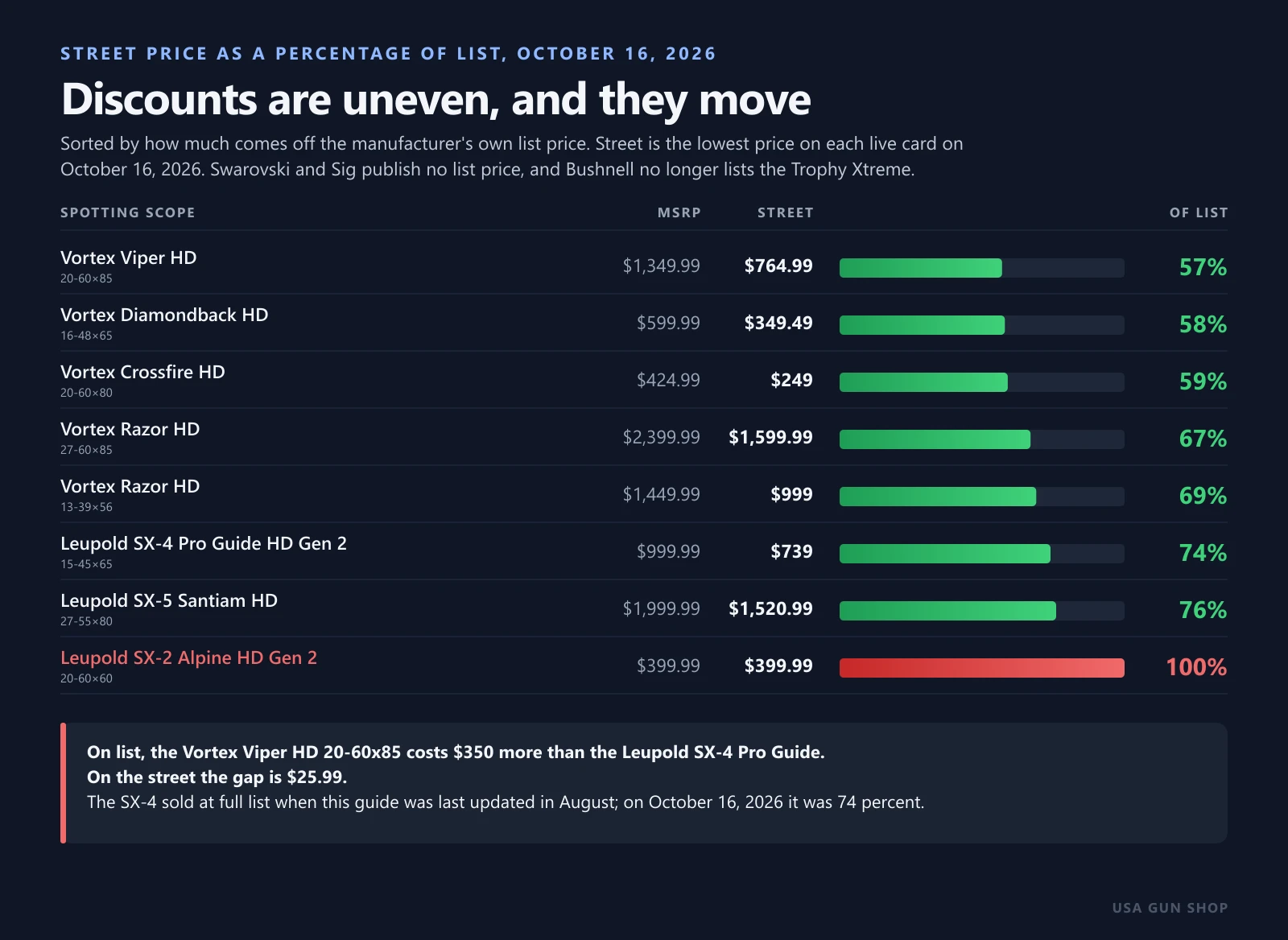
Every guide, this one included, lists spotting scopes by price. Almost all of them use the manufacturer’s list price, and in this category that turns out to be nearly meaningless, because the discount off list is wildly uneven from one model to the next.
| Spotting scope | MSRP | Street, October 16, 2026 | Percent of list |
|---|---|---|---|
| Vortex Viper HD 20-60×85 | $1,349.99 | $764.99 | 57% |
| Vortex Diamondback HD 16-48×65 | $599.99 | $349.49 | 58% |
| Vortex Crossfire HD 20-60×80 | $424.99 | $249 | 59% |
| Vortex Razor HD 27-60×85 | $2,399.99 | $1,599.99 | 67% |
| Vortex Razor HD 13-39×56 | $1,449.99 | $999 | 69% |
| Leupold SX-4 Pro Guide HD Gen 2 | $999.99 | $739 | 74% |
| Leupold SX-5 Santiam HD | $1,999.99 | $1,520.99 | 76% |
| Leupold SX-2 Alpine HD Gen 2 | $399.99 | $399.99 | 100% |
Discounts are uneven, and they move. On October 16, 2026 every Vortex scope in this guide sold at 57 to 69 percent of its list on the cards, and the Leupolds at 74 to 100 percent: the SX-2 Alpine still at full list, the Santiam at 76 percent and the SX-4 Pro Guide at 74. In August the SX-4 sold at full list everywhere we looked. Swarovski and Sig publish no list price and Bushnell no longer lists the Trophy Xtreme, so those three are left out. The gap between list and street is a pricing decision that changes from month to month, not a quality signal, and it reorders any list built on MSRP.
Two examples of the reordering. On list, the Vortex Diamondback HD at $599.99 sits well above the Leupold SX-2 Alpine at $399.99. On the card the Diamondback was $349.49 and the Leupold $399.99, so the order flips and the cheaper-looking scope is the more expensive one. And the Vortex Viper HD 20-60x85 lists $350 above the Leupold SX-4 Pro Guide, at $1,349.99 against $999.99; on the card the gap was $25.99, $764.99 against $739.
The lesson is not that one brand is overpriced. It is that you cannot compare two scopes from different brands using list prices, and any guide that ranks by MSRP is ranking by each manufacturer’s marketing department. The street gap also moves, as the SX-4 shows, so compare the numbers on the live cards, which is what they are there for.
Weight Tracks Aperture and Design, Not Price
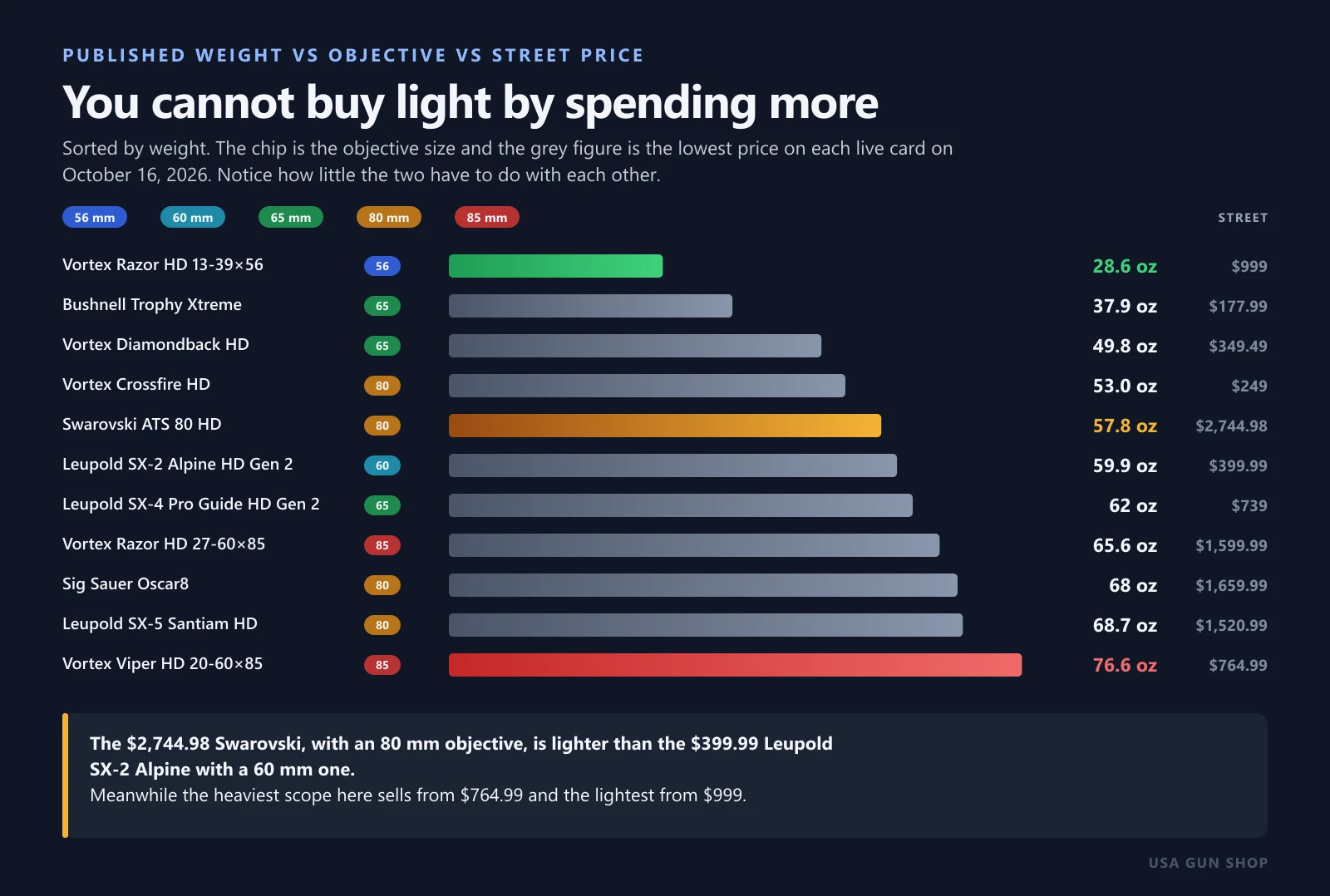
The last published figure worth putting side by side is mass, because it is the one you feel on every hunt and the one nobody checks before buying.
| Spotting scope | Objective | Weight | Street, October 16, 2026 |
|---|---|---|---|
| Vortex Razor HD 13-39×56 | 56 mm | 28.6 oz | $999 |
| Bushnell Trophy Xtreme | 65 mm | 37.9 oz | $177.99 |
| Vortex Diamondback HD | 65 mm | 49.8 oz | $349.49 |
| Vortex Crossfire HD | 80 mm | 53.0 oz | $249 |
| Swarovski ATS 80 HD | 80 mm | 57.8 oz | $2,744.98 |
| Leupold SX-2 Alpine HD Gen 2 | 60 mm | 59.9 oz | $399.99 |
| Leupold SX-4 Pro Guide HD Gen 2 | 65 mm | 62 oz | $739 |
| Vortex Razor HD 27-60×85 | 85 mm | 65.6 oz | $1,599.99 |
| Sig Sauer Oscar8 | 80 mm | 68 oz | $1,659.99 |
| Leupold SX-5 Santiam HD | 80 mm | 68.7 oz | $1,520.99 |
| Vortex Viper HD 20-60×85 | 85 mm | 76.6 oz | $764.99 |
Three things fall out. The $2,744.98 Swarovski, with an 80 mm objective, is lighter than the $399.99 Leupold SX-2 Alpine with a 60 mm one. That is what alpine-grade design buys and it is the clearest single justification for the price on this page. The $249 Vortex Crossfire, also 80 mm, weighs 53 oz, which is lighter than four scopes costing more than six times as much.
And you cannot buy light by spending more in general. The heaviest scope in this guide is the $764.99 Viper HD at 76.6 oz; the lightest is the $999 Razor HD 13-39×56 at 28.6 oz. About $234 separates them on price and forty-eight ounces on the scale. Weight follows the objective and the optical design, and price follows the glass.
One footnote on exit pupil, because two makers here publish it and the rest do not. Sig give the Oscar8 as 2.96 to 1.45 mm, exactly the objective divided by the magnification. Swarovski give the ATS 80 as 3.2 to 1.6 mm, which is not the textbook figure and reflects the real optical design of their zoom. Either way, at maximum magnification every scope in this guide is putting a disc of light under 1.7 mm into an eye that can accept two or three, which is exactly why the image at 60x looks dim as well as narrow.
How to Choose the Best Spotting Scope for You
The best spotting scope for you is decided by three numbers and one purchase you have probably not budgeted for. Everything below is the order it matters in.
Objective size is the only thing that gathers light
Sixty, 65, 80 and 85 mm are the sizes that matter here, and the jump from 65 to 80 is the one you notice at dawn and dusk. An 80 mm objective gathers roughly 50 percent more light than a 65. Coatings and glass then decide how much of that light survives the trip to your eye, which is what separates a $249 80 mm from a $2,744.98 one.
Buy on the low magnification, not the high one
As the chart above shows, every scope’s field of view roughly halves across its zoom range, and the ones that reach 60x end up between 50 and 68 feet at 1,000 yards. A scope that starts at 13x or 15x is a genuine search tool; one that starts at 27x is not. Decide whether the spotter is how you find animals or how you study them, and buy the bottom of the range accordingly.
Angled or straight
Angled bodies are easier to share, more comfortable for long sessions and better when glassing above you, because the tripod sits lower and your neck does less work. Straight bodies are quicker to get on target, better from a truck window or prone, and more intuitive if you are used to a rifle scope. Almost every scope in this guide comes both ways at the same price, so this is preference rather than performance.
Eye relief, especially in glasses
The spread in this guide is 15 mm to 20.3 mm, and it does not track price at all. The $349.49 Vortex Diamondback HD publishes 20.3 mm, the best figure here, while the $1,599.99 Razor HD publishes 16.7 mm at its low end. If you wear glasses, find this number before you find the reviews.
Weight, if it is leaving the truck
Twenty-eight ounces to seventy-seven ounces is the range here, and it does not follow price either. If the scope goes in a pack, the Razor HD 13-39×56 at 28.6 oz is in a category of one. If it lives on a bench or a truck hood, ignore this entirely and buy aperture.
You need a tripod, and it is not optional
A spotting scope is unusable handheld. At 40x, a heartbeat moves the image. Budget for a tripod and head that can actually hold your scope steady, which for a 68 oz 80 mm scope means something substantially better than a camera tripod. Several scopes here, including the Swarovski, the Razor HD and both Leupolds, have Arca-Swiss feet that bolt straight to a decent head with no adapter plate.
Reticles, if you are calling shots
A ranging reticle in the eyepiece lets you call corrections in mils or MOA rather than guessing, which is how spotters work behind the rifles in our best PRS scopes guide. None of the scopes in this guide ships with one as standard, but reticle eyepieces are sold separately for several of them, including the Vortex Razor HD line and the Athlon Ares G2. If you shoot with a spotter beside you, price that eyepiece in before you choose the scope, because it is not available for every model.
Spotting scope or binoculars
They are not alternatives, they are a sequence. Binoculars search, a spotting scope confirms. Two eyes on a 10×42 will find animals faster and more comfortably than one eye on a 60x scope ever will, and a good pair costs less than most of this page. If you are choosing between them and you own neither, buy the binoculars first: our best binoculars guide covers that side.
How I Chose These Spotting Scopes
Spotting scopes are the hardest optic to rank honestly, because the thing that separates a $400 scope from a $2,744.98 one only shows up in bad light and cannot be photographed. So this guide is built on published specifications and arithmetic anyone can repeat, and it says where every number came from.
Field of view, eye relief, weight, length and list price all come from the manufacturers: the Vortex Razor HD spec sheet, Leupold’s SX-5 Santiam page, the SX-4 Pro Guide HD Gen 2 page, Bushnell’s Trophy Xtreme listing (since removed from bushnell.com), and Sig and Swarovski’s own published figures. We re-read the Vortex and Leupold list prices on the makers’ own pages on October 16, 2026. Street prices are the live cards on this page, and every street figure in the tables and charts is the lowest price on that scope’s card on October 16, 2026.
The comparisons are then arithmetic. The field of view loss is one subtraction and one division. Percent of list is street divided by MSRP. Where a manufacturer publishes nothing, or published something that cannot be right, this page says so rather than filling the gap: Swarovski and Sig publish no MSRP, Bushnell no longer lists the Trophy Xtreme, and Bushnell’s field of view was labeled at a distance that would make it ten times wider than a Swarovski.
One thing worth being upfront about: five of the eleven picks are Vortex. That is not sponsorship, it is what happens when you filter a category by expert consensus, then by what our merchants actually stock at a competitive price. Vortex covers more of the price ladder than anyone else, and on our cards it has sold further under its list than Leupold. Where a well-reviewed scope was carried by only one merchant, or only by a merchant we know converts poorly, it was left out and the reason is stated below.
Mistakes to Avoid When Buying a Spotting Scope
Buying on the top magnification. Sixty power costs you half your field of view and most of your image brightness. The 60x scopes in this guide show 50 to 68 feet at 1,000 yards; the ones that stop lower show up to 89.
Comparing brands on MSRP. On October 16, 2026 Vortex sold at 57 to 69 percent of list and Leupold at 74 to 100 percent, and those numbers move. A list-price ranking is a ranking of marketing departments.
Forgetting the tripod. A spotting scope without a tripod that can hold it still is an expensive paperweight, and a 68 oz scope needs a real head.
Assuming a bigger objective means a bigger scope. The 80 mm Swarovski is lighter than the 60 mm Leupold SX-2 and the 80 mm Crossfire is lighter than the 65 mm SX-4.
Skipping eye relief if you wear glasses. The spread here is 15 mm to 20.3 mm and the best figure belongs to a $349.49 scope.
Buying a spotting scope instead of binoculars. If you own neither, the binoculars will find more animals. The spotter is the second purchase, not the first.
What We Removed From This Guide, and Why
Three of the previous six picks are gone.
The Bushnell Prime came out because there is no single scope to point at. Across our merchants the name returns an unlabelled “Bushnell Prime Spotting Scope” at two different prices plus a 16-48×50 and a 20-60×65, and neither of those model numbers returns anything when searched directly. Recommending a product line rather than a product is how readers end up with the wrong scope. The Bushnell Trophy Xtreme takes that slot because it is one identifiable scope, cheaper, and named in a major expert round-up.
The Sig OSCAR6 HDX came out because the listings are for the OSCAR6 HDX Pro, which is not quite the scope the page named, and because at that money a 16-32×60 compact is a hard argument against a $999 Razor HD 13-39×56. Sig’s own Oscar8 is on this page instead, at $1,659.99, and it is the model the expert round-ups actually name.
The Burris Signature HD came out because it appeared on none of the current expert round-ups we checked, and it sits in the same price band as the Sig Oscar8 and the Vortex Razor HD 27-60x85, both of which do have consensus behind them. It is not a bad scope. It is a slot better used.
Some genuinely well-reviewed scopes are also absent and it is worth saying why. Maven’s S.1A and CS.1A appear on two expert lists and Maven sells direct, so no merchant we work with carries them. The Athlon Ares G2 UHD, which is the obvious answer for anyone wanting a ranging reticle eyepiece, is carried by exactly one merchant we know converts poorly, so it is discussed in the buyer’s guide rather than given a slot. The same applies to the Nikon Monarch 20-60×82. The Vortex Diamondback HD 20-60×85 is now stocked more widely, at about $499, but the 16-48x65 already holds the Diamondback slot. We do not list what we cannot price competitively.
The Bottom Line: the Best Spotting Scope to Buy
If money is genuinely not the constraint, the Swarovski ATS 80 HD is the best spotting scope here and the weight figure proves it: 57.8 oz for an 80 mm objective, lighter than a $400 60 mm scope. For everyone else the answer is the Vortex Razor HD 27-60×85 at $1,599.99, which has the biggest objective in this guide and the widest view at 60x of any full-size scope on the page.
Below that, buy for one specific reason. The Razor HD 13-39×56 is 28.6 oz and the only one you will carry all day. The SX-4 Pro Guide HD Gen 2 starts at 15x and 131 feet, so it finds animals. The Viper HD 20-60×85 is the cheapest 85 mm objective here at $764.99, and the biggest discount off list. The Diamondback HD at $349.49 has the best eye relief in this guide.
And whatever you buy, check the street price rather than the list price, and check the field of view at the top of the zoom range rather than the number on the box. On this page those two habits move a scope up or down the ranking more than any review ever will.
Last updated October 16, 2026
What is the best spotting scope?
The Swarovski ATS 80 HD if budget is genuinely not the constraint, and the Vortex Razor HD 27-60x85 at $1,599.99 for everyone else. The Razor has the largest objective in this guide at 85 mm and the widest published view at 60x of any full-size scope here, 68 feet at 1,000 yards against the Swarovski 60 and the Vortex Viper 50.
Is a 60x spotting scope better than a 45x one?
For most glassing, no, and the manufacturers' own numbers show why. Every scope in this guide that reaches 60x drops to between 50 and 68 feet of view at 1,000 yards at full magnification. Every scope that stops short of 60x holds between 68 and 89 feet. The $999 Vortex Razor HD 13-39x56 gives 89 feet at its maximum, 78 percent more than the 85 mm Viper HD gives at 60x.
What size objective do I need on a spotting scope?
Sixty, 65, 80 and 85 mm are the sizes that matter. The jump from 65 to 80 is the one you notice at dawn and dusk, because an 80 mm objective gathers roughly 50 percent more light than a 65. Above that, glass and coatings decide how much of that light survives to your eye, which is what separates a $249 80 mm scope from a $2,744.98 one.
How much should you spend on a spotting scope?
About $300 or less buys a real 80 mm objective in the Vortex Crossfire HD, which was $249 on the card on October 16, 2026. Around $1,000 buys genuinely good glass. Past about $1,600 you are buying the last few percent of edge sharpness and low light performance, and whether that is worth it depends on how many hours you spend behind the scope in bad light. Do not spend the tripod budget on the scope.
Angled or straight spotting scope?
Angled bodies are more comfortable for long sessions, easier to share and better when glassing above you, because the tripod sits lower. Straight bodies get on target faster, work better from a truck window or prone, and feel more natural if you are used to a rifle scope. Almost every scope in this guide is sold both ways at the same price, so it is preference rather than performance.
Do I need a tripod for a spotting scope?
Yes, and it is not optional. A spotting scope is unusable handheld, because at 40x a heartbeat moves the image. Budget for a tripod and head that can hold your scope steady, which for a 68 oz 80 mm scope means considerably more than a light camera tripod. Several scopes here have Arca-Swiss feet that bolt straight to a decent head without an adapter plate.
What is the best spotting scope with a reticle?
None of the scopes in this guide ships with a ranging reticle as standard, but reticle eyepieces are sold separately for several of them, including the Vortex Razor HD line and the Athlon Ares G2, whose 22x ranging eyepiece uses a mil reticle. If you spot for a shooter and want to call corrections in mils rather than guesses, price that eyepiece in before choosing the scope, because it is not offered for every model.
Spotting scope or binoculars, which first?
Binoculars, if you own neither. They are not alternatives, they are a sequence: binoculars search and a spotting scope confirms. Two eyes on a 10x42 will find animals faster and more comfortably than one eye on a 60x scope, and a good pair costs less than most of the scopes on this page.
Why is MSRP a bad way to compare spotting scopes?
Because the discount off list varies by model and moves over time. On October 16, 2026 the Vortex scopes in this guide sold at 57 to 69 percent of list and the Leupolds at 74 to 100 percent, and the Leupold SX-4 Pro Guide that sold at full list in August was down to 74 percent. On MSRP the Vortex Diamondback HD at $599.99 outranks the Leupold SX-2 Alpine at $399.99; on the card the Diamondback was $349.49 and the Leupold $399.99, so the order flips.
4,021+ Gun & Ammo Deals
Updated daily from 200+ top retailers. Filter by category, caliber, action type, and price.
Related Guides