

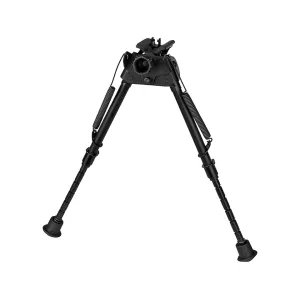
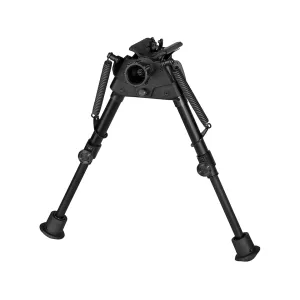
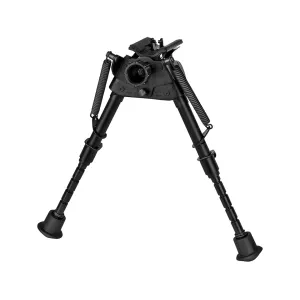
Look under almost any bolt-action hunting or precision rifle resting on a bench, and the bipod folded against the forend is very likely a Harris — or one of the countless copies of it. Harris Engineering has built the benchmark rifle bipod for decades: the spring-loaded, sling-stud-mounted S-BRM, the taller S-L, the swivel-and-tilt S-series and the fixed 1A2 models. Here is who they are, what they make, and what is worth buying.
Table of Contents
Who Harris Engineering is
Harris Engineering is a family-owned company in Barlow, Kentucky that has built the benchmark rifle bipod since the 1970s. Founder Jerry Harris invented it after repeatedly forgetting his shooting sticks while varmint hunting, and his spring-loaded, sling-stud-mounted design became the most-copied bipod in the world.
Gerald “Jerry” Harris started making bipods in Detroit, Michigan in 1965 — the story goes that he and his hunting buddies kept leaving their shooting sticks at home when they went after crows and varmints, so he built a folding bipod that attached straight to the rifle and was always there when you went prone. He had applied for a patent before turning it into a business. In 1975 he moved the operation to his hometown of Barlow, Kentucky, and in 1979 the company was formally incorporated as Harris Engineering, Inc. by Jerry, Margaret Harris and Susan Wilkerson.
That design was good enough that it essentially never had to change. The Harris bipod became such a standard that “Harris-style bipod” is now a generic description, and a long list of competitors openly build clones of the same sling-stud, spring-leg pattern. The company is still family-owned and still makes its bipods in Barlow.
On tier, Harris is the proven workhorse standard rather than the feature king. It is not the most ergonomic bipod you can buy in 2026 — premium rivals have tool-less quick-detach levers and free-recoiling pan-and-tilt heads that a Harris does not — but it is rugged, low-profile, American-made and a fraction of the price, which is exactly why it has stayed on so many rifles for so long.
What Harris makes
How to read a Harris model code
Harris model names look cryptic but they follow a simple logic, and decoding it is the fastest way to buy the right one:
- S- prefix means the swivel series — the bipod cants and tilts side to side via a tension knob, so you can level the rifle on uneven ground. A model without the S (the 1A2 line) is fixed: no swivel, lighter and cheaper.
- BR means bench-rest height, legs 6 to 9 inches (prone and bench). L means longer legs, 9 to 13 inches (sitting and tall grass). There are taller models still, like the 12-to-25-inch and the 13.5-to-27-inch, for varmint and bench work.
- A trailing M means notched legs — spring detents that lock at set heights. A trailing 2 means self-leveling legs. No suffix is the standard smooth leg.
So an S-BRM is a swivel, 6-to-9-inch, notched-leg bipod — the single most popular configuration, and the one most hunters should buy.
Swivel (S-series) bipods
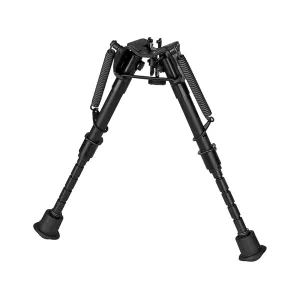
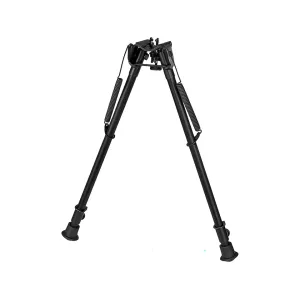
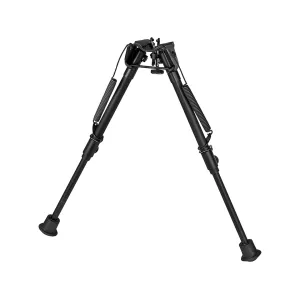
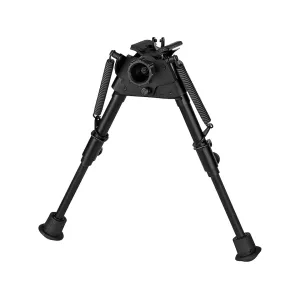
The S-BR, S-BRM, S-L and S-LM are the heart of the line. The swivel lets you cant the rifle level without moving the feet, which matters in the field far more than on a flat range. These are the Harris bipods most people picture.
Fixed (1A2-series) bipods
The 1A2-BR, 1A2-BRM and 1A2-L drop the swivel for a lighter, simpler, less expensive bipod. For a flat bench or a dedicated range gun where you do not need to cant, the fixed models do everything you need for less.
Mounting and adapters
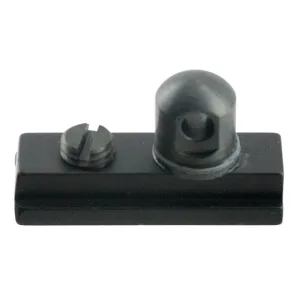
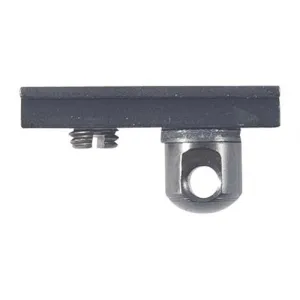
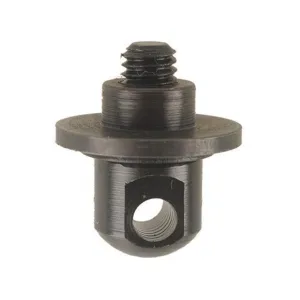
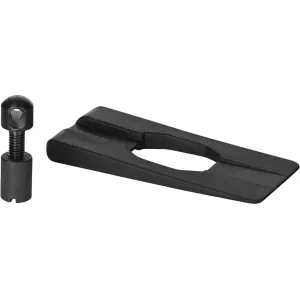
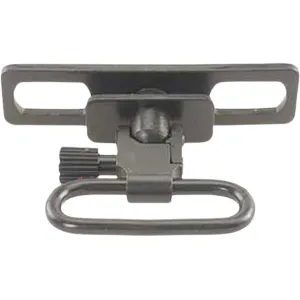
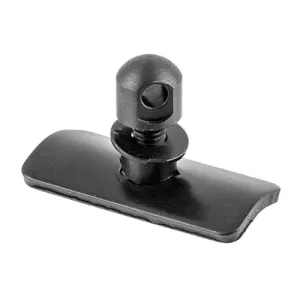
A Harris mounts natively to a front sling-swivel stud, which is why it bolts straight onto most hunting rifles. For a Picatinny or M-LOK rifle, Harris and others make rail adapters (the No. 2 and No. 5 stud adapters, plus M-LOK and Picatinny versions of the bipods themselves), and the Pod-Lock knob upgrade makes the swivel tension easier to set by hand.
Slings and rests
Beyond bipods, Harris offers a small line of shooting slings and rests. They are a sideline to the bipods, but they round out a field setup from the same maker.
Build quality and where it’s made
Harris bipods are built from steel and aluminum in Barlow, Kentucky, and durability is the whole point: spring-loaded legs that snap into position, a simple swivel, and a finish that survives years of being dragged through the field. There is very little to break, and what wears can usually be tightened or replaced. That rugged simplicity is why a thirty-year-old Harris still works exactly like a new one.
How Harris compares
The honest comparison is against the modern premium bipods. The Atlas BT10 and the MDT Ckye-Pod offer tool-less quick-detach mounting and a free-recoiling pan-and-tilt that a Harris cannot match — for three to four times the money. The Magpul bipod is lighter, polymer-bodied, has a native QD lever and undercuts everything on price, but is less rugged for hard prone work. Accu-Tac sits between, all-metal with QD. Harris wins on proven reliability, low profile, weight-to-cost and the fact that it bolts to a plain sling stud; it loses on quick-detach convenience, on a swivel that is a single tension knob rather than a true pan-tilt head, and on leg adjustment that is fiddlier than a modern lever system. For most hunters and a lot of range shooters, that trade still lands firmly in Harris’s favor.
Who should buy what
- The hunter who wants one do-it-all bipod: the S-BRM, 6-9 inch, swivel and notched.
- The prone and range precision shooter: the S-L, 9-13 inch swivel.
- The budget or dedicated-bench buyer: a fixed 1A2-BRM.
- The varmint and sitting shooter: a taller model like the 12-25 inch or 25C.
- The AR or M-LOK rifle owner: the M-LOK or Picatinny version, or a stud adapter.
Look elsewhere if your priority is tool-less quick-detach and a free-recoiling pan-and-tilt for a heavy long-range rig — that is where the Atlas and MDT bipods earn their premium.
The Harris philosophy
Harris is a study in rugged simplicity. The company found a design that worked in the 1970s, refined it carefully rather than reinventing it, and kept building it in America at a price ordinary shooters could afford. There is no chase for features for their own sake — just a bipod that deploys, holds steady and lasts. In an industry that loves to complicate things, that restraint is the whole brand.
The bipod everyone copies
It is hard to overstate how dominant the Harris pattern became. Walk a gun store or scroll a parts catalog and you will find dozens of bipods that are, functionally, Harris clones — same sling-stud mount, same spring legs, same fold-flat profile. Militaries and police units have used them, generations of hunters grew up with one folded under the forend, and the design has stayed in production essentially unchanged because it simply does the job. A man who got tired of forgetting his shooting sticks ended up setting the template the entire category still copies.
Shop Harris Parts & Prices
Live Harris Engineering products and current prices, organized by department and updated automatically.
Bipods




Slings & Swivels




Where Harris Fits in Our Buying Guides
- Best Bipods
- Best PRS & Precision Rifles
- Best Hunting Rifles
- Best .308 Rifles
- Best Rifle Scopes
- The Best AR-15 Parts & Accessories
Harris Bipods FAQ
What does S-BRM mean?
It is a Harris swivel bipod (S), bench-rest height with 6-to-9-inch legs (BR), with notched legs that lock at set heights (M). It is the most popular Harris model and a great all-rounder.
What is the difference between the S-series and the 1A2 series?
The S-series swivels — you can cant and tilt the rifle level on uneven ground via a tension knob. The 1A2 series is fixed: no swivel, lighter and cheaper, best for a flat bench.
What do notched and self-leveling legs mean?
Notched legs (the “M” models) lock at set heights via spring detents. Self-leveling legs (the “2” models) extend smoothly and let the bipod settle on uneven ground. Standard legs have neither.
How do you mount a Harris bipod on a Picatinny or M-LOK rail?
Harris bipods natively use a front sling-swivel stud. For a rail, use a stud-to-rail adapter (the No. 2 or No. 5), or buy the M-LOK or Picatinny version of the bipod.
Harris or Atlas — which is better?
Atlas offers tool-less quick-detach and a free-recoiling pan-and-tilt at three to four times the price. Harris is lighter on the wallet, low-profile and proven. For hunting and general range use, Harris is plenty; for a dedicated long-range rig, Atlas earns its premium.
Where are Harris bipods made?
In Barlow, Kentucky, where the family-owned company has built them since 1975.
Are Harris bipods still the standard?
Yes. The sling-stud, spring-leg pattern is so dominant that “Harris-style bipod” is a generic term, and many competitors build copies of it.
What tier is Harris?
The proven, value workhorse standard — rugged, American-made and affordable, rather than the most feature-rich premium option.
Compare Harris Head-to-Head
- Harris vs Atlas — the affordable proven classic versus the premium USSOCOM precision bipod, with a full spec table and live prices. Both American-made.
Related Slings & Bipods Brands
USA Gun Shop may earn a commission on purchases made through the links on this page, at no extra cost to you. We list products on merit; prices and availability are pulled live and can change.
4,798+ Gun & Ammo Deals
Updated daily from 200+ top retailers. Filter by category, caliber, action type, and price.