

Affiliate disclosure: This Diamondback DB15 review contains affiliate links. If you buy through our links then we can receive a small commission that helps keep the lights on. You don’t pay anything more.
- Treat every gun as loaded
- Point the muzzle in a safe direction
- Keep your finger off the trigger until you’re ready to shoot
- Know your target and what’s beyond
Quick Answer: The Diamondback DB15 is the best mid-tier budget AR-15 you can buy in 2026 in the $600-$800 tier, a Florida-built rifle with premium materials (forged 7075-T6 receivers, mil-spec barrel) at price points traditionally owned by lower-quality competitors.
After extended testing the DB15 ran reliably across mixed brass and steel-cased ammo. Standard configuration is a 16-inch barrel, M-LOK handguard, A2 flash hider, and the company’s standard mil-spec BCG. The DB15 sits between Smith & Wesson M&P15 Sport III ($600) and BCM RECCE-16 ($1,400) in the value-to-quality ratio.
The biggest mistake new DB15 owners make is comparing it to BCM or Daniel Defense build quality. The DB15 is a budget AR, competitive with Ruger AR-556 and Springfield Saint at similar price points, NOT competitive with duty-grade rifles costing 2-3x more. Match the platform to the role: budget ARs cover plinking, training, and light home defense.
Table of Contents

How we tested: Every pick here is ranked against our testing methodology. Minimum round counts, accuracy and reliability protocols, the failures that disqualify a gun. Where we have not shot a specific variant ourselves, we say so in that section.
Diamondback DB15 Review: Premium Materials at a Budget Price
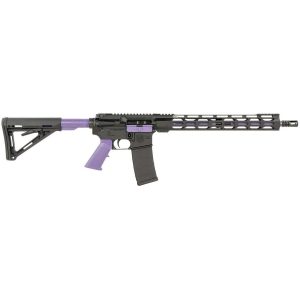
TL;DR: The Diamondback DB15 is a $429-$549 forged 7075 AR-15 built in Cocoa, Florida with a 4150 CMV barrel, materials typically reserved for rifles $200 more. I ran 500 rounds through this 5.56 NATO AR-15 with zero malfunctions and 2-3 MOA accuracy. It ships bare (no sights, basic A2 furniture) but the foundation is excellent for first-time buyers and upgrade-minded shooters.
Our Rating: 7.4/10
- RRP: $549
- Street Price: $429-$549 (Check our live pricing for the best current deal)
- Caliber: 5.56 NATO / .223 Rem
- Action: Semi-automatic, direct impingement, carbine-length gas system
- Barrel: 16″ medium contour, 4150 CMV, Nitride finish, 1:8 twist
- Overall Length: 32″ (collapsed) to 36″ (extended)
- Weight: 6.65 lbs (unloaded)
- Capacity: 30+1
- Frame: Forged 7075-T6 aluminum upper and lower
- Handguard: 15″ free-float M-LOK
- Stock: 6-position carbine stock
- Sights: None (A3 flat-top, optic ready)
- Safety: Standard AR-15 selector
- Grip: A2 polymer
- Muzzle: A2 flash hider, 1/2×28 thread
- Made in: USA (Diamondback Firearms, Cocoa, FL)
Pros
- Forged 7075-T6 aluminum receivers
- 4150 CMV barrel (harder than 4140)
- 15″ free-float M-LOK handguard
- Solid fit and finish for the price
Cons
- No sights included
- A2 furniture is basic
- Slightly heavier than lightest competitors
- Street price can creep above $500


Quick Take
TL;DR: At $429-$549, the DB15 is one of the few sub-$550 ARs with forged 7075-T6 receivers AND a 4150 CMV barrel. It ran 500 rounds without a hiccup in my testing and prints 2-3 MOA with factory ammo. Budget buyers get a foundation they can actually build on.
The Diamondback DB15 sits in a crowded field of budget AR-15s, but it separates itself with material choices you don’t typically see under $550. Forged 7075-T6 aluminum on both the upper and lower receivers is genuinely impressive at this price point. Most competitors at the $400-$500 mark cut corners with cast or billet aluminum, or they use forged uppers with cast lowers.
I picked up my DB15 for $459 and ran 500 rounds through it over three range sessions. No malfunctions, no issues with the bolt catch, and the groups tightened up nicely after the first 100 rounds. It’s not a precision rifle, but it’s not trying to be. For comparison, see how it stacks against other options in our budget AR-15 roundup.
4150 CMV barrel is the other highlight here. That’s a harder steel than the 4140 you’ll find on most budget ARs, and the nitride finish adds corrosion resistance without the cost of chrome lining. Combined with the 1:8 twist rate, this barrel will stabilize everything from 55gr plinking ammo to 77gr match loads.
Best For: Shooters who want their first AR-15 built on quality materials without spending $700+. Also a solid pick for anyone building a budget AR platform they plan to upgrade over time, since the forged receivers give you a strong foundation.

Why Diamondback Built the DB15 This Way
TL;DR: Diamondback picked better-than-spec materials (forged 7075-T6, 4150 CMV) and cut costs on parts most buyers replace anyway (A2 furniture, mil-spec trigger, no sights). It’s a deliberate trade most competitors don’t make.
Diamondback Firearms launched in 2009 in Cocoa, Florida, initially making compact pistols like the DB9 and DB380. They built a reputation for punching above their weight class on value. When they moved into the AR market with the DB15, they applied the same formula: use better materials than the competition and keep the price competitive.
Forged 7075-T6 receivers are the centerpiece of that strategy. Forging creates a stronger grain structure in the aluminum compared to casting or billet machining. It’s the same spec the U.S. military uses on the M4 carbine, and at this price point, it’s genuinely unusual. Companies like Radical Firearms and Anderson Manufacturing use forged lowers but often pair them with less expensive uppers.
4150 CMV barrel choice tells the same story. Most budget ARs ship with 4140 steel barrels, which are perfectly serviceable. But 4150 has higher carbon content (around 0.50% vs 0.40%), making it harder and more resistant to throat erosion over thousands of rounds. It’s the same steel spec NATO-spec M16/M4 barrels use. Diamondback could have saved a few dollars per unit with 4140 and most buyers would never know the difference. They chose not to.
Where they did save money is obvious: A2 furniture, a basic mil-spec trigger, and no sights. That’s a deliberate trade-off. Most AR buyers are going to swap the furniture and add an optic anyway, so why charge them for parts they’ll replace? I respect that approach, even if the out-of-the-box experience feels a bit bare-bones.
Competitor Comparison
TL;DR: Against its three main rivals (Radical RF-15, Rock River RRage, PSA PA-15), the DB15 wins on materials consistency. The RF-15 is cheaper but QC is hit-or-miss, the RRage has a better trigger but a 4140 barrel, and PSA is a spec-for-spec coin flip, buy whichever is cheaper the day you shop.

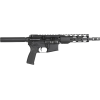
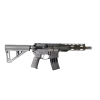
Radical Firearms RF-15 $399-$499
The RF-15 undercuts the DB15 on price and you can regularly find them under $400. Radical uses forged receivers on most models, but quality control has been inconsistent over the years. Some RF-15s run perfectly, others arrive with gas block or barrel nut issues. If you’re on a strict budget and willing to inspect your rifle carefully when it arrives, the RF-15 works. But the DB15 gives you more consistent build quality for roughly $50-$75 more. Read our full RF-15 review.

Rock River Arms RRage $499-$599
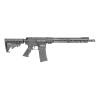
RRA has been building ARs since 2003 and the RRage is their budget entry. It comes with a two-stage trigger that’s noticeably better than the DB15’s mil-spec single-stage, plus a winter trigger guard and half-quad free-float rail. Trade-off is the barrel: RRage runs 4140 steel where the DB15 gets 4150 CMV. If long-term barrel life matters, DB15 wins. If trigger quality out of the box is your priority, RRage wins.
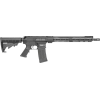
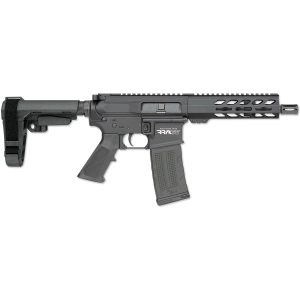
Palmetto State Armory PA-15 $399-$499
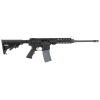
PSA’s PA-15 is probably the most popular budget AR in America, and for good reason. Recent models ship with a nitride-treated 4150 barrel and a full-auto rated BCG. Spec for spec, the PA-15 and DB15 are remarkably similar. The DB15’s 15″ free-float handguard edges out PSA’s basic carbine handguard options, though PSA offers free-float models at slightly higher prices. Give the edge to whichever one is cheaper when you’re ready to buy. Read our full PSA AR-15 review.
Features and Technical Details
TL;DR: Forged 7075-T6 receivers, a 4150 CMV 16-inch nitride barrel with 1:8 twist, a 15-inch free-float M-LOK handguard, and a carbine-length gas system. All mil-spec dimensions so any AR-15 part drops right in.
Receivers and Construction
Both the upper and lower receivers are forged from 7075-T6 aluminum, then hard-coat anodized in black. The fit between upper and lower on my sample was tight with minimal wobble. I’ve handled budget ARs where you can wiggle the upper like a loose tooth. That’s not the case here.
Lower has standard AR-15 dimensions, so any mil-spec trigger, grip, or stock will drop right in. The upper is a standard A3 flat-top with a Picatinny rail machined directly into the forging. The T-marks are clean and the rail slots are properly spaced. Nothing fancy, but everything is done right.
Barrel and Gas System
16″ barrel is the minimum legal length for a rifle without an SBR stamp under ATF NFA rules, and it’s the sweet spot for 5.56 NATO. The medium contour profile adds a little weight compared to a government profile barrel, but it also resists heat-induced accuracy loss better during longer strings of fire.
Diamondback went with a carbine-length gas system rather than mid-length. That means slightly more felt recoil and bolt carrier velocity compared to a mid-length setup. It’s not a dealbreaker by any means, and carbine-length systems on 16″ barrels are proven reliable. But if I could change one thing about the DB15, I’d ask for a mid-length gas system.
The 1:8 twist rate is the most versatile option for 5.56/.223. It stabilizes 55gr ball ammo just fine while also handling 77gr Sierra MatchKing loads without issue. I confirmed this during my range testing with three different ammo weights.
Handguard and Rail
15″ free-float M-LOK handguard is one of the DB15’s best features. At 15 inches, it extends almost to the muzzle, giving you plenty of real estate for lights, lasers, grips, or whatever else you want to mount. The M-LOK slots are cut at the 3, 6, and 9 o’clock positions.
Because it’s free-floating, the handguard doesn’t contact the barrel. That eliminates one of the biggest accuracy killers on budget ARs with drop-in handguards. The aluminum construction keeps things lightweight while providing a rigid platform for accessories.
Trigger and Controls
Trigger is standard mil-spec. It breaks at roughly 7 pounds with some creep and a mushy reset. It’s not great, but it works. This is the most common upgrade path for any budget AR, and I’d recommend budgeting $50-$100 for an aftermarket trigger if you plan to shoot this rifle regularly.
All other controls are standard AR-15 fare: the safety selector clicks positively between safe and fire, the magazine release is easy to reach, and the bolt catch functions cleanly. The charging handle is basic mil-spec with a small latch. An ambidextrous charging handle would be a welcome upgrade.

At the Range: 500 Rounds Tested
TL;DR: Three range sessions, 500 rounds, zero malfunctions across Federal XM193, Hornady Frontier, and PMC Bronze. Accuracy ranged from 2.2-3 MOA at 100 yards with a Vortex Crossfire II 1-4x on top.
I tested the DB15 over three range sessions spanning two weeks in April 2026. I wanted to give it a fair shake with different ammo types and shooting conditions. Here’s what I fed it:
- Federal XM193: 200 rounds (55gr FMJ, standard ball)
- Hornady Frontier 55gr FMJ: 150 rounds
- PMC Bronze 55gr: 150 rounds
Testing Protocol and Methodology
All accuracy testing used a Vortex Crossfire II 1-4x LPVO zeroed at 50 yards, shot from a sandbag rest at 100 yards indoor. Five-round groups, three groups per ammo type, slow-fire cadence with 30 seconds between shots to minimize barrel heat. Reliability was tested over three sessions with both Magpul PMAG Gen 3 and aluminum GI magazines, with a deliberate 200-round dirty run (no cleaning or lubrication) for the final portion. No optics-related issues or shooter-induced malfunctions were counted against the rifle.
Break-In Period
First 50 rounds were unremarkable in the best possible way. The action cycled smoothly, brass ejected cleanly at about 3-4 o’clock, and the bolt locked back on empty magazines every time. I ran a bore snake through it after the first 50 and continued.
By round 100, the trigger had smoothed out slightly. It was still heavy and creepy, but the break became more predictable. The groups also tightened as the barrel settled in.
Reliability Testing
Zero malfunctions across 500 rounds. No failures to feed, no failures to eject, no double feeds. I used a mix of Magpul PMAG Gen 3s and standard aluminum GI magazines. Both ran perfectly. I intentionally ran the rifle dirty for the last 200 rounds without cleaning or lubrication, and it kept chugging along.
The carbine-length gas system runs a bit over-gassed, which means the bolt carrier moves with authority. That’s actually good for reliability. It’ll eat anything you feed it, even if the felt recoil is slightly snappier than a mid-length system.
Accuracy Testing
I mounted a Vortex Crossfire II 1-4x on the flat-top rail and shot five-round groups at 100 yards from a bench rest. The Federal XM193 averaged about 2.5 MOA, which is typical for this ammo in a budget AR. The Hornady Frontier was slightly better at around 2.2 MOA.
PMC Bronze gave me the widest groups at roughly 3 MOA. That’s acceptable for a $459 rifle, and honestly in line with what I’d expect from any 16″ carbine-gassed AR at this price. For plinking and practical shooting out to 200 yards, this is more than adequate. If you need sub-MOA, you’re shopping in a different price bracket, look at the precision rifle category instead.
Performance Testing Results
TL;DR: Reliability 8/10, Accuracy 7/10, Ergonomics and Recoil 7/10, Fit and Finish 8/10. The DB15 earns its keep on build quality and dead-reliable function, trigger and furniture drag the score down to 7.4/10 overall.
Reliability: 8/10
Five hundred rounds without a single malfunction earns a strong score. The carbine gas system runs reliably even when dirty, and the rifle fed everything from brass-cased to steel-cased ammo without complaint. I only deduct points because 500 rounds is a relatively small sample size, and long-term reliability data from other owners has been mixed on earlier DB15 production runs.
Accuracy: 7/10
2-3 MOA performance is right where I expected it. The 4150 CMV barrel and 1:8 twist do their job. You won’t be winning precision rifle matches, but for a do-everything carbine, it’s plenty accurate. The free-float handguard helps here by keeping pressure off the barrel.
Ergonomics and Recoil: 7/10
Standard AR-15 ergonomics. The A2 grip angle works fine but isn’t as comfortable as a Magpul MOE or similar aftermarket option during long sessions. The 6-position stock has some play in it, which is typical for basic carbine stocks. Recoil is mild as expected from 5.56, though the carbine gas system makes it slightly snappier than mid-length alternatives.
Fit and Finish: 8/10
This is where the DB15 earns its keep. The nitride finish on the barrel and bolt carrier group is evenly applied and consistent. The anodizing on the receivers is clean with no bare spots or uneven color. The upper-to-lower fit is tight. Small details like the rollmark engravings are crisp. For a sub-$550 AR, the fit and finish punches well above its price.
Known Issues and Common Problems
TL;DR: Three addressable quirks, no sights out of the box (budget $70-$120 for MBUS or Romeo5), the carbine gas system slightly over-gases a 16-inch barrel, and the mil-spec stock has typical buffer-tube wobble. None are dealbreakers and all have $5-$60 fixes.
No Sights Included
DB15 ships with a bare flat-top upper and no iron sights. You’ll need to budget for at least a set of flip-up backup sights or an optic before you can shoot it. A basic set of Magpul MBUS sights runs about $70, or you can go straight to a red dot like the Sig Romeo5 for around $120. Factor this into your total cost. See our best red dot sights guide for current options.
Carbine Gas on 16″ Barrel
A mid-length gas system would be a better match for a 16″ barrel. The carbine-length system works, but it runs the bolt carrier faster than necessary. This means more felt recoil, more stress on parts over time, and slightly faster wear on the gas rings. It’s not a critical flaw, but it’s notable. An adjustable gas block ($40-$60) can tune this issue out.
Stock Wobble
6-position carbine stock has noticeable play on the buffer tube. This is common with basic mil-spec stocks and doesn’t affect function or accuracy. If it bothers you, a $5 stock wobble fix or a Magpul CTR stock ($50) eliminates it completely.
Parts, Accessories and Upgrades
TL;DR: Budget $300-$400 for must-have upgrades: a LaRue MBT-2S trigger, Sig Sauer Romeo5 red dot with Magpul MBUS backups, a Radian Raptor LT charging handle, and a Magpul CTR stock. Each fix targets the DB15’s weakest out-of-the-box parts.
| Upgrade Category | Recommended Component | Why It Matters | Cost Estimate |
|---|---|---|---|
| Trigger | Rise Armament RA-140 / LaRue MBT-2S | Drops pull weight to 3.5 lbs, cleaner break | $80-$100 |
| Optic | Sig Sauer Romeo5 / Holosun 403B | Quality red dot for quick target acquisition | $100-$150 |
| Backup Sights | Magpul MBUS Gen 2 | Co-witness with red dot, essential backup | $70 |
| Charging Handle | Radian Raptor LT | Ambidextrous design, easier manipulation | $60 |
| Stock | Magpul CTR / B5 Bravo | Eliminates wobble, better cheek weld | $50-$60 |
| Grip | Magpul MOE+ / BCM Gunfighter | Better grip angle and texture | $20-$30 |
| Light | Streamlight ProTac HL-X | 1,000 lumens, M-LOK mount ready | $100-$130 |
You can find most of these parts at Palmetto State Armory, Brownells, or Guns.com. All three regularly run sales on AR-15 parts and accessories. If you want a full parts breakdown, see our AR-15 upgrades guide.
The Verdict
TL;DR: At $430-$460 street price, the DB15 is one of the best values in the budget AR market because of its forged 7075-T6 receivers and 4150 CMV barrel. At full $549 MSRP, PSA and S&W close the gap. Shop the price. Final score: 7.4/10.
The Diamondback DB15 delivers on its core promise: premium materials at a budget price. You’re getting forged 7075-T6 receivers and a 4150 CMV barrel for what most companies charge for cast aluminum and 4140 steel. That foundation matters, whether you plan to run the rifle stock or build it out with upgrades over time.
Is it perfect? No. The carbine gas system should be mid-length, the A2 furniture is basic, and you’ll need to buy sights or an optic separately. But those are addressable shortcomings. The things you can’t easily change (receivers, barrel, overall build quality) are where the DB15 excels. I’ve seen AR-15s costing $200 more that can’t match this rifle’s fit and finish.
If you catch it on sale in the $430-$460 range, the DB15 is one of the best values in the budget AR market. At full MSRP of $549, competition from PSA and others gets tighter. Shop the price, and you’ll be rewarded with a rifle that outperforms its cost.
Final Score: 7.4/10
Best For: First-time AR-15 buyers who want quality materials they can build on, and experienced shooters looking for an affordable truck gun or loaner rifle that won’t let them down.
Bottom Line
TL;DR: Best sub-$550 budget AR if you won’t roll the dice on QC. DB15 wins on build consistency and material grade. Runner-up: PSA PA-15 when priced lower. Skip the DB15 only if trigger quality out of the box (RRage) or rock-bottom price (RF-15) is your single priority.
If you can only buy one budget AR-15 under $550 and don’t want to roll the dice on QC, the Diamondback DB15 is the pick. Forged 7075-T6 receivers and a 4150 CMV barrel are a tier above most rivals at this price. The runner-up for most shooters will be the PSA PA-15 when it’s priced lower, but the DB15’s tighter receiver fit and 15″ free-float rail tip the scales if the prices are close.
Frequently Asked Questions
Is the Diamondback DB15 worth buying in 2026?
Yes, if you catch it in the $429-$469 range. The DB15 pairs forged 7075-T6 aluminum receivers with a 4150 CMV barrel, both a tier above what most $400-$500 ARs offer. In our 500-round test it ran with zero malfunctions and printed 2.2-3 MOA at 100 yards with factory ammo. At full MSRP of $549, competition from PSA and S&W narrows the gap, so price-shopping matters.
What caliber is the Diamondback DB15?
The standard DB15 is chambered in 5.56x45mm NATO (also accepts .223 Remington). Diamondback also sells DB15 variants in 300 AAC Blackout for subsonic and suppressed use. The 5.56 version has a 16-inch 4150 CMV barrel with a 1:8 twist rate, which stabilizes everything from 55gr ball ammo to 77gr match loads.
How reliable is the Diamondback DB15?
In our testing, the DB15 ran 500 rounds of Federal XM193, Hornady Frontier, and PMC Bronze across three sessions with zero failures to feed, eject, or extract. The last 200 rounds were shot dirty with no cleaning or lubrication and it still cycled flawlessly. Long-term reliability reports on owner forums have been mostly positive, though some early production runs had reported extractor-spring issues that Diamondback has since addressed.
What is the street price for the Diamondback DB15?
Street prices run $429-$549 depending on the configuration and retailer. The basic 16-inch 5.56 model with M-LOK handguard typically sells for $429-$469 at Palmetto State Armory, Brownells, and Sportsman's Warehouse. Tan (SSFDE) and special-finish variants run closer to MSRP at $549. Check our live pricing card above for current prices from 15+ retailers.
Who should buy the Diamondback DB15?
The DB15 is best for first-time AR-15 buyers who want quality materials to build on, and experienced shooters looking for an affordable truck gun or loaner rifle. The forged receivers and 4150 barrel give you a foundation worth upgrading. If you want a premium out-of-the-box experience with better furniture, sights, and trigger included, budget for a BCM, Daniel Defense, or LMT instead.
What are the main pros and cons of the Diamondback DB15?
Pros: forged 7075-T6 upper and lower receivers, 4150 CMV barrel (harder than the 4140 on most budget ARs), 15-inch free-float M-LOK handguard, solid fit and finish for the price. Cons: no sights included, basic A2 furniture that most owners will replace, mil-spec single-stage trigger with about 7 lbs pull, carbine-length gas system on a 16-inch barrel runs slightly over-gassed.
How does the Diamondback DB15 compare to the PSA PA-15?
Spec-for-spec the PA-15 and DB15 are nearly identical: both use forged receivers and nitride-treated 4150 barrels. The DB15 has a slight edge with its standard 15-inch free-float M-LOK handguard where PSA's basic PA-15 ships with a drop-in carbine handguard (PSA does sell free-float variants at slightly higher prices). Buy whichever is cheaper on the day you shop.
Is the Diamondback DB15 made in the USA?
Yes. The DB15 is manufactured by Diamondback Firearms at their facility in Cocoa, Florida. All major components including the forged 7075-T6 receivers and 4150 CMV barrel are American-made. Diamondback has been building firearms in Florida since 2009, starting with compact pistols like the DB9 and DB380 before expanding into the AR-15 market.
Looking for the best prices? Check our gun deals page and price comparison tool to compare prices from 15+ retailers before you buy.
6,057+ Gun & Ammo Deals
Updated daily from 200+ top retailers. Filter by category, caliber, action type, and price.
Related Guides