

Last updated September 28th 2026
Some of the links below are affiliate links, meaning at no additional cost to you, we may earn a commission if you click through and make a purchase.
Check your state first. Forced reset triggers are legal under federal law but banned in a growing list of states, and the list changes on October 1, 2026. Read the state table below before you buy, and see our safety and legal disclaimer.
An FRT trigger is the most argued-about part you can drop into an AR-15, and most of what gets written about it is wrong. The most repeated claim online is that a federal appeals court ruled these legal. That is not what happened, and the difference matters when you’re about to spend $120 to $450 on a part federal agents were seizing three years ago.
So I did it the slow way. I read the Justice Department’s settlement, the court dockets and the state statutes, then priced every forced reset trigger our retailers actually stock. Below are the five worth buying in 2026, what each one needs to run, and the patent war that decides whether they stay in stock.
How we tested: Every pick here is ranked against our testing methodology. Minimum round counts, accuracy and reliability protocols, the failures that disqualify a gun.
FRT Trigger: The Short Answer
FRT stands for forced reset trigger. It is legal under federal law. A federal judge in Texas ruled on July 23, 2024 that an FRT isn’t a machinegun, final judgment followed the next day, and the Justice Department dropped its appeal as part of a settlement signed May 13, 2025. Eleven states plus Washington DC ban them today, Connecticut joins them on October 1, 2026, and four more are contested.
The best FRT trigger for most AR-15 owners is the Partisan Disruptor. The original Rare Breed FRT-15L3 is the benchmark if you don’t mind paying $450. On a budget, the Kabuto kit does the job for about $120.
Table of Contents
Best FRT Triggers in 2026 at a Glance
| Trigger | Model Details | Key Specs | Check Price |
|---|---|---|---|
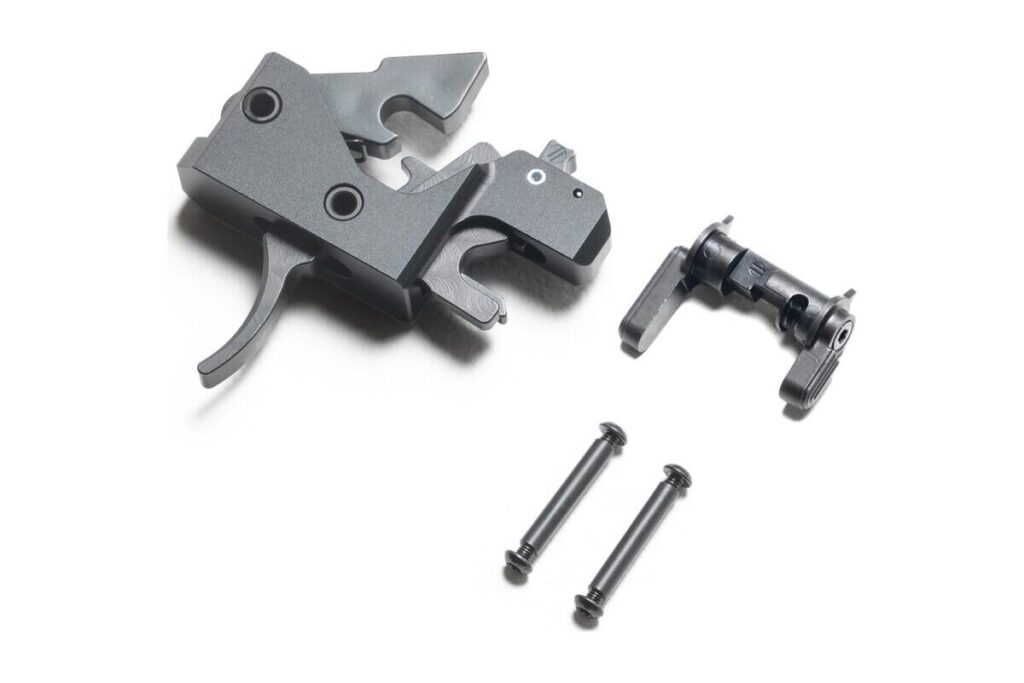 | BEST OVERALLPartisan Disruptor A drop-in AR-15 cassette with a proper three-position selector, sold through dealers. | AR-15: 5.56, 300 BLK, 9mm Needs M16 bolt carrier 3.75 to 4.1 lb pull | Check Price ↓ |
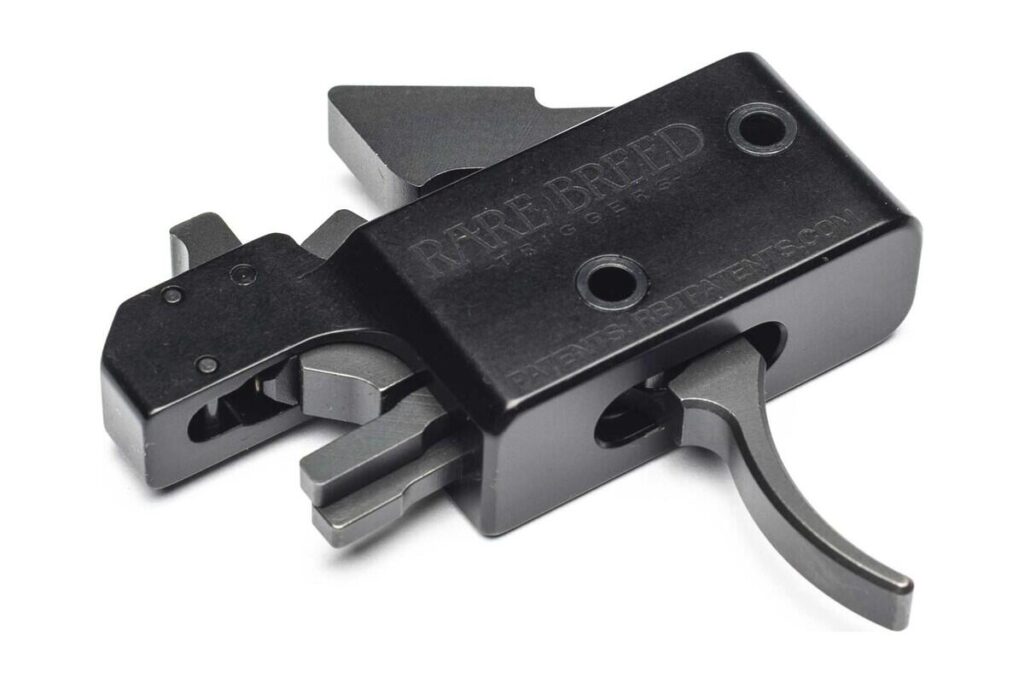 | THE ORIGINALRare Breed FRT-15L3 The trigger the whole legal fight was about, now in a three-position version. | AR-15: 5.56, 300 BLK Proprietary selector $450 from the maker | Check Price ↓ |
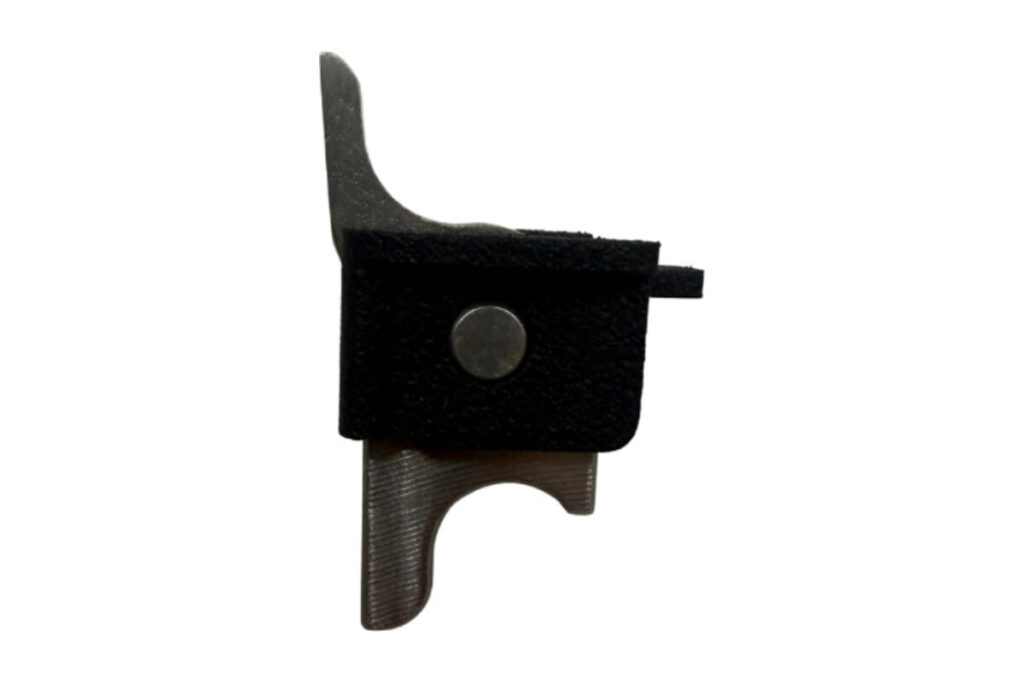 | BEST BUDGETKabuto FRT The cheapest way into a forced reset setup that still uses a steel selector. | AR-15 and PCC lowers Steel ambi selector Made in Dallas, Texas | Check Price ↓ |
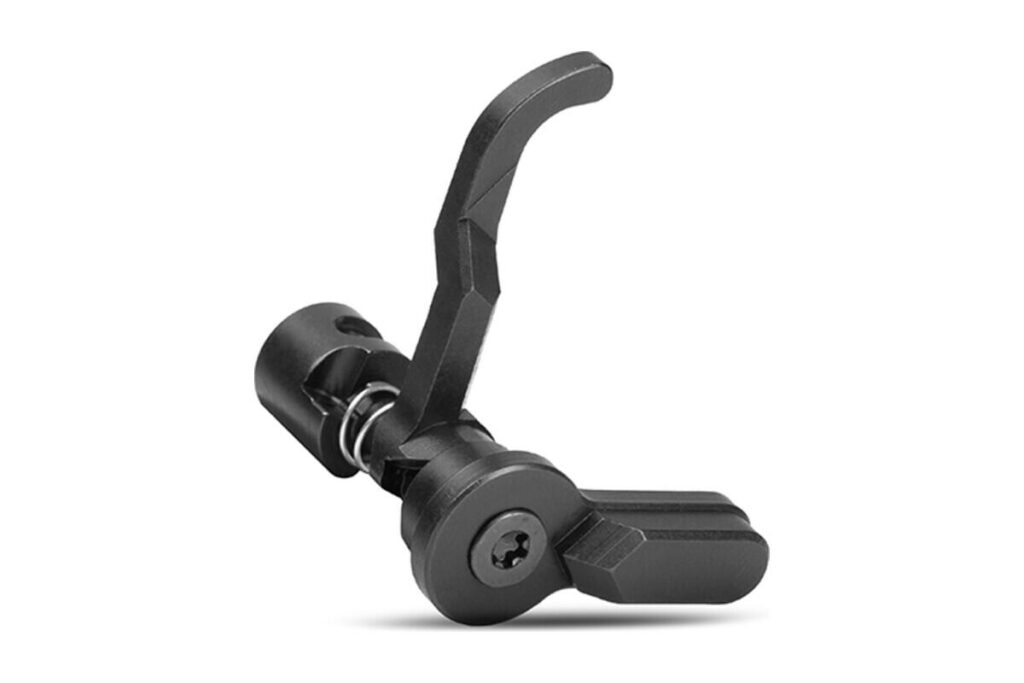 | BEST SELECTOR TYPEAtrius Forced Reset Selector Replaces your safety instead of your trigger, and keeps your favorite trigger in the gun. | Safe, Semi, Super-Semi Mil-spec trigger bar required 4140 steel | Check Price ↓ |
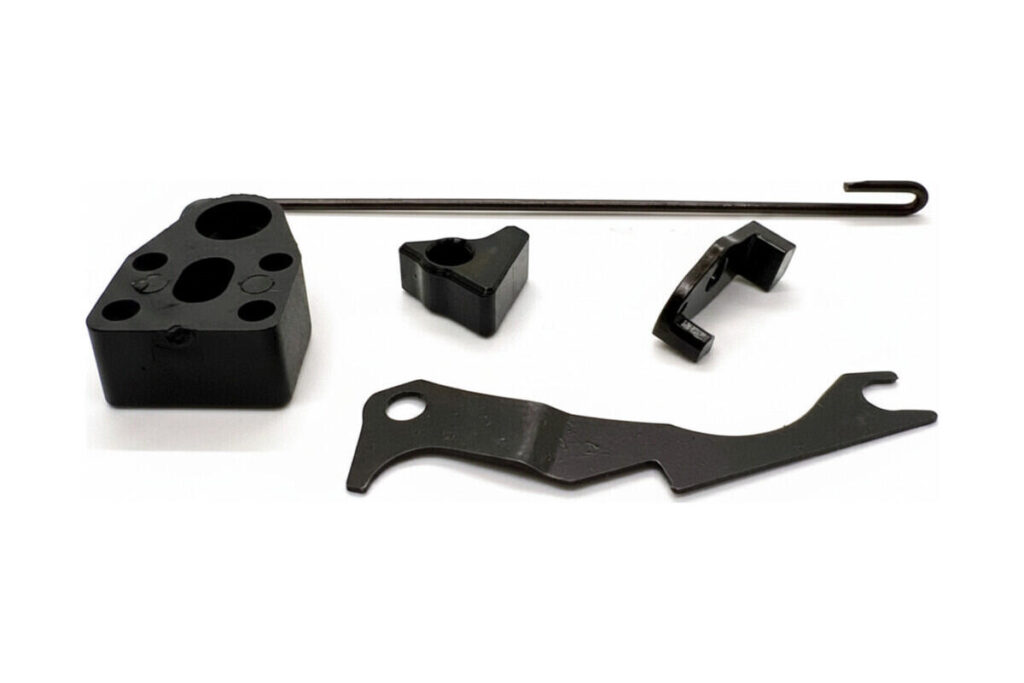 | BEST FOR AKTrigger Supply AK FRT The one on this list for AK-47, AK-74 and RPK-pattern rifles, with a recoil buffer in the box. | 7.62×39, 5.45×39, 5.56 Stamped or milled Any AK trigger | Check Price ↓ |
Introduction: Forced Reset Triggers in 2026
Two years ago this was a one-company market. Rare Breed made the FRT-15, the ATF called it a machinegun, and owners were mailing parts back. Today there are half a dozen designs on dealer shelves, and the fight has moved from the ATF to the patent courts.
That changes how you should shop. Price and fit still matter, but so does whether the part you want will still be sold next month. Rare Breed has sued many of its competitors, one of them is already blocked by a court order, and a second request to block the Disruptor is waiting on a ruling in Texas.
Every pick below is priced from the live retailer feeds on this site, and every requirement comes from the maker’s own page. If you’re still choosing the rifle to put one in, start with our AR-15 buyer’s guide. Rifles that run a regular trigger well can still hate an FRT, and the tuning section further down explains why.
1. Partisan Disruptor: Best FRT Trigger Overall
- Type: Drop-in cassette, assisted reset
- Platform: AR-15 in 5.56, 300 Blackout and 9mm
- Selector: Three positions, Safe, Semi and Enhanced Semi
- Pull weight: 3.75 to 4.1 lb
- Needs: M16-style bolt carrier, anti-walk pins, H2 buffer or heavier
- Maker price: $299.99, or $324.99 for the ambi version
| Category | Score |
|---|---|
| Value | 4/5 |
| Reliability | 5/5 |
| Ease of install | 5/5 |
| Availability | 4/5 |
| Supply risk | 3/5 |
Pros
- True three-position selector
- Drop-in cassette, no fitting
- Runs 5.56, 300 BLK and 9mm
Cons
- Needs an M16 bolt carrier
- Patent case still pending
- Dealer-only, no direct sales
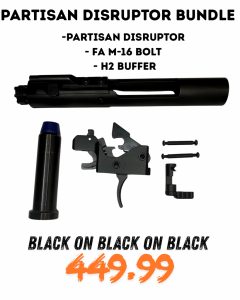
The Disruptor is the one I’d put in my own rifle. It’s made by The Triggered Company, sold under the Partisan name, and the maker traces its design back to the old TacCon 3MR trigger. Rare Breed says it’s a copy of the L3, and that claim is what the patent fight is about. In the hand it feels a little different: the selector gives you a real semi-auto position as well as the enhanced one, so you aren’t locked into the fast mode every time you take the safety off.
Installation is a cassette swap. Pull your old trigger group, drop the Disruptor in, and pin it with anti-walk pins, which the maker says are required. The two things that trip people up are the bolt carrier and the buffer. It needs an M16-profile carrier, and on a carbine with a 16-inch or shorter barrel it wants an H2 buffer at minimum, with H3 recommended.
The maker tested it beyond 6,000 rounds using a course of fire built from the Marine Corps M27 IAR evaluation, and the steel wear surfaces are 17-4 stainless and 4140 chromoly. Pull weight sits around 4 pounds, which is lighter than most mil-spec triggers before the reset even comes into it.
The catch is legal, not mechanical. Rare Breed sued Partisan in Wyoming in early 2026. The judge denied an emergency injunction on February 13, 2026 and said plainly it wasn’t a ruling on the merits. The case has since moved to the Eastern District of Texas, where a fresh request to stop sales was fully briefed by August with no ruling yet. If that request is granted, Disruptor stock could dry up overnight.
Best For: AR-15 owners who want the most polished forced reset trigger on sale today and can accept that its supply depends on a pending court decision.
2. Rare Breed FRT-15L3: The Original Forced Reset Trigger
- Type: Single-stage, three-position drop-in trigger
- Platform: AR-15 in 5.56/.223 and 300 Blackout
- Selector: Proprietary ambidextrous three-position, included
- Materials: 7075 aluminum and heat-treated 4140 steel
- Needs: Mil-spec lower, full-auto bolt carrier, H2, H3 or A5 buffer
- Maker price: $450
| Category | Score |
|---|---|
| Value | 3/5 |
| Reliability | 5/5 |
| Ease of install | 4/5 |
| Availability | 3/5 |
| Supply risk | 5/5 |
Pros
- The design everyone copies
- Backed by the DOJ settlement
- Selector and pins included
Cons
- Most expensive on this list
- Won’t fit some Colt lowers
- Two per order maximum
You will not find a price card here, and that’s deliberate. Rare Breed sells the FRT-15L3 through its own website at $450, with a limit of two per order, and none of the retailers we track carries it. The company does run a dealer program now, so a local shop may be able to order one in.
This is the trigger the whole saga was about, and the L3 is its 2025 update: a single-stage trigger with a three-position selector, Safe, Semi and FRT. The selector is proprietary, so your existing ambi safety comes out and theirs goes in. It’s rated for standard AR-15s in 5.56 and 300 Blackout. The maker says AR-10s are not supported, and that some Colt lowers and other lowers with a sear block may not accept it.
Rare Breed ran a 10,000-round torture test on it, and it’s the one design whose federal status is written into the settlement itself. That’s worth something. You’re also paying $150 more than a Disruptor for it, and the company won’t ship to 13 states plus DC, a list slightly different from every other maker’s.
If you’d rather have a two-stage feel, Rare Breed also sells the FRT-15C3 at the same $450.
Best For: Buyers who want the original design with the clearest federal footing and don’t mind paying for it.
3. Kabuto FRT: Best Budget Forced Reset Trigger
- Type: Drop-in forced reset device with steel selector
- Platform: AR-15 and PCC lowers
- Selector: Stainless steel, ambidextrous, Safe, Semi and Forced Reset
- Works with: Mil-spec, LaRue and Geissele triggers, per the seller
- Needs: M16-profile bolt carrier, H2 buffer or heavier, never a solid buffer
- Made in: Dallas, Texas
| Category | Score |
|---|---|
| Value | 5/5 |
| Reliability | 3/5 |
| Ease of install | 4/5 |
| Availability | 4/5 |
| Supply risk | 3/5 |
Pros
- Less than half a Disruptor
- Keeps your existing trigger
- Steel ambi selector now
Cons
- One seller, no second source
- Needs an M16 bolt carrier
- Older versions still circulate
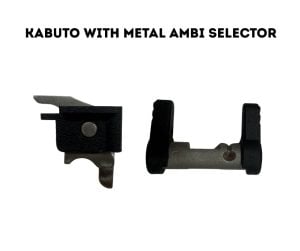
The Kabuto is the cheapest forced reset setup worth fitting. It isn’t a full trigger cassette. It’s a drop-in device built around a stainless three-position selector, and the seller says it runs in mil-spec AR-15 and pistol-caliber-carbine lowers with a mil-spec, LaRue or Geissele trigger already in them. That makes it a good fit if you like the trigger you have.
Two things to know before you order. First, the current kit is the metal-selector version. The Gen 2 and Gen 3 kits with printed selectors are discontinued, and the seller says “Kubota” is just a common misspelling of the same product, so ignore listings under that name. Second, the bolt carrier matters even more here than with the Disruptor. A semi-auto profile carrier will not engage the reset at all.
Buffer advice is the same as everyone else’s: H2 minimum, H3 recommended. The seller adds one thing I’d underline, which is never to run it with a solid buffer. The price card above is the current listing, which comes in well under the other AR-15 options on this page.
Best For: AR-15 owners who want to try a forced reset setup without spending $300, and who already have a trigger they like.
4. Atrius Forced Reset Selector: Best Selector-Style FRT
- Type: Three-position safety selector, not a trigger
- Positions: Safe, Semi and Super-Semi
- Works with: Mil-spec triggers with a squared-off trigger bar
- Material: Heat-treated 4140 steel, made in the USA
- Needs: Mil-spec lower with a low shelf, full-profile bolt carrier
- Maker price: From $199 for the mil-spec version
| Category | Score |
|---|---|
| Value | 4/5 |
| Reliability | 4/5 |
| Ease of install | 5/5 |
| Availability | 5/5 |
| Supply risk | 4/5 |
Pros
- Swaps the safety, not trigger
- Several retailers stock it
- Geissele-compatible G-Lever version
Cons
- Picky about trigger bar shape
- Not for pistol buffer tubes
- Costs more than the Kabuto
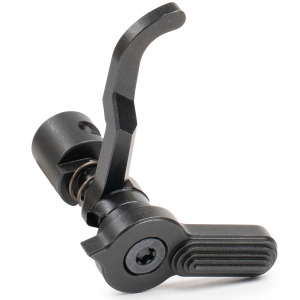
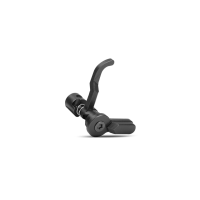
The Atrius works from the other end of the lower. Instead of replacing your trigger group, it replaces the safety selector, and its third position, which Atrius calls Super-Semi, does the forced reset work. The swap takes minutes and your trigger stays in the gun. Atrius also points buyers to the One Horse Express, which it bills as the first FRS-ready rifle.
It is fussier than it looks about what it pairs with. Atrius says it needs a mil-spec trigger whose trigger bar is squared off at the rear, and that mil-spec triggers with U notches or relief cuts won’t work. The lower needs a low shelf and a full-profile trigger pocket, and the bolt carrier has to be full profile too. On an AR pistol, it only works with a carbine-length buffer tube.
Pick the version for your trigger. The basic mil-spec selector is $199 from Atrius and the ambidextrous one $249. If you run a Geissele SSA, SSA-E or G2S, the G-Lever version at $269 is the one to buy. It doesn’t fit Geissele’s X Series, which needs Atrius’s separate X-Series selector. If you get light primer strikes, Atrius says to check that you’re running an H2 or H3 buffer.
Best For: Owners of a good mil-spec or Geissele trigger who would rather change the safety than the trigger group.
5. Trigger Supply AK FRT: Best Forced Reset Trigger for the AK
- Type: Forced reset kit with AK recoil buffer included
- Platform: AK-47, AK-74 and RPK-pattern rifles
- Calibers: 7.62×39, 5.45×39 and 5.56×45
- Receivers: Stamped AKM and milled, full or short-stroke carriers
- Trigger: Works with any AK trigger
- Price: $179.99
| Category | Score |
|---|---|
| Value | 4/5 |
| Reliability | 3/5 |
| Ease of install | 3/5 |
| Availability | 4/5 |
| Supply risk | 4/5 |
Pros
- Recoil buffer in the box
- Stamped and milled receivers
- Keeps your AK trigger
Cons
- Dracos need trunnion work
- Not for pistol-caliber AKs
- Some rifles need extra parts
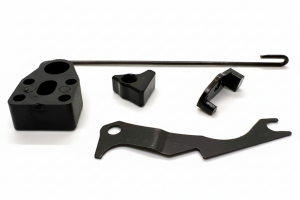
AK owners get a shorter list, and this is the kit on it. The seller confirms it in PSA GF-series rifles, the Century VSKA, WASR-10, Arsenal, Zastava and RPKs, and in most AKs built on a standard AKM receiver. It works in stamped and milled receivers, and with full-stroke or short-stroke carriers, across 7.62×39, 5.45×39 and 5.56.
You keep your own trigger, and the kit ships with a recoil buffer, which on an AK is doing a lot of the tuning work. Some rifles need a transfer bar, an extended wire or a PSA-style safety lever to finish the job, so check your model before you order. Dracos of every size fit, but only after a slight reduction of the rear trunnion with a rotary tool. Pistol-caliber AKs like the NAK9 and PSA AK-V are out, and so is the Saiga 12.
If this one’s sold out, Mars Trigger makes the other AK system worth knowing about. Its V1 parts kit is $169.99 from the maker and its spring-loaded V2 is $299.99, but installation runs from basic to advanced depending on your rifle.
Best For: AK-47 and AK-74 owners who want a forced reset setup with the buffer already sorted.
What a Forced Reset Trigger Actually Is
Pull a normal AR-15 trigger and it stays back until you let it go. Your finger does the resetting, and that forward travel is dead time between shots.
An FRT takes that job off your finger. It uses the energy of the bolt carrier moving rearward to physically shove the trigger forward again, against the pressure you’re still applying. The trigger resets whether you cooperate or not, so by the time the bolt is back in battery the trigger is forward and ready to go.
Here’s the part people miss. The gun still fires one round per function of the trigger. You are not holding a trigger down while the gun empties a magazine. You’re pulling it very fast, over and over, because the mechanism keeps handing it back. That distinction is the entire legal argument, and it’s why the court landed where it did.
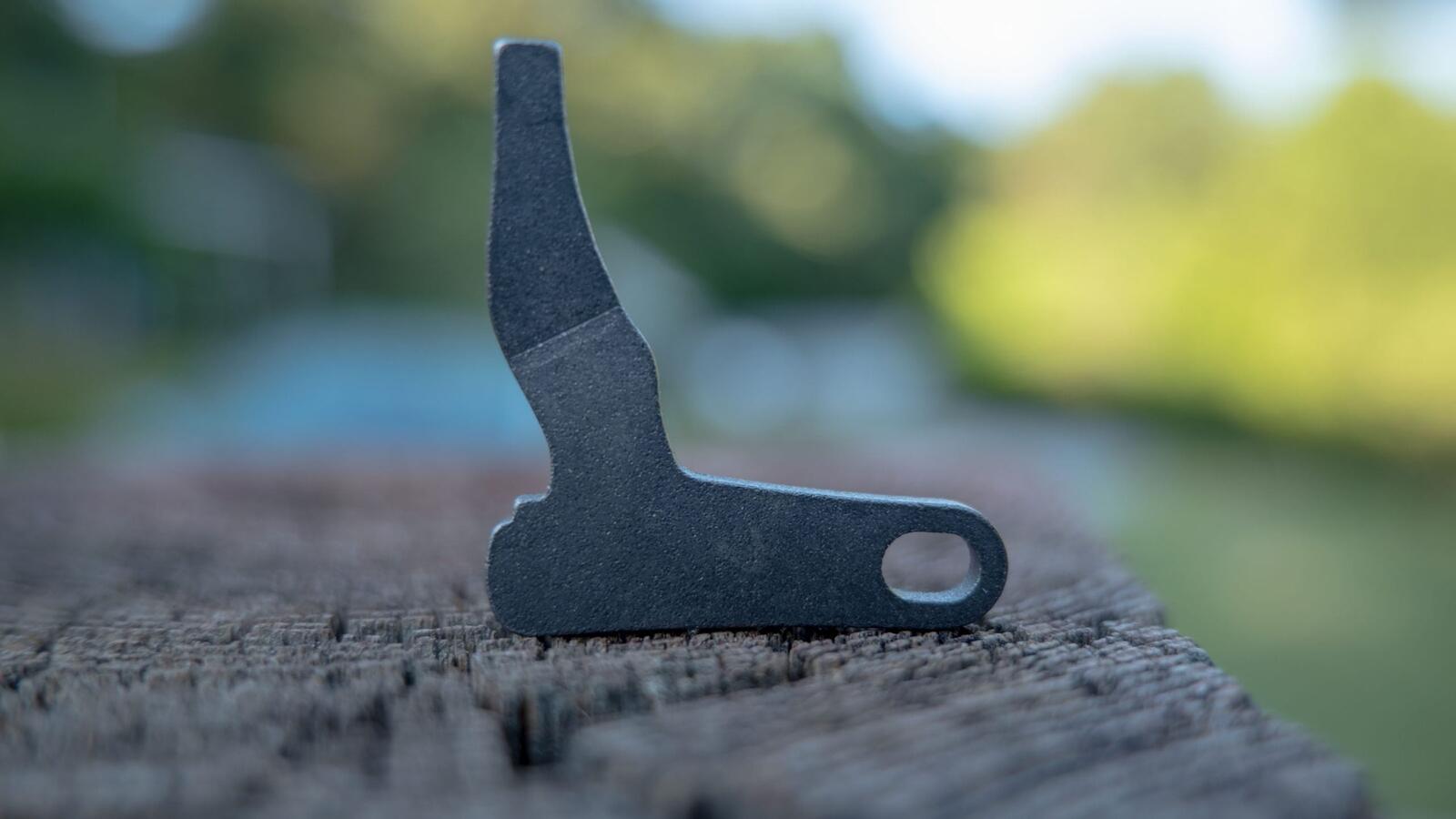
The hardware comes in three shapes. Complete trigger cassettes like the FRT-15L3 and the Disruptor replace the whole trigger group. Selector designs like the Atrius and the ARC-Fire replace the safety and leave your trigger alone. And the smallest parts replace just the disconnector, like Hoffman Tactical’s Trigger Kicker below, photographed on a bench beside a standard trigger, hammer and safety selector.
Facts and Figures
| Item | Detail |
|---|---|
| Rounds per trigger function | One. This is the legal crux. |
| ATF cease-and-desist to Rare Breed | July 2021 |
| ATF open letter calling FRTs machineguns | March 2022 |
| Supreme Court bump-stock decision | Garland v. Cargill, June 2024 |
| FRT ruling | July 23, 2024, Judge Reed O’Connor, N.D. Texas (final judgment July 24) |
| Government appeal | Filed August 1, 2024, dropped under the settlement |
| Settlement | Signed May 13, 2025, announced May 16 in press release 25-520 |
| States’ challenge to the settlement | Dismissed April 23, 2026 |
| Forced reset triggers on this page | From about $120 to $450 |
| States prohibiting them | 11 plus DC, Connecticut from October 1, 2026, 4 contested |
Are FRT Triggers Legal? The Federal Position
This is the section everyone gets wrong, so I’ll be specific about who decided what.
In June 2024 the Supreme Court decided Garland v. Cargill. That case was about bump stocks, not FRTs. The Court held that the ATF had gone beyond its statutory authority, because a machinegun fires more than one shot per single function of the trigger and a bump stock does not change that.
On July 23, 2024, Judge Reed O’Connor of the Northern District of Texas applied that reasoning to forced reset triggers in NAGR v. Garland and vacated the ATF’s classification, entering final judgment the next day. That district court ruling is the one that actually deals with FRTs. If a page tells you the Fifth Circuit ruled on forced reset triggers, it’s repeating an error. The government did appeal, on August 1, 2024, as case 24-10707, but the appeal was dropped as part of the settlement and never decided.
The settlement was signed on May 13, 2025, and the Justice Department announced it three days later in press release 25-520. It closed three cases at once: NAGR v. Garland in Texas, United States v. Rare Breed Triggers in the Eastern District of New York, and a forfeiture case in Utah. Owners who’d had FRTs seized could ask for them back by September 30, 2025.
Sixteen states and DC sued to undo the deal. They dropped that suit on April 23, 2026, after the federal government agreed not to return seized FRTs to owners in their states. So the federal position is favorable, and it has held. It’s still a settlement rather than a law passed by Congress. Two bills that would ban these devices, H.R. 2799 and S. 1374, were introduced in April 2025 and have not moved out of committee.
Pistols and Glock FRTs: Where the Settlement Stops
The settlement is narrower than most summaries suggest. Rare Breed agreed it will not design FRTs “for use in any handgun”, and the agreement defines a handgun as “a firearm whose magazine loads into the trigger-hand grip”. The government’s promise not to enforce the machinegun law only covers FRTs that work the way the Texas court described and are “not designed for use in and used in handguns”.
Two practical consequences. An AR or AK pistol, where the magazine sits ahead of the grip, falls outside that handgun definition, according to a July 2025 Congressional Research Service analysis. A Glock does not, and forced reset parts for Glocks and for rimfire pistols like the Taurus TX22 are on sale from smaller makers right now. The same CRS analysis notes the settlement doesn’t stop the government from going after other FRT makers. We don’t recommend any handgun FRT on this page for that reason.
The 2026 Patent Fight: Why FRT Stock Comes and Goes
The settlement also committed Rare Breed to enforce its patents, and it has. By spring 2026 it and its patent holder, ABC IP, had filed ten suits over the Disruptor alone, in nine federal courts, and it has also sued Hoffman Tactical, AS Designs and the retailer OpticsPlanet.
The results so far are mixed. A federal court in Tennessee granted Rare Breed a preliminary injunction against Hoffman on February 11, 2026, and Hoffman stopped selling its Super Safety. Two days later a court in Wyoming refused to block the Disruptor, finding that Partisan had raised a substantial question about whether Rare Breed’s patents are valid. That case is now in the Eastern District of Texas, where Rare Breed’s second attempt to stop sales was waiting on a ruling at the time of writing.
For a buyer, the takeaway is simple: if the one you want is in stock at a fair price, that’s the moment to buy. A single court order can pull a product off every shelf at once.
FRT Legal States: Where They Are Banned
I checked three published state-by-state guides while writing this. They contradicted each other. One listed Minnesota and Nevada as bans, another dropped both, a third added Colorado and dropped Washington. The makers’ own no-ship lists disagree too. On a question where being wrong is a felony, that isn’t a rounding error.
So here’s the mechanism instead, which is more useful. Most states don’t ban forced reset triggers by name. They ban a category written for bump stocks and trigger cranks, using terms like multiburst trigger activator, rapid-fire device or trigger activator. Those definitions are broad, and an FRT lands inside them. Two states now name FRTs outright: Oregon, and Connecticut from October 1, 2026.
| State | Status | How the statute catches it |
|---|---|---|
| California | Prohibited | Multiburst trigger activator |
| Colorado | Prohibited | Rapid-fire device, added by SB25-003 |
| Delaware | Prohibited | Rapid fire device |
| Hawaii | Prohibited | Multiburst trigger activator |
| Illinois | Prohibited | Treated as a machine gun |
| Maryland | Prohibited | Rapid fire trigger activator |
| Massachusetts | Prohibited | Rapid-fire trigger activator |
| New Jersey | Prohibited | Prohibited machine gun |
| New York | Prohibited | Rapid-fire modification device |
| Oregon | Prohibited | Rapid fire activator, names forced reset triggers (SB 243, 2025) |
| Rhode Island | Prohibited | Rapid-fire device |
| District of Columbia | Prohibited | Machine gun definition |
| Connecticut | Prohibited from October 1, 2026 | Rate of fire enhancement, names forced reset triggers (Public Act 26-41) |
| Florida | Contested | Bump-fire stock definition covers any device that raises the rate of fire |
| Minnesota | Contested | Trigger activator, sources disagree |
| Nevada | Contested | Rate-of-fire device, sources disagree |
| Washington | Contested | Refused by several makers, not named in current statute text |
Colorado is the clean example, and I read the legislation rather than trusting a summary. Senate Bill 25-003 added a definition of a rapid-fire device to Colorado Revised Statutes section 18-12-101, covering anything that has the effect of increasing the rate of fire of a semiautomatic firearm above its standard rate. An FRT does exactly that by design. There’s a wrinkle: that definition arrived numbered as subsection (1)(g.7) and was relocated to (1)(u.3) when two bills were harmonized, so sources still citing (1)(g.7) point at a subsection that no longer exists.
Treat the contested four as prohibited until an attorney in your state tells you otherwise. Check your own state’s code through our state gun law guides. Do not take a buying guide’s word for it, including this one.
Super Safety vs FRT: What Is the Difference?
The Super Safety gets lumped in with forced reset triggers constantly, and it works in a different place. An FRT lives in the trigger group. A Super Safety replaces the safety selector, and in its third position it interrupts the disconnector so the hammer follows the bolt carrier down. Hoffman Tactical’s version even ships with its own custom-cut trigger.
You can’t buy Hoffman’s Super Safety right now. A federal court in Tennessee granted Rare Breed a preliminary injunction against Hoffman on February 11, 2026, and it has been out of stock at $120 on Hoffman’s site ever since. The selector idea lives on in the Atrius above and in AS Designs’ ARC-Fire V2, which is $199.99 non-ambi or $249.99 ambi and fits a long list of platforms beyond the AR-15. Hoffman’s $43 Trigger Kicker is still on sale, but on its own it’s a two-position part that only does safe and semi.
Legally, don’t assume a selector-style part is the safer choice. State statutes are written around effect, not around which component you changed. A device that raises the rate of fire above standard sits inside a rapid-fire device definition whether it’s a selector or a trigger. If your state is on the table above, a selector isn’t a workaround.
FRT vs Binary Trigger vs Bump Stock
| Device | How it fires | Rounds per pull |
|---|---|---|
| Forced reset trigger | Mechanism pushes the trigger forward for you | One |
| Selector-style FRT | Selector interrupts the disconnector | One |
| Binary trigger | Fires on the pull, then again on the release | Two, one per function |
| Bump stock | Recoil slides the rifle against a static finger | One |
A binary trigger is the closest cousin and the easier thing to live with. You get a second shot on release, it’s mechanically simple, and Franklin Armory and Fostech have been building them for years. An FRT is faster and much less forgiving of a sloppy build.
Tuning: Buffer, Spring and Gas
This is the part the legal explainers skip, and it’s the reason most people are unhappy with their purchase. An FRT is a timing device. It depends on the bolt carrier arriving at the right speed with the right momentum, and a rifle that runs fine with a normal trigger can be badly out of tune for one.
The variables that matter are buffer weight, action spring rate, gas port size and ammunition power. Under-gassed, the carrier doesn’t drive the reset hard enough and you get failures to reset. Over-gassed, the carrier comes back too fast, outruns the hammer and you get light strikes or hammer follow. Every maker on this page publishes a buffer recommendation, and nearly all of them land on H2 minimum with H3 preferred. Our AR-15 buffer weight guide explains the weights, and our bolt carrier group guide covers the M16-profile carriers most of these need.
A few honest cautions. Suppressed shooting changes the gas curve, so a rifle tuned unsuppressed may misbehave with a can on. Cheap steel-case ammunition is often milder than the brass you tuned with. And a carbine-length gas system on a short barrel is the hardest case of all.
Troubleshooting a Forced Reset Trigger
It doubles or runs away. Stop shooting. Unload and check the disconnector engagement and the reset spring. A gun that fires more than once per function of the trigger is a machinegun in law regardless of what you intended.
It fails to reset. Check the bolt carrier first. A semi-auto profile carrier won’t drive most of these at all. Then look at the buffer, and try a lighter one before you touch the gas.
Light primer strikes. The carrier is outrunning the hammer. A heavier buffer or a stronger hammer spring is the usual answer.
It works on the bench and not on the range. Ammunition. Test with the load you actually shoot.
Function-check every time you reassemble, on an empty gun, before you take it anywhere. If you’ve never had a lower apart, pay a gunsmith. This is a poor first build.
Who Should Skip One
Anyone in a listed state. No ambiguity. Not worth a felony.
New shooters. Learn a trigger before you fit one that resets itself. A standard drop-in trigger teaches you more.
Anyone with an untuned or marginal rifle. Fix the gas system first. An FRT will expose every weakness in the build.
Competitors. Most action shooting sports will not let you use one. A competition trigger is the right buy.
FAQ
What does FRT stand for?
FRT stands for forced reset trigger. It is a trigger system that uses the rearward travel of the bolt carrier to push the trigger forward after each shot, so it resets faster than your finger would let it. The gun still fires one round per function of the trigger.
What is the best FRT trigger in 2026?
For most AR-15 owners the Partisan Disruptor is the best forced reset trigger on sale in 2026: a drop-in cassette with a real three-position selector at $299.99. The Rare Breed FRT-15L3 is the original at $450, and the Kabuto kit is the budget pick at about $120.
Are FRT triggers legal?
Under federal law, yes. A federal court in Texas ruled on July 23, 2024 that a forced reset trigger is not a machinegun, and the Justice Department dropped its appeal in a settlement signed May 13, 2025. Eleven states plus Washington DC prohibit them, Connecticut joins on October 1, 2026, and Florida, Minnesota, Nevada and Washington are contested. Check your own state before you buy.
Is a forced reset trigger a machine gun?
Not under federal law as it stands. A machinegun fires more than one shot per single function of the trigger, and an FRT fires one shot each time the trigger is pulled, however fast that happens. Some state laws are written around rate of fire instead, which is why several states still ban them.
Is the Super Safety a forced reset trigger?
No. A Super Safety replaces the safety selector rather than the trigger group, and its third position interrupts the disconnector. Hoffman Tactical has been barred from selling its Super Safety by a preliminary injunction since February 11, 2026. Selector-style alternatives like the Atrius Forced Reset Selector and the AS Designs ARC-Fire V2 are still sold.
What is the difference between a forced reset trigger and a binary trigger?
A binary trigger fires once when you pull and again when you release, so you get two shots from one pull and release. A forced reset trigger fires once per pull and mechanically resets the trigger for you. FRTs are faster and fussier about how the rifle is tuned.
How much does an FRT trigger cost?
The forced reset triggers on this page run from about $120 for the Kabuto kit to $450 for the Rare Breed FRT-15L3. The Partisan Disruptor is $299.99, or $324.99 for the ambi version, and the Trigger Supply AK kit is $179.99. Live prices are in the cards on this page.
What do I need to run an FRT in my AR-15?
Most forced reset triggers need an M16-profile or full-auto bolt carrier group and a heavier buffer, H2 at minimum with H3 recommended. The Disruptor also requires anti-walk pins. A rifle that runs a normal trigger well can still need tuning for an FRT.
Why does my FRT fail to reset?
The most common cause is a semi-auto profile bolt carrier, which will not drive most FRTs. After that, check the buffer weight and try a lighter buffer before changing the gas. If the rifle ever fires more than once per trigger pull, stop, unload and inspect it before shooting again.
Can you put a forced reset trigger in a pistol?
The settlement bars Rare Breed from designing FRTs for any handgun, defined as a firearm whose magazine loads into the trigger-hand grip, and the federal promise not to enforce only covers FRTs not designed for or used in handguns. AR and AK pistols, where the magazine sits ahead of the grip, fall outside that definition. We do not recommend any handgun FRT.
About the author. Nick Hall has been shooting and building AR-15s for over 30 years and runs the testing program at USA Gun Shop. The legal section on this page is sourced from the Justice Department’s release, the settlement agreement, the court dockets and the state legislatures. It is not legal advice, and firearms law changes. Verify your state before you buy.
5,031+ Gun & Ammo Deals
Updated daily from 200+ top retailers. Filter by category, caliber, action type, and price.