

Last updated September 28, 2026
Some of the links below are affiliate links, meaning at no additional cost to you, we may earn a commission if you click through and make a purchase.
- Treat every gun as loaded
- Point the muzzle in a safe direction
- Keep your finger off the trigger until you’re ready to shoot
- Know your target and what’s beyond
Guns ahead of their time are designs that got a big idea right years before the rest of the gun world caught up, then faded because they cost too much, came too early or lost a trial to a simpler gun. Most are forgotten guns now, known mainly to collectors, but plenty of their ideas are in the guns you buy today.
This is my list of 12 of them, from the Spencer repeater Lincoln fired on the White House lawn to the squeeze-cocking HK P7 and the 18-round Steyr GB. For each one I’ll tell you what it did first, why it faded, and what our dealers were asking when I checked, with a live price card wherever one is for sale.
How we tested: Every pick here is ranked against our testing methodology. Minimum round counts, accuracy and reliability protocols, the failures that disqualify a gun.
Guns Ahead of Their Time at a Glance
Here are all 12 guns ahead of their time on this list, what each one is, and how you can buy one today.
| Gun | Why It Matters | Key Facts | Check Price |
|---|---|---|---|
 |
THE REPEATER LINCOLN FIRED
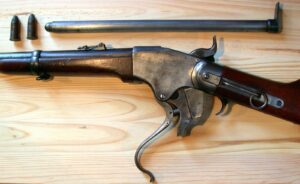
Spencer Repeating Rifle
Civil War collectors and anyone who wants to shoot the first repeater an army went to war with. |
Era: 1800s design Caliber: .56-56 Spencer rimfire New or used: Chiappa reproductions new; originals at auction |
Check Price ↓ |
 |
COLT’S FIRST DOUBLE ACTION
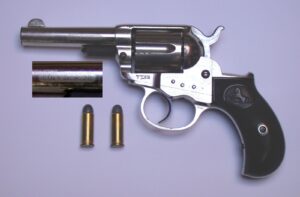
Colt 1877 Lightning
Revolver collectors who want the gun that started the double-action era in America. |
Era: 1800s design Caliber: .38 Long Colt New or used: Used and antique only |
Check Price ↓ |
 |
THE ROTARY-MAGAZINE RIFLE
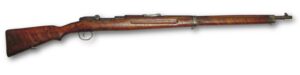
Mannlicher-Schoenauer
Hunters and collectors who want the smoothest-feeding bolt action ever made. |
Era: 1800s design Caliber: 6.5x54mm Mannlicher-Schoenauer and others New or used: Used only |
Check Price ↓ |
 |
AMERICA’S FIRST SUCCESSFUL SEMI-AUTO RIFLE
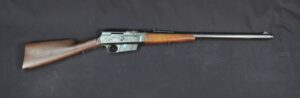
Remington Model 8
Collectors who want the rifle that made semi-auto hunting real, and don’t mind hunting for one. |
Era: Early semi-auto Caliber: .35 Remington, .25, .30 and .32 Remington New or used: Used only, mostly at auction |
Read More ↓ |
 |
THE RIFLE THAT LOST TO THE GARAND
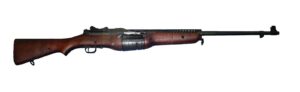
Johnson M1941
Serious World War II collectors who want the Garand’s great rival. |
Era: Early semi-auto Caliber: .30-06 Springfield New or used: Used only, at collector prices |
Check Price ↓ |
 |
THE PLASTIC RIFLE OF 1959
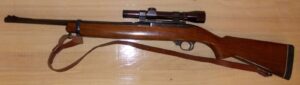
Remington Nylon 66
Anyone who wants a million-seller .22 with a real piece of design history built in. |
Era: Postwar design Caliber: .22 LR New or used: Used and police trade-in |
Check Price ↓ |
 |
THE MAGNUM DEER CARBINE
Ruger Model 44 Carbine
Deer hunters in heavy timber and Ruger collectors. |
Era: Postwar design Caliber: .44 Magnum New or used: Used only |
Check Price ↓ |
 |
THE BOLT-ACTION HANDGUN
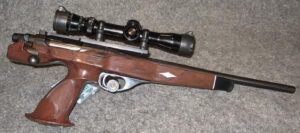
Remington XP-100
Handgun hunters and silhouette shooters who want where it all started. |
Era: Postwar design Caliber: .221 Fireball and others New or used: Used only |
Check Price ↓ |
 |
THE OTHER ARMALITE
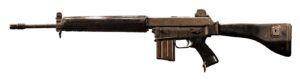
ArmaLite AR-18 and AR-180
Rifle collectors who want the ArmaLite that shaped a generation of military rifles. |
Era: Postwar design Caliber: 5.56 NATO and .223 Remington New or used: Used only |
Check Price ↓ |
 |
THE FIRST SUBCOMPACT .45
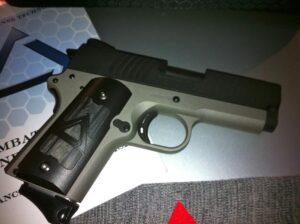
Detonics Combat Master
1911 collectors and anyone who wants the pistol that invented the carry .45. |
Era: 1970s pistol Caliber: .45 ACP New or used: Used only |
Check Price ↓ |
 |
THE SQUEEZE COCKER
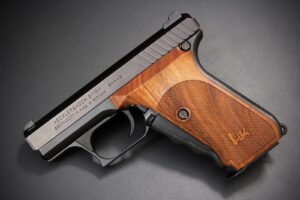
Heckler & Koch P7
Pistol collectors and anyone who wants the most clever safety system ever put in a 9mm. |
Era: 1970s pistol Caliber: 9mm Luger New or used: Used only |
Check Price ↓ |
 |
THE 18-ROUND NINE OF 1968
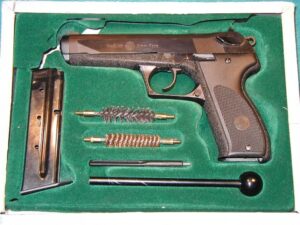
Steyr GB
Collectors of 1980s service pistols and fans of odd, clever actions. |
Era: 1970s pistol Caliber: 9mm Luger New or used: Used only |
Check Price ↓ |
Table of Contents
What Makes a Gun Ahead of Its Time?
A gun is ahead of its time when it solves a problem the market was not ready to pay for. A repeating rifle in an army that feared wasted ammunition, a nylon stock in 1959, a subcompact .45 in 1976. The idea won later, in somebody else’s gun.
Every original on this list is discontinued, so the real question is which discontinued guns are worth buying. The price cards answer that for each one.
That’s also why they’re hard to find now. Most of these were made in small numbers and never came back, so the ones that turn up are used, consigned or at auction. Here’s how the 12 break down by how you can buy one today, with prices from when I checked on September 28, 2026.
| How it is sold | Guns | What to expect |
|---|---|---|
| New reproduction | Spencer 1860 | About $2,000 to $2,500 for a Chiappa |
| Used, under $1,000 | Remington Nylon 66, Remington XP-100 | A police trade-in Nylon 66 was $299.99 |
| Used, $1,000 to $4,000 | Colt 1877 Lightning, Mannlicher-Schoenauer, Ruger Model 44, ArmaLite AR-180, Detonics Combat Master, HK P7, Steyr GB | Single consignment guns, so each price is one gun |
| Used, over $4,000 | Johnson M1941 | One rifle at $9,999.99 |
| Not listed by our dealers | Remington Model 8 | Auctions and gun shows |
The 1800s: Ideas Decades Early
These three proved an idea long before armies and buyers were ready for it: the metallic-cartridge repeater, the double-action revolver and the rotary magazine.
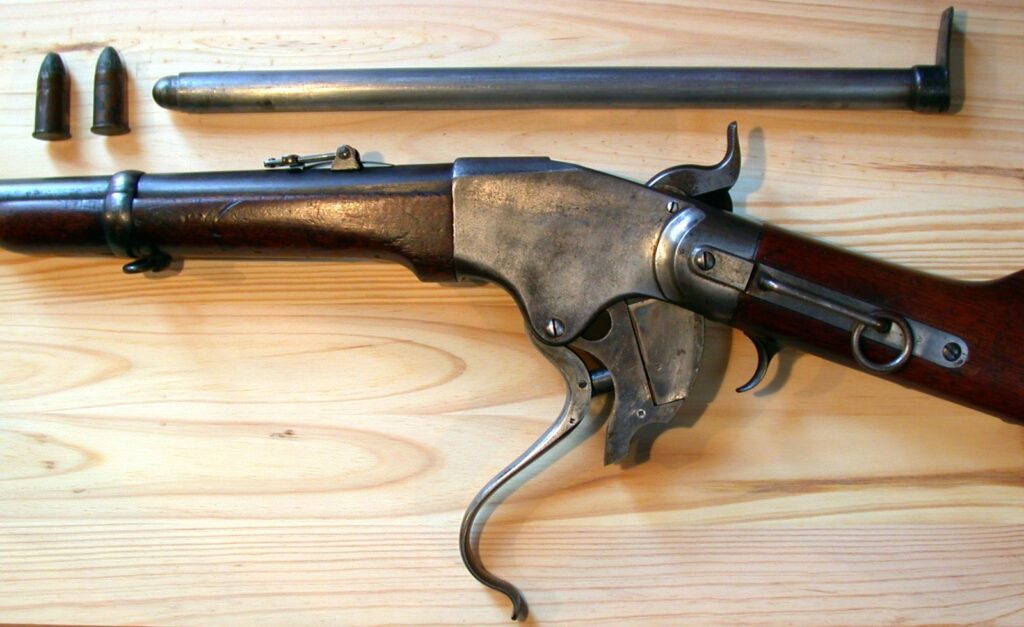
1. Spencer Repeating Rifle: The Repeater Lincoln Fired
- Caliber: .56-56 Spencer rimfire originally; reproductions in .45 Colt, .44-40 and .56-50
- Action: Lever action, seven-round tube magazine in the buttstock
- Made: More than 200,000, 1860 to 1869
- New or used: Chiappa reproductions new; originals at auction
| Category | Rating |
|---|---|
| Innovation | 5/5 |
| Collector Appeal | 5/5 |
| Availability | 4/5 |
Pros
- First military metallic-cartridge repeater
- Seven shots before a musket fired twice
- Reproductions are easy to buy
Cons
- Hammer cocked by hand every shot
- Original ammo is gone
- Reproductions cost about $2,000
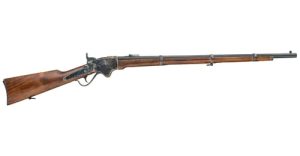
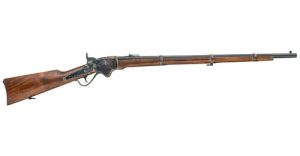
Christopher Spencer designed his rifle in 1860, and it fed seven rimfire cartridges from a tube in the buttstock. It was the world’s first military repeating rifle to fire metallic cartridges. The Ordnance Department did not want it, because it feared soldiers would waste ammunition.
After Gettysburg, Spencer got an audience with Abraham Lincoln and a shooting demonstration on the White House lawn. Wilder’s Lightning Brigade and Custer’s Michigan cavalry had already proved it that summer, and Lincoln ordered it adopted. A trooper could fire more than 20 rounds a minute, against two or three from a muzzleloader.
Chiappa makes a faithful reproduction today. Midway USA lists its carbine at $2,099, including one in .56-50 Spencer, and Guns.com has a three-band rifle at $2,119.99. Our best lever-action rifles roundup covers the lever guns that followed it.
Best For: Civil War collectors and anyone who wants to shoot the first repeater an army went to war with.
2. Colt 1877 Lightning: Colt’s First Double Action
- Caliber: .38 Long Colt; .41 Long Colt as the Thunderer, .32 as the Rainmaker
- Action: Double action, six-round cylinder
- Made: 166,849, 1877 to 1909
- New or used: Used and antique only
| Category | Rating |
|---|---|
| Innovation | 4/5 |
| Collector Appeal | 4/5 |
| Availability | 2/5 |
Pros
- First successful US double-action cartridge revolver
- Small, elegant bird’s-head grip
- Early guns are federal antiques
Cons
- Delicate, breakage-prone lockwork
- Few gunsmiths will repair one
- Ammo is nearly impossible to buy
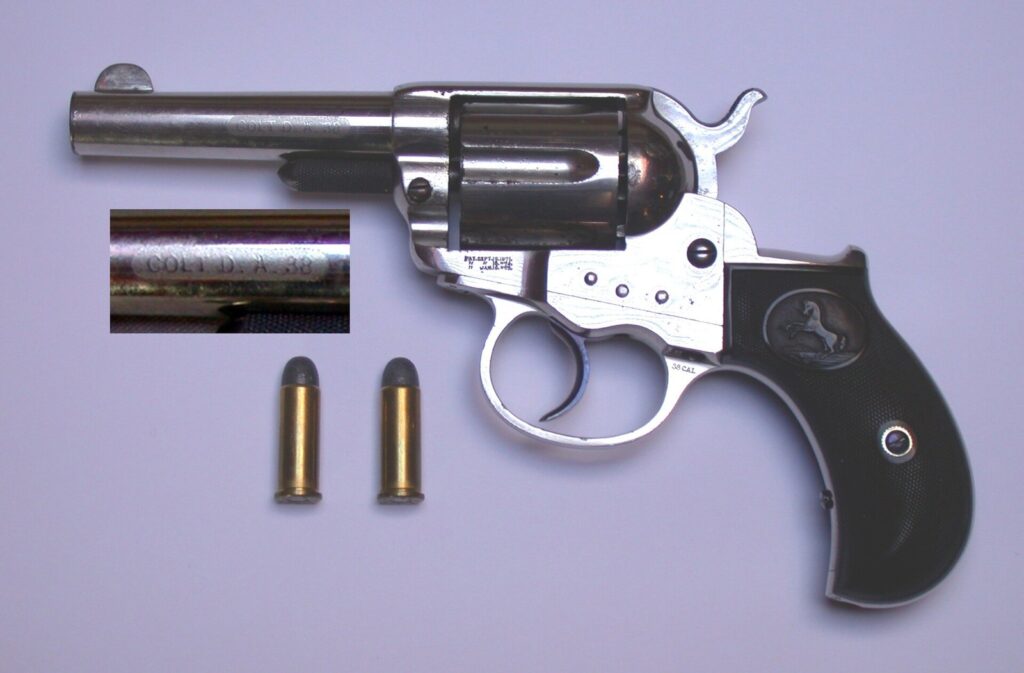
William Mason, one of the men behind the Single Action Army, designed the Model 1877 as Colt’s first double-action revolver. You could fire it just by pulling the trigger. It was the first successful double-action cartridge revolver made in the United States, and Colt built 166,849 between 1877 and 1909.
The names came from a Colt distributor, Benjamin Kittredge, who also gave the Single Action Army its Peacemaker name. The .38 was the Lightning and the .41 the Thunderer. The trouble was the lockwork, which was so delicate that a broken spring left many guns working as single actions only.
That’s why the idea had to wait for sturdier revolvers. When I checked, Guns.com had an 1877 Lightning on consignment at $1,025.99. You’ll find the double actions that got it right in our classic revolvers guide.
Best For: Revolver collectors who want the gun that started the double-action era in America.
3. Mannlicher-Schoenauer: The Rotary-Magazine Rifle
- Caliber: 6.5x54mm Mannlicher-Schoenauer, later .30-06, .270 and others
- Action: Bolt action, five-round rotary spool magazine
- Made: Military rifles from 1903, sporting rifles until 1972
- New or used: Used only
| Category | Rating |
|---|---|
| Innovation | 4/5 |
| Collector Appeal | 5/5 |
| Availability | 3/5 |
Pros
- Silky rotary magazine feeds perfectly
- Beautiful full-length sporting stocks
- Superb fit and finish
Cons
- No longer made
- 6.5×54 ammo is scarce
- Fine examples cost thousands
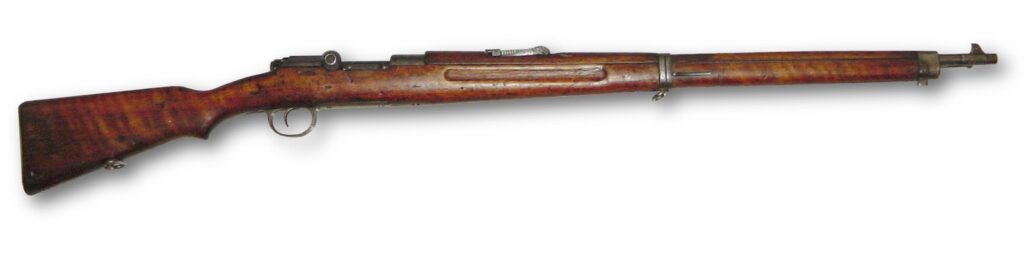
Otto Schoenauer and Ferdinand Mannlicher patented their rotary spool magazine together in 1900. Instead of stacking rounds in a box, it turned them around a spool, which made feeding smooth. The Greek Army adopted the rifle in 1903, and it was the main Greek rifle through the Balkan Wars and both world wars.
Hunters loved it too. Sporting models with full-length stocks were made from 1903 until 1972, and in 1925 the action was lengthened for American cartridges like the .30-06 and .270. The same rotary idea turns up in the Johnson rifle below and in the magazine of the Ruger 10/22.
A 1956 sporting rifle was on consignment at Guns.com for $2,000.99 when I checked. The Greek military rifles show up in our best military surplus rifles roundup.
Best For: Hunters and collectors who want the smoothest-feeding bolt action ever made.
Early Semi-Autos That Beat the Clock
John Browning had a semi-auto hunting rifle on the market in 1905, and Melvin Johnson built a rifle in 1941 that Marine Paramarines carried into combat. Both faded, for very different reasons.
4. Remington Model 8: America’s First Successful Semi-Auto Rifle
- Caliber: .25, .30, .32 and .35 Remington
- Action: Long-recoil semi-automatic, fixed five-round magazine, takedown
- Made: About 26,000 Autoloading Rifles, 80,600 Model 8s to 1936, then 55,581 Model 81s to 1950
- New or used: Used only, mostly at auction
| Category | Rating |
|---|---|
| Innovation | 5/5 |
| Collector Appeal | 5/5 |
| Availability | 1/5 |
Pros
- John Browning design
- Takes down without tools
- .35 Remington ammo still made
Cons
- None listed on our dealers
- Heavy at 8 pounds
- Complex long-recoil action
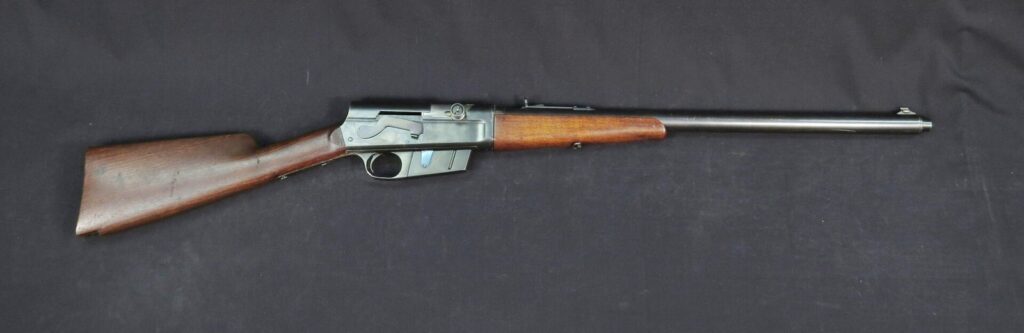
John Browning was granted his patent in October 1900 and sold the design to Remington, which launched it in 1905 as the Remington Autoloading Rifle. It became the Model 8 in 1911. It was the first commercially successful semi-auto rifle sold to American civilians, decades before most hunters trusted one.
The whole barrel recoils inside the receiver on every shot, and Remington created four new rimless cartridges so it would feed from a box magazine. Texas Ranger Frank Hamer carried a customized .35 Remington Model 8 with an extended magazine, and it was one of the rifles used in the 1934 ambush of Bonnie and Clyde.
None of our dealers had a Model 8 or Model 81 listed when I checked, so there’s no price card here. They turn up at auctions and gun shows, and a .35 Remington is the one to look for, because ammo is still made. Our classic American rifles guide covers more rifles from the same era.
Best For: Collectors who want the rifle that made semi-auto hunting real, and don’t mind hunting for one.
5. Johnson M1941: The Rifle That Lost to the Garand
- Caliber: .30-06 Springfield; 7x57mm for Chile
- Action: Short-recoil semi-automatic, 10-round rotary magazine
- Made: Fewer than 30,000 rifles and machine guns combined, 1940 to 1945
- New or used: Used only, at collector prices
| Category | Rating |
|---|---|
| Innovation | 5/5 |
| Collector Appeal | 5/5 |
| Availability | 1/5 |
Pros
- Ten rounds against the Garand’s eight
- Top off with the bolt closed
- Marine Corps combat history
Cons
- Rare and very expensive
- Many small parts to lose
- Barrel movement hurt accuracy
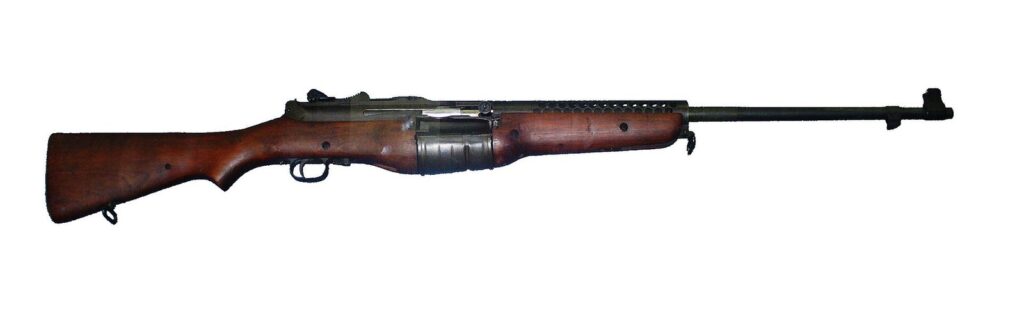
Melvin Johnson was a lawyer and Marine Corps officer who did not trust the gas-operated Garand. His rifle used short recoil and a rotating bolt with eight locking lugs, and its 10-round rotary magazine could be topped up from 1903 stripper clips with a round in the chamber. A Garand holds eight and can’t be topped off.
The Army stayed with the Garand, but Marine Paramarines took Johnsons from a Dutch order, and Captain Robert Dunlap carried serial A0009 on Iwo Jima, where he earned the Medal of Honor. Johnson later championed the AR-15, whose bolt looks a lot like his.
They’re rare now. Guns.com had one on consignment at $9,999.99 when I checked. The Garand that beat it is in our WW2 guns list.
Best For: Serious World War II collectors who want the Garand’s great rival.
Space-Age Materials and New Ideas
The Nylon 66, Ruger Model 44, XP-100 and AR-18 all appeared between 1959 and 1963, as American makers tried nylon stocks, magnum carbines, bolt-action handguns and stamped-steel rifles. Every one of these four was early, and every idea caught on later.
6. Remington Nylon 66: The Plastic Rifle of 1959
- Caliber: .22 LR
- Action: Semi-automatic, 14-round tube magazine in the buttstock
- Made: 1,050,350, 1959 to 1989
- New or used: Used and police trade-in
| Category | Rating |
|---|---|
| Innovation | 5/5 |
| Collector Appeal | 3/5 |
| Availability | 4/5 |
Pros
- Nylon stock decades ahead
- Runs without any lubrication
- Light at 4 pounds
Cons
- No longer made
- Collector colors cost more
- Tube loading is slow
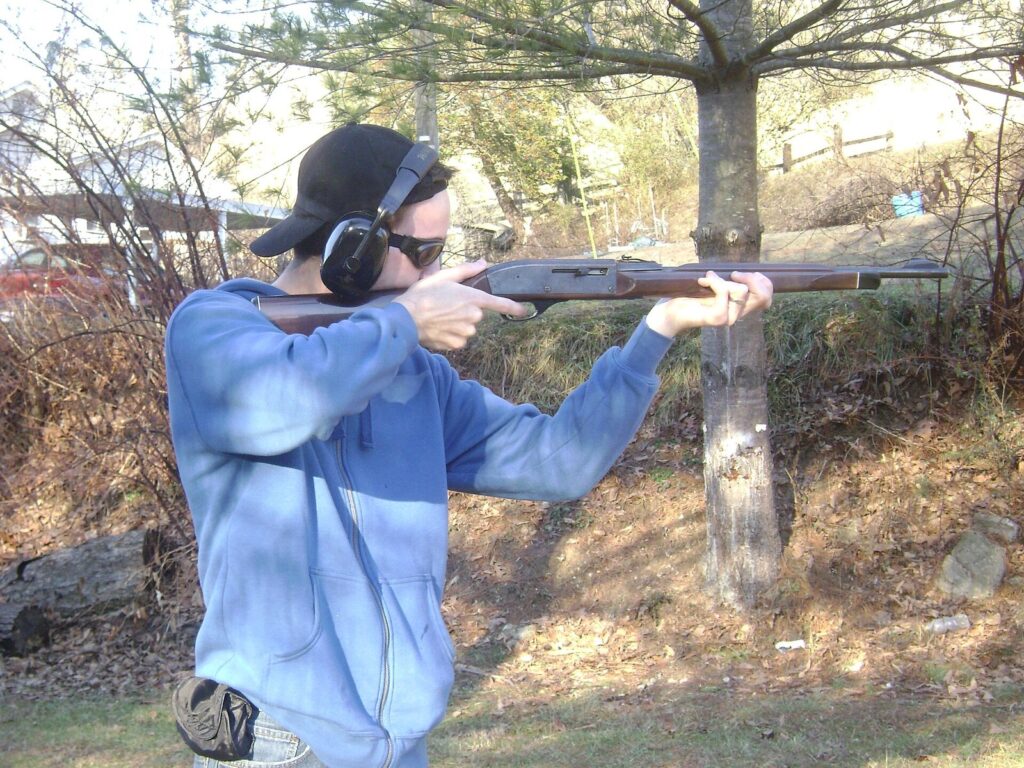
Remington wanted a cheaper .22, so it asked DuPont for a plastic that could replace both the wooden stock and the receiver. DuPont came back with Zytel 101, a nylon resin, and the Nylon 66 went on sale in 1959. Most buyers had never seen a gun stock that wasn’t wood, and this came decades before the Glock 17 put a polymer frame in police holsters.
The nylon parts needed no oil, which made it popular in the Arctic, and Remington built more than a million by 1989. The colors are what collectors chase now. Only 42,500 Seneca Greens were made, against 221,000 Apache Blacks with chrome metal.
It’s still cheap. Sportsman’s Outdoor Superstore had a police trade-in at $299.99, and Guns.com had one on consignment at $550.99. For new rimfires, see our best .22 LR rifles.
Best For: Anyone who wants a million-seller .22 with a real piece of design history built in.
7. Ruger Model 44 Carbine: The Magnum Deer Carbine
- Caliber: .44 Magnum
- Action: Gas-operated semi-automatic, four-round tube magazine
- Made: More than 250,000, 1961 to 1985
- New or used: Used only
| Category | Rating |
|---|---|
| Innovation | 4/5 |
| Collector Appeal | 4/5 |
| Availability | 3/5 |
Pros
- Handy 5.75-pound deer carbine
- Soft-shooting .44 Magnum
- Inspired the Ruger 10/22
Cons
- Only four rounds
- Lead bullets foul the gas port
- No factory parts support
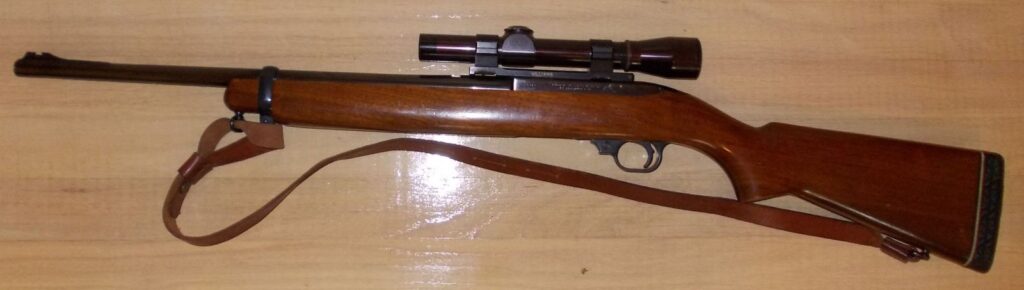
Bill Ruger built this as a close-range deer carbine for thick woods, and he launched it in 1961 as the Deerstalker. Ithaca sued over the name, so it became the Model 44 in 1962. A light semi-auto carbine in a handgun magnum was a new idea, long before pistol-caliber carbines were everywhere.
It influenced the 10/22, which shares its carbine lines and barrel band and came out in 1964. Ruger dropped the Model 44 in 1985 because it cost too much to build, and the company no longer supports it with parts.
When I checked, Guns.com had one on consignment at $1,599.99. Our Ruger 10/22 review covers the little brother that outsold it.
Best For: Deer hunters in heavy timber and Ruger collectors.
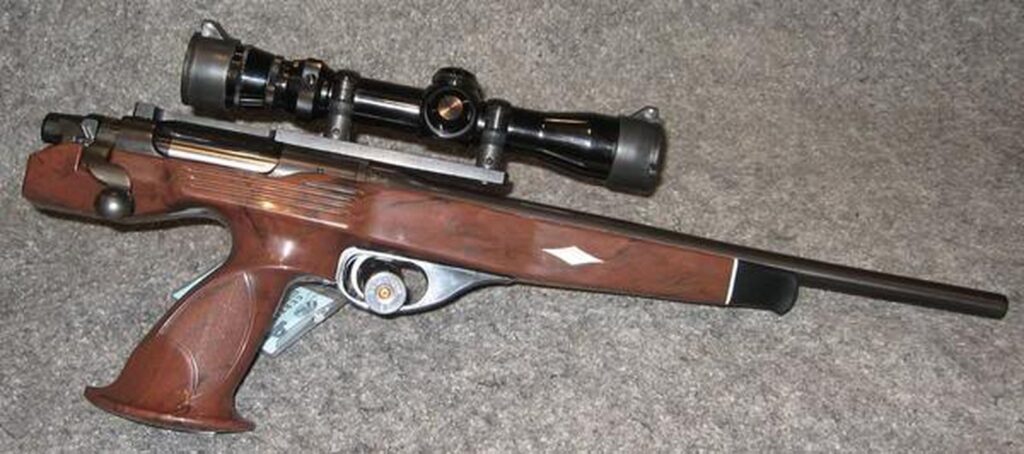
8. Remington XP-100: The Bolt-Action Handgun
- Caliber: .221 Fireball, later .223, 7mm BR, 7mm-08 and others
- Action: Bolt action, single shot; four-round XP-100R from 1991
- Made: 1963 to 1998
- New or used: Used only
| Category | Rating |
|---|---|
| Innovation | 5/5 |
| Collector Appeal | 4/5 |
| Availability | 3/5 |
Pros
- Rifle accuracy in a handgun
- Helped start handgun varmint hunting
- Tough nylon stock
Cons
- Awkward center grip
- Heavy for a handgun
- Custom versions cost more
Remington built the XP-100 on its Model 40X short action, set it into a nylon stock with the grip in the middle, and put it on sale in 1963. XP stood for experimental pistol. It was one of the first handguns designed to shoot at long range.
Remington shortened the .222 case to make the .221 Fireball for its 10.75-inch barrel, and it still ran more than 2,700 feet per second. The XP-100 helped create handgun varmint hunting, and it was a favorite in metallic silhouette.
Guns.com had one on consignment at $799.99 when I checked. Modern hunting handguns are in our big game hunting handguns guide.
Best For: Handgun hunters and silhouette shooters who want where it all started.
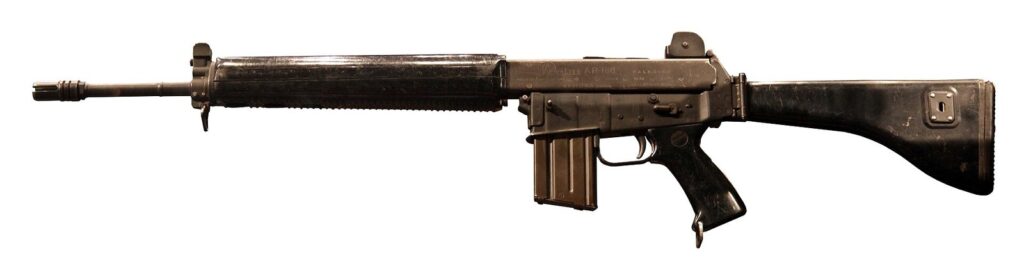
9. ArmaLite AR-18 and AR-180: The Other ArmaLite
- Caliber: 5.56x45mm NATO
- Action: Short-stroke gas piston, rotating bolt; AR-180 is the semi-auto
- Made: 1969 to 1985, by ArmaLite, Howa in Japan and Sterling in England
- New or used: Used only
| Category | Rating |
|---|---|
| Innovation | 5/5 |
| Collector Appeal | 4/5 |
| Availability | 2/5 |
Pros
- Folds its stock, unlike an AR-15
- Cheap stamped-steel build
- Blueprint for modern military rifles
Cons
- Proprietary magazines
- Wobbly folding stock
- Originals are scarce and costly
ArmaLite had sold the AR-15 to Colt, so in 1963 it designed a 5.56mm rifle it could still sell. The AR-18, led by chief designer Arthur Miller, used stamped steel instead of forgings, a short-stroke gas piston, and recoil springs inside the receiver. That last change let the stock fold, which an AR-15 can’t do.
No army adopted it as its standard rifle, but ArmaLite licensed it to Howa in Japan and Sterling in England. It’s said to have influenced the British SA80, the Howa Type 89, the FN F2000 and the Heckler & Koch G36. The civilian semi-auto was the AR-180.
Guns.com listed an AR-180 on consignment at $3,500.99 when I checked. The rifle it was built to compete with is in our history of the AR-15.
Best For: Rifle collectors who want the ArmaLite that shaped a generation of military rifles.
Pistols That Came Too Early
The Detonics Combat Master, the HK P7 and the Steyr GB were all designed between 1968 and 1976, and each solved a problem before the market asked: a pocket-size .45, a 9mm with no safety to forget, and an 18-round double action from before the wonder-nine era.
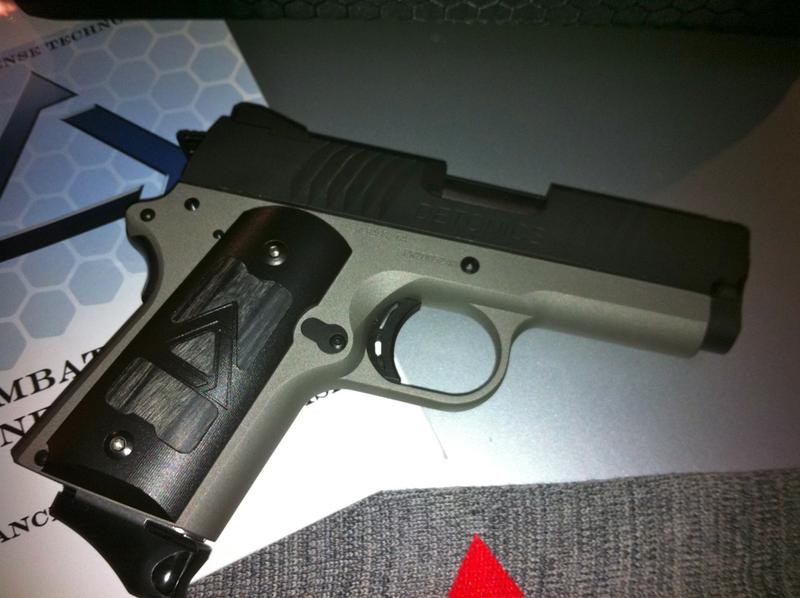
10. Detonics Combat Master: The First Subcompact .45
- Caliber: .45 ACP
- Action: Single-action 1911 type, six-round magazine, 3.5-inch barrel
- Made: About 17,000 in Seattle, 1976 to 1987; later by other Detonics companies
- New or used: Used only
| Category | Rating |
|---|---|
| Innovation | 5/5 |
| Collector Appeal | 5/5 |
| Availability | 2/5 |
Pros
- A true pocket-size .45
- Bushingless cone barrel design
- Seattle guns are collectible
Cons
- Only six rounds
- Snappy recoil
- Expensive for a used 1911
Detonics started in Seattle in the mid-1970s to build a small .45 that a factory could make. The Combat Master had a 3.5-inch barrel, three-quarters of an inch shorter than a Colt Commander’s, and it’s called the world’s first commercially made subcompact single-action semi-auto.
It had no barrel bushing. A cone-shaped barrel centered itself in the slide, and nested, counterwound recoil springs tamed the kick. Detonics built about 17,000 in Seattle before 1987, and the name passed to later companies that kept the Combat Master going.
Every compact carry 1911 since owes it something. Guns.com had a Combat Master Mk VI on consignment at $3,500.99 when I checked. For new 1911s, see our best 1911 pistols under $1,000.
Best For: 1911 collectors and anyone who wants the pistol that invented the carry .45.
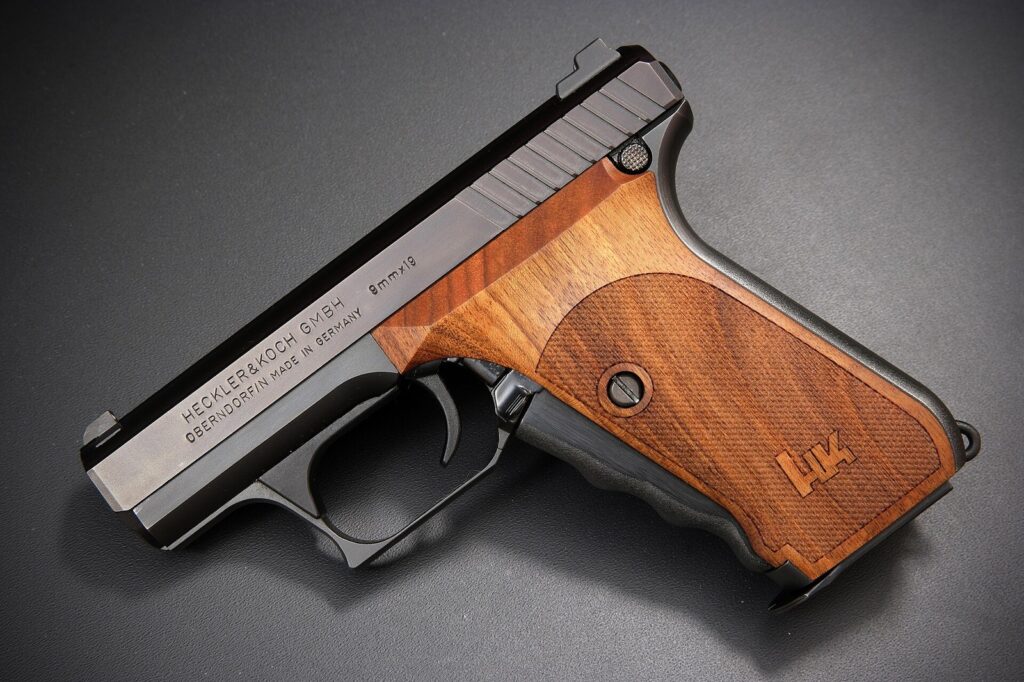
11. Heckler & Koch P7: The Squeeze Cocker
- Caliber: 9mm Luger
- Action: Gas-delayed blowback, fixed barrel, squeeze cocker; 8 rounds, or 13 in the P7M13
- Made: 1979 to 2008
- New or used: Used only
| Category | Rating |
|---|---|
| Innovation | 5/5 |
| Collector Appeal | 5/5 |
| Availability | 3/5 |
Pros
- Squeeze to cock, release for safe
- Fixed barrel is very accurate
- Low bore axis, flat profile
Cons
- Gets hot after long strings
- Prices keep climbing
- Parts are hard to find
After the 1972 Munich Olympics, German police wanted a 9mm that was safe to carry loaded and fast to draw. Helmut Weldle’s answer was the P7, announced in 1976 as the PSP. A lever in the front of the grip cocks the striker when you squeeze it, and letting go makes the pistol safe.
It takes about 15.7 pounds to squeeze the lever and only 2 to hold it, and then the trigger breaks at about 4.5 pounds. The barrel is fixed in the frame and gas slows the slide, which makes it very accurate. It lost the US Army trials to the Beretta, and H&K ended production in 2008.
When I checked, Guns.com had a certified used P7M8 at $3,039.99. It’s one of the pistols on our grail guns list.
Best For: Pistol collectors and anyone who wants the most clever safety system ever put in a 9mm.
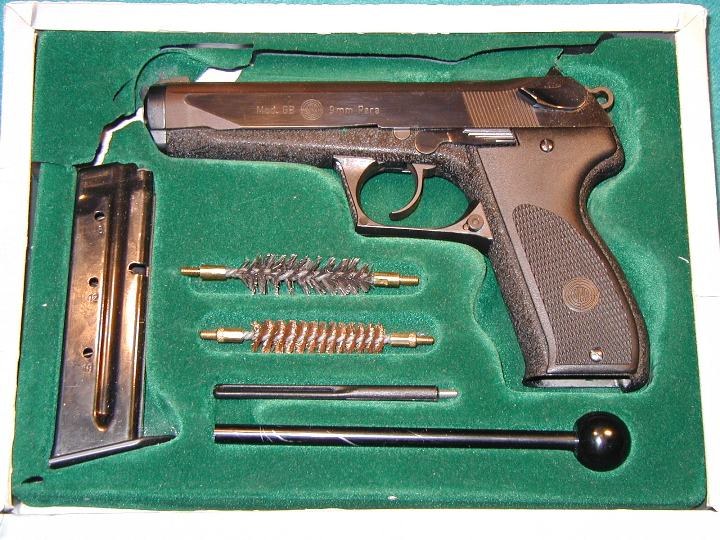
12. Steyr GB: The 18-Round Nine of 1968
- Caliber: 9mm Luger
- Action: Double action, gas-delayed blowback, fixed polygonal barrel, 18-round magazine
- Made: About 15,000 to 20,000, 1981 to 1988
- New or used: Used only
| Category | Rating |
|---|---|
| Innovation | 4/5 |
| Collector Appeal | 4/5 |
| Availability | 3/5 |
Pros
- 18 rounds of 9mm
- Soft recoil from gas brake
- Accurate fixed barrel
Cons
- Big and heavy
- Runs hot in long strings
- Magazines are scarce
Steyr designed the GB in 1968 as the Pi 18, named for its 18-round magazine, when most service pistols held seven or eight and even the Browning Hi-Power held 13. It paired double action with a fixed barrel, polygonal rifling and a gas brake that slowed the slide. GB stands for Gasbremse, gas brake.
It lost the Austrian trials to the Glock 17 and the US trials to the Beretta, and Steyr made the GB only from 1981 to 1988. A crude American copy, the Rogak P-18, hurt its name first. Collectors know the Steyr original is the one to own.
Expect to pay about $1,400. Guns.com had one on consignment at $1,399.99 when I checked. The other European classics are in our classic European pistols guide.
Best For: Collectors of 1980s service pistols and fans of odd, clever actions.
Where Their Ideas Went
Most of these guns faded, but their ideas did not. Here’s what each one did early and where you see the idea today.
| Gun | Year | What it did early | Where the idea went |
|---|---|---|---|
| Spencer | 1860 | A military repeater firing metallic cartridges | The repeating rifles that replaced the musket |
| Colt 1877 Lightning | 1877 | The first successful American double-action cartridge revolver | The double-action police revolvers of the 1900s |
| Mannlicher-Schoenauer | 1900 | The rotary spool magazine | Rotary magazines like the Ruger 10/22’s |
| Remington Model 8 | 1905 | The first successful semi-auto rifle sold to American civilians | Today’s semi-auto hunting rifles |
| Johnson M1941 | 1941 | A multi-lug rotating bolt and a magazine you can top off | A bolt much like the AR-15’s |
| Remington Nylon 66 | 1959 | A nylon stock and receiver | Polymer stocks and frames on most new guns |
| Ruger Model 44 | 1961 | A semi-auto carbine in a handgun magnum | The Ruger 10/22 and today’s pistol-caliber carbines |
| Remington XP-100 | 1963 | A bolt-action pistol built for long range | Handgun varmint hunting and silhouette |
| ArmaLite AR-18 | 1963 | A stamped receiver, short-stroke piston and folding stock | The SA80, Howa Type 89 and G36 |
| Detonics Combat Master | 1976 | The first commercially made subcompact single-action .45 | Every compact carry 1911 |
| Heckler & Koch P7 | 1976 | A squeeze-cocking 9mm with a fixed barrel | Collectors, since nothing replaced it |
| Steyr GB | 1968 | An 18-round double-action 9mm | The high-capacity 9mm service pistol |
The dates are the year each design appeared, so the Steyr GB is listed from 1968, when it was designed, though it wasn’t sold until 1981.
Can You Still Feed a Forgotten Design?
Here’s how many ammo listings each cartridge had across our dealer network on September 28, 2026, and how many dealers carried it. The modern cartridges are easy. The originals are where it gets hard.
| Cartridge | Guns on this list | Ammo listings | Dealers carrying it |
|---|---|---|---|
| 9mm Luger | HK P7, Steyr GB | 1,935 | 20 |
| .223 Remington and 5.56 NATO | ArmaLite AR-180 | 1,541 | 23 |
| .45 ACP | Detonics Combat Master | 932 | 18 |
| .30-06 Springfield | Johnson M1941, later Mannlicher-Schoenauers | 829 | 16 |
| .44 Magnum | Ruger Model 44 | 431 | 12 |
| .22 LR | Remington Nylon 66 | 361 | 18 |
| .35 Remington | Remington Model 8 | 55 | 10 |
| .221 Fireball | Remington XP-100 | 10 | 7 |
| 6.5x54mm Mannlicher-Schoenauer | Mannlicher-Schoenauer | 5 | 4 |
| .38 Long Colt | Colt 1877 Lightning | 1 | 1 |
| .56-50 Spencer | Spencer reproductions | 0 | 0 |
If you want to shoot a Spencer, buy a reproduction in .45 Colt or .44-40, because our dealers had no .56-50 loaded ammo listed. The Colt Lightning is in the same spot, with a single listing of .38 Long Colt.
Discontinued Guns Worth Buying: What to Check
These guns were made in small numbers, and most have been out of production for decades. That changes how you should buy one.
- Check parts and magazines first. Ruger doesn’t support the Model 44 with parts, and AR-180 and Steyr GB magazines are hard to find. Buy spare magazines when you buy the gun.
- Expect one gun per listing. Most of the cards on this page show a single consignment gun, so the price is that gun, not a market average. Compare a few before you pay.
- Look at the action, not just the finish. A Colt Lightning with a broken spring, a P7 with a worn cocking lever or a Johnson with missing small parts can cost more to fix than you saved.
- Check the date. A gun made in or before 1898 is an antique under federal law, and any gun made 50 or more years ago in its original configuration counts as a curio or relic. Collectors call these C&R guns, and a Curio and Relic license from the ATF lets you have them shipped to your door. The Johnson also came as a light machine gun, and any machine gun is an NFA item that has to be a registered, transferable gun made before May 1986.
- Never refinish a collector gun. Original finish and matching numbers hold the value. Our used guns guide covers inspecting a used gun before you buy.
How I Picked These 12 Guns
I picked guns that did something important first, then faded or were overtaken by a simpler design. I kept to forgotten firearms designs that reached production, skipped prototypes you can’t buy, and I checked what our 200+ retailers had for sale on September 28, 2026. Eleven of the 12 had a live listing, and the Remington Model 8 is here because it matters too much to leave out.
The history comes from published histories of each gun, and the photos come from museum collections and collectors who released them for free use. For the rarest guns ever made, see our rarest production guns list, and for where to shop for old guns, our vintage guns guide.
Featured image: a scene built around a photo of a Heckler & Koch P7 PSP by Askild Antonsen, Wikimedia Commons, released under CC BY 2.0.
The Bottom Line
If you want to shoot one of these cheaply, a Nylon 66 at about $300 gets you real design history, and the most underrated buy here is the XP-100, under $800 for the gun that helped create handgun varmint hunting. If you want one that’s still made, the Chiappa Spencer is the only new gun here. For collecting, the HK P7 and the Detonics Combat Master are the pistols to watch, and the Johnson is the rifle. For classics you can shoot every weekend, see our list of classic guns every shooter should own.
Frequently Asked Questions
What are some guns that were ahead of their time?
Guns ahead of their time include the Spencer repeating rifle of 1860, the Colt 1877 Lightning double-action revolver, the Remington Model 8 semi-auto rifle, the Johnson M1941, the Remington Nylon 66, the ArmaLite AR-18, the Detonics Combat Master and the Heckler & Koch P7. Each one proved an idea years before the market was ready for it.
What was the first repeating rifle used by an army?
The Spencer repeating rifle was the first military repeating rifle to fire metallic cartridges. It held seven rounds in a tube in the buttstock, and Union cavalry and mounted infantry were already carrying it when Abraham Lincoln saw it demonstrated in 1863 and ordered it adopted.
What was the first successful semi-automatic rifle sold to civilians?
The Remington Model 8, designed by John Browning and launched in 1905 as the Remington Autoloading Rifle, was the first commercially successful semi-automatic rifle sold to civilians in the United States. Texas Ranger Frank Hamer carried one.
Why did the Army pick the M1 Garand over the Johnson rifle?
The Army had already adopted the Garand and invested heavily in it. The Johnson M1941 held ten rounds and could be topped off, but its moving barrel hurt accuracy, it did not work well with a bayonet, and it had many small parts. The Marines used some in the Pacific.
How does the HK P7 squeeze cocker work?
The Heckler & Koch P7 has a lever along the front of the grip. Squeezing it with about 15.7 pounds cocks the striker, holding it takes about 2 pounds, and letting go decocks the pistol. That makes it safe to carry loaded with no manual safety.
Is the Remington Nylon 66 worth buying?
Yes, if you want a light, reliable .22 with some history. More than a million were made from 1959 to 1989, so they are affordable, and a police trade-in was $299.99 when we checked. Seneca Green and Apache Black models are worth more to collectors.
What was the first subcompact .45 pistol?
The Detonics Combat Master, first made in Seattle in 1976, is called the first commercially made subcompact single-action semi-auto. It had a 3.5-inch barrel, a six-round .45 ACP magazine and a bushingless cone barrel.
What rifles did the ArmaLite AR-18 influence?
The ArmaLite AR-18 of 1963, with its stamped receiver and short-stroke piston, is said to have influenced the British SA80, the Howa Type 89, the FN F2000 and the Heckler & Koch G36. The civilian semi-auto version was the AR-180.
Can you still buy ammo for a Spencer rifle?
Original .56-56 Spencer rimfire ammo is long gone, and our dealers had no .56-50 listings. Chiappa builds its Spencer reproductions in .45 Colt and .44-40 as well, which are easy to buy, so most shooters choose one of those.
Are old guns like these antiques under federal law?
A gun made in or before 1898 is an antique under federal law, so original Spencers and pre-1899 Colt Lightnings are not treated as firearms under federal law. A gun made 50 or more years ago in its original configuration counts as a curio or relic, which covers the Mannlicher-Schoenauer, the Model 8 and the Johnson, and early examples of several others.
5,378+ Gun & Ammo Deals
Updated daily from 200+ top retailers. Filter by category, caliber, action type, and price.
Related Guides