
Disclosure: This post may contain affiliate links. We earn a small commission at no extra cost to you when you buy through our links.
- Treat every gun as loaded
- Point the muzzle in a safe direction
- Keep your finger off the trigger until you’re ready to shoot
- Know your target and what’s beyond
Gun safe or gun cabinet? It sounds like a simple question, but the answer has real implications for security, fire protection, legal compliance, and your wallet. I’ve owned both over the years, and the differences go way beyond price. One keeps your firearms locked up. The other actually protects them.
This guide breaks down exactly what separates a gun safe from a gun cabinet, when each one makes sense, and how to decide which is right for your situation. If you’re on the fence, this should make the decision clear.
What Defines a Gun Safe vs a Gun Cabinet?
A gun safe is a heavy, steel-walled container with a locking mechanism (electronic or mechanical), locking bolts on multiple sides of the door, and typically some form of fire-resistant lining. Quality safes use 10-gauge to 7-gauge steel bodies and weigh hundreds of pounds. They’re designed to resist forced entry, fire, and theft.
A gun cabinet is a lightweight, typically sheet-metal enclosure with a basic lock. Most cabinets use 18-gauge to 20-gauge steel, weigh 50 to 150 pounds, and have a single locking point. They keep honest people out and satisfy the bare minimum for “locked storage.” They are not safes, no matter what the marketing says.
The distinction matters. The industry uses terms like “security cabinet” and “safe cabinet” to blur the lines, but the construction differences are night and day. Understand the difference between an RSC (Residential Security Container) and a true safe before you buy.
Side-by-Side Comparison
| Feature | Gun Safe | Gun Cabinet |
|---|---|---|
| Steel Gauge (body) | 7 to 12 gauge | 18 to 20 gauge |
| Weight | 300 to 1,500+ lbs | 50 to 150 lbs |
| Locking Bolts | 6 to 18+ bolts, multiple sides | 1 to 3 bolts, door side only |
| Lock Type | Electronic keypad or dial combo | Key lock or basic combo |
| Fire Rating | 30 min to 2+ hours | None |
| Fire Lining | Fireboard or composite | None |
| Door Seal | Expandable fire seal (Palusol) | None |
| Pry Resistance | High (recessed door, hard plate) | Low (thin steel, exposed hinges) |
| UL Rating | RSC or TL-rated | Not rated |
| Bolt-Down Holes | Yes (floor and sometimes wall) | Sometimes (floor only) |
| Price Range | $500 to $5,000+ | $100 to $400 |
| Typical Capacity | 10 to 72 guns | 8 to 18 guns |
Security Differences: Steel, Locks, and Bolts
This is where the gap is widest. A quality gun safe uses 10-gauge or thicker steel for the body and 1/4-inch plate steel for the door. That’s serious metal. A determined attacker with hand tools isn’t getting through it quickly. A gun cabinet uses 18 to 20 gauge steel, which is thinner than a car door panel. You can peel it open with a crowbar and a few minutes of effort.
Locking bolts matter too. A good safe has 6 to 18 active locking bolts that engage on three or four sides of the door. Even if you cut the hinges off, the bolts hold the door in place. A cabinet typically has 1 to 3 locking points on one side only. Pop the hinges and the door falls open.
Lock quality follows the same pattern. Safes use UL-listed electronic or mechanical locks with anti-pick, anti-drill, and anti-manipulation features. Cabinets use cheap wafer locks that a YouTube video and a bobby pin can defeat.
Fire Protection: Safes Win, Cabinets Lose
Gun cabinets offer zero fire protection. None. Thin sheet metal conducts heat instantly. In a house fire, the contents of a gun cabinet are destroyed just as fast as if they were sitting in the open.
Gun safes use layers of fireboard or composite material between the steel walls to insulate the interior. A safe rated at 1200°F for 60 minutes will keep the interior below 350°F (the point where paper chars and ammo can cook off) for that duration. It’s not perfect, but it gives the fire department time to arrive.
If fire protection is a priority for you, read our guide on the best fireproof gun safes and understand what fire ratings actually mean. Spoiler: not all fire ratings are tested equally, and some manufacturers exaggerate their claims.
Legal Compliance: When the Law Decides for You
In some states, the law dictates whether a cabinet is sufficient or a safe is required. California’s SB 53 and various local ordinances require firearms to be stored in a “locked container” or with a trigger lock. While a cabinet technically qualifies as a “locked container” under most definitions, some jurisdictions are getting more specific.
If you have children in the home, child access prevention (CAP) laws in many states create liability if a minor accesses an unsecured firearm. A flimsy cabinet that a teenager can pry open with a screwdriver may not protect you legally. A bolted, locked safe with an electronic keypad is a much stronger defense against both criminal charges and civil liability.
Check your state gun laws for specific storage requirements. The rules vary significantly from state to state.
Price: What You Get for Your Money
Gun cabinets are cheap. You can get a basic 10-gun cabinet for $100 to $200. That’s appealing if you’re on a tight budget. But you’re getting exactly what you pay for: thin steel, a junk lock, and zero fire protection.
Gun safes start around $400 to $500 for entry-level models and go up from there. A solid mid-range safe runs $800 to $1,500. Premium safes from brands like Liberty, Fort Knox, and Sturdy Safe push $2,000 to $5,000 and beyond.
Here’s how I think about it: if your firearm collection is worth more than $1,000 (which is basically two handguns), spending $500 to $1,000 on a real safe is just insurance. A $150 cabinet “protecting” a $5,000 collection doesn’t make financial sense. Browse our picks for the best gun safes under $500 and under $1,000 to see what’s available at reasonable price points.
When a Gun Cabinet Is Good Enough
I’m not here to trash gun cabinets entirely. There are situations where they make sense.
You own one or two budget firearms. If your entire collection is a Mossberg Maverick 88 and a Ruger 10/22, a $150 cabinet provides basic locked storage without breaking the bank. The replacement cost of those firearms is less than a quality safe.
You need visible storage for display. Glass-front display cabinets show off a collection while keeping curious hands off. Collectors who want to display antiques or engraved firearms often use display cabinets paired with a separate safe for high-value items.
You need a temporary solution. Just moved into a new place and haven’t bought a safe yet? A cabinet keeps your guns out of unauthorized hands while you save up for proper storage. Better than nothing, but plan to upgrade.
You’re in a very low-crime area and have no children. Solo adult in a rural area with minimal theft risk? A cabinet is a reasonable, honest choice. I won’t judge you for it. Just know the limitations.
When You Absolutely Need a Safe
You have children or teenagers in the home. Full stop, no debate. Kids are curious. Teenagers are resourceful. A gun cabinet will not stop a determined teenager. A quality safe with an electronic lock will. This is a safety issue, not a preference.
Your collection has significant value. Once your firearms are worth more than $2,000 to $3,000, a safe pays for itself in theft protection and insurance premium reductions. Many insurers won’t cover firearms over a certain value without documented secure storage.
You live in an area with property crime. Urban and suburban areas have higher burglary rates. A cabinet is a speed bump. A bolted safe is a wall. If break-ins happen in your neighborhood, invest in a real safe and bolt it down.
State law requires it. Some states and localities mandate specific storage standards. California gun owners should see our California gun safe guide for compliance details.
Display Cabinets: The Collector’s Compromise
Display cabinets with glass fronts occupy a unique niche. They’re designed for showing off, not for security. Quality wood-and-glass display cabinets from manufacturers like American Furniture Classics look beautiful in a den or study and protect firearms from dust and handling.
The security is minimal. Glass breaks. Locks are decorative. But for antique firearms, collector pieces, or guns that are more art than tool, a display cabinet serves a different purpose than a safe. Many serious collectors use both: display cabinets for the showpieces and a heavy safe for everything else.
If you go the display route, consider adding a hidden gun safe somewhere else in the home for your defensive firearms and high-value items. Our hidden gun safe guide covers options that blend into furniture and wall spaces.
The Bottom Line
If you can afford a gun safe, buy a gun safe. The security, fire protection, and peace of mind are worth the extra cost. A cabinet keeps casual hands off your guns. A safe actually protects them from theft, fire, and unauthorized access.
For most gun owners, a mid-range safe in the $600 to $1,200 range provides excellent protection without breaking the bank. Check our best gun safes guide for top picks across all budgets, and see which brands consistently deliver quality.
Shop Gun Safes & Cabinets
Best-scored accessories across 80+ retailers · Updated every 4 hours
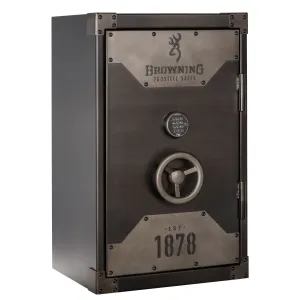
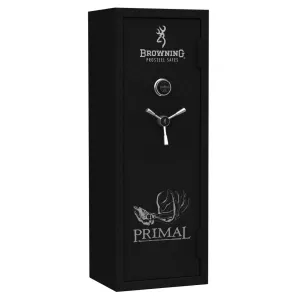
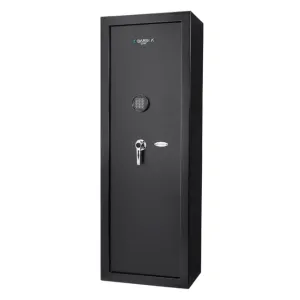
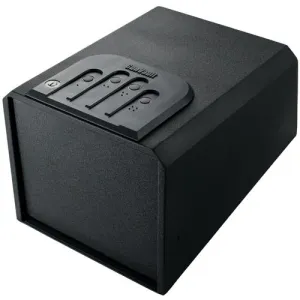
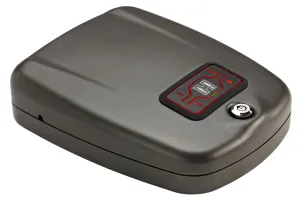
Compare All Gun Safes & Cabinets →
Frequently Asked Questions
Related Guides
🔹 Best Gun Safes for California
🔹 Gun Safe Fire Ratings Explained
Is a gun cabinet considered a safe?
No. Cabinets use thin 18-20 gauge steel with basic locks. Safes use 7-12 gauge steel with multi-point locking and fire-resistant materials. They are fundamentally different products.
Does a gun cabinet satisfy legal storage requirements?
In most states a cabinet qualifies as a locked container. However, some jurisdictions like California and Massachusetts have stricter definitions. Check your local laws.
Can a burglar break into a gun cabinet?
Yes, easily. Most cabinets can be forced open with a crowbar or screwdriver within minutes. The thin steel and single-point locks offer minimal resistance.
Are gun cabinets fireproof?
No. Gun cabinets have zero fire protection. Thin sheet metal conducts heat rapidly. Only safes with rated fire linings provide meaningful fire protection.
How much more does a gun safe cost than a cabinet?
Entry-level cabinets run 100 to 200 dollars. Entry-level safes start around 400 to 500 dollars. The price gap is 3x to 5x, but the protection gap is far larger.
Can I upgrade a gun cabinet to be more secure?
You can add locks and bolt it down, but the thin steel body is the fundamental weakness. No aftermarket upgrade fixes that. Invest in a real safe if security matters.
Do gun safes hold their resale value?
Quality safes from brands like Liberty and Fort Knox sell used for 50 to 70 percent of retail. Gun cabinets have minimal resale value, making safes a better long-term investment.
What is the best option for apartment dwellers?
A compact 10-14 gun safe that you can bolt down or secure with a cable. Even unbolted, a 400-pound safe in a closet is far more secure than a lightweight cabinet.
14,528+ Gun & Ammo Deals
Updated daily from 10+ top retailers. Filter by category, caliber, action type, and price.
Related Guides