

Last updated September 2026 · By Nick Hall, 5,000+ documented draws from both IWB and OWB rigs across the past five years
USA Gun Shop is reader-supported. When you buy through links on our site, we may earn an affiliate commission at no extra cost to you. Full disclosure here.
Quick Answer: IWB (inside the waistband) is the right choice for almost all concealed carry in 2026. It tucks the gun against your body, stays concealed under any standard shirt, and offers the deepest concealment for daily wear. OWB (outside the waistband) is the right choice for duty use, range training, and competitive shooting where concealment is not required.
IWB trade-offs: more belt pressure on your hip, slightly slower draw than OWB, and pant size needs to accommodate the gun and holster (one size up for most people). OWB trade-offs: requires a covering garment longer than the holster: a jacket, an untucked button-up, or a vest. OWB is more comfortable for sitting and driving than IWB.
The biggest mistake new carriers make is buying a $30 nylon hybrid IWB and giving up on concealed carry within a month because it sags, prints, and shifts. Buy a quality kydex or hybrid IWB ($60-$120) from Tenicor, Phlster, Tier 1 Concealed, ANR Design, or Bravo Concealment; the right holster is half of successful daily concealed carry.
Table of Contents
Pick up any concealed carry forum thread and you’ll find people arguing about IWB versus OWB like it’s a religious debate. Both have real advantages. Neither is universally “better.” What matters is how you carry, what you wear, and what you’re actually optimizing for. Let’s break it down.
How we tested: Every pick here is ranked against our testing methodology. Minimum round counts, accuracy and reliability protocols, the failures that disqualify a gun.
IWB vs OWB at a Glance
| Factor | IWB | OWB |
|---|---|---|
| Concealment | Excellent, under an untucked shirt | Needs a jacket or long cover garment |
| All-day comfort | Takes breaking in, waistband pressure | Better, nothing between belt and body |
| Draw speed | Slightly slower, clears the waistband | Faster, cleaner grip access |
| Retention options | Passive, friction and trigger-guard click | Up to Level II and III active retention |
| Belt required | Stiff gun belt, non-negotiable | Stiff gun belt, non-negotiable |
| Pants sizing | Often one size up | No change |
| Works with dress clothes | Yes, with a tuckable model | Rarely |
| Best for | Everyday concealed carry | Range, competition, open carry, cold weather |
One rule sits above both: whatever you carry, the trigger guard must be fully covered and the gun must be secure enough that it cannot shift or fall out, which is the core of every serious carry-safety brief. Retention itself is a graded standard, Level I through Level III, and the general reference on handgun holsters covers how those levels are defined. A holster that leaves the trigger exposed is not a holster, whichever side of the belt it sits on.
The short version: IWB conceals and OWB is comfortable and fast. Most people who carry daily own both, because the honest answer changes with the season and the dress code.
What Is an IWB Holster?
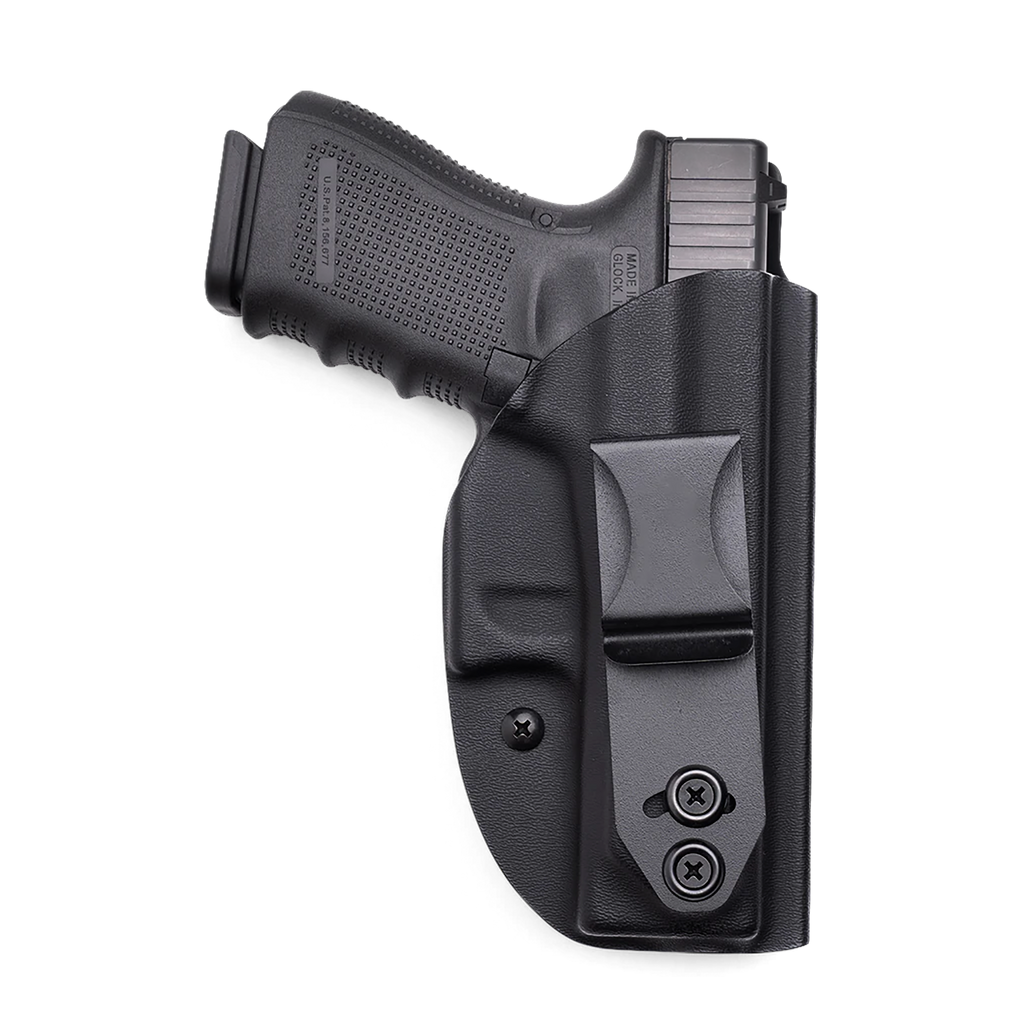
IWB stands for inside the waistband. The holster sits between your pants and your body, with the grip of the gun at or just above your beltline. A clip or set of clips hooks over the waistband to hold everything in place. Most people carry IWB at the 3 o’clock position (strong side hip), 4 o’clock (behind the hip), or 1 o’clock (appendix, in front of the hip).
Because the holster rides inside the pants, the gun tucks close to the body. That’s the whole point. There’s less bulk printing through a shirt, and with the right cover garment you can carry a full-size pistol without anyone knowing. Most people buying a holster for daily concealed carry end up going IWB for exactly that reason.
The tradeoff is real though. You need pants with a waistband that can accommodate both your waist and the gun. Most serious IWB carriers size up one waist size. It also puts hard polymer or leather directly against your skin for hours at a time, which is something you feel immediately.
What Is an OWB Holster?
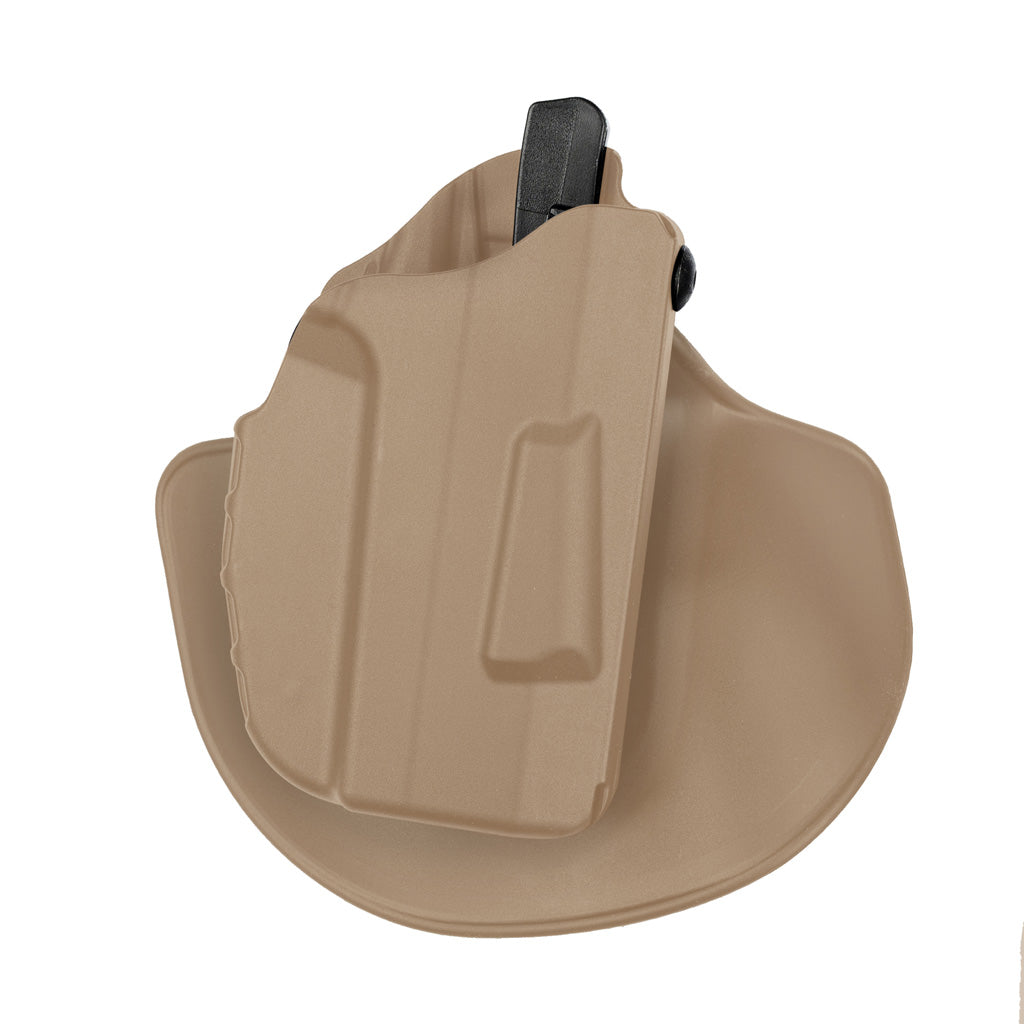
OWB stands for outside the waistband. The holster mounts on the outside of your belt, sitting against your hip. The gun rides on the exterior of your body rather than inside your pants. For open carry, duty carry, range use, or any situation where concealment isn’t the priority, OWB is the standard choice.
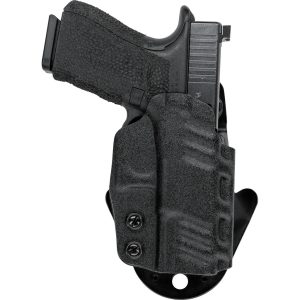
There are two main OWB mounting styles. Pancake holsters use two parallel belt loops that sandwich the holster against the belt, pulling the gun closer to the body. Paddle holsters use a wide plastic paddle that slips inside the waistband to anchor the holster without threading through belt loops. Pancake sits tighter and conceals better. Paddle is faster to put on and take off.
OWB also works for concealed carry in the right circumstances. A jacket, untucked flannel, or heavy cover garment can hide an OWB setup just fine. Law enforcement has done it for decades. But it requires more deliberate clothing choices than IWB.
Concealment: IWB Wins, and It’s Not Close
If your primary goal is deep concealment under normal street clothes, IWB is the clear winner. The gun sits inside the pants, the grip is right at the beltline, and a regular t-shirt or untucked button-down covers it with minimal printing. Appendix IWB in particular is remarkably easy to conceal because the muzzle points straight down rather than pushing the cover garment out at an angle.
OWB adds roughly an inch or more of bulk to your hip profile. On a big guy with the right clothing it might not matter. On most people, wearing a t-shirt, it’s obvious. The gun pushes the shirt out in a way that’s immediately recognizable to anyone who knows what they’re looking at. Doable with the right wardrobe, not ideal.
Weather plays a role too. Summer carry is where IWB really earns its place. A lightweight IWB like the Tenicor Velo under a polo or slim t-shirt disappears in a way no OWB ever will. Colder months close the gap considerably since a jacket covers everything regardless.
Comfort: OWB Wins, Especially All Day
Ask anyone who carries daily and they’ll tell you: IWB comfort is a learned skill. You get used to it. That first week carrying appendix or strong-side IWB, you’ll feel the holster constantly. After a month, you stop noticing most of the time. That’s the honest reality, not a flaw in IWB as a concept, just the nature of carrying something inside your pants all day.
OWB is more comfortable for extended carry. Nothing is pressing against your skin. The gun hangs off the belt, the holster breathes, and you can wear any pants you own without sizing up. For people who sit at a desk most of the day, drive for work, or carry for long shifts, OWB comfort is hard to argue against.
Body shape matters here. Slim or average builds often find IWB appendix comfortable pretty quickly. Bigger waistlines or people who spend a lot of time seated find IWB significantly less comfortable, especially at 3 or 4 o’clock where the gun digs in when you sit. That’s not a deal-breaker, but it’s something to factor in before you commit to a setup.
Draw Speed: OWB Has a Slight Edge
OWB puts the gun in a more natural position for a straight-down draw stroke. Your hand hits the grip cleanly, there’s no waistband interference, and the holster mouth stays open without anything pinching it. Competition shooters use OWB race holsters for a reason: every fraction of a second matters, and OWB removes one variable from the equation.
For defensive carry, the difference is smaller than people think. A well-designed IWB holster with a proper cant and the right ride height draws just as fast in practical use. Appendix IWB is actually faster than strong-side OWB for many people because the draw stroke is shorter and more natural. The speed gap between a good IWB and a good OWB at defensive distances is measured in hundredths of a second. Train with whatever you’re carrying and the “slower” option becomes irrelevant.
Where OWB has a real speed advantage is under stress with a garment. Clearing a tucked shirt or heavy jacket requires more deliberate movement than clearing a t-shirt over an OWB holster. For that specific scenario, OWB is faster. But if you’re carrying concealed under a t-shirt, you’re probably using IWB anyway.
Retention Options
Retention refers to how securely the holster holds the gun and what’s required to draw it. Most carry holsters use passive retention: friction and the holster’s geometry hold the gun in place until you draw deliberately. You can adjust this with a set screw on most Kydex holsters. Too tight and your draw slows down. Too loose and the gun rattles around.
OWB holsters are where active retention (Level II or Level III) lives. Safariland’s ALS system, for example, requires a thumb release before the gun will draw. Law enforcement uses active retention OWB holsters specifically because someone might try to grab their gun. For civilian concealed carry, active retention isn’t required and most people don’t use it. But for duty carry, security work, or open carry in a crowded environment, it’s worth considering.
IWB holsters are almost exclusively passive retention. The waistband itself adds a layer of security since the gun is sitting inside your pants, but there’s no mechanical lock. That’s fine for concealed carry. Just dial in the retention screws and make sure the gun doesn’t shift under movement.
Belt Requirements
A quality gun belt isn’t optional for either style. Your standard dress belt or casual leather belt will eventually cant, sag, and make your whole setup feel miserable. A dedicated concealed carry belt is stiff enough to support the weight of a loaded gun and holster without rolling or deforming.
OWB asks more of the belt, because the holster hangs on the outside. The mechanics are different. A floppy belt with an OWB holster will shift and print more, and the gun will swing around when you move. Stiff leather belts (1.5 inch, 8-10 oz leather) or rigid nylon belts like the Kore Essentials or Ares Aegis work well. You’ll feel the difference immediately the first time you swap from a regular belt to a proper gun belt.
IWB is slightly more forgiving on belt quality, but only slightly. Soft belts still cause problems. If you’re going to carry daily, buy one good belt and stop messing around. It’s probably the most underrated piece of your carry setup. Check our full gun belt guide if you haven’t sorted this out yet.
When OWB Works for Concealed Carry
OWB gets written off as “open carry only” by people who haven’t tried it with the right setup. In colder climates, with a jacket or untucked flannel, OWB is a totally legitimate concealed carry option. The gun is more accessible, more comfortable, and the concealment is perfectly adequate when the cover garment is doing its job.
The key is choosing the right OWB holster for concealment work. A pancake-style holster that rides close to the body, like the Safariland 7378 or a Blackhawk SERPA equivalent, conceals much better than a holster designed to sit wide off the hip. Cant matters too. A FBI cant (roughly 15-20 degrees forward) tucks the grip closer to the body and reduces printing significantly compared to a straight-drop holster.
If you live somewhere with actual winters and wear a jacket nine months out of the year, there’s a real argument for making OWB your primary carry method. You get the comfort and accessibility, and the cover garment handles concealment effortlessly. Summer carry is where the calculus flips back toward IWB.
Competition Shooting vs. Everyday Carry
For competition, OWB wins decisively. IDPA, USPSA, and 3-Gun all allow or require OWB holsters. Speed holsters from companies like Safariland (specifically the ELS and Competition series) drop the gun lower on the hip for a cleaner draw stroke and use a thumb-release retention system optimized for fast presentation. No one shoots competition with a Kydex IWB holster if they’re serious about times.
For everyday carry, the calculation is reversed. You need concealment, comfort over extended wear, and a setup that works under real-world clothing. Competition holsters are completely impractical for concealed carry. They print badly, sit too low, and require a cover garment that defeats the purpose of the low-ride position.
Don’t fall into the trap of using your competition holster for carry or vice versa. Train with your carry setup so the muscle memory is correct when it counts. If you want to read more about positioning, the appendix vs hip carry debate is worth working through too.
Range Use
Range bags and training are where OWB shines for people who primarily carry IWB. Many instructors actually recommend showing up to a class with an OWB holster even if you carry IWB daily, because it’s easier to draw repeatedly, more visible for instructors to observe your technique, and less physically demanding during a long training day. You’re not hiding anything at a training class.
If you carry IWB daily, train with your carry setup at least some of the time so the draw stroke is automatic. But for pure round-count range sessions where you’re doing drills and running targets, an OWB holster is easier to work with for hours. Have both. Use each for what it’s good at.
Tuckable IWB for Dress Clothes
One specific IWB category worth calling out: tuckable holsters. These use a clip design that allows you to tuck your shirt in over the gun, with only a thin metal clip visible on the waistband. From the outside it looks like a belt clip or suspender clip, not a holster. For people who work in office environments or attend formal events, tuckable IWB is how you stay armed without looking armed.
The Vedder LightTuck is probably the most popular example in this category. It’s a clean single-clip Kydex design with adjustable cant and ride height that tucks in completely. The draw is slower since you have to clear the tucked shirt first, but for professional settings that tradeoff is acceptable. You can also check the full holster selection guide for more context on matching holster type to your lifestyle.
Tuckable OWB doesn’t really exist in any practical sense. If you need to tuck your shirt, you need an IWB tuckable. That’s one category where IWB has no competition alternative.
Popular IWB Holster Brands
Tier 1 Concealed makes some of the most refined IWB holsters on the market. Their Axis Elite AIWB holster is purpose-built for appendix carry with a forward-leaning cant, a built-in claw to push the grip into the body, and a full sweat guard. If you carry appendix and want to do it right, Tier 1 is the standard most others get measured against.
Tenicor is another brand that has built a cult following among serious everyday carriers. The Velo and Certum are clean, minimalist Kydex designs with just enough features and nothing extra. No gimmicks. They fit well, retain firmly, and draw cleanly. Tenicor prices run about $70-$90 and they’re worth every dollar.
Vedder Holsters offers a broader lineup at a slightly more accessible price point. The LightTuck is their flagship IWB and it’s legitimately excellent for the money. Vedder is also one of the few brands that covers an enormous number of gun models and ships quickly. If you need a solid everyday IWB without waiting weeks, Vedder is a reliable choice. See our full breakdown at best concealed carry holsters.
Popular OWB Holster Brands
Safariland is the dominant name in duty-grade OWB holsters. Their ALS (Automatic Locking System) retention mechanism is used by law enforcement agencies across the country. The 6360 and 7360 series are the standard for uniformed carry. For civilian concealed carry or range use, the 7378 is a more streamlined option that still uses ALS retention and conceals reasonably well under a jacket.
Blackhawk makes the SERPA, which generates strong opinions. It’s a Level II retention OWB holster that releases with a finger push on a button as you draw. Instructors have mixed feelings about it because the button placement can cause finger-on-trigger issues under stress. For range use and training, it’s fine. For duty carry or defensive use, the debate is legitimate. Know the arguments before you decide.
For competition OWB, Safariland’s competition line (ELS system) is the standard. Ghost and DAA make competitive options as well. But if you’re setting up a competition rig for the first time, Safariland ELS is where most serious competitors start. The modularity alone is worth it since you can swap holsters, mag pouches, and accessories on one platform.
Pancake vs. Paddle OWB
Pancake holsters use two belt slots that thread onto your belt like any other belt-worn accessory. They sit flat against the hip, pull the gun close to the body, and are the better choice for concealment if you’re carrying OWB under a cover garment. The downside is you have to thread them on when you put your belt on, which means taking the belt off to remove the holster. Not ideal if you need to take the gun off frequently.
Paddle holsters clip on and off without removing your belt. The paddle slides inside the waistband and the holster sits outside. They’re faster to put on and take off, which makes them convenient for people who remove their gun at a desk, in a vehicle, or when entering a gun-free zone. The tradeoff is they sit slightly further from the body and are harder to conceal than a well-fitted pancake.
For daily concealed carry under a cover garment: pancake. For open carry, range work, or situations where you’ll be taking the holster on and off regularly: paddle. Both are legitimate options depending on use case.
Which Should You Choose?
For most concealed carry situations, IWB is the right answer. It conceals better under normal clothing, works across all seasons with the right wardrobe adjustments, and once you dial in your setup and get past the break-in period, it’s comfortable for daily carry. Start with a quality holster from Vedder or Tenicor, buy a proper gun belt, and commit to two weeks of wearing it daily before you decide it’s uncomfortable.
OWB makes sense for duty carry, open carry, competition, range training, and cold-weather concealed carry under a jacket. It’s not the compromise choice. For those specific use cases it’s the better tool. Some carriers run OWB full-time in climates where a jacket is a daily reality and never look back.
The real answer is: serious carriers own both. An IWB for summer and everyday street carry, and an OWB for the range, training classes, and covered winter carry. Holsters aren’t that expensive relative to the guns they hold. Get the right tool for each job. Our full concealed carry tips guide covers the rest of the carry setup decisions you’ll face.
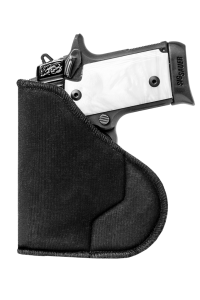
IWB Holsters: Live Prices
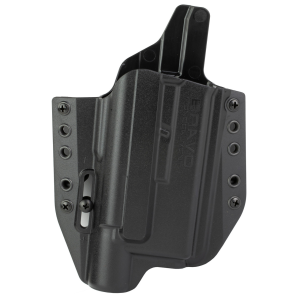
Buy for your exact make and model rather than a universal fit, and budget for a proper gun belt at the same time. A good holster on a floppy belt still sags.
OWB Holsters: Live Prices
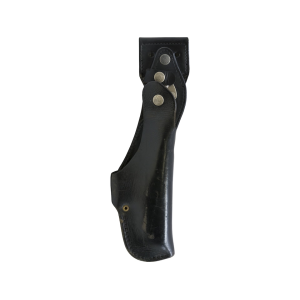
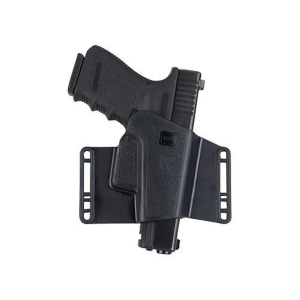
For range and competition use, look at the retention level and whether it takes a paddle or belt loops. For open carry, active retention stops being optional.

FAQ: IWB vs OWB Holster
Is IWB or OWB better for concealed carry?
IWB is better for concealed carry in most situations. The gun sits between your body and pants, making it significantly easier to hide under a t-shirt. OWB requires a jacket or heavy cover garment to conceal.
Is OWB more comfortable than IWB?
Yes. OWB holsters sit outside the waistband and do not press the gun against your body. They are more comfortable for extended wear, range sessions, and open carry. The trade-off is poor concealment without a cover garment.
Do I need a different belt for IWB vs OWB?
Both require a quality gun belt but IWB demands more. The belt must support the gun weight while being tight enough to keep the holster from shifting. A dedicated gun belt from Blue Alpha or Nexbelt is recommended for either.
Can I conceal an OWB holster?
Yes, with a jacket, sport coat, or untucked heavy overshirt. OWB concealment works best in fall and winter. In summer with only a t-shirt, IWB is significantly better for concealment.
What is a tuckable IWB holster?
A tuckable holster allows you to tuck your dress shirt over the gun while the holster clip sits outside the belt. This conceals the gun under a tucked shirt for business or formal settings. The Vedder LightTuck is a popular tuckable option.
Is OWB faster to draw than IWB?
Slightly. OWB holsters have less material between your hand and the gun. The draw stroke is shorter and less likely to snag on clothing. Competition shooters almost universally use OWB for this reason.
What is a pancake holster?
A pancake holster is an OWB design that uses two flat pieces of material stitched together with the gun sandwiched between them. The flat profile pulls the gun tight against the body for better OWB concealment than a paddle holster.
Should beginners start with IWB or OWB?
Start with IWB if concealed carry is the goal. Learning to draw from concealment with an IWB holster from day one builds the right habits. Use OWB for range practice and training where concealment is not required.
Hub: Best Concealed Carry Holsters
Appendix Carry vs Hip Carry: Which Position Is Right for You?
How to Choose a Concealed Carry Holster
Best Gun Belts for Concealed Carry
Concealed Carry Tips and Techniques
4,644+ Gun & Ammo Deals
Updated daily from 200+ top retailers. Filter by category, caliber, action type, and price.