

Last updated March 15th 2026
Some of the links below are affiliate links, meaning at no additional cost to you, we may earn a commission if you click through and make a purchase.
- Treat every gun as loaded
- Point the muzzle in a safe direction
- Keep your finger off the trigger until you’re ready to shoot
- Know your target and what’s beyond
Table of Contents
Also see our head-to-head comparison: Beretta 92FS vs Glock 17.
How we tested: Every pick here is ranked against our testing methodology. Minimum round counts, accuracy and reliability protocols, the failures that disqualify a gun. Where we have not shot a specific variant ourselves, we say so in that section.
Quick Verdict: Sig Sauer vs Glock
I’ll save you 4,000 words if you’re in a hurry. If you want the most reliable, proven, easy-to-maintain handgun with the biggest aftermarket on the planet, buy the Glock. If you want a better trigger, better ergonomics, and the most innovative modular platform in the industry, buy the Sig Sauer.
For most shooters, especially first-time buyers, I lean Glock. The simplicity is hard to beat, parts are everywhere, and they just work. You’ll never regret a G19.
But if you’re an enthusiast who values how a gun feels in the hand and shoots out of the box, Sig is going to impress you. The P365 family changed the CCW market forever, and the P320’s modularity is genuinely revolutionary. This isn’t a blowout either way. It’s two excellent brands that approach handgun design from different philosophies.
Brand Overview: Sig Sauer vs Glock at a Glance
| Sig Sauer | Glock | |
|---|---|---|
| Founded | 1853 (Switzerland) | 1963 (Austria) |
| U.S. HQ | Newington, NH | Smyrna, GA |
| Military Contract | M17/M18 (U.S. Army MHS) | G19M (various agencies) |
| Street Price Range | $500 – $1,400+ | $450 – $750 |
| Flagship Model | P320 / P365 | G19 Gen 6 |
| Best For | Enthusiasts, modularity, military/LE | Reliability, value, first-time buyers |
Both brands have earned their reputation. Glock essentially invented the modern polymer-framed striker-fired pistol. Sig Sauer has over 170 years of gunmaking history and just won the biggest military handgun contract in decades. They’re playing different games, and they’re both winning.
Trigger Quality
Winner: Sig Sauer
This one isn’t even close. Sig wins the trigger comparison across every single model in their lineup. The P320’s flat trigger has a clean break with a short, tactile reset that feels like a gun costing twice the price.
The P365 trigger is crisp and consistent. And if you step up to the Legion series? That’s a factory trigger that rivals some aftermarket upgrades.
Glock triggers are… fine. They’re consistent and predictable, which matters for duty use.
But they’re mushy, the reset is long, and almost everybody who shoots a Glock seriously ends up swapping the trigger. The stock Glock trigger is the handgun equivalent of a base model Camry. It works. Nobody brags about it.
I’ve shot both platforms extensively, and every time I pick up a stock Sig after shooting a stock Glock, the trigger difference is immediately obvious. Sig invests more in their fire control groups from the factory, and it shows.
Ergonomics and Grip
Winner: Sig Sauer
Sig pistols feel better in the hand. Full stop. The grip angle on the P320 and P365 families is more natural for most shooters, pointing more intuitively than the Glock’s aggressive grip angle. Sig’s texturing is more refined, and the beavertail on models like the P320 X-Carry gives you a higher, more locked-in grip.
Glock’s grip angle has been debated since 1982. Some people love it. Most people tolerate it.
The Gen 5 and Gen 6 frames improved texturing, but the grip angle hasn’t changed. If you’ve trained on Glocks for years, it feels natural. If you’re coming from almost any other platform, Sig will feel better immediately.
Slide releases, mag releases, and overall control layout also favor Sig. Their controls are more intuitive and easier to manipulate, especially under stress. Glock keeps things minimal on purpose, but “minimal” sometimes means “harder to use.”
Reliability
Winner: Glock
Glock’s reputation for reliability is legendary, and it’s earned. Torture tests, mud tests, sand tests, frozen-in-a-block-of-ice tests: the Glock just keeps shooting. The design is brilliantly simple with fewer parts than most competitors, and that simplicity translates directly into dependability. There’s a reason police departments worldwide have trusted Glocks for four decades.
Sig Sauer pistols are also reliable. The M17/M18 passed rigorous military testing, and the P226 served Navy SEALs for years. In normal use, you’re unlikely to have issues with either brand.
But let’s talk about the elephant in the room: the P320 drop-fire issue. In 2017, reports surfaced that the original P320 could discharge when dropped at specific angles. Sig issued a voluntary upgrade program, and the issue has been resolved in current production.
Still, it happened, and it dented Sig’s reliability reputation in a way that Glock has never experienced. If absolute, no-questions-asked reliability is your top priority, Glock has the edge here.
Modularity
Winner: Sig Sauer (by a mile)
This is Sig’s biggest trump card. The P320’s Fire Control Unit (FCU) is the serialized component, not the frame. That means you can buy one FCU and swap it between a full-size duty gun, a compact carry gun, and a subcompact, just by changing grip modules and slides.
One serial number, multiple configurations. It’s genuinely brilliant.
Glock has nothing comparable. Each Glock is a distinct serialized frame. Want a compact and a full-size?
You’re buying two guns. Glock’s design philosophy prioritizes simplicity over modularity, and there’s nothing wrong with that. But if you like the idea of building one platform that adapts to different roles, Sig’s FCU system is years ahead of anything else on the market.
The P320’s modularity also means caliber conversions are straightforward. Going from 9mm to .40 S&W or .357 SIG is a slide and barrel swap. Try doing that with a Glock. (Hint: you’re buying another Glock.)
Aftermarket Support
Winner: Glock (overwhelmingly)
Glock aftermarket is the largest in the handgun world. Period. Triggers, slides, barrels, sights, holsters, magazine extensions, frames, stippling services: if you can imagine it, somebody makes it for a Glock.
The sheer volume of third-party support is staggering. You can build a custom Glock from a pile of aftermarket parts without using a single OEM component.
Sig’s aftermarket has grown substantially, especially for the P320 and P365. Companies like Wilson Combat, Gray Guns, and Armory Craft make excellent Sig upgrades. But the selection still doesn’t compare to what’s available for Glock. Not even close.
If you’re the type who likes to tinker, customize, and build, Glock is your platform. The ecosystem is mature, competitive, and the prices reflect that competition. A quality Glock trigger upgrade costs $50-$150. Comparable Sig parts often run more, with fewer options to choose from.
Price and Value
Winner: Glock
Across comparable models, Glock runs $100-$200 cheaper. A G19 Gen 6 streets around $550-$600. A P320 Compact runs $600-$700.
A G43X goes for $450-$500. The P365X typically starts around $550-$600. That gap adds up, especially if you’re buying your first handgun on a budget.
Glocks also hold their value well on the secondary market, and you can find used Gen 3 and Gen 5 models for bargain prices. Police trade-in Glocks are some of the best deals in the used handgun market.
Sig counters with better out-of-box features. Many Sig models ship with optics-ready slides, night sights, and better triggers as standard. So while the sticker price is higher, you might spend less on upgrades. But dollar for dollar, if you’re price-sensitive, Glock wins the value equation.
Concealed Carry: P365 vs G43X/G48
Brand-level winner: Sig (slim margin). Sig hit harder in micro-compact carry. The P365 in 2018 reset the category and the P365XL turned 12+1 into a flush-fit answer to the Glock 43X.
Glock did not give up the territory. The G43X with Shield Arms S15 mags lifts capacity to 15+1 in a footprint a P365XL owner can’t match without an extended mag. The G48 adds slide length for sight radius without bulking up. Both Glocks ship with the brand’s usual no-frills factory triggers, which is the catch.
For the deep model-by-model breakdown I run two dedicated head-to-heads on this matchup. Glock 43X vs Sig P365: Hands-on Head-to-Head covers the standard P365. Glock 43X vs Sig P365 XL: Everyday Carry Shootout handles the longer XL.
Read either of those if you’re choosing between specific guns. The brand-level take: Sig wins on factory feature set, Glock wins on aftermarket and capacity ceiling.
Duty and Home Defense: P320/P226 vs G17/G19/G45
Brand-level winner: too close to call. Glock’s G17 is the duty pistol everyone else is measured against. The G19 is the best-selling handgun in America. The G45 (G17 grip + G19 slide) has become an LE favorite.
That’s a deep bench.
Sig’s answer is the P320, which beat the Glock platform for the U.S. Army’s Modular Handgun System contract and now serves as the M17 / M18. The P320 X-Carry and X-Full ship with flat triggers, optics cuts, and grip texturing Glock charges aftermarket money for. The P226 hammer-fired classic is still the standard against which DA/SA service pistols get judged.
The closest direct head-to-head in this bracket is the G19 against the P320 Compact, and I cover that fight in detail in Glock 19 Gen 6 vs Sig P320 Compact, including the P320 uncommanded discharge concern, the Gen 6 ORS optics cut, and the price reversal. For brand-level duty buyers: Glock wins on parts ecosystem and proven reliability record, Sig wins on out-of-box features and Army-contract pedigree. This category is close to a draw on the brand level.
Innovation
Winner: Sig Sauer
Sig has been on an absolute tear over the past decade. The P320’s FCU system was a paradigm shift. The P365 redefined micro-compacts and forced every manufacturer (including Glock) to respond.
Sig won the MHS contract over Glock. They developed the MCX Spear, which became the Army’s XM7 rifle. The Cross bolt-action brought their innovation to the hunting market.
Glock innovates at a glacial pace. The Gen 5 took years to arrive and brought changes that competitors had offered for a decade (front serrations, flared mag well, ambidextrous slide stop). The Gen 6 finally added an optics-ready MOS system as standard on some models, which Sig had been doing for years. Glock’s philosophy is evolution, not revolution.
That conservatism isn’t necessarily bad. Glock’s resistance to change is part of why they’re so reliable and consistent. But if you’re evaluating which brand is pushing the industry forward, Sig is lapping the field right now.
Customer Service
Winner: Draw
Neither brand is going to win awards for customer service. Glock’s warranty support is decent but slow. If you need warranty work, expect to ship your gun and wait 4-6 weeks. They’ll fix it, but they won’t rush.
Sig’s customer service has improved significantly over the past few years, but they still have mixed reviews online. The P320 voluntary upgrade program was handled reasonably well, but some owners reported long wait times. Both companies offer limited lifetime warranties to the original purchaser.
If customer service is a major factor in your decision, I wouldn’t let it tip the scales either way. Both are adequate. Neither is exceptional. This is a wash.
The Verdict: Sig Sauer vs Glock
| Category | Winner |
|---|---|
| Trigger Quality | Sig Sauer |
| Ergonomics | Sig Sauer |
| Reliability | Glock |
| Modularity | Sig Sauer |
| Aftermarket | Glock |
| Price & Value | Glock |
| Concealed Carry | Sig Sauer (slight) |
| Duty / Home Defense | Draw |
| Innovation | Sig Sauer |
| Customer Service | Draw |
Sig wins more categories, but Glock wins the ones that matter most to the average buyer: reliability, price, and aftermarket. That’s why I still recommend Glock as the default choice for most people. It’s the safer bet in every sense of the word.
Buy a Glock If…
- You’re buying your first handgun and want something foolproof
- Reliability is your absolute top priority
- You want the biggest aftermarket and customization ecosystem
- You’re on a budget and want the best value per dollar
- You want proven police and military track record spanning 40+ years
- You plan to customize extensively with aftermarket parts
Buy a Sig Sauer If…
- You value a great trigger and ergonomics out of the box
- Modularity appeals to you (one FCU, multiple configurations)
- You want the most innovative platform on the market
- You’re an enthusiast who appreciates fit, finish, and feel
- You want a micro-compact CCW with class-leading capacity (P365 family)
- You’re willing to spend a bit more for premium features from the factory
Best Sig Sauer Picks
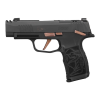
Sig Sauer P365XL
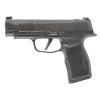
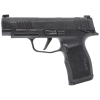
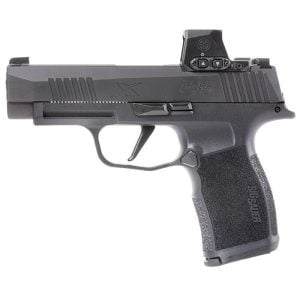
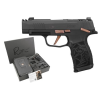
P365XL is the best concealed carry pistol on the market right now. It gives you 12+1 capacity in a package that’s barely bigger than guns holding 6-7 rounds. The flat trigger is excellent, the optics-ready slide accepts a Romeo Zero or Holosun 507K, and it shoots like a much bigger gun. If I could only own one carry gun, this would be it.

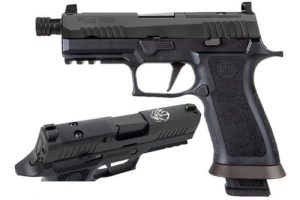
Sig Sauer P320 X-Carry
P320 X-Carry splits the difference between compact and full-size, making it perfect for duty use, home defense, or competition. The flat trigger is one of the best in the striker-fired world. The optics-ready slide, aggressive grip module, and 17+1 capacity make it a complete package. This is the gun that won the military contract (in M18 form), and it’s just as impressive in civilian trim.
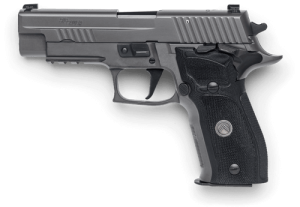
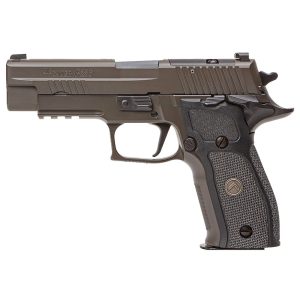
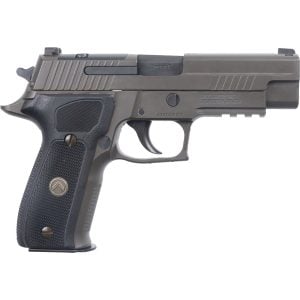
Sig Sauer P226 Legion
The P226 Legion is Sig’s finest full-size pistol. It’s a hammer-fired DA/SA gun with a match-grade trigger that will spoil you for anything else. The Legion treatment includes an X-Ray3 day/night sight system, custom G10 grips, and the smoothest action you’ll find on a production pistol. It’s not cheap (expect to pay $1,200-$1,400), but if you want the best Sig makes, this is it.


Best Glock Picks
Glock 19 Gen 6
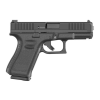
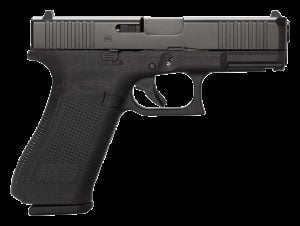
G19 is the best-selling handgun in America, and the Gen 6 is the best version yet. It’s the Goldilocks gun: not too big, not too small, 15+1 capacity, and it fits virtually every holster ever made for a G19. If you can only own one handgun, the G19 Gen 6 is the rational choice. It does everything well and nothing poorly.
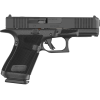
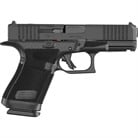
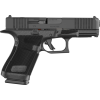
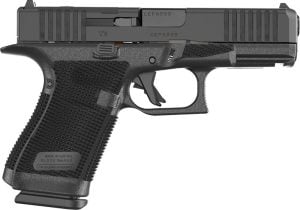
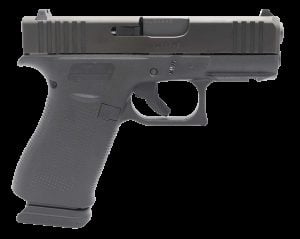
Glock 43X
G43X is Glock’s answer to the micro-compact revolution, and it’s a great one. The slim frame conceals easily, the 10+1 capacity is solid, and it shoots softer than you’d expect from a gun this size. Drop in a set of Shield Arms S15 magazines and you’re looking at 15+1 in a true slim-line package. That’s a real significant upgrade for concealed carry.
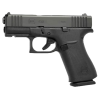
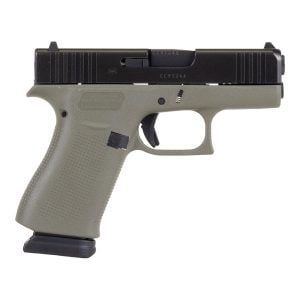
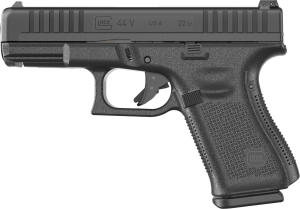
Glock 45
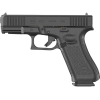
G45 is a crossover that’s become a law enforcement favorite. It pairs the full-size G17 grip with the compact G19 slide, giving you a full grip for better control while keeping the barrel length manageable for concealment. It’s an outstanding duty gun, a solid home defense option, and one of the most versatile Glocks in the lineup. The Gen 5 improvements (ambidextrous controls, no finger grooves, flared mag well) make it a pleasure to run.

Where to Buy
Both Sig Sauer and Glock pistols are widely available from reputable online retailers. Here are some of our top picks for finding the best prices:
- EuroOptic – Excellent selection of Sig Sauer pistols, especially Legion and optics-ready models
- Brownells – Great for both brands, plus the best aftermarket parts selection for Glock
- Palmetto State Armory – Consistently competitive pricing on both Sig and Glock models
FAQ: Sig Sauer vs Glock
Related Guides
- Top 10 Sig Sauer Pistols
- Best Glock Pistols
- Sig P320 vs Glock 19
- Glock 43X vs Sig P365: Hands-On Head to Head
Looking for the best prices? Check our gun deals page and price comparison tool to compare prices from 200+ retailers before you buy.
Sig vs Glock Questions Beyond Brand Loyalty
Does the SIG P320 trigger genuinely feel different from a Glock trigger?
Yes, in measurable ways. The P320 trigger has a shorter take-up and a slightly heavier wall before the break, while the Glock trigger has a longer take-up and a lighter wall. Carriers who train consistently on either platform develop the muscle memory specific to that trigger. The cross-platform transition takes 200 to 400 rounds of dedicated practice. Neither trigger is objectively better; the choice depends on which feel the shooter trains to consistently.
What does the P320 modular fire control unit actually unlock?
The fire control unit is the serialized component of the P320 platform, allowing the shooter to swap grip modules, slide lengths, and barrel configurations on the same registered firearm. A single P320 fire control unit can run as a full-size duty pistol, a compact carry pistol, and a subcompact backup pistol with module swaps. The Glock platform does not offer equivalent modularity within a single registered firearm.
Did the P320 drop-safety controversy actually affect current production?
Sig Sauer implemented the Voluntary Upgrade Program addressing the drop-safety issue in 2017, and current-production P320s ship with the updated trigger, sear, and disconnector geometry. The issue with the original release configuration is documented and was addressed; current-production guns are widely considered to have resolved the underlying concern. Carriers buying used pre-upgrade P320s should verify the upgrade status with Sig before relying on the gun.
Which platform has longer-term parts availability for civilian buyers?
Glock has a longer civilian parts-availability track record because the platform has been in continuous production with minimal frame changes since 1982. The P320 is younger and has gone through more design iterations. Both manufacturers maintain factory parts support, but the aftermarket parts ecosystem for Glock is larger and more competitive on price. For a buyer who anticipates extensive modification, Glock has the broader ecosystem.
Frequently Asked Questions
Sig Sauer or Glock, which brand is better in 2026?
It depends on what you value. Sig wins on factory trigger feel, ergonomics, and out-of-box features (optics cuts, night sights, flat triggers as standard). Glock wins on aftermarket depth, parts ecosystem, magazine availability, and ~$100-$200 cheaper street prices model-for-model. Both are reliable. The 2026 short version: Sig if you want the best gun out of the box; Glock if you want a platform you can build on cheaply for years.
Which has the better factory trigger, Sig or Glock?
Sig, by a clear margin. The P320's flat trigger has a clean break with a short tactile reset that feels like a gun costing twice as much. The P365 trigger improved that further. Stock Glock triggers are mushy with a long reset and almost every serious Glock shooter ends up swapping in an aftermarket connector or full trigger upgrade. Glock's upgrades are cheap, but the Sig wins out of the box.
Which has better ergonomics, Sig Sauer or Glock?
Sig generally wins on grip angle (closer to the natural 1911 angle that most shooters find intuitive). Glock's 22-degree grip angle has been controversial since 1982 and the Gen 5/Gen 6 frames improved texturing without changing the angle. If you trained on Glocks you may not care, but most shooters point a Sig more naturally at a target.
Which is cheaper, Sig Sauer or Glock?
Glock, by $100-$200 across comparable models in 2026. A Glock 19 Gen 6 streets at around $550-$600. A Sig P320 Compact runs $600-$700. A Glock 43X goes for $450-$500 vs a P365X starting around $550-$600. Sig partly offsets that with better factory features (optics cuts, night sights, flat triggers) that you would otherwise pay aftermarket money for on a Glock.
Can I use the same holster for both Sig and Glock?
No. Sigs and Glocks have different frame profiles, trigger guards, and rail dimensions, so they need brand-specific holsters. Within Glock you can sometimes share holsters across compatible models (G19 holsters often fit a G23 and G32). Within Sig the P320 Fire Control Unit lets one FCU run multiple grip modules but each grip size still needs its own holster. Buy the holster for the specific gun.
Which is better for concealed carry, Sig P365 or Glock 43X?
Sig P365 / P365XL has a slight edge for pure concealment (smaller footprint, better factory trigger, 12+1 flush-fit on the XL). Glock G43X with Shield Arms S15 magazines lifts capacity to 15+1 in a comparable size, which is the strongest Glock argument. We have full head-to-heads on both matchups (P365 vs 43X and P365 XL vs 43X), see the linked posts in the Concealed Carry section above.
Which has better aftermarket support, Sig or Glock?
Glock, by a wide margin. The Glock aftermarket is the largest in handguns, with custom triggers, slides, barrels, sights, holsters, magazine extensions, frames, and stippling services from hundreds of vendors. Sig's aftermarket has grown around the P320 and P365 specifically (XGrip, Wilson Combat grip modules, custom slides) but it's a fraction of Glock's depth. If you want to build on a platform over years, Glock wins.
Sig or Glock for a first-time buyer?
For a brand-new shooter who wants a single duty-or-carry gun and doesn't plan to modify it, Sig P320 Compact or P365XL gives you the best out-of-box experience: trigger, ergonomics, sights, optics-ready slide. For a shooter who wants the cheapest reliable gun, plans to take training classes, and might upgrade trigger/sights later, a Glock 19 Gen 6 is the obvious pick. Both are sound first-gun choices.
6,216+ Gun & Ammo Deals
Updated daily from 200+ top retailers. Filter by category, caliber, action type, and price.
Related Guides