

Last updated June 13th 2026
Some of the links below are affiliate links, meaning at no additional cost to you, we may earn a commission if you click through and make a purchase.
- Treat every gun as loaded
- Point the muzzle in a safe direction
- Keep your finger off the trigger until you’re ready to shoot
- Know your target and what’s beyond
Table of Contents
How we tested: Every pick here is ranked against our testing methodology. Minimum round counts, accuracy and reliability protocols, the failures that disqualify a gun.
Quick Verdict: Beretta 92FS vs Glock 17
These two icons represent opposite philosophies of the service pistol. Choose the Beretta 92FS if you love a smooth all-metal DA/SA pistol with a soft-shooting feel, a hammer and a classic manual of arms, and you do not mind the weight and the long first trigger pull. Choose the Glock 17 if you want a lighter, simpler, higher-maintenance-tolerant striker pistol with one consistent trigger, a deeper aftermarket and a lower price. The Beretta wins on shooting feel, smoothness and classic appeal, while the Glock wins on simplicity, weight, ecosystem and value.
Specs Comparison: Beretta 92FS vs Glock 17
| Metric | Beretta 92FS | Glock 17 |
|---|---|---|
| Action | DA/SA, hammer-fired | Striker-fired (Safe Action) |
| Frame | Aluminum alloy | Polymer |
| Caliber | 9mm | 9mm |
| Capacity | 15+1 (18-rd available) | 17+1 |
| Weight (loaded) | ~40 oz | ~32 oz |
| Safety | Slide-mounted safety/decocker | No external safety (trigger safety) |
| Military service | U.S. M9 (1985 to 2017) | Police and military worldwide |
| Typical price | $600 to $750 | $500 to $650 |
Pros
- Smooth, soft-shooting all-metal feel
- Excellent single-action trigger after the first shot
- Open-slide design aids reliable ejection
- Proven U.S. military M9 pedigree
- Classic looks and a manual decocker safety
Cons
- Heavy all-metal weight
- Long, heavy double-action first trigger pull
- Bulky grip for smaller hands
- Smaller aftermarket than Glock
- Costs more than a Glock 17
Pros
- Light polymer frame
- One consistent striker trigger every shot
- 17+1 capacity
- Runs reliably with minimal maintenance
- The deepest aftermarket of any pistol
- Affordable and easy to find
Cons
- Trigger feel and grip angle are not for everyone
- Less refined, less classic shooting experience
- No external manual safety, which some shooters want
- All-metal smoothness of the Beretta is missing
Two Service Pistol Philosophies
This is a clash of eras and design philosophies as much as two guns. The Beretta 92FS is a hammer-fired, double-action/single-action pistol with an aluminum-alloy frame, a slide-mounted safety and decocker, and a smooth all-metal feel that defined service pistols of the 1980s. It represents the refined, traditional approach to a fighting handgun.
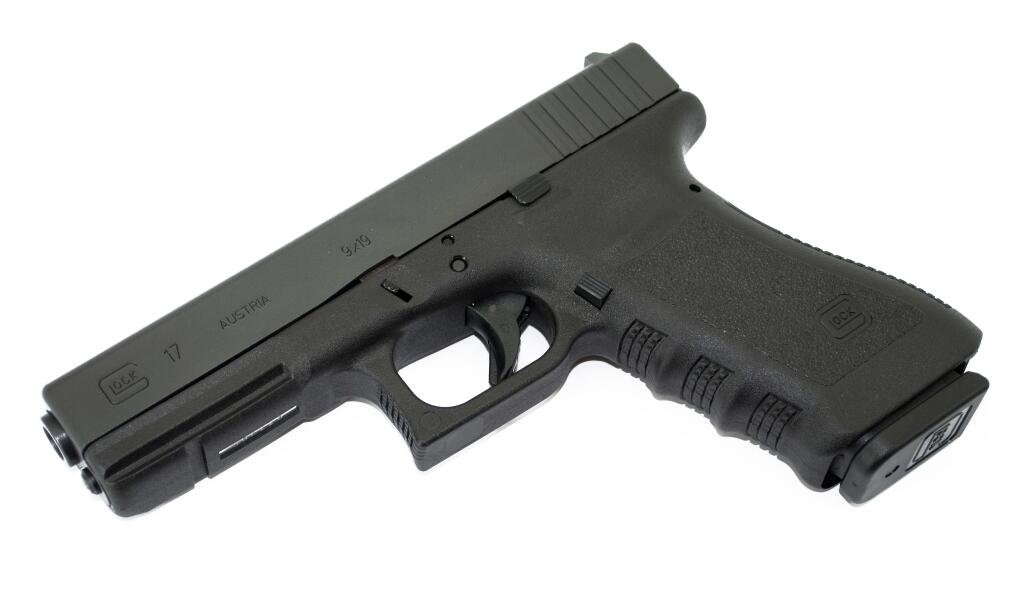
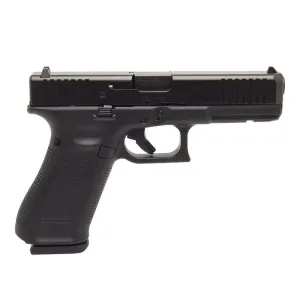
The Glock 17 is a striker-fired, polymer-framed pistol with no external safety and one consistent trigger pull for every shot, built around reliability, simplicity and low cost. It represents the modern approach that came to dominate. Both were adopted for serious service use, so this is not old versus obsolete but two valid, proven answers to the same question, each with devoted followers and clear trade-offs.
History and Pedigree
The Beretta 92FS rose to fame when the U.S. military adopted it as the M9 in 1985, replacing the 1911 and serving as the standard sidearm until the Sig P320 M17 took over around 2017. For over three decades the 92 was the American service pistol, carried in every conflict of that era, and it built a reputation for reliability and a smooth shooting feel that endures today.
The Glock 17 arrived earlier, in 1982, and conquered a different market: American law enforcement. Within a decade most U.S. police departments had adopted Glocks, drawn by the light weight, high capacity, reliability and low cost, and the Glock 17 became one of the best-selling handguns in the world. So the Beretta owns the military-icon story while the Glock owns the police-domination story, and both are deeply proven.
The Trigger: DA/SA vs Striker
The biggest practical difference is the trigger system. The Beretta 92FS is double-action/single-action: the first shot has a long, heavy double-action pull, and every shot after that is a short, light, crisp single-action press. That single-action trigger is excellent, but the transition from a long first pull to short follow-ups is a skill that takes practice to master, and it is the defining trait of the 92.
The Glock 17 uses one consistent striker trigger for every shot, with the same moderate pull weight and travel each time, which is simpler to learn and run under stress. There is no long first pull to manage. Many shooters prefer the Glock’s consistency, while others love the 92’s superb single-action trigger once they are past the first shot. Which is better is a genuine preference, not a clear win.
Safety and Manual of Arms
The 92FS has a slide-mounted safety that also functions as a decocker, letting you safely lower the hammer on a loaded chamber, and it can be carried with the safety on or off depending on training. This gives shooters who want an external safety and a decocker a traditional, deliberate manual of arms, which some find reassuring.
The Glock 17 has no external manual safety, relying on its trigger-based Safe Action system, so the manual of arms is simply draw and fire, which is fast and simple under stress and is part of why police favored it. The downside is it demands strict trigger-finger and holster discipline. Neither approach is unsafe when trained properly; the 92 suits those who want a manual safety and decocker, the Glock suits those who want fewer steps.
Ergonomics and Grip
The Beretta 92FS has a relatively wide grip and a longer reach to the double-action trigger, which can be a challenge for shooters with smaller hands, though many find the grip comfortable and the gun points naturally. Its all-metal construction gives it a solid, planted feel that fans love, and the open-top slide is a distinctive signature.
The Glock 17’s grip is slimmer and its striker trigger reach is shorter and consistent, making it easier for a wider range of hand sizes, and the Gen 5 and Gen 6 add interchangeable backstraps to fine-tune the fit. The Glock’s grip angle is distinctive and not for everyone. Grip feel is personal, but the Glock generally accommodates small hands better, while the Beretta rewards those who fit its larger grip.
The Open-Slide Design
The Beretta 92’s open-top slide is one of its most recognizable features, exposing much of the barrel and aiding positive ejection of spent cases, which contributes to the platform’s strong reliability reputation. The design is part of why the 92 ran so well in military service across harsh conditions, and it gives the gun its unmistakable look.
The Glock 17 uses a conventional fully enclosed slide, which is also extremely reliable in its own way and simpler in profile. Neither design is better for the average shooter in practice, since both eject reliably, but the open slide is a genuine engineering signature of the Beretta that fans appreciate, and it sets the gun apart visually and mechanically from the Glock.
Capacity
Capacity is close and favors the Glock slightly in standard form. The Glock 17 holds 17+1 rounds of 9mm in its flush magazine, while the 92FS holds 15+1 standard, with 18-round magazines available to close or exceed the gap. Both accept larger magazines for more capacity, so neither is short on rounds.
For most purposes the two-round difference is minor, and with extended magazines the Beretta matches or beats the Glock. Both are full-size, high-capacity 9mm service pistols, which is exactly what they were designed to be. Capacity is therefore not a major deciding factor between them, with the Glock holding a small standard-magazine edge that disappears with aftermarket mags.
Weight and Size
This is a clear difference. The all-metal Beretta 92FS is heavy, around 40 ounces loaded, which gives it a solid, planted feel and helps soak up recoil but adds noticeable weight on the belt and in the hand over a long day. The heft is a feature on the range and a consideration for carry.
The polymer Glock 17 is much lighter, around 32 ounces loaded, making it more comfortable to carry and easier to handle for many people. Both are full-size pistols of similar footprint, so the size is comparable, but the weight difference is significant. For all-day carry the lighter Glock has the advantage, while the Beretta’s weight pays off in shooting smoothness.
Recoil and Shootability
The Beretta 92FS is famously soft-shooting. Its heavy all-metal frame and low bore axis soak up recoil, giving a smooth, controllable feel that many shooters consider among the most pleasant of any full-size 9mm. Once past the double-action first shot, the single-action trigger and steady weight make for very accurate, comfortable shooting.
The Glock 17 is also easy to shoot, with mild 9mm recoil and a consistent trigger, and its lighter weight makes it livelier in the hand, which some prefer and others find slightly snappier than the planted Beretta. Both are controllable for fast strings. The Beretta’s weight gives it a smoothness edge, while the Glock’s consistent trigger and light weight make it quick and intuitive, so the better shooter depends on what you value.
Accuracy
Both are accurate full-size service pistols, plenty capable for any practical purpose, and a good shooter will print tight groups with either. The Beretta’s excellent single-action trigger and steadying weight can make deliberate accuracy come easily once you are past the first double-action shot, which is why the 92 has a strong accuracy reputation.
The Glock 17 is also very accurate and its consistent trigger helps fast, repeatable hits, with any mechanical difference between the two being small at typical distances. As always, shooter skill matters more than the gun. Both deliver the accuracy needed for defense, duty or the range, with the Beretta offering a smoothness that flatters careful shooting and the Glock offering consistency.
Reliability
Both have legendary reliability records, which is why each was adopted for hard service use. The Beretta 92FS proved itself across decades of military service in harsh conditions, and the open-slide design contributes to its dependable ejection, earning a strong reputation among those who carried the M9.
The Glock 17 is famous for running dirty, wet and neglected with minimal maintenance, the trait that won over police departments worldwide, and it tolerates abuse and high round counts with little fuss. Both are guns you can trust your life to, and neither has a meaningful reliability disadvantage. The Glock asks for slightly less maintenance, while the Beretta’s track record across global military use speaks for itself.
Aftermarket and Holsters
The Glock 17 wins this decisively, as Glocks do. It has the deepest aftermarket of any handgun, with holsters, sights, triggers, barrels, slides, magazines and parts available everywhere at every price, much of it plug-and-play. If you want endless, affordable customization and holster choices, the Glock ecosystem is unmatched.
The Beretta 92 has a solid aftermarket given its long history, with quality sights, grips, triggers and parts available, plus a strong custom scene from makers like Wilson Combat, but it is far smaller and pricier than the Glock’s. You can accessorize a 92 well, just with fewer and costlier options. For breadth and value of accessories, the Glock 17 is the clear winner here.
Optics and Modern Features
Red dots are now common, and the Glock 17 has embraced them with MOS optics-ready models and the new Gen 6 Optic Ready System, plus front slide serrations and accessory rails, making it natively modern straight from the box. For a current optics-equipped setup, the Glock is the easier and better-supported choice.
The classic 92FS is a traditional iron-sight pistol, though Beretta offers modern optics-ready variants like the 92X RDO for those who want a dot, and rails appear on newer models. So the Beretta can be brought up to modern standards, but the platform’s heart is the classic design, while the Glock 17 was built to evolve with current accessories. The Glock leads on out-of-the-box modern features.
Concealed Carry
Both are full-size pistols better suited to duty, home defense and open or belt carry than deep concealment, but people do carry them. The lighter Glock 17 is easier to carry concealed for most, since the all-metal Beretta’s weight drags on a belt over a long day, and the Glock’s slimmer grip helps too.
The Beretta 92FS can be concealed with a good belt and holster but is heavier and bulkier, making it more of a duty and range gun than a daily concealment piece. For those set on carrying a full-size pistol, the Glock is the more practical daily choice, while the Beretta is better suited to the nightstand, the range or open carry where its weight and size are not a burden.
Price and Value
The Glock 17 is generally more affordable, and that lower price buys a complete, reliable, duty-grade pistol that needs no upgrades to trust, plus excellent resale and easy availability. As a value proposition, especially for a first or only full-size 9mm, the Glock 17 is hard to beat and is the budget-friendlier of the two.
The Beretta 92FS costs more, reflecting its all-metal construction and refined feel, and quality magazines and accessories add up. It holds value well and offers a shooting experience the Glock cannot match, so the premium buys character and smoothness rather than raw practicality. For pure dollars-in value the Glock wins, while the Beretta justifies its price with craftsmanship and feel.
Variants and Family
Both come in useful families. The Beretta 92 line includes the classic 92FS, the upgraded 92X with modern grips and sights, the M9A3 and M9A4 with rails and threaded barrels and optics readiness, and compact versions, so you can find a more modern or more traditional 92 to taste. The platform has evolved while keeping its DA/SA heart.
The Glock 17 sits in the broad Glock family, sharing magazines and parts with the compact Glock 19 and subcompact Glock 26, and is available in Gen 5 and the latest Gen 6 plus MOS optics-ready versions. That family commonality lets you build a matched set of Glocks on shared magazines, a practical advantage. Both lineups offer room to choose your exact configuration.
Common Myths
Myth: the Beretta 92 is outdated. It is a different philosophy, not obsolete, and remains a superb, reliable shooter with modern variants available. Myth: the Glock has no refinement. Its refinement is reliability and simplicity, a different kind of excellence. Myth: DA/SA is too hard to shoot. The first-pull transition takes practice but is very manageable. Myth: you must pick the modern one. Buy the action and feel you prefer; both are proven service pistols.
Maintenance and Field Stripping
Both strip without tools and are simple to maintain, but the procedures differ in character. The Glock 17 famously requires a trigger press to disassemble, demanding strict clearing discipline, and its few parts make cleaning quick and foolproof, which is part of its low-maintenance appeal. It tolerates neglect and high round counts with little fuss.
The Beretta 92FS has a few more parts and a slightly more involved takedown using its disassembly latch, and the all-metal design benefits from regular cleaning and lubrication to stay smooth, though it is by no means fussy. Both are easy to live with, and armorer support is good for each given their long service histories. The Glock asks slightly less of you, while the Beretta rewards routine care with that smooth feel.
Training and Mastering the Trigger
The biggest skill difference comes from the trigger systems. The Glock 17’s one consistent pull is quick to learn, so a new shooter reaches competence faster with fewer variables to manage under stress, which is a genuine advantage for simplicity. Practice is straightforward because every shot feels the same.
The Beretta 92FS asks you to master the transition from the long double-action first shot to the short single-action follow-ups, a skill that takes dedicated dry-fire and range time but becomes second nature with practice. Many shooters enjoy that mastery and the reward of the excellent single-action trigger. Neither is hard with commitment, but the Glock is the easier gun to pick up, while the Beretta rewards the shooter willing to put in the reps.
Resale and Collectibility
Both hold their value well, but in different ways. The Glock 17 is so common and in such steady demand that it is easy to buy, sell or trade at predictable prices, making it a low-risk, liquid purchase, though it is a tool rather than a collectible and rarely appreciates beyond normal use.
The Beretta 92FS holds value strongly on the strength of its quality and its M9 legacy, and certain military-marked or special-edition 92 variants carry genuine collector interest that a standard Glock does not. For pure liquidity the Glock is easier to move, but for a pistol with heritage and potential collectibility, the Beretta offers something the Glock cannot, which appeals to buyers who value history as well as function.
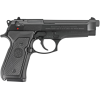
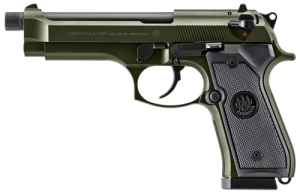
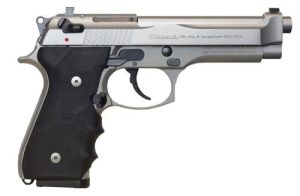
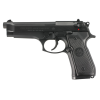
Beretta 92FS Live Prices


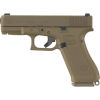
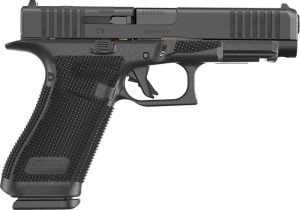
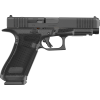
Glock 17 Live Prices
Which Should You Buy?
Buy the Beretta 92FS if you love a smooth all-metal DA/SA pistol with a superb single-action trigger, a hammer and decocker, and the classic M9 feel, and you do not mind the weight and the long first pull. Buy the Glock 17 if you want a lighter, simpler striker pistol with one consistent trigger, higher capacity, the deepest aftermarket and a lower price. The honest take: the Beretta is the more refined and pleasant gun to shoot, while the Glock is the lighter, simpler, more practical and better-value tool, and both are proven service pistols.
How I Compared These
This comparison is based on hands-on experience with both pistols, their long service records, their published specifications, and the practical realities of carrying, shooting and maintaining each. I weighed the trigger systems, weight, ergonomics, reliability, price and aftermarket against how these guns actually perform for duty, home defense and the range, and I checked live pricing across the retailers we track. The aim is an honest, use-case-based recommendation rather than nostalgia, because both are genuinely excellent and the right pick depends on which philosophy suits you.
Related: See where it ranks in our best Beretta pistols countdown.
Bottom Line
The Beretta 92FS and Glock 17 are two of the most proven service pistols ever made, representing opposite but equally valid philosophies. The Beretta wins on smoothness, its superb single-action trigger, all-metal feel and classic M9 character. The Glock 17 wins on light weight, a simple consistent trigger, higher capacity, the deepest aftermarket and lower price. Decide whether you want the refined hammer-fired experience or the simple, light, modern striker tool, and the right pistol between these two legends is clear.
Frequently Asked Questions
Is the Beretta 92FS or Glock 17 better?
They represent different philosophies. The Beretta 92FS is a smooth all-metal DA/SA pistol with a superb single-action trigger and classic M9 feel, but it is heavy with a long first trigger pull. The Glock 17 is lighter, simpler, holds 17+1, has one consistent trigger, the deepest aftermarket and a lower price. Both are proven; the right pick depends on what you value.
Why is the Beretta 92 so heavy compared to the Glock 17?
The 92FS uses an aluminum-alloy frame and all-metal construction, weighing around 40 ounces loaded versus about 32 for the polymer-framed Glock 17. That weight adds belt fatigue but also soaks up recoil, giving the Beretta its famously smooth, soft-shooting feel.
What is the difference between DA/SA and the Glock trigger?
The Beretta 92FS is double-action/single-action: the first shot has a long, heavy pull and every shot after is a short, light single-action press, which takes practice to master. The Glock 17 uses one consistent striker pull for every shot, which is simpler to learn. It is a genuine preference rather than a clear winner.
Does the Glock 17 hold more rounds than the Beretta 92FS?
Slightly. The Glock 17 holds 17+1 standard while the 92FS holds 15+1, though 18-round Beretta magazines are available to close the gap. Both accept larger magazines, so capacity is not a major deciding factor between them.
Which is better for concealed carry, the 92FS or Glock 17?
Both are full-size pistols better suited to duty and home defense, but the lighter Glock 17 is easier to carry concealed for most people, since the all-metal Beretta is heavier and bulkier on the belt. For a daily concealed full-size 9mm, the Glock is the more practical choice.
3,979+ Gun & Ammo Deals
Updated daily from 200+ top retailers. Filter by category, caliber, action type, and price.
Related Guides