

Affiliate disclosure: This Steyr AUG A3 M1 review contains affiliate links. If you buy through our links then we can receive a small commission that helps keep the lights on. You don’t pay anything more.
- Treat every gun as loaded
- Point the muzzle in a safe direction
- Keep your finger off the trigger until you’re ready to shoot
- Know your target and what’s beyond
Table of Contents
| Bullpup | OAL | Barrel | Weight | Trigger | Mag | Street price |
|---|---|---|---|---|---|---|
| Steyr AUG A3 M1 | 28.15″ | 16″ | 7.8 lb | ~9 lb (Ratworx fix) | Waffle OR STANAG (NATO SKU) | $1,800-$2,100 |
| IWI Tavor X95 | 26.125″ | 16.5″ | 7.9 lb | ~5-6 lb stock | STANAG | $1,700-$2,000 |
| Springfield Hellion | 28.25″ | 16″ | 8.4 lb | ~5-6 lb stock | STANAG | $1,600-$1,900 |
| Kel-Tec RDB | 27.6″ | 17.4″ | 7.0 lb | ~5 lb stock | STANAG | $850-$1,000 |
| Daniel Defense DDM4 V7 (16″) | 32.75″ | 16″ | 6.55 lb | ~4-5 lb stock | STANAG | $1,800-$2,100 |
How we tested: Every pick here is ranked against our testing methodology. Minimum round counts, accuracy and reliability protocols, the failures that disqualify a gun.
Review: Steyr AUG A3 M1 – Die Hard’s Favorite Bullpup, 40 Years Later
Our Rating: 8.0/10
- RRP: $2,050 (extended rail) / $2,599 (integrated 3x optic)
- Street Price: $1,750-$2,100 (Check our live pricing for the best current deal)
- Caliber: 5.56x45mm NATO / .223 Remington
- Action: Short-Stroke Gas Piston, Semi-Auto
- Barrel Length: 16″, Cold Hammer Forged, Mannox/nitride-treated
- Overall Length: 28.15″
- Weight (unloaded): 7.8 lbs
- Capacity: 30+1 (standard), 42-round extended available
- Receiver: Aluminum (upper), Polymer (lower housing)
- Stock: Integrated Polymer Housing
- Sights: None (Picatinny rail), optional 1.5x or 3x integrated optic
- Optics: Full-length Picatinny Rail (extended rail version)
- Safety: Cross-bolt, Bilateral
- Rifling: 6 Grooves, 1:9 RH Twist
- Magazine: Two SKUs: standard A3 M1 takes proprietary Steyr Waffle mags only; A3 M1 NATO (separate variant) takes STANAG / AR-15-compatible mags
- Made in: USA (Bessemer, Alabama) / Originally designed in Austria
Pros
- 16″ barrel in a 28.15″ overall package, 4.6 inches shorter than a 16″ AR
- Short-stroke gas piston ran 500 rounds of mixed ammo with zero malfunctions
- Quick-change barrel pulls in under 5 seconds with no tools
Cons
- Stock trigger is heavy and mushy (~9 lb pull), Ratworx sear is the mandatory fix
- Charging handle is poorly designed and slow under stress
- $1,800+ puts it in DDM4 territory with a worse trigger and slimmer aftermarket
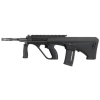
Quick Take
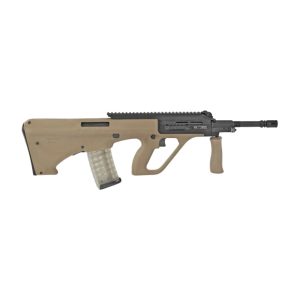
Every generation of shooters has that one gun they saw in a movie and immediately needed to own. For guys my age, the Steyr AUG was that gun. It showed up in Die Hard, Commando, and basically every action movie from the late ’80s looking like it was beamed in from the future.
The thing is, it actually was ahead of its time. The AUG entered Austrian military service in 1977 as the Sturmgewehr 77, and the fundamental design hasn’t changed much because it didn’t need to.
The A3 M1 is the modern civilian version built in Alabama, and after running 500 rounds through it, I can tell you that the legend is mostly deserved. The gas piston system is absurdly reliable.
The 28″ overall length with a full 16″ barrel is a genuine tactical advantage in tight spaces. And the thing just feels different from every other rifle on the rack. Whether that “different” is good or bad depends entirely on what you’re coming from.
If your muscle memory is built on AR-15s, the AUG is going to fight you for the first 200 rounds. The trigger, the charging handle, the mag release, the manual of arms… nothing is where you expect it.
But push through that learning curve and you’ll find a rifle that does things no AR can do in the same footprint. Twenty-eight inches. That’s shorter than most AR pistols with a brace. And you get a full-length barrel doing it.
Best For: Shooters who want a compact home defense rifle with maximum barrel length in minimum overall length, military collectors, and anyone ready to commit to learning a different manual of arms for genuine tactical advantages in confined spaces.
Why Steyr Built the AUG This Way
AUG was born from a very specific military requirement in the mid-1970s. Austria wanted a universal weapon system that could fill multiple roles by simply swapping barrel lengths and configurations.
One receiver, multiple missions. That’s the “Armee Universal Gewehr” concept, and it was radical for its time. While everyone else was iterating on traditional rifle designs, Steyr went full science fiction.
Bullpup layout wasn’t chosen because it looked cool on movie posters. It was chosen because it solves a real problem. Military operations in vehicles, buildings, and urban environments need short weapons.
But short barrels mean reduced velocity, range, and terminal performance. The bullpup puts the action behind the trigger, giving you a full 16″ barrel in a package shorter than most carbines with 10″ barrels. That’s not a gimmick. That’s physics working in your favor.
Gas piston system was another forward-thinking choice. While the AR-15 world was still running direct impingement and dealing with carbon fouling in the bolt carrier group, the AUG was running a clean, short-stroke piston that kept the action remarkably clean even after extended firing.
Dozens of militaries adopted it. The Australian Army runs it as the F88 Austeyr. The Irish, Saudi, and New Zealand armed forces all field variants. That kind of adoption doesn’t happen by accident.
The A3 M1 is the latest civilian evolution. Steyr Arms established US manufacturing in Bessemer, Alabama beginning in 2014, expanded the facility in 2017, added the extended Picatinny rail for modern optics, and now ships the A3 M1 NATO as a separate variant with a STANAG-compatible lower that takes standard AR-15 mags.
They kept everything that works and updated the interface. The bones are still the same rifle that’s been proving itself in combat zones since before most of us were born. Steyr also now offers the AUG A3 M2 (new for 2024) and the AUG MP88 9mm bullpup alongside the M1, but the A3 M1 remains the volume seller and the default recommendation for a 5.56 bullpup.
What Other Owners Are Saying
AUG community is passionate in a way that AR-15 owners don’t quite understand. Once you’re in the AUG cult, you’re in for life. Here’s what they’re saying.
“I was initially afraid the 9 lb trigger pull would be too much. It’s actually super smooth with a nice clean break. Is it an AR trigger? No. But it’s way better than the internet makes it sound.”
“The charging handle is genuinely awful until you learn to grab it from underneath instead of the side. Once that clicks, it’s fine. Takes about 200 rounds of practice.”
“I run the NATO version with Magpul PMAGs and it’s been 100% reliable through about 2,000 rounds. Never had a single malfunction. Not one.”
“It’s a 28 inch rifle with a 16 inch barrel. I can clear my entire house with this thing and never once feel like the barrel is hanging up on doorframes. That’s the whole point.”
“Got mine for $1,800 on a holiday sale. That’s a lot of money. But I also own several ARs that cost more and do less in tight spaces. No regrets.”
“The Ratworx trigger sear upgrade is mandatory. Takes the pull from 9 lbs to about 5 lbs and transforms the shooting experience. Should have done it day one.”
Competitor Comparison
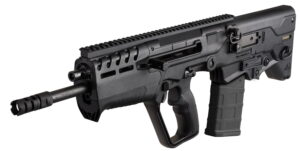
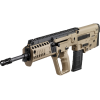
IWI Tavor X95 $1,700-$2,000
X95 is the AUG’s most direct competitor and, honestly, the more practical choice for most people. The trigger is noticeably better out of the box. The controls are more intuitive, especially if you’re coming from an AR background. So why would you buy the AUG instead? Two reasons. The gas piston system in the AUG is arguably more refined and certainly more field-proven. And the quick-change barrel system gives you flexibility the Tavor can’t match.

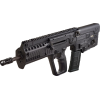
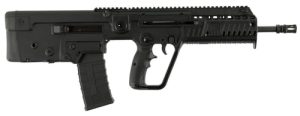
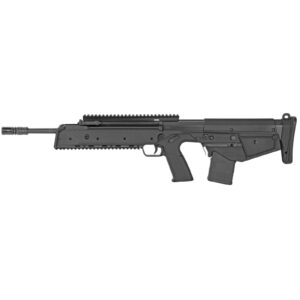
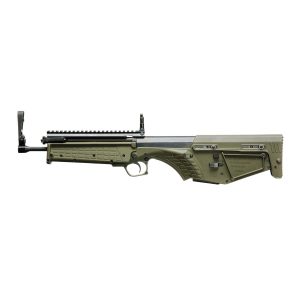
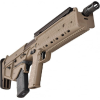
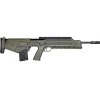
Kel-Tec RDB $850-$1,000
Budget bullpup. The RDB is less than half the price of the AUG, takes AR mags, ejects downward so lefties love it, and is actually lighter. The trigger is decent. The accuracy is acceptable. For pure value in the bullpup space, nothing touches it. But the RDB and the AUG are not the same class of weapon. The Kel-Tec feels like a $900 gun. Kel-Tec’s quality control reputation is “inconsistent.” The AUG will run from day one, every time, for decades. That consistency has a price.
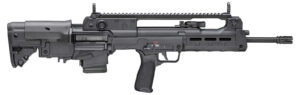
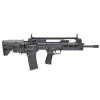
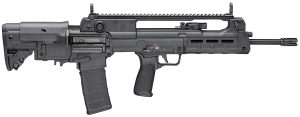
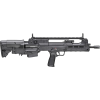
Springfield Hellion $1,600-$1,900
The Hellion is a rebranded VHS-2, Croatia’s standard military bullpup. The ergonomics are arguably the best of any production bullpup, the trigger is solid, and fit and finish impressed me. Reciprocating charging handle on either side, feature and training consideration. Where the AUG wins is proven longevity and aftermarket. The Hellion is still relatively new to the US market, long-term reliability data isn’t there yet. If I were buying my first bullpup today, the Hellion would get a hard look.
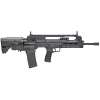

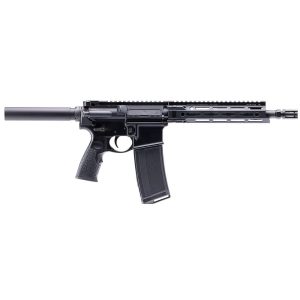
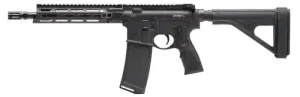
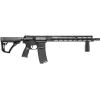
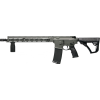
Daniel Defense DDM4 V7 $1,800-$2,100
For the same money as an AUG you could buy one of the best AR-15s on the market. The DDM4 V7 has a vastly superior trigger, a mountain of aftermarket options, a manual of arms every shooter already knows, and it weighs less. Better rifle in almost every measurable category except overall length. V7 with a 16″ barrel is 32.75″ overall. The AUG is 28.15″. That 4.6 inches matters when you’re maneuvering through a hallway at 3 AM. If compact size is your priority and SBR/brace isn’t an option, the AUG makes a compelling case.
FN FS2000 (Discontinued, $2,500-$4,000 used)
I’m including this for the collectors. The FS2000 is discontinued and commands absurd prices on the secondary market. It’s a cool piece of engineering with its forward ejection system, but it’s not a practical purchase in 2026.
If you find one under $3,000, buy it as an investment. If you want a bullpup you’ll actually shoot and train with, buy the AUG.
Features and Quirks

That Trigger, Though
Let’s address the elephant in the room. The AUG trigger has a long pull, a mushy break, and a reset you could drive a bus through. Stock trigger pull weight runs around 8-9 pounds depending on who’s measuring. It’s the worst single aspect of this rifle and the primary reason the accuracy score isn’t higher.
Here’s the thing, though. It’s not as bad as the internet says. I’ve shot mil-spec AR triggers that felt worse.
The AUG trigger is long and heavy, yes, but it’s consistent. Once you learn the break point, you can shoot it predictably.
And the Ratworx sear upgrade drops the pull to around 5 pounds with a much crisper break for about $60. That’s the first upgrade I’d buy. Not a red dot, not a light. Fix the trigger first.
Here’s a fun bit of history: the original AUG design had a two-stage trigger where a half-pull was semi-auto and a full pull went full-auto. The civilian A3 M1 obviously doesn’t do that, but the trigger mechanism still carries some of that design DNA, which partially explains why it feels the way it does.
The Gas Piston System: Beautifully Overengineered
Short-stroke gas piston in the AUG is one of the cleanest-running systems in the rifle world. After 500 rounds without cleaning, the bolt carrier group looked like it had been through maybe 100 rounds in a DI gun.
The carbon stays forward, near the gas block, and the action stays remarkably clean. There’s also an adjustable gas regulator for tuning to different ammo weights or running suppressed. Twist it with a cartridge rim. Simple, effective, zero tools required.
This matters for reliability in adverse conditions. Sand, mud, dust, whatever. The AUG has been tested in environments that would choke a DI rifle, and it keeps running.
The Austrian military didn’t adopt this thing because it looked neat. They adopted it because it works when conditions are terrible.
Quick-Change Barrel: The Hidden Superpower
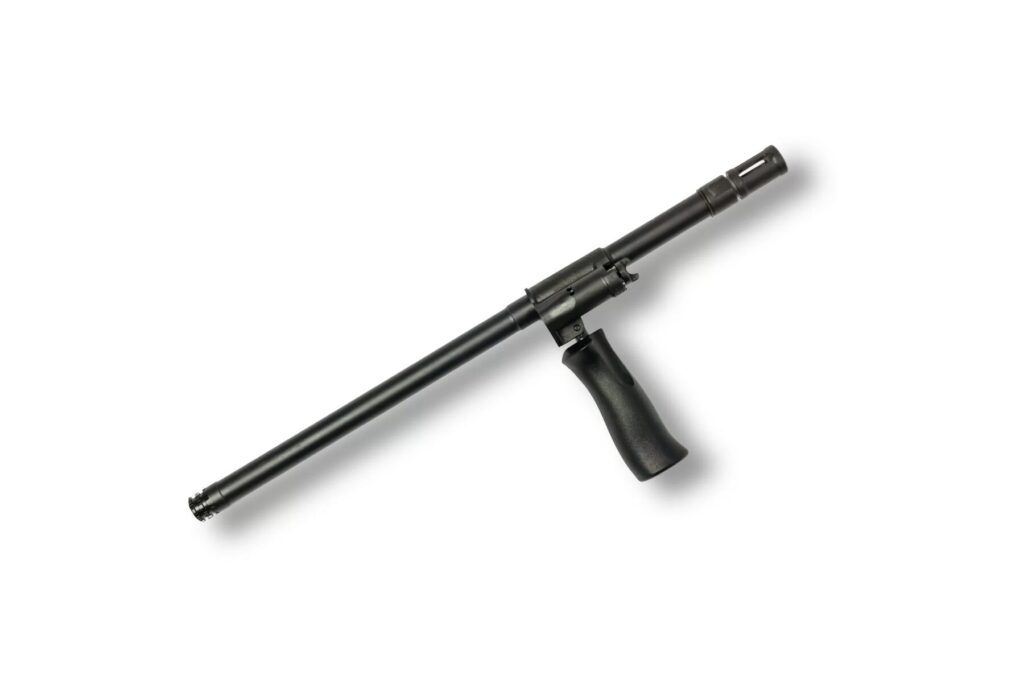
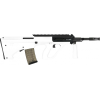
Push one button. Rotate the barrel. Pull it out. That’s it.
The entire barrel assembly comes out of the rifle in about three seconds.
This was designed for military logistics, so a squad could carry barrels of different lengths and swap them in the field. For civilians, it means deep cleaning is effortless and you can potentially have barrels in different configurations.
Steyr sells the 20″ barrel assembly for longer-range work and the 16″ is the standard. There are also aftermarket options from Corvus Defensio and others. Barrel swaps in a traditional AR require tools, a vise, and some mechanical aptitude. On the AUG, my 10-year-old can do it.
The Charging Handle Situation
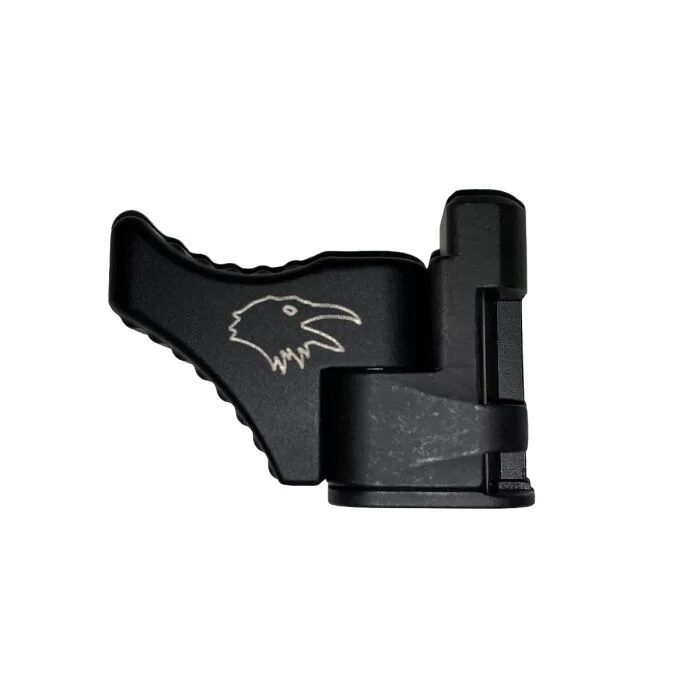
I’m not going to sugarcoat this. The factory charging handle is bad. It’s a small, spring-loaded nub on the left side of the receiver that requires you to pull back, then rotate slightly to lock it open.
It’s counterintuitive, it’s awkward under stress, and it can smack your knuckles against your optic if you’re not careful. Every AUG owner I’ve talked to has the same complaint.
Good news: Manticore Arms makes an extended charging handle that dramatically improves the experience. It’s about $50 and takes five minutes to install.
Consider it a mandatory accessory, right alongside the Ratworx trigger sear. Steyr, if you’re reading this, please redesign this thing. It’s the one component that feels like it hasn’t been updated since 1978. Because it hasn’t.
NATO vs. Proprietary Magazines
The AUG A3 M1 comes in two magazine configurations. The standard version uses Steyr’s proprietary “waffle” magazines, which are excellent in quality but expensive and hard to find. The NATO version accepts standard AR-15/STANAG magazines, which means your existing pile of PMAGs works perfectly.
Buy the NATO version. I’m not even going to pretend the proprietary mag version makes sense for most people. AR mags are $12 apiece, available everywhere, and you probably already own a dozen.
The Steyr waffle mags are $40+ each when you can find them. Unless you’re a purist who wants the “authentic” AUG experience, NATO is the way.
At the Range: 500 Round Test Protocol
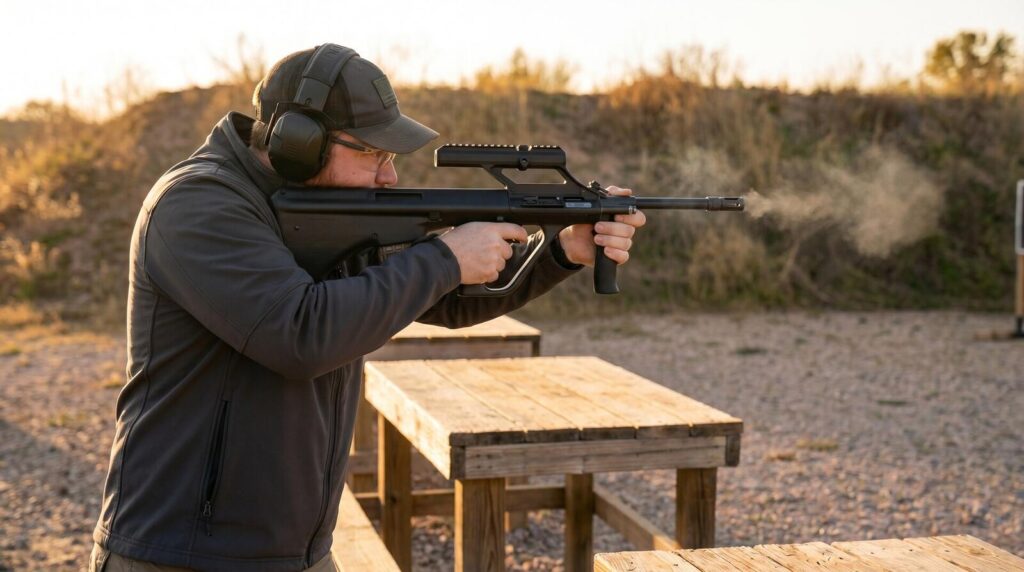
Break-In Period (Rounds 1-100)
First impressions picking up the AUG are always the same. It’s compact. Noticeably more compact than any 16″ barreled rifle you’ve held. The balance point is right above the magazine well, which means it sits naturally in your hands without being front-heavy.
That rear weight bias takes getting used to, but once you do, the gun feels like an extension of your arms rather than something you’re holding out in front of you.
I started with 50 rounds of Federal M193 55gr FMJ. The gas system needed no adjustment. Recoil impulse was mild and pushed straight back rather than flipping the muzzle up.
The trigger was… the trigger. Heavy, long, but workable. By round 50, I was getting used to the break point. By round 100, I’d stopped thinking about it.
Charging handle gave me trouble twice in the first magazine when I tried to lock it back using AR muscle memory. Learned to grab from underneath by magazine three. Operator error, not a gun problem. But still annoying.
Reliability Testing (Rounds 100-400)
For the reliability portion, I ran a mix of everything I could find.
Cheap steel-case Tulammo that my AR hates. PMC Bronze. Wolf Gold. Hornady Frontier.
And some old reloads from a buddy that I wouldn’t trust in anything less than a piston gun. The AUG ate all of it without complaint. Not a single malfunction in 300 rounds of deliberately mixed, questionable ammunition.
I tested with three different magazine brands in the NATO version: Magpul PMAG Gen 3, OKAY Industries USGI, and Lancer L5AWM. All fed and locked back on empty without issues. The Lancers had a slightly tighter fit inserting and required a firmer slap to seat, but functioned flawlessly once in place.
No cleaning during this stretch. When I finally pulled the bolt carrier group at round 400, it was remarkably clean. The gas piston system really does keep the action cleaner than any DI gun I’ve tested.
Carbon was concentrated near the gas port on the barrel, not distributed throughout the receiver. This is a rifle you could take to a week-long carbine class and clean it once at the end.
Accuracy Testing (Rounds 400-500)
Benched at 100 yards with an Aimpoint Comp M5 mounted on the extended rail. Here’s what I got:
- Federal Gold Medal 77gr SMK: 50 rounds, 1.8 MOA average at 100 yards
- Hornady Frontier 55gr FMJ: 50 rounds, 2.4 MOA average at 100 yards
- PMC Bronze 55gr FMJ: 50 rounds, 2.8 MOA average at 100 yards
- Federal M193 55gr FMJ: 30 rounds, 2.5 MOA average at 100 yards
- Wolf Gold 55gr FMJ: 20 rounds, 3.1 MOA average at 100 yards
These numbers are respectable for a bullpup but not exceptional. The 1:9 twist rate clearly prefers heavier bullets, with the 77gr Gold Medal turning in the tightest groups by a comfortable margin. The trigger is the limiting factor here, not the barrel.
Every time I concentrated on a slow, deliberate squeeze, groups tightened. Every time I pulled normally, they opened up. A Ratworx sear would almost certainly improve these numbers by half a MOA across the board.
Performance Testing Results

Reliability: 9/10
Five hundred rounds of mixed ammunition, including steel case and old reloads. Zero malfunctions. Zero. The gas piston system handled everything from light 55gr loads to heavy 77gr match ammunition without any gas adjustments.
This is the kind of reliability that builds a forty-year military career. You can trust this rifle with your life. Soldiers in dozens of countries already do.
Accuracy: 8/10
1.8 MOA best group with 77gr match ammo shows what the barrel is capable of. The 2.5-3.0 MOA average with ball ammo is typical for a bullpup and entirely adequate for the rifle’s intended role. This isn’t a precision rifle.
It’s a fighting rifle. And at fighting distances, which is inside 200 yards for most civilian scenarios, the accuracy is more than sufficient. The trigger upgrade would meaningfully improve these numbers.
Ergonomics and Recoil: 7/10
Compact dimensions are the AUG’s strongest ergonomic selling point, and the balance is surprisingly good for a bullpup. Recoil is mild and linear. But the controls dock this score significantly. The charging handle is poor.
The magazine release on the NATO version is behind the magazine, which means your support hand has to come off the handguard to drop a mag. The safety is workable but not intuitive for AR shooters. You adapt, but you shouldn’t have to adapt this much in 2026.
Fit, Finish, and QC: 8/10
The metal components are well-finished. The cold hammer forged barrel is excellent. The rail machining is clean and holds zero.
Where the AUG loses points is in the polymer housing. It’s thick and durable, but you can see mold lines and the texture isn’t as refined as what you’d find on a Tavor or Hellion.
It’s not bad. It’s just not $2,000-rifle refined. The barrel lockup is tight, the piston is beautifully machined, and the bolt carrier is beefy.
The bones are right. The skin could use some polish.
Known Issues and Common Problems
The Trigger (Fixable)
Already covered this extensively, but it bears repeating: the stock trigger is the AUG’s biggest weakness. It’s functional but underwhelming for a rifle at this price point. The Ratworx trigger sear upgrade is roughly $60 and dramatically improves the experience.
Some owners also report that the trigger smooths out considerably after 500-1,000 rounds as parts wear in. Mine was slightly better at round 500 than round 1, but the difference wasn’t dramatic enough to skip the aftermarket sear.
Ejection Port Brass Erosion
Over time, ejected brass chips away at the polymer stock directly behind the ejection port. This is cosmetic, not functional, but it’s annoying on a $2,000 rifle. Corvus Defensio makes a brass deflector that solves this, but it’s pricey and sometimes hard to source.
It’s not going to affect reliability or accuracy. But if you’re the type who wants your guns to look pristine, be aware that the ejection port area will show wear faster than the rest of the rifle.
Left-Hand Shooting Considerations
AUG can be converted to left-side ejection with a bolt swap and ejection port cover change. Steyr sells the left-hand bolt. The conversion takes about two minutes.
What Steyr doesn’t solve elegantly is the charging handle, which remains on the left side regardless of ejection direction. Left-handed shooters will need to reach over the top or learn to use the handle with their firing hand. It works, but it’s not slick.
Gas Adjustment with Suppressor
If you run a suppressor, you’ll want to adjust the gas regulator to the “adverse” setting to prevent overgassing. Some owners report increased bolt velocity and accelerated wear on the bolt carrier if they don’t make this adjustment. The regulator is easy to turn with a cartridge rim, but it’s something you need to know about before threading on a can and sending it.
Parts, Accessories, and Upgrades
| Upgrade Category | Recommended Component | Why It Matters | Cost Estimate |
|---|---|---|---|
| Trigger | Ratworx AUG Trigger Sear | Drops pull weight to ~5 lbs with crisper break. Priority one upgrade. | $55-$65 |
| Charging Handle | Manticore Arms Extended Charging Handle | Makes the charging handle actually usable under stress | $45-$55 |
| Optic | Aimpoint Comp M5 or EOTech EXPS3 | Full co-witness on the extended rail, bombproof reliability | $550-$700 |
| Brass Deflector | Corvus Defensio Brass Deflector | Prevents stock erosion at the ejection port | $80-$120 |
| Sling | Magpul MS4 or Blue Force Gear Vickers | Two-point adjustable sling for CQB transitions | $50-$75 |
| Light | Surefire M600DF with AUG-compatible mount | 1,500 lumens, industry standard for weapon lights | $280-$350 |
AUG aftermarket is nowhere near as deep as the AR-15 world, but the essentials are covered. You can find most of these at Brownells or Palmetto State Armory. The trigger sear and charging handle should be considered mandatory upgrades. Everything else is nice to have.
The Verdict
Steyr AUG A3 M1 is a genuinely impressive rifle wrapped in a package that fights you for the first 200 rounds. The gas piston reliability is best-in-class. The compact dimensions solve a real problem for home defense and vehicle operations.
The quick-change barrel system is clever engineering that has stood the test of time. And the military pedigree is unmatched by any bullpup on the US civilian market.
But I’d be lying if I said it was the smart buy for most people. At $1,800+, you’re in Daniel Defense and BCM territory for AR-15s that will outshoot the AUG, have better triggers, offer unlimited aftermarket options, and use a manual of arms you already know. The AUG demands commitment. You have to train with it, upgrade the trigger and charging handle, and accept that it does some things differently than every other rifle in your safe.
If you’ve already decided you want a bullpup, the AUG is one of the best you can buy. If compactness is your non-negotiable requirement, the 28″ overall length is unbeatable with a 16″ barrel.
And if you just think it’s the coolest rifle ever made, well, you’re not wrong. Buy it. Upgrade the trigger.
Learn the manual of arms. You’ll own a piece of firearms history that still outperforms most modern designs where it matters most.
Final Score: 8.0/10
Best For: Dedicated home defense bullpup seekers, military rifle collectors, shooters who prioritize maximum barrel length in minimum package size, and anyone willing to invest the training time to master a non-AR platform.
Frequently Asked Questions
Is the Steyr AUG reliable?
Very reliable. The AUG has been in military service since 1978 with armed forces in over 40 countries. We fired 500 rounds with zero malfunctions. The gas-regulated piston system is proven and robust.
Is the Steyr AUG good for home defense?
The 28-inch overall length with a 16-inch barrel makes it extremely maneuverable indoors. The bullpup design puts the action behind your shoulder. For tight spaces it is one of the most practical rifle platforms available.
Steyr AUG vs IWI Tavor X95?
The X95 has a more conventional AR-like trigger and accepts AR magazines. The AUG has a unique trigger system that takes training. The X95 is easier to transition to from an AR platform. The AUG has a longer combat pedigree.
Why is the Steyr AUG so expensive?
Austrian manufacturing with proprietary components. The AUG uses a unique gas system, progressive trigger, and cold hammer-forged barrel. Low production volume compared to AR-15s also drives up cost. You pay for European engineering and military heritage.
Does the Steyr AUG take AR magazines?
The NATO stock version accepts standard AR-15 STANAG magazines. The original AUG stock uses proprietary Steyr waffle magazines. Make sure you buy the right version for your preference.
Where is the Steyr AUG made?
The civilian A3 M1 is assembled in Bessemer, Alabama from Austrian-made components. The design originates from Steyr Mannlicher in Austria where the military versions are manufactured.
What is the AUG trigger like?
The original AUG has a progressive trigger: half-pull fires semi-auto, full pull fires full-auto on military versions. The civilian A3 M1 has a standard semi-auto trigger. The trigger is heavier and less crisp than an AR-15 and requires dedicated practice.
How accurate is the Steyr AUG?
1.5 to 2 MOA with quality ammunition from the cold hammer-forged barrel. The bullpup trigger linkage adds some trigger pull weight which can affect precision compared to a free-floated AR, but practical accuracy is excellent.
4,715+ Gun & Ammo Deals
Updated daily from 200+ top retailers. Filter by category, caliber, action type, and price.
Related Guides