

Affiliate disclosure: This Stevens 555 review contains affiliate links. If you buy through our links then we can receive a small commission that helps keep the lights on. You don’t pay anything more.
- Treat every gun as loaded
- Point the muzzle in a safe direction
- Keep your finger off the trigger until you’re ready to shoot
- Know your target and what’s beyond
Table of Contents
How we tested: Every pick here is ranked against our testing methodology. Minimum round counts, accuracy and reliability protocols, the failures that disqualify a gun. Where we have not shot a specific variant ourselves, we say so in that section.
Review: Stevens 555 – Five Gauges, One Price, One Trap For The Unwary
Our Rating: 8.0/10
- RRP: $869 (555), $1,059 (555 E), $1,119 (555 Sporting)
- Street Price: $634.98 (Use our live pricing for the best up to date deal)
- Gauge: 12, 16, 20, 28 and .410, all at the same list price
- Action: Over/under break action, single selective mechanical trigger
- Barrel Length: 24 in., 26 in. or 28 in. depending on gauge and configuration
- Choke: Five tubes, Beretta / Benelli Mobil pattern (C, IC, M, IM, F)
- Capacity: 2
- Overall Length: 39.57 in. (24 in. barrels) to 45.28 in. (28 in. barrels)
- Weight: 5 lbs (24 in. sub gauge) to 6.2 lbs (12 gauge, 28 in.)
- Stock Material: Turkish walnut, satin finish
- Length of Pull: 14.57 in. standard, 13 in. on the Compact guns
- Receiver: Aluminum with a steel breech insert
- Sights: Single brass bead
- Extraction: Extractors, not automatic ejectors
Pros
- Same price in all five gauges
- Five choke tubes on a common pattern
- Sub gauge guns weigh about five pounds
Cons
- Extractors mean plucking hulls by hand
- Barrels spring up when you open it
- The Trap model is a single barrel
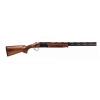
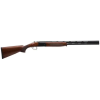
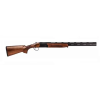
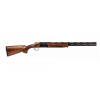
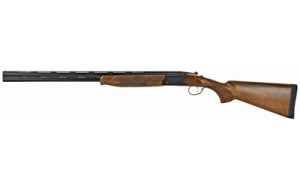
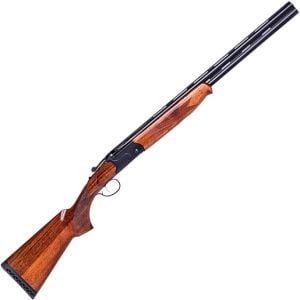
Quick Take
The Stevens 555 is Savage’s answer to the sub $800 over/under question, and it answers it better than the price suggests. Aluminum receiver with a steel breech insert, Turkish walnut, chrome lined barrels and five choke tubes in the box. Ours patterned evenly, weighed a hair over six pounds in 12 gauge and carried like a gun costing twice as much.
Then there is the thing Savage’s own catalog tells you and nobody repeats. The 555 costs $869 in 12, 16, 20, 28 gauge and .410, identically. No sub gauge tax. Browning charges hundreds more for the small bores on a Citori, and Savage charges nothing.
One warning before you shop by price. The cheapest 555 on our pricing cards right now is a 555 Trap at $457.76, and that gun has one barrel, not two. Savage lists it at the same $869 as the double, and the spec sheet says capacity: 1.
Best For: Upland hunters and casual clays shooters who want a light, honest over/under and the option of a 28 gauge or .410 without paying a premium. Not for anyone who needs automatic ejectors or fast reloads.

The 555 Trap Has One Barrel
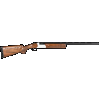
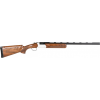
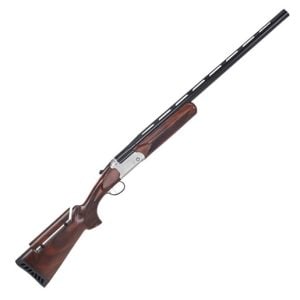
Savage sells four 555 families and the names do not tell you what you are buying. Pull up the spec sheet for a 555 Trap (SKU 23222) and read the feed type: single shot, break open, capacity 1. It is a one barrel trap gun with a tall rib and an adjustable comb, and Savage prices it at the same $869 as the two barrel 555.
On the shelf the gap is wider than the list price suggests, because the Trap discounts harder. A shopper sorting “Stevens 555” by price sees $457.76 at the top and a walnut over/under in the photo thumbnail. That is the single barrel gun.
| Model | Barrels | Gauges | Weight | MSRP | Card price from |
|---|---|---|---|---|---|
| 555 | Two, over/under | 12, 16, 20, 28, .410 | 5 to 6.2 lbs | $869 | $634.98 |
| 555 E | Two, over/under | 12, 16, 20, 28, .410 | 5.6 to 6.45 lbs | $1,059 | see live pricing |
| 555 Trap | One | 12, 20 | 6.6 to 7.5 lbs | $869 | $457.76 |
| 555 Sporting | Two, over/under | 12, 20, .410 | 5 to 7.25 lbs | $1,119 | $696.05 |
None of this makes the Trap a bad gun. A single barrel trap gun is a real thing that real clubs shoot, and at $457.76 with an adjustable comb it is a lot of gun. It is simply not the gun most people mean when they say they want a Stevens 555.

No Sub Gauge Tax, And A 16 Gauge
Here is the number that should decide a lot of purchases. Savage lists the 555 at $869 whether you buy the 12, the 16, the 20, the 28 or the .410. Sub gauge guns normally cost more because they sell in smaller numbers, and the industry charges for it. When we reviewed the Browning Citori 725, the 28 gauge and .410 listed $370 above the 12. Savage charges the same for all five.
The 16 gauge deserves its own sentence. Almost nobody chambers a new over/under in 16, and Savage does, in both the 555 and the 555 E, with a 28 inch barrel at 6.2 pounds. If you have inherited a 16 gauge habit, that is a short list to shop from.
What you give up for the flat price is weight matching. The receiver is scaled for the smaller gauges, which is why a 24 inch 28 gauge or .410 comes in at 5 pounds even while the 12 gauge with 28 inch barrels runs 6.2. That makes the sub gauges genuinely delightful to carry and a little lively to shoot.
555, 12 gauge, 28 in., 6.2 lbs $635-$755
555 Compact, 20 or 28 gauge, 24 in., 5 lbs $722-$780
555 E, upgraded walnut, 12 to .410 $1,059 list
555 Sporting, ported, 30 in. $696-$991
How We Tested It
Phase 1: Handling and Trigger
The single selective mechanical trigger broke at just under 4 pounds, which is heavier than a target gun and fine for a field gun. The tang safety doubles as the barrel selector: slide it right for the under barrel first, left for the over barrel. It is the kind of control you learn in one box of shells and never think about again.
One quirk showed up immediately. When you thumb the lever and break the action, the barrels spring up rather than hanging open, so they do not drop far enough to drop shells straight in. You end up pushing the barrels down with your off hand while loading. On a walked up hunt nobody cares. On a clays station where you reload every two targets, it gets old.

Phase 2: Patterning
We patterned the 12 gauge at 40 yards on 30 inch plates with a factory ounce of 7½ shot, one barrel choked improved cylinder and the other modified. The modified barrel put 54 percent of its pellets inside the circle and the improved cylinder barrel 46 percent, which is exactly where those chokes should land.
More important than the percentages is that the patterns were even, with no blown centers and no ragged edges. Cheap over/unders often shoot two barrels to two different places. This one did not.
The .410 got the same treatment at a sane distance for the bore. Winchester Super X No. 6 at 20 yards averaged 38 pellets inside an 8 inch circle, about 37 percent of the payload, evenly spaced. That is a clays and rabbit gun, not a 40 yard duck gun, and the .410 is honest about it.
Phase 3: Reliability
Three hundred shells across four sessions, mixing trap loads from Winchester, Federal, Remington and Fiocchi with field loads in 7½ and 6. No failures to fire, no doubling, no barrel selector faults and no sign of the hinge loosening.
The extractors lift a fired hull far enough to pinch out by hand, and that is the whole story. There are no automatic ejectors, so nothing flies over your shoulder and nothing lands in the grass. Some hunters treat that as a feature.
Ammunition Log
- Winchester, Federal, Remington and Fiocchi 12 gauge trap loads: 200 shells
- Factory 1 oz. 7½ field loads, 12 gauge: patterning at 40 yards
- Winchester Super X No. 6, .410: patterning at 20 yards
- Assorted 20 gauge field loads in the Compact: 60 shells
What This Means for You
- Reliability: Nothing broke and nothing loosened in 300 shells. This is a sound gun.
- Chokes: The Mobil pattern is the most common thread there is, so replacement tubes are cheap and everywhere.
- Reloading: Push the barrels down when you open it. Budget a session to get used to it.
- Gauge choice: Since the price is flat, pick the gauge you actually want to carry.
Performance Results
Reliability (9/10)
Break action guns fail at the hinge and at the ejectors, and this one has no ejectors to fail. After 300 shells the action closed with the same slight stiffness it had new, which is what you want from a gun that will loosen over decades rather than seasons.
Patterning (8/10)
Even patterns from both barrels with factory tubes is the headline, and 54 percent from a modified choke at 40 yards is textbook. Nothing here is exotic, and nothing needs fixing before you shoot it.
Ergonomics and Recoil (8/10)
At 6.2 pounds the 12 gauge is light for an over/under, which is wonderful walking and busy on heavy loads. The sub gauge guns at 5 pounds are the real prize. The 14.57 inch length of pull suits an average adult, and the Compact guns drop that to 13 inches for smaller shooters.
Fit, Finish, and Quality Control (7/10)
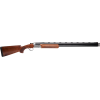
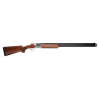
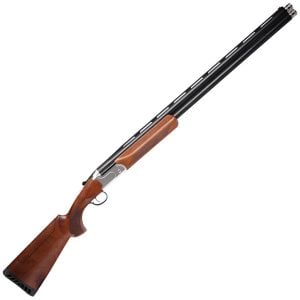
The walnut on our gun had even grain under a satin finish, the checkering is pressed rather than cut, and the receiver to wood fit is tight. Look closely and you can see where the money was saved. Stand back and it looks like a $1,200 shotgun.
Technical Deep Dive
The Aluminum Receiver With A Steel Insert
The 555 saves its weight in the receiver, which is aluminum with a steel insert reinforcing the breech. That is the standard way to build a light break action without battering the standing breech, and it is why a 12 gauge over/under can weigh 6.2 pounds. The barrels are carbon steel and chrome lined.
| Component | Specification | Why it matters |
| Receiver | Aluminum, steel breech insert | Light to carry, strong where it counts |
| Barrels | Carbon steel, chrome lined | Handles steel shot and cleans easily |
| Chokes | Five tubes, Beretta / Benelli Mobil | The most common pattern, so tubes are cheap |
| Trigger | Single selective mechanical, under 4 lbs | Second shot does not need recoil to reset |
| Safety | Tang mounted, doubles as barrel selector | One control, learned in a box of shells |
| Extraction | Extractors only | No hulls in the grass, slower reloads |
Mechanical Trigger, And Why It Matters
A mechanical trigger resets on its own rather than relying on the recoil of the first shot. On a cheap gun with an inertia trigger, a light sub gauge load can fail to set up the second barrel, and you pull on a live round and get nothing. The 555 sidesteps that, which matters most in exactly the gauges where this gun is most tempting.
How It Compares
Our best over/under shotguns under $1,000 ranking has the full field. These are the three we would put beside a 555 on the rack.
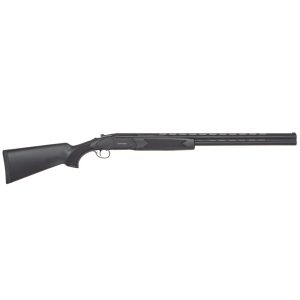
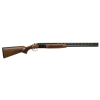
Mossberg Silver Reserve ($587-$702)
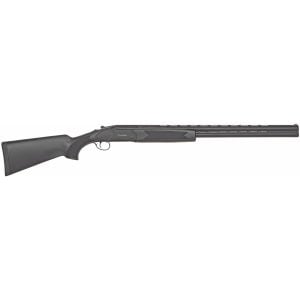
The closest rival and the cheaper one, starting at $586.99. The Silver Reserve Eventide gives you a silver engraved receiver and, like the Stevens, extractors rather than ejectors. We ran one for our Mossberg Silver Reserve review, and the buying difference is gauge choice: Mossberg’s current lineup is narrower than Savage’s five.

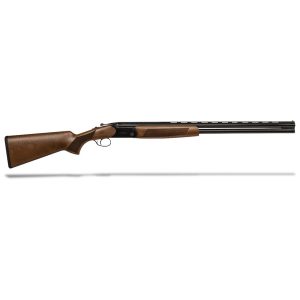
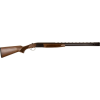
CZ Drake ($621-$750)
CZ’s entry over/under undercuts the Stevens at $621.38 and buys you a slightly better finished gun with a reputation for good wood. The Drake is heavier in 12 gauge, which some shooters will take as a plus on clays and a minus in the uplands.
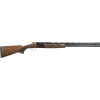
TriStar Setter ($413-$636)
The budget option at $412.99, and the one that undercuts everything here. The Setter LT is lighter and cheaper, and it is also the simplest gun of the group. If your budget stops below $600 this is the honest alternative, and our best double barrel shotguns guide covers where it sits.
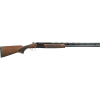
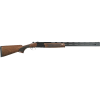
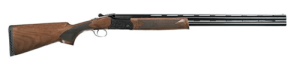
Verdict: The Mossberg and the CZ both undercut the Stevens today, and the TriStar undercuts everything. The Stevens wins on the thing none of them offer: five gauges at one price, including a 16.
Upgrades Worth Making
| Upgrade Category | Recommended Component | Why It Matters | Priority |
| Chokes | Extended Mobil pattern tubes | Easier to change by hand and cheap on this thread | First |
| Recoil pad | A thicker pad on the 12 gauge | Six pounds and heavy loads is a lively combination | Second |
| Case | A takedown case sized for 28 in. barrels | The gun ships in a cardboard box | Third |
Skip the trigger work. Under 4 pounds on a field gun is fine, and gunsmith time on a $635 shotgun is money aimed at the wrong target. If you want a better trigger and a ported barrel, that is what the Sporting is for. Our best skeet and trap shotguns guide covers the clays end.
Common Problems and Fixes
- Barrels spring up when opened: Push them down with your support hand as you load. It is a characteristic of the hinge tension, not a fault, and it eases with use.
- Hulls need plucking: The gun has extractors, not ejectors. There is no retrofit. Factor it into your reload rhythm on clays.
- Stiff action when new: Normal on a break action. It loosens over the first few hundred shells and should never become sloppy.
- Buying the wrong 555: Check the barrel count before you click. Trap models are single barrel; the 555, 555 E and Sporting are over/unders.
Who Should NOT Buy This Gun
- The competitive clays shooter: No ejectors and a 4 pound trigger will cost you time and points. Buy the 555 Sporting or step up to a Browning Citori 725.
- Anyone who wants automatic ejectors: The 555 has extractors and cannot be converted. The CZ Drake range includes ejector models.
- Heavy waterfowl shooters: A 6.2 pound 12 gauge with 3 inch magnums is punishing. A gas semi-auto like the Beretta A400 Xtreme Plus soaks that up.
- The shopper buying on price alone: The cheapest 555 listing is the single barrel Trap at $457.76, which is not the gun most people are shopping for.
- Collectors of fine wood: The walnut is honest and plain, and the checkering is pressed. A Weatherby Orion or a Citori looks the part.
Final Verdict
The Stevens 555 is the most sensible over/under under $800. It patterns evenly from both barrels, it carries like a proper upland gun at six pounds, the chokes are a common pattern you can replace for pocket money, and the mechanical trigger means the second shot works even with light sub gauge loads.
Two things keep it honest. The extractors slow you down on a clays station, and the barrels spring up when you open the gun. Neither is a defect, both are choices, and both are worth knowing before you hand over the money. Buy the gauge you want, because Savage charges the same for all five.
Final Score: 8.0/10. A light, even patterning over/under that asks you to read the model name carefully.
FAQ: Stevens 555
Is the Stevens 555 a good shotgun?
Yes, for the money. Ours ran 300 shells with no failures, and the 12 gauge patterned 54 percent from a modified choke inside a 30 inch circle at 40 yards with an ounce of 7.5 shot. It weighs 6.2 pounds, comes with five choke tubes and starts at $634.98 on our live pricing card.
What gauges does the Stevens 555 come in?
12, 16, 20, 28 gauge and .410, and Savage lists every one of them at the same $869. The 16 gauge is unusual in a new over/under. The smaller gauges get scaled receivers, so a 24 inch 28 gauge or .410 weighs about 5 pounds.
Is the Stevens 555 Trap an over/under?
No. The 555 Trap is a single barrel gun. Savage's spec sheet lists its feed type as single shot with a capacity of 1, and it carries the same $869 list price as the two barrel 555. Check the barrel count before you buy on price alone.
Does the Stevens 555 have ejectors?
No, it has extractors. The fired hull is lifted far enough to pull out by hand rather than being thrown clear. That slows reloads on a clays station, and it means you are not hunting for empty hulls in the grass.
How much does a Stevens 555 weigh?
Savage lists 6.2 pounds for the 12 gauge with 28 inch barrels, 5.5 pounds for a 26 inch 20 gauge and 5 pounds for the 24 inch sub gauge guns. The 555 Sporting runs heavier, up to 7.25 pounds in 12 gauge.
What chokes does the Stevens 555 use?
It ships with five tubes in cylinder, improved cylinder, modified, improved modified and full, on the Beretta / Benelli Mobil thread. That is one of the most common patterns available, so replacements and extended tubes are cheap and easy to find.
6,216+ Gun & Ammo Deals
Updated daily from 200+ top retailers. Filter by category, caliber, action type, and price.
Related Guides