

Last updated September 5th 2026
Some of the links below are affiliate links, meaning at no additional cost to you, we may earn a commission if you click through and make a purchase.
Table of Contents
How we tested: Every pick here is ranked against our testing methodology. Minimum round counts, accuracy and reliability protocols, the failures that disqualify a gun.
The Short Answer
These two do genuinely different jobs. Choose the .223 Remington for light recoil, cheap ammo, high capacity and a flat-shooting round for varmints, predators, targets and home defense, in a light AR-15. Choose the .308 Winchester for real power on deer and larger game, better long-range energy and barrier performance, accepting more recoil, heavier ammo and a heavier rifle.
The .223 is the high-volume, low-recoil all-rounder. The .308 is the heavy hitter. Neither is better in the abstract, and most of the arguments you see online are people comparing them at jobs only one of them was built for.
One thing worth knowing before you shop a used .223: the barrel’s twist rate, not the cartridge, decides how far that rifle can actually reach. That section is below.
Specs Comparison: .223 vs .308
| Metric | .223 Remington | .308 Winchester |
|---|---|---|
| Bullet diameter | .224 in | .308 in |
| Common bullet weight | 55 to 77 gr | 147 to 180 gr |
| Typical velocity | ~3,000 to 3,200 fps | ~2,600 to 2,800 fps |
| Muzzle energy | ~1,300 ft-lbs | ~2,600 ft-lbs |
| Recoil | Very light | Moderate to stout |
| Common barrel twist | 1:7 to 1:12 | 1:10 to 1:12 |
| Main platform | AR-15 | AR-10 and bolt rifles |
| Best for | Varmints, predators, targets, defense | Deer, big game, long range |
| Year introduced | 1964 | 1952 |
Figures from published manufacturer ballistic data and ANSI/SAAMI cartridge standards, cross-checked September 2026.
Pros
- Very light recoil, fast accurate strings
- Cheap and abundant ammunition
- Carry far more rounds per pound
Cons
- Not a big-game cartridge
- Sheds energy past a few hundred yards
- Old slow-twist barrels limit bullet choice
Pros
- Heavy bullet with big energy on game
- Better long-range energy and wind bucking
- Strong barrier penetration
Cons
- Stout recoil compared to .223
- Ammo costs and weighs far more
- Lower capacity and heavier rifles
The Core Difference: Light and Fast vs Heavy and Hard-Hitting

The whole comparison comes down to bullet size and everything that follows from it. The .223 fires a small, light .224-inch bullet very fast. You get low recoil, a flat trajectory and the ability to carry a lot of ammunition, which is exactly what you want for high-volume shooting, varmints and defense. It trades raw power for speed, comfort and capacity.
The .308 fires a much heavier .308-inch bullet slower, with roughly double the energy, which gives it the authority to take deer and larger game cleanly and to keep working at long range. It trades light recoil and cheap, light ammo for power and reach. They are optimized for opposite ends of the same spectrum.
Worth clearing up before going further: .223 Remington and 5.56 NATO are closely related but not identical, and the chamber decides what is safe. A 5.56 chamber fires both. A rifle marked .223 only should not be fed 5.56, which runs at higher pressure. Most modern AR-15s are 5.56 or .223 Wylde and handle both, so this rarely bites in practice, but check the barrel marking. We cover it properly in 5.56 vs .223. For this comparison the two perform close enough that everything below applies to both.
Ballistics and Trajectory
The .223 shoots flat and fast at moderate range. A light bullet leaving the muzzle at 3,000 to 3,200 fps drops very little inside a few hundred yards, which makes it forgiving on holdovers and easy to hit with on varmints and targets.
The .308 launches a much heavier bullet slower, around 2,600 to 2,800 fps, so it drops more at distance. What it gives back is retained energy and wind performance, because mass and a high ballistic coefficient beat raw speed once the range opens up. Flat and fast inside a few hundred yards goes to the .223. Energy and honesty in a crosswind at 600 goes to the .308. That is the whole speed-versus-mass trade in one sentence.
Twist Rate Decides Which .223 You Actually Own
Here is the part that gets skipped, and it matters more on the .223 side than anything else on this page. Two rifles both marked .223 Remington can be completely different tools depending on one number stamped on the barrel: the twist rate.
A lot of older .223 bolt guns and varmint rifles were cut with a slow 1:12 or even 1:14 twist, because they were built around 40 to 55 grain varmint bullets and nothing heavier. Those barrels will not stabilize the long 69, 75 and 77 grain match and defensive bullets that make the .223 competitive past a few hundred yards. Feed them to a 1:12 barrel and the bullets tumble. You see it as oval holes in the paper instead of round ones, and groups that make no sense.
The rough guide most people work to: 1:12 handles up to about 55 grains, 1:9 gets you to roughly 69, and 1:7 or 1:8 is what you want for 75 to 77 grain bullets. Modern AR-15s are mostly 1:7 or 1:8, which is why a current AR shooting 77 grain match ammo behaves like a genuinely different cartridge from grandad’s 1:12 varmint rifle running 55 grain ball.
This reframes half the argument. When somebody tells you the .223 runs out of usefulness at 300 yards, ask what twist their barrel is. Often they are describing a barrel limitation and calling it a cartridge limitation. It will not turn a .223 into a .308, and it will not make it a deer cartridge, but the gap at distance is smaller than the received wisdom if the rifle can actually shoot heavy bullets. Check the marking before you buy anything used.
Recoil, and What It Costs Your Optic
Recoil is the .223’s biggest practical advantage and a large part of why it is everywhere. It kicks so little that you can fire fast accurate strings, stay on target for follow-ups, and shoot all afternoon without fatigue or flinch. New and recoil-sensitive shooters get along with it immediately, which makes it an excellent training round.
The .308 kicks noticeably harder. It is very manageable in a proper rifle, and nobody should be scared of it, but it is tiring over long strings and it does build flinch in shooters who push through too much of it in one session.
The cost people forget is the glass. Recoil is hard on scopes, and a budget optic that lives happily on a .223 will start shifting zero on a .308. If you are pricing a .308 build, price a scope that can take it and mounts that will hold, because the cheapest way to make a good rifle look inaccurate is to hang a fragile optic off it.
Effective Range and Energy
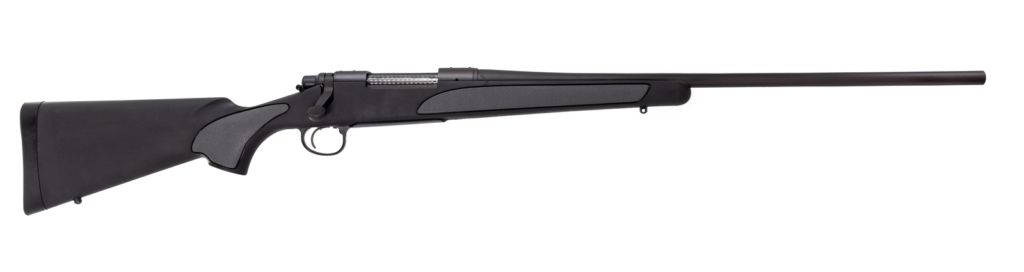
The .223 is effective on varmints and predators out to a few hundred yards and is a fine target round at moderate distance. It sheds energy as range grows and it was never meant for big game far out. Inside its lane it performs beautifully, and it has a real ceiling.
The .308 carries roughly double the energy at the muzzle and retains useful energy well past where the .223 fades. That makes it effective on deer-sized game to sensible hunting ranges and a capable long-range performer with match bullets. For energy on target and reach it is in a different class, which is exactly why it owns hunting and precision work while the .223 owns volume and varmints.
The Platforms: AR-15 vs AR-10 and Bolt Rifles
Platform follows cartridge, and this is often the decision people are really making. The .223 is the heart of the AR-15: light, modular, high-capacity, cheap to feed and endlessly customisable. It also turns up in bolt and varmint rifles. If you want a light, fast-handling, high-capacity rifle, this is the natural end of the pool.
The .308 runs in larger AR-10 pattern semi-autos and in a huge range of bolt-action hunting and precision rifles, all heavier and lower in capacity because the cartridge is bigger. So choosing between the cartridges means choosing between a light AR-15 and a heavier AR-10 or bolt gun, and that difference will be in your hands every time you carry it. Our AR-15 vs AR-10 comparison covers the platform side in detail.
Hunting: Varmints vs Big Game
The .223 is an excellent varmint and predator round. Coyotes, prairie dogs, groundhogs and foxes are exactly what it was built for, and the flat trajectory plus cheap ammo makes for a lot of shooting.
For deer it is a different conversation, and a legal one before it is a ballistic one. Plenty of states set a minimum caliber or minimum energy for deer-sized game that rules the .223 out entirely, and where it is legal it demands premium controlled-expansion bullets and disciplined shot placement at modest range. The .308 has none of those constraints. It is one of the most proven deer cartridges ever made, it is legal essentially everywhere, and it gives you margin when the shot is not perfect. If big game is on your list, this stops being a close call.
Home and Self-Defense
The .223 is the better defensive choice for almost everyone, and the reason surprises people. Light, fast .223 bullets tend to fragment and shed energy quickly when they hit drywall, so a properly chosen defensive load over-penetrates interior walls less than many common handgun rounds. Add low recoil, high capacity and a rifle light enough to run one-handed if you have to, and it is hard to argue with.
The .308 is the opposite on every count. It penetrates barriers extremely well, which is a feature in a hunting or duty context and a serious liability in a house with rooms behind the target. It is also louder, heavier and lower-capacity. Its barrier performance earns it a place where reaching through a windshield or heavy cover matters, and that is not most people’s home defense scenario.
Weight: How Much Ammo You Can Carry
This one is invisible until you have carried both. A .308 cartridge weighs roughly two and a half times what a .223 does, and that ratio holds across a loadout. For the same weight on your back or your belt, you carry well over twice as many rounds of .223.
Magazines compound it. A 30-round AR-15 magazine and a 20-round AR-10 magazine are not remotely the same weight loaded, and the rifle underneath is heavier before you add a single round. If you are hiking with a rifle, or you just want to shoot 300 rounds in an afternoon without a wheelbarrow, this is a real and underrated part of the decision.
What They Cost to Shoot
The gap is bigger than most people expect. Across the retailers we track as I write this, .223 practice ammunition from a trusted seller starts around 47 cents a round. Comparable .308 starts near $1.23. Call it two and a half times, which is close to the weight ratio, and not a coincidence: you are buying more brass, more powder and more lead.
Put that against a year of shooting and it stops being abstract. Two thousand rounds is roughly $940 in .223 against about $2,460 in .308. That difference is the reason .223 shooters get more practice, and practice is what actually makes people accurate. Barrel life leans the same way: a .308 burns its throat faster under sustained fire than a .223 does, so the heavier cartridge costs more per shot both in the box and in the barrel. Both cards below pull live prices so you can check the current spread yourself.
My Recommendation
Buy the .223 first. For a first centerfire rifle it is cheaper to buy, far cheaper to feed, easier to learn on, and it covers varmints, targets, training and home defense without any special considerations. You will shoot it more, and that is the whole game early on.
Buy the .308 when a specific job arrives: deer or larger game, long range with real energy on target, or a need to reach through barriers. It is not a beginner’s mistake to want one, it is just a specialist that most people should own second.
If you are buying one rifle and you hunt deer, the answer flips and it flips completely. Take the .308, accept the recoil, and budget for glass that can live on it. If you do not hunt big game, I would take a .223 with a 1:8 twist barrel and spend the difference on ammunition, because a rifle you shoot two thousand rounds through beats one you shoot two hundred through, every single time. For the middle ground, our .308 vs .30-06 and .270 vs .30-06 comparisons cover the hunting tier.
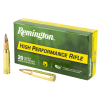
.223 Remington Ammo: Live Prices

![[PRIME] Armscor Range Rifle Ammo 223 Remington Full Metal Jacket 55 Grain 20 Rounds](https://www.usa-gun-shop.com/wp-content/uploads/ugs-pc-img/9b54844868c597eabd56e260538f3c14.png)


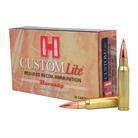
.308 Winchester Ammo: Live Prices


Frequently Asked Questions
Is .223 or .308 better?
They excel at different jobs. The .223 is better for varmints, predators, targets, training and home defense thanks to light recoil, cheap ammo and high capacity in a light AR-15. The .308 is better for deer and larger game, long range and barrier penetration, at the cost of more recoil, cost and weight. Neither is better overall; it depends on the use.
What is the difference between .223 and 5.56?
They are closely related but not identical. A 5.56 NATO chamber safely fires both, but a rifle marked .223 only should not fire higher-pressure 5.56. Most modern AR-15s are chambered in 5.56 or .223 Wylde, which handle both. Always check your barrel marking and follow the chamber rule.
Can you hunt deer with .223?
It is marginal and restricted or discouraged for deer in some states because the light bullet lacks energy for reliably clean kills on bigger animals. The .308 is the far better deer and big-game cartridge. The .223 is best kept to varmints, predators and small game.
Which has more recoil, .223 or .308?
The .308, by a clear margin. The .223 has very light recoil that makes it easy to shoot fast and accurately for long sessions, while the .308 has moderate to stout recoil that is manageable but tiring over many rounds. Lighter recoil is one of the .223s biggest advantages.
Is .308 good for long range?
Yes. The .308 Winchester is a long-proven precision and long-range cartridge with excellent match ammo, good energy retention and solid wind-bucking with high-BC bullets. The .223 can be accurate at moderate range but lacks the energy and long-range performance of the .308.
What barrel twist rate do I need for .223?
It depends entirely on the bullet weight you want to shoot, and it is the number to check before buying any used .223. As a rough guide, 1:12 stabilises up to about 55 grains, 1:9 gets you to roughly 69, and 1:7 or 1:8 is what you need for the 75 and 77 grain match and defensive bullets. Older varmint rifles were often cut 1:12 or 1:14 and will tumble heavy bullets, which shows up as oval holes in the paper. Most modern AR-15s ship 1:7 or 1:8 and can shoot the full range.
How much cheaper is .223 than .308 to shoot?
Across the retailers we track, .223 practice ammunition from a trusted seller starts around 47 cents a round against roughly $1.23 for comparable .308, so about two and a half times. Over 2,000 rounds in a year that is around $940 against $2,460. Barrel wear leans the same way, since the .308 burns its throat faster under sustained fire. The practical effect is that .223 shooters get more trigger time for the same money, and trigger time is what makes people accurate.
Is .223 or .308 better for home defense?
The .223 for almost everyone. Light, fast .223 bullets tend to fragment and shed energy when they strike drywall, so a properly chosen defensive load over-penetrates interior walls less than many common handgun rounds, and you get low recoil, high capacity and a light rifle with it. The .308 penetrates barriers extremely well, which is exactly what you do not want with rooms behind the target, and it is louder, heavier and lower capacity too.
3,979+ Gun & Ammo Deals
Updated daily from 200+ top retailers. Filter by category, caliber, action type, and price.
Related Guides