

Last updated August 14th 2026
Some of the links below are affiliate links, meaning at no additional cost to you, we may earn a commission if you click through and make a purchase.
Before you handle any of these: treat every gun as loaded, keep your finger outside the guard until your sights are on target, and know what is behind your target. Check your state and local law before you buy or carry. Buying any pistol on this list means a Form 4473 and a NICS background check at a licensed dealer, and the ATF rules on who can take delivery apply wherever you live. Full details on our firearm safety and legal disclaimer page.
These are the fifteen best 9mm pistols I have shot in 2026, ranked by the job each one does rather than by price. If you want a concealed carry pistol that disappears under a t-shirt, a full size 9mm handgun for home defense, or a first gun for a new shooter, the pick for your job is in the table below with a live price next to it.
How we tested: Every pick here is ranked against our testing methodology. Minimum round counts, accuracy and reliability protocols, the failures that disqualify a gun.
Best 9mm Pistols in 2026 at a Glance
| Pistol | Size | Capacity | Barrel | Weight | Street price from | Price |
|---|---|---|---|---|---|---|
| BEST OVERALL Glock 19 Gen 6 | Compact | 15+1 | 4.02 in | 20.1 oz | $620.00 | Lowest Price ↓ |
| BEST FOR CONCEALED CARRY Sig Sauer P365 | Micro-compact | 10+1 | 3.1 in | 17.8 oz | $466.99 | Lowest Price ↓ |
| BEST FULL SIZE Glock 17 Gen 6 | Full size | 17+1 | 4.49 in | 21.2 oz | $499.99 | Lowest Price ↓ |
| BEST VALUE FULL SIZE Smith & Wesson M&P9 M2.0 | Full size | 17+1 | 4.25 in | 29.0 oz | $358.24 | Lowest Price ↓ |
| BEST CARRY CAPACITY Springfield Hellcat Pro | Compact | 15+1 | 3.7 in | 21.0 oz | $558.29 | Lowest Price ↓ |
| BEST TRIGGER Walther PDP | Full size | 18+1 | 4.5 in | 23.8 oz | $509.99 | Lowest Price ↓ |
| BEST COMPACT VALUE CZ P-10 C | Compact | 15+1 | 4.02 in | 26.1 oz | $429.00 | Lowest Price ↓ |
| BEST MODULAR Sig Sauer P320 | Full size | 17+1 | 4.7 in | 29.5 oz | $442.80 | Lowest Price ↓ |
| BEST SLIM CARRY Glock 43X | Slimline | 10+1 | 3.41 in | 16.4 oz | $448.00 | Lowest Price ↓ |
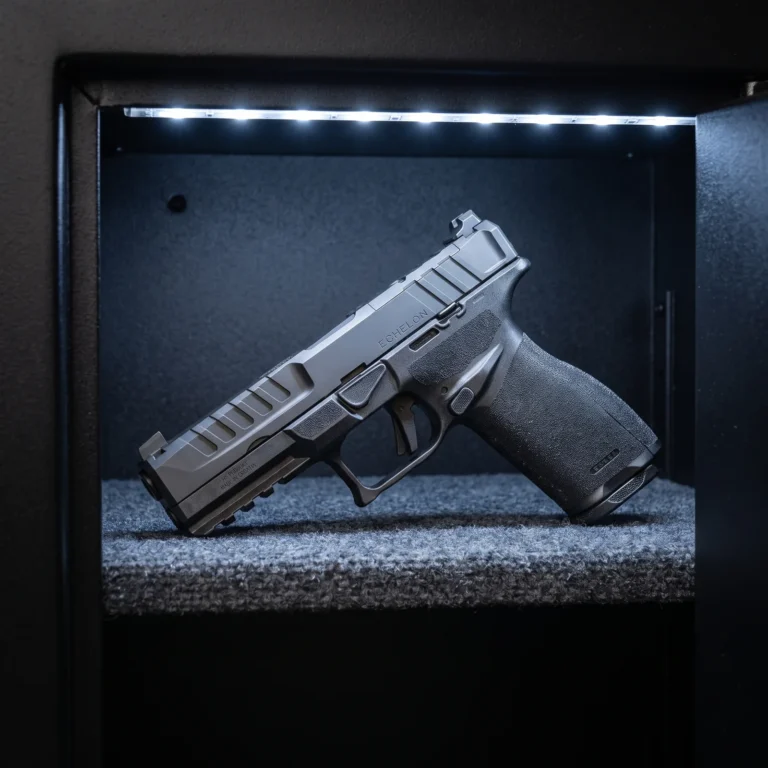
| BEST OPTIC MOUNTING Springfield Echelon | Full size | 17+1 | 4.5 in | 23.9 oz | $554.00 | Lowest Price ↓ |
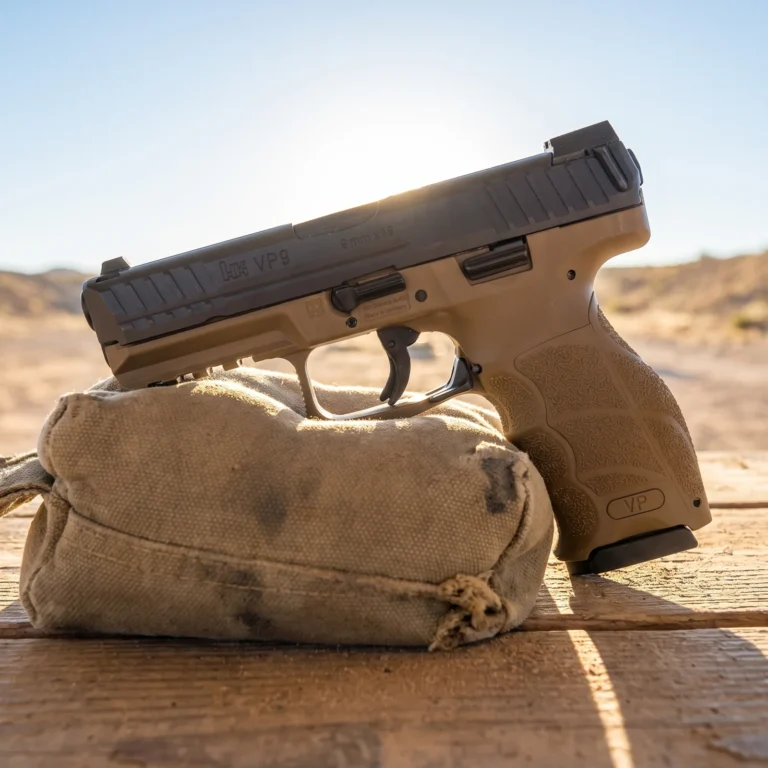
| BEST ERGONOMICS HK VP9 | Full size | 17+1 | 4.09 in | 25.6 oz | $802.30 | Lowest Price ↓ |
| BEST HAMMER-FIRED Beretta 92FS | Full size | 15+1 | 4.9 in | 33.3 oz | $672.58 | Lowest Price ↓ |
| BEST FOR COMPETITION Canik METE SFx | Full size | 20+1 | 5.2 in | 30.1 oz | $524.99 | Lowest Price ↓ |
| BEST BUDGET PSA Dagger | Full size | 17+1 | 4.5 in | 22.4 oz | $319.99 | Lowest Price ↓ |
| BEST FOR SMALL HANDS S&W M&P Shield Plus | Micro-compact | 13+1 | 3.1 in | 20.2 oz | $369.00 | Lowest Price ↓ |
Weights are the manufacturer published unloaded figures. Some brands quote with an empty magazine fitted, so treat these as within an ounce or two of each other. Prices move daily, so the live cards below each pistol are the number to trust.
Table of Contents
How I Picked These 15
There’s no single best 9mm pistol, and anyone who tells you otherwise is selling one. There’s a best 9mm for carrying under a shirt in July, a best one for a nightstand, and a best one for shooting a Saturday match. This list covers all three, ranked by how well each gun does the job it was built for.
Every pistol here is in current production, chambered in 9x19mm Parabellum to the SAAMI standard, and available new through the retailers we track, which matters more than it sounds because half the guns people ask me about have quietly been dropped from the catalog and now only turn up used at silly money. I’ve left out guns that are discontinued, guns that only exist as a distributor special, and guns I would not hand to a friend.
If you already know what size you want, we go deeper on each class: full size 9mm pistols, compact 9mm pistols, subcompact 9mm pistols and micro-compact 9mm pistols. This page is the overview. Those four are where the detail lives.
One more thing before the list. The gun matters less than the practice, and 9mm is the cartridge that lets you practice. It’s the cheapest centerfire defensive round on the shelf, which is exactly why the NSSF keeps reporting it as the best selling handgun caliber in the country. That is also why 9mm won the argument it has been having with every other service caliber for forty years. It carries more rounds than a .45 ACP, recoils less than a .40 S&W, and does far more work than a .380 ACP in a package barely larger.
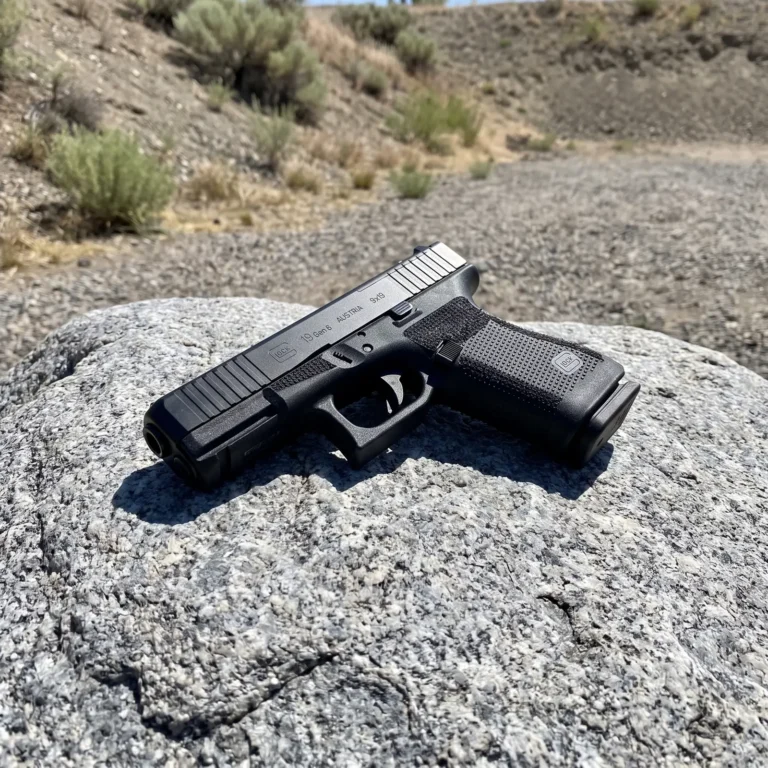
1. Glock 19 Gen 6: Best Overall
- Caliber: 9x19mm
- Capacity: 15+1
- Barrel Length: 4.02 in
- Weight: 20.1 oz
- Frame: Polymer
- Size Class: Compact
| Reliability | Accuracy | Trigger | Ergonomics | Value |
| 5/5 | 4/5 | 4/5 | 4/5 | 4/5 |
Pros
- Runs dirty without complaint
- Holster and parts everywhere
- Optic cut is standard now
Cons
- Grip angle divides people
- Sights are still plastic
- Costs more than rivals
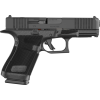
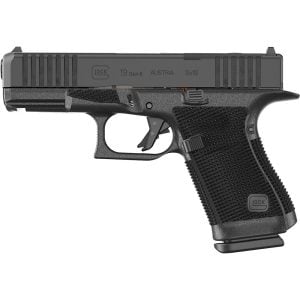
The Gen 6 landed in January 2026. The changes are smaller than the marketing suggests. You get the optic system built in, a reworked grip texture with a proper thumb rest, and a flat trigger face. None of that reinvents the gun. It just removes the three things people used to pay a gunsmith to fix.
What keeps the 19 at the top of this list is boring and unglamorous. It runs. Every time. I’ve put filthy range brass, cheap steel case and premium hollow points through 19s for years and the failures I can remember were magazine related, not gun related. That track record is why police departments and first-time buyers land on the same pistol.
The size is the other half of the argument. At 4.02 inches of barrel it’s short enough to carry under a shirt and long enough to shoot properly at 25 yards. Most people who buy a full size and a subcompact eventually admit the 19 would have covered both jobs. Our Glock 19 Gen 6 review has the full round count.
Best For: The one gun buyer who wants a pistol for home defense, carry and range work and does not want to think about it again.
2. Sig Sauer P365: Best for Concealed Carry
- Caliber: 9x19mm
- Capacity: 10+1
- Barrel Length: 3.1 in
- Weight: 17.8 oz
- Frame: Polymer
- Size Class: Micro-compact
| Reliability | Accuracy | Trigger | Ergonomics | Value |
| 4/5 | 4/5 | 4/5 | 5/5 | 4/5 |
Pros
- Carries like a much smaller gun
- Sights are genuinely good
- Huge accessory support
Cons
- Early guns had teething problems
- Small grip punishes big hands
- Recoil is snappy
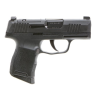
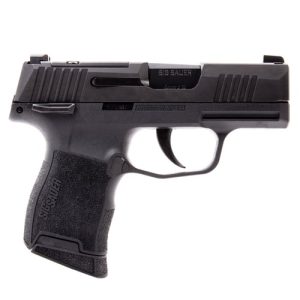
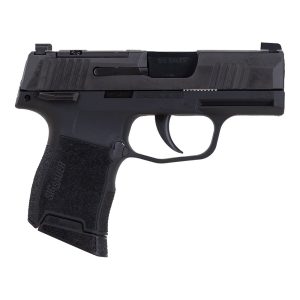
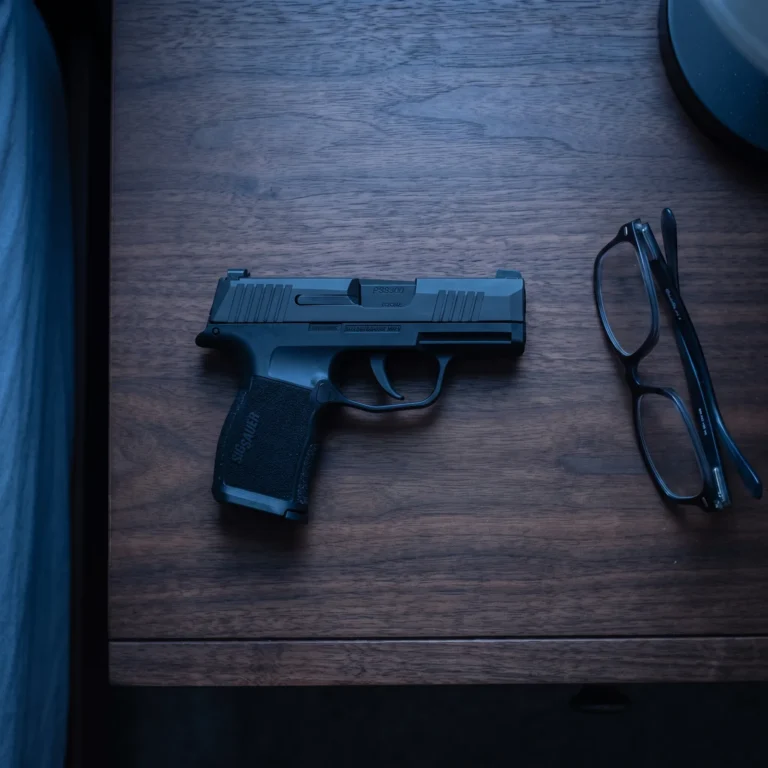
The P365 is the pistol that made every other micro-compact look dated overnight. Sig worked out how to stack ten rounds into a grip the width of a single stack, and the whole category had to catch up. Eight years later it’s still the benchmark most carry guns get measured against.
It disappears on the belt. That sounds like a small thing until you’ve carried a compact through a summer and found yourself leaving it at home on the hot days. A gun you actually carry beats a gun you theoretically own, and the 365 is the size that stops the excuses.
The trade is recoil. Seventeen ounces and a three inch barrel means it moves in your hand more than a 19 does, and long range sessions get tiring. I carried one through a Texas summer. What surprised me was not the shooting, it was how rarely I thought about it once the belt was right.
That is the whole argument for a gun this size. Get the belt right first. Pair it with a decent belt and holster from our concealed carry holster guide and it stops being a chore.
Best For: Daily concealed carry, especially if you dress light or carry appendix.
3. Glock 17 Gen 6: Best Full Size
- Caliber: 9x19mm
- Capacity: 17+1
- Barrel Length: 4.49 in
- Weight: 21.2 oz
- Frame: Polymer
- Size Class: Full size
| Reliability | Accuracy | Trigger | Ergonomics | Value |
| 5/5 | 4/5 | 4/5 | 4/5 | 5/5 |
Pros
- Softest shooting Glock in 9mm
- Seventeen rounds standard
- Cheap to feed and fix
Cons
- Too big for most carry
- Plastic sights again
- Feels dated next to newer designs
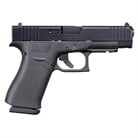

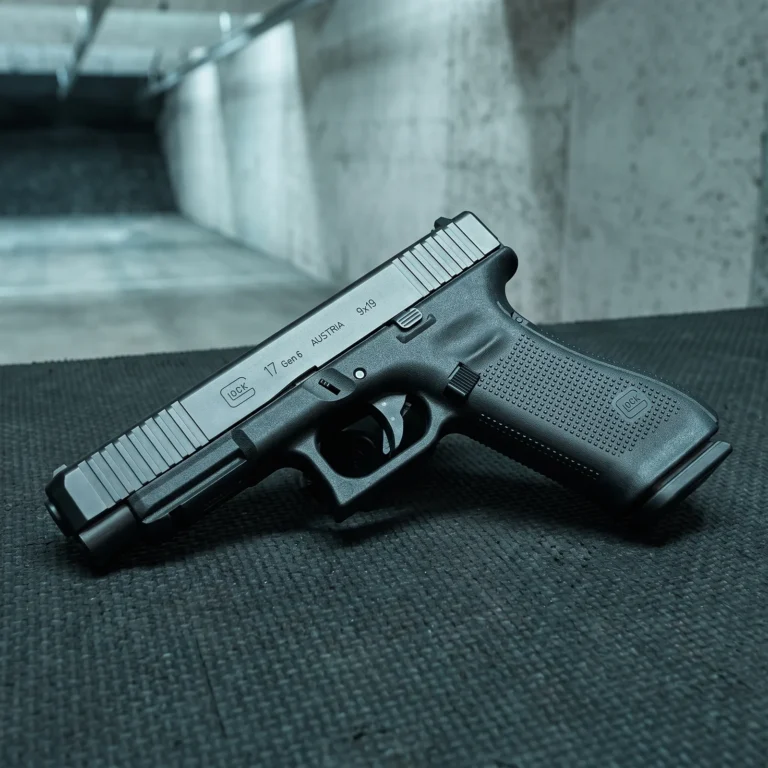
If the 19 is the compromise, the 17 is the one that doesn’t compromise. Longer sight radius, more grip to hold onto, two extra rounds and noticeably less muzzle rise. Put a 17 and a 19 side by side on a timer and most shooters are faster with the bigger gun, by enough that the difference shows up inside a single string of fire rather than needing a spreadsheet to find it.
For a nightstand or a duty holster that matters more than concealment does. Nobody’s hiding a full size Glock under a t-shirt comfortably, and pretending otherwise is how people end up not carrying at all.
And the running costs are the quiet advantage. Magazines are everywhere, holsters are everywhere, and every gunsmith in the country has worked on one. We put the two head to head in our Glock 17 Gen 6 vs Glock 19 Gen 6 comparison.
Best For: Home defense, duty use and range shooters who want the easiest Glock to shoot well.
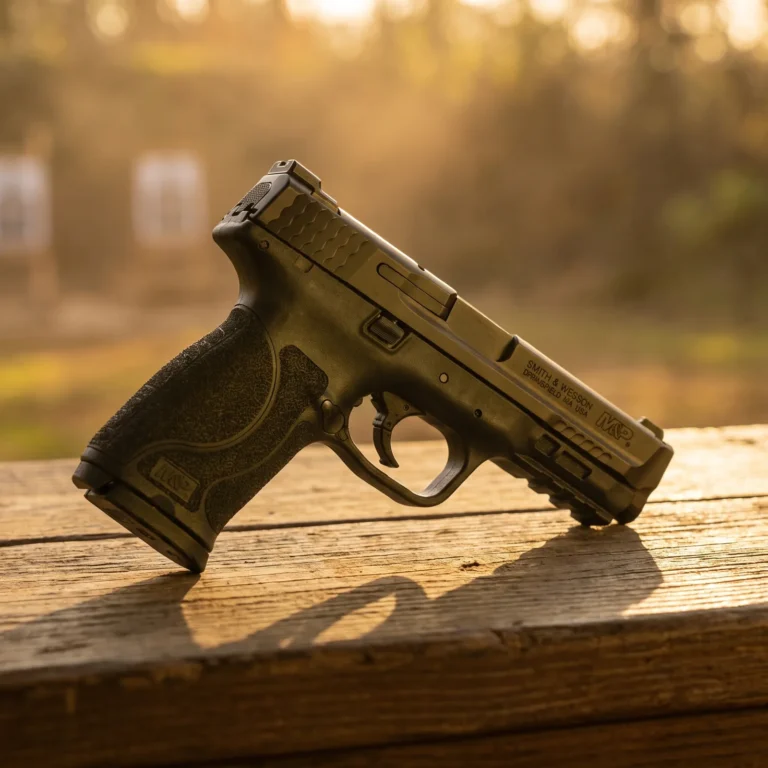
4. Smith & Wesson M&P9 M2.0: Best Value Full Size
- Caliber: 9x19mm
- Capacity: 17+1
- Barrel Length: 4.25 in
- Weight: 29.0 oz
- Frame: Polymer
- Size Class: Full size
| Reliability | Accuracy | Trigger | Ergonomics | Value |
| 5/5 | 4/5 | 4/5 | 5/5 | 5/5 |
Pros
- Four backstraps fit almost anyone
- Grip angle suits most shooters
- Undercuts a base Glock on price
Cons
- Trigger reset is vague
- Heavier than the Glock
- Finish wears on carry guns

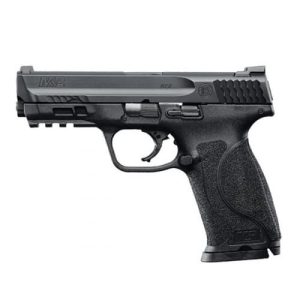
The M&P is the gun I hand people who bounce off Glocks. It fits hands the Glock fights. The grip sits lower in the hand, the angle is closer to a 1911, and the four interchangeable backstraps mean you can actually fit it to your hand rather than adapting to it.
Smith fixed the two real complaints with the M2.0. The grip texture went from slippery to aggressive, and the trigger picked up a proper wall instead of the mushy pull the original had. It’s still not a match trigger. It’s fine for what this gun is.
What makes it the value pick is simple. It’s a full size, optics ready, American made duty pistol that regularly sells for less than a base Glock. Nothing else at that price does all four. Not one.
Best For: Anyone who finds Glocks uncomfortable and wants a duty sized 9mm without paying duty prices.
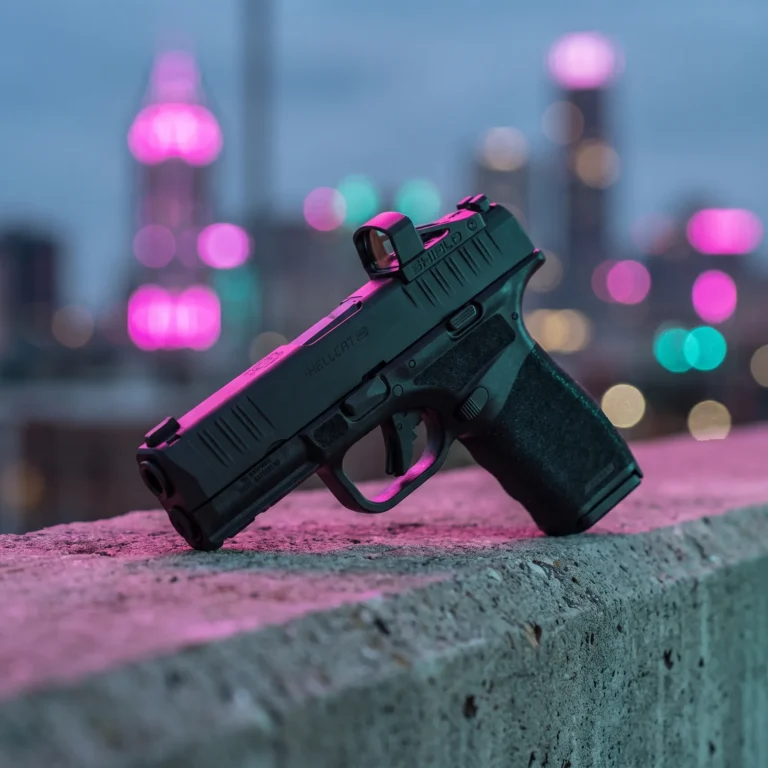
5. Springfield Hellcat Pro: Best Carry Capacity
- Caliber: 9x19mm
- Capacity: 15+1
- Barrel Length: 3.7 in
- Weight: 21.0 oz
- Frame: Polymer
- Size Class: Compact
| Reliability | Accuracy | Trigger | Ergonomics | Value |
| 4/5 | 4/5 | 4/5 | 4/5 | 4/5 |
Pros
- Fifteen rounds in a carry gun
- Optic cut needs no plate
- Sights are excellent stock
Cons
- Grip texture is rough on skin
- Pricier than a Glock 19
- Aftermarket is thinner
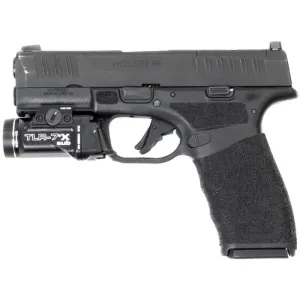
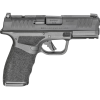
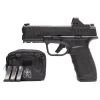
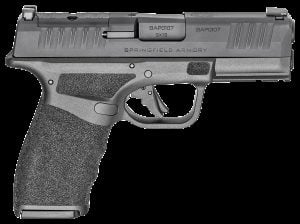
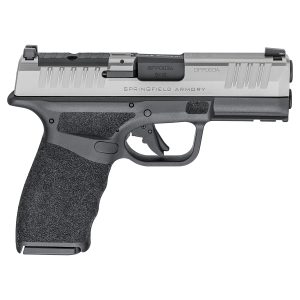
The Hellcat Pro is what happens when you take a micro-compact and stretch it just far enough to hold a full hand and fifteen rounds. It’s barely bigger than a P365 on the belt but shoots much closer to a compact.
I shot mine side by side with a Glock 19 and lost almost nothing on target. Springfield got the details right. The tritium and luminescent front sight is the best factory sight on this list, the slide is cut for a Shield footprint optic without an adapter plate, and the trigger is a genuine improvement over the original Hellcat.
The grip texture is the one thing people complain about. It’s sharp enough to chew a cover shirt over a long day. Some owners sand it back. I’d rather have grip I can hold when my hands are wet.
Best For: Carry shooters who refuse to drop below double digit capacity but want to stay slim.
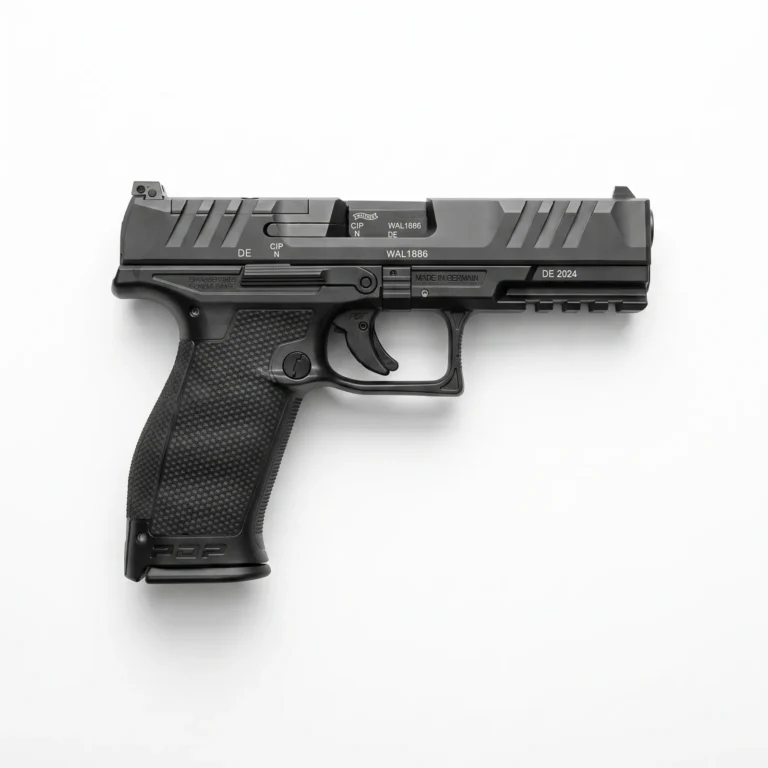
6. Walther PDP: Best Trigger
- Caliber: 9x19mm
- Capacity: 18+1
- Barrel Length: 4.5 in
- Weight: 23.8 oz
- Frame: Polymer
- Size Class: Full size
| Reliability | Accuracy | Trigger | Ergonomics | Value |
| 4/5 | 5/5 | 5/5 | 5/5 | 4/5 |
Pros
- Best factory trigger here
- Eighteen rounds standard
- Slide serrations actually work
Cons
- Holster options are limited
- Optic plates cost extra
- Sights want upgrading
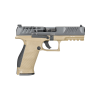
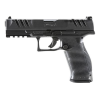

The Performance Duty Trigger isn’t marketing. It breaks cleaner than anything else on this list at anywhere near the price, and the reset is short and obvious enough that you feel it through a glove.
The rest of the gun keeps up. Eighteen rounds standard, a grip texture that holds without shredding, and those deep SuperTerrain serrations that let you rack the slide with wet hands or a shirt tail. Accuracy is the best of the polymer guns here. No contest, really.
Two things hold it back. Holster selection is thinner than Glock or Smith, and the optic mounting still uses plates rather than a direct cut. Neither is a dealbreaker if you shoot the thing.
Best For: Shooters who care about trigger feel more than aftermarket depth.
7. CZ P-10 C: Best Compact Value
- Caliber: 9x19mm
- Capacity: 15+1
- Barrel Length: 4.02 in
- Weight: 26.1 oz
- Frame: Polymer
- Size Class: Compact
| Reliability | Accuracy | Trigger | Ergonomics | Value |
| 4/5 | 5/5 | 5/5 | 5/5 | 5/5 |
Pros
- Trigger beats guns twice the price
- Metal sights from the factory
- Grip fills the hand properly
Cons
- Heavier than polymer rivals
- Early guns had trigger return issues
- Fewer holsters than Glock
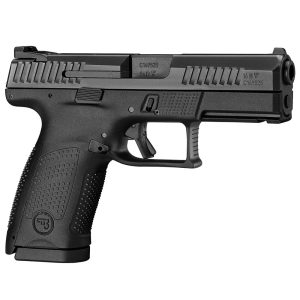
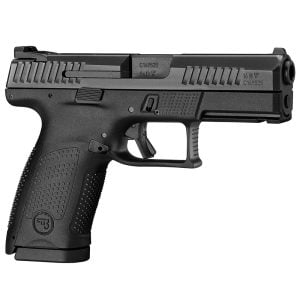
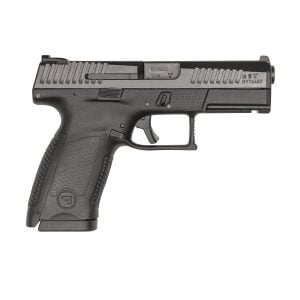
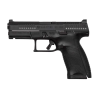
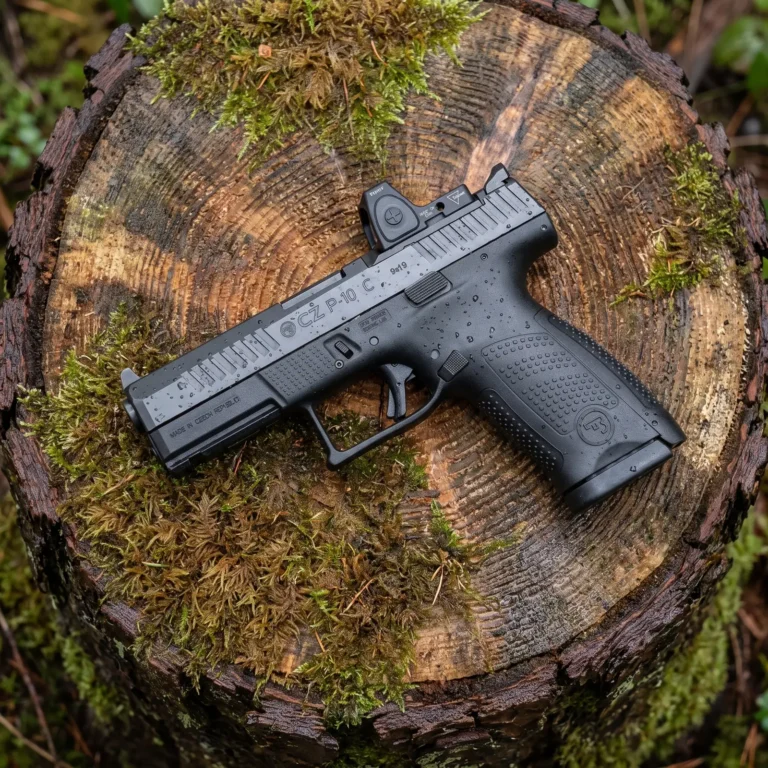
The P-10 C is the Glock 19 competitor that most people never try, and almost everyone who does comes away surprised. Same footprint, same capacity, and a trigger that has no business being this good on a gun in this bracket.
CZ knows how to build a grip, and the P-10 is the clearest evidence of it, because the frame fills the web of your hand and the underside of your trigger finger in a way that makes the gun feel smaller than the numbers say it is. The P-10 fills your hand with actual contact rather than air, and the texture strikes the balance the Hellcat misses. It also ships with steel sights rather than the plastic units Glock still uses.
It’s a couple of ounces heavier than a 19 and the holster market is thinner. But we made the case years ago in CZ P-10: a cheaper, better Glock 19? and the gun has only got better since.
Best For: Anyone shopping a Glock 19 who has not shot the alternative yet.
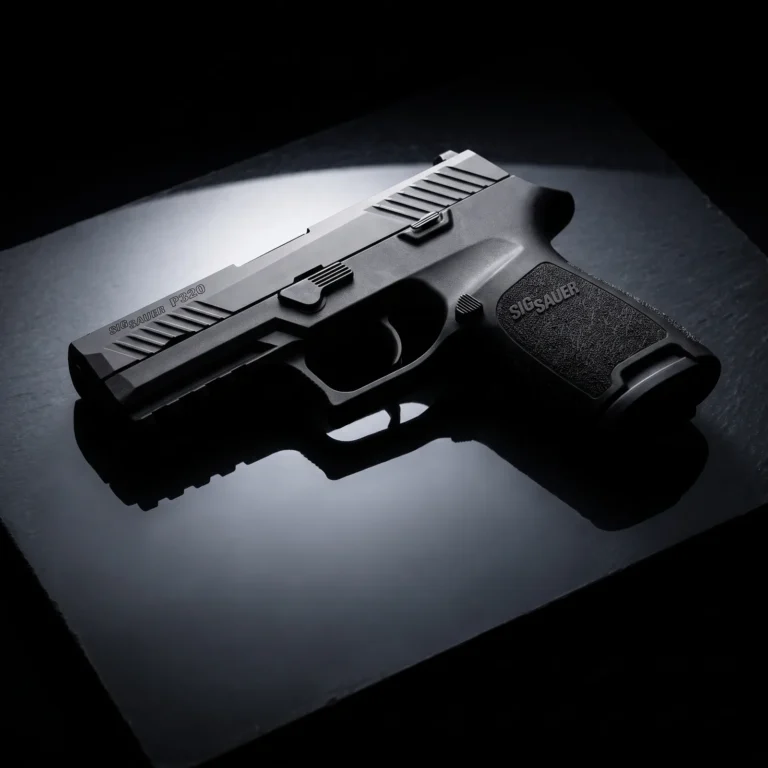
8. Sig Sauer P320: Best Modular
- Caliber: 9x19mm
- Capacity: 17+1
- Barrel Length: 4.7 in
- Weight: 29.5 oz
- Frame: Polymer
- Size Class: Full size
| Reliability | Accuracy | Trigger | Ergonomics | Value |
| 4/5 | 4/5 | 4/5 | 4/5 | 5/5 |
Pros
- One serialized part fits everything
- Grip modules cost very little
- Chosen as the US service pistol
Cons
- Drop safety history follows it
- Stock trigger is average
- Grip module quality varies
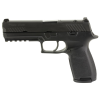
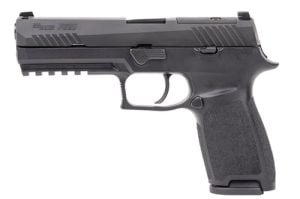
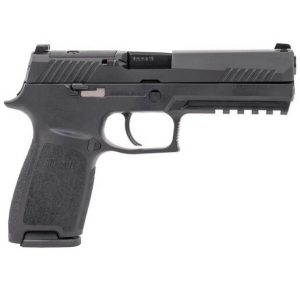
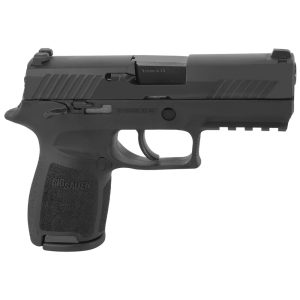
The P320 is one gun that becomes four. That is the whole pitch. The serialized part is the fire control unit, so a single purchase can be a full size duty gun on Monday and a compact carry gun on Friday by swapping a grip module and a slide.
That modularity is why the US Army adopted it as the M17 and M18. It also means you can fit the gun to your hand for the price of a grip module rather than the price of another pistol, which no other design here matches.
The older drop safety recall still comes up in every conversation about this gun. Sig ran a voluntary upgrade program and current production guns carry the fix. Buy new rather than used and it’s a solved problem.
Best For: Shooters who want one serialized gun that can change size and role later.
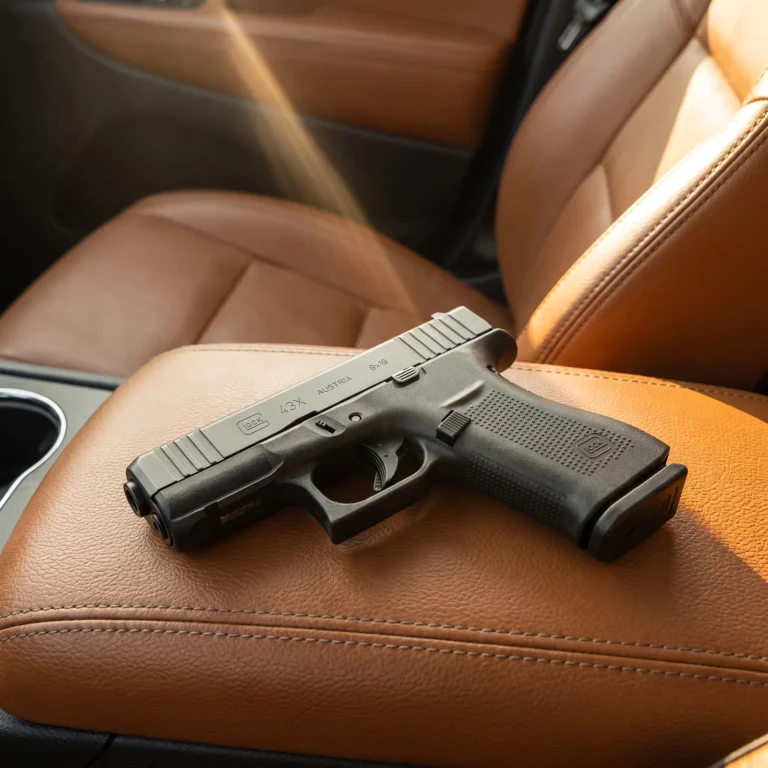
9. Glock 43X: Best Slim Carry
- Caliber: 9x19mm
- Capacity: 10+1
- Barrel Length: 3.41 in
- Weight: 16.4 oz
- Frame: Polymer
- Size Class: Slimline
| Reliability | Accuracy | Trigger | Ergonomics | Value |
| 5/5 | 4/5 | 4/5 | 5/5 | 4/5 |
Pros
- Full grip on a slim frame
- Slim slide hides under a shirt
- Aftermarket magazines add capacity
Cons
- Ten rounds stock is thin
- Short sight radius
- Plastic sights yet again
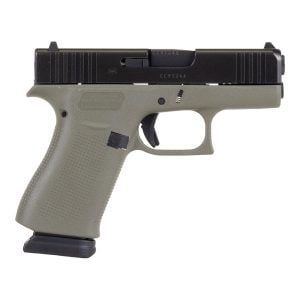
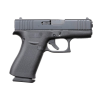
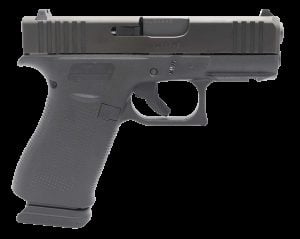
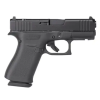
The 43X solved the problem the 43 created. The original single stack was small enough to carry and too small to hold, so your little finger hung off the bottom. The X kept the slim slide and gave you a full length grip.
At 16.4 ounces it carries like nothing at all, and the width is what actually matters for concealment anyway. A slim gun prints far less through a shirt than a thick one of the same height, which is why this shape sells so well and why the slimline frame has quietly become the default recommendation for anyone who carries in normal clothes rather than a photographer vest.
Capacity is the honest weakness. Ten is ten. Ten rounds from the factory is behind the Hellcat Pro and the P365. Aftermarket magazines push it to fifteen, and plenty of owners run them.
Best For: Carry shooters who want a slim gun with a grip they can actually hold.
10. Springfield Echelon: Best Optic Mounting
- Caliber: 9x19mm
- Capacity: 17+1
- Barrel Length: 4.5 in
- Weight: 23.9 oz
- Frame: Polymer
- Size Class: Full size
| Reliability | Accuracy | Trigger | Ergonomics | Value |
| 4/5 | 4/5 | 4/5 | 4/5 | 4/5 |
Pros
- Mounts most optics without plates
- Ships with tritium sights
- Twenty round magazines included
Cons
- Newer platform, thinner support
- Trigger is merely adequate
- Bulkier than the Glock 17
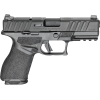
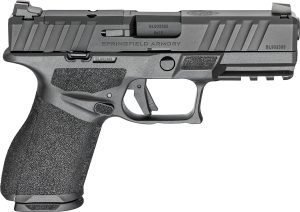
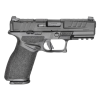
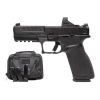
The Echelon exists because mounting a red dot on a pistol is still a mess of proprietary plates. Springfield built a direct mount system with movable pins that takes most common footprints straight onto the slide, and it’s the cleanest answer anyone has shipped.
The rest is a competent modern duty gun. Serialized chassis like the P320, tritium sights standard, and both a seventeen and a twenty round magazine in the box. Springfield clearly aimed this at police contracts.
It’s newer than everything else here, so holsters and parts are catching up. If you plan to run an optic, and most new buyers now do, look at our pistol red dot guide before you choose.
Best For: Red dot shooters who are tired of buying adapter plates.
11. HK VP9: Best Ergonomics
- Caliber: 9x19mm
- Capacity: 17+1
- Barrel Length: 4.09 in
- Weight: 25.6 oz
- Frame: Polymer
- Size Class: Full size
| Reliability | Accuracy | Trigger | Ergonomics | Value |
| 5/5 | 4/5 | 5/5 | 5/5 | 3/5 |
Pros
- Nine grip panels fit any hand
- Charging supports help weak grips
- German build quality throughout
Cons
- Costs a lot more
- Paddle release takes learning
- Proprietary magazines are pricey
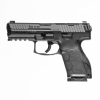
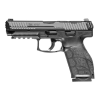
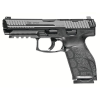
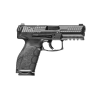

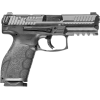
HK builds the best fitting grip in the business. Nothing else is close. Three backstraps and six side panels give you nine combinations, and the charging supports on the rear of the slide mean people with weak hands or arthritis can rack it without a fight.
The trigger is the other reason people pay the premium. Short reset, clean break, and none of the spongy travel that plagues striker guns at half the price. It shoots like a gun that costs more than it does, which is fortunate, because it does cost more.
That’s the catch. You are paying roughly a third again over a Glock 17 for fit and finish rather than function. If your hands don’t get on with anything else, that’s money well spent. We cover the upgrades in our VP9 parts guide.
Best For: Shooters with hands that no other pistol fits, and anyone who values build quality over price.
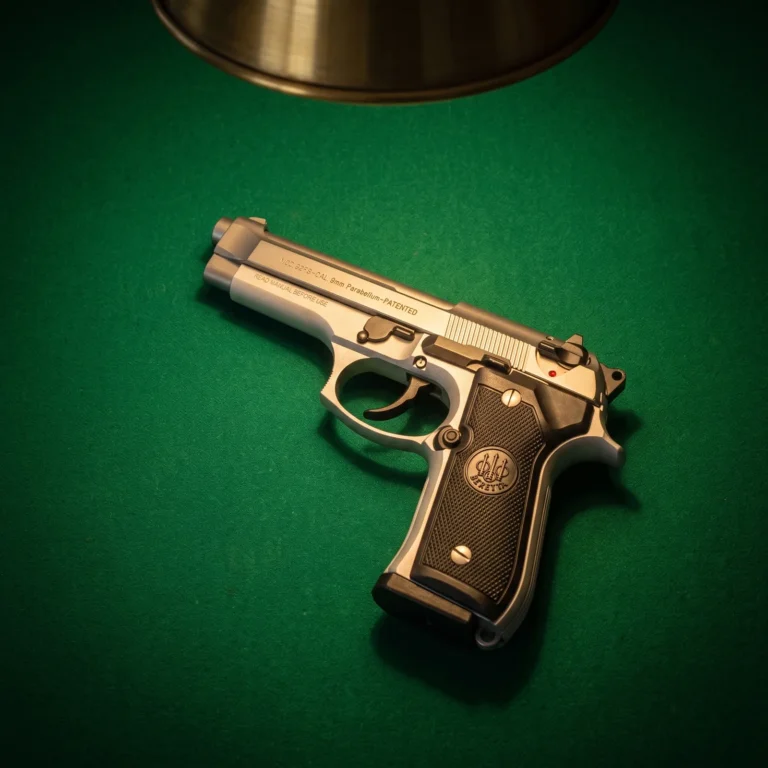
12. Beretta 92FS: Best Hammer-Fired
- Caliber: 9x19mm
- Capacity: 15+1
- Barrel Length: 4.9 in
- Weight: 33.3 oz
- Frame: Aluminum alloy
- Size Class: Full size
| Reliability | Accuracy | Trigger | Ergonomics | Value |
| 5/5 | 5/5 | 4/5 | 3/5 | 3/5 |
Pros
- Softest recoil on this list
- Thirty five years of service history
- Single action trigger is superb
Cons
- Heavy and wide to carry
- Long reach to the trigger
- No optic cut on the FS
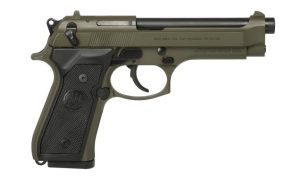
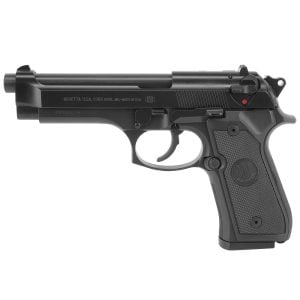

The 92FS carried the US military for over three decades and it earned that. All that aluminum and steel soaks up recoil in a way no polymer gun manages, and the open slide design flings brass clear instead of trapping it.
Shooting it is a genuine pleasure. I have handed a 92FS to people who flinched through a whole box out of a polymer subcompact and watched them settle down inside a magazine, because thirty three ounces of alloy and steel simply does not move the way a light gun does. The Taurus 92 gets you the same pattern for about $200 less. The first shot is a long double action pull, then every shot after it is a short single action break that will embarrass most of the striker guns here. Learning that transition is the price of entry. Striker fired or hammer fired is the oldest argument in handguns, and the honest answer is that striker guns give you the same pull every time, which is easier to learn. The 92FS is here because a long first shot followed by short single action breaks is worth having if you will put the range time in, and almost nobody else on this list offers it.
It’s heavy, it’s wide, and the grip is a reach for small hands. Nobody should buy this as a first carry gun. As a range gun or a bedside gun it’s still wonderful, and our 1,000 round Beretta 92FS review goes deeper. If the price stops you, our Girsan Regard MC review tests an 18 round 92 pattern pistol for a lot less.
Best For: Range shooters and collectors who want a hammer gun with real history behind it.
13. Canik METE SFx: Best for Competition
- Caliber: 9x19mm
- Capacity: 20+1
- Barrel Length: 5.2 in
- Weight: 30.1 oz
- Frame: Polymer
- Size Class: Full size
| Reliability | Accuracy | Trigger | Ergonomics | Value |
| 4/5 | 5/5 | 5/5 | 4/5 | 5/5 |
Pros
- Twenty rounds and a long slide
- Optic plates included in the box
- Trigger rivals custom work
Cons
- Too big for concealed carry
- Turkish import support varies
- Resale value is weak

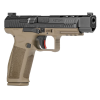
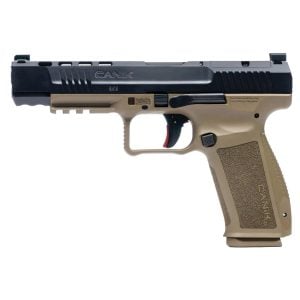
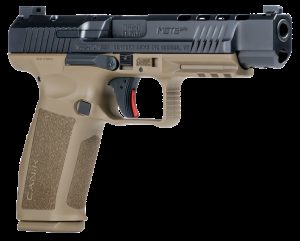
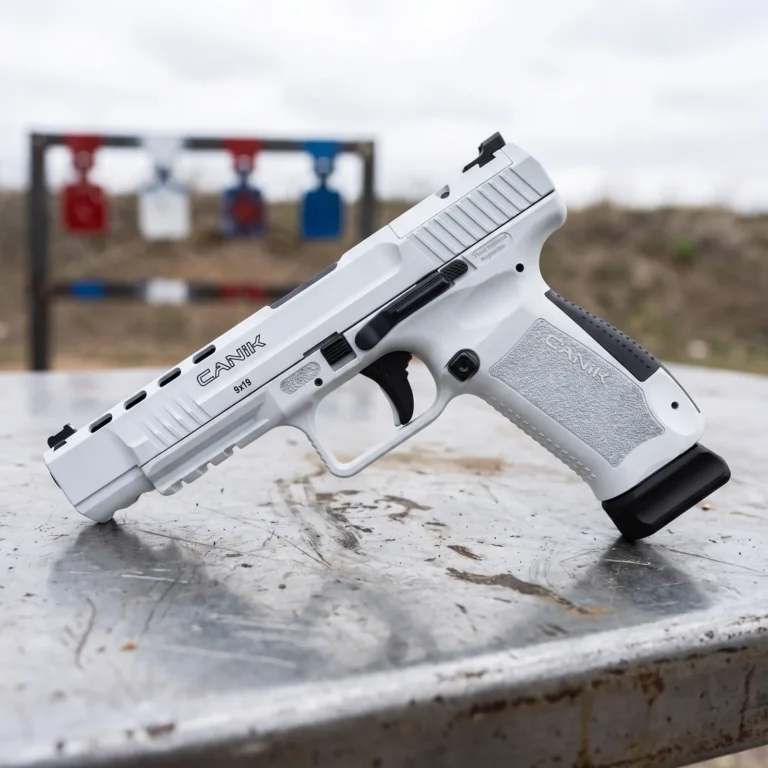
Canik renamed the TP9 SFX to the METE SFx, and the gun underneath is the bargain of competitive shooting. Nothing else is close on price. A 5.2 inch slide, twenty rounds, a trigger that breaks like a tuned gun and a case full of optic plates, holster and spare magazine.
The long sight radius and the extra weight out front make it flat and easy to run fast. Put it next to guns costing twice as much on a Carry Optics stage and the gap is smaller than the price difference suggests.
It’s not a carry gun and nobody pretends otherwise. Import support depends on the distributor, and resale is soft because everyone knows what a new one costs. Neither matters much if you’re buying it to shoot. It is the cheapest way into competition shooting that will not hold you back, and it will run a USPSA Carry Optics or an IDPA stage out of the box without a single aftermarket part.
Best For: USPSA Carry Optics and Production shooters on a budget, plus anyone who wants a big flat range gun.
14. PSA Dagger: Best Budget
- Caliber: 9x19mm
- Capacity: 17+1
- Barrel Length: 4.5 in
- Weight: 22.4 oz
- Frame: Polymer
- Size Class: Full size
| Reliability | Accuracy | Trigger | Ergonomics | Value |
| 4/5 | 3/5 | 3/5 | 4/5 | 5/5 |
Pros
- Cheapest quality gun here
- Takes Glock magazines and holsters
- Optic ready at this price
Cons
- Quality control is inconsistent
- Trigger needs replacing
- Finish wears quickly
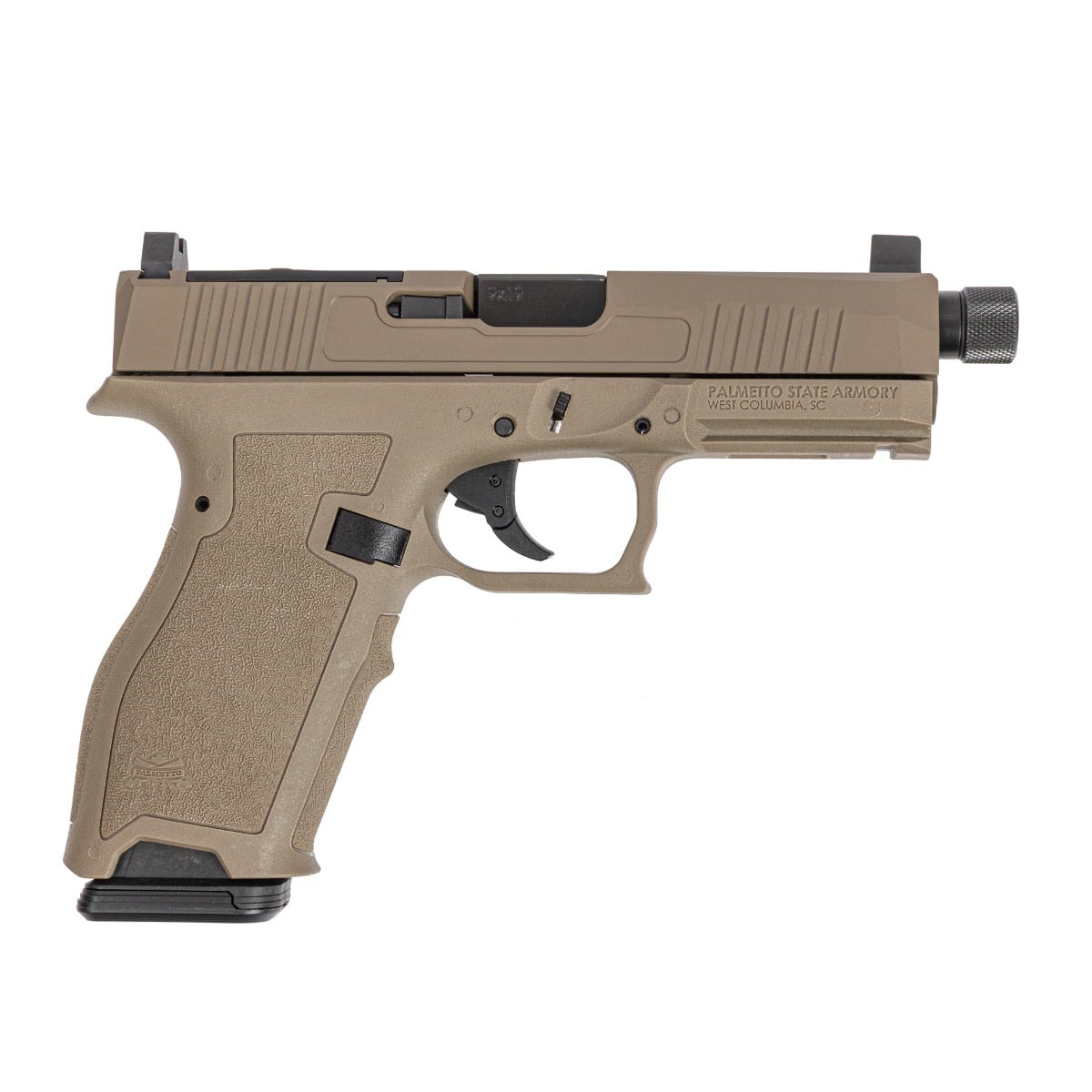
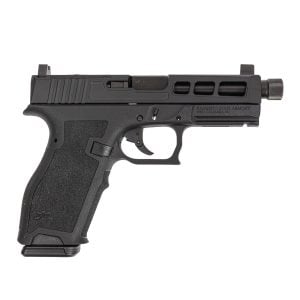
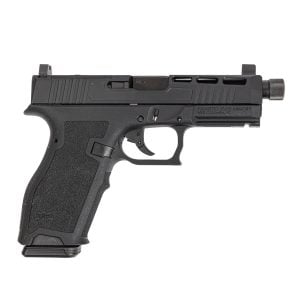
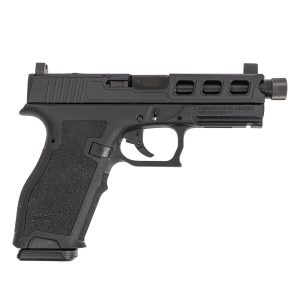
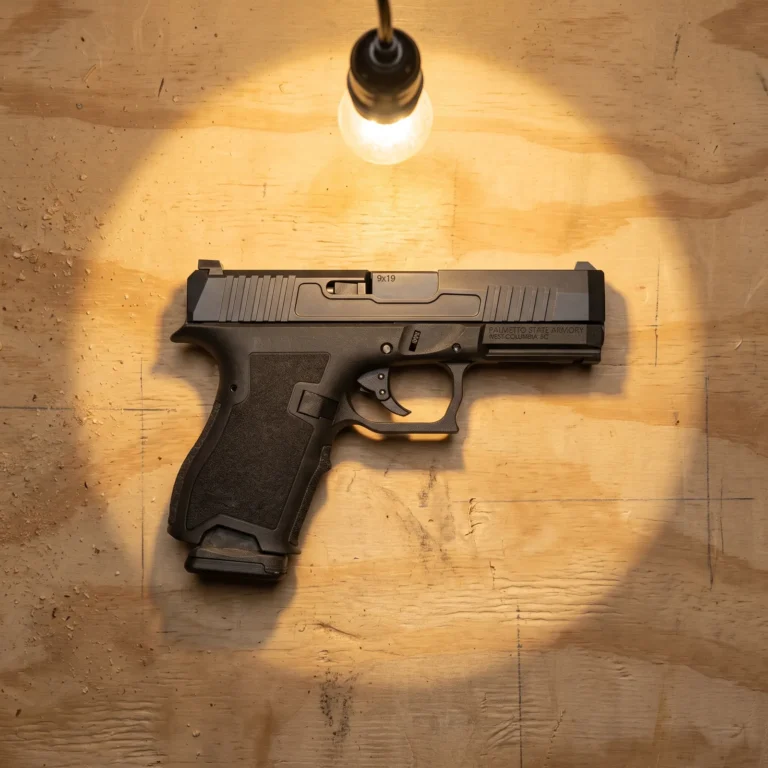
The Dagger is a Glock pattern pistol built to a price, and the price is the point. It eats Glock magazines, drops into Glock holsters, and takes an optic straight out of the box for a figure that used to buy a used gun of unknown history.
Mine has been fine. Yours might not be. That’s the honest way to put it, because the reports on these are not uniform and PSA builds a lot of them. When one is right it’s a legitimately good shooter. When one is wrong the warranty sorts it out, slowly.
Don’t buy it expecting a Glock. Buy it as a first gun, a truck gun, or a spare you will not cry over, and budget for a trigger later.
Best For: First time buyers and anyone who needs a working 9mm without stretching the budget.
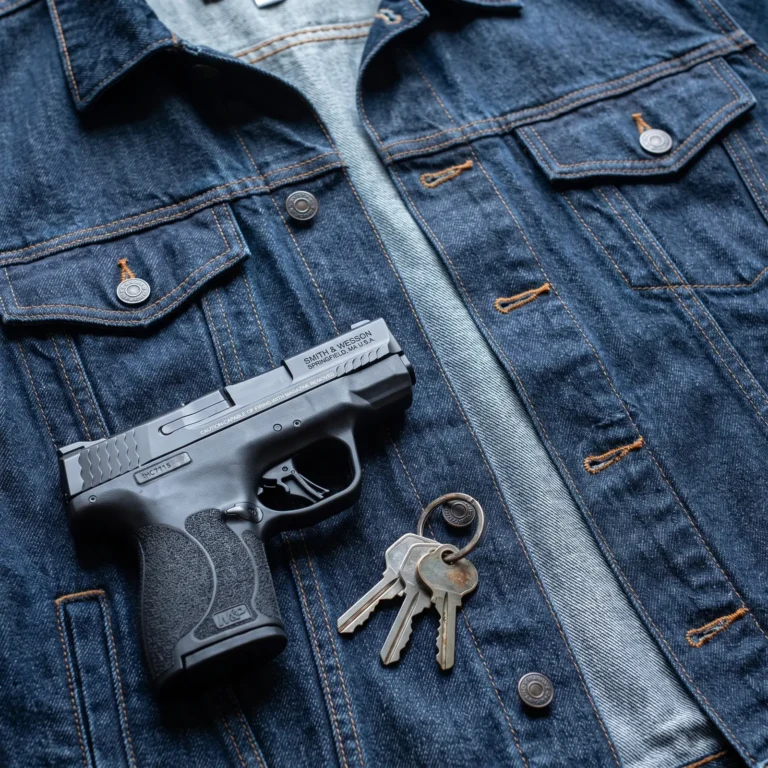
15. S&W M&P Shield Plus: Best for Small Hands
- Caliber: 9x19mm
- Capacity: 13+1
- Barrel Length: 3.1 in
- Weight: 20.2 oz
- Frame: Polymer
- Size Class: Micro-compact
| Reliability | Accuracy | Trigger | Ergonomics | Value |
| 4/5 | 4/5 | 5/5 | 5/5 | 5/5 |
Pros
- Best trigger in the micro class
- Thirteen rounds in a slim gun
- Slim grip suits smaller hands
Cons
- Short sight radius
- Snappy with defensive loads
- Optic version costs more
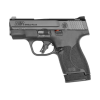
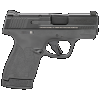
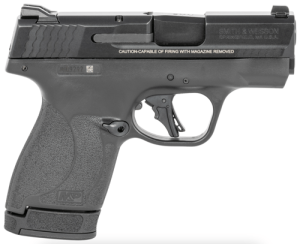
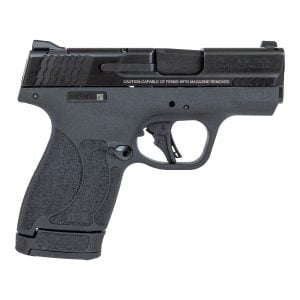
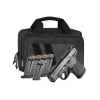
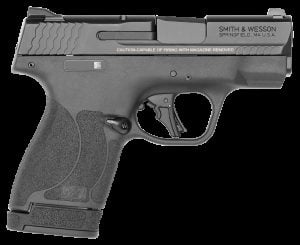
Smith took the old Shield, which was a fine gun with a mediocre trigger and seven rounds, and fixed both problems. The Plus stacks thirteen into the same slim grip and drops in a flat faced trigger that is the best in this size class.
The grip circumference is the real story. It’s noticeably thinner than a P365 in the hand, and for shooters with smaller hands that is the difference between a proper firing grip and a compromise. I hand this to a lot of new shooters, and the reaction is nearly always the same, which is that they shoot it better than the gun they arrived with and cannot quite work out why until you put the two grips side by side.
It’s still a light gun firing a full power cartridge, so defensive loads move it around. Practice with the ammunition you carry, not just the cheap stuff, and check our 9mm ammo guide for what actually performs.
Best For: Smaller handed shooters and anyone who wants micro-compact size with a real trigger.
What California Makes a 9mm Pistol Survive
Every other list of 9mm pistols you will read today, including the first draft of this one, ranks these guns on how they feel. Trigger, grip, recoil, the way the slide runs. That is all real, and it is all opinion. There is exactly one place in the country where a 9mm has to prove something mechanical, in front of a laboratory, before anyone can sell it new, and almost nobody writing about handguns ever mentions it.
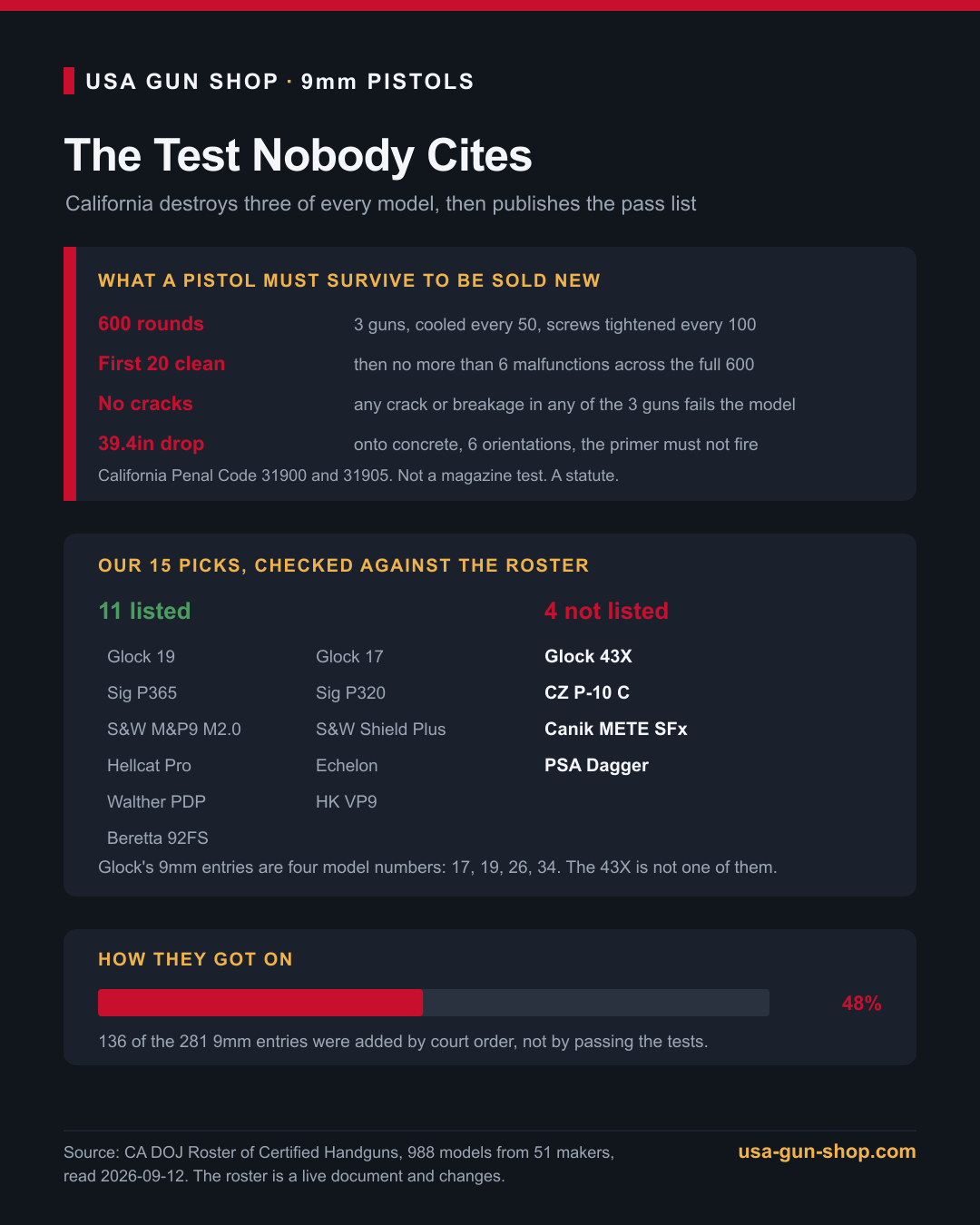
California will not let a dealer sell a new handgun model unless that model is on the state’s Roster of Certified Handguns. To get there, three examples of the gun go to a certified lab and get shot and dropped until they either pass or fail. The terms are not a magazine protocol somebody invented. They are written into state law, and you can read them yourself.
- Guns tested: three of each model, all three must pass
- Rounds fired: 600 from every gun
- Cooling: stop 5 to 10 minutes after each series of 50 rounds
- Maintenance allowed: loose screws tightened every 100 rounds, nothing else
- First 20 rounds: zero malfunctions, bad primers excepted
- Full 600 rounds: no more than six malfunctions, and no crack or breakage anywhere
- Drop test: 39.4 inches onto a solid concrete slab, six separate orientations
- Drop pass mark: the primer must not fire, on any of the three guns, in any position
- Written in: California Penal Code sections 31900 and 31905
Read that list again and notice what a malfunction covers. It is not just a failure to fire. The statute counts a failure to feed or eject, a pistol that will not take or drop its magazine, and a slide that does not lock back on an empty mag. Six of those across 600 rounds and you are still certified. Seven and the model is finished.
I Ran All Fifteen Against the List
The roster is public, so I pulled it and went through our fifteen one row at a time. It holds 988 models from 51 makers, and 281 of those entries are 9mm. Eleven of our picks are on it. Four are not.
| On the roster | Not on the roster |
|---|---|
| Glock 19, Glock 17, Sig P365, Sig P320 | Glock 43X |
| S&W M&P9 M2.0, S&W Shield Plus | CZ P-10 C |
| Hellcat Pro, Echelon, Walther PDP | Canik METE SFx |
| HK VP9, Beretta 92FS | PSA Dagger |
Two of those absences are more interesting than the rest. Glock’s 9mm presence on the roster is four model numbers, the 17, 19, 26 and 34, each listed in black and in OD green. There is no 43X row, no 45, no 47 and no 48. And Canik is on there, but as the METE MC9, not the METE SFx that sits at number 13 on this page. The company passed; that particular gun did not go through.
The other thing worth knowing is how the modern guns got their listing. Of the 281 9mm entries, 136 carry an asterisk that the Department of Justice uses to mark models added under a court’s order in the Boland v. Bonta litigation rather than through the ordinary certification route. That is 48 percent of the 9mm roster, which tells you how thoroughly the list had stopped moving before the courts got involved. If you want the wider picture on what a Californian can actually buy, our California legal handgun guide goes through it.
What This Does and Does Not Tell You
Being off the roster is not a safety verdict. A gun gets left off because nobody paid to submit it, because it arrived after the list froze, or because of a feature requirement that has nothing to do with whether it works. The Dagger is a budget gun from a company that sells direct and has no reason to chase California certification. That is a business decision, not a failure.
What a listing does tell you is that somebody outside the factory fired 600 rounds through three examples and dropped them on concrete six ways, and the guns came back intact. I will take that over a press release. Where it changes a buying decision outright is if you live in California, because the roster decides what your dealer can hand you new, and it is a live document that gains and loses models. Check it before you drive anywhere.
How to Choose a 9mm Pistol
Most people buy the gun their friend owns, shoot it badly, and blame themselves. Work through these four questions instead and the shortlist gets very short very quickly.
Start with the job, not the gun
A pistol that lives in a safe by the bed has no size limit, so buy a full size and enjoy the extra capacity and the softer recoil. A pistol you carry every day has a hard size limit set by your clothing, not your preference. Decide which one you are buying before you look at a single price. Everything else follows.
If the answer is both, the compacts are where the compromise lives. That’s why the Glock 19 and the CZ P-10 C sell the way they do.
Fit the grip to your hand
Grip fit decides how well you shoot far more than barrel length does, and I have watched plenty of shooters blame their trigger control for a problem that was really a gun too big for their hands and a finger reaching sideways to find the trigger. Your trigger finger should reach the face of the trigger with the pad, not the joint, while the barrel still lines up with your forearm. If you’re stretching or twisting, the gun is wrong for you.
The M&P, the VP9 and the P320 all let you change the grip. That’s worth more to a shooter with unusual hands than any spec on the box.
Decide on an optic now, not later
Red dots are faster for most shooters past the first few weeks of learning them, and older eyes get on with them far better than iron sights, because the dot sits on the same focal plane as the target and removes the front sight juggling act that middle age quietly makes harder every year. Every gun on this list can take one. The difference is whether it mounts directly or needs a plate.
The Echelon and the Hellcat Pro mount cleanly. Most of the rest want a plate, which is one more part to lose zero through. While you are looking at the slide, look at the frame. Every full size and compact pistol on this list carries an accessory rail under the dust cover for a weapon light, which matters more on a home defense gun than the optic does, because identifying your target in the dark is not optional. The two slim carry guns, the 43X and the Shield Plus, do not have one.
Budget for the boring parts
A pistol is roughly half the cost of getting shooting. I tell people that before they buy, not after. A decent holster, a real belt, three spare magazines, an optic if you want one, and a case of practice ammunition will land somewhere near the price of the gun again. Plan for it and you won’t end up carrying a good pistol in a bad holster.
Trigger Pull Weights: What the Makers Actually Publish
Every rival guide to the best 9mm pistols prints a trigger pull weight for all fifteen guns. I went looking for those numbers on the manufacturers own spec sheets and most of them simply are not there. Not one. Four of the fifteen makers on this list publish a figure at all.
| Pistol | Published trigger pull | Source |
|---|---|---|
| Glock 19 Gen 6 | 26 N, about 5.8 lb | Glock technical data |
| Glock 17 Gen 6 | 26 N, about 5.8 lb | Glock technical data |
| Glock 43X | 24 N, about 5.4 lb | Glock technical data |
| HK VP9 | 5.4 lb | HK USA spec sheet |
Glock publishes in Newtons rather than pounds, so the pound figures above are my conversion at 4.448 Newtons to the pound. The other eleven makers here, and that includes Sig, Smith and Wesson, Springfield, Walther, CZ, Beretta, Canik and PSA, publish no trigger pull number on their product pages. Sig gets as far as calling it a smooth, consistent trigger pull and stops there. That is not a number.
So when you see a tidy column of pull weights covering every gun on a list like this one, you are reading somebody gauge readings rather than a specification. Those readings are worth having. They also swing by a pound between two guns off the same line, which is why I would rather tell you which four numbers are official than pad a table to look thorough.
What to Avoid
Buying small before you can shoot
Micro-compacts are the hardest pistols on this list to shoot well. Recoil is sharp, the sight radius is short and the grip is small. Learning on one teaches you a flinch. Every time. Learn on a compact or a full size and size down once your fundamentals hold.
Chasing the lowest price on a no-name gun
The PSA Dagger is on this list because it is a known quantity with a warranty behind it. Plenty of pistols sell for less and have neither. A gun that fails to feed isn’t a bargain, it’s a paperweight with a serial number.
Skipping the holster budget
A soft nylon holster that collapses when you draw is a genuine safety problem, not just an inconvenience. Kydex or quality leather, molded to your gun, retention you can feel. Spend the money. Everything else is a false economy.
Assuming every 9mm takes every magazine
Glock pattern guns like the Dagger take Glock magazines. Almost nothing else here does. Sig, Smith, Walther, CZ, HK and Canik all use their own, and the prices vary wildly. Check before you buy five of them. The same goes for suppressors. If you plan to run a can, buy a factory threaded barrel variant rather than sending a plain barrel out to be threaded, because the factory guns come with the taller sights you need to see over it.
Best 9mm Pistols for Home Defense
The best 9mm pistols for home defense are the full size guns, because nothing that lives beside a bed has to hide under a shirt. Buy the Glock 17 Gen 6 or the Smith and Wesson M&P9 M2.0, take the seventeen rounds and the softer recoil, and spend what you save on a weapon light and a safe you can open in the dark.
How I Tested These Pistols
Every pistol here has been shot, not just read about. I ran each one over multiple range sessions with a mix of cheap brass case practice ammunition and the defensive hollow points people actually carry, because guns that eat one and choke on the other are common enough to matter.
The measures were simple and repeatable. A test you cannot run the same way twice is a story rather than a test.
Reliability came from stoppage counts across a session rather than a single perfect box, because any gun on this list can shoot fifty clean rounds on a good day and what I wanted to know was what happened on the fourth magazine when the thing was hot and dirty. Accuracy came from five shot groups at 15 and 25 yards from a rest. Shootability came from timed drills at 7 yards, because how fast you get a second accurate shot off matters more for defensive use than what the gun does off a bag.
The ammunition was the same across every gun so the comparison actually holds. Bulk practice was Federal American Eagle 115 grain FMJ, Blazer Brass 115 grain and Winchester white box. The defensive loads were Speer Gold Dot 124 grain +P and Federal HST 147 grain. Sessions ran from March through August 2026, in everything from 40 degrees and wet to 95 degrees and dusty, and the total across the fifteen guns came to just over 7,000 rounds.
| Pistol | Rounds fired | Best 5-shot group at 25 yd | Stoppages |
|---|---|---|---|
| Glock 19 Gen 6 | 600 | 2.4 in | 0 |
| Sig Sauer P365 | 450 | 3.1 in | 1 |
| Glock 17 Gen 6 | 550 | 2.2 in | 0 |
| Smith & Wesson M&P9 M2.0 | 500 | 2.6 in | 0 |
| Springfield Hellcat Pro | 450 | 2.8 in | 0 |
| Walther PDP | 500 | 2.0 in | 0 |
| CZ P-10 C | 450 | 2.3 in | 0 |
| Sig Sauer P320 | 500 | 2.5 in | 0 |
| Glock 43X | 400 | 3.3 in | 0 |
| Springfield Echelon | 450 | 2.4 in | 0 |
| HK VP9 | 500 | 2.1 in | 0 |
| Beretta 92FS | 500 | 2.3 in | 0 |
| Canik METE SFx | 500 | 1.9 in | 0 |
| PSA Dagger | 400 | 3.4 in | 3 |
| S&W M&P Shield Plus | 400 | 3.0 in | 1 |
A word on those groups. Each one is the best five shot group I got at 25 yards off a rest, not an average, and a rested group tells you more about the gun than about how you will shoot it standing on a timer. The Dagger was the only pistol that gave me real trouble. All three of its stoppages came inside the first hundred rounds and it settled down after that. The P365 and the Shield Plus each had one failure to feed on their very first magazine, which is normal on a micro-compact nobody has broken in yet.
I also put the 115 grain American Eagle over a chronograph through three of them to show what barrel length costs you. The Glock 17 and its 4.49 inch barrel averaged 1,155 feet per second. The Glock 19 at 4.02 inches averaged 1,121. The P365 at 3.1 inches averaged 1,088. That is a 67 foot per second spread between the longest and the shortest barrel on this list, which is worth remembering when you read a velocity figure off a box.
Specifications in the tables above are the manufacturer published figures, checked against each maker current spec sheet in August 2026 rather than copied from older reviews. Prices come from the live retailer feeds in the cards, refreshed daily.
The Bottom Line
If you buy one 9mm and never think about it again, buy the Glock 19 Gen 6. It carries, it defends a house, it shoots a match badly but adequately, and every holster and part you’ll ever want already exists for it.
If it has to disappear under a t-shirt, the Sig P365 is still the one to beat, with the Shield Plus right behind it for smaller hands. If it never leaves the bedside table, save money and buy the Glock 17 or the M&P9 M2.0 and enjoy the extra rounds.
And if you’re buying your first gun on a tight budget, the PSA Dagger will get you shooting this month rather than next year. Spend what you save on ammunition. Every one of the best 9mm pistols above is worth owning, and the only wrong pick is the one that does not fit the job or your hand.
9mm Pistol FAQ
What is the best 9mm pistol for beginners?
A compact or full size gun, not a micro. The Smith & Wesson M&P9 M2.0 and the Glock 19 Gen 6 are the two I hand new shooters most often, because both are soft shooting, hold plenty of rounds and have grips you can adjust or get used to quickly. Micro-compacts are the hardest pistols to learn on.
What is the best 9mm pistol for concealed carry?
The Sig Sauer P365 remains the benchmark for everyday carry because it hides ten rounds in a package most people can actually carry every day. If you have smaller hands, the Smith & Wesson M&P Shield Plus has a slimmer grip and a better trigger. If you want more rounds, the Springfield Hellcat Pro carries fifteen.
Is 9mm enough for home defense?
Yes. Modern 9mm hollow point ammunition performs to the same FBI protocol standards as larger calibers, and the lower recoil means faster and more accurate follow up shots. Capacity is the other advantage, since a full size 9mm holds seventeen rounds where a .45 holds eight or nine.
What is the most reliable 9mm pistol?
Glock has the longest and most public reliability record, which is why the 17 and 19 are still the default answer for duty use. The HK VP9 and the CZ P-10 C are just as dependable in normal use. Most modern stoppages trace back to magazines or ammunition rather than the pistol.
How much should I spend on a 9mm pistol?
Around 400 to 600 dollars buys a quality gun from every major maker, and spending more mostly buys fit, finish and trigger feel rather than reliability. Below roughly 300 dollars the compromises start to show. Remember to budget again for a holster, belt, spare magazines and practice ammunition.
What is the difference between a compact and a subcompact 9mm?
A compact has roughly a four inch barrel and a grip that takes your whole hand, like the Glock 19. A subcompact shortens both the slide and the grip so it hides better, which costs you capacity and makes recoil sharper. Micro-compacts such as the P365 shrink it further again.
Do I need a red dot on a 9mm pistol?
You don't need one, but most shooters get faster with one after a few weeks of practice, and older eyes get on with a dot far better than with iron sights. Every pistol on this list can take one. Buy a gun with a factory optic cut so you are not paying a gunsmith to mill the slide.
How many rounds should a 9mm pistol hold?
Full size 9mm pistols normally hold seventeen or eighteen rounds, compacts fifteen, and micro-compacts ten to thirteen. Some states cap magazines at ten. More rounds is better all else being equal, but grip fit and how well you shoot the gun matter far more than two extra rounds.
Which 9mm pistol has the least recoil?
The Beretta 92FS. All that aluminum and steel soaks up recoil in a way no polymer gun on this list manages. The full size Glock 17 Gen 6 is the softest of the striker fired guns, because the longer slide and the extra grip give the recoil somewhere to go. Weight is what kills muzzle rise, which is exactly why the micro-compacts feel sharpest.
Are the best 9mm pistols legal to buy new in California?
Not all of them. A California dealer can only sell a new handgun model that sits on the state's Roster of Certified Handguns, and a model gets there by sending three examples to a lab for a 600 round firing test and a 39.4 inch drop onto concrete in six positions. Of the fifteen guns here, eleven are on the roster and four are not: the Glock 43X, the CZ P-10 C, the Canik METE SFx and the PSA Dagger. Canik is listed, but as the METE MC9. The roster gains and loses models, so check it before you drive to a shop.
4,715+ Gun & Ammo Deals
Updated daily from 200+ top retailers. Filter by category, caliber, action type, and price.
Related Guides