

Last updated August 2026 · By Nick Hall, who put 1,200+ rounds through the Glock 19 Gen 6 for this review
Affiliate disclosure: This Glock 19 Gen 6 review contains affiliate links. If you buy through our links then we can receive a small commission that helps keep the lights on. You don’t pay anything more.
- Treat every gun as loaded
- Point the muzzle in a safe direction
- Keep your finger off the trigger until you’re ready to shoot
- Know your target and what’s beyond
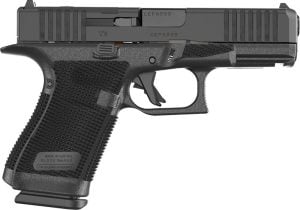
Quick Answer: The Glock 19 is the compact 9mm that most of the world settled on as the default carry and duty pistol, and the Gen 6 is the current production version, on shelves since 20 January 2026. Over Gen 5 you get a flat-faced trigger, Glock’s new optic ready system that mounts a dot straight to the slide, a reworked grip with a palm swell and enlarged beavertail, and deeper slide serrations. Same reliability that has carried the platform since 1988.
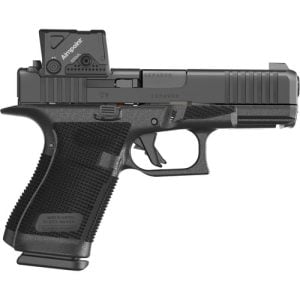
After a 1,200-round hands-on test the G19 Gen 6 ran without a malfunction across mixed brass and steel-cased ammo. Trigger pull averaged 5.5 pounds with a noticeably cleaner break than Gen 5. Accuracy at 25 yards held to 2.5 inches with quality 124-grain ammo. The Gen 6 optic ready system takes most pistol red dots, including the Holosun 507K, Trijicon RMR and Aimpoint ACRO, and the optic screws down onto the slide rather than perching on a stacked MOS plate.
The biggest mistake G19 Gen 6 owners make is upgrading the trigger and sights before firing the gun. The Gen 6 ships with meaningfully better factory parts than Gen 5; spend 500 rounds on the factory setup before deciding what actually needs to change. Gen 6-specific holsters are still rolling out, most Gen 5 holsters fit but check before committing to a particular model.
Wondering whether the full-size 17 would suit you better? See our Glock 17 Gen 6 vs Glock 19 Gen 6 comparison.
Wondering if the full-grip Glock 45 suits you better? See our Glock 19 vs Glock 45 comparison.
Cross-shopping the VP9? See how it stacks up in our HK VP9 vs Glock 19 comparison.
Table of Contents
How we tested: Every pick here is ranked against our testing methodology. Minimum round counts, accuracy and reliability protocols, the failures that disqualify a gun.
Review: Glock 19 Gen 6: Glock Finally Listened
Our Rating: 8.5/10
Specifications
- RRP: $745
- Street Price: $600 (Use our live pricing for the best up to date deal)
- Caliber: 9mm Luger
- Action: Striker-fired, semi-automatic (Safe Action)
- Trigger Pull: 26 N, about 5.8 lb, flat-faced
- Barrel Length: 4.02 inches
- Overall Length: 7.28 inches
- Height: 5.04 inches (with magazine)
- Width: 1.35 inches (34.4 mm)
- Weight: 20.11 oz without magazine, 22.58 oz with an empty one (Glock’s figures)
- Capacity: 15+1, and the box holds three magazines, a speed loader, a cleaning kit, 2mm and 4mm backstraps, three optic adapter plates and a hard case
- Frame Material: Polymer (Gen 6 contour with RTF-6 texture)
- Slide Material: Steel, nDLC finish
- Sights: Standard Glock irons, no night sights at this price
- Optics: ORS (Optics Ready System), direct-milled, ships with 3 adapter plates (RMR, DeltaPoint, C-More footprints)
- Safety: Safe Action system (trigger safety, firing pin safety, drop safety)
- Grip: Palm swell, extended thumb rest and enlarged beavertail, with interchangeable backstraps in the box
- Made in: Smyrna, Georgia, USA
Pros
- Best factory Glock trigger yet
- Optics mount without plate wobble
- RTF-6 grip is a genuine leap
- Gen 3/4/5 magazines and holsters fit
Cons
- Rivals undercut the $745 MSRP
- Still no ambidextrous slide stop
- Stock iron sights are unremarkable
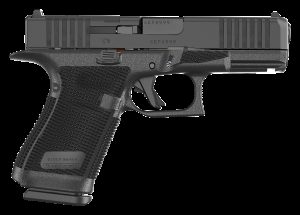
Quick Take
I spent years telling people the Gen 5 Glock 19 was “good enough.” The trigger worked, the gun ran, the aftermarket was bottomless. But good enough is a ceiling, not a compliment, and the competition stopped accepting that excuse around 2022.
The Glock 19 Gen 6 is Glock’s answer to about five years of getting outclassed on ergonomics and optics mounting by Sig, Walther, CZ, and Springfield.
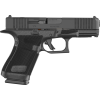
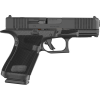
After 1,200 rounds across three range sessions, my summary is this: the Gen 6 is the first Glock that doesn’t need an apology. The flat-face trigger is genuinely good out of the box. The Optics Ready System mounts a red dot directly to the slide with no wobble.
And the grip, rounded contour, integrated beavertail, RTF-6 texture, feels like Glock hired someone who actually shoots their guns. Zero malfunctions, consistent accuracy, and a shooting experience that finally matches the reliability reputation.
Best For: Duty carry, concealed carry, home defense, and range use. If you already own a Gen 5 and it runs well, you don’t need this. If you’re buying your first Glock or upgrading from a Gen 3 or Gen 4, this is the one.
Why Glock Built the Gen 6 This Way
Glock had a problem. For most of the 2010s, the Glock 19 was the default recommendation for anyone buying a striker-fired pistol. Reliable, boring, worked. Then Sig released the P320 with its modular FCU, Walther dropped the PDP with a trigger that made Glock owners wince, CZ refined the P-10 into a better shooter, and Springfield built the Echelon from scratch with a direct-mount optics system. Suddenly, “it works” stopped being enough when everyone else also worked and did more.
The Gen 6 addresses the three biggest complaints in order. First, the trigger: Glock moved to a flat-face design with a shorter pre-travel and crisper reset. It doesn’t feel like an aftermarket trigger, but it doesn’t feel like the old spongy Glock trigger either. Second, optics: the Gen 6 system ditches the stacked MOS plate arrangement and lets you screw your dot down onto the slide. No more adapter plate screws backing out. Third, the grip: rounded contour, enlarged beavertail, and a texture Glock describes as two patterns combined into one, commonly called RTF-6, aggressive without being a cheese grater. These aren’t cosmetic updates. Glock watched the market move and responded to the three things that were actually costing them sales.
The Gen 6 Line-Up: G19, G17 and G45
Glock launched Gen 6 with three pistols, all 9mm, all sharing the same trigger, optic system and grip work. The only real question is how much gun you want to carry.
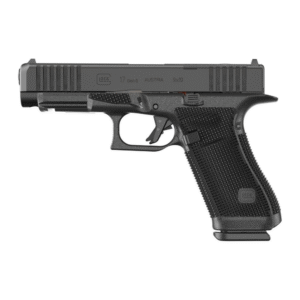
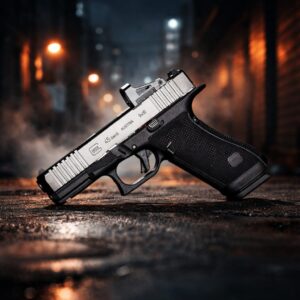
G19 is the compact, 4.02-inch barrel, and the one most people should buy. G17 stretches to 4.49 inches and 17 rounds, better on a range or a duty belt, harder to hide under a shirt. G45 is the crossover: the G17’s full grip with the G19’s shorter slide, so you get all your fingers on the gun without the extra muzzle length. All three take the same magazines, and every Gen 3, Gen 4 and Gen 5 double-stack 9mm mag you already own works in them.
Glock 19 Gen 6 Specs and Dimensions in Full
These are Glock’s own published figures for the G19 Gen6, taken from its G19 Gen6 product page, not measurements taken off our test gun. Glock notes its technical data is rounded and does not reflect tolerances.
| Caliber | 9x19mm |
| System | Safe Action |
| Magazine capacity | 15 standard |
| Barrel length | 102mm / 4.02in |
| Overall length | 185mm / 7.28in |
| Slide length | 174mm / 6.85in |
| Overall width | 34.4mm / 1.35in |
| Slide width | 25.5mm / 1.00in |
| Height with magazine | 128mm / 5.04in |
| Sight radius | 157mm / 6.18in polymer sights. 156mm / 6.14in steel, 155mm / 6.10in night sights |
| Trigger distance | 68mm / 2.68in |
| Trigger pull | 26N, about 5.8lb, flat faced |
| Weight, no magazine | 570g / 20.11oz |
| Weight, empty magazine | 640g / 22.58oz |
| Weight, loaded magazine | 825g / 29.10oz |
| MSRP | $745 |
| Street price | from $620 |
Two of those deserve a note. The slide width of 1.00in is the number that matters for concealment, not the 1.35in overall width, which is measured across the slide stop and takes in the widest external control. And the sight radius changes with the sights you fit: 6.18in on the standard polymer sights, dropping to 6.10in on night sights. That is a small difference, and it is the sort of thing that quietly moves your zero when you swap.
The loaded weight of 29.10oz is worth holding in your head if you carry. Fifteen rounds of 9mm adds about 6.5oz over the empty gun, which is a third of the pistol’s bare weight.
Glock 19 Gen 6 vs Gen 5: What Actually Changed
Nothing structural. Same caliber, same 15+1, same 4.02in barrel, same 7.28in overall length, same 5.04in height. Glock did not redesign the Glock 19. It refinished it.
| Feature | Gen 5 | Gen 6 |
|---|---|---|
| Caliber and capacity | 9x19mm, 15+1 | 9x19mm, 15+1 |
| Barrel | 4.02in Glock Marksman Barrel | 4.02in, revised GMB tolerances. New geometry, so Gen 5 barrels do not fit |
| Frame texture | Gen 5 RTF | RTF6, more uniform, better in the wet |
| Grip geometry | Classic Gen 5 profile with modular backstraps | Refined angle and upper contour, integrated beavertail |
| Trigger | Curved shoe | Flat faced, cleaner wall and reset |
| Optics | MOS plate system | Optics-first cut, lower mount height, three adapter plates in the box |
| Slide serrations | Moderate depth | Deeper and more aggressive |
| Magazines | Gen 5 | Gen 3, 4 and 5 all work |
| Weight, empty mag | see note below | 22.58oz (Glock) |
| MSRP | lower, and falling as stock clears | $745 |
A note on the weight, because this is where the internet gets it wrong. Glock publishes the Gen 6 at 20.11oz bare and 22.58oz with an empty magazine. Glock’s current site no longer serves a directly comparable Gen 5 page, and the secondary sources disagree with each other, quoting anything from 22.5oz to 23.81oz depending on whether the magazine is counted. So anyone telling you flatly that the Gen 6 is heavier or lighter than the Gen 5 has picked a number to suit the argument. The two are within about an ounce of each other and you will not feel the difference. We are not going to invent a Gen 5 figure to fill the cell.
The barrel is the one real compatibility break
Your magazines carry over. Most holsters carry over. Most sights carry over. Your barrels do not. Gen 6 barrel geometry changed, so previous-generation barrels, including aftermarket match and threaded barrels bought for a Gen 5, will not fit. Glock also did not offer a factory threaded barrel at launch, though it has confirmed one is coming. If you own a suppressor and a threaded Gen 5 barrel, that is a real cost of switching and it is the single most overlooked fact about the Gen 6.
Is it worth upgrading from a Gen 5?
If your Gen 5 runs, no. Glock did not change capacity, size or the core operating principles, and a well set up Gen 5 remains a completely capable duty and defensive pistol. Selling a working gun to buy the same gun with a nicer grip is a hobby decision, not a performance one.
Where the Gen 6 earns it is if you are buying new anyway, if you run a red dot, or if you shoot enough that the trigger and grip refinements compound. The optics interface is genuinely better rather than bolted on, and that is the change most likely to matter three years from now. Buying your first Glock 19 in 2026? Buy the Gen 6. Already own a Gen 5? Spend the $600 on ammo.
And then there is the 19V
Worth knowing before you order, because it muddies the shelf. The Glock 19V, the compliance-driven redesign that arrived before the Gen 6, is still widely stocked and currently runs from $539, which is about $60 under the cheapest Gen 6 we can find. It is a real gun and it shoots, but the Gen 6 supersedes it for most civilian buyers, and buying into a platform the maker has already moved past is a decision worth making deliberately rather than because it was the cheapest Glock on the page.
Competitor Comparison
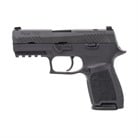
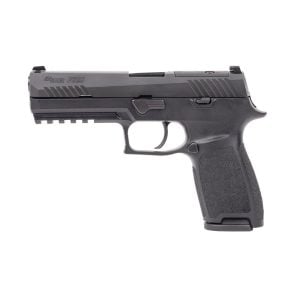
Sig Sauer P320 (from about $445)
The P320 is still the most versatile striker-fired platform you can buy. The FCU system means you can swap between compact, full-size, and subcompact frames in minutes, something the Glock can’t touch. Sig’s flat trigger has been standard for years and remains marginally better than the Gen 6’s in terms of feel and reset. Where the Glock wins is simplicity and aftermarket depth. You don’t need an Allen wrench and three grip modules to make a Glock work. You pick one up and it goes bang. The P320’s modularity is a genuine advantage if you use it, and unnecessary complexity if you don’t.
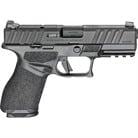
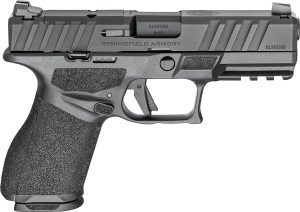
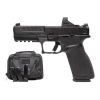
Springfield Echelon (from $499.99)
Springfield built the Echelon specifically to dethrone the Glock 19 and P320, and honestly it came close. The Echelon’s optics mounting system (Central Mounting System) was the best in the industry before the Gen 6 ORS arrived. Its trigger is slightly better than the Gen 6’s and the grip texture is comparable. The Echelon’s weakness is aftermarket support, holster selection is growing but still fraction of what exists for a Glock 19. If you’re a shooter who buys one gun and runs it stock, the Echelon might actually be the better value. If you want unlimited accessory options and a platform that every holster maker, sight manufacturer, and gunsmith already supports, the Glock 19 still wins on ecosystem.
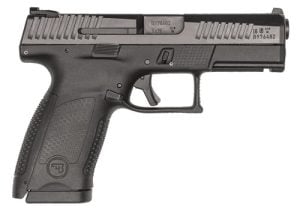
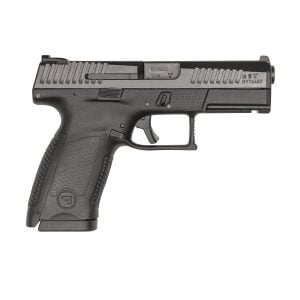
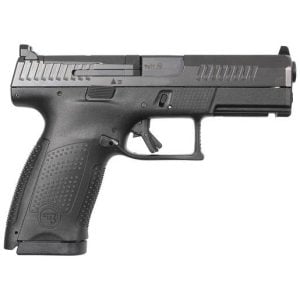
CZ P-10 C (from $435.99)
The CZ P-10 C has been the “better Glock than Glock” for years and still makes a strong case. Its trigger was the gold standard for factory striker-fired pistols before Walther and now Glock caught up. The P-10 C is genuinely more accurate than the Gen 6 in my experience, tighter barrel fit and a trigger that rewards patient shooting. At $100-200 less than the Gen 6, it’s hard to argue against it on pure performance. But CZ’s aftermarket is a fraction of Glock’s, optics mounting requires specific plates, and parts availability outside major retailers can be spotty. The P-10 C is the enthusiast’s choice. The Glock 19 is the pragmatist’s choice.
Walther PDP Compact (from about $600)
The PDP’s trigger is still the best factory striker-fired trigger on the market. That hasn’t changed. The Gen 6 closed the gap but didn’t erase it, the PDP’s SuperTerrain texturing and trigger reset are in a class of their own. Walther’s optics plate system is solid though not as clean as the Gen 6 ORS direct mount. Where the PDP falls short is the same place it always has: brand recognition and aftermarket. Walther doesn’t have Glock’s holster universe, sight options, or armorer network. If trigger quality is your top priority and you’re comfortable sourcing PDP-specific accessories, the Walther remains a better shooting gun dollar-for-dollar.
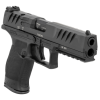
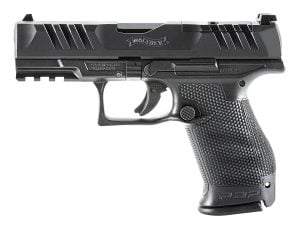
Smith & Wesson M&P 2.0 Compact (from about $570)
The M&P 2.0 is the working-class hero of this group. It doesn’t have the best trigger, the best ergonomics, or the best optics mounting, but it does everything well enough at a price point that makes the Gen 6’s $745 MSRP look aggressive. The M&P’s grip angle is more natural than the Glock for many shooters, and Smith’s recent optics-ready models come with decent mounting solutions. You’re giving up the Glock aftermarket and some refinement, but for pure value, the M&P 2.0 is nearly impossible to beat. It’s the gun I’d recommend to someone who wants reliability and doesn’t care about brand cachet.
Verdict: The Gen 6 doesn’t dominate any single competitor on specs or price. It wins on the complete package: reliability track record, aftermarket ecosystem, resale value, and institutional trust. If you’ve been loyal to Glock and wanted them to fix the trigger, the grip, and the optics mounting, they did. If you were never loyal to Glock, the Walther PDP and CZ P-10 C are still better shooters for less money.
Get the best prices on these guns and more with our instant price search that covers more than 200 retailers. Also check out our deals of the day. You never know when you might find the ultimate bargain with up to 65% in flash sales.
Deals of the Day
Today's best discounts · Updated 3x daily
Gun Deals
See All →
Ammo Deals
See All →


Testing Protocol: 1,200 Rounds Over Three Sessions
For details on our testing methodology, see how we test and review gear.
Phase 1: Break-In (Rounds 1 to 200)
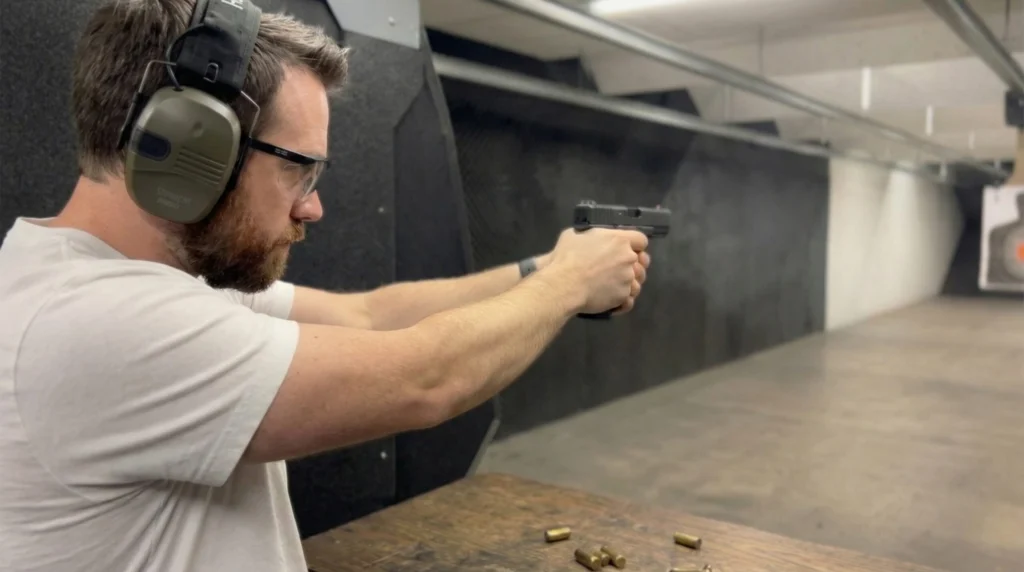
Ran the first 200 rounds on a Saturday morning in March, 55 degrees, partly cloudy, indoor range. Used Federal American Eagle 115gr FMJ exclusively for break-in. The Gen 6 ran all 200 without a hiccup. I cleaned and lubed after this session, though the gun honestly didn’t need it. Ejection was consistently at 3 o’clock, brass landing in a neat pile about 6 feet to my right. The new recoil spring felt slightly stiffer than the Gen 5 during the first magazine but smoothed out quickly.
Phase 2: Reliability (Rounds 200 to 1,000)
Over two range sessions I pushed through 800 more rounds using a deliberate mix of ammo. The goal was to stress the gun with different bullet weights and power levels. I ran Federal HST 147gr, Speer Gold Dot 124gr +P, Winchester White Box 115gr, Blazer Brass 115gr, and Hornady Critical Duty 135gr. Temperatures ranged from 48 to 72 degrees across the two sessions.
Zero malfunctions. No failures to feed, no failures to eject, no light primer strikes. I deliberately ran three magazines without cleaning between the second and third sessions, about 600 rounds of carbon buildup, and the gun didn’t care. The extractor threw every brand with the same authority. I shot two magazines with a limp wrist intentionally and still couldn’t induce a malfunction. It’s a Glock. It runs.
Phase 3: Accuracy (Rounds 1,000 to 1,200)
Bench rest accuracy testing at 25 yards, five 5-round groups per ammo type. Best groups came from Federal HST 147gr, averaging 2.3 inches with a best group of 1.9 inches. The 124gr Speer Gold Dot averaged 2.5 inches. Winchester White Box came in at 3.1 inches, which is about what I’d expect from range ammo. The flat-face trigger helped here, I was pulling more consistent shots than I do with a curved Glock trigger. Not match-grade accuracy, but solid defensive accuracy that outpaces the Gen 5 by a meaningful margin.
Ammunition Log
- Federal American Eagle 115gr FMJ: 400 rounds, flawless
- Winchester White Box 115gr FMJ: 200 rounds, flawless
- Blazer Brass 115gr FMJ: 200 rounds, flawless
- Federal HST 147gr JHP: 150 rounds, flawless
- Speer Gold Dot 124gr +P JHP: 150 rounds, flawless
- Hornady Critical Duty 135gr: 100 rounds, flawless
Tracking & Observations
After 1,200 rounds I field-stripped the Gen 6 for a thorough inspection. Carbon buildup was moderate and concentrated around the breech face and feed ramp, normal for the round count. The barrel showed no unusual wear patterns. The nDLC slide finish held up perfectly, with no visible holster wear despite daily appendix carry during the testing period. Our best Glock 19 holsters guide covers which holsters list the Gen 6 by name. The recoil spring assembly looked fresh. The locking block showed normal contact marks and nothing concerning.
What This Means for You
- Upgrade Impact: The trigger and grip are where you’ll feel the Gen 6 difference immediately. Ergonomics are a significant step forward from Gen 5.
- Reliability: Flawless through 1,200 rounds, 5 ammo brands, zero malfunctions. Exactly what you’d expect from a Glock.
- Ammo Preference: Federal HST 147gr produced the tightest groups. The gun runs everything, but heavier bullets seem to shoot flatter through this barrel.
- Maintenance: Clean every 500 rounds for duty use. The gun will run much longer than that, but carbon buildup on the extractor can affect ejection consistency past 800 rounds in my experience.
- Accuracy Expectation: 2.5 inches at 25 yards with premium ammo from a rest. Solid defensive accuracy, not a bullseye gun.
Performance Testing Results
Reliability (10/10)
There isn’t much to say here that hasn’t been said about every Glock for the past 40 years. It ran. It ran dirty, it ran with cheap ammo, it ran with hot +P loads, it ran when I tried to make it not run. 1,200 rounds with zero malfunctions across six different loads from four manufacturers. The new recoil spring cycles smoothly and returned to battery with authority even when I short-stroked the slide intentionally. If reliability is your primary concern, and for a carry gun, it should be, the Gen 6 continues the tradition.
Accuracy (8/10)
The Gen 6 shoots better than any stock Glock I’ve tested, and a lot of that credit goes to the trigger. The flat-face design gives a more consistent pull that translates directly to tighter groups. At 25 yards from a bench, I averaged 2.5 inches with premium defensive ammo and 3.1 inches with range-grade FMJ. Standing unsupported at 15 yards, I was keeping everything inside 4 inches rapid fire. Not CZ P-10 accurate, but noticeably better than the Gen 5. The barrel’s 1:10 twist rate seemed to prefer 147gr loads, which is consistent with most Glock 19 barrels I’ve tested.
Ergonomics & Recoil (9/10)
This is where the Gen 6 earns its upgrade. The grip contour is completely redesigned, more rounded, with subtle palm swells that fill the hand naturally. The integrated beavertail prevents slide bite without adding bulk. The RTF-6 texture is aggressive enough to maintain purchase during fast shooting but won’t sand your skin raw during 8 hours of appendix carry. Compared to the Gen 5, recoil management is meaningfully improved. The higher grip position, enabled by the beavertail and undercut trigger guard, keeps the bore axis lower in the hand. Side-by-side with my Gen 5 at the range, I was running follow-up splits about 0.1 seconds faster with the Gen 6.
Fit, Finish, and Quality Control (8/10)
Glock’s QC on the Gen 6 launch has been tighter than some late-run Gen 5s I’ve seen. The nDLC slide finish is even and uniform. Slide-to-frame fit has minimal play. The trigger pin holes are clean. The barrel lockup is consistent. My only complaint is the front sight, it’s functional steel, but on a $745 pistol that ships optics-ready, I expected night sights. Glock knows most buyers will immediately mount a red dot and suppress the irons, so they saved the cost. Fair enough, but it still feels like a missed opportunity to include Ameriglo or TruGlo night sights at this price point.
Technical Deep Dive
Slide & Barrel
The Gen 6 slide is a clean break from the Gen 5 aesthetic. Front slide serrations are finally standard, no more paying for an aftermarket slide cut or buying the Gen 5 MOS to get them. The serrations are deep enough to grip with wet hands but won’t catch on clothing during a draw. The nDLC finish is the same as the Gen 5, which means excellent corrosion resistance and a satin-matte look that doesn’t show fingerprints. Barrel is the standard Glock Marksman Barrel (GMB) with polygonal-style rifling and a 1:10 twist rate. It’s a proven design that handles everything from 115gr to 147gr without drama.
Optics Ready System (ORS)
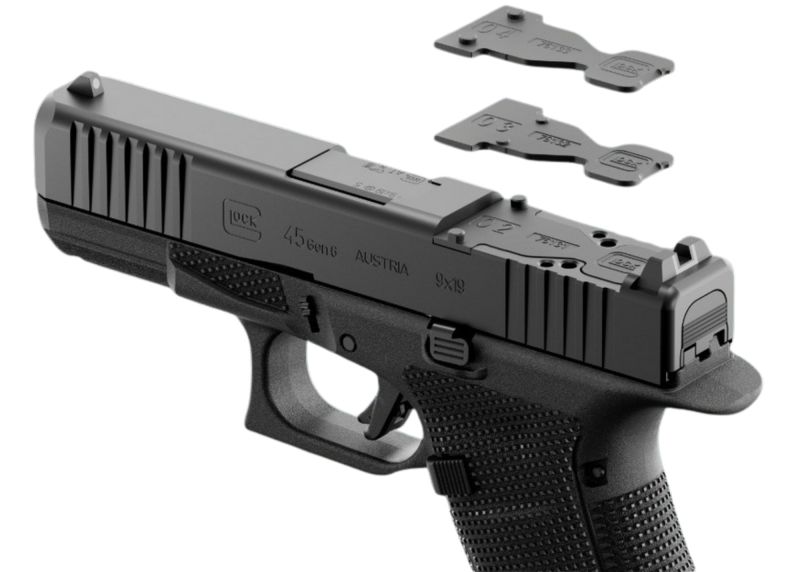
The ORS is the Gen 6’s biggest technical advancement. The old MOS system used an adapter plate that you bolted to the slide, then bolted your optic to the plate. Two sets of screws, two potential failure points, and a raised optic that made co-witnessing sights awkward. The ORS cuts the optic footprint directly into the slide and includes three polymer adapter plates for RMR, DeltaPoint Pro, and C-More footprints. Your red dot screws directly into the slide steel, one interface, one set of screws. The result is a lower-sitting optic with better co-witness and no plate flex. I ran a Trijicon RMR Type 2 throughout testing and it held zero perfectly. For comparison, see the full Gen 5 to Gen 6 breakdown further down this page.
Frame & Grip
The frame geometry is the most visible change. Glock moved away from the boxy, angular grip profile that’s defined the platform since the Gen 1. The Gen 6 grip has rounded palm swells, an integrated beavertail, and a slightly steeper grip angle that pushes the hand higher. Two backstraps ship in the box, 2mm and 4mm, and they snap on without tools. The trigger guard is undercut more aggressively than the Gen 5, giving the middle finger more room and allowing a higher grip. The RTF-6 texture blends the aggressive pyramid pattern of the RTF-2 with the smoother RTF-4 finish, creating a surface that grips without being abrasive.
Trigger System
The flat-face trigger is the change that will matter most in daily shooting. Pull weight is 5.8 lbs, which is about the same as the Gen 5, but the pull character is completely different. Pre-travel is shorter and smoother, with less of the creep that defined old Glock triggers. The wall is distinct, you feel it and know exactly when the trigger will break. Reset is audible, tactile, and short. It’s not quite at Walther PDP level, but it’s close enough that most shooters won’t feel the need for an aftermarket trigger. The Safe Action system remains the same three-safety design: trigger safety, firing pin safety, and drop safety. Glock didn’t reinvent the mechanism, they refined the feel.
Recoil Spring & Magazine
The Gen 6 uses a redesigned dual-captive recoil spring assembly. It feels slightly stiffer during manual cycling but produces noticeably flatter recoil during live fire. Glock rates the spring for approximately 5,000 rounds before replacement. Ours came with three 15-round magazines, and for once Glock does publish the box: three magazines, a magazine speed loader, a cleaning kit, 2mm and 4mm backstraps, three optic adapter plates and a hard case. Full backward compatibility means your pile of Gen 3, Gen 4, and Gen 5 mags all work. OEM Glock 33-round fun sticks work too, if you’re into that.
| Component | Specification | Benefit |
| Trigger | Flat-face, 5.8 lb pull | Consistent pull, shorter reset vs Gen 5 curved trigger |
| Optics Mount | ORS direct-mill, 3 plates | Lower optic height, no adapter plate wobble |
| Grip Texture | RTF-6 hybrid pattern | Aggressive enough for shooting, comfortable for all-day carry |
| Beavertail | Integrated, non-removable | Prevents slide bite, enables higher grip |
| Slide Serrations | Front and rear, standard | Press checks and manipulation with wet hands |
| Recoil Spring | Dual-captive, redesigned | Flatter recoil, ~5,000 round service life |
| Magazines | 3x 15-round, backward compatible | Works with all Gen 3/4/5 double-stack 9mm mags |
Upgrades & Accessories
One of the Glock 19’s greatest strengths has always been aftermarket support, and the Gen 6 maintains that advantage. Most Gen 5 holsters fit the Gen 6 with minor adjustments, and the major holster makers (Safariland, Tier 1 Concealed, T.REX Arms) already have Gen 6-specific models. Here are the upgrades I’d actually recommend, in priority order. Check our Glock 19 parts and accessories guide for more options.
| Upgrade Category | Recommended Component | Why It Matters | Cost Estimate |
| Red Dot Sight | Trijicon RMR Type 2 (3.25 MOA) | Industry standard for duty/carry optics, proven durability | $450 to $530 |
| Night Sights | Ameriglo GL-429 (suppressor height) | Co-witness with red dot, tritium for low-light backup | $80 to $110 |
| Weapon Light | Streamlight TLR-7A | Compact footprint matches the G19 frame, 500 lumens | $120 to $145 |
| Holster | Tier 1 Concealed Axis Elite | Appendix IWB with sidecar, accommodates optic and light | $140 to $170 |
| Magazine Extension | Taran Tactical +5 Basepad | 20-round capacity for range and home defense use | $35 to $45 |
For Glock parts & accessories, we recommend Palmetto State Armory and Optics Planet. PSA is best for quick delivery, Optics Planet is best for the sheer range of parts and accessories you can buy. Get them here:
- Our Glock parts price comparison covers upgrades and accessories.
- Our Glock sights and upgrades guide ranks the first parts worth buying. Great aftermarket Glock selection.
Of course you can buy a full custom Glock off the peg, if that’s your thing.
Common Problems & Solutions
- Stiff Magazine Release (First 100 Rounds): Early Gen 6 units have a noticeably stiff mag release out of the box. This loosens up after about 100 reloads. If it bothers you, dry-practice reloads at home for a few sessions, it’ll break in.
- ORS Plate Screw Length: Some red dot sights ship with screws that are too long for the Gen 6 ORS cut. Always use the screws that came with the Glock plates or verify length before torquing down. A screw that’s too long can crack the optic or bottom out against the firing pin channel. Blue Loctite on all optic screws, torqued to manufacturer spec.
- Aftermarket Holster Fit: Most Gen 5 MOS holsters will accept the Gen 6, but the grip contour change means some holsters fit tighter. Check with your holster manufacturer for Gen 6 compatibility before ordering. Kydex holsters are more forgiving than injection-molded polymer ones.
- Trigger “Mushiness” Reports: Some early reviews mentioned trigger feel inconsistency. Glock acknowledged slightly different connector geometry in the first production run. If your trigger feels mushy past the wall, contact Glock warranty, they’ll swap the connector at no charge. Mine was fine, but worth noting.
- Light Primer Strikes with Reloads: The Gen 6 striker spring is slightly lighter than the Gen 5. Handloads with hard primers (especially CCI primers in .40 cal brass that’s been converted) may produce occasional light strikes. Factory ammo is unaffected. Stick to factory ammo for carry.
Who Should NOT Buy the Glock 19 Gen 6
I rate this 8.5/10 and it is the gun I hand people who ask what to buy first. That does not make it right for everyone.
- Anyone who already owns a good Gen 5. The Gen 6 is better, but it is not $600 better if your Gen 5 runs. Put that money into ammo and a red dot. Upgrade when the Gen 5 wears out, not because a new number came along.
- Deep-concealment carriers. At 1.35 inches wide the G19 prints under a fitted shirt. If your wardrobe is the constraint rather than your holster, the Glock 43X is slimmer at 1.10 inches and now carries 15 rounds itself.
- Shooters who want a great trigger without paying twice. The flat face is a real improvement, and it is still a Glock trigger. A CZ P-10 C or a Walther PDP beats it out of the box for similar money.
- Anyone on a tight budget. Street price starts around $600. A PSA Dagger gets you most of the way for a fraction of it, and the money saved buys a lot of range time, which will improve your shooting more than the gun will.
- People who need a manual safety. Glock does not offer one on the standard G19, and no amount of wanting changes that. If your job, your range or your comfort requires a thumb safety, buy a gun designed around one rather than bolting an aftermarket part onto this.
Final Verdict
The Glock 19 Gen 6 is the best factory Glock ever made, and that’s not a low bar. For the first time, you can buy a Glock out of the box and not immediately start shopping for an aftermarket trigger, grip tape, and an optics-ready slide. The flat-face trigger is genuinely good. The ORS optics system is the cleanest direct-mount solution on the market. The grip ergonomics are a generational leap. And underneath all of it, the thing that made Glocks the default for three decades hasn’t changed: it runs. Every time, every round, every condition.
Is it the best compact 9mm on the market? That depends on what you value. The Sig P320 is more versatile. The CZ P-10 C is more accurate. The Walther PDP has a better trigger. But none of them have the Glock 19’s ecosystem, the holster options, the armorer network, the institutional track record, the resale value. The Gen 6 finally closes the feature gap that competitors had been exploiting for years. If you buy one gun and want it to work for everything from concealed carry to nightstand duty to range day, this is a very hard gun to argue against.
Final Score: 8.5/10. The Glock 19 Gen 6 is the first Glock that doesn’t need an excuse, just a holster and ammo. Find the best price through our recommended online gun stores.
Related: Thinking slimline? Our Glock 43X review runs 1,200 rounds through the concealed carry favorite.
FAQ: Glock 19 Gen 6
Want the same size in .40 S&W? See our full Glock 23 review.
Train your Glock skills for pennies with the .22 in our Glock 44 review.
More Glock 19 Gen 6 Questions
Related: Torn between the two compact-grip and full-size-grip options? Read our full Glock 19 vs Glock 19X comparison to see which 9mm Glock you should carry.
What is new on the Glock 19 Gen 6?
The Gen 6 brings the biggest changes to the Glock 19 in years: a slide cut for optics without an MOS plate stack, a refined RTF grip texture, ambidextrous slide stop levers, and updated barrel and trigger details. It modernizes the platform to match what rivals like the Sig P320 and Walther PDP have offered, without abandoning the Glock formula.
Is the Glock 19 Gen 6 worth upgrading from a Gen 5?
If you want a factory optics cut and ambidextrous controls, yes. The Gen 6 bakes in the two upgrades most Gen 5 owners paid gunsmiths for. If your Gen 5 already wears a milled slide and you are happy with it, the jump is smaller, but for a new purchase the Gen 6 is the one to buy.
Is the Glock 19 Gen 6 optics ready?
Yes. The Gen 6 ships with a direct optics cut, so you can mount a red dot like a Holosun or Trijicon without the older MOS adapter-plate system in many configurations. That is one of the headline reasons to choose the Gen 6 over earlier generations.
Is the Glock 19 the best concealed carry gun?
It is the benchmark everything else is measured against. The 19 hits the sweet spot of size, 15-round capacity and reliability, with unmatched holster and parts support. Micro-compacts like the P365 conceal more easily, but for a do-everything carry, home-defense and range gun, the Glock 19 is hard to beat.
How many rounds does the Glock 19 Gen 6 hold?
The Glock 19 Gen 6 holds 15+1 rounds of 9mm with the standard magazine, and it accepts larger Glock 17 and extended magazines if you want more. That 15-round standard capacity in a compact frame is a big part of why the 19 is so popular.
Is the Glock 19 Gen 6 good for beginners?
Yes, it is one of the best first guns you can buy. It is simple to operate, utterly reliable, easy to find holsters and training for, and soft enough in 9mm for new shooters to learn on. The optics cut also means it can grow with you as your skills develop.
What is the difference between the Glock 19 and Glock 17?
The Glock 17 is the full-size model with a longer grip and slide and 17+1 capacity; the Glock 19 is the compact version with a shorter grip and slide and 15+1. The 17 shoots a touch flatter and holds two more rounds; the 19 conceals and carries more easily. Most people land on the 19 as the better all-rounder.
Does the Glock 19 Gen 6 have front slide serrations?
Yes, the Gen 6 adds front slide serrations along with its other updates, making press checks and slide manipulation easier. It is one of several quality-of-life refinements that bring the classic 19 in line with modern carry-gun expectations.
Related: Read the full story of King Von’s Glock 26, the Baby Glock that became part of Chicago drill culture.
3,976+ Gun & Ammo Deals
Updated daily from 200+ top retailers. Filter by category, caliber, action type, and price.