

Last updated August 2026 · By Nick Hall, AR-15 shooter who tested the ATI Alpha Maxx against premium rifles at the range
Affiliate disclosure: This ATI Alpha Maxx review contains affiliate links. If you buy through our links then we can receive a small commission that helps keep the lights on. You don’t pay anything more.
- Treat every gun as loaded
- Point the muzzle in a safe direction
- Keep your finger off the trigger until you’re ready to shoot
- Know your target and what’s beyond
Quick Answer: The ATI Alpha Maxx is the lightest budget AR-15 you can buy in 2026 at around $370, a polymer-receiver lightweight AR that proves the platform can be done well at the bottom of the price tier when you use polymer instead of forged aluminum.
After extended testing the Alpha Maxx ran reliably across mixed brass and steel-cased ammo. Standard configuration is a 16-inch barrel, M-LOK handguard, 6-position adjustable stock, and the ATI polymer upper-and-lower receiver design. Polymer receivers save weight (gun weighs about 5.5 pounds bare) and survive recoil but show more wear at the takedown pin holes than aluminum receivers.
The biggest mistake new Alpha Maxx owners make is treating it as a duty-grade rifle. The polymer receiver is acceptable for plinking, range training, and light home-defense use; for sustained hard use, a forged-aluminum BCM, Daniel Defense, or PSA PA-15 will outlast the Alpha Maxx by 5-10x in receiver service life. Match the rifle to the role.

Table of Contents
How we tested: Every pick here is ranked against our testing methodology. Minimum round counts, accuracy and reliability protocols, the failures that disqualify a gun. Where we have not shot a specific variant ourselves, we say so in that section.
Review: ATI Alpha Maxx – The Ultralight Budget AR-15
Our Rating: 6.8/10
- RRP: $399
- Street Price: $329-$399 (Check our live pricing for the best current deal)
- Caliber: 5.56 NATO / .223 Rem
- Action: Semi-automatic, direct impingement, carbine-length gas
- Barrel: 16″ HBAR, 1:8 twist
- Overall Length: 36.5″ (extended)
- Weight: 5.5 lbs (unloaded)
- Capacity: 30+1 (ships with Schmeisser 60-round magazine on some models)
- Frame: Carbon-fiber reinforced polymer upper and lower with zinc alloy inserts
- Handguard: Polymer M-LOK compatible
- Sights: Flip-up front and rear
- Safety: Standard AR-15 selector
- Grip: A2-style polymer
- Stock: M4-style 6-position
- Made in: USA (American Tactical, Summerville, SC)
Pros
- Lightest budget AR at 5.5 lbs
- Ships with flip-up sights included
- Affordable entry point under $400
- Comfortable for smaller shooters
Cons
- Polymer receiver less durable than aluminum
- Can’t handle heavy optic setups
- Accuracy average for the class
- Limited aftermarket compatibility





Quick Take
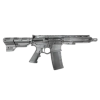
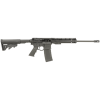
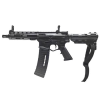
The ATI Alpha Maxx is the strangest AR-15 I’ve ever picked up. At 5.5 lbs unloaded, it feels more like a .22 trainer than a 5.56 rifle. American Tactical pulled this off by building both the upper and lower receivers from carbon-fiber reinforced polymer with zinc alloy inserts at critical stress points. It’s a bold design choice that prioritizes weight savings above everything else.
I put 500 rounds through the Alpha Maxx over two range sessions. The rifle ran reliably with brass-cased ammo, though accuracy was average at best. Groups at 100 yards hovered around 3-4 MOA with Federal XM193, which is fine for plinking and home defense but won’t win any precision competitions.
The real question with this rifle isn’t whether it shoots. It does. The question is whether the weight savings justify the trade-offs in durability and rigidity. For some shooters, the answer is absolutely yes. For others, spending an extra $50-$100 on a traditional aluminum receiver makes more sense long-term.
Best For: New shooters, smaller-framed shooters, and anyone who wants the lightest possible AR-15 for budget AR-15 money. Also a solid option for a truck gun or backpack rifle where weight matters more than match-grade performance.
Why American Tactical Built the Alpha Maxx This Way
American Tactical has been importing and manufacturing budget firearms in Summerville, South Carolina for years. They’ve built a reputation for bringing affordable guns to market, even when that means making unconventional design choices. The Alpha Maxx is their boldest move yet: a full polymer AR-15 designed to undercut the competition on both weight and price.
The thinking behind the Alpha Maxx is straightforward. A huge segment of AR-15 buyers are first-time rifle owners who don’t need mil-spec durability. They need something light, affordable, and reliable enough for range days and home defense. ATI looked at that market and asked what would happen if you replaced the forged aluminum receivers with carbon-fiber reinforced polymer.
The answer is a rifle that weighs 5.5 lbs empty. For context, a standard M4-pattern AR tips the scales around 6.5-7 lbs. That full pound of weight savings comes entirely from the polymer construction. ATI reinforced the critical areas (buffer tube threading, takedown pin holes, trigger pin holes) with zinc alloy inserts to handle the stress concentrations that would otherwise crack plastic.
It’s a calculated trade-off. You’re giving up the rigidity and impact resistance of 7075-T6 aluminum in exchange for a rifle that’s noticeably easier to carry and shoulder all day. Whether that trade-off makes sense depends entirely on how you plan to use the gun.
Competitor Comparison
PSA PA-15 Freedom ($399-$499)
The Palmetto State Armory PA-15 is the default recommendation in the budget AR space, and for good reason. You get a forged aluminum upper and lower, a proper mil-spec parts kit, and PSA’s excellent warranty. It weighs about 6.5 lbs, a full pound heavier than the Alpha Maxx, but the build quality gap is significant.
If weight isn’t your primary concern, the PA-15 is the better rifle in almost every measurable way. Better accuracy, more durable construction, wider aftermarket support. The Alpha Maxx only wins on weight and (sometimes) price. For most buyers, I’d point them toward the PA-15 first.
Bear Creek Arsenal BC-15 ($299-$399)
The Bear Creek Arsenal BC-15 competes directly on price and sometimes undercuts the Alpha Maxx. BCA uses traditional forged aluminum receivers with their own barrels and BCGs. Quality control can be inconsistent with BCA, but when you get a good one, it’s a solid shooter that outperforms its price tag.
The BC-15 weighs around 6.2 lbs with a standard barrel profile. You lose about 0.7 lbs compared to the Alpha Maxx but gain aluminum receiver durability. BCA also offers far more configuration options (barrel lengths, calibers, handguard styles) than ATI does with the Alpha Maxx.
Del-Ton Echo 316L ($379-$449)
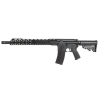
The Del-Ton Echo 316L is a no-frills AR that uses quality components without any gimmicks. Del-Ton has been building AR-15s in North Carolina since 2002, and the Echo line represents solid, traditional construction at a competitive price point. Forged receivers, a chrome-lined barrel, and standard mil-spec furniture.
At 6.4 lbs, the Echo is nearly a pound heavier than the Alpha Maxx. But the chrome-lined barrel will outlast the Alpha Maxx’s barrel, and the forged aluminum construction inspires more confidence for long-term use. If you’re choosing between these two, the Del-Ton is the more conventional (and arguably smarter) pick unless weight is your deciding factor.
Features & Technical Details
Construction
The Alpha Maxx’s defining feature is its carbon-fiber reinforced polymer receivers. Both the upper and lower are injection-molded polymer with zinc alloy inserts pressed into high-stress areas. The polymer itself has a slightly textured finish that hides fingerprints well but shows visible mold lines along the seams. It doesn’t look or feel like a $1,000 rifle, but it looks fine for the price.
The fit between upper and lower is acceptable with minimal play. I noticed slightly more wobble than you’d get with a quality forged set, but it’s not enough to affect function. The takedown pins work smoothly, and the pivot pin detent holds the action closed without issue. ATI clearly spent time engineering the zinc inserts at the pin locations.
One thing to note: the polymer rail section on the upper is M-LOK compatible but not as rigid as aluminum. I could flex the handguard slightly with hand pressure. This means any accessories you mount (lights, lasers, grips) may shift zero slightly under heavy recoil or if bumped. Keep your accessory weight low on this rifle.
Ergonomics & Controls
All the controls are standard AR-15 fare. The safety selector clicks positively between safe and fire. The magazine release is crisp. The bolt catch works as expected. ATI didn’t try to reinvent anything here, and that’s a smart decision. If you’ve ever handled an AR, you’ll feel right at home.
The A2 grip is basic but functional. I’d recommend swapping it for a Magpul MOE or similar upgrade since A2 grips tend to feel narrow for larger hands. The M4-style stock has six positions and locks solidly at each detent. At 5.5 lbs, the rifle shoulders quickly and points naturally. Smaller shooters will especially appreciate how easy it is to hold on target without fatigue.
Barrel & Gas System
The 16″ HBAR (heavy barrel) profile is an interesting choice for an ultralight rifle. The heavier barrel adds some weight up front but provides better heat management during sustained fire. The 1:8 twist rate is a solid all-rounder that stabilizes everything from 55-grain M193 to 77-grain match loads.
ATI went with a carbine-length gas system, which is the standard for 16″ budget ARs. It works, but a mid-length gas system would have been a nice upgrade. Carbine-length gas on a 16″ barrel runs at higher port pressures, which translates to a snappier recoil impulse. Combined with the polymer receiver’s slight flex under recoil, the shooting experience feels distinctly different from a traditional AR.

Range Testing: 500 Rounds
Break-In
I started with a clean, lightly oiled rifle straight from the box. The first 50 rounds were Federal XM193 (55-grain FMJ), fired in slow strings of 10. The action cycled smoothly from round one. No failures to feed, no failures to eject. The bolt locked back consistently on empty magazines.
During the break-in, I noticed the recoil character is noticeably different from aluminum-receiver ARs. There’s a slight flex in the receiver under recoil that creates a softer, almost mushy impulse instead of the sharp snap you feel with forged aluminum. It’s not unpleasant, just different. The rifle doesn’t shift in your hands, and follow-up shots came naturally.
Reliability Testing
I ran 500 total rounds through the Alpha Maxx over two range sessions. The ammunition breakdown was 200 rounds of Federal XM193, 200 rounds of PMC Bronze (55-grain), and 100 rounds of Wolf Gold (.223). All brass-cased. I used a mix of Magpul PMAG Gen 3s and the aluminum GI magazine that shipped with the rifle.
The result: zero malfunctions across 500 rounds of brass-cased ammunition. That’s a clean sheet. The GI magazine fed reliably, and the PMAGs ran without any issues. I did not test steel-cased ammo (Wolf or Tula) because other reviewers have reported feeding problems with steel case in this platform. If you buy an Alpha Maxx, I’d recommend sticking with brass.
Accuracy Testing
Accuracy testing was done from a bench rest at 100 yards using Federal XM193 and PMC Bronze. I shot five-round groups and measured center-to-center. The best group of the day was 2.8″ with Federal XM193. The average across ten groups was 3.4″ with XM193 and 3.7″ with PMC Bronze.
That’s 3-4 MOA territory, which puts the Alpha Maxx at the back of the pack for budget ARs. Most forged-receiver budget rifles will do 2-3 MOA with the same ammo. I suspect the polymer receiver flex contributes to the larger groups, since the barrel-to-receiver fit isn’t as rigid as it would be in an aluminum upper. For plinking, home defense, and casual shooting, 3-4 MOA is perfectly serviceable. Don’t expect to ring steel at 300 yards consistently.
Performance Results
Reliability: 7/10
Zero malfunctions in 500 rounds of brass-cased ammo is a strong showing for any rifle, let alone a sub-$400 polymer AR. The direct impingement system cycled every round without hesitation. I’m docking points because of the widely reported issues with steel-cased ammunition, which limits your ammo options. Brass-only reliability is great, but a truly reliable rifle should eat everything.
Accuracy: 6/10
The 3-4 MOA average at 100 yards is below what most budget ARs deliver. The 1:8 twist barrel is fine, and the HBAR profile should theoretically provide decent accuracy. The limiting factor appears to be the polymer upper receiver, which doesn’t provide the same rigid barrel extension lockup that aluminum does. For combat accuracy (hitting a torso-sized target inside 200 yards), it’s adequate. For anything requiring precision, look elsewhere.
Ergonomics: 7/10
The ultralight weight is the Alpha Maxx’s superpower. At 5.5 lbs, it’s effortless to shoulder, carry, and transition between targets. The standard AR controls are all present and work properly. The A2 grip is the weakest link ergonomically, but that’s a $15 fix. Points off for the basic furniture and the fact that the polymer handguard limits your accessory mounting options.
Fit & Finish: 6/10
The Alpha Maxx looks like a budget rifle. Mold lines are visible on the polymer receivers, and the overall finish lacks the refinement you see from PSA or Del-Ton. The handguard has some rough edges near the M-LOK slots. Nothing is functionally wrong, but the presentation won’t impress anyone at the range. The flip-up sights are serviceable but feel cheap. They hold zero, though, which is what matters.
Known Issues & Common Problems
Polymer Durability Concerns
The biggest concern with the Alpha Maxx is long-term durability of the polymer receivers. Carbon-fiber reinforced polymer is strong, but it doesn’t handle impact the same way forged aluminum does. Dropping the rifle on concrete or hard surfaces could crack the receivers. The zinc alloy inserts protect the pin holes and threading, but the receiver walls themselves are polymer through and through. Treat this rifle with more care than you would a traditional AR.
Heavy Optic Limitations
The polymer Picatinny rail on the upper receiver is not designed for heavy optics. Mounting a full-size LPVO (1-6x or 1-8x) with a quality mount could stress the rail or cause flex that ruins your zero. Stick to lightweight red dots (Sig Romeo5, Holosun 403B, or similar). Total optic and mount weight should stay under 10 oz for best results.
Steel-Cased Ammo Issues
Multiple owners report feeding and extraction problems with steel-cased ammunition (Wolf, Tula, Barnaul). The extractor may not grip the steel cases as firmly, and the tighter chamber tolerances common in budget ARs compound the issue. This isn’t unique to the Alpha Maxx, but it’s worth noting because steel-cased 5.56/.223 is significantly cheaper than brass. Budget rifle buyers often rely on cheap ammo, and the Alpha Maxx may not cooperate.
Parts, Accessories & Upgrades
The Alpha Maxx accepts most standard AR-15 parts, but the polymer receivers limit some upgrades. Here are my recommendations for getting the most out of this rifle.
| Upgrade Category | Recommended Component | Why It Matters | Cost Estimate |
|---|---|---|---|
| Optic | Sig Romeo5 or Holosun 403B | Lightweight red dot that won’t stress polymer rail | $100-$140 |
| Grip | Magpul MOE or K2+ | Major comfort upgrade over the A2 grip | $18-$25 |
| Sling | Magpul MS4 or Blue Force Gear Vickers | Essential for carrying a rifle this light | $35-$65 |
| Light | Streamlight ProTac HL-X (M-LOK mount) | Compact, lightweight WML for home defense | $100-$120 |
| Charging Handle | Radian Raptor LT | Smoother, ambidextrous operation | $50-$60 |
| Trigger | Rise Armament RA-140 or LaRue MBT-2S | Huge improvement over mil-spec trigger | $80-$100 |
You can find most of these upgrades at Brownells or Palmetto State Armory. I’d prioritize the optic and grip first since those two changes make the biggest difference in how the rifle handles and shoots.
The Verdict
The ATI Alpha Maxx is a rifle that exists for one reason: to be the lightest AR-15 you can buy for under $400. It accomplishes that goal. At 5.5 lbs, nothing else in this price range comes close. The all-polymer construction is a legitimate engineering achievement, and the rifle runs reliably with brass-cased ammunition.
But the trade-offs are real. Accuracy trails most budget ARs by about 1 MOA. The polymer receivers won’t survive the same abuse as forged aluminum. You can’t mount heavy optics without risking zero shift. And steel-cased ammo is a gamble. If you understand these limitations and the weight savings matter to you, the Alpha Maxx delivers something genuinely unique in the market.
For most first-time AR buyers, I’d still recommend a PSA PA-15 or a Del-Ton Echo as the smarter all-around purchase. But if you’re a smaller-framed shooter, you want the lightest possible home defense rifle, or you need something you can carry all day without fatigue, the Alpha Maxx fills a niche that nothing else does.
Final Score: 6.8/10
Best For: Smaller shooters, new shooters wanting an ultralight first AR, lightweight home defense, truck guns, and anyone who prioritizes weight savings over long-term durability.
FAQ: ATI Alpha Maxx
Frequently Asked Questions
How much does the ATI Alpha Maxx weigh?
The ATI Alpha Maxx weighs approximately 5.3 pounds unloaded, making it one of the lightest AR-15s available. The polymer lower receiver is the main reason for the reduced weight.
Is the ATI Alpha Maxx reliable?
In testing, it ran reliably with brass-cased ammo but had occasional issues with steel case. For a budget AR under 500 dollars, reliability is acceptable for recreational range use.
What caliber is the ATI Alpha Maxx?
The ATI Alpha Maxx is chambered in 5.56 NATO, which also safely fires .223 Remington. It uses standard AR-15 magazines and accepts any mil-spec compatible magazine.
Is ATI a good gun brand?
ATI is a budget brand that offers functional firearms at entry-level prices. Quality is adequate for the price point but does not match mid-tier manufacturers like Ruger, Smith and Wesson, or Springfield.
What barrel length does the ATI Alpha Maxx have?
The Alpha Maxx comes with a 16-inch barrel made from 4150 chrome moly vanadium steel with a 1:8 twist rate. This is the standard length for a civilian AR-15 rifle.
Can you upgrade the ATI Alpha Maxx?
Yes. It uses mil-spec AR-15 components, so most aftermarket triggers, handguards, stocks, and accessories are compatible. Upgrading the trigger is the single best improvement for this rifle.
Does the ATI Alpha Maxx come with a warranty?
ATI offers a limited lifetime warranty covering defects in materials and workmanship. The warranty does not cover normal wear, misuse, or modifications. Contact ATI customer service for claims.
Is the ATI Alpha Maxx good for beginners?
It works as a budget entry point for new AR-15 owners. The low price makes it accessible, and it teaches the same manual of arms as any AR platform. Consider upgrading later as your skills develop.
6,057+ Gun & Ammo Deals
Updated daily from 200+ top retailers. Filter by category, caliber, action type, and price.
Related Guides