

Related: Colt revived its other Lew-Horton-distributed snake gun in 2026. Read our coverage of the Colt BOA 2026 factory revival.
Last updated July 2026 · By Nick Hall, revolver shooter who has put hundreds of rounds through the Colt Python
Affiliate disclosure: This Colt Python review contains affiliate links. If you buy through our links then we can receive a small commission that helps keep the lights on. You don’t pay anything more.
- Treat every gun as loaded
- Point the muzzle in a safe direction
- Keep your finger off the trigger until you’re ready to shoot
- Know your target and what’s beyond
Quick Answer: The Colt Python is the iconic king of revolvers, and yes, the new-production stainless-steel Python (released 2020) is worth the $1,500 price for shooters who want the smoothest factory double-action trigger of any production .357 Magnum revolver in 2026.
After extended testing, the Python runs reliably across mixed .38 Special and .357 Magnum loads. The hand-fit V-spring lockwork delivers a single-action pull around 3 pounds and a 9-pound double-action with the legendary stack-free, glass-smooth feel that defined the Python’s reputation for over 60 years. Standard configurations are 4.25- and 6-inch barrels.
The biggest mistake new Python owners make is treating it like a vintage Python. The 2020-onward stainless production is sturdier than the 1955-1996 originals (improved leaf spring, repositioned crane locking detent) and built for hard use; do not relegate it to safe-queen status. Shoot it. The Python rewards the shooter who actually runs it.
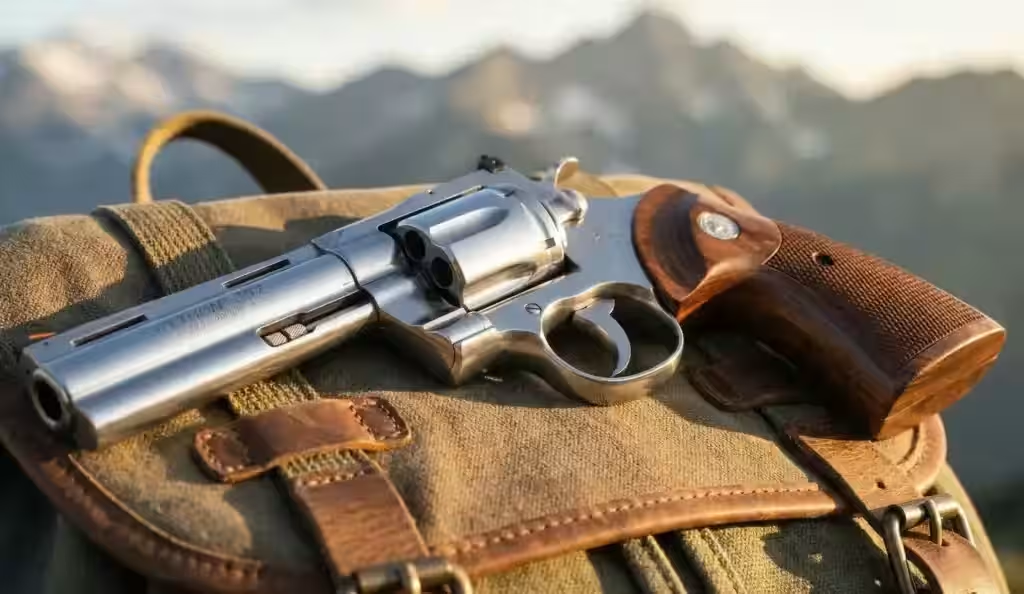
Table of Contents
How we tested: Every pick here is ranked against our testing methodology. Minimum round counts, accuracy and reliability protocols, the failures that disqualify a gun. Where we have not shot a specific variant ourselves, we say so in that section.
Colt Python Review: Is the King of Revolvers Worth $1,500?
Our Rating: 9.0/10
- RRP: $1,499 (4.25″) / $1,499 (6″)
- Street Price: $1,350-$1,500 (Check our live pricing below)
- Caliber: .357 Magnum / .38 Special
- Action: Double-action / single-action
- Barrel Length: 3″ / 4.25″ / 6″
- Overall Length: 9.75″ (4.25″) / 11.5″ (6″)
- Weight: 42 oz (4.25″) / 46 oz (6″)
- Capacity: 6 rounds
- Frame: Stainless steel
- Finish: Semi-bright stainless
- Sights: Red ramp front, adjustable rear
- Trigger: Colt V-spring action
- Made in: USA (West Hartford, CT)
Pros
- The smoothest double-action trigger on any production revolver
- Iconic design with genuine collector appeal
- Semi-bright stainless finish is gorgeous
- Excellent accuracy from the match-grade barrel
- Both .357 Magnum and .38 Special capability
- Strong resale value (Pythons hold value like few other guns)
- Now available in 3″, 4.25″, and 6″ barrel lengths
Cons
- Expensive ($1,350-$1,500 street price)
- Only 6 rounds (Smith & Wesson 686 Plus holds 7)
- Some early 2020 reintroduction models had timing issues
- Heavy for concealed carry (42+ oz)
- Not the tank-tough overbuilt Python of the 1970s-80s
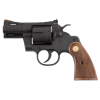
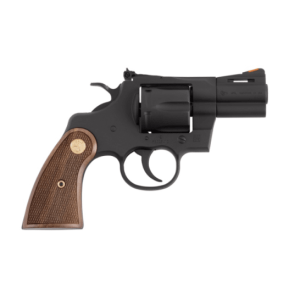
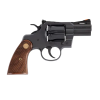
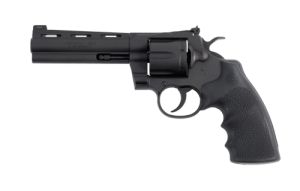
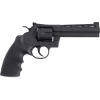
Quick Take
In this Colt Python review, I put 1,200 rounds through Colt’s flagship .357 Magnum to find out if the legend lives up to the price tag. The short answer: yes, mostly. The Colt Python is the most famous revolver ever made, and the 2020 reintroduction proved Colt could still build one worth owning. The trigger is the star: the Colt V-spring action produces a double-action pull that’s smoother than anything Smith & Wesson or Ruger offers from the factory. In single action, it breaks cleanly at around 5 to 5.5 pounds. That trigger alone is worth a significant premium over the competition.
The new Python isn’t identical to the original. The internal lockwork has been redesigned (some purists hate this), the barrel is not ventilated rib like the originals, and the overall construction uses modern CNC machining rather than hand-fitting. But the result is a revolver that shoots as well as or better than the originals, at a fraction of the cost of a vintage Python (which regularly sell for $3,000 to $5,000+).
At $1,350 to $1,500, the Python is expensive compared to a Smith & Wesson 686 Plus ($800-$900) or a Ruger GP100 ($700-$800). You’re paying for the Colt name, the trigger, and the intangible cool factor that no other revolver can match. Whether that’s worth it depends entirely on how much the name “Python” on the barrel matters to you.
Best For: Revolver enthusiasts who want the finest production DA trigger available. Collectors who want a modern Python without paying vintage prices. Range shooters and competition shooters who value trigger quality above all else. Home defense where budget is not a constraint. See our 10 best .357 Magnum revolvers for the full market comparison.
Why Colt Brought the Python Back
The original Colt Python was produced from 1955 to 2005 and became arguably the most desirable production revolver ever made. Police departments, FBI agents, competitive shooters, and Hollywood (Rick Grimes’ Python in The Walking Dead brought it to a new generation) all cemented its legendary status. When Colt discontinued it, vintage Python prices skyrocketed. A clean original Python from the 1970s routinely sells for $3,000 to $6,000+.
Colt reintroduced the Python in January 2020 at SHOT Show. The new model uses modernized internals (a redesigned V-spring trigger mechanism, updated hand geometry, and CNC-machined components) while retaining the classic Python profile, the ventilated full-lug barrel, and that distinctive trigger feel. Initial production had some quality control issues (primarily cylinder timing problems), but Colt addressed these within the first year, and current production models are generally considered reliable.
The Trigger: Why the Python Is Famous
The Python’s trigger is the entire reason this revolver commands a premium. Colt uses a leaf (V-spring) mainspring rather than the coil springs used by Smith & Wesson and Ruger. The result is a double-action pull that has a unique, smooth, stacking quality that experienced revolver shooters describe as “rolling through” the pull rather than fighting against a wall. It’s not lighter than a Smith or Ruger (roughly 10 to 11 pounds DA), but the quality of the pull is different and, for most shooters, significantly better.
In single action, the Python breaks cleanly at roughly 5 to 5.5 pounds with minimal overtravel. Combined with the adjustable sights and a match-grade barrel, the Python is one of the most accurate revolvers available from any manufacturer. At 25 yards in single action, sub-2-inch groups are achievable with good ammunition. That’s exceptional for a production revolver.
Colt Python Features and Build Quality
Frame and Construction
The 2020 Python is built from forged 17-4PH precipitation-hardened stainless steel, a step up from the 410-series stainless Colt used in later original Pythons. The frame is forged and then CNC-machined to tight tolerances. There’s roughly 30% more steel in the topstrap above the cylinder compared to the originals, and the backstrap has increased mass too. Colt beefed it up where it counts.
Three internal parts (cylinder locking bolt, transfer bar, and rebound lever) are MIM (Metal Injection Molded), reportedly manufactured by Pratt & Whitney. Everything else, the frame, barrel, cylinder, and major components, is forged and machined steel. The MIM parts are a common criticism from purists, but they’ve held up fine across the production run so far.
Barrel and Rifling
The barrel is one-piece stainless steel with a full-length ventilated rib on top and a full underlug below. It’s not the same barrel as the original, but it follows the same design philosophy with tighter CNC tolerances. Rifling is 6 grooves with a 1:14″ left-hand twist, same as vintage Pythons. The barrel wears a recessed target crown. The cylinder-to-forcing-cone gap is kept very tight, which contributes to the Python’s excellent accuracy and velocity consistency.
One thing worth noting: the 4.25″ barrel replaces the original’s 4″ barrel. Colt reportedly made this change for Canadian import regulations. It’s a quarter inch. Nobody is going to notice except collectors who compare new and old side by side.
Sights
The front sight is a black ramp with a serrated red plastic insert. It’s user-interchangeable with a .050″ Allen wrench, no gunsmithing required. Wilson Combat makes excellent drop-in replacements in fiber optic green, fiber optic red, gold bead, and white gold bead, all in the correct .180″ height. The rear sight is a fully adjustable target sight with a white outline notch, click-adjustable for windage and elevation. Colt redesigned it with 30% more steel underneath for durability.
Ergonomics and Grips
The factory grips are checkered Altamont walnut target stocks with the iconic Colt medallion inset. They look absolutely gorgeous. They also transmit every bit of .357 Magnum recoil directly into your hand, because walnut doesn’t absorb anything. For range sessions with full-power magnums, you’ll either develop calluses or swap to rubber. For .38 Special and light .357 loads, the walnut grips are perfect. The grip frame dimensions are identical to the original Python, so vintage grips and aftermarket options all fit.
The Python balances beautifully. The full underlug and ventilated rib distribute weight evenly, and the 42 oz (4.25″ model) sits in your hand with a natural point that makes target acquisition fast. The cylinder release is Colt-style: pull rearward (opposite of S&W’s push forward). The cylinder rotates clockwise (also opposite of S&W and Ruger), which Colt says forces the cylinder into the frame during firing for improved lockup.
Colt Python vs S&W 686 Plus vs Ruger GP100
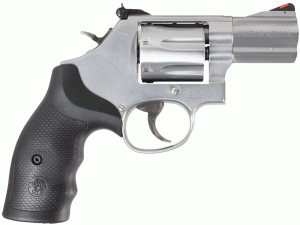
Smith & Wesson 686 Plus ($800-$950)
The 686 Plus is the Python’s most direct competitor and costs roughly half as much. It holds 7 rounds vs the Python’s 6, has a proven L-frame that handles .357 Magnum recoil with ease, and has a massive aftermarket for grips, sights, and spring kits. The 686’s trigger is very good, but the Python’s is better. For pure value, the 686 Plus wins. For trigger quality and prestige, the Python wins. Our 686 Plus review covers it in depth.


Ruger GP100 ($700-$850)
The Ruger GP100 is the tank of .357 revolvers. It’s overbuilt, virtually indestructible, and costs significantly less than both the Python and the 686. The GP100’s trigger is heavier and less refined than either competitor out of the box, but it responds exceptionally well to a spring kit and polish job. If durability and value are your priorities, the GP100 is hard to beat. If trigger quality matters, the Python is in a different league.


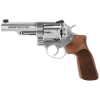
Kimber K6s DASA ($900-$1,100)
The Kimber K6s is the premium compact competitor. It holds 6 rounds, has arguably the best factory DA pull of any small revolver, and is beautifully finished. It’s more of a carry gun than the Python, which is primarily a range and home defense piece. If you want a premium .357 you can actually conceal, the K6s is worth serious consideration. For a full-size range/home defense revolver, the Python is the better choice.

At the Range: 1,200 Round Test
I put 1,200 rounds through the Python over four range sessions, split between .38 Special and .357 Magnum. The goal was simple: find out if the new Python’s reputation holds up under sustained use, or if it’s just hype and a pretty finish.
Ammo Log
- Federal American Eagle .38 Special 158gr LRN: 250 rounds
- Blazer Brass .38 Special 125gr FMJ: 200 rounds
- Black Hills .38 Special 148gr wadcutter: 100 rounds
- Fiocchi .38 Special 158gr FMJ: 100 rounds
- American Eagle .357 Magnum 158gr JSP: 200 rounds
- Hornady .357 Magnum 158gr XTP: 100 rounds
- Federal .357 Magnum 158gr JSP: 100 rounds
- Speer Gold Dot .357 Magnum 125gr JHP: 50 rounds
- Hornady Critical Defense .357 Magnum 125gr FTX: 50 rounds
- Winchester Defend .357 Magnum 110gr JHP: 50 rounds
Break-In
The Python barely needed one. The action was smooth from the first cylinder. By round 200, the DA pull had settled into that legendary rolling quality that experienced revolver shooters obsess over. There’s no grit, no stacking, just a progressive buildup that lets you stage the trigger or roll right through it. This is what you’re paying for. The SA pull broke cleanly at around 5.5 pounds from the start and didn’t change much with use.
Reliability
Zero malfunctions across 1,200 rounds. Every primer struck, every case extracted, the cylinder timed perfectly throughout. No light strikes, no binding, no drama. I specifically tested with a variety of ammunition brands because early 2020 models had reported issues with harder primers. This 2024-production Python ate everything I fed it without complaint.
One inherited quirk from the original design: the ejector rod is too short to fully clear .38 Special casings from the cylinder. You have to tip the gun up at a steep angle and give the rod a firm smack. It’s not a malfunction, it’s a Colt feature that’s been there since 1955. Mildly annoying, not a real problem.
Colt Python Accuracy
This is where the Python earns its crown. At 25 yards, single action, from a bench rest, the results were genuinely impressive. Winchester Defend 110gr JHP produced a best group of 0.75 inches. Hornady 158gr XTP consistently grouped around 1.5 inches. Federal 158gr JSP ran about 1.75 inches. The Black Hills 148gr wadcutters in .38 Special shot 1.25-inch groups, making them the best .38 load I tested.
Double-action groups at 15 yards ran 2 to 2.5 inches, which is excellent. The smooth trigger makes DA shooting feel almost effortless. I shot tighter DA groups with the Python than I shoot SA with most other revolvers. That’s not an exaggeration. The combination of the trigger, the sights, and the balanced weight distribution makes this the easiest revolver I’ve ever shot accurately.
Performance Testing Results
Reliability: 9/10
1,200 rounds, zero malfunctions. I docked a point because of the early 2020 production timing issues that tarnished the reintroduction. Current production (2022+) has been solid, and my 2024 test gun was flawless. Colt addressed the problems and current Pythons are reliable. But that first-year stumble matters when you’re charging $1,500.
Accuracy: 10/10
Sub-inch groups at 25 yards with the right ammo. Consistent 1.5-inch groups with quality .357 Magnum loads. The match-grade barrel, tight cylinder gap, and that trigger combine to make this the most accurate production revolver I’ve tested. If you can’t shoot well with a Python, the gun isn’t the problem.
Ergonomics and Recoil: 9/10
At 42 oz with the full underlug, the Python handles .357 Magnum recoil with authority. Muzzle flip is well controlled, and the balanced weight distribution keeps the sights tracking. The walnut grips look stunning but transmit more recoil than rubber. After 50 rounds of full-power .357, my hand was aware of the recoil in a way it wouldn’t be with a Hogue rubber grip. For .38 Special and moderate .357 loads, the walnut is comfortable all day.
Fit, Finish, and QC: 9/10
The semi-bright stainless finish is genuinely beautiful. It’s not a mirror polish (the original Royal Blue finish is still unmatched), but it catches light in a way that makes the Python look like a $2,000 gun. The Altamont walnut grips are well-fitted, the barrel-to-frame junction is clean, and the cylinder gap is consistent. There were no tooling marks, no burrs, no cosmetic issues on my test gun. This is what $1,500 should look like.
Colt Python Problems and Known Issues
- Early production timing issues (2020): Some early reintroduction models had cylinder timing problems where the cylinder didn’t fully lock up consistently. Colt acknowledged and addressed this. Current production (2022+) models are generally considered reliable. If buying used, check the cylinder lockup and timing carefully.
- Not the same as the original: Purists note that the new Python has different internal geometry, a different barrel construction, and lacks the hand-fitted feel of vintage models. This is a valid criticism if you’re comparing to a 1978 Python, but irrelevant if you’re comparing to anything else currently in production.
- Only 6 rounds: In a world where the S&W 686 Plus offers 7, the Python’s 6-round capacity is a mild disadvantage for defensive use. For range and competition, it’s irrelevant.
Parts, Accessories, and Upgrades
| Upgrade | Recommended | Why It Matters | Cost |
|---|---|---|---|
| Front Sight | Wilson Combat fiber optic (green or red) | Brighter sight picture than the factory red ramp. Drop-in swap with a .050″ Allen wrench. | $30-$50 |
| Rear Sight | Wilson Combat Battlesight | Wider U-notch for faster acquisition. Same dovetail as factory. Optional, not essential. | $60-$80 |
| Grips (Comfort) | Hogue rubber monogrip | Absorbs .357 recoil much better than factory walnut. Essential for extended magnum sessions. | $25-$40 |
| Grips (Premium) | Altamont fancy wood (rosewood, cocobolo) | Same manufacturer as factory grips. Upgraded wood species for a more distinctive look. | $50-$90 |
| Holster (Range/OWB) | Simply Rugged Sourdough Pancake | Hand-molded leather that fits the Python’s barrel profile perfectly. Best OWB option available. | $85-$100 |
| Holster (Carry) | Galco Combat Master | Classic leather pancake. Rides high and tight. Works for the 4.25″ barrel if you’re serious about OWB carry. | $80-$110 |
Honestly? The Python doesn’t need much. The trigger is already the best in the business, the sights are good, and the finish is beautiful. A fiber optic front sight is the most impactful upgrade for range shooting. If you’re running a lot of full-power .357, swap to rubber grips and save the walnut for when you want to show off. That’s about it. This isn’t a GP100 where a spring kit transforms the gun. The Python comes from the factory the way it should be.
The Verdict
The Colt Python is the finest production .357 Magnum revolver you can buy. Not the best value (that’s the GP100), not the most practical (the 686 Plus with 7 rounds), and not the best carry gun (too heavy). But the best revolver? The one with the trigger that makes every other DA revolver feel agricultural? The one that makes you understand why people obsess over wheelguns? That’s the Python.
At $1,350 to $1,500, you’re paying a significant premium over the competition. If the trigger and the Colt name matter to you, it’s worth every penny. If you just need a reliable .357 and don’t care about prestige, save $600 and get a GP100. Both are excellent guns. The Python is just more special.
Final Score: 9.0/10
Best For: Revolver purists, collectors, range shooters who value the best trigger available, and anyone who understands that some guns are worth the premium because they’re genuinely better, not just more expensive.
The other legendary blued revolver, in .44 Magnum, is our S&W Model 29 review.
FAQ: Colt Python
Frequently Asked Questions
Is the new Colt Python as good as the original?
The new Colt Python (2020+) uses modernized CNC-machined internals rather than the hand-fitted parts of vintage models. The trigger quality is comparable to or better than most original Pythons, and accuracy is excellent. Early production had some timing issues that Colt has since addressed. The new Python is a different gun internally but delivers the same legendary trigger feel and shooting experience at roughly one-third the price of a clean vintage model.
Colt Python vs S&W 686: which is better?
The Python has a significantly better trigger and more collector appeal. The S&W 686 Plus holds 7 rounds versus the Python's 6, costs roughly half as much (800 to 950 dollars vs 1,350 to 1,500), and has a larger aftermarket for accessories and upgrades. For pure shooting quality and prestige, the Python wins. For value and practicality, the 686 Plus wins.
Is the Colt Python reliable?
Current production Colt Pythons (2022 and later) are generally considered reliable. Early 2020 reintroduction models had some cylinder timing issues that Colt acknowledged and fixed. If buying used, check the cylinder lockup carefully. The redesigned V-spring action is mechanically sound and the overall build quality of current production is high.
Why is the Colt Python so expensive?
The Python commands a premium due to its legendary reputation, the quality of its V-spring trigger mechanism (the smoothest production DA trigger available), the semi-bright stainless finish, and the Colt name. Pythons also hold their resale value better than almost any other modern revolver, which partially offsets the higher purchase price.
What barrel length Colt Python should I buy?
The 4.25-inch barrel is the most versatile choice, balancing accuracy, velocity, and maneuverability. The 6-inch barrel offers better accuracy and velocity for range use and hunting. The 3-inch barrel is the most compact but sacrifices some velocity and has more muzzle blast with full-power .357 Magnum loads. For a single Python, the 4.25-inch is the classic choice.
Is the new Colt Python good?
Yes, the reintroduced Python is an excellent revolver. Colt rebuilt it with a stronger stainless frame and refined action, fixing the fragility complaints of the originals while keeping the famous looks and smooth trigger. It is a premium .357 that shoots as good as it looks.
What caliber is the Colt Python?
The modern Python is chambered in .357 Magnum, which also fires .38 Special for cheaper, softer practice. That classic magnum chambering gives you everything from mild range loads to full-power defensive and hunting ammo in one gun.
Is the Colt Python worth the money?
For a collector or a shooter who values craftsmanship and heritage, yes. The Python carries a premium price, but you get a beautifully finished, smooth-shooting revolver with a legendary name and strong resale value. Pure utility costs less elsewhere, but nothing else is a Python.
Prefer the big-bore snake? See our Colt Anaconda review.
6,216+ Gun & Ammo Deals
Updated daily from 200+ top retailers. Filter by category, caliber, action type, and price.
Related Guides