
Last updated and checked October 29, 2026 · By Nick Hall
- Treat every gun as loaded
- Point the muzzle in a safe direction
- Keep your finger off the trigger until you’re ready to shoot
- Know your target and what’s beyond
A clean, lubricated gun is a reliable gun. You don’t need a garage full of products to keep yours running, but you do need the right few, and the gun makers’ own manuals are clearer about what those are than most of the internet.
We compare cleaning kits, solvents, lubricants, CLPs, bore snakes, rods, brushes, mats and storage gear from 200+ retailers. Filter by type, brand and price. Below the finder, I’ve laid out what each product does and when to use it, with every price and rule checked on the maker’s own site or in the gun’s owner’s manual.
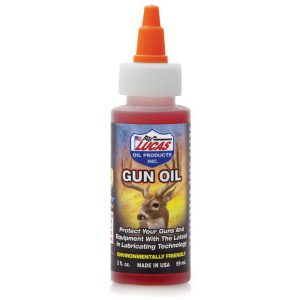
 -15%
Otis Technology T-Handle Gun Cleaning Tool Gold Small
 -20%
Bronze Bore Brush - Bronze Bore Brush, 17 Caliber, 8-32m
 -20%
Bronze Bore Brush - Bronze Bore Brush, 45 Caliber, 8-32m
 -20%
Bronze Bore Brush - Bronze Bore Brush, 22 Caliber, 8-32m
 -20%
Bronze Bore Brush - Bronze Bore Brush, 357 Caliber, 8-32m
 -20%
Rifle Bronze Bore Brush - Bronze Rifle Bore Brush, 375 Caliber, 8-32m
 -20%
Rifle Bronze Bore Brush - Bronze Rifle Bore Brush, 416 Caliber, 8-32m
 -20%
Rifle Bronze Bore Brush - Bronze Rifle Bore Brush, 50 Caliber, 8-32m
 -20%
Rifle Bronze Bore Brush - Bronze Rifle Bore Brush, 6.5mm, 8-32m
 -20%
Rifle Bronze Bore Brush - Bronze Rifle Bore Brush, 8mm, 8-32m
 -20%
Bronze Bore Brush - Bronze Bore Brush, 41 Caliber, 8-32m
 -20%
Rifle Bronze Bore Brush - Bronze Rifle Bore Brush, 30 Caliber, 8-32m
 -20%
Gun/Parts Cleaning Brush - Gun/Parts Cleaning Brush, 1 Pack
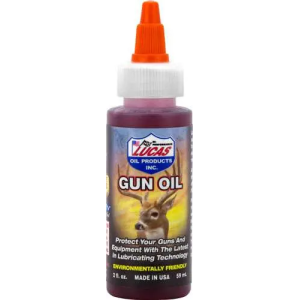 -32%
 -44%
Breakthrough Clean Technologies .22 Cal Nylon Bristle Bore Brush
 -44%
Breakthrough Clean Technologies Nylon Bristle Bore Brush .17 Cal

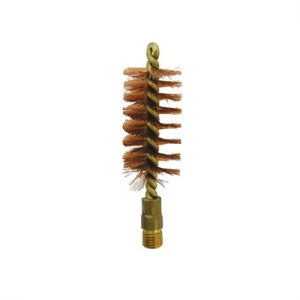
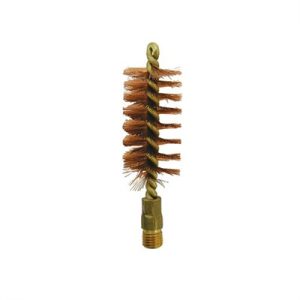
 -44%
Breakthrough Clean Technologies .270 Cal/.284 Cal/7mm - Nylon Bristle Bore Brush
 -43%
Breakthrough Clean Technologies .44 Cal/.45 Cal Nylon Bristle Bore Brush
 -47%
Breakthrough Clean Technologies .25 Cal/6.5mm - Nylon Bristle Bore Brush
 -46%
Breakthrough Clean Technologies .243 Cal/6mm - Nylon Bristle Bore Brush
Table of Contents
Cleaning Schedules from the Gun Makers
| Maker / model | What the manual says |
|---|---|
| Glock (Gen6 manual, Oct 2025) | Before the first shot, after every firing, after rain, snow, sweat or dust, and at least once a year |
| Sig Sauer P320 | After each firing session, when residue builds up, and after rain, snow or freezing weather |
| Ruger Security-9 / American Pistol | After each range session and after sand, dust, moisture or humidity |
| Mossberg pump shotguns | A thorough cleaning every 200 shotshells, sooner in dirty conditions |
The pattern is simple: clean after you shoot and after the gun gets wet or dirty, and don’t let a safe queen go more than a year. Glock adds one I see people skip: clean a new gun before its first shot, because factory preservative isn’t lubricant. Your own manual is the final word for your gun. For the full step-by-step, see our gun cleaning and maintenance guide.
Solvent, Lubricant or CLP?
A solvent cleans. Hoppe’s No. 9 has been made since 1903 and removes “carbon, powder, and lead fouling” from any bore. A lubricant cuts friction and wear: Lucas Extreme Duty Gun Oil and Slip 2000 EWL are lubricants, and Slip 2000 notes EWL is “not ideal for long term storage.” A CLP does all three jobs in one bottle. Break-Free, which was “the first to pass MIL-SPEC 63460,” spells it out as cleaner, lubricant and preservative.
For most owners, one CLP covers routine maintenance, and Glock’s manual tells you to use “gun cleaning solvent or cleaner-lubricant-preservative (CLP)” on the barrel and slide. Keep a dedicated solvent for a really dirty bore, then follow it with a light coat of oil. Our best gun cleaning solvents guide ranks the options.
Copper Fouling and Ammonia Solvents
Rifles that shoot a lot of copper-jacketed bullets build copper fouling that a standard solvent won’t touch. Hoppe’s sells its Black Copper Cleaner ($13.99, 4 oz) for “high round count” bores, and Bore Tech’s CU+2 and Eliminator (from $19.99) are both ammonia-free; Bore Tech says Eliminator “will not etch or harm barrel steels” and can soak in the bore.
Ammonia-based copper removers work but need care. Read the label for dwell time, wear gloves and eye protection (NIOSH’s rule for anyone using cleaning chemicals), and don’t use a bronze brush with them: Otis warns that some ammonia removers turn blue or green by reacting with the brush, giving you a false reading. Ruger adds a blunt warning: never use caustic, acetone-based, automotive or paint-stripping products on a gun, and test any cleaner on a hidden spot first.
Bore Snake or Cleaning Rod?
A bore snake is the fast option. Hoppe’s says one pass “loosens large particles, scrubs out the remaining residue with a bronze brush, then swabs it all,” which makes it the best range-bag tool there is. The BoreSnake lists at $14.99 for rifles, $13.99 for most pistols and $15.99 for 12 and 20 gauge.
A rod, jag, patches and brush is the thorough option, and it’s what Glock, Sig and Mossberg describe in their manuals. The one rule they agree on: clean from the chamber end when you can. Sig says “NEVER CLEAN THE BARREL FROM THE MUZZLE END,” and Glock warns that cleaning from the muzzle without field stripping can push dirt and oil into the pistol and cause malfunctions. Mossberg adds: don’t leave patches or excess oil in the bore, because they can create dangerous obstructions. See best bore snakes.
Brushes: Bronze, Nylon or Steel?
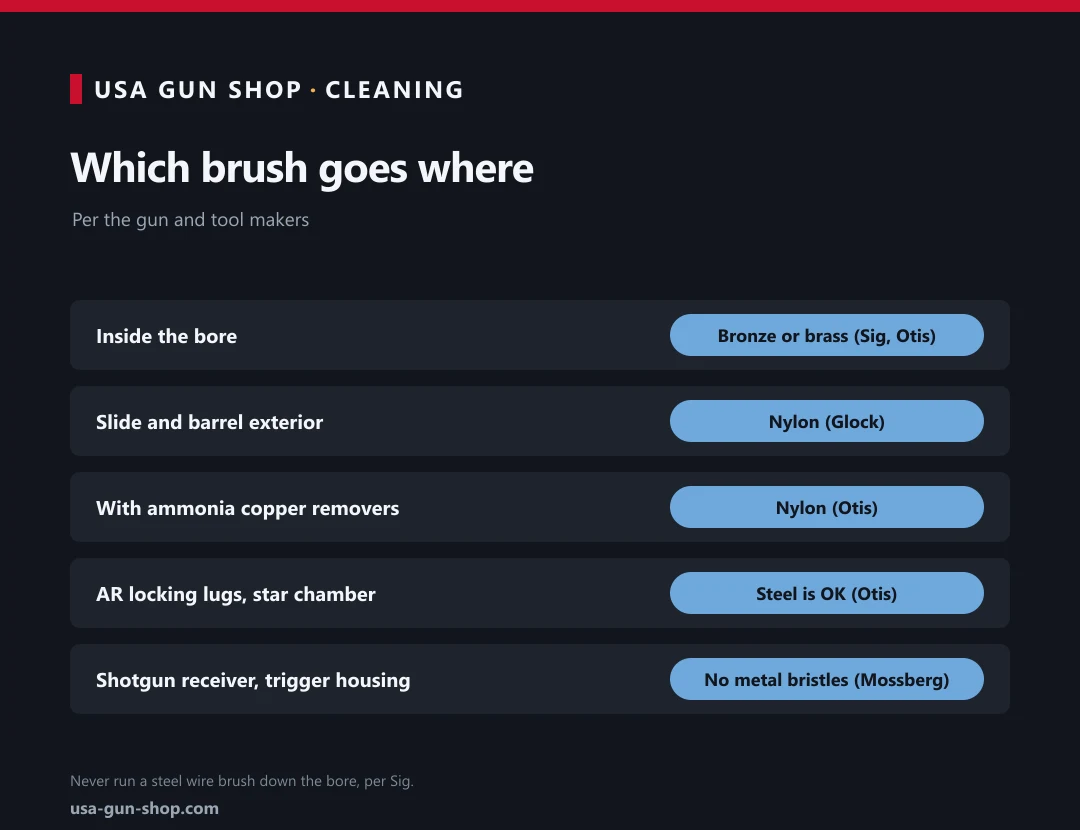
Bronze or brass in the bore, nylon for most everything else, and steel only where the maker says. Sig says to use “BRONZE BRUSH OF THE CORRECT CALIBER” and never a steel wire brush in the barrel. Otis explains why brass is safe: it’s “softer than your chrome lined steel barrel so it won’t scratch the bore,” while steel belongs on AR locking lugs and the star chamber. Glock calls for a nylon brush on the slide and barrel exterior, and Mossberg warns that a metal-bristle brush can strip the protective coating off the receiver and trigger housing.
Cleaning Kits
A good kit puts the rod, jags, brushes and patches for your calibers in one case, so you’re not hunting through a drawer. Maker prices on the kits I’d shortlist: Real Avid’s Gun Boss Pro AR15 kit at $34.99 (18 pieces with a 29-inch sectional brass rod) and Universal kit at $39.99, Breakthrough’s Vision Series Universal kit at $57.99, the Otis Tactical kit at $63.99, and the Otis Elite at $169.99, which uses Otis’s flexible Memory-Flex cables so you can clean breech to muzzle without a rod. Our best gun cleaning kits guide has the full ranking, and a gun cleaning mat saves your table.
Where to Oil, and Where Not To
More oil isn’t better. Too much lubricant collects carbon and grit, and in some places it causes malfunctions. Glock’s manual is specific: “Do not put lubricant or gun oil inside the firing pin channel,” and the copper-colored lubricant on the slide rails from the factory “should not be removed.” Mossberg says not to leave excess oil in the bore, where it can become an obstruction.
My rule for most semi-autos is a drop on each rail or contact point the manual shows, a light film on the barrel hood and the outside of the barrel, and nothing else. Wipe off anything that runs. On an AR-15, the bolt carrier group is the exception: it runs better wet, so a coat of lubricant on the carrier and bolt is normal. When in doubt, the lubrication diagram in your owner’s manual beats any forum post.
Keep Solvent Out of Magazines and Ammo
This one surprises people. Ruger warns that “penetrating oils and solvents inside a magazine can ‘kill’ or weaken cartridge primers or powder.” That’s a real risk with spray products and soaking solvents. Clean magazines dry: pull the baseplate, wipe the spring, follower and body with a dry cloth or a barely damp one, and let everything dry before you reload. Keep your ammo out of the cleaning area entirely, and never spray a loaded gun or a loaded magazine with lubricant.
Ultrasonic Cleaners
Metal parts can go in an ultrasonic cleaner; wood and leather can’t. Hornady’s instructions say not to put “easily discolored items” such as wood or leather in the tank, so pull stocks and grips first. Its materials chart warns that carbon steel “may quickly rust after removing from cleaning tank,” so dry and oil those parts right away, and that the sonic action can lift a coating that has any nick or scratch. Never use a brass case solution on gun parts: Hornady says it “will damage most non-brass materials.”
Storage and Rust Prevention
Clean the gun, wipe a thin coat of oil or protectant on the metal, and keep the air dry. Liberty Safe recommends keeping the relative humidity inside a safe between 40% and 50% and checking it with a digital hygrometer. Mossberg warns against storing a gun in a fabric-lined case, which soaks up the oil and leaves metal unprotected, and against plugging the barrel. A silicone cloth wipe before it goes away removes the skin oils that start rust; Breakthrough’s reusable silicone cloth is $6.49. For the safe itself, see best gun safe dehumidifiers.
Lead Safety at the Cleaning Bench
Cleaning guns exposes you to lead. Sig’s P320 manual says so directly and tells owners to keep the room ventilated and wash their hands. NIOSH’s rules for ranges apply at home too: wash hands, forearms and face before eating, drinking or smoking, change clothes before you leave, and wash range clothes apart from the family laundry. NIOSH also notes that soap and water don’t remove all of it, so don’t eat at the bench, and keep kids away from it.
My Basic Cleaning Setup
If you’re starting from zero, here’s what I’d buy and nothing more: a CLP for routine cleaning and lube, a bottle of bore solvent for the dirty days, a bore snake for every caliber you shoot, one rod kit with bronze brushes and jags, a pack of patches, a nylon utility brush, a mat, and a silicone cloth. That handles every handgun, rifle and shotgun you’re likely to own for well under $100, and you can add a copper solvent if you start shooting a precision rifle a lot.
The habit matters more than the products. Clean after every range trip while the fouling is fresh, inspect as you go, and wipe everything down before it goes back in the safe. Ten minutes after shooting beats an hour of scrubbing a month later.
Facts and Figures

- Glock: clean at least once a year even if the gun never leaves the safe, per the Glock Gen6 manual
- Mossberg pumps: thorough cleaning every 200 shotshells
- Clean from the chamber end: Sig and Glock both say so
- CLP stands for cleaner, lubricant and preservative, per Break-Free
- Safe humidity: 40% to 50% relative humidity, per Liberty Safe
Our Cleaning Guides
- Gun cleaning and maintenance guide
- Best gun cleaning kits
- Best gun cleaning solvents
- Best bore snakes
- Best gun cleaning mats
- Best gun safe dehumidifiers
- Gun cleaning brands
Frequently Asked Questions
How often should I clean my gun?
Clean it after every range trip and any time it gets wet, dusty or sweaty. Ruger tells owners to clean and inspect the gun "after each range session" and after exposure to sand, dust, moisture or humidity. Sig says the same for the P320: after each firing session and after rain, snow or freezing weather. Glock's current manual adds two more triggers: clean a new pistol before its first shot, and clean every Glock at least once a year even if it never leaves the safe. Shotguns follow their own schedule. Mossberg calls for a thorough cleaning every 200 shotshells on its pump guns, and sooner in dirty conditions. Your owner's manual sets the rule for your gun, so read it first.
What is the difference between a solvent, a lubricant and a CLP?
A solvent cleans. Hoppe's No. 9 is a bore cleaner that removes carbon, powder and lead fouling. A lubricant reduces friction and wear on moving parts. Lucas Extreme Duty Gun Oil and Slip 2000 EWL are lubricants. A CLP does all three jobs in one bottle. Break-Free, which was the first product to pass the MIL-SPEC 63460 standard, spells CLP out as cleaner, lubricant and preservative. It cleans burnt powder, cuts friction and protects against corrosion. Ballistol and Otis O85 are also sold as CLPs.
What is the best gun cleaning product?
For routine cleaning, one CLP such as Break-Free CLP, Ballistol or Otis O85 covers cleaning, lubrication and rust protection. Glock's manual tells owners to use gun cleaning solvent or CLP on the barrel and slide, so either works on that gun. For a dirty bore, a dedicated solvent such as Hoppe's No. 9 (carbon, powder and lead) or Bore Tech Eliminator (carbon, copper and lead) does the heavy lifting, and you follow it with a light coat of oil or CLP. One label check: Slip 2000 sells EWL as a lubricant and says it is not ideal for long term storage. Its thicker EWL30 is the one Slip 2000 calls a CLP.
Do I need a bore snake or a cleaning rod?
A bore snake is the fast option. Hoppe's says one pass loosens debris, scrubs with a built-in bronze brush and swabs the bore, which makes it a good range bag tool. A rod with a jag, patches and a brush is the thorough option, and it is what Glock, Sig and Mossberg describe in their cleaning steps. Whatever you pick, clean from the chamber end when the gun allows it. Sig's P320 manual says never to clean the barrel from the muzzle end. Glock's manual says to run patches and the brush from the chamber end. Many owners keep a bore snake for the range and a rod kit for the bench.
Which brush should I use: nylon, bronze or stainless steel?
Use bronze or brass in the bore, nylon for most other parts, and keep steel out of the barrel. Sig says to use a bronze brush of the correct caliber and never a steel wire brush, because steel can damage the bore. Otis says brass is softer than a chrome lined steel barrel, so it will not scratch the bore, and that steel bristles belong on AR locking lugs and the star chamber, not in the bore. Glock's manual calls for a nylon bristle brush on the slide and barrel exterior. Mossberg warns that a metal bristle brush can strip the protective coating on the receiver and trigger housing. Pick nylon with copper removers too: Otis notes that some ammonia copper removers turn blue or green from reacting with a bronze brush, which gives a false reading.
Do I need a copper solvent, and are ammonia solvents safe?
A rifle that shoots a lot of copper jacketed bullets builds copper fouling, and a copper solvent removes it. Hoppe's sells Black Copper Cleaner for "high round count" bores, and Bore Tech sells CU+2 Copper Remover and Eliminator, which removes carbon and copper. Bore Tech markets both as ammonia free and says its formulas will not etch barrel steel and can soak in the bore. Ammonia based copper removers are a different product, so read the label for its dwell time and wear gloves and eye protection when you use any cleaning chemical, which is what NIOSH tells range workers to do. Ruger also warns against caustic or acetone based cleaners and automotive or paint stripping products, and tells owners to test a cleaner on a hidden spot first.
Can I put my gun in an ultrasonic cleaner?
Metal parts, yes. Wood, no. Hornady's Sonic Cleaner instructions say not to put easily discolored items such as wood or leather in the tank, so remove wood stocks and grips first. Hornady's gun parts solution is rated safe for firearm finishes, but steel can rust fast after it comes out of the tank, so dry and oil those parts right away. Hornady also warns that the sonic action can lift paint, ceramic coatings and powder coat if the finish has any nick or scratch. Never use a brass case solution on gun parts, because Hornady says it will damage most non-brass materials.
How should I store my guns so they do not rust?
Clean the gun, wipe a thin coat of oil or protectant on the metal, and keep the air dry. Liberty Safe puts the ideal humidity inside a gun safe at 40% to 50%, and recommends a digital hygrometer you can read at a glance plus a dehumidifier. Mossberg warns against storing a gun in a fabric lined case that soaks up its oil, and against plugging the barrel. A silicone cloth wipe removes fingerprints and skin oils before the gun goes away. Glock adds that guns belong unloaded and locked, with ammunition stored in a separate container.
4,367+ Gun & Ammo Deals
Updated daily from 200+ top retailers. Filter by category, caliber, action type, and price.