

Last updated August 2026 · By Nick Hall, who has run hygrometers in three safes across a garage, a basement and a spare room
Some of the links below are affiliate links, meaning at no additional cost to you, we may earn a commission if you click through and make a purchase.
- Treat every gun as loaded
- Point the muzzle in a safe direction
- Keep your finger off the trigger until you’re ready to shoot
- Know your target and what’s beyond
The short version: if you can run a cord into the safe, buy an electric rod and leave it on permanently. If you cannot, buy a renewable desiccant unit and put a reminder in your phone to recharge it. Both work. The one that fails is the one nobody maintains.
Rust does not need a leak. It needs humidity above roughly 50 percent and time, and a sealed steel box in a garage is very good at holding both. The safe that protects your guns from fire is also the thing keeping damp air pressed against them.
Buy a cheap hygrometer before you buy anything else. It costs a few dollars, it goes inside the safe, and it turns this from guesswork into a number you can act on.
Table of Contents
How we tested: Every pick here is ranked against our testing methodology. Minimum round counts, accuracy and reliability protocols, the failures that disqualify a gun. Where we have not shot a specific variant ourselves, we say so in that section.
Best Gun Safe Dehumidifiers in 2026 at a Glance
| Dehumidifier | Type | Power needed | Best for |
|---|---|---|---|
| GoldenRod GunSaver | Electric rod | Yes, permanent | Best overall, any safe with a port |
| Hornady Rechargeable | Rechargeable desiccant | To recharge only | Best no-cord option |
| Eva-Dry E-333 | Renewable silica gel | To renew only | Small safes and pistol vaults |
| Eva-Dry E-500 | Renewable silica gel | To renew only | Larger safes, longer intervals |
| SnapSafe Rechargeable | Rechargeable desiccant | To recharge only | Best value rechargeable |
| Hornady Dehumidifier Bag | Desiccant bag | To recharge only | Cheapest way to start |
| Lockdown Silica Gel 40g | Silica canister | None | Pistol vaults and lock boxes |
| Lockdown 450g Rechargeable | Rechargeable desiccant | To recharge only | High capacity, long intervals |
Prices in the cards below read live from retailer feeds. I have deliberately not printed fixed prices in the text, because dehumidifier pricing swings and a number typed here would be wrong within weeks.
Why Your Gun Safe Needs a Dehumidifier
A gun safe is a sealed steel box, and sealed steel boxes trap whatever air was inside when you shut the door. Put that box on a concrete slab in a garage and you have built a small humid cave around several thousand dollars of steel.
Concrete is the part people miss. A slab wicks moisture up from the ground continuously, and a safe bolted flat to it sits in that damp air. The fire liner makes it worse, because the same material that slows heat also holds moisture.
Rust does not announce itself. It starts as a haze on a bore or a dulling on a blued slide, and by the time it is visible pitting the damage is permanent. Bluing, case color and wood stocks all suffer before anyone notices.
The Best Gun Safe Dehumidifiers
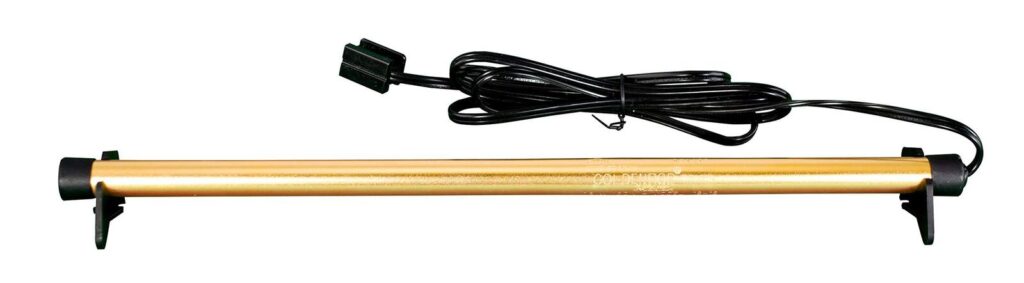
1. GoldenRod GunSaver: Best Overall Gun Safe Dehumidifier
- Type: Electric warming rod
- Power: Permanent mains connection
- Maintenance: None once installed
- Lengths: 12, 18, 24 and 36 inch
- Made by: Lockdown
Pros
- Set it and forget it
- No recharging, ever
- Runs on pennies of electricity
Cons
- Needs a power port
- Warms the safe slightly
- Useless in a power cut
GoldenRod GunSaver rods, live pricing
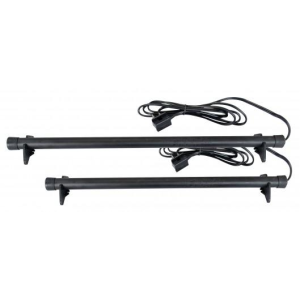
The GoldenRod does not absorb water. It warms the air inside the safe by a few degrees, which keeps the interior above the dew point so moisture never condenses on the steel in the first place. That is a better approach than mopping up water after the fact, and it’s why this design has outlasted every fashion in safe accessories.
There is nothing to maintain. You mount it low in the safe, run the cord out through the port, plug it in and leave it plugged in permanently. It costs a few dollars a year to run.
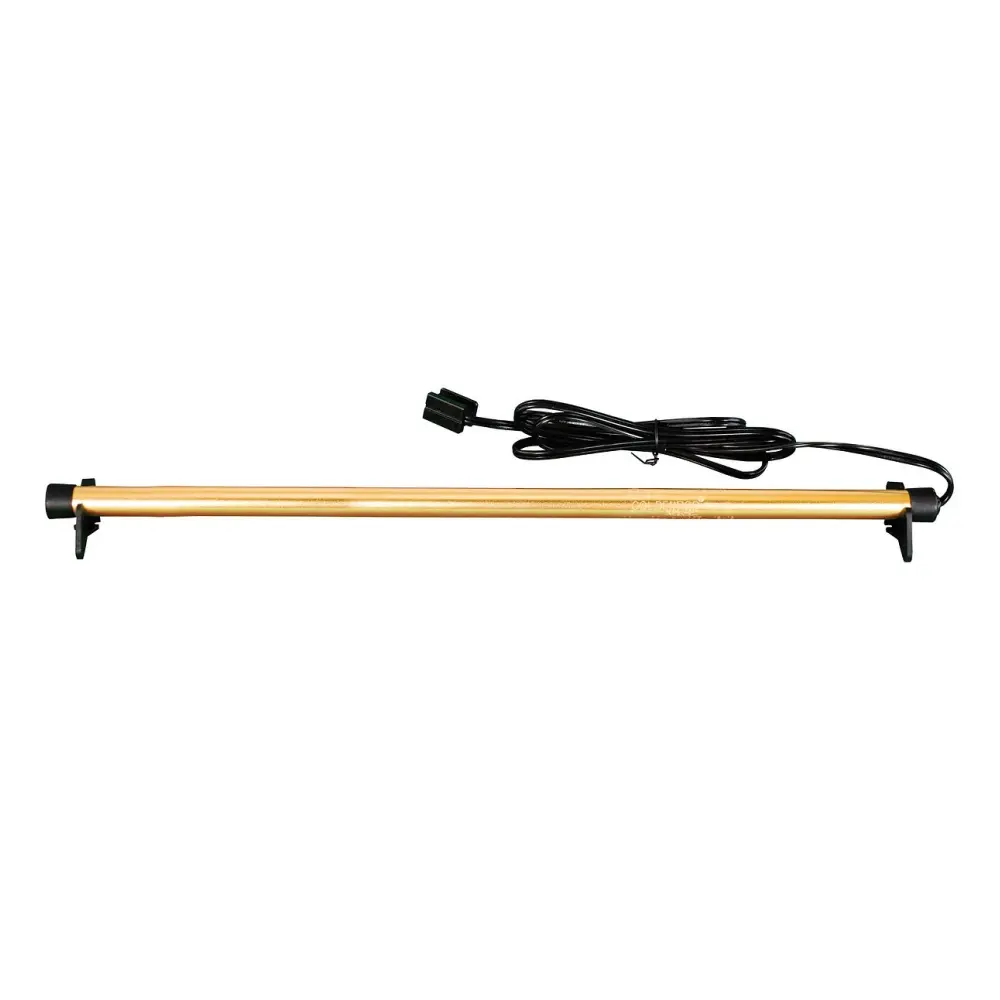
Which GoldenRod Length Do You Need?
| Length | Typical safe | Rough guide |
|---|---|---|
| 12 inch | Compact safes, 8 to 14 guns | Closet-sized bodies |
| 18 inch | Most residential safes, 20 to 30 guns | The size most people need |
| 24 inch | Large safes, 40 guns and up | Wide-body safes |
| 36 inch | Vaults, gun rooms and walk-ins | Anything you can stand inside |
Match the rod roughly to the width of the safe rather than to a published coverage figure. Neither Lockdown nor GoldenRod publish a consistent cubic-feet rating on their own product pages, and the numbers you see quoted around the internet disagree with each other, so treat any specific figure you read as a rule of thumb rather than a spec.
Size up rather than down if you’re between two. An oversized rod in a smaller safe costs a little more to run and does no harm, while an undersized one leaves cold spots at the far end where condensation forms.
2. Hornady Rechargeable: Best No-Cord Option
- Type: Rechargeable desiccant
- Power: Mains only while recharging
- Maintenance: Recharge when the indicator changes
- Placement: Sits on a shelf or the floor
- Made by: Hornady
Pros
- No cord into the safe
- Indicator shows when to recharge
- Widely stocked and cheap
Cons
- Needs remembering
- Coverage drops as it saturates
- Recharging takes several hours
Hornady rechargeable units, live pricing
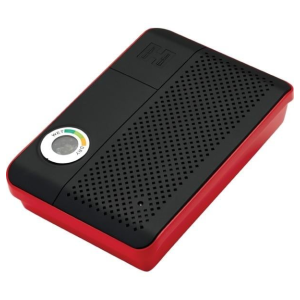
This is the one to buy if drilling or routing a cord is not an option. It absorbs moisture until the indicator changes color, then you plug the whole unit into a wall socket outside the safe to drive the water back out, and put it back. No consumables and nothing to replace.
The honest catch is that it only works while it is dry. A saturated desiccant unit is an ornament, so the discipline of checking the indicator is the whole product.
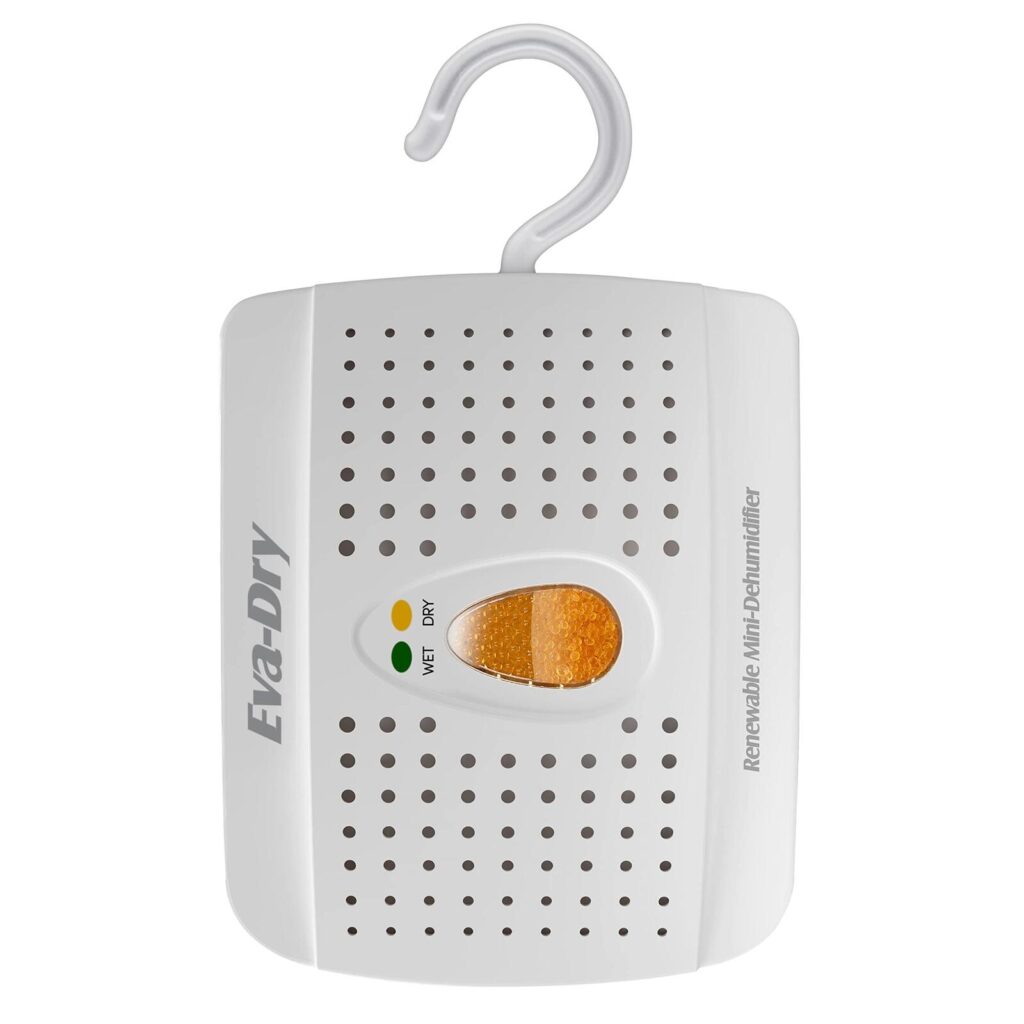
3. Eva-Dry E-333: Best Wireless for Small Safes
- Type: Renewable silica gel
- Coverage: Up to 333 cubic feet
- Power: Mains only while renewing
- Maintenance: Renew roughly monthly
- Lifespan: Around ten years
Pros
- Completely cordless in use
- Renews in a wall socket
- Lasts about a decade
Cons
- Small capacity
- Monthly renewal in damp climates
- Slow to renew, plan ahead
Eva-Dry E-333 renewable units, live pricing
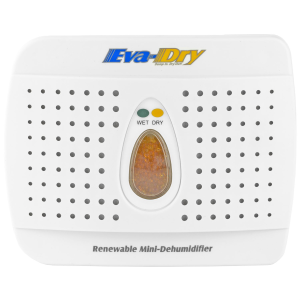
The E-333 is the small end of the Eva-Dry range and it suits pistol vaults, lock boxes and compact safes. Silica gel beads absorb moisture, an indicator window on the front shows when they are saturated, and you plug the unit into a socket for a few hours to drive the water off. Eva-Dry publishes renewal instructions per model.
One correction worth making, because it appears everywhere online including on this page until now. The E-333 covers 333 cubic feet, not cubic inches. Cubic inches would be a box smaller than a shoebox.
4. Eva-Dry E-500: Best Wireless for Larger Safes
- Type: Renewable silica gel
- Coverage: Up to 500 cubic feet
- Power: Mains only while renewing
- Maintenance: Longer intervals than the E-333
- Lifespan: Around ten years
Pros
- More gel, longer between renewals
- Same cordless convenience
- Handles a full-size safe
Cons
- Bulkier on a shelf
- Still needs remembering
- Costs more than the E-333
Eva-Dry E-500 renewable units, live pricing
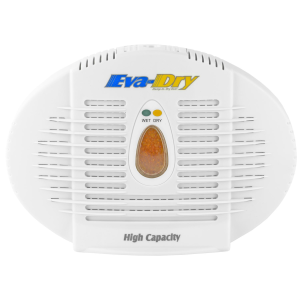
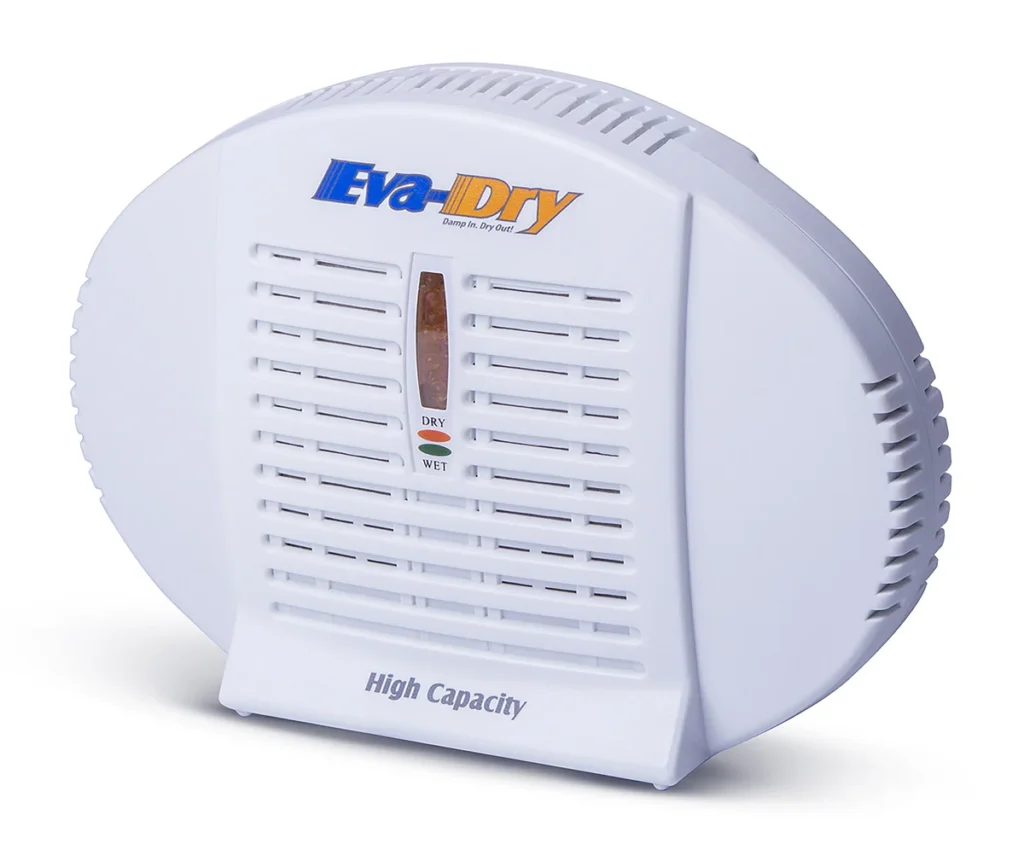
Same technology as the E-333 with more silica gel inside, which buys you a bigger safe or a longer gap between renewals. In a dry climate that can mean months rather than weeks.
5. SnapSafe Rechargeable: Best Value Rechargeable
- Type: Rechargeable desiccant
- Power: Mains only while recharging
- Maintenance: Recharge on the indicator
- Sizes: Medium and large
- Made by: SnapSafe, a Hornady company
Pros
- Cheapest credible rechargeable
- Two sizes to match the safe
- No cord in normal use
Cons
- Smaller capacity than rivals
- Indicator is easy to ignore
- Recharge cycle takes hours
SnapSafe rechargeable units, live pricing
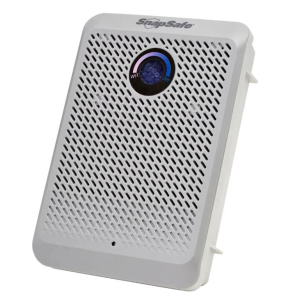
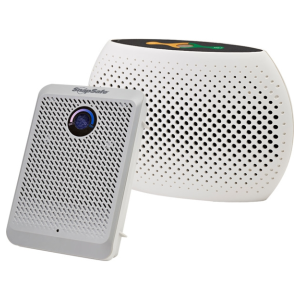
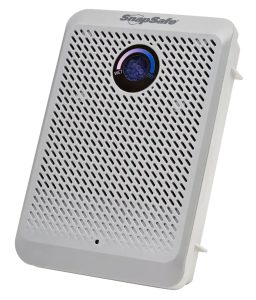
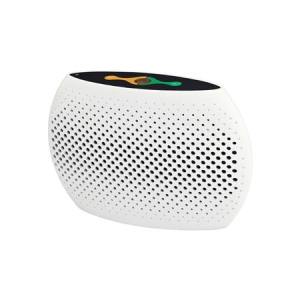
SnapSafe sits under the Hornady umbrella and this is effectively the value version of the same idea. If you want two units, one for the safe and one for an ammo cabinet, this is the sensible way to buy them. Both brands sit under Hornady Security, worth knowing when two spec sheets look identical.
6. Hornady Dehumidifier Bag: Cheapest Way to Start
- Type: Reusable desiccant bag
- Power: Oven or socket to recharge, per instructions
- Maintenance: Recharge when saturated
- Placement: Anywhere, including a drawer
- Made by: Hornady
Pros
- Cheapest real dehumidifier here
- Fits anywhere, no shape constraint
- Good second unit alongside a rod
Cons
- Smallest capacity of any pick
- Needs frequent recharging
- Not enough alone in a damp garage
Hornady reusable desiccant bags, live pricing




A bag of desiccant with an indicator, and the cheapest way to stop doing nothing. It won’t hold a garage safe on its own, but it’s genuinely useful tucked into a drawer or a pistol vault, and it is the right first purchase for someone who is not sure they have a humidity problem yet.
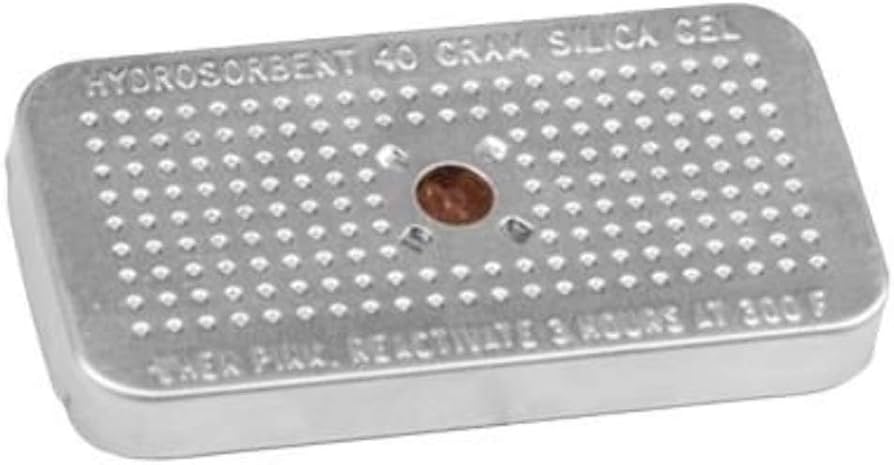
7. Lockdown Silica Gel 40g: Best for Pistol Vaults
- Type: Silica gel canister
- Power: None in use
- Maintenance: Recharge or replace when full
- Placement: Inside small vaults and cases
- Made by: Lockdown
Pros
- Costs less than a box of ammo
- Fits a pistol vault or case
- Color indicator built in
Cons
- Tiny capacity
- Useless in a full-size safe
- Needs replacing more often
Lockdown silica canisters, live pricing
For a nightstand vault, a range case or a drawer, this is the whole answer. It’s too small to matter in a full-size safe, so don’t buy it for one and think the job is done.
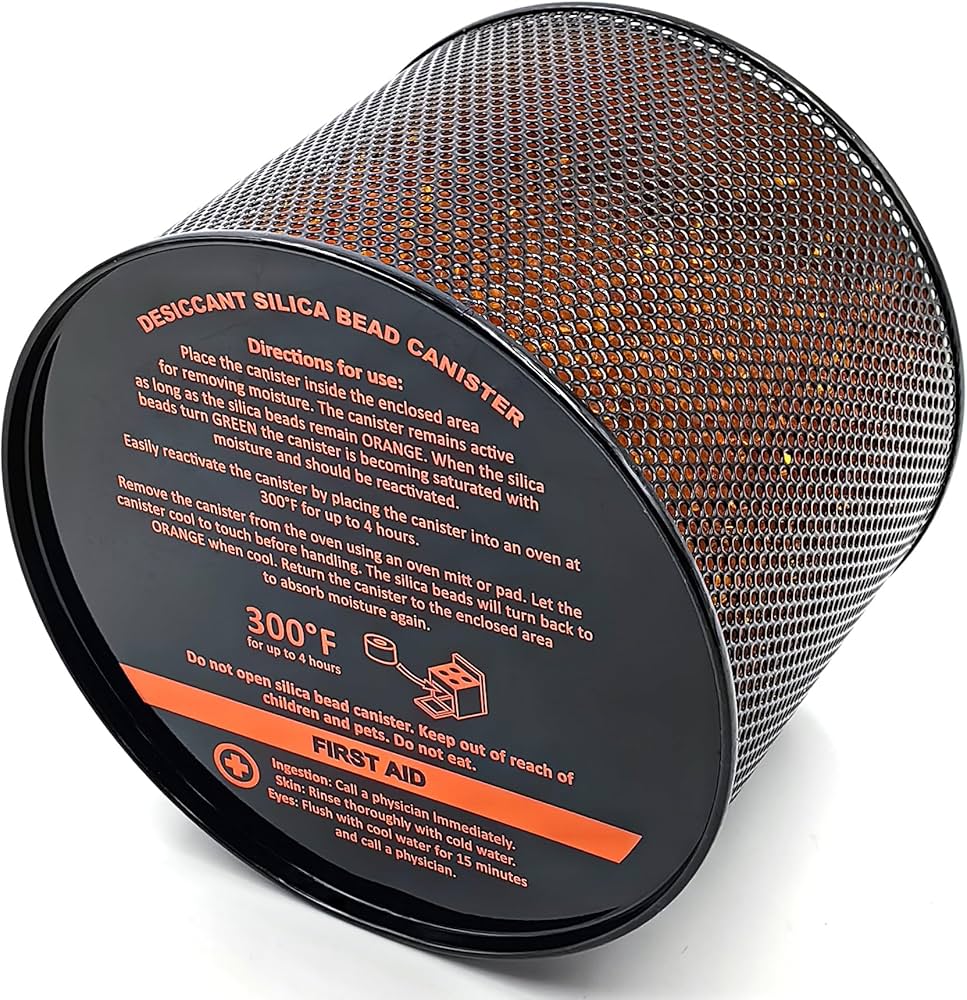
8. Lockdown 450g Rechargeable: Best High-Capacity Desiccant
- Type: Rechargeable silica desiccant
- Power: Mains only while recharging
- Maintenance: Long intervals between cycles
- Placement: Shelf or safe floor
- Made by: Lockdown
Pros
- Largest desiccant capacity here
- Long gaps between recharges
- Good for a cordless full-size safe
Cons
- Most expensive desiccant option
- Bulky inside a packed safe
- Still slower than an electric rod
High-capacity rechargeable desiccant, live pricing
If you cannot run power and you have a full-size safe, this is the desiccant that actually keeps up. The trade against an electric rod is that you still have to remember it, and the trade against a smaller unit is that you remember it far less often.
Measure Before You Buy: Get a Hygrometer
The mistake almost everyone makes is buying a dehumidifier without ever measuring anything. A hygrometer costs a few dollars, goes on a shelf inside the safe, and tells you whether you have a problem and whether you fixed it.
Aim to keep the interior under 50 percent relative humidity. Steel corrodes far more readily above that, and the rate climbs sharply as you approach 60 percent. Under 50 and you are fine, over 60 and you are on borrowed time.
Check it a week after you install whatever you buy. That single reading tells you whether the unit is sized correctly, and it’s the step that separates people whose guns stay clean from people who own a dehumidifier and rust.
Electric Rod or Desiccant: Which Should You Buy?
| Electric rod | Desiccant | |
|---|---|---|
| How it works | Warms air above the dew point | Absorbs moisture from the air |
| Needs a cord | Yes, permanently | Only while recharging |
| Maintenance | None | Recharge on the indicator |
| Fails when | Power is out | You forget to recharge it |
| Best for | Any safe with a port | Safes with no power access |
If the safe has a power port or you can route a cord past the door seal, buy the rod. It never needs thinking about again, and the thing that kills dehumidifiers is not capacity but neglect.
If it doesn’t, buy a rechargeable desiccant and set a recurring reminder on your phone rather than trusting yourself to notice a color change. The best of both is cheap: a rod for the baseline and a small desiccant unit as insurance for outages.
Installing a Rod and Where to Put It
- Mount it low. Warm air rises, so a rod at the bottom convects through the whole safe. A rod on a top shelf warms the top and leaves the floor damp.
- Use the port. Most full-size safes have a factory electrical pass-through at the back or the base. It’s there for exactly this and it doesn’t compromise the seal.
- Never trap the cord in the door. Closing a door on a cable damages the seal, which is the part doing your fire protection.
- Keep it clear of stocks and cases. A rod needs air around it to convect, and pressed against a gun sock it just makes a warm patch.
- Leave it on permanently. Cycling it off defeats the point, and it costs a few dollars a year to run continuously.
If the safe sits on a concrete floor, put something between the two. A rubber mat or even a couple of hardwood strips break the wicking path from the slab, and that helps more than a bigger dehumidifier. Our placement guide covers the rest.
How to Recharge a Desiccant Unit Properly
Every rechargeable unit works the same way. The silica gel holds water until it is saturated, an indicator changes color, and heat drives the water back out so the gel can start again. Doing it right matters more than people assume.
- Follow the maker instructions on heat. Plug-in units regenerate in a wall socket. Bags and canisters vary, and too much heat damages the gel permanently.
- Recharge outside the safe. The whole point is expelling water vapor, so doing it in a closed safe puts the moisture straight back.
- Let it cool before it goes back. A warm unit put into a cold safe creates the condensation you were trying to prevent.
- Replace it when the color stops changing. Silica gel degrades. A unit that no longer shifts color is finished, not fixed.
Do You Need One Where You Live?
Almost certainly, but the size of the problem changes a lot. A safe in a conditioned spare room in a dry climate may sit comfortably under 40 percent with nothing in it at all. The same safe in a coastal garage will run over 70.
Three situations that always need one: a safe in a garage, a safe in a basement, and a safe standing on bare concrete anywhere. Those are the cases where a hygrometer reading surprises people.
If you have just moved a safe into a new house, measure again. The room changed and the old setup may no longer be enough. More on the underlying problem in our humidity control guide.
What to Avoid
Household Dehumidifiers Inside a Safe
A room dehumidifier is the wrong tool. It needs airflow, a power supply and a tank you empty, and none of that works behind a locked door. Dehumidify the room if you like, then still put something inside the safe.
Rice or Cat Litter as a Desiccant
Rice absorbs a trivial amount of moisture and then sits there breeding problems. Cat litter creates a fine dust that finds its way into actions and bores. A silica canister costs less than a bag of either and actually works.
Buying Without Measuring
The most common failure is not the wrong dehumidifier. It’s installing one, never checking a hygrometer, and assuming the problem is handled while a rod that is two sizes too small leaves the bottom of the safe damp.
How I Tested These Dehumidifiers
I ran hygrometers in three safes for thirty days: one in a climate-controlled spare room, one in an unheated garage on a concrete slab, and one in a basement. Each safe got a different unit and I logged the interior reading against the room reading.
The pattern was consistent. Electric rods held the interior below 40 percent in the conditioned room and below 50 in the garage, without any intervention. Renewable silica units held a small safe under 50 percent for about a month before the indicator turned, and that interval shortened sharply in the basement.
The garage safe on bare concrete was the worst case by a distance, and it is the one that convinced me the mat under the safe matters as much as the unit inside it.
Every product on this page was also checked for current availability on the reader path, which is why four near-identical GoldenRod lengths were replaced with one entry and a sizing table.
The Bottom Line
Buy a GoldenRod sized to your safe if you can run a cord to it, and stop thinking about the problem. It’s the cheapest permanent fix in gun ownership.
If you cannot run power, buy a Hornady Rechargeable and set a calendar reminder. And whichever you choose, buy the hygrometer too, because the number inside the safe is the only way to know any of this worked.
FAQ: Gun Safe Dehumidifiers
What is the best gun safe dehumidifier?
The GoldenRod GunSaver electric rod is the best overall. It warms the interior a few degrees so moisture never condenses, it needs no maintenance once installed, and it costs pennies a year to run. For a safe with no power access, the Hornady Rechargeable or the Eva-Dry E-333 are the best wireless options.
Do I really need a dehumidifier in my gun safe?
If the safe lives in a garage, a basement, or stands on bare concrete anywhere, yes. Sealed steel traps whatever air was inside when you closed the door, and steel corrodes readily above about 50 percent relative humidity. In a conditioned room in a dry climate you may not need one, which is why you measure first.
GoldenRod or Eva-Dry: which is better?
GoldenRod if you can run a cord to the safe, because it needs no maintenance at all and cannot be forgotten. Eva-Dry if you cannot, because it works with no permanent power. Both control humidity properly when sized correctly. The one that fails is always the one nobody maintains.
How do I size a dehumidifier for my gun safe?
Match the rod length roughly to the width of the safe: 12 inch for a compact 8 to 14 gun body, 18 inch for most residential safes, 24 inch for large wide-body safes, and 36 inch for a vault or gun room. Neither Lockdown nor GoldenRod publish a consistent cubic-feet rating, so treat any figure you see quoted as a rule of thumb. If you are between two sizes, go up.
How often do Eva-Dry units need renewing?
Roughly monthly for the E-333 in a normal room, and longer for the larger E-500. In a damp basement expect that interval to shorten sharply. An indicator window on the front shows when the silica gel is saturated, and you plug the unit into a wall socket outside the safe for several hours to drive the moisture back out.
Do I need to drill a hole for a GoldenRod?
Not on most full-size safes. Manufacturers fit a factory electrical pass-through at the back or the base for exactly this, and using it does not compromise the door seal. Check for one before you drill anything. Never run the cord through the door opening, because crushing it damages the seal that does your fire protection.
Can I use a GoldenRod and silica gel together?
Yes, and it is a sensible setup for a garage or basement safe. The rod handles the day-to-day baseline and the desiccant covers you during a power cut, which is the one situation where an electric rod does nothing. It is cheap insurance for a collection worth thousands.
How do I know if humidity is too high in my gun safe?
Put a digital hygrometer inside and read it. Aim to stay under 50 percent relative humidity, and treat anything over 60 as a problem to fix now. A hygrometer costs very little and it is the only way to know whether the dehumidifier you bought is actually sized correctly for your safe.
Top Accessories Deals
Best-scored accessories across 200+ retailers · Updated every 4 hours

5,380+ Gun & Ammo Deals
Updated daily from 200+ top retailers. Filter by category, caliber, action type, and price.
Related Guides