

Last updated March/April 2026 · By Nick Hall, AR-15 builder who has installed both mil-spec and commercial buffer tubes
Last updated May 2026. This post contains affiliate links. If you click and buy, I may earn a small commission at no extra cost to you. Full disclosure.
- Treat every gun as loaded
- Point the muzzle in a safe direction
- Keep your finger off the trigger until you’re ready to shoot
- Know your target and what’s beyond
Quick Answer: Mil-spec is the right standard for almost every AR-15 build in 2026. Mil-spec parts are dimensionally interchangeable across manufacturers, meet defined hardness and material specifications, and are what serious manufacturers (BCM, Daniel Defense, Geissele) build to.
Mil-spec buffer tubes are 1.148 inches in diameter; commercial buffer tubes are 1.168 inches. Mil-spec is forged 7075-T6 receivers; commercial often uses cast or 6061. Mil-spec barrels meet specific HPT/MPI testing protocols; commercial barrels often skip those steps. The price difference is typically modest, mil-spec costs 10-30% more for verified quality.
The biggest mistake AR-15 builders make is buying really cheap, no-name forged lowers and discovering out-of-spec trigger pin holes. If your trigger pins walk out, the holes are oversized, anti-rotation pins are a band-aid. Buy mil-spec lowers from BCM, Aero Precision, Geissele, Sons of Liberty, Spike’s Tactical, or any reputable manufacturer that publishes its mil-spec compliance.
Table of Contents
“Is it mil-spec?” might be the most overused question in the AR-15 world. Guys throw this term around like it’s a quality certification, a seal of approval, a guarantee that their rifle is built to the same standard as what the military carries. It isn’t. Not even close. And misunderstanding what mil-spec actually means costs people money and causes compatibility headaches.
I’ve built dozens of AR-15s mixing mil-spec and commercial parts. I’ve learned exactly when it matters and when it’s pure marketing fluff. Let me clear this up once and for all.
What “Mil-Spec” Actually Means
Mil-spec means the part was manufactured to the dimensions and material specifications outlined in the military’s Technical Data Package (TDP). The TDP is a set of engineering drawings and specs that define every part of the M4/M16 platform. Colt held the TDP for decades, and FN Manufacturing currently produces M4s for the military under contract.
AR-15 remains the most popular rifle platform in America with over 24 million in civilian hands according to NSSF estimates.
When a manufacturer says a part is “mil-spec,” they’re saying it matches the TDP dimensions and material requirements. That’s it. They’re not saying it’s better, more accurate, or more reliable. They’re saying it will interchange with military parts. Some mil-spec parts are excellent. Some are the bare minimum. The spec defines a floor, not a ceiling.
This matters because plenty of aftermarket parts deliberately exceed mil-spec. A Geissele trigger is not mil-spec. It’s way better than mil-spec. A Criterion match barrel isn’t mil-spec either. The military doesn’t spec match-grade accuracy for infantry rifles. Understanding this distinction will save you from the “but is it mil-spec?” trap that keeps people from buying genuinely superior parts.
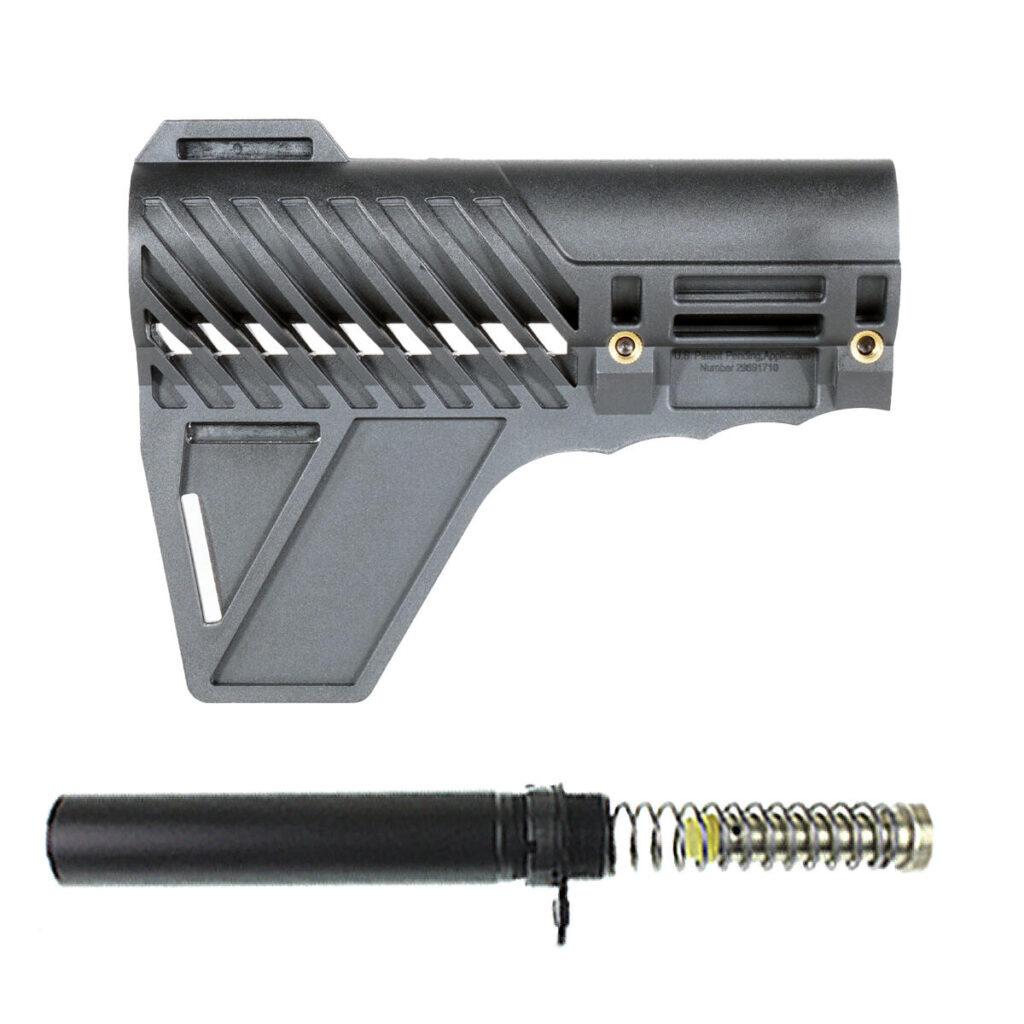
The Buffer Tube: Where It Actually Matters
One place where “mil-spec vs commercial” is a genuinely important distinction is the buffer tube (receiver extension). Mil-spec and commercial buffer tubes have different diameters, and the stocks designed for each are not interchangeable without modification.
| Specification | Mil-Spec Buffer Tube | Commercial Buffer Tube |
|---|---|---|
| Outer Diameter | 1.148″ | 1.168″ |
| Wall Thickness | Thicker | Thinner |
| Material | 7075-T6 Aluminum | 6061-T6 Aluminum (usually) |
| Back Plate | Forged, integral | Threaded end cap |
| Stock Compatibility | Mil-spec stocks only | Commercial stocks only |
| Threading | Roll-threaded | Cut-threaded |
| Price Range | $15-40 | $10-25 |
Difference is only 0.020″ in diameter, but that’s enough that a mil-spec stock will wobble on a commercial tube and a commercial stock won’t fit on a mil-spec tube. Always check what tube you have before ordering a stock.
The vast majority of quality AR-15s ship with mil-spec buffer tubes. Commercial tubes are mostly found on budget builds and older rifles. If you bought your rifle from any reputable manufacturer in the last decade, you almost certainly have a mil-spec tube.
Buffer Tube Material: 7075 vs 6061
Mil-spec buffer tubes are made from 7075-T6 aluminum, which is significantly stronger than the 6061-T6 aluminum used in most commercial tubes. In practical terms, this means the mil-spec tube handles stress better, is more resistant to cracking, and has a longer service life.
For a range toy that sees a few hundred rounds a year, the material difference doesn’t matter. For a duty gun, home defense gun, or any rifle you depend on, spend the extra $10 for a mil-spec 7075 tube. It’s cheap insurance. The best AR-15 parts guide covers specific tube recommendations.
Lower Receiver: When Mil-Spec Matters
AR-15 lower receivers are broadly compatible regardless of manufacturer, but mil-spec dimensions ensure everything fits together without slop. The critical dimensions are the receiver pin holes (pivot and takedown), trigger pocket, magazine well, and buffer tube threading.
Forged 7075-T6 lowers from companies like Aero Precision, BCM, and FN are made to mil-spec dimensions. Billet lowers from companies like Mega, Seekins, and V Seven often exceed mil-spec in certain areas (tighter tolerances, enhanced features) while maintaining compatibility with mil-spec parts.
Where I see problems is with really cheap, no-name forged lowers. Out-of-spec trigger pin holes are the most common issue. If your trigger pins walk out, it’s usually because the holes are oversized. Anti-rotation pins are a bandaid. A properly-specced lower doesn’t need them. Check out our best AR-15 rifles for builds that start with quality lowers.
Upper Receiver: Forged vs Billet
Mil-spec upper receivers are forged from 7075-T6 aluminum and have specific dimensions for barrel nut threads, feed ramp cuts, and the carrier key channel. Both A3 (flat top) and A4 (carry handle) patterns are defined in the TDP.
Billet uppers are machined from a solid block of aluminum and can have features that forged uppers don’t: integrated trigger guards, flared magwells, enhanced aesthetics. They’re not mil-spec by definition, but they’re often made to tighter tolerances. The trade-off is cost and sometimes compatibility with certain handguard mounting systems.
For most builders, a quality forged upper from Aero, BCM, or FN is all you need. Billet uppers look cool and can offer slightly better fit, but they don’t make the gun shoot better. Your barrel and ammo determine accuracy, not whether your upper is forged or billet.
Barrel: Mil-Spec Is Just the Starting Point
The mil-spec barrel is a 14.5″ chrome-lined, 4150 CMV (chrome moly vanadium) steel barrel with a 1:7 twist, M4 feed ramps, and a government/M4 profile. It’s designed for duty use: durability over accuracy, with chrome lining for corrosion resistance and barrel life.
The M4 profile (thinner under the handguard, thicker at the gas block) was designed to accommodate the M203 grenade launcher. Unless you’re mounting a grenade launcher, this profile is suboptimal. It puts weight where you don’t need it and removes material where heat builds up. The government profile is the same concept. Both are outdated designs carried forward for compatibility.
Modern barrels from companies like Criterion, Faxon, and Ballistic Advantage use superior profiles (pencil, Hanson, SOCOM), better steel alloys (416R stainless for accuracy), improved linings (nitrided/melonite instead of chrome), and optimized twist rates (1:8 for versatility). These are all “better than mil-spec” and I’d choose any of them over a TDP barrel for a civilian build. Our twist rate guide and barrel length guide help you spec the perfect barrel.
Bolt Carrier Group: MPI and HPT
A mil-spec BCG is made from Carpenter 158 steel (bolt), 8620 steel (carrier), chrome-lined inside, phosphate-coated outside, and has passed both Magnetic Particle Inspection (MPI) and High Pressure Testing (HPT). These tests check for cracks and prove the bolt can handle proof loads.
MPI and HPT matter. A lot of budget BCGs skip one or both tests. If a BCG listing doesn’t mention MPI/HPT, assume it wasn’t tested. For a gun you might stake your life on, only buy BCGs that are tested and marked. Toolcraft, Microbest, and BCM all produce properly tested BCGs at reasonable prices.
Some BCGs exceed mil-spec with 9310 steel bolts (stronger than C158 in some applications), nickel boron or DLC coatings (slicker and easier to clean than phosphate), and enhanced extractor springs. These improvements are worth paying for. The mil-spec BCG is good enough, but “good enough” doesn’t mean “the best available.”
Trigger: Mil-Spec Is Mediocre
I’ll say it plainly: the mil-spec trigger is not good. It’s a single-stage trigger with roughly 6-8 pounds of pull, gritty feel, and noticeable creep. It was designed for safety margins in combat conditions (heavy trigger = harder to negligent discharge), not for accuracy or shooter enjoyment.
Upgrading from a mil-spec trigger to an aftermarket option is the single biggest improvement most shooters can make. A LaRue MBT-2S ($100), ALG ACT ($65), or Geissele SSA-E ($240) will transform your shooting experience. The LaRue in particular is an absurd value. It’s a $100 trigger that performs like a $200 trigger.
For a duty or home defense gun, the mil-spec trigger is acceptable. You don’t want a 2-pound competition trigger on a gun you might use under stress with adrenaline shaking your hands. But for range work, hunting, or competition, upgrade immediately.
Furniture: Stocks, Grips, and Handguards
Mil-spec furniture includes the M4 waffle stock, A2 pistol grip, and plastic handguards with the delta ring system. All of it is functional and none of it is comfortable. The A2 grip angle is too vertical for most people. The M4 stock has minimal cheek weld. The plastic handguards get hot after two magazines.
Modern furniture options are vastly superior. Magpul’s MOE and SL series stocks, B5 Systems SOPMOD stocks, BCM Gunfighter grips, and free-float handguards from BCM, Aero, and Midwest Industries all outperform mil-spec options in ergonomics, weight, and functionality. See our free float vs drop-in guide for handguard options.
This is one area where chasing “mil-spec” actively hurts your rifle. Upgrade the furniture. Your hands, cheek, and shoulder will thank you.
When Mil-Spec Matters (and When It Doesn’t)
Mil-Spec Matters For:
- Parts compatibility: Mil-spec dimensions ensure parts from different manufacturers work together
- Buffer tube/stock pairing: Must match mil-spec to mil-spec or commercial to commercial
- BCG testing: MPI and HPT are important safety checks worth insisting on
- Material specs: 7075-T6 receivers and Carpenter 158 bolts are proven materials
- Staking: Properly staked castle nuts and carrier keys prevent dangerous loosening
Mil-Spec Doesn’t Matter For:
- Quality certification: Mil-spec is a dimension spec, not a quality grade
- Accuracy: Match barrels, aftermarket triggers, and quality ammo matter more
- Ergonomics: Aftermarket furniture is almost always superior
- Barrel profile: M4/government profile is obsolete for civilian use
- Coating: Modern coatings (nitrided, NiB, DLC) outperform mil-spec phosphate and chrome
How to Check Your Buffer Tube Spec
If you’re not sure whether you have a mil-spec or commercial buffer tube, there are two easy ways to check. First, look at the back end. Mil-spec tubes have a flat back plate that’s part of the forging. Commercial tubes have a threaded end cap that screws on.
Second, measure the outer diameter. You’ll need calipers for this. Mil-spec is 1.148″ and commercial is 1.168″. If you don’t have calipers, try fitting a known mil-spec stock. If it’s snug, you have mil-spec. If it’s loose, you have commercial.
When ordering a new stock, most aftermarket options (Magpul, B5, BCM) come in both mil-spec and commercial versions. Always check before ordering. Getting the wrong one means either a wobbly fit or a stock that won’t slide on at all. When building from scratch, just buy mil-spec components. They’re the industry standard for good reason. Our AR-15 build guide walks through every component choice.
Shop AR-15 Stocks & Buffer Tubes
Best-scored accessories across 200+ retailers · Updated every 4 hours

Frequently Asked Questions
Does mil-spec mean higher quality?
No. Mil-spec means the part meets military dimensional and material specifications. It guarantees interchangeability, not superior quality. Many aftermarket parts deliberately exceed mil-spec.
Can I put a mil-spec stock on a commercial buffer tube?
It will physically fit but will be loose and wobbly because the commercial tube is 0.020 inches larger in diameter. Get the correct stock for your tube spec.
Is a commercial buffer tube worse than mil-spec?
Generally yes. Commercial tubes are typically made from weaker 6061-T6 aluminum with thinner walls. For a serious use rifle, spend the extra money on a mil-spec 7075-T6 tube.
Are all AR-15 lowers mil-spec?
Most forged lowers from reputable manufacturers are made to mil-spec dimensions. Billet lowers may have enhanced features while maintaining compatibility. Very cheap lowers sometimes have out-of-spec pin holes.
What is the TDP?
The Technical Data Package is the complete set of engineering drawings and specifications for the M4/M16 platform. It defines every dimension, material, and process for every part.
Should I only buy mil-spec parts for my AR-15?
No. Use mil-spec as a compatibility baseline but not a ceiling. Aftermarket triggers, barrels, handguards, and furniture often outperform mil-spec parts significantly.
How do I know if a BCG is truly mil-spec?
Look for Carpenter 158 steel bolt, MPI tested, and HPT proof fired. The bolt should be marked with MPI and HPT stamps. If a manufacturer does not mention these tests, assume it was not tested.
Is a mil-spec trigger good enough for home defense?
Yes. The 6-8 pound mil-spec trigger provides adequate safety margin for high-stress situations. It works, but an ALG ACT upgrade at 65 dollars is much smoother while maintaining safe pull weight.
4,617+ Gun & Ammo Deals
Updated daily from 200+ top retailers. Filter by category, caliber, action type, and price.