
Last updated and checked October 29, 2026 · By Nick Hall, CCW instructor with 5,000+ documented draws across AIWB and strong-side over five years
USA Gun Shop is reader-supported. When you buy through links on our site, we may earn an affiliate commission at no extra cost to you. Full disclosure here.
- Treat every gun as loaded
- Point the muzzle in a safe direction
- Keep your finger off the trigger until you’re ready to shoot
- Know your target and what’s beyond
Quick Answer: Appendix carry (AIWB) is the fastest-draw concealed carry position in 2026 and the right choice for shooters with a fit body type and a willingness to invest in proper holster setup. Strong-side (3 to 5 o’clock) is the most comfortable for sitting and driving, and the right choice for larger body types.
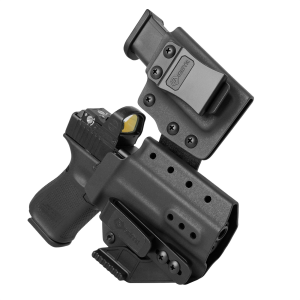
AIWB requires a purpose-built holster with a wedge (rolls the grip into the body) and a claw (levers the grip inward), without those tools, you are AIWB-carrying on hard mode. Tenicor, Phlster, Tier 1 Concealed, ANR Design make purpose-built AIWB holsters with adjustable ride height and cant. Strong-side is more forgiving of holster choice but more limiting on draw speed under stress.
The biggest mistake new AIWB carriers make is dismissing the safety considerations of holstering with the muzzle pointed at your femoral artery. AIWB demands the holstering protocol of pulling the holster off the belt, holstering the gun outside the body, and reattaching the loaded rig, never holster a loaded AIWB gun while it is on the belt unless you have years of practice. Strong-side has no such constraint.
Table of Contents
I’ve carried both. I’ve trained with both. And I’ve watched a lot of people switch from one to the other after getting some range time with an instructor who pushed them to try something new. The appendix carry vs hip carry debate is one of those conversations that gets religious fast, and most of the hot takes online skip the nuance that actually matters.
Here’s the real deal: both positions work. The “best” one depends on your body, your lifestyle, your gun, and how much you’re willing to train. This isn’t going to be another “AIWB is the way” post or a strong-side purist screed. It’s a straight breakdown of what each position does well and where it falls apart.
How we tested: Every pick here is ranked against our testing methodology. Minimum round counts, accuracy and reliability protocols, the failures that disqualify a gun.
What Is Appendix Carry (AIWB)?
Appendix carry, or AIWB (appendix inside the waistband), puts the gun at the 1 o’clock position for right-handed carriers. The holster sits in front of your hip, just to the right of center. Some people run it straight at 12 o’clock (dead center), but for most body types, 1 o’clock is more comfortable and still gives you a fast draw.
The name comes from the appendix organ, which sits in that general abdominal area. It sounds clinical. In practice, you’re sticking a loaded gun in front of your pelvis, pointed down toward your femoral artery and your inner thigh. That’s not a scare tactic. It’s just accurate, and it matters when we get to the safety section.
AIWB has exploded in popularity over the last decade, especially in the competitive shooting and defensive training worlds. Spencer Keepers, whose Keepers Concealment holsters helped make the position mainstream, and trainers like John Johnston and Craig Douglas have made appendix the default in defensive-shooting classes. There’s a reason for that.
Read more in our full appendix carry guide if you want a deeper dive into holster selection, gear, and setup tips specific to AIWB.
What Is Strong Side Carry (3-4 O’Clock)?
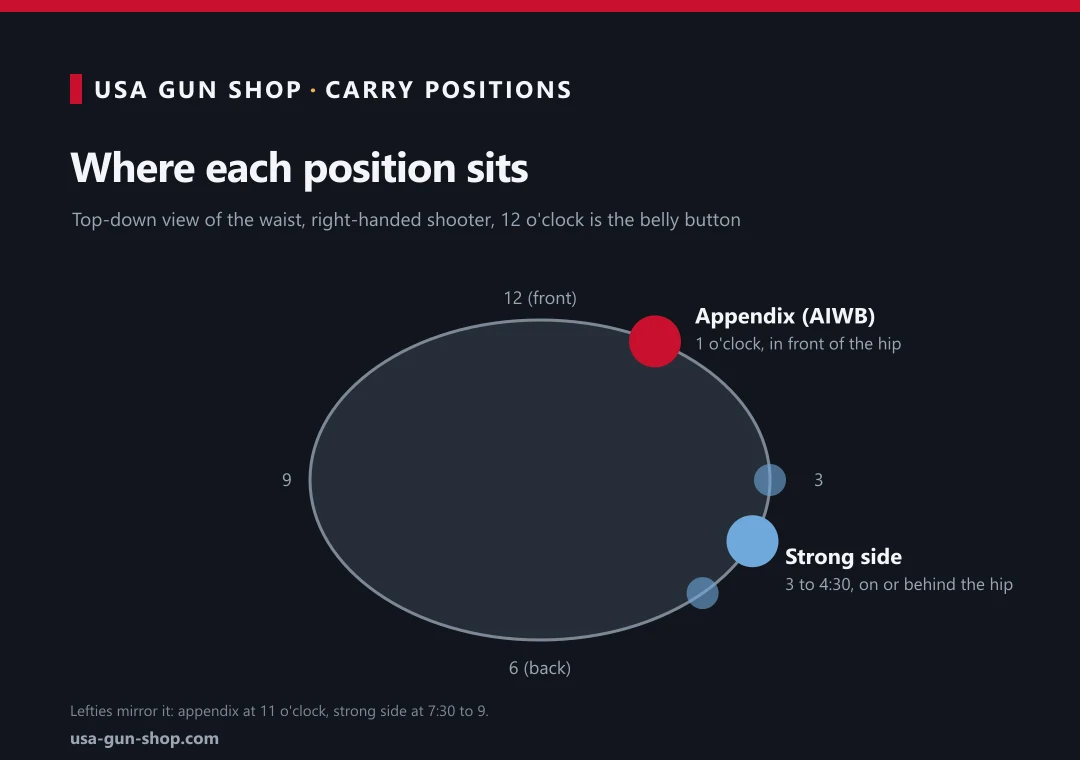
Strong side carry puts the gun at 3, 4, or sometimes 4:30 on your dominant side. It’s been the default carry position for most concealed carriers and law enforcement for decades. Your holster rides on your hip, behind the point of your hip bone, muzzle angled down and back.
It’s intuitive. If you’ve ever worn a dress belt with a phone clip or a tape measure, your hand already knows how to reach back there. Strong side carry is also what most holsters are designed for, which means you have more gear options at every price point.
Cops, security professionals, and a lot of older-school CCW holders run 3-4 o’clock. It’s not behind the times. It works well for a lot of people, especially those with certain body types or job requirements that make AIWB impractical.
Concealment Comparison
Honest take: AIWB wins for concealment in most situations, for most body types. When the gun is in front of your hip, a cover garment hangs straight down and covers the grip naturally. There’s no hip bulge printing through your shirt. You can tuck a t-shirt over an AIWB holster in a way that’s hard to detect.
Strong side carry creates a print problem that’s tough to solve completely. The grip sticks out perpendicular to your body. Any wind, any reach across your body, any time you lean forward, and the grip is pushing against your shirt. A well-fitted cover garment helps, but it’s a harder geometry to hide.
The exception is body type, and we’ll get into that in its own section. For guys with larger midsections, AIWB can actually be harder to conceal than strong side because the gun has nowhere to sit without digging in. Strong side at 4 o’clock can disappear on a larger frame with the right holster and belt.
For slim and athletic builds, AIWB conceals a mid-size gun like a Glock 19 or SIG P365XL with little effort. Check our picks for the best concealed carry holsters if you’re trying to optimize concealment for either position.
Draw Speed: Standing vs Seated
From a standing position, appendix is faster. Full stop. The gun is in front of your body, your arm travels the most direct path to the grip, and you can clear a cover garment with less motion. Competitive shooters have clocked the difference and it’s measurable, not marginal. A trained AIWB shooter will consistently beat a trained strong-side shooter from the standing draw.
Seated is a completely different story. From a car seat or a chair, strong side becomes problematic fast. Your hip holster is pinned between your body and the seat back. Getting a clean grip requires lifting off the seat or contorting awkwardly. AIWB is also not perfect from a seated position, but the gun is accessible without that same awkward reach.
If you spend a lot of time in a vehicle, this matters. A lot of defensive encounters happen in or near cars. Neither position is perfect for a seated draw, but AIWB is easier to access when you’re buckled in. Some carriers run a separate vehicle holster for this reason entirely.
Our guide to drawing from concealment covers standing and seated draw mechanics in detail, including drills you can practice at home.
Comfort: Sitting, Standing, and Moving
Strong side wins on comfort. That’s the honest answer. A good strong-side IWB holster at 4 o’clock with a quality belt barely registers during a normal day. You’re not sitting on it, not pressing it into your gut, not fighting it when you bend over. It just rides there.
AIWB comfort is earned, not given. The first few weeks of carrying appendix feel weird. The holster digs when you sit. The muzzle pokes your thigh when you get in the car. You need to adjust your wardrobe, your belt, and how you move. Once it clicks, most people say it becomes comfortable. But it takes longer to get there.
Holster design matters enormously for AIWB comfort. A wedge attachment (a foam or rubber wedge that tilts the grip into your body) changes the equation dramatically. Without a wedge, AIWB digs and pokes. With one, that same holster becomes comfortable enough to forget it’s there.
Physical activity is another variable. For running, CrossFit, or anything involving a lot of bending and twisting, strong side is more stable and less in the way. AIWB with the right holster can work for moderate activity, but it’s more position-sensitive.
Body Type Considerations
This is where most carry position advice falls apart. People write guides from their own body type and assume it generalizes. It doesn’t.
For slim or athletic builds, AIWB is the better choice. The gun tucks flat against a flat midsection. Concealment is excellent, comfort is achievable, and draw speed benefits are real. If you’re lean and you’re not running AIWB, you’re leaving performance on the table.
For stockier builds or anyone carrying extra weight at the midsection, AIWB gets complicated. The gun has to fight for real estate in the front waistband. It can be done, but it takes a longer holster ride height, a significant cant, and clothing adjustments. Some people make it work. Others find it uncomfortable all day.
Strong side at 3:30 to 4 o’clock tends to work better for larger frames. The hip area naturally accommodates the gun without the midsection pressure. Concealment can actually be better, counterintuitively, because the gun isn’t pushing forward against your shirt fabric.
Women face unique challenges with both positions due to different hip-to-waist ratios and clothing cuts. Strong side tends to have more gear support designed for women’s carry. That’s a practical reality, not a comment on capability.
Safety Concerns with AIWB
Let’s not soft-pedal this. AIWB points the muzzle at your femoral artery, your inner thigh, and your groin area during the draw and during reholstering. A negligent discharge in this position can kill you or cause permanent injury. This is a real risk, not a theoretical one. There have been documented cases.
That doesn’t mean AIWB is unsafe. It means AIWB requires a higher standard of discipline and gear. A quality holster with a rigid shell that fully protects the trigger guard is non-negotiable. Floppy fabric holsters, SERPA-style mechanisms with bad habits, or any holster that allows the trigger to be reached while the gun is seated, those are dangerous at any position. At appendix, they’re potentially lethal.
The number one rule for AIWB reholstering: stand up first. If you’re seated at a desk or in a car and you need to reholster, stand up, clear your cover garment fully, visually verify the holster is clear and undistorted, then slowly seat the gun. Never blind-reholster at appendix. Not once. Not even when you’re in a hurry.
Some instructors go further and recommend removing the holster from the waistband entirely before reholstering. That’s not always practical, but the principle is correct: slow down and pay attention every single time you reholster at AIWB. It’s the moment that bites people.
Strong side carry is not dangerous by comparison, but it has its own discipline requirements. Reholstering behind the hip with a cover garment can catch fabric in the trigger guard if you’re careless. The same rule applies: slow down, clear the garment, verify the holster mouth is clear.
Gun Size Limitations
AIWB works best with compact and subcompact guns. A Glock 43X, SIG P365, Springfield Hellcat, or Glock 19 at the larger end of the practical range. Full-size guns with 5-inch barrels get uncomfortable fast at appendix because the muzzle digs into your thigh when seated. It’s not impossible, but most people find it annoying enough to switch.
Strong side handles full-size guns better. A Glock 17, 1911, or full-size M&P rides comfortably at 4 o’clock in a good IWB or OWB holster. The muzzle clears your body entirely, so gun length is less of a limiting factor. If you want to carry a 5-inch gun concealed, strong side is the more comfortable answer.
For subcompacts, both positions work fine. A SIG P365 at AIWB all but disappears. That same gun at 4 o’clock also conceals easily. At that size, carry position comes down less to what’s physically possible and more to personal preference and draw speed priority.
See our breakdown of the best concealed carry handguns if you’re still dialing in which gun to carry.
Holster Differences
The holster market has caught up with AIWB’s popularity. Tenicor, Phlster, Tier 1 Concealed, ANR Design, and dozens of other makers produce purpose-built AIWB holsters with wedges, claws, and ride height adjustability. A claw attachment hooks on the belt and levers the grip inward toward your body, which dramatically reduces printing. If you’re running AIWB without a claw, you’re carrying without the best tool for the job.
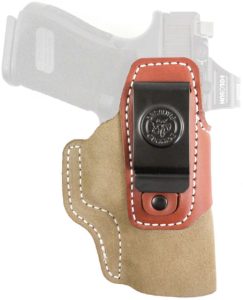
Strong side holsters have a longer history and a bigger market. Galco, Safariland, Blackhawk, CrossBreed, and Vedder all make excellent strong-side IWB options at various price points. OWB holsters for strong side are also widely available, which opens up paddle holsters and duty rigs if you’re carrying in a less concealment-critical environment.

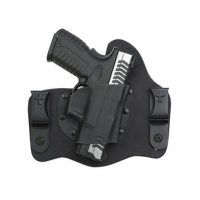
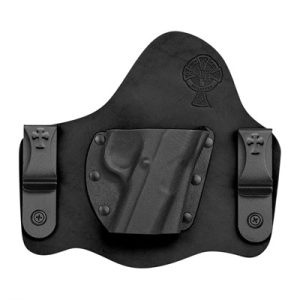
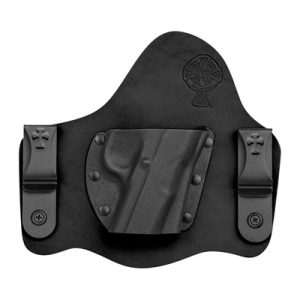
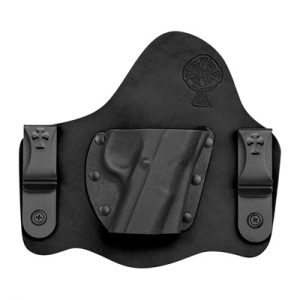
Both positions require a stiff, quality belt. A dress belt or a limp fabric belt will ruin either carry position. Leather or reinforced nylon gun belts from companies like Ares Gear, Kore Essentials, or Volund Gearworks make a real difference in how the gun carries and how consistent your draw is.
What Instructors and Competitors Prefer
Don’t read too much into match results. USPSA’s Carry Optics division (see the USPSA rules) uses open race holsters, not concealed rigs, so its results say nothing on concealed carry, and IDPA sets its own holster-position rules, so check the rulebook before you assume your carry rig is legal at a match.
Defensive shooting instructors are more split. Many trainers, including Craig Douglas of ShivWorks, teach AIWB with proper training. Others point out that most defensive gun uses don’t involve a competitive-speed draw and that the safety discipline AIWB requires isn’t universal among the general CCW population.
Law enforcement runs strong side, mostly OWB with retention holsters. That’s partly institutional inertia and partly that duty holsters with Level II or Level III retention don’t have good AIWB form factors. Plainclothes officers and detectives tend to run strong-side IWB for concealment.
The honest takeaway from the training world: if you’re willing to put in the practice, AIWB is the higher-performance option. If you’re going to carry but not train regularly, strong side is more forgiving of lazy reholstering habits. That’s not a compliment to laziness. It’s just a realistic assessment of risk.
Our concealed carry tips and techniques page covers gear selection, draw practice, and training recommendations for both positions.
The “Stand Up to Reholster” Rule
This deserves its own section because it’s the most important operational rule for AIWB carry and most people either don’t know it or don’t follow it consistently.
When you reholster at AIWB from a seated position, the holster mouth can be partially compressed, your cover garment can fall into the draw path, and the angle of your body puts the muzzle sweeping directly across your inner thigh and groin. All three of those things increase the risk of a negligent discharge during reholster.
The rule is simple: stand up before you reholster. Clear your cover garment. Look at the holster. Confirm the mouth is open and unobstructed. Then slowly return the gun to the holster using deliberate, controlled pressure. No rushing. No looking away. No doing it with one hand while the other is on the steering wheel.
This takes three extra seconds. Those three seconds are the difference between a boring day and a hospital visit. Train this as an absolute habit from day one of carrying AIWB. If you’re at the range, your instructor should be calling out anyone who blind-reholsters or reholsters while seated. If they’re not, find a different instructor.
Which One Should You Choose?
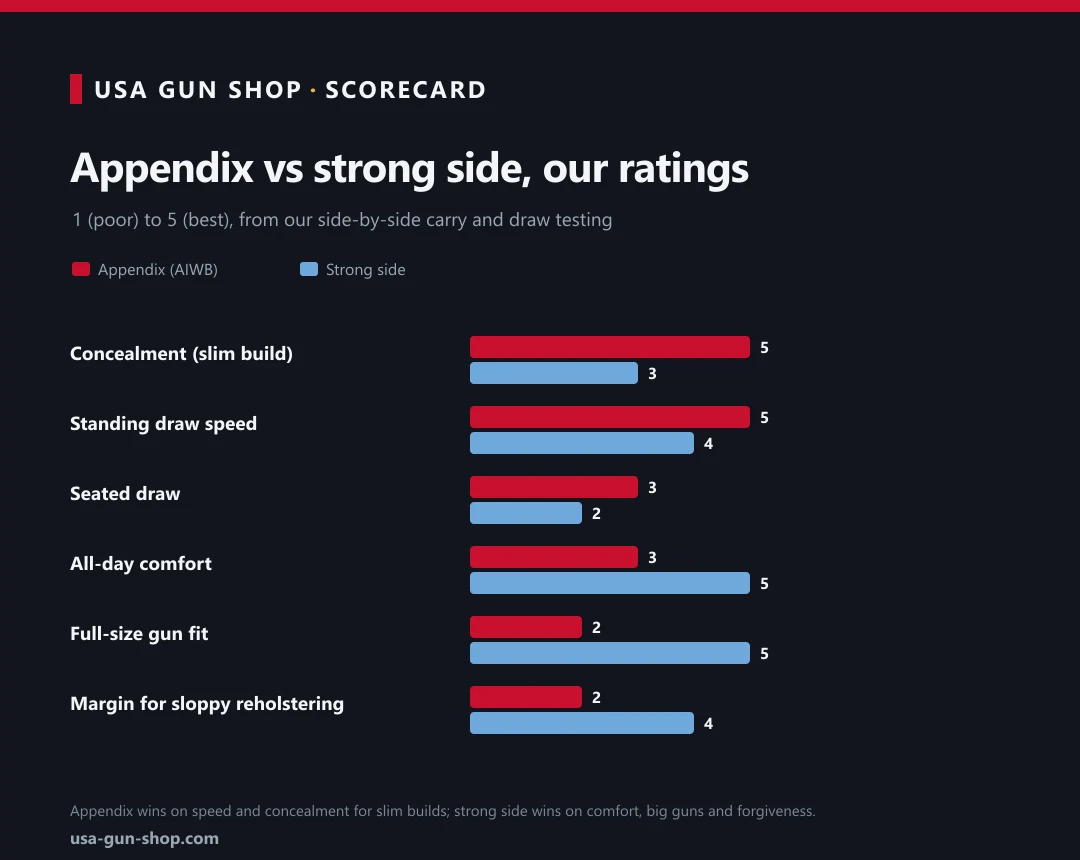
Here’s the simple version. Run AIWB if you’re slim or athletic, you want the fastest draw from standing, you’re willing to train the reholstering discipline, and you’re carrying a compact or subcompact gun. The performance ceiling is higher and concealment is better for most body types.
Run strong side if you’re larger-framed, you want to carry a full-size gun, you sit for most of your day in a vehicle or at a desk, or you’re new to carrying and still building fundamentals. It’s more forgiving, has more gear options, and still works extremely well when set up correctly.
And if you have the time, try both for a few months each. Carry position preference can change after someone actually trains with different setups. Don’t let anyone tell you there’s only one correct answer. There isn’t. There’s only what works for your body, your lifestyle, and your commitment to training.
For a full look at both gear options, see our picks for the best concealed carry holsters and our roundup of the best concealed carry handguns.
Facts and Figures
- Appendix (AIWB): 1 o’clock for a right-handed shooter, in front of the hip; muzzle points at the femoral artery and groin
- Strong side: 3 to 4:30, on or behind the hip; muzzle clears the body
- AIWB holster must-haves: rigid shell covering the trigger guard, a claw and a wedge
- Reholster rule for AIWB: stand up, clear the cover garment, look at the holster, then holster slowly
- Best fit: AIWB for slim builds and compact guns; strong side for larger builds and full-size guns
Frequently Asked Questions
Is appendix carry better than strong side?
For slim or athletic builds carrying a compact gun, yes: appendix (AIWB) conceals better and draws faster from standing. For larger builds, full-size guns or people who sit all day, strong side at 3 to 4:30 is more comfortable and more forgiving.
Is appendix carry safe?
It is safe with the right holster and discipline. The muzzle points at your femoral artery and groin, so use a rigid holster that fully covers the trigger guard, and always stand up, clear your shirt and look at the holster before you reholster.
Which carry position is fastest to draw from?
Appendix, from standing. The gun is in front of your body, so your hand travels the shortest path and you clear the cover garment with less motion. From a car seat neither is great, but AIWB is easier to reach.
Which carry position is more comfortable?
Strong side. A good strong-side IWB holster at 4 o'clock with a stiff belt barely registers through the day. Appendix comfort takes a few weeks and a holster with a wedge to dial in.
Can I carry a full-size gun appendix?
You can, but a 5-inch barrel digs into your thigh when you sit. Appendix works best with compact and subcompact guns like the Glock 19, Glock 43X or Sig P365. For a full-size gun, carry strong side.
What holster do I need for appendix carry?
A purpose-built AIWB holster with a rigid shell, a claw that levers the grip into your body, and a wedge that tilts it in. Tenicor, PHLster, Tier 1 Concealed and ANR Design all make them.
What is the best carry position for a bigger build?
Strong side at 3:30 to 4 o'clock. The hip carries the gun without pressure on the midsection, and it can conceal better than appendix on a larger frame.
Do I need a gun belt?
Yes, for either position. A dress belt or a limp fabric belt lets the gun sag and print. A stiff leather or reinforced nylon gun belt keeps the holster in the same place for every draw.
3,213+ Gun & Ammo Deals
Updated daily from 200+ top retailers. Filter by category, caliber, action type, and price.