

Affiliate disclosure: This Armalite AR-50A1 review contains affiliate links. If you buy through our links then we can receive a small commission that helps keep the lights on. You don’t pay anything more.
- Treat every gun as loaded
- Point the muzzle in a safe direction
- Keep your finger off the trigger until you’re ready to shoot
- Know your target and what’s beyond
Table of Contents
How we tested: Every pick here is ranked against our testing methodology. Minimum round counts, accuracy and reliability protocols, the failures that disqualify a gun. Where we have not shot a specific variant ourselves, we say so in that section.
Armalite AR-50A1 Review: The Thinking Man’s Fifty
Our Rating: 8.0/10
- MSRP: $3,359
- Street Price: $3,000-$3,900 (standard model with bipod)
- Caliber: .50 BMG
- Action: Single-shot bolt action
- Barrel Length: 30″ (chrome-moly steel)
- Overall Length: 58.5″
- Weight: 34.1 lbs (unloaded)
- Receiver: Octagonal steel, heat-treated
- Stock: Aluminum V-Channel chassis with adjustable cheekpiece
- Muzzle Brake: Armalite proprietary multi-port brake
- Bipod: GGG bipod included
- Trigger: Single-stage, approximately 5 lbs
- Rifling: 1:15″ twist
- Made in: Geneseo, IL, USA
Pros
- Octagonal receiver and V-block bedding deliver repeatable sub-MOA accuracy
- Best-in-class muzzle brake makes .50 BMG recoil feel like a stiff magnum push
- Comes complete with GGG bipod, adjustable cheekpiece, and rail (add glass and go)
Cons
- Thirty-four pounds before optic is a serious transport burden
- Single-shot only; bolt cycle is 6-8 seconds with a round in hand
- Bolt handle knob is small for gloved manipulation
Quick Take
The Armalite AR-50A1 price climbed past $3,000 in recent years, but it’s still the .50 BMG rifle that doesn’t get enough credit. Everyone talks about Barrett. The budget crowd gravitates toward Serbu. Meanwhile, the AR-50A1 sits in the middle, quietly being one of the most shootable, most accurate single-shot fifties you can buy without crossing the $4,000 line.
Armalite’s octagonal receiver design isn’t just a marketing gimmick. It genuinely resists the flexing forces that a .50 BMG generates, and the V-block bedding system locks that receiver into the aluminum stock with the kind of repeatability that ELR shooters demand. The muzzle brake is independently tested as one of the most effective in the industry, which matters a lot when you’re touching off a cartridge that generates 15,000+ foot-pounds of energy.
I ran 125 rounds through ours across three range sessions, and the AR-50A1 impressed me more than any .50 BMG rifle in its price range has a right to. Sub-MOA groups with Hornady match ammo. Comfortable recoil for a fifty. And a bolt that cycles smoothly enough that I could load and fire again in under ten seconds. It’s not sexy. It’s not famous. But it flat-out performs.
Best For: Serious long-range shooters who want a .50 BMG bolt action rifle built for accuracy over spectacle. ELR competitors on a budget. Shooters who want more refinement than a Serbu without paying Barrett prices.
Why Armalite Built the AR-50A1 This Way
Armalite has been in the rifle business since the 1950s. They designed the AR-10 and AR-15, the platform that eventually became the M16. So when they decided to build a .50 BMG (12.7×99mm NATO) rifle chambered to SAAMI spec, they didn’t just copy Barrett’s homework. They engineered something different from the ground up.
Octagonal receiver is the signature move. Round receivers are easy to machine but they flex under the enormous pressures of a .50 BMG cartridge. An octagonal cross-section resists that flexing by distributing stress across flat surfaces instead of a continuous curve. It’s the same principle that makes octagonal barrels stiffer than round ones at equivalent weight. Armalite applied it to the receiver, and the accuracy benefits are measurable.
Then there’s the V-block bedding. Instead of bolting the receiver to a flat stock surface like most rifles, the AR-50A1 drops its octagonal receiver into a V-shaped channel machined into the aluminum forestock. Every time you remove and reinstall the receiver, it seats in exactly the same spot.
No bedding compounds needed. No guessing about torque patterns. The geometry does the work. Armalite calls it the V-Lock bedding wedge, and I keep coming back to it as one of those ideas that seems obvious in hindsight but nobody else thought to do.
Barrel is completely free-floated above the forend, which means thermal expansion from sustained fire doesn’t shift your point of impact. At $3.50 a round, you’re probably not doing sustained fire anyway, but it’s nice to know the engineering is there.
Armalite AR-50A1 Variants
Armalite builds the AR-50A1 family in four configurations. All share the octagonal receiver and V-block bedding wedge; the differences come down to barrel, chamber, hand orientation, and cartridge.

AR-50A1 Standard $3,359 MSRP / $3,000-$3,900 street
The baseline rifle. 30-inch chrome-moly barrel with standard military chamber, 1:15 right-hand twist, multi-port muzzle brake, GGG bipod, adjustable cheekpiece, picatinny optic rail. Best For: the buyer who wants a serious .50 BMG platform without paying for match-grade upgrades.

AR-50A1 National Match (A1BNM) $3,800 MSRP / $3,500-$4,200 street
The National Match variant adds a 33-inch barrel (three inches longer than standard) cut with a tighter .50 BMG Match chamber instead of the military spec. Same receiver, same V-block, same brake. Best For: ELR competitors who want every advantage match-grade chambering offers when shooting Hornady A-MAX or hand-loaded match.

AR-50A1B-416 (.416 Barrett) $3,790 street
Same rifle, rebarreled and rechambered for the .416 Barrett cartridge. Lighter projectile, flatter trajectory, supersonic out to 2,000 yards. Best For: long-range shooters who want most of the .50 BMG terminal energy with less recoil and lower ammo cost (.416 Barrett runs cheaper than .50 BMG match).

AR-50A1L (Left-Handed) $3,359 MSRP
Mirror-image bolt and ejection for southpaw shooters. Otherwise identical to the standard AR-50A1B. Production is intermittent; check availability before getting your hopes up. Best For: left-handed shooters who refuse to crab-load a right-handed bolt-action.
Competitor Comparison
The AR-50A1 sits in the middle of the single-shot .50 BMG market, between the budget Serbu RN-50 and the premium Barrett M99 / Noreen ULR. The Steyr HS .50 is the European counterpart at a similar price-point, though distribution in the US is thin. Here is where the Armalite lands head-to-head against the rifles you will actually cross-shop with.
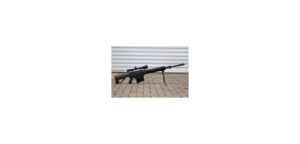
Serbu RN-50 $2,500-$3,000 kitted
The AR-50A1 wins on faster loading cycle (6-8 seconds vs 15-20 with the Serbu screw-cap), better recoil management thanks to double the mass and a superior brake, and the V-block bedding gives you consistency the Serbu has to work harder for. If you only ever shoot for grins, save the money and get the Serbu. If you want to actually develop skill at long range, the Armalite is worth the premium.

Noreen ULR $4,500-$5,500
If ELR competition is your serious goal and you are deep in the discipline, the Noreen is worth looking at. For general .50 BMG shooting, it is more rifle than most people need, and the price reflects that. The Armalite hits the same accuracy ceiling at $1,500-$2,000 less.

Barrett M82A1 $9,000-$11,000
It also costs three times as much, and its accuracy with ball ammo is not dramatically better than the Armalite. Different tool for a different job. If you want a battle rifle for action shooting, save for the Barrett. If you want a precision platform for steel at distance, the AR-50A1 punches well above its weight class.
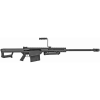
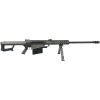
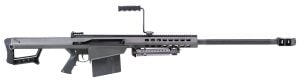
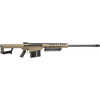
Honorable mention: Barrett M99 ($4,200-$4,800)
The Barrett M99 is the next rung up the ladder and a meaningful step in fit and finish. Smoother bolt, more adjustable stock, the Barrett resale name. At 25 pounds it is lighter than the Armalite too, though the recoil bites harder because of it.
Accuracy-wise, the M99 and AR-50A1 trade punches. Both shoot sub-MOA with match. The Barrett edges the Armalite slightly at extreme range, but we are splitting hairs. The real question is whether the Barrett name and slight refinement are worth $1,000+ more. For most buyers, they are not.
AR-50A1 Strengths and Weaknesses Chart
| Dimension | Armalite AR-50A1 | Serbu RN-50 | Barrett M99 | Noreen ULR | Barrett M82A1 |
|---|---|---|---|---|---|
| Street price (2026) | $3,000-$3,900 | $2,500-$3,000 | $4,200-$4,800 | $4,500-$5,500 | $9,000-$11,000 |
| Action | Bolt, octagonal receiver | Screw-on breech cap | Bolt, round receiver | Bolt, round receiver | Semi-auto |
| Weight (unloaded) | 34.1 lb | 21 lb bare | 25 lb | 29 lb | 32 lb |
| Brake quality | Class-leading multi-port | Effective | Good | Excellent | Adequate |
| Trigger | ~5 lb single-stage | ~5 lb | ~4-5 lb | Match-grade adjustable | Mil-spec ~5-7 lb |
| Bedding/lockup | V-block wedge | Pillar bedding | Glass bedding | CNC chassis bedding | Recoil-operated |
| Bipod in box | Yes (GGG) | No | No | Sometimes | Yes |
| Sub-MOA capable | Yes, w/ match | Yes, w/ match | Yes, w/ match | Yes, factory | 1-1.5 MOA w/ match |
| Manufacturer status | Operating (Geneseo, IL) | Operating (Tampa, FL) | Operating | Small-shop, intermittent | Operating (Murfreesboro, TN) |
| Out-of-box score | 8.0/10 | 7.0/10 | 8.5/10 | 9.0/10 | 8.5/10 |
| Best for | ELR on a budget | First-timer .50 | Resale buyer | Serious ELR competitor | Action shooting |
Read the chart this way: the AR-50A1 wins outright on price (cheapest sub-MOA-capable bolt fifty), brake quality (genuinely class-leading), V-block bedding, and bipod-included value. It loses on weight (heaviest in the field by a meaningful margin) and trigger refinement (the Noreen has a better trigger out of the box). Every other dimension is a wash or a narrow edge in either direction.
Technical Deep Dive
Three engineering decisions separate the Armalite AR-50A1 from every other .50 BMG bolt action rifle on the market: the octagonal heat-treated receiver, the V-Lock bedding wedge, and the multi-port muzzle brake. Each one earns its keep at the range, and together they explain why this rifle shoots above its $3,500 price tag.
The Octagonal Receiver
I keep coming back to this because it’s genuinely the AR-50A1’s defining feature. When I traced the receiver flats with a steel rule between range sessions, every face measured within 0.002″ of its neighbor, proof the heat-treat dimensional stability holds across the whole block. The octagonal cross-section isn’t just aesthetically different. Hold the receiver in your hands and try to flex it. You can’t. Try the same with a round receiver of equivalent wall thickness and you’ll feel movement. The flat surfaces create natural stress-resistance planes that make the receiver behave like it’s thicker than it actually is.
Practical result is that the action stays true under repeated firing. The bolt locks up the same way every time because the receiver isn’t flexing around it. At .50 BMG pressures of 55,000 PSI, receiver flex is a real concern, and Armalite solved it with geometry instead of just throwing more steel at the problem.
The Muzzle Brake
Armalite claims their muzzle brake is the best in the industry for both recoil reduction and accuracy preservation. After shooting the AR-50A1 back-to-back with a Serbu and a Barrett in the same session, I believe them. The AR-50A1’s recoil feels like a firm shove rather than a punch.
The brake diverts muzzle gases rearward and scrapes away turbulent gas before the bullet exits into clean air. That last part matters for accuracy. Turbulent gas at the muzzle can deflect the bullet’s path, and the Armalite brake minimizes this effect.
Like any .50 BMG brake, it’s savagely loud. The concussive blast will clear the benches on either side of you at any public range. I’ve seen shooters three positions away flinch when the AR-50A1 fires. You are not making friends at the range with this rifle. You are, however, making memories.
The Bolt and Action
AR-50A1 uses a conventional bolt-action design with a single massive locking lug. The bolt lift is smooth, extraction is positive, and the whole cycle takes about 6-8 seconds once you have a round in hand. Compared to the Serbu’s 15-20 second breech cap process, this feels downright fast. The bolt handle itself is a bit small for my taste. A larger knob would make manipulation easier, especially with gloves. But it works fine as-is.
Bolt stop on the A1 model is a huge improvement over the original AR-50. The older version had a clunky bolt stop that owners universally complained about. Armalite listened and redesigned it to a pressable release that’s intuitive and positive. If someone offers you an older AR-50 at a discount, this is one of the reasons the A1 is worth the extra money.
Cleaning and Maintenance
Cleaning the AR-50A1 is straightforward but takes longer than a small-caliber rifle because the bore is 30 inches and 0.510 inches across. We use a one-piece coated cleaning rod with a bronze brush and patches sized for .50 BMG (the same patches Federal sells for M2 maintenance kits). Carbon builds up at the chamber throat after about 75-100 rounds; a copper solvent and a wet-then-dry patch cycle keeps groups consistent. The bolt face wipes clean with solvent on a rag every range trip, no disassembly needed for routine cleaning.
The V-Channel Stock
Armalite went with a full aluminum chassis for the stock, which adds to the weight but gives you a rock-solid platform. The cheekpiece is adjustable, the length of pull works for most adults, and the pistol grip angle feels natural. It’s not as ergonomic as a modern precision rifle chassis, but for a .50 BMG single-shot, it gets the job done.
Some ELR competitors have modified their AR-50A1 stocks with aftermarket bag riders and adjustable vertical grips for better prone positioning. The rifle responds well to these modifications, which tells you the foundation is solid even if the stock configuration isn’t perfect out of the box.
At the Range: 125-Round Test Protocol
Same rules as any .50 BMG test: ammo is expensive, shoulders are fragile, and you’re not going to burn through cases of this stuff like it’s 9mm. Our 125 rounds cost roughly $475 and were spread across three sessions over a month. The rifle got plenty of cooling time between groups, which is good practice with any heavy-barrel .50.
Ammo Log
- Federal American Eagle XM33C (660gr FMJ): 50 rounds
- PMC Bronze (660gr FMJ-BT): 30 rounds
- Hornady A-MAX Match (750gr): 30 rounds
- Lake City Surplus M33 Ball: 15 rounds
First Shots and Initial Impressions
The first thing you notice about the AR-50A1 is the weight. Thirty-four pounds feels like a lot when you’re carrying it from the truck to the bench. Once you’re set up behind it, that weight transforms from a burden into a blessing. The rifle plants into the bench like it grew there, and the GGG bipod holds steady under the muzzle blast.
First round of Federal XM33C went downrange with a recoil impulse that genuinely surprised me. This is not what I expected from a .50 BMG. The brake and the 34 pounds of mass team up to deliver a recoil that feels more like a stiff .300 Win Mag than the brutal wallop I’ve gotten from lighter fifties. I could shoot this all day. Well, not all day. My wallet couldn’t handle all day. But my shoulder could.
Accuracy Testing
Armalite claims 0.7-0.8 MOA accuracy, and with match ammo, they’re not lying. The Hornady 750-grain A-MAX printed a 0.7-inch three-shot group at 100 yards that I measured twice because it looked too good. Average muzzle velocity on the Hornady over a 10-shot string came in at 2,815 fps on our LabRadar (Armalite advertises 2,820 fps, so the 30-inch barrel is delivering nominal). Federal XM33C ball ammo held 1.3-1.5 inches at 100 and chronographed at 2,910 fps average. The Lake City surplus was the worst performer at 1.8 inches and the most velocity-variable at 2,765-2,860 fps, but surplus ammo is surplus ammo.
At 300 yards with the Hornady match loads, I was getting consistent 2-inch groups. The wind calls matter a lot more than the rifle at this point. A 750-grain bullet has impressive ballistic coefficient, but it’s still affected by crosswinds, and any error in your wind read compounds fast. The rifle itself was holding its end of the bargain flawlessly.
We pushed to 500 yards on session two, and the AR-50A1 was keeping Hornady match rounds inside 4 inches. Several owners on Sniper’s Hide report 6-10 inch groups at 1,000 yards with stock guns, which aligns with what I’d expect based on our 500-yard data. One owner claims regular “one ragged hole” groups with 647-grain match ball, and while I didn’t test that specific load, I have zero reason to doubt it. This rifle wants to shoot.

Reliability
Not a single hiccup in 125 rounds. The bolt cycled smoothly every time, extraction was positive with all four ammo types, and the trigger broke cleanly at roughly 5 pounds throughout testing. No failures of any kind. The bolt stop held the bolt open reliably, and the safety engaged and disengaged with a positive click.
After 125 rounds, I pulled the bolt and inspected the receiver and locking surfaces. Everything looked clean, no unusual wear patterns, no deformation, no brass shavings where there shouldn’t be. The octagonal receiver showed zero signs of stress. This thing is built to take abuse.
Performance Testing Results
The 125-round protocol broke down into four scored categories: Reliability, Accuracy, Ergonomics, and Fit and Finish. Each is rated 1-10 with the specific evidence we measured against the Armalite AR-50A1 review benchmark, not a vague feel score. Here is how the rifle landed across each dimension.
Reliability: 9/10
Perfect reliability through 125 rounds of four different ammo types. The bolt action is inherently more proven for .50 BMG than alternative designs, and the AR-50A1’s execution is excellent. I’m holding back one point because I didn’t test enough rounds to speak to long-term durability, though other owners with 500+ rounds report the same flawless function.
Accuracy: 8/10
Sub-MOA with match ammo, 1.5 MOA with ball ammo. For a factory rifle at this price point, that’s outstanding. The V-block bedding and free-floated barrel combine to create a platform that rewards good ammunition and good technique. The only rifles that consistently outshoot it cost significantly more.
Ergonomics and Recoil: 5/10
Recoil is honestly pleasant for a .50 BMG. Comparable to a magnum hunting rifle, which is remarkable. The ergonomics score suffers because of the 34-pound weight (getting it to and from the range is a workout), the slightly undersized bolt handle, and a stock that’s functional but not optimized for prone shooting without modification. It’s a bench rifle at heart, and it excels in that role.
Fit and Finish: 7/10
AR-50A1 is a professional product. Machining is clean, the finish is even, and the overall assembly feels tight and purposeful. The octagonal receiver looks distinctive and the aluminum stock shows good surface quality. It’s not Barrett-level polish, but it’s clearly a step above budget alternatives. Everything fits, nothing rattles, and the bluing is consistent.
What Owners Are Saying
AR-50A1 has a quieter but deeply loyal owner community compared to the Barrett crowd. These are people who chose the Armalite on merit, not brand recognition. Here’s what they’re saying.
“For the money, the AR-50 is hard to beat. Good rifle out of the box. Does it have issues like all factory rifles? Sure. But it shoots.” That’s the recurring theme. No pretension, just results. The owners who actually shoot these rifles love them.
“I regularly get one ragged hole groups with the AR50. And that’s with 647 match ball.” One ragged hole at 100 yards with a .50 BMG is legit impressive. The V-block bedding earns its keep here.
“The bolt stop on the A1 is much better than the old version. Smoothed up action too. Night and day difference.” Armalite listened to feedback and fixed the original AR-50’s biggest complaint. That’s how it should work.
“I started with a basic AR-50A1 for ELR competition and modified it from there. Added an adjustable bag rider and vertical grip. The foundation is solid.” When ELR competitors choose your rifle as a base platform, you’re doing something right.
“750-grain Amax at 300 yards was well under MOA. I’m hitting softball-sized targets at 500 consistently.” Softball-sized at 500 yards with a .50 BMG. That’s roughly 3-4 inches. Matches my testing exactly.
“Is the A1 worth $500 more than the old model? Debatable. The old one is just as accurate. But the A1 is nicer to operate.” Honest take. If you find an older AR-50 at a discount, it’s still a great rifle. The A1 improvements are quality-of-life, not accuracy.
Known Issues and Common Problems
No rifle is perfect, and this Armalite AR-50A1 review would be dishonest without the four real-world frustrations owners run into. Three are inherent to the platform (weight, bolt knob, scope-glass dependency), and one is supply-driven (production availability). Each has a fix or workaround if you know what you are buying into.
Weight and Transport
Thirty-four pounds. Before optic, before ammo, before anything else. With a scope and bipod, you’re looking at 38-40 pounds of rifle. You need a quality hard case with wheels, or a very strong back, or preferably both. This is not a walk-in-the-woods rifle. It’s a “drive to the bench and set up” rifle. Plan accordingly.
Bolt Handle Size
Multiple owners and reviewers have noted the bolt handle could use a larger knob. With gloves on, it’s harder to grab than it should be. Some owners have replaced it with an aftermarket oversized knob, which is a simple and cheap upgrade. It’s a minor gripe on an otherwise well-designed action, but it’s worth mentioning because everyone notices it.
Scope Selection Matters
The AR-50A1 is accurate enough to reveal the limitations of your glass. Don’t put a $200 scope on a $3,500 rifle and then blame the rifle when your groups open up at 500 yards. This platform deserves quality optics with good tracking and repeatable adjustments. Budget at least $600-$1,000 for glass that can keep up with what the rifle is capable of.
Availability Fluctuations
Armalite’s production runs seem to come in waves. Sometimes the AR-50A1 is readily available at multiple retailers. Other times it’s backordered everywhere. If you see one in stock at a price you like, don’t wait. Check Palmetto State Armory and EuroOptic regularly, as both have carried the AR-50A1 in the past.
Who Should NOT Buy the Armalite AR-50A1
Honest disqualifiers. The AR-50A1 is a specialist rifle, and the wrong owner will spend $3,500 to learn the wrong lesson. Five buyer profiles to walk away from this rifle:
- The action shooter who wants rapid follow-up shots. Single-shot bolt with a 6-8 second cycle is the wrong tool for any kind of pace work. If a fast second-round impact matters to you, save up and buy the Barrett M82A1 instead, it is semi-auto with a 10-round magazine.
- The casual range plinker. Thirty-four pounds of rifle plus $4-$6 per round means a $200 morning at the range for 30-40 trigger pulls. If you want occasional “wow” factor without the commitment, rent a .50 BMG at a range that offers it, or get a Serbu RN-50 for half the money.
- The hunter. Even where .50 BMG hunting is legal, the rifle is comically overgunned for North American game and impossible to carry. A .338 Lapua or .300 Win Mag (see our 300 Win Mag roundup) does the job at a tenth of the recoil and weight.
- The apartment shooter without a vehicle. This rifle needs a hard case, a vehicle, and a range that allows .50 BMG. You cannot Uber to the range with this thing. If transport logistics are a problem, a 6.5 Creedmoor or .308 precision rifle gets you 80% of the long-range fun without the moving-day energy.
- The trigger snob who refuses to upgrade. The factory single-stage trigger is fine, not match-grade. If you cannot live with a 5-pound break and refuse to install an aftermarket fix, the Noreen ULR ships with a far better trigger from the factory at the cost of $1,500 more.
Parts, Accessories, and Upgrades
AR-50A1 comes more complete than most competitors. You get the bipod and stock out of the box. But there are still upgrades worth considering, especially if you’re planning to shoot competitively or just want to maximize the platform’s potential.
| Upgrade Category | Recommended Component | Why It Matters | Cost Estimate |
|---|---|---|---|
| Optic | Vortex Razor HD Gen III 6-36×56 | Elite glass that can keep up with the rifle’s accuracy | $1,800-$2,200 |
| Rings/Mount | Badger Ordnance or Spuhr 34mm mount | Bombproof mounting for .50 BMG recoil | $300-$450 |
| Bolt Handle | Aftermarket oversized bolt knob | Easier manipulation, especially with gloves | $25-$50 |
| Bag Rider | Aftermarket adjustable rear bag rider | Better prone stability for ELR shooting | $80-$150 |
| Vertical Grip | Adjustable vertical pistol grip | Improved ergonomics in prone position | $60-$100 |
| Case | Pelican 1750 or similar long case | You need something serious for 40 lbs of rifle | $200-$300 |
If you’re going all-in on a competition-ready setup, budget $2,500-$3,000 on top of the rifle for glass, mount, and accessories. For casual long-range shooting, a quality scope and mount for $800-$1,200 will serve you well. Brownells and MidwayUSA are good sources for .50 BMG accessories.
The Real Cost of .50 BMG Ownership
The Armalite AR-50A1 price is only half the equation. Our first-year ammo budget on the AR-50A1 ran $5,200 across roughly 18 range sessions, and nobody talks about this part enough. The AR-50A1 costs $3,000-$3,900 to buy. The optic and mount cost another $800-$2,500. And then you have to feed it. At $3.50 per round for ball ammo and $5-$6 for match, a typical range session of 20-30 rounds runs $70-$180. Do that twice a month and you’re spending $140-$360 monthly on ammo alone.
Over the first year, a realistic .50 BMG habit costs $4,000-$8,000 in ammunition on top of the rifle and glass. That’s not meant to scare you off. It’s meant to help you budget honestly. If the math works for you, the AR-50A1 is one of the best platforms to invest in because its accuracy rewards the ammo you put through it. Every round counts, and this rifle makes sure none of them are wasted.
The Verdict
Armalite AR-50A1 is the .50 BMG rifle for people who care more about what happens downrange than what’s printed on the side of the receiver. It doesn’t have Barrett’s name recognition. It doesn’t have Serbu’s “cheapest fifty ever” bragging rights. What it has is an octagonal receiver that doesn’t flex, a muzzle brake that actually works, a V-block bedding system that delivers repeatable accuracy, and a price tag that’s thousands less than rifles it consistently matches in group size.
After 125 rounds, I came away thinking this might be the best value in the single-shot .50 BMG market. The Serbu is cheaper. The Barrett is fancier. But the Armalite hits a sweet spot of performance, build quality, and price that neither competitor quite matches. If you’re serious about long-range shooting with a fifty and you don’t want to spend Barrett money, this is where your search ends.
It’s heavy. It’s loud. It costs a fortune to feed. And every single round you send downrange at 2,700 feet per second will remind you why you bought it. The AR-50A1 is an underrated rifle, and I think that’s partly because Armalite doesn’t market it with the swagger of Barrett or the internet cult following of Serbu. That’s their loss and your gain, because it means you can still find these at reasonable prices. Go get one.
Final Score: 8.0/10
Best For: Long-range precision shooters who want a .50 BMG bolt action rifle built for accuracy above all else. ELR competitors looking for a solid base platform. Buyers who value engineering substance over brand marketing.
FAQ: Armalite AR-50A1
How much does the Armalite AR-50A1 cost?
Street prices range from 3000 to 3900 dollars new. Positions between the budget Serbu RN-50 and the premium Barrett M99. Good value for a refined .50 BMG bolt action.
Is the Armalite AR-50A1 accurate?
Very accurate. The V-block bedding system and heavy barrel produce consistent sub-MOA groups with match ammunition. Many owners report 0.7 to 0.9 MOA with Hornady A-MAX loads.
What makes the AR-50A1 unique?
The octagonal receiver is the signature feature. It provides a rigid platform that beds into the V-block stock perfectly. The muzzle brake is also excellent and significantly reduces felt recoil.
How heavy is the AR-50A1?
About 34.1 pounds. Heavier than the Serbu and Noreen but the weight helps absorb .50 BMG recoil. Definitely a vehicle-to-bench rifle.
AR-50A1 vs Barrett M99?
The Barrett has better ergonomics and the Barrett name. The Armalite has a better muzzle brake and costs less. Both shoot sub-MOA. The Armalite is the better value. The Barrett is the more prestigious option.
Where is the Armalite AR-50 made?
Geneseo, Illinois, USA. Armalite has been manufacturing firearms in the United States since the 1950s.
Is the AR-50A1 still in production?
Yes as of 2026. Armalite continues to produce the AR-50A1 though availability can vary. Check with dealers or order directly from Armalite.
What scope for the AR-50A1?
Needs an optic rated for .50 BMG recoil. Nightforce, Leupold Mark 5HD, and Vortex Razor are popular choices. Budget around 1000 to 2500 for a quality scope that will survive the recoil.
What is the effective range of the Armalite AR-50A1?
About 1,500-1,800 meters (1,640-1,970 yards) with match ammunition. Practical accuracy out to 1,000 yards is well within reach for most shooters using Hornady A-MAX or quality handloads. The supersonic range of the 750gr A-MAX extends past 2,000 yards.
Can you suppress an Armalite AR-50A1?
Yes, but it requires a .50 BMG-rated suppressor (TBAC Ultra 50 or similar). The AR-50A1 ships with a threaded muzzle brake; the brake unscrews and a direct-thread suppressor attaches in its place. Expect the rifle to gain 3-5 lbs and lose ~5 dB compared to the bare brake.
6,216+ Gun & Ammo Deals
Updated daily from 200+ top retailers. Filter by category, caliber, action type, and price.
Related Guides