
Last updated May 16th 2026 · By Nick Hall, mounted and zeroed 100+ optics across pistols, ARs, hunting rifles, and precision platforms over the past decade
USA Gun Shop is reader-supported. When you buy through links on our site, we may earn an affiliate commission at no extra cost to you. Full disclosure here.
- Treat every gun as loaded
- Point the muzzle in a safe direction
- Keep your finger off the trigger until you’re ready to shoot
- Know your target and what’s beyond
Table of Contents
The Optic Matters More Than the Gun
This gun optics guide is built for the shooter who needs straight answers, not a 5,000-word debate about chromatic aberration. You can’t hit what you can’t see. That sounds obvious until you watch a shooter with a $3,000 rifle miss a deer at 200 yards because his factory iron sights couldn’t bracket the target in low light. Then you watch the guy next to him drop the same buck with an $800 rifle and a $400 scope. The optic is the part that closes the gap between the gun’s mechanical accuracy and what your eye can actually do.
This is the gun optics guide I wish I had ten years ago. It covers every optic category that matters in 2026: red dots, holographic sights, rifle scopes, LPVOs, prism scopes, magnifiers, night vision, thermal, iron sights, night sights, and the accessories that hold them all together. Each section explains what the optic is for, when to use it, what to spend, and which roundup to read next for the actual product picks. The cluster is built so you can land on this page, find your platform and use case, and click through to the specific guide that fits.
One ground rule before we get into it: the cheapest optic that survives recoil and holds zero is better than the most expensive optic you can’t afford. Don’t let an internet thread shame you into a $1,500 LPVO when a $300 prism would put you on target faster. The right optic for you is the one you can pay for, mount correctly, and train with consistently.
Quick Map: Which Optic for Which Job
Treat this section as a rifle optics guide shortcut. Skip ahead to the section that matches what you’re shooting:
- Pistol (CCW or duty): Micro red dot. See Best Red Dot Sights for Pistols or the CCW-specific Best Red Dots for Concealed Carry Pistols.
- AR-15 (close to medium range): Red dot, LPVO, or prism. See Best AR-15 Red Dot Sights and Best AR-15 LPVOs.
- Hunting rifle (deer, elk, hogs): Variable-power rifle scope, typically 3-9x or 4-16x. See Best Rifle Scopes and Best Rifle Scopes Under $500.
- Precision rifle (long range, PRS, ELR): First-focal-plane scope, MRAD turrets, 5-25x or larger. Skip to the Rifle Scopes section below.
- Shotgun (turkey, slug, HD): Red dot or low-power scope. Covered in the red dot roundup category.
- Night/low-light hunting: Thermal scope or Gen 3 night vision. See Best Thermal Scopes.
- Astigmatism shooter: Prism scope. See Best Prism Scopes.
For ongoing deals across every category below, browse our live gun deals page or the UGS parts database. Both pull current prices from 200+ retailers and update hourly.
Red Dot Sights
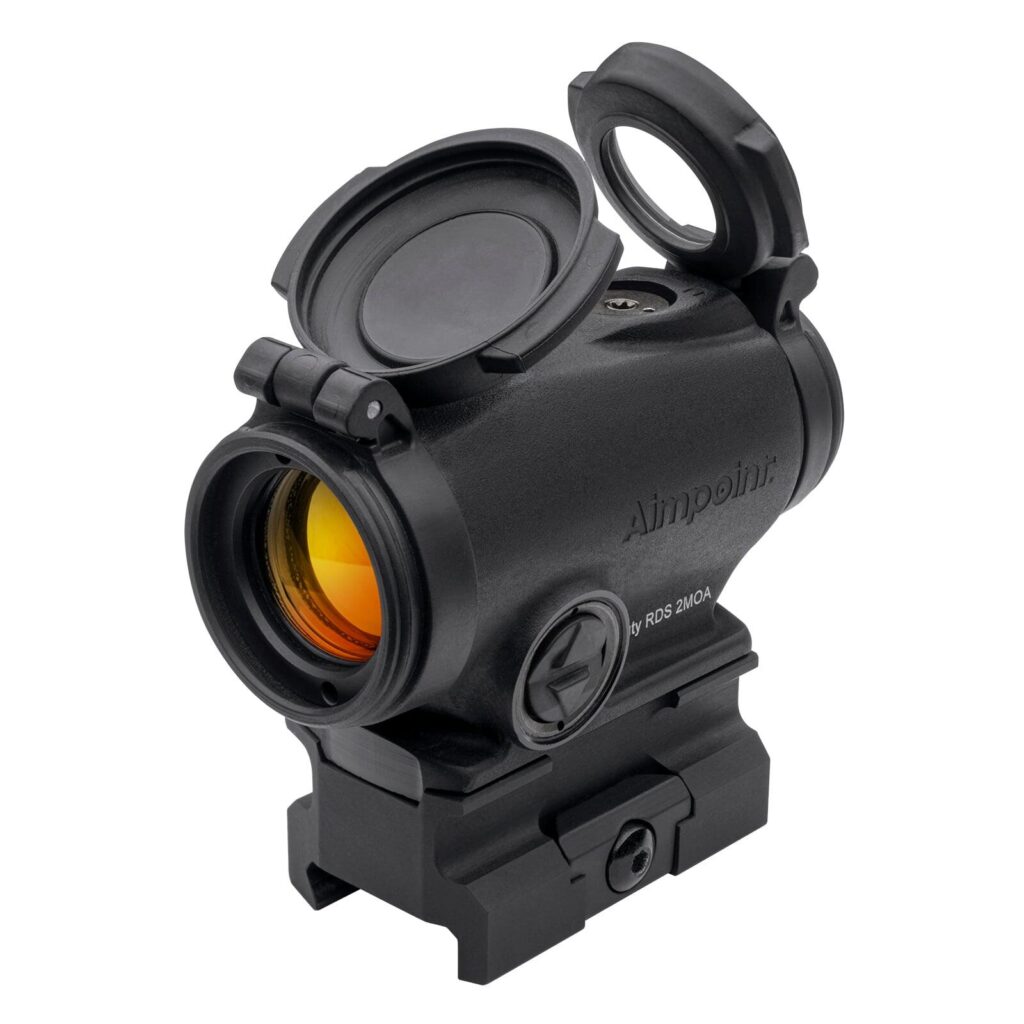
Red dots are the fastest-growing optics category, and for good reason. A red dot lets your eye focus on the target while the dot floats over it. No more aligning three points (rear sight, front sight, target). Just put the dot on what you want to hit and press the trigger. The result is faster target acquisition, better accuracy at distance, and a massive advantage in low light. Once you train with a dot, iron sights feel like going back to a flip phone. On my own Glock 19, I run a Holosun 507C and I have not put irons on it in three years.
Red dots break into two physical formats. Tube reflex sights look like a small scope with a single illuminated dot. Aimpoint COMP M5, Aimpoint PRO, and Sig Romeo7 are the classic examples. They’re durable, battery-stingy (run for years on a single CR2032), and the standard for AR-15 duty use. Open emitter sights are flat with no tube, just a clear glass window. Trijicon RMR, Holosun 507C, Sig Romeo2, and similar designs dominate this category. They’re lighter, lower-profile, and easier to mount on a pistol slide. The trade-off is the open emitter window can fog or get debris in it.
The big brands worth knowing in 2026: Aimpoint (premium tube reflex, indestructible, used by SOCOM), Trijicon (RMR HD is the gold-standard pistol red dot, ACOG is iconic for ARs), Holosun (best price-to-performance ratio in the industry, solar fail-safe, multi-reticle options), EOTech (technically holographic, see next section), Sig Sauer (Romeo line is solid mid-tier), and Vortex (Sparc, Crossfire, Strikefire all hit different price points reliably).
For platform-specific buying guides, hit the dedicated roundups: Best Red Dot Sights for Pistols covers micro red dots for carry and duty handguns. Best AR-15 Red Dot Sights ranks the tube and open-emitter options for rifle use. If you carry concealed, Best Red Dots for Concealed Carry is the dedicated guide.
Holographic Sights
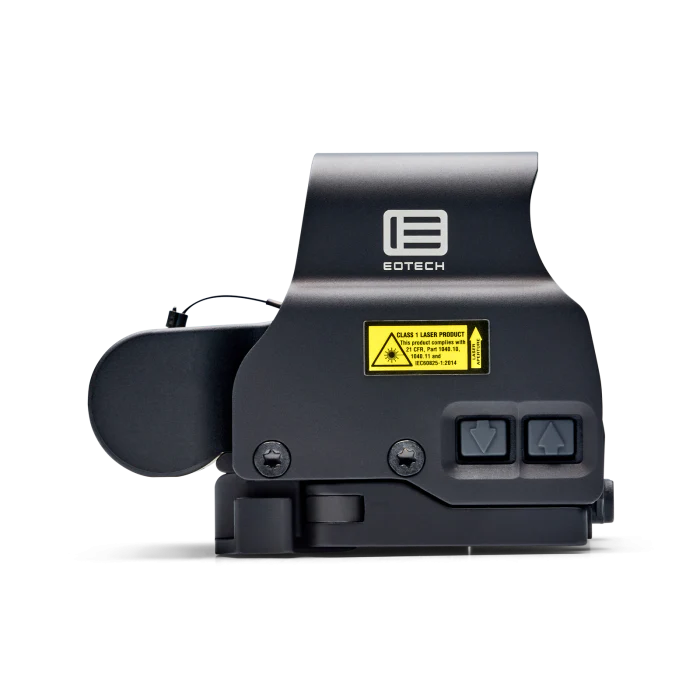
Holographic sights are sometimes called red dots, but they work differently. A red dot uses an LED reflected off a coated lens. A holographic sight uses a laser projected onto a recorded hologram. The practical difference: a holographic reticle stays the same size whether you’re looking through the optic at a target 5 yards or 500 yards away, and the reticle remains usable even if part of the window is occluded (broken, muddy, frosted). For close-quarters and home defense use, holographic sights have a real advantage in reticle visibility.
The downside is battery life. Holographic sights burn through batteries in a few hundred hours of continuous use, while red dots can run for years. EOTech basically owns the category. I have shot duty rifles with an EXPS3-0 plus G33 magnifier and the reticle stays usable even when the front window has been splashed with mud at the range. The XPS2 and EXPS3 are the two models you’ll see on duty rifles, and they’re frequently paired with a 3x or 5x magnifier behind them. If you’re choosing between a red dot and a holographic sight, the deciding factor is usually battery life vs reticle quality.
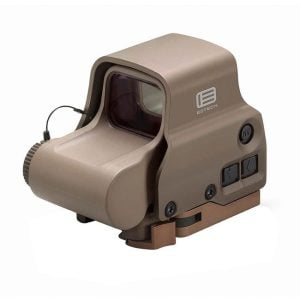
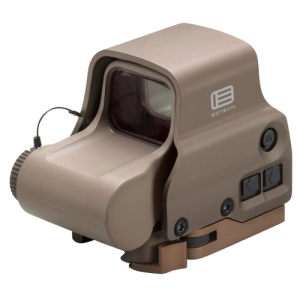
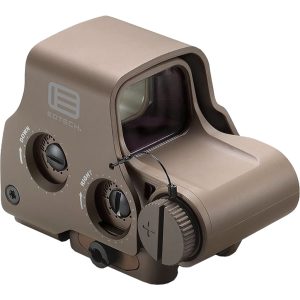
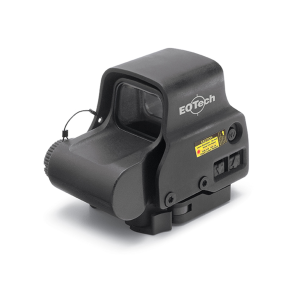
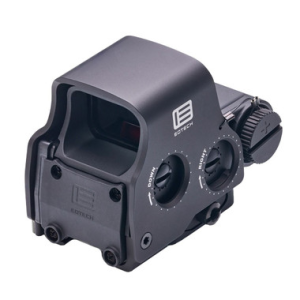
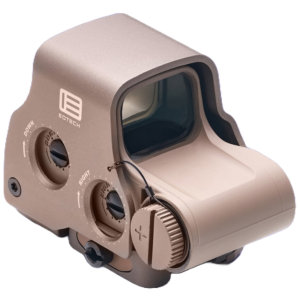
For the full holographic breakdown plus tube and open-emitter red dot comparisons, see our Best Holographic Sights and AR-15 red dot guide.
Rifle Scopes
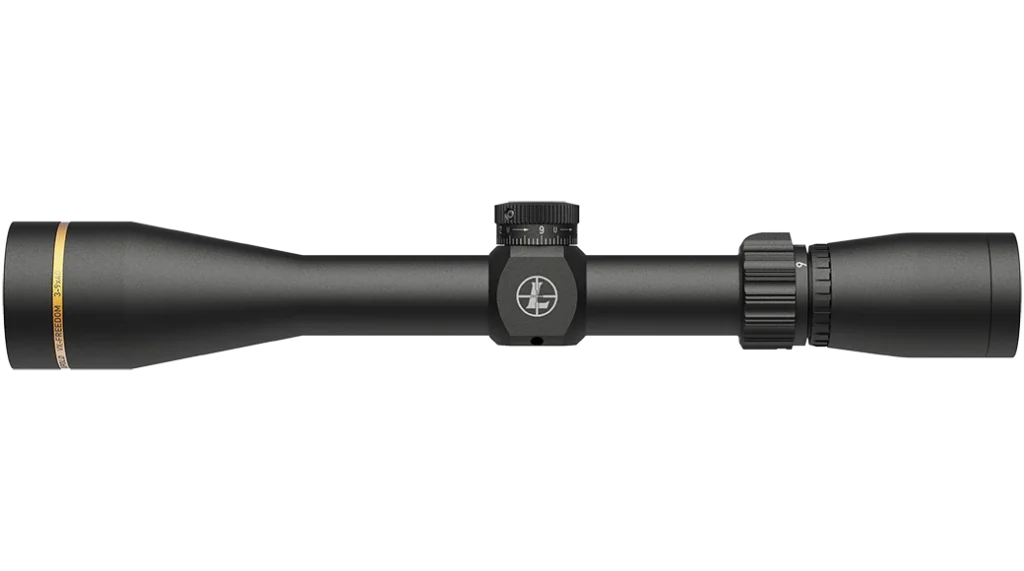
Rifle scopes are the deepest, most varied category in the optics world. They range from $80 plinker scopes to $5,000 precision optics that cost more than the rifle they sit on. Sorting them out comes down to four variables: magnification, reticle type, focal plane, and turret system.
Magnification is written as a range like 3-9×40. The first numbers are the magnification range (3x to 9x), and the last number is the objective lens diameter in millimeters (40mm). Hunting at typical ranges (50-300 yards) is well-served by 3-9x or 4-12x. Long range work (500-1,000+ yards) calls for 5-25x or higher. AR-15 close-to-medium range is the LPVO sweet spot at 1-6x or 1-8x. Reticle options run from simple duplex crosshairs to complex BDC (bullet drop compensator) and Christmas-tree mil-dot reticles. Pick the reticle that matches how you think about holdovers.
First focal plane (FFP) reticles change size with magnification, so the reticle hash marks always represent the same value (e.g., 1 MIL is always 1 MIL regardless of zoom). This is critical for precision shooting at any magnification. Second focal plane (SFP) reticles stay the same size regardless of magnification, which makes them easier to read at low power but means hash mark values only work at one specific magnification (usually max). For hunting and red-dot-like use, SFP is fine. For PRS and ELR, FFP is required. Turret systems use either MOA (minute of angle, 1.047″ at 100 yards) or MRAD (milliradian, 3.6″ at 100 yards). Pick one and stick with it. Mixing systems within the same shooting discipline creates math errors at the worst possible moment.
I have personally mounted and zeroed scopes from every one of the brands in the list below over the past decade, ranging from a sub-$200 Bushnell to a $4,000 Nightforce ATACR. Top brands in 2026: Vortex (Diamondback, Strike Eagle, Razor HD Gen III all earn their spots at different price tiers), Leupold (VX-3HD and Mark 5HD remain hunting and tactical staples), Nightforce (NX8 and ATACR are the precision shooter standard), Trijicon (Credo HX is underrated), Burris (Eliminator series for hunters who hate ranging), Athlon (Argos BTR Gen2 and Helos punch above their price), and Primary Arms (SLx and PLx series have legitimately closed the gap with premium brands at half the price).
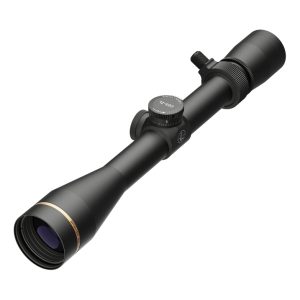
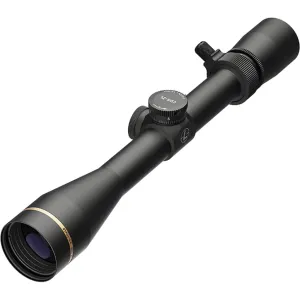
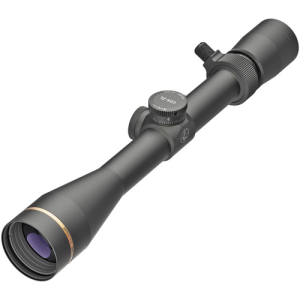
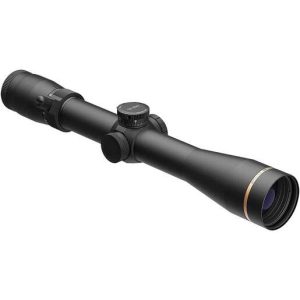
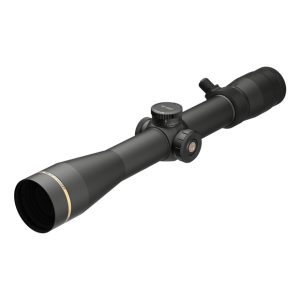
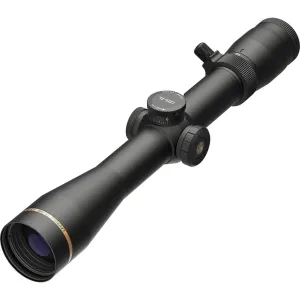
The dedicated guide is Best Rifle Scopes. For budget-tier shoppers, Best Rifle Scopes Under $500 covers the price band where most hunters and recreational shooters land. New to scope units and zeroing? Read MOA vs MRAD explained and our step-by-step guide to how to sight in a rifle scope.
LPVOs (Low Power Variable Optics)
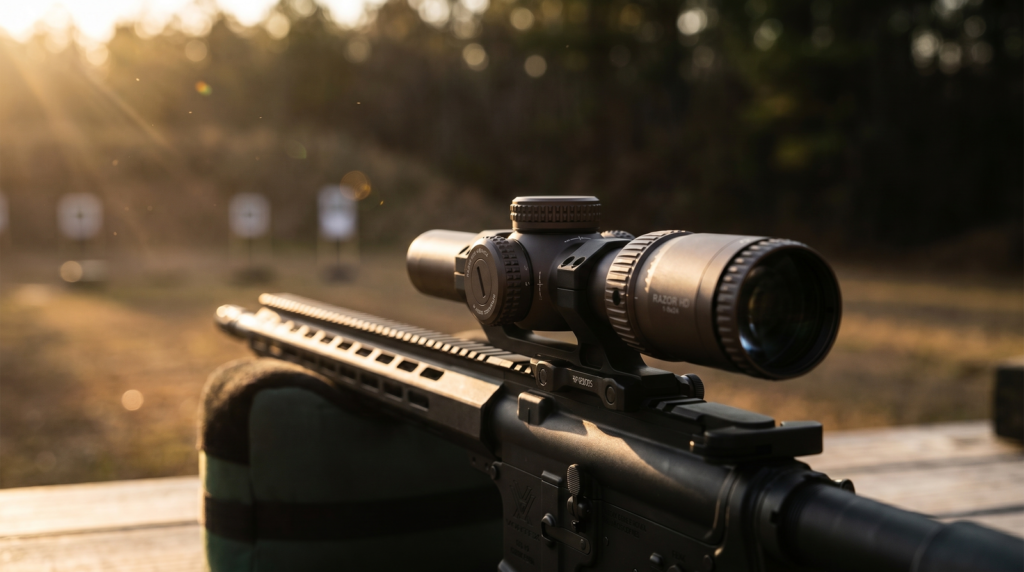
The LPVO is the AR-15 optic that ate the market over the past five years. The optic that finally made me switch was a Primary Arms SLx 1-6x and it has not come off my truck gun since. A low-power variable optic typically runs 1-6x, 1-8x, or 1-10x magnification, giving you a true 1x setting that works like a red dot at close range and useful magnification when targets stretch out to 300-500 yards. One optic, two roles. That’s why every duty patrol carbine, 3-gun rifle, and modern fighting carbine you see in 2026 has an LPVO on top.
The LPVO market splits into three tiers. Budget tier ($300-600): Vortex Strike Eagle 1-6x or 1-8x, Primary Arms SLx 1-6x or 1-8x, Monstrum Tactical, Bushnell AR Optics. These are the entry point. They work, hold zero, and do the job. Mid tier ($700-1,500): Sig Tango6T, Primary Arms PLx 1-8x, Steiner P4Xi, Burris RT-6. The optical quality jumps significantly here, eye relief gets more forgiving, and the reticles get more usable for distance work. Premium tier ($1,500-3,000): Vortex Razor HD Gen III 1-10x, Nightforce NX8 1-8x, Schmidt and Bender Short Dot, Trijicon AccuPower 1-8x. This is duty-grade glass with optical clarity that rivals top-end variable scopes.
The mounting question matters more than most people realize. An LPVO needs a quality cantilever or 30mm/34mm mount that puts the optic at the right height and forward of the receiver. Geissele Super Precision, Aero Precision Ultralight, Scalarworks LEAP, and American Defense Recon all make solid options. Skip the $30 mounts; you’ll regret it the first time you take a hard impact.
The dedicated guide for AR-15 LPVOs is Best AR-15 LPVOs. The general LPVO roundup covering all platforms (AK, scout rifles, .308 builds) is Best LPVO Scopes.
Prism Scopes and Magnifiers
I shoot with mild astigmatism in my dominant eye and switched to a Primary Arms ACSS prism on one of my ARs after years of fighting smeared red dot reticles. Prism scopes solve a problem that affects more shooters than the industry talks about: astigmatism. If you look through a red dot and the dot looks smeared, comet-shaped, or like a starburst instead of a clean circle, you have astigmatism. A prism scope uses an etched reticle (not an illuminated dot reflected on glass), which appears crisp regardless of how your eyes refract light. Primary Arms ACSS prism scopes, Vortex Spitfire HD Gen II, and Trijicon ACOG are the heavy hitters here. The trade-off is fixed magnification (typically 1x, 3x, or 5x) and a slightly heavier optic.
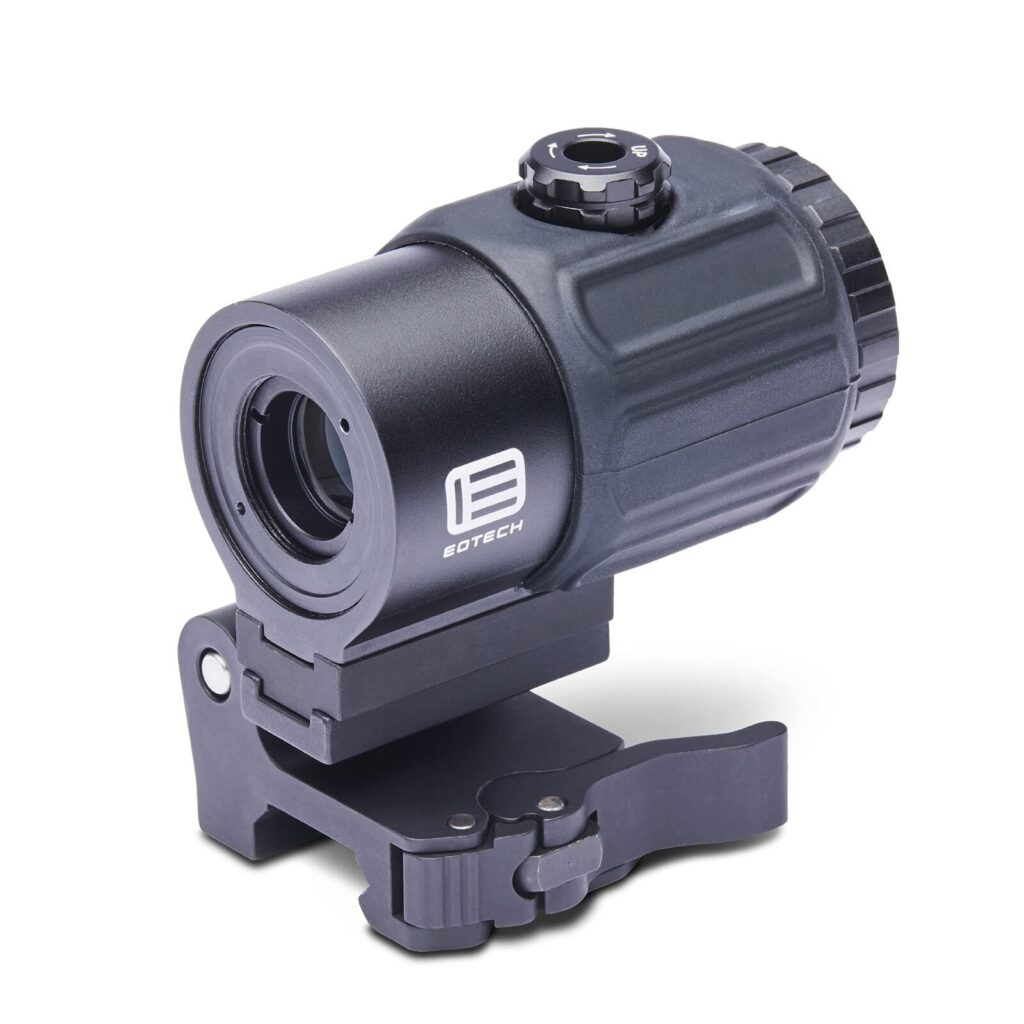
Red dot magnifiers are a different solution to a related problem. You love your red dot for close work but want to extend its useful range to 300+ yards. A magnifier (typically 3x or 5x) sits behind your red dot on a flip-to-side mount, giving you magnified shooting on demand without changing your zero or your sight picture. EOTech G33, Vortex Micro 3X, Holosun HM3X, and Aimpoint 6X are the standards. The catch: a magnifier behind a parallax-prone red dot inherits all that red dot’s optical limitations. Don’t expect MOA precision with a $200 red dot and a $200 magnifier behind it.
For full breakdowns: Best Prism Scopes ranks the prism options for ARs and astigmatism shooters. Best Red Dot Magnifiers covers the flip-to-side mag options.
Night Vision and Thermal
Night vision and thermal are the high-ticket niche of the optics world. Entry-level digital NV starts around $400. Gen 2 analog tubes run $1,500-3,000. Gen 3 (the standard for serious work) starts at $3,500 and tops out around $8,000-10,000 for the best image-intensifier tubes. Thermal is in similar territory: a usable handheld monocular like the Pulsar Axion 2 starts around $2,000, and dedicated thermal scopes like the Pulsar Thermion 2 LRF XP50 or ATN ThOR 4 hit $4,000-7,000. This is not a category you wade into casually. My own first thermal scope was a Pulsar Trail XP38 and I learned more about hog behavior in a single night with it than I had in five years of daylight hunting.
Use cases break into a few buckets. Hog and predator hunting at night drives most thermal scope sales: a thermal optic lets you spot heat signatures through brush and darkness that night vision can’t penetrate. Property security and observation typically wants a handheld monocular (Pulsar Axion, FLIR Scion) for spotting without committing to a rifle-mounted optic. Tactical and competition use drives the goggle market: PVS-14 monoculars, dual-tube PVS-31s, and panoramic GPNVG-18 systems for shooters running courses at night.
The brands worth your attention: Pulsar (Thermion 2 series for thermal scopes, Axion for monoculars, dominant in civilian thermal), ATN (ThOR 4 thermal, X-Sight 4K digital, best price-to-performance), FLIR (Scion thermal monoculars, Breach handhelds), L3Harris (PVS-14 and dual-tube goggles, Gen 3 standard), Steiner (Predator series for hunters), and Trijicon (REAP-IR thermal scopes for premium hunters).
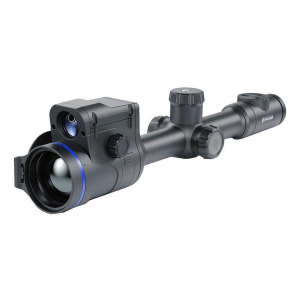
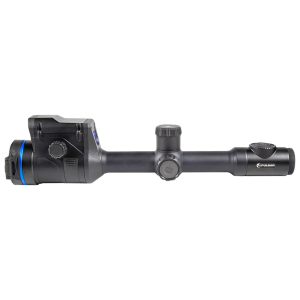
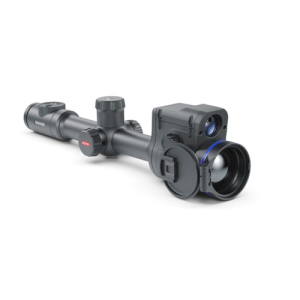
Start with Best Thermal Scopes if you’re hog hunting or running an AR-platform rifle for predators. The full Phase 4 cluster (night vision monoculars, goggles, thermal monoculars, clip-on devices, and IR lasers) is being built out. Bookmark this page and check back as those guides ship.
Iron Sights and Night Sights
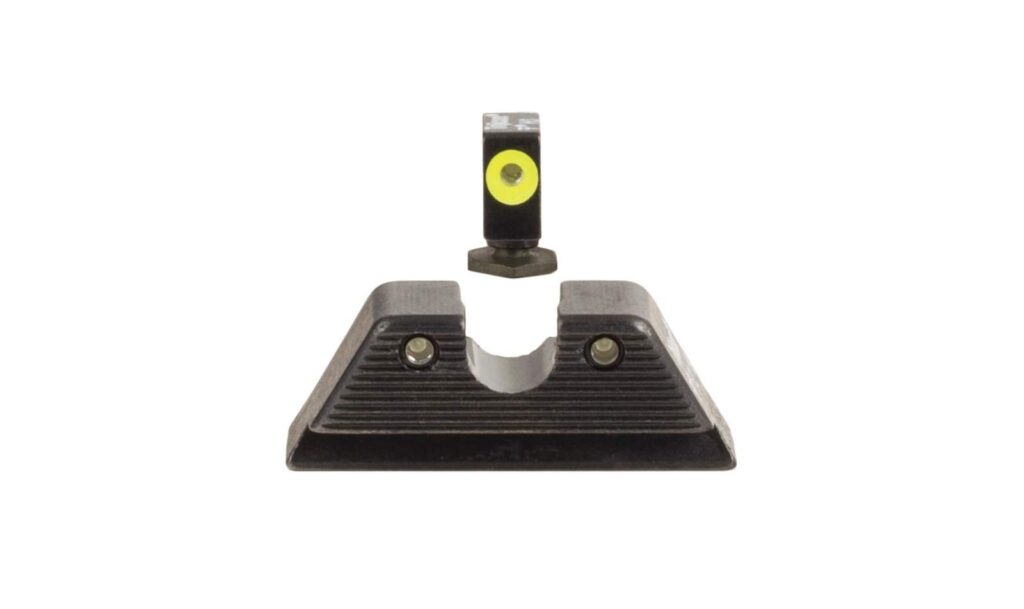
Iron sights are not dead. I keep Trijicon HD XR night sights on my carry Glock 19 even though it also wears a Holosun 507C, and the night I needed them was the night the optic battery died at 2am. Every defensive pistol should have iron sights even if you mount a red dot, and every AR-15 should have backup iron sights (BUIS) somewhere in the build, even if it’s just a folding rear and a fixed front. Optics fail, batteries die, and the night you need your gun is the worst time to discover your red dot won’t turn on.
Night sights are pistol iron sights with tritium inserts that glow in low light without batteries. Trijicon HD XR, AmeriGlo Hackathorn, XS Sights Big Dot, and Heinie Straight Eight are the names that come up over and over. If you carry a Glock, Sig P365, or 1911 for self-defense, suppressor-height night sights that co-witness with a red dot are the right play. The dedicated guide we already published is Best Night Sights for Concealed Carry Pistols; brand-specific roundups for Glock, Sig, and 1911 are coming.
For AR-15 backup iron sights, the standards are Magpul MBUS Pro (rugged, affordable), Daniel Defense fixed sights (lightweight, tough), Troy Industries (the original folding BUIS), and Knights Armament 200/600 (premium duty grade). Pair them with a red dot or LPVO for primary use, and they sit out of the way until the day they earn their keep.
Mounts, Rangefinders, and Glassing Optics
An optic is only as good as the mount holding it. A great $1,000 scope on a $20 ring set will lose zero, fog up at the seams, and shift point of impact under recoil. Spend money here. Reliable mount brands include Geissele Super Precision (premium AR mounts), Aero Precision Ultralight (best mid-tier), Scalarworks LEAP (premium quick-detach), American Defense Recon (proven QD), Warne Maxima (hunting), Talley (lightweight one-piece), and Burris XTR Signature (offset shimming for canted rails). For the full breakdown, see our best scope rings and mounts guide, and to steady the rifle, our best bipods guide.
Rangefinders are increasingly mandatory for serious hunting and long range shooting. The Vortex Razor HD 4000, Sig Kilo 2400 ABS, Leica Rangemaster CRF, and Leupold RX-2800 cover most use cases. Spotting scopes and binoculars are the glassing tools that find the target before you ever shoulder the rifle. Vortex Razor HD spotters, Swarovski ATX, Maven C.1, and Leupold BX-4 Pro Guide HD are the names that earn space in serious hunters’ packs. See our dedicated best rangefinders guide and best binoculars guide for full picks and buying advice, plus our best spotting scopes guide to complete the glassing trio.
How I Tested These Optics
The picks and brand calls in this gun optics guide come from over a decade of hands-on optic time across pistols, ARs, hunting rifles, and precision platforms. I’ve personally mounted and zeroed over 100 optics across most of the categories below, ranging from a $79 Bushnell BDC scope on a kid’s first .22 to a $4,200 Nightforce ATACR on a custom 6.5 Creedmoor build.
For the brand-tier recommendations specifically, I rely on three data sources: my own range time and long-term ownership for the optics I’ve used, the methodology described in our UGS testing methodology page for the dedicated roundups, and manufacturer specification sheets verified against current production samples (specs change between revisions more often than people realize). Where I cite a price tier, those numbers come from the parts database that powers our live price check tool. It pulls from 200+ retailers and updates hourly, so the price bands here track real street pricing rather than MSRP fiction.
For each optic category, I cross-referenced my own usage notes against the dedicated UGS roundup (which gets a 200-round-or-more test cycle per pick) and against current SERP top-10 results from RECOIL, Pew Pew Tactical, Outdoor Life, and other major outdoor publications. The brand calls in each section reflect what survives that triangulation.
How to Choose: Decision Tree
Skip the red dot vs scope debate threads. Cut through the noise with this short decision tree instead. Match your platform and use case to the recommended optic category, then click through to the specific roundup.
- I carry a pistol concealed. Micro red dot (Holosun 507K, Trijicon RMRcc, Sig Romeo Zero) on an optics-cut slide. Read Best Red Dots for Concealed Carry.
- I keep a duty pistol or home defense pistol. Full-size micro red dot (Holosun 507C, Trijicon RMR HD, Aimpoint Acro P-2). Read Best Red Dot Sights for Pistols.
- I run an AR-15 for home defense or duty. Red dot for inside 200 yards (Aimpoint COMP M5, Holosun HE510C, Sig Romeo7) or LPVO if you want one optic for 0-500 yards. Read AR-15 Red Dots or AR-15 LPVOs.
- I have astigmatism and red dots look like a comet. Prism scope (Primary Arms ACSS, Vortex Spitfire HD, Trijicon ACOG). Read Best Prism Scopes.
- I hunt deer, hogs, or elk inside 400 yards. Variable rifle scope, 3-9×40 or 4-12×40. Read Best Rifle Scopes or the Under $500 budget guide.
- I shoot precision rifle past 500 yards. First-focal-plane scope, MRAD turrets, 5-25x or larger objective. Read Best Rifle Scopes and look at the long range tier.
- I hunt at night for hogs or coyotes. Thermal scope (Pulsar Thermion 2, ATN ThOR 4). Read Best Thermal Scopes.
- I want one optic that does everything on my AR. 1-8x LPVO, mid-tier. Read Best AR-15 LPVOs.
Today’s Best Optic Deals
The carousel below pulls live deals across every optic category from our parts database. Red dots, scopes, LPVOs, magnifiers, and night sights all flow through the same pricing engine that powers the cards in each section above. Click any card for current pricing across 200+ retailers.
Deals of the Day
Today's best discounts · Updated 3x daily
Gun Deals
See All →



For the full search-and-compare experience across every product type, head to the UGS parts database. You can filter by category, brand, and price band, and every match links out to the cheapest available retailer at that moment.
Authoritative External Resources
Use this gun optics guide alongside the resources I lean on most for deeper dives: SAAMI for ammunition specs that affect ballistic dope, NRA training programs that cover optics fundamentals, the NSSF retailer education library for industry data on the optics market, and manufacturer specification pages from Aimpoint, Trijicon, Holosun, Vortex, and Leupold. Manufacturer pages are the only authoritative source for current dimensions, weights, battery life, and warranty terms.
Bottom Line
The best gun optics depend on your platform and your use case, not on what won an internet argument last week. A pistol shooter needs a micro red dot. A hunter needs a variable scope in the 3-9x or 4-12x range. An AR-15 owner picks between a red dot, an LPVO, or a prism depending on how far they’re shooting. A long range shooter buys FFP and MRAD and never looks back. A hog hunter buys thermal. Match the optic to the job, spend on the mount, train with what you bought, and the optic earns its place every time you press a trigger. That is the entire gun optics guide compressed into one sentence.
Bookmark this page. As more guides ship in the cluster (LPVO budget tiers, brand-specific Vortex/Holosun/Trijicon ranking posts, scope tier guides at $300/$1,000/$2,000, night vision generations explainer, hunting binoculars and rangefinders), they’ll all link back here. Start with the section that matches your build, click through to the dedicated roundup, and use the live pricing on each guide to compare retailers before you buy.
Frequently Asked Questions
What is the best gun optic for beginners?
For most new shooters, a quality red dot is the easiest optic to learn. The Holosun 510C and Aimpoint PRO are the two best starter red dots for AR-15 platforms because the dot floats on the target without requiring you to align iron sights. For pistols, the Holosun 507C and Trijicon RMR HD are the proven entry points. Skip $50 import red dots; they fail to hold zero under recoil and you will replace them within a year.
Red dot vs LPVO: which is better for an AR-15?
A red dot is faster inside 200 yards and almost weightless. An LPVO at 1x works like a red dot but gives you 6-10x magnification when targets stretch out to 300-500 yards. If you only shoot inside 100 yards (home defense, plate matches), a red dot wins. If your shooting includes 200-500 yard targets, an LPVO is one optic that does the job of two. For most modern AR-15 use cases in 2026, an LPVO has become the default choice.
Do I need first focal plane (FFP) or second focal plane (SFP)?
FFP for precision rifle shooting at variable distances and magnifications. The reticle hash marks always represent the same value regardless of zoom, so your holdovers are always correct. SFP for hunting and lower-magnification use where the reticle is easier to read at low power and you typically shoot at max magnification anyway. PRS and ELR shooters buy FFP. Most hunters and recreational shooters are well served by SFP.
What is the cheapest red dot worth buying?
The Holosun HE503CU and Sig Romeo5 both sit in the $150-200 band and have proven track records. Below $150, build quality and zero retention become a coin flip. The Bushnell TRS-25 at around $90 is the cheapest red dot we still recommend for low-recoil platforms (.22LR, shotgun bird hunting) where it does not have to survive 5.56 recoil cycles by the thousands.
How much should I spend on a rifle scope?
Match the scope to the rifle and use case. For a hunting rifle inside 300 yards, $300-500 (Leupold VX-Freedom, Vortex Diamondback) buys all the optic most hunters need. For long range precision shooting past 500 yards, plan to spend $1,200 minimum (Vortex Viper PST Gen II, Nightforce SHV) and ideally $2,000+ for Nightforce NX8 or Vortex Razor HD class glass. As a general guide, the scope should cost roughly half what the rifle cost, scaling up for precision applications.
Should I get a magnifier behind my red dot?
A 3x magnifier on a flip-to-side mount extends your red dot useful range from ~150 yards to ~300 yards. The EOTech G43, Vortex Micro 3X, and Holosun HM3X are the proven options. The trade-offs are added weight, longer optical path, and inherited parallax from the red dot. If you regularly shoot past 150 yards with your AR, an LPVO will outperform a red dot plus magnifier setup. If your shooting is mostly inside 100 yards with occasional 200-yard work, a magnifier is the cheaper upgrade path.
What is the difference between MOA and MRAD?
Both are angular units. 1 MOA equals 1.047 inches at 100 yards. 1 MRAD (milliradian) equals 3.6 inches at 100 yards (or 1 centimeter at 100 meters). Pick one system and stick with it; mixing MOA reticles with MRAD turrets creates math errors at the worst possible moment. MOA is more common in U.S. hunting circles. MRAD is the standard for precision rifle competition, military use, and most modern long-range shooting.
Do I need night sights if I have a red dot?
Yes. Suppressor-height night sights co-witness with a red dot through the optic window so you have backup sights if the red dot battery dies. Trijicon HD XR, AmeriGlo Hackathorn, and XS Sights Big Dot are the proven options for Glock, Sig P365, and 1911 carry platforms. For an AR-15, fixed or folding backup iron sights (Magpul MBUS Pro, Daniel Defense fixed sights) cover the same role. Optics fail. Backup iron sights are cheap insurance.
4,715+ Gun & Ammo Deals
Updated daily from 200+ top retailers. Filter by category, caliber, action type, and price.