

6.5 Creedmoor is the cartridge that made precision reloading mainstream, and it is one of the most rewarding rounds to handload. It runs on rifle primers, though you have to check your brass because premium match brass often uses small rifle primers, plus a high-BC 6.5mm bullet from 120 to 147 grains, a slow-burn rifle powder like H4350, and brass that loves to be annealed. The work here is precision-focused. This guide covers the components, the case prep, the pitfalls, and where to get verified load data. No charge weights.
Some of the links below are affiliate links, meaning at no additional cost to you, we may earn a commission if you click through and make a purchase.
Table of Contents
How we tested: Every pick here is ranked against our testing methodology. Minimum round counts, accuracy and reliability protocols, the failures that disqualify a gun.
Why 6.5 Creedmoor is a reloader’s favorite
6.5 Creedmoor was designed from the start for accuracy and long range, and reloading is how you unlock the rest of its potential. It is efficient, low in recoil, and easy on barrels for the performance it delivers, which is a big reason it topped our best deer hunting cartridges list. A load tuned to your barrel will out-shoot most factory ammo, and that accuracy is the whole point of this cartridge. New to the process? Start with the complete guide to reloading.
The components you need to reload 6.5 Creedmoor
This is a bottleneck rifle case, so the prep resembles .308 more than a pistol round. The one twist is the primer.
Brass
This is where 6.5 Creedmoor surprises people. Factory Hornady brass uses a large rifle primer pocket, but premium match brass from Lapua, Alpha, and Peterson often uses a small rifle pocket for tighter ignition consistency. Check your brass before you buy primers. All of it reloads many times at this cartridge’s moderate pressure, and the match brass in particular is built to last.
Primers
6.5 Creedmoor uses rifle primers, large or small, depending entirely on your brass. Match the primer to your brass’s pocket. If you run a mix of Hornady and Lapua brass, you will be buying both large and small rifle primers, so keep them clearly separated to avoid a frustrating priming session.
Bullets
6.5mm bullets, .264 diameter, run from about 120 to 147 grains for most uses. The 140 to 147 grain match bullets, like the ELD Match, are the long-range standard and what most Creedmoor reloaders settle on, because their high ballistic coefficients are what the cartridge is built around. The standard 1:8 twist stabilizes these heavies with no trouble.
Powder
The famous 6.5 Creedmoor powder is Hodgdon H4350, which delivers superb accuracy in this case. It can be hard to find, so it is worth knowing the alternatives: Alliant Reloder 16, IMR 4350, Hodgdon Varget, and Hodgdon StaBALL 6.5 all have a following here. Pick one your published data covers for your exact bullet, and take the charge from that data, never from this page.
6.5 Creedmoor case prep for precision
Like all bottleneck cases, 6.5 Creedmoor must be lubricated before sizing, trimmed to length, then chamfered and deburred. Because this is a precision cartridge, the details matter more than they do on a plinking round. Annealing the necks every few firings keeps neck tension consistent, which shows up directly on paper at distance.
Seating depth is the other lever. In a bolt gun, tuning how far the bullet sits off the rifling, the jump to the lands, can tighten groups noticeably, so it is worth testing. If you shoot a gas-gun 6.5 Creedmoor, keep rounds at magazine length so they feed, and full-length size for reliability. Either way, sorting brass and keeping your process consistent is what earns the accuracy you paid for.
Pitfalls unique to 6.5 Creedmoor
- Primer size confusion. The big one. Buy a brick of large rifle primers, then discover your new Lapua brass takes small rifle, and you are stuck. Confirm your brass’s primer pocket size first.
- H4350 availability. The best-known Creedmoor powder is often in short supply. Stock up when you find it, and know which alternatives your data supports.
- Seating depth sensitivity. 6.5 Creedmoor responds to bullet jump, so a load that shoots great in one rifle may need tuning in yours. Test seating depth rather than assuming.
- Inconsistent case prep. This is a precision cartridge, so sloppy, uneven brass prep throws away the accuracy that is the whole reason to shoot it. Anneal, sort, and keep neck tension consistent.
The gear you need to load 6.5 Creedmoor
6.5 Creedmoor was designed around handloading, so the gear that makes it sing leans toward the precision end. You need a press, a 6.5 Creedmoor die set, a good scale, calipers, a case trimmer, case lube, and a comparator to measure shoulder bump and bullet seating depth. Many Creedmoor handloaders add a bushing or competition die set and a concentricity gauge, because this is a cartridge where small consistency gains show up clearly on paper at distance.
A rigid single-stage is the right press for Creedmoor, and the Forster Co-Ax is a favorite for its low runout. The best reloading presses guide covers the picks, the best reloading dies roundup explains why precision shooters reach for bushing dies, and the best reloading kits guide bundles the foundation. Spotless brass matters more here than almost anywhere, so set up cleaning with the best brass tumblers guide.
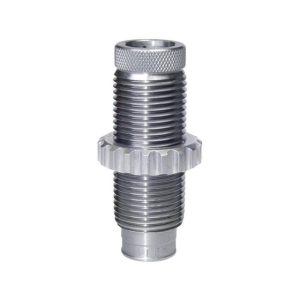
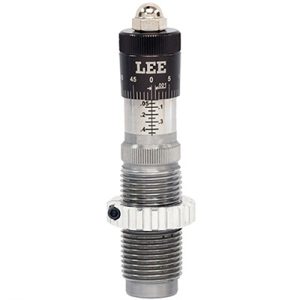
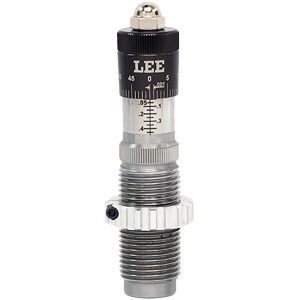
Cleaning and prepping 6.5 Creedmoor brass
Creedmoor accuracy is built on consistent brass, so prep gets more attention here than on a plinking round. Tumble clean, then lube and size with controlled shoulder bump so headspace stays uniform load after load. Trim to a consistent length, then chamfer and deburr the mouth so bullets seat without shaving. Many shooters uniform the primer pockets and clean them every firing, because consistent ignition is part of consistent velocity.
Annealing the necks every few firings is common practice with Creedmoor, since it keeps neck tension uniform and extends the life of quality brass that is not cheap to replace. A wet stainless tumble leaves cases spotless inside and out for precision work, which is why a lot of Creedmoor reloaders go that route. The best brass tumblers guide covers wet versus dry for exactly this kind of careful loading.
Why 6.5 Creedmoor rewards careful handloading
6.5 Creedmoor earns its reputation because it responds to good handloading more visibly than most cartridges. The efficient case, the high-ballistic-coefficient bullets it was built around, and its mild recoil all combine so that small improvements in consistency translate into measurably tighter groups downrange. Tune neck tension, control your seating depth relative to the lands, keep your charges uniform, and a Creedmoor will reward the effort on paper in a way that flatters the loader.
That same sensitivity is why so many precision shooters reload it rather than buy factory. You can tailor a load to your specific barrel, find the seating depth your rifle prefers, and squeeze out the consistency that wins matches. It is not a hard cartridge to load safely, but it is one that pays back the extra steps, which is exactly why the precision crowd adopted it so fast. If you are choosing between it and a .308, our gear guides and the points above lay out the trade.
How to work up a 6.5 Creedmoor load safely
Start at the published starting charge for your exact bullet and powder, then work up in small steps, watching the brass and the chronograph closely. Creedmoor pressure signs are the usual ones: flattened or cratered primers, stiff bolt lift, ejector marks, and loosening primer pockets. Because the cartridge is so consistent, many shooters run a careful charge ladder over the chronograph to find the node where velocity stabilizes, then settle there, well below any pressure.
Seating depth is its own variable on Creedmoor, so once you have a charge you like, test small changes in how close the bullet sits to the lands and watch group size. Measure shoulder bump with a comparator when you reload brass repeatedly so headspace stays safe, and keep brass sorted by lot for loads that matter. Pull every charge weight from the verified manufacturer data in the next section, never from a forum or memory.
Loading your first batch of 6.5 Creedmoor, step by step
6.5 Creedmoor follows the precision bottleneck sequence, and since most people load it specifically for accuracy, the prep steps get more attention than they would on a plinking round. Here is how a careful first session goes.
Inspect, sort, and clean. Sort brass by lot for loads you care about, inspect for any signs of stretch or neck splits, and tumble clean. Many Creedmoor loaders wet tumble with stainless pins to get the interiors and primer pockets spotless, because consistency starts with clean, uniform brass.
Lube and size. Lube every case and full-length size, setting your die for minimal, repeatable shoulder bump measured with a comparator. Controlled bump keeps headspace consistent, which is foundational to the accuracy this cartridge is capable of. Wipe the lube afterward.
Trim, prep, and anneal. Trim to a uniform length, chamfer and deburr the mouth, and uniform the primer pockets. Annealing the necks every few firings keeps neck tension consistent and protects your investment in good brass. These small uniformity steps are exactly what the Creedmoor rewards on paper.
Prime. Seat a fresh large rifle primer carefully into each uniform pocket, feeling each one home to the same depth. Consistent ignition supports consistent velocity, and on a precision cartridge that shows up directly in your group size at distance.
Charge, seat, and test. Weigh each charge precisely to the value your verified data lists for your exact bullet and powder, because the precision crowd loads this cartridge for a reason. Seat to your tested seating depth, skip the crimp for concentricity, and chronograph your loads as you develop them. Record everything in your log, label the box, and pull your charge data from the verified sources in the next section.
Where to get verified 6.5 Creedmoor load data
As with every caliber here, we do not print charge weights, because a safe charge depends on your exact bullet, powder, primer, and brass, and the powder makers’ data is proprietary and meant to be read at the source. Pull your 6.5 Creedmoor data from Hodgdon’s Reloading Data Center, which covers H4350 and StaBALL 6.5, from the bullet maker like Hornady, Berger, or Sierra, or from a current Lyman or Hornady manual.
Safety note: start at the listed starting charge, work up slowly while watching for pressure signs, and cross-reference two sources where you can. Reloading is done at your own risk.
Common 6.5 Creedmoor reloading mistakes to avoid
- Inconsistent shoulder bump. Creedmoor accuracy lives on consistent headspace. Set your die for minimal, repeatable bump using a comparator.
- Ignoring seating depth. This cartridge is sensitive to how close the bullet sits to the lands. Skipping seating-depth testing leaves accuracy on the table.
- Never annealing. Quality brass is expensive, and skipping periodic neck annealing shortens its life and lets neck tension drift.
- Sloppy charge weighing. The precision crowd loads Creedmoor for a reason. A coarse scale undermines the consistency the cartridge is capable of.
- Mixing brass lots for match loads. Different lots vary in capacity. Keep brass sorted for ammo you intend to shoot at distance.
Finding your rifle’s seating depth
Seating depth is where a lot of 6.5 Creedmoor accuracy is found, and it is a variable most factory ammo cannot address. The distance between the seated bullet and the rifling, often called jump, affects how consistently the bullet enters the bore, and many barrels show a clear preference for a particular jump. Once you have a charge you like, the next step is to load small batches at slightly different seating depths and shoot them for group size.
You measure your starting point by finding the length at which the bullet just touches the lands in your chamber, then seating a controlled amount shorter and testing from there. A comparator on your calipers makes this repeatable. It is a methodical process, but it is also the kind of tuning the Creedmoor was built to reward, and finding your barrel’s preferred depth often shrinks groups more than any other single change. Record the winning depth and load to it consistently.
Tracking your data like a precision shooter
Precision reloading is as much record-keeping as it is bench work, and 6.5 Creedmoor shooters tend to be meticulous about it. Keep a log of every load: bullet, powder, charge, primer, brass lot, seating depth, the velocity from your chronograph, and the group it produced. Over time that log becomes the map to your rifle’s preferences, and it lets you return to a winning load months later without guessing.
The chronograph is central to this. Watching velocity across a charge ladder reveals the node where speed stabilizes despite small charge changes, which is the load that will be most consistent shot to shot and most forgiving of tiny errors. Pair that with your seating-depth testing and your group data, and you build a load with evidence behind every choice. This habit is exactly why so many serious long-range shooters handload rather than trust factory ammo to find their barrel’s sweet spot.
Is reloading 6.5 Creedmoor worth it?
Absolutely. Premium 6.5 Creedmoor match and hunting ammo is expensive, so the per-round savings are real, but the accuracy of a tuned handload is the bigger payoff for a cartridge built around precision. We ran the numbers in our cost-per-round breakdown, and our best reloading presses guide covers the gear that suits careful rifle loading.
Where to go from here with 6.5 Creedmoor
6.5 Creedmoor is a cartridge built for handloaders, and the seating-depth testing, charge ladders, and meticulous record-keeping it rewards are the heart of precision rifle reloading. Once you are loading consistent, accurate Creedmoor, you have the skills to wring the best out of almost any long-range cartridge you pick up next.
If you are assembling the bench, our best reloading presses guide covers the rigid single-stage and low-runout Co-Ax presses precision shooters favor, while the best reloading dies roundup explains why bushing and competition dies matter for tuning neck tension on a match cartridge. The best reloading kits guide bundles the foundation, and the best brass tumblers guide covers the wet stainless cleaning that keeps Creedmoor brass spotless.
For the complete picture, our complete guide to reloading walks the whole process, and the cost-per-round breakdown covers the economics, which favor handloading strongly once you factor in the accuracy a tuned load buys. The Creedmoor rewards careful loading more visibly than most cartridges, so the effort you put into shoulder bump, seating depth, and consistent charges shows up directly on paper at distance. Keep a detailed log, treat your brass well, and your Creedmoor handloads will outshoot anything you can buy in a box.
One last thought before you start: the whole appeal of 6.5 Creedmoor is consistency, and consistency comes from process, not from pushing the cartridge hard. The most accurate loads almost always live comfortably below maximum, at the velocity node where your barrel settles down, so resist the urge to chase speed. Weigh every charge, control your shoulder bump and seating depth, and let your chronograph and your targets tell you where the rifle wants to shoot. Build that disciplined habit early and your Creedmoor will reward you with the kind of repeatable precision that made the cartridge famous.
Last updated June 3rd 2026
Does 6.5 Creedmoor use large or small rifle primers?
It depends on your brass. Factory Hornady 6.5 Creedmoor brass uses a large rifle primer pocket, while premium match brass from Lapua, Alpha, and Peterson often uses a small rifle pocket. Always confirm your brass before buying primers.
What is the best powder for reloading 6.5 Creedmoor?
Hodgdon H4350 is the classic choice and famous for accuracy in this cartridge, though it is often in short supply. Good alternatives that your data may cover include Alliant Reloder 16, IMR 4350, Hodgdon Varget, and StaBALL 6.5. Always take the charge weight from official published data.
What bullet weight is best for 6.5 Creedmoor?
140 to 147 grain match bullets like the ELD Match are the long-range standard and what most Creedmoor reloaders use, because their high ballistic coefficients are what the cartridge is built around. The standard 1:8 twist stabilizes these heavy bullets easily.
Do you need to anneal 6.5 Creedmoor brass?
It is not strictly required, but because 6.5 Creedmoor is a precision cartridge, annealing the necks every few firings keeps neck tension consistent and shows up directly on target at distance. For casual loads you can skip it, but precision shooters generally anneal.
Is reloading 6.5 Creedmoor worth it?
Yes. Premium factory 6.5 Creedmoor ammo is expensive, so the cost savings are real, and a load tuned to your barrel typically out-shoots factory ammo. For a cartridge built around accuracy, that tuning is the main reason most owners reload it.
Why doesn't this guide list 6.5 Creedmoor charge weights?
Because a safe charge depends on your exact bullet, powder, primer, and brass, and a generic number would be both dangerous and a misuse of the powder makers' proprietary data. Pull your charges from Hodgdon's Reloading Data Center, your bullet or powder maker, or a current manual, and work up from the starting charge.
Is 6.5 Creedmoor or .308 better for reloading?
Both are excellent. 6.5 Creedmoor shoots flatter, drifts less in wind, and recoils less, which makes it the favorite for long-range precision. .308 has cheaper, more available brass and bullets and a longer track record. For pure paper accuracy at distance the Creedmoor edges it; for versatility and component supply the .308 holds up.
How many times can you reload 6.5 Creedmoor brass?
With careful full-length sizing, controlled shoulder bump, and periodic annealing, quality 6.5 Creedmoor brass commonly lasts many firings before the pockets loosen or necks split. Hot loads near maximum shorten that life considerably, while moderate match loads and good prep stretch it. Inspect pockets and necks each cycle and retire cases that show wear.
4,021+ Gun & Ammo Deals
Updated daily from 200+ top retailers. Filter by category, caliber, action type, and price.
Related Guides